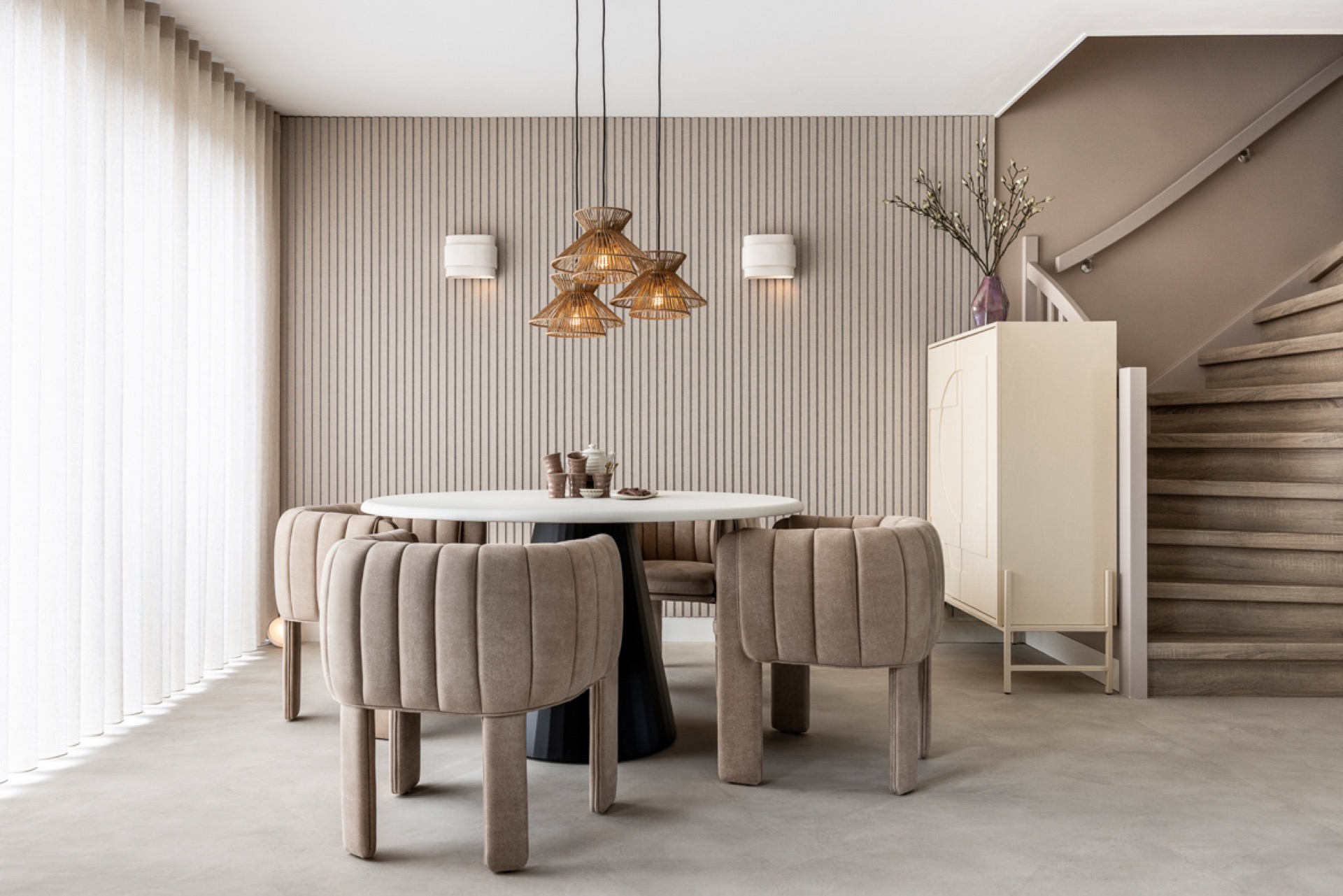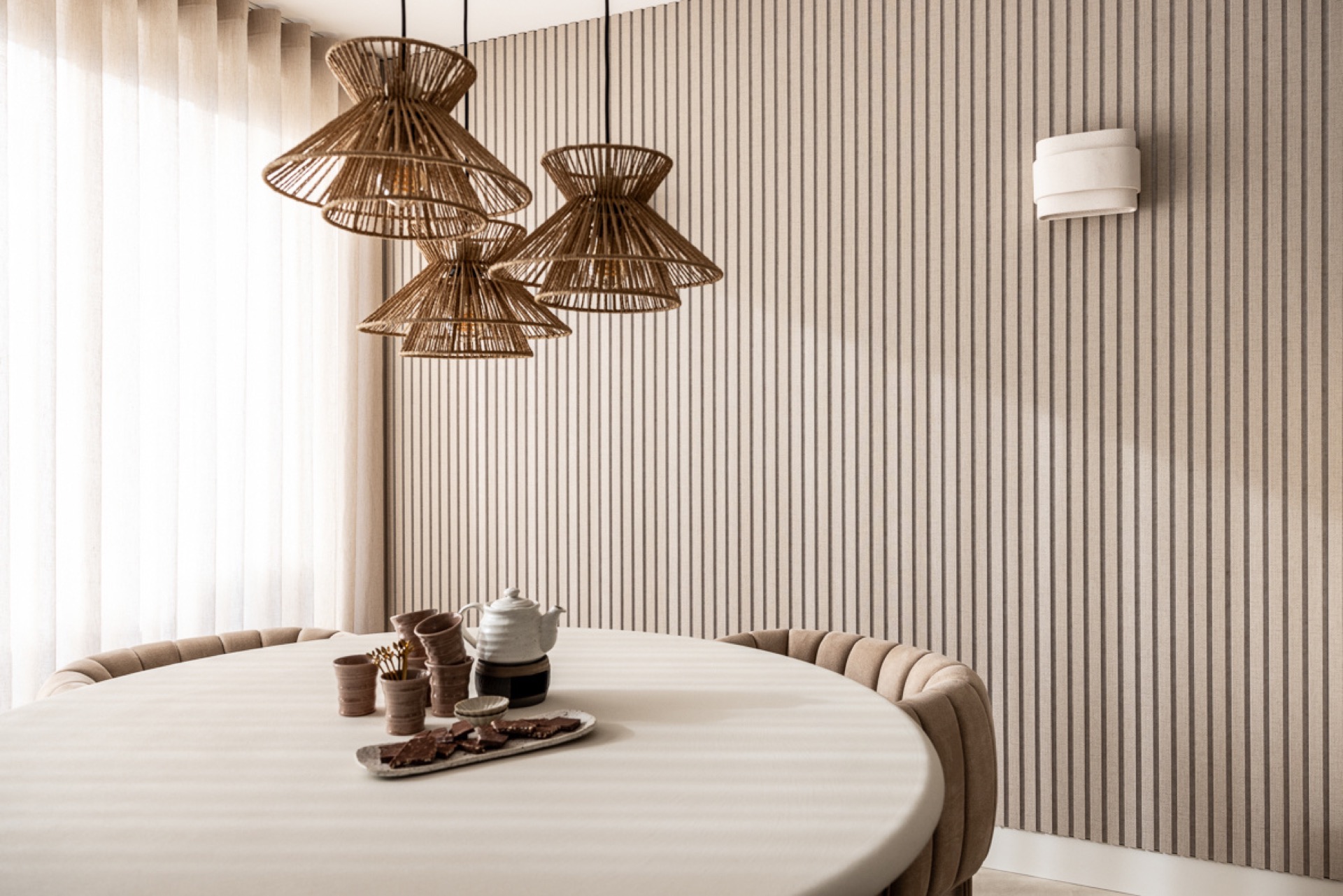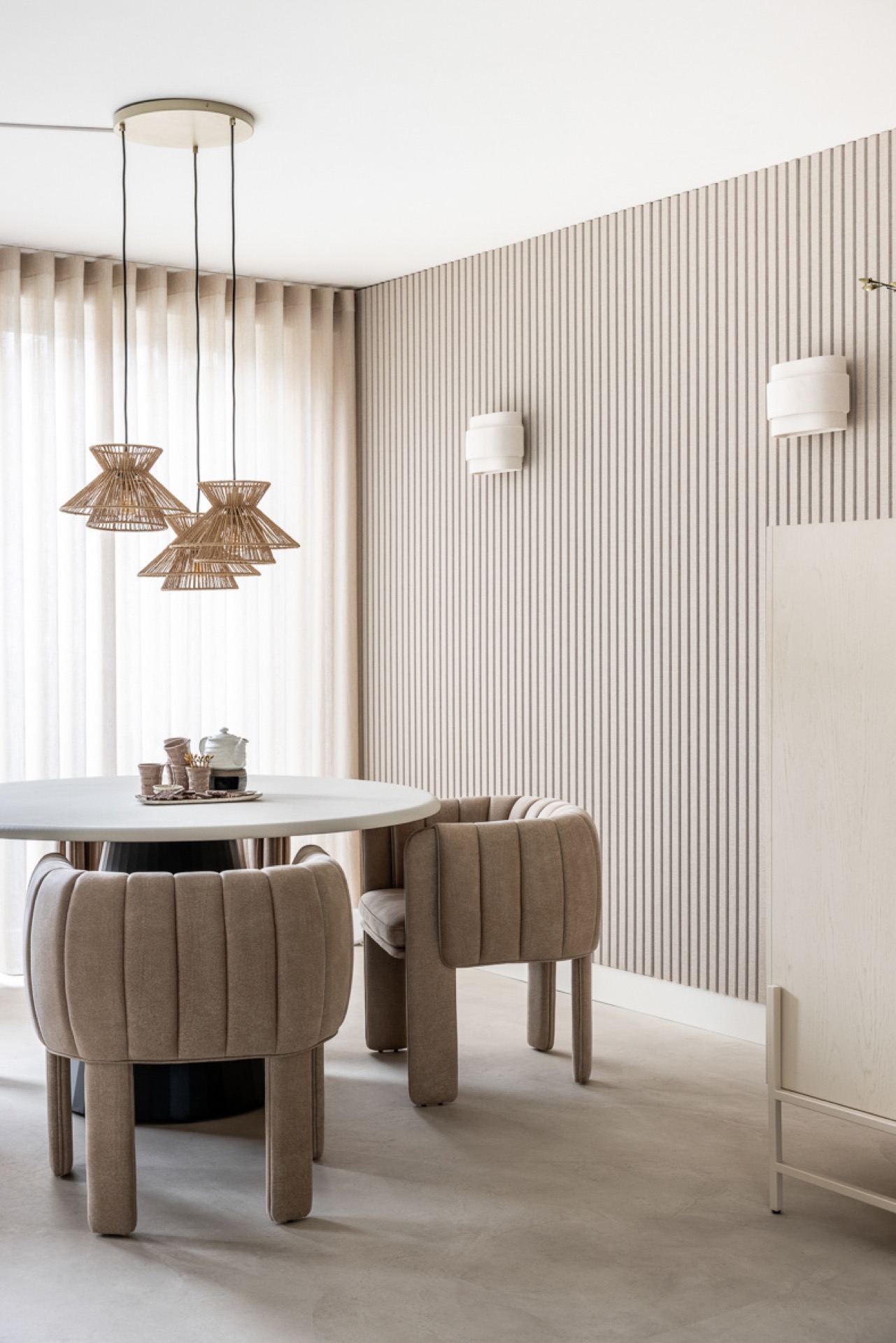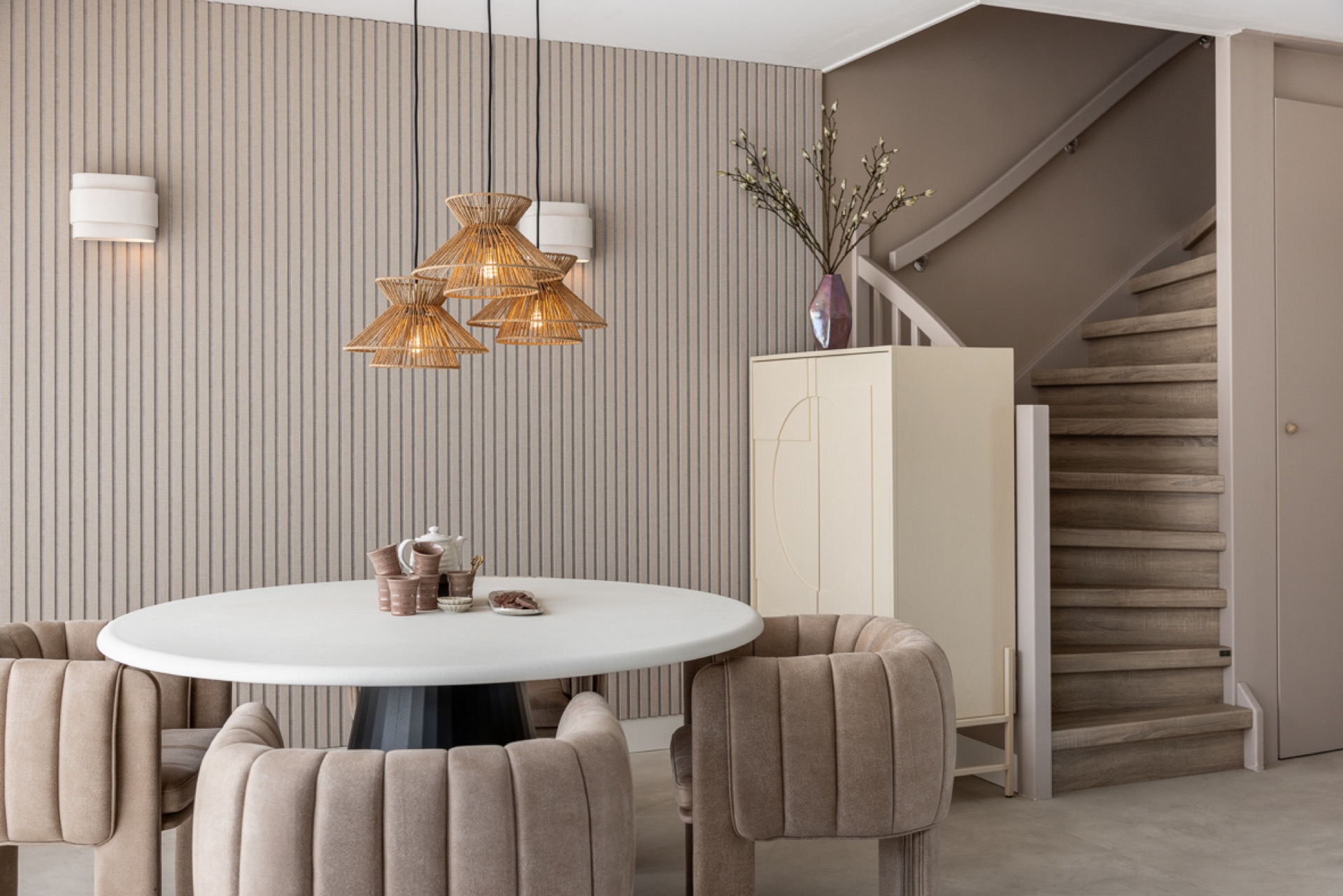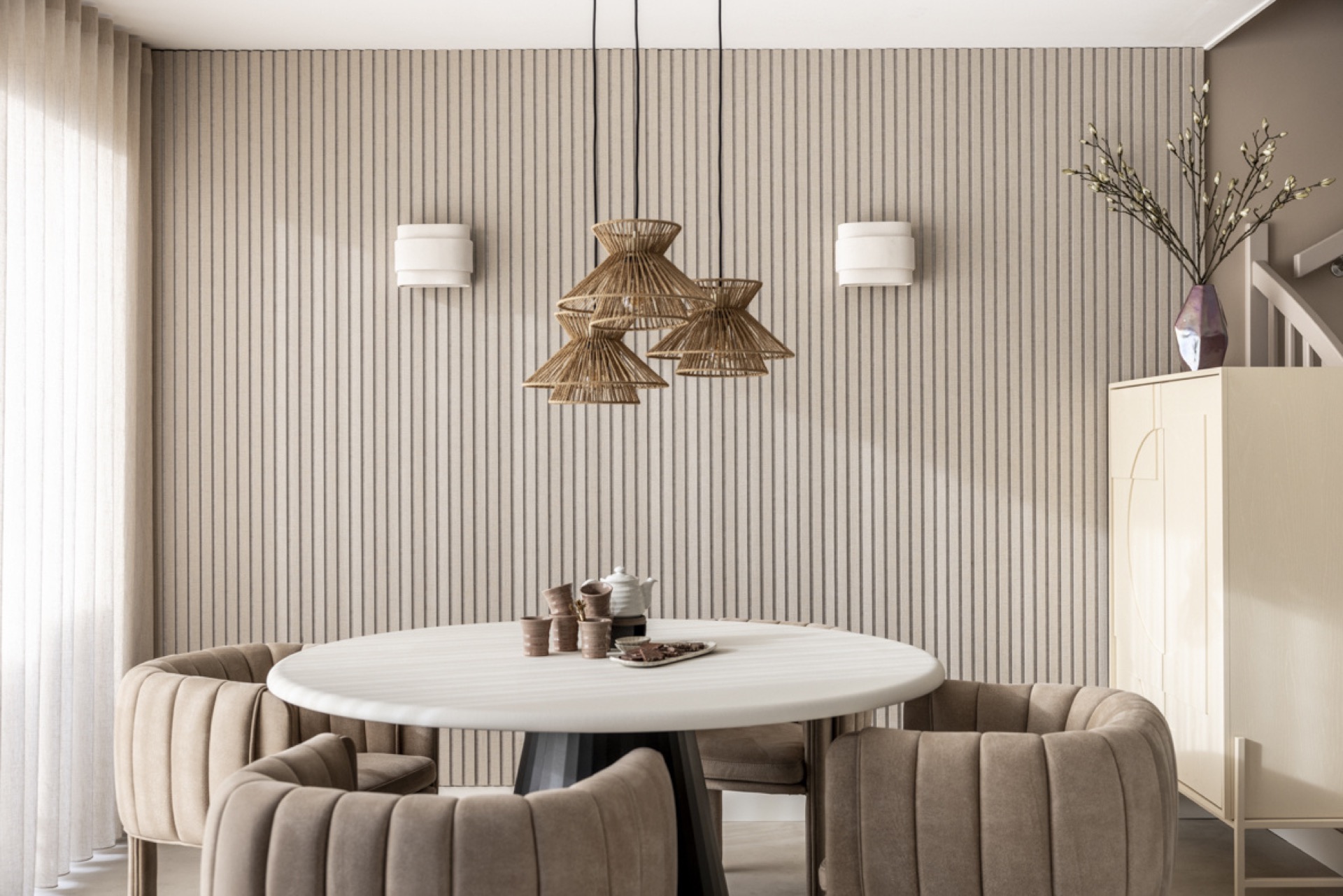








Colored acoustic wall panels shapes the way the rooms are organized and described. The wall immediately reads as more than a backdrop. Beige acoustic wall panels turn it into an acoustic accent wall, with a vertical ribbed surface that catches light in narrow bands and gives the room a clear edge. In the living and dining area, the panel height and repeated lines hold the eye without needing any extra decoration. The result is practical, but never plain.
Colored acoustic wall panels as a spatial starting point
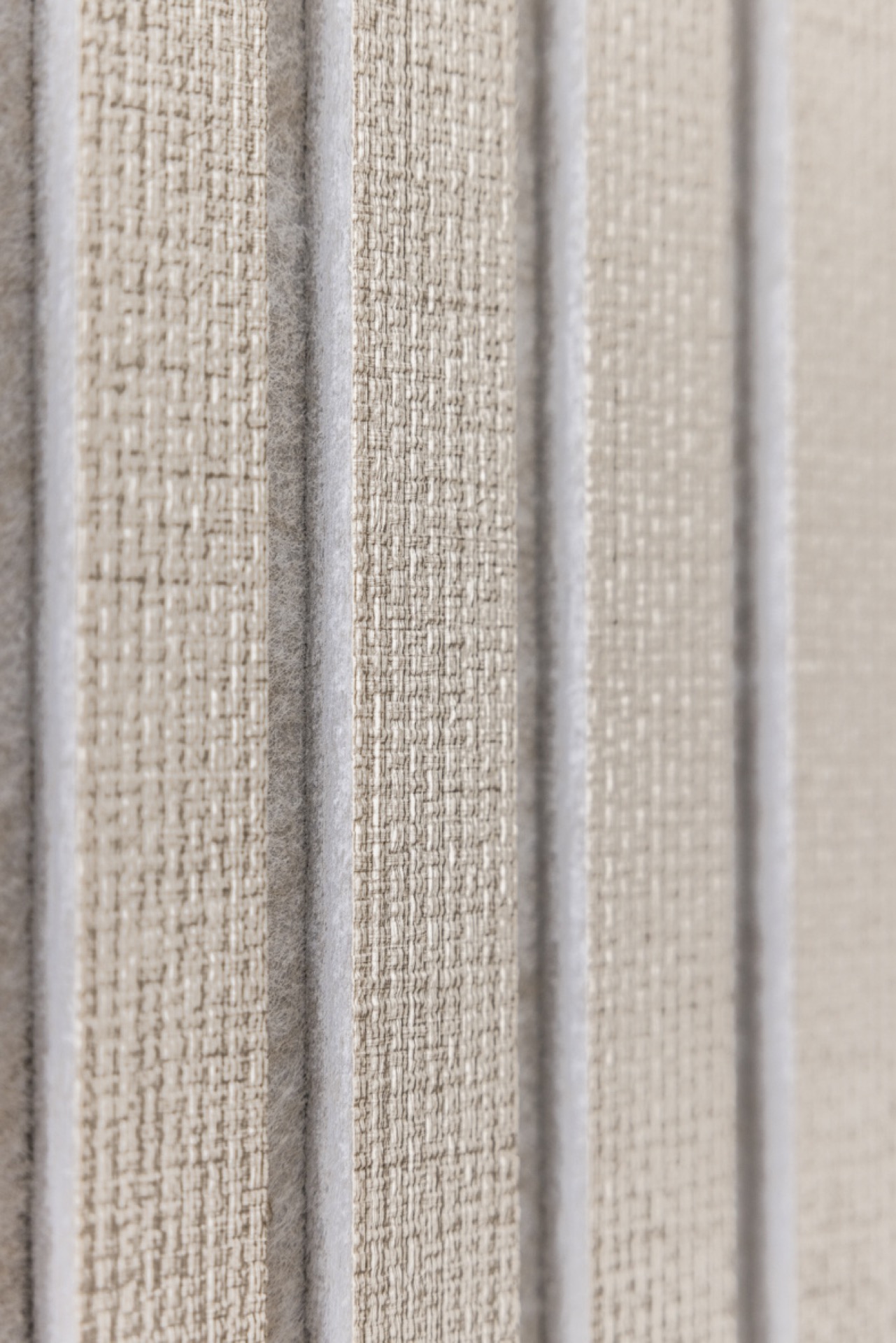
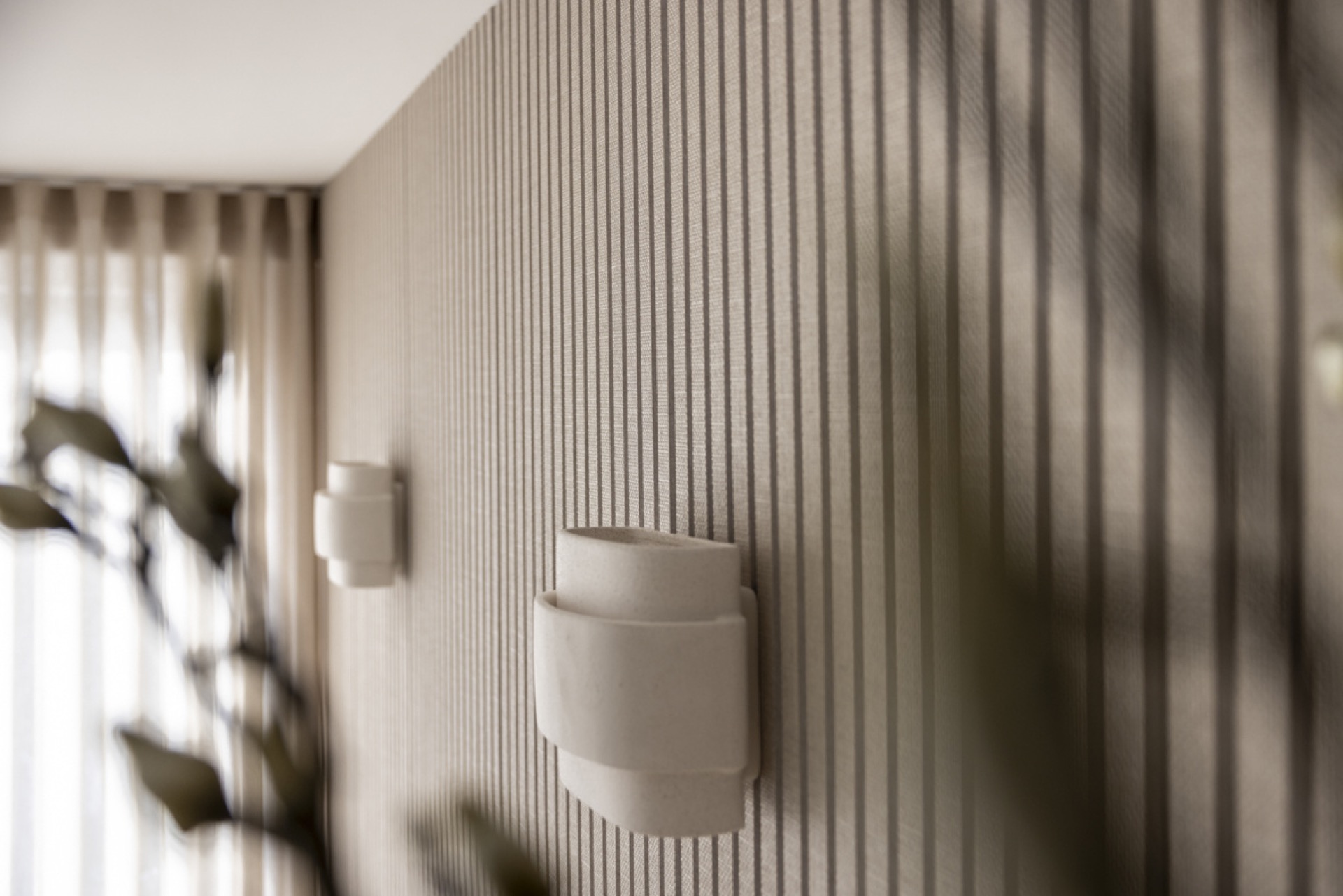
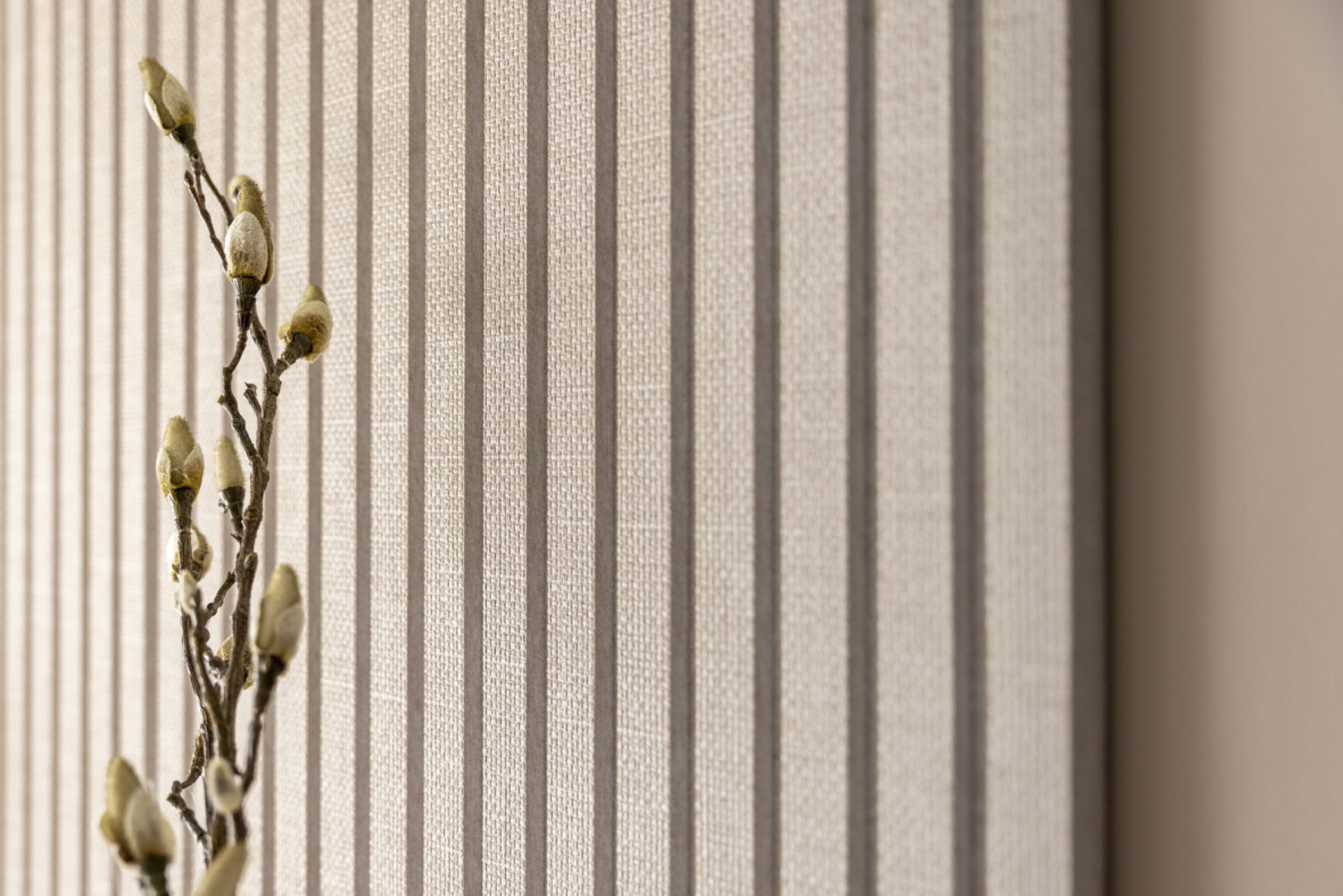
The strongest detail is the rhythm of the surface. These colored acoustic wall panels use a vertical pattern that feels measured rather than busy, so the wall can sit behind furniture, lamps, and door openings without losing its own presence. In close-up, the ribs create shallow shadow lines, and the joins between panel sections stay visible enough to remind you that this is a built-up surface, not a flat finish. That small difference matters in a room with a lot of hard edges.
Several images show the panels rising across a large height, which makes the texture read as one continuous plane. White wall lights sit against the beige background and sharpen the contrast between smooth fixtures and the ribbed surface. Seen from across the room, the wall becomes the main field in the composition, while the table and seating stay visually lighter in front of it.
Different combinations, one clear language
The project text notes that these panels are available in different color combinations, materials, and finishes. That flexibility explains why the same system can work in many interiors without changing its basic character. Here, the beige tone keeps the wall quiet, while the textured surface adds depth. In another setting, the same idea could read more sharply or more softly, depending on the chosen finish and color.
What stays consistent is the way the paneling organizes the room. The vertical structure gives direction to a wall that might otherwise disappear into the background, and the panel format supports a clean, deliberate line. It is this mix of variation and restraint that makes textured wall panels useful in living spaces where one surface needs to do several jobs at once.
A color choice that stays close to the room
The beige acoustic wall panels in this interior sit within a pale palette of white walls, light furnishings, and a warm floor tone. That keeps the accent wall present without overwhelming the rest of the space. The color is soft enough to work beside the stair opening seen in the images, but the ribbed surface still gives it enough force to stand apart. The wall does not compete with the room; it sets the tone for it.
Because the surface is not glossy, the effect depends on light rather than shine. The ribs pick up daylight and the beam from the wall fittings, so the wall changes subtly over the day. That makes the paneling more interesting to live with than a smooth board surface, even when the palette remains restrained.
When the room needs less echo
The panels are not only decorative. The source text states that they also contribute to better acoustics, and that the difference is directly audible when enough acoustic panels are used. That is the important point here: the wall is doing more than framing the dining area. In a room with hard planes, such as glass, plaster, and a polished table surface, the added absorption changes how the space behaves when people speak and move through it.
This is where acoustic wall panels living room becomes more than a product term. The panel system is being used as part of the room itself, not as an afterthought. Because the panels cover a substantial area, the sound treatment and the visual treatment are tied together. The wall looks intentional because it is doing real work in the space. Colored acoustic wall panels remains connected to the layout, materials and daily use of the home.
Seen from the table, not just from the wall
The wide shots matter because they show how the surface reads in daily use. From the dining table, the beige vertical ribs form a steady backdrop behind the chairs and pendant lights. In one view, the round table and suspended lights sit against the wall like simple shapes placed in front of a textured field. Nothing is overdrawn. The paneling carries the composition through scale rather than ornament.
That clarity is useful in open rooms, where one wall often has to define a zone without adding extra partitions. The acoustic accent wall gives the dining area a clear boundary while leaving the room open. The panel texture does the visual separating; the sound-absorbing material helps the room feel calmer when it is occupied.
A structured vinyl covering with an easy-care surface
In this interior, the acoustic panels are paired with ivory wall covering from Vescom. The covering has a structured surface that looks like soft fabric, but it is finished with a vinyl coating. That detail changes how the wall can be used. It keeps the tactile look, while making the surface low-maintenance and easy to wipe clean. For a wall that sits close to furniture and circulation, that matters more than a decorative label.
The combination of panel and wall covering adds another layer to the room without overcomplicating it. The ivory section softens the transition next to the beige ribs, and the difference between the two surfaces is easy to read in the images. One is organized by repeated vertical lines; the other has a finer, textile-like grain. Together they create a wall that is varied at close range and calm from a distance.
Built for home use or larger interior projects
The source content points to both project-based applications and use at home. That broad reach makes sense, because the panel system is easy to adapt through color, finish, and material choice. A living room wall may ask for a quieter tone, while a larger interior project may need a stronger texture or a different surface rhythm. The principle stays the same: a wall can absorb sound and still lead the room visually.
For anyone looking into colored acoustic wall panels, this project shows how the idea works when it is kept simple. A ribbed wall, a pale palette, and a vinyl-covered textured section are enough to shape the space. The wall is not treated as a separate object. It is part of the room’s daily use, part of the light, and part of the acoustic response.
Details that matter up close
The close-ups reveal the edge conditions that give the wall its finish. Panel joins remain legible, and the regular rib spacing keeps the surface from becoming visually noisy. White sconces set against the beige field underline the depth of the grooves. In one image, the stair zone sits beside the panel wall, so the eye moves from the textured surface to the adjacent plane in a single glance. Those transitions are where the project feels most considered.
As a whole, the wall shows how beige acoustic wall panels can do more than soften sound. They shape a room’s first impression through line, repetition, and a material that changes with light. Paired with the structured vinyl wall covering, the result stays practical enough for daily use and distinct enough to hold the room together without shouting for attention. Colored acoustic wall panels remains connected to the layout, materials and daily use of the home.
Want to see more of ? View the page of for even more great projects and company information.