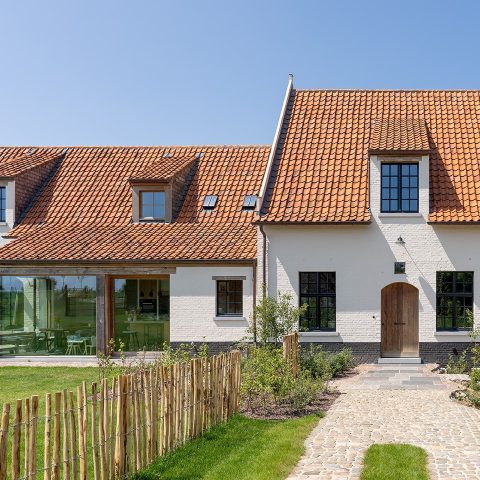








Rural refinement: double wooden farm gates and timeless joinery
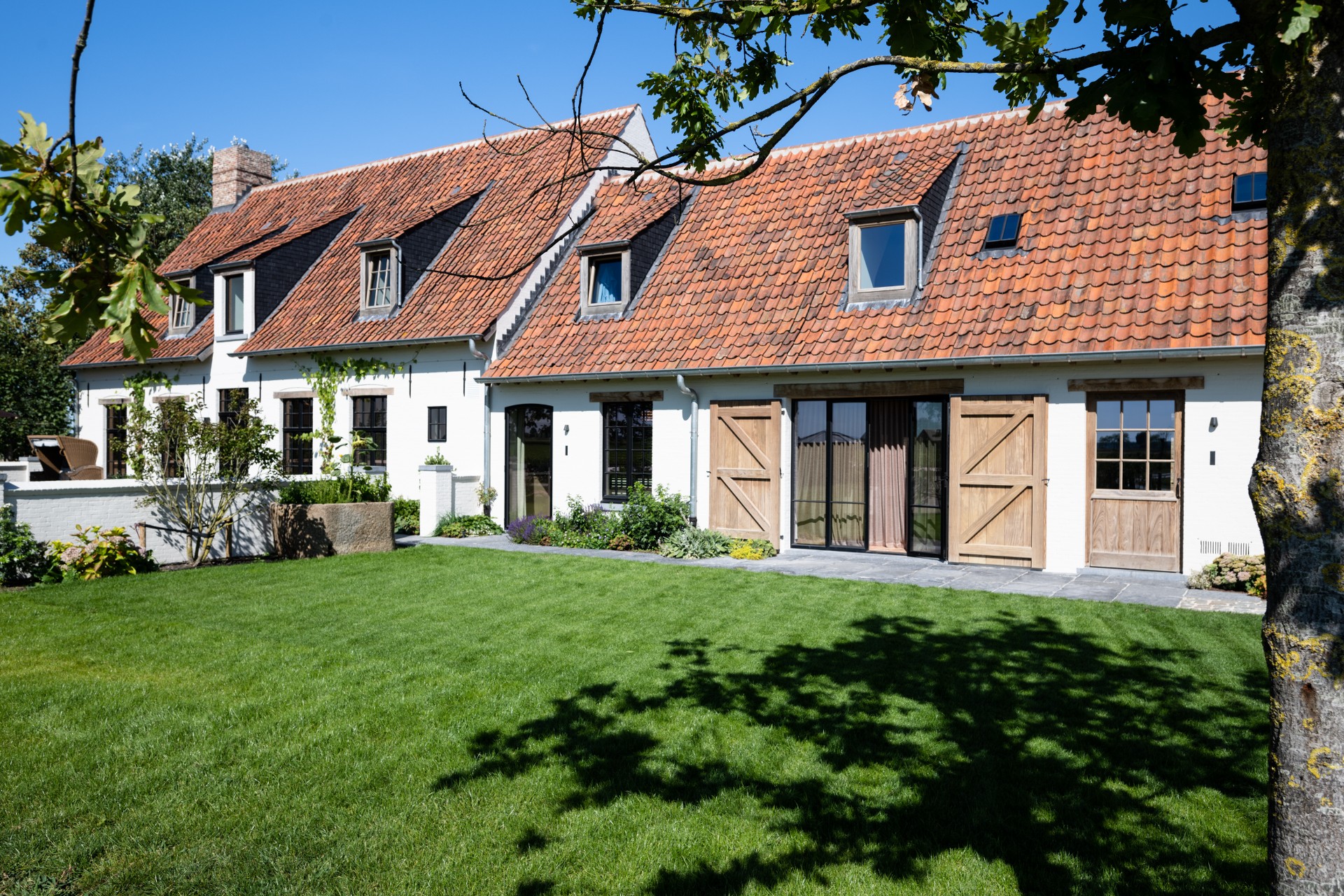
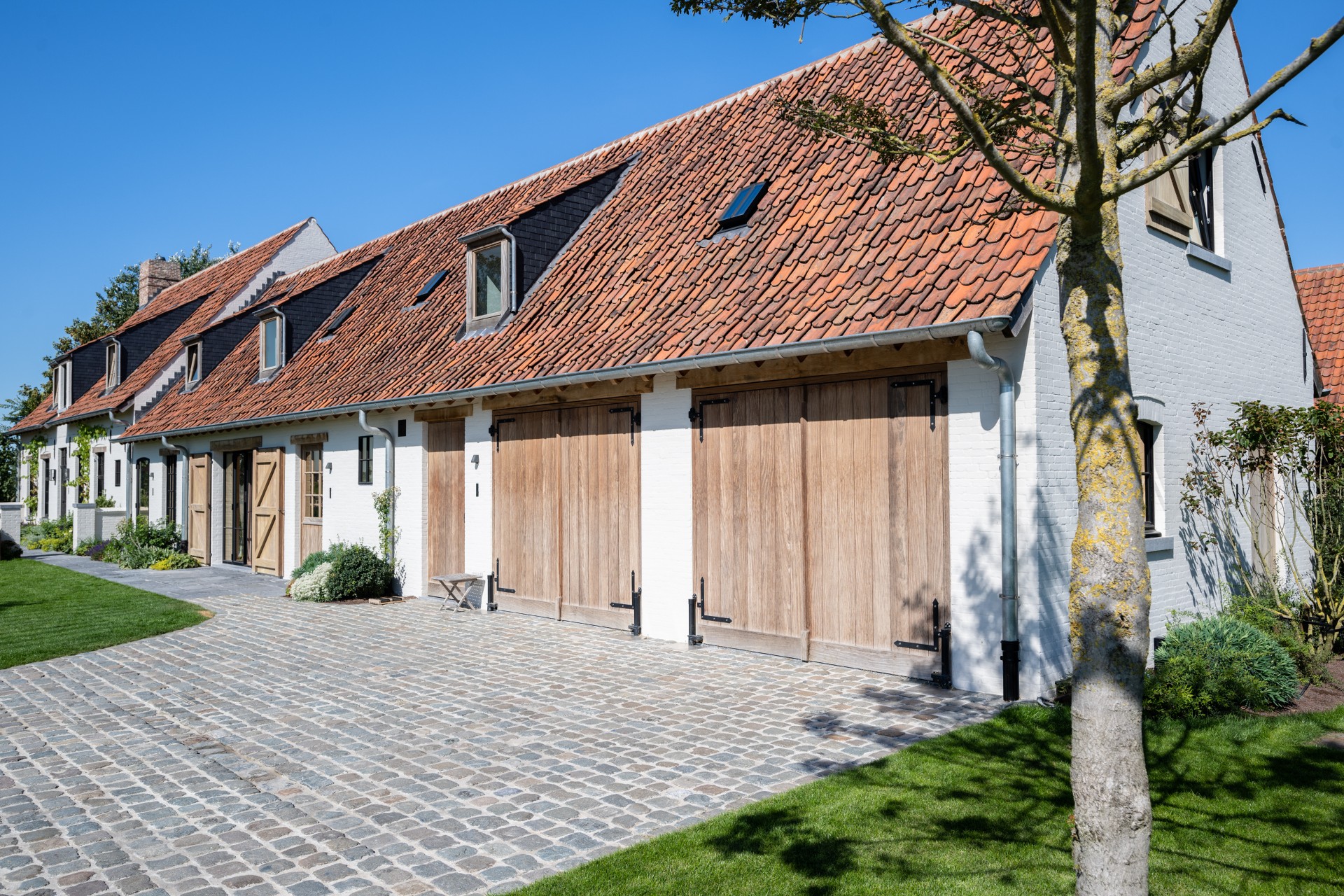
Double wooden farm gates shapes the way the rooms are organized and described. Two solid gate leaves take the lead as soon as you look toward the entry. In the garden photographs, the surface is built, not painted smooth: vertical battens hold the structure in place and the proportions feel heavy, meant to last. The hinges sit where you expect them, with enough presence to read as part of the carpentry rather than a later add-on. From a distance it reads as a single threshold; up close you can trace how the boards form the field and where the fixings land against the frame.
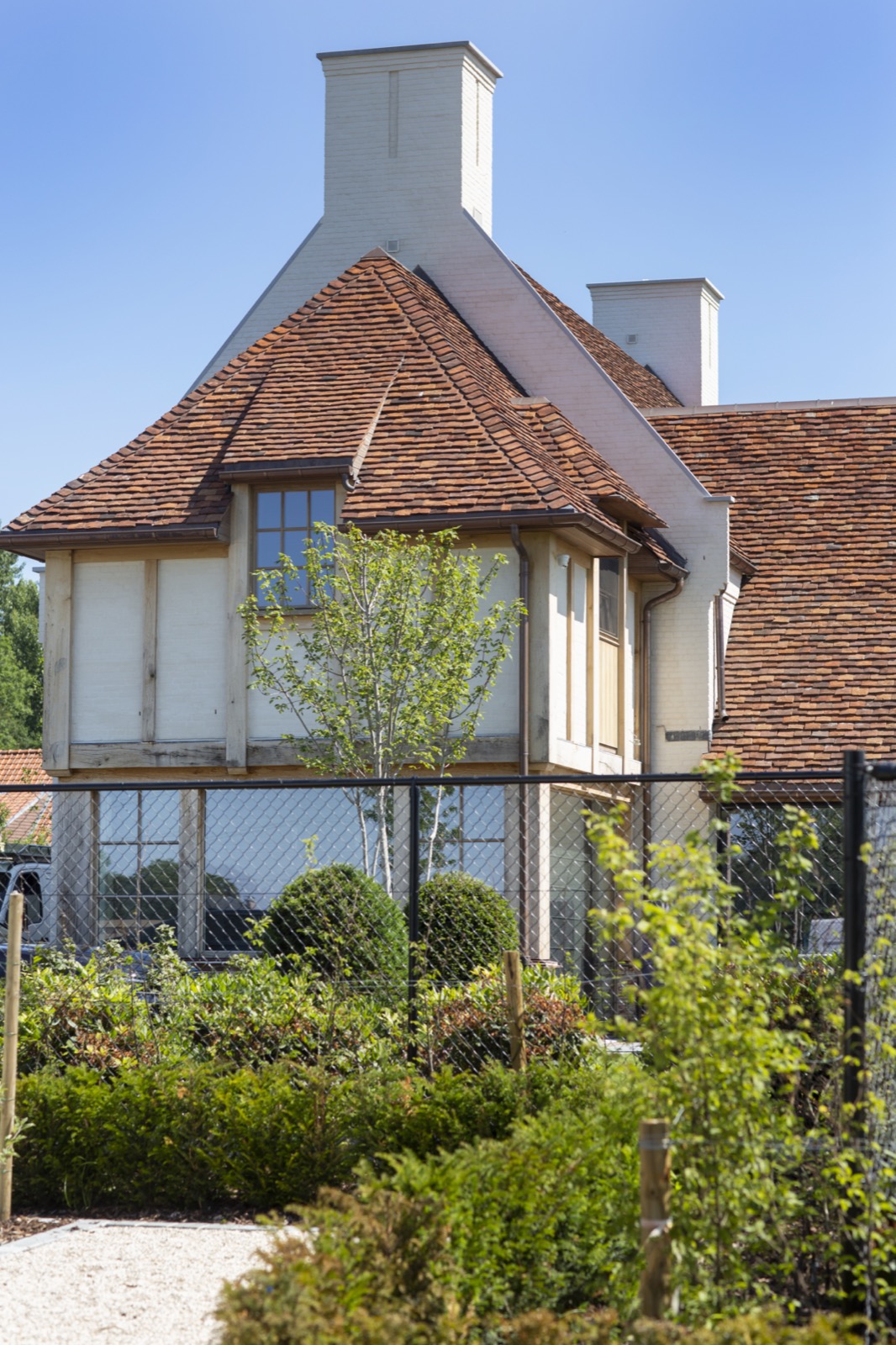
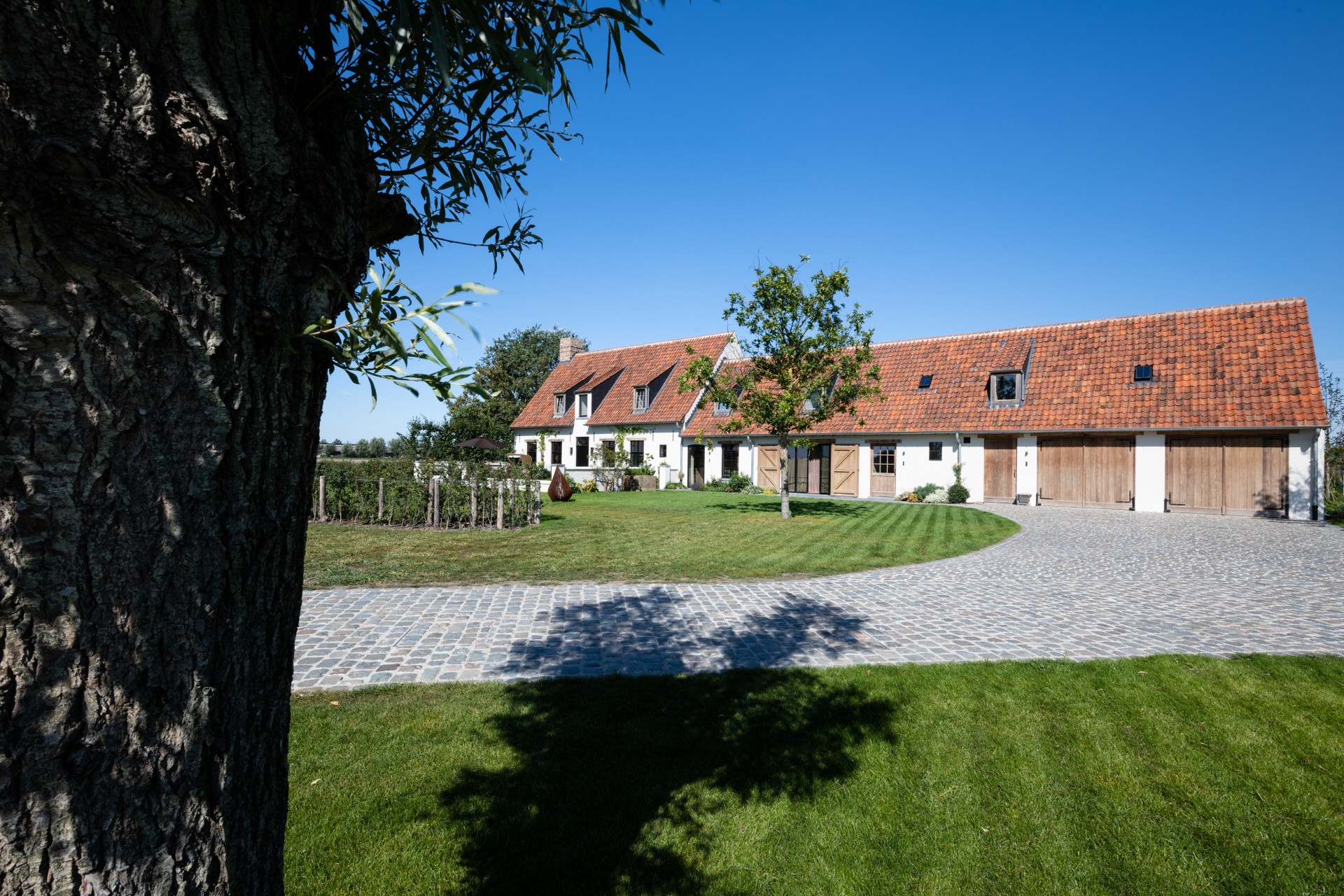
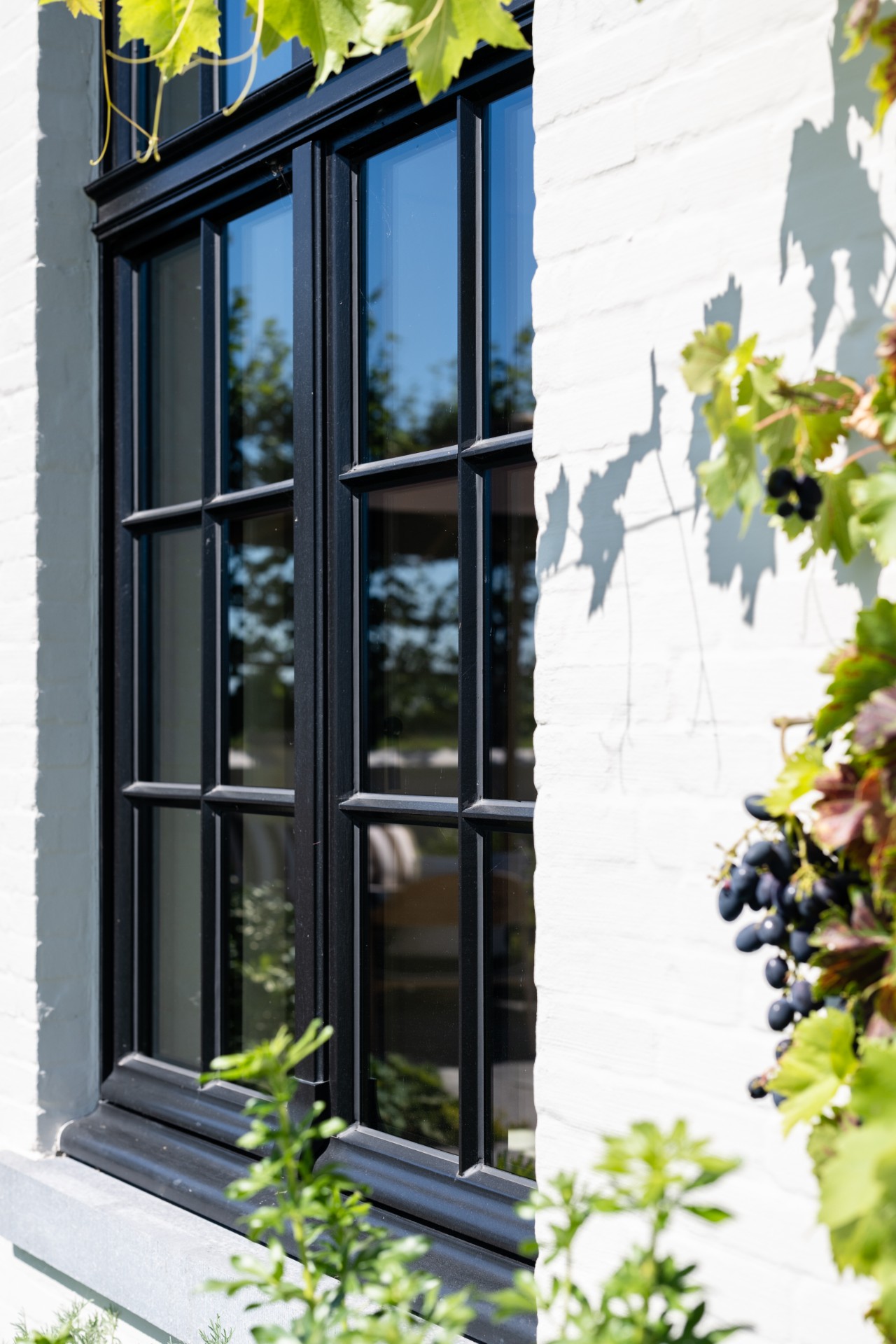
Behind that dark timber moment, the rest of the palette stays light. Pale plaster finishes the wall plane, while red ceramic roof tiles carry the color above the openings. When the eye moves from the lighter masonry to the darker joinery, the transitions become easy to follow. Windows and wood door and window frames pick up the same tone as the gates, so the wood isn’t used once as a decorative accent; it returns around each opening.
Double wooden farm gates as a spatial starting point
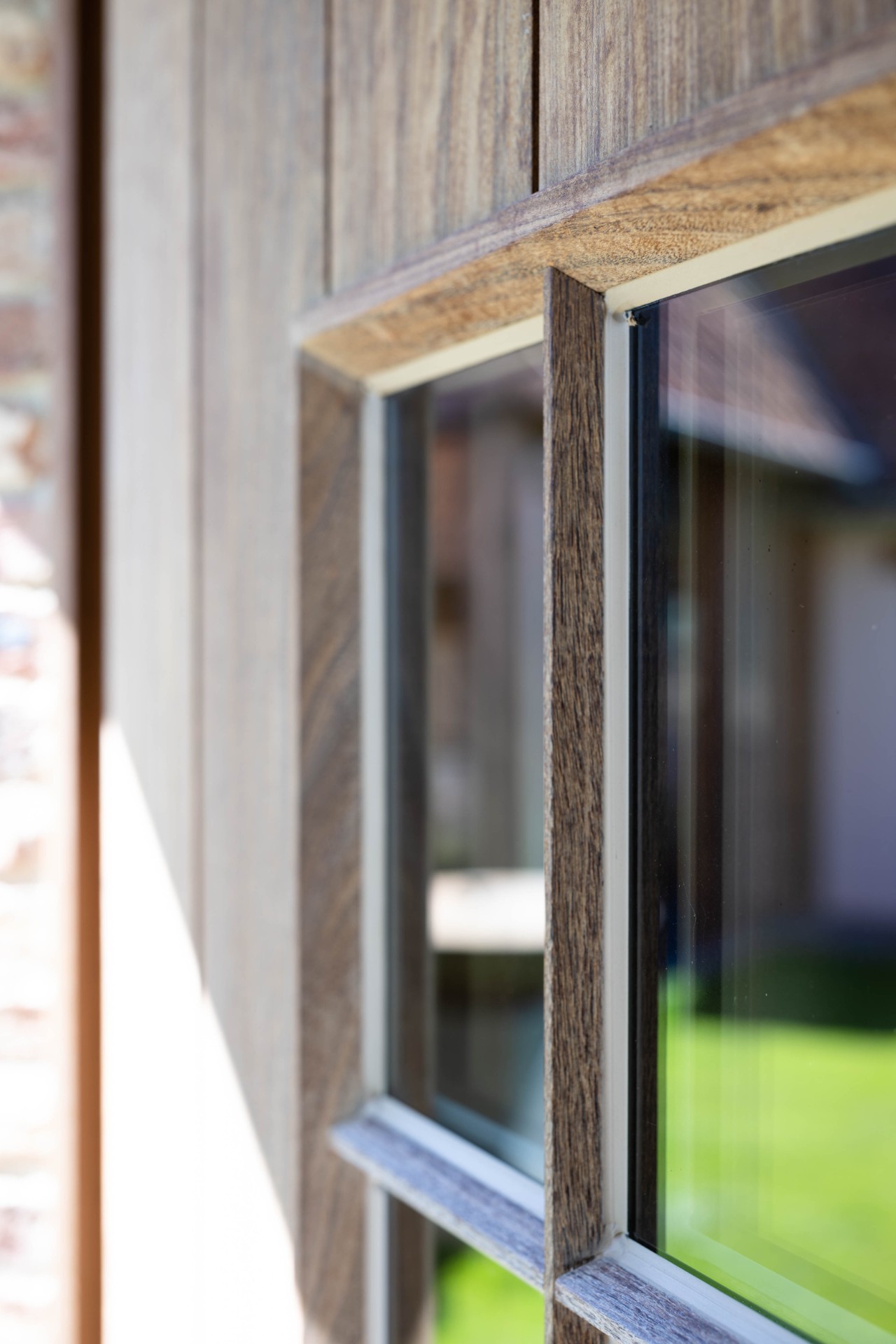
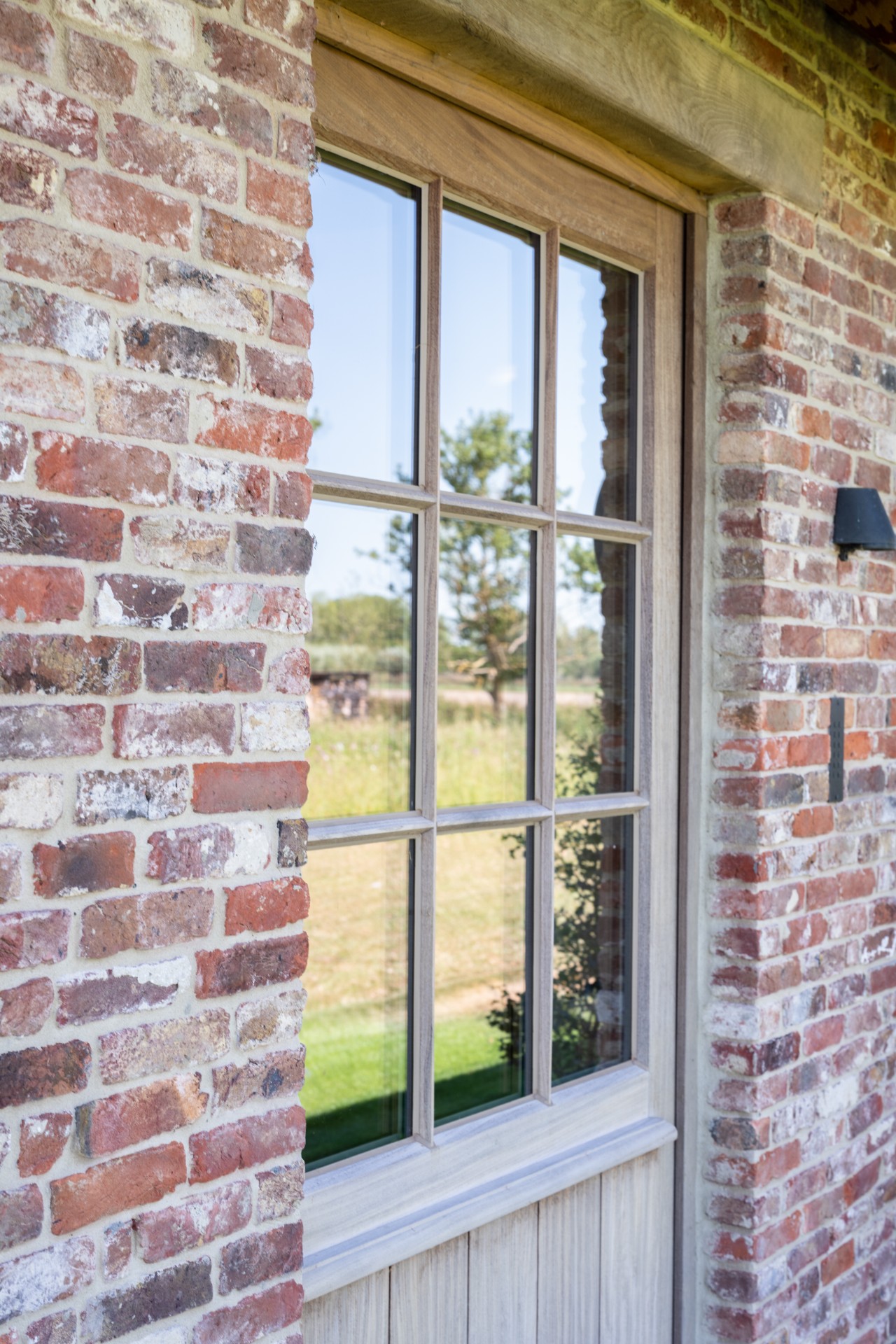
Windows and wood door and window frames sit against the lighter wall, creating a clear edge that’s legible in both wide shots and details. The joinery doesn’t just outline the opening. It is shaped at the meeting line, with softer, gently profiled sections where timber meets plaster. That joint line continues across the different frames, so the carpentry feels like one system rather than a collection of separate pieces placed independently.
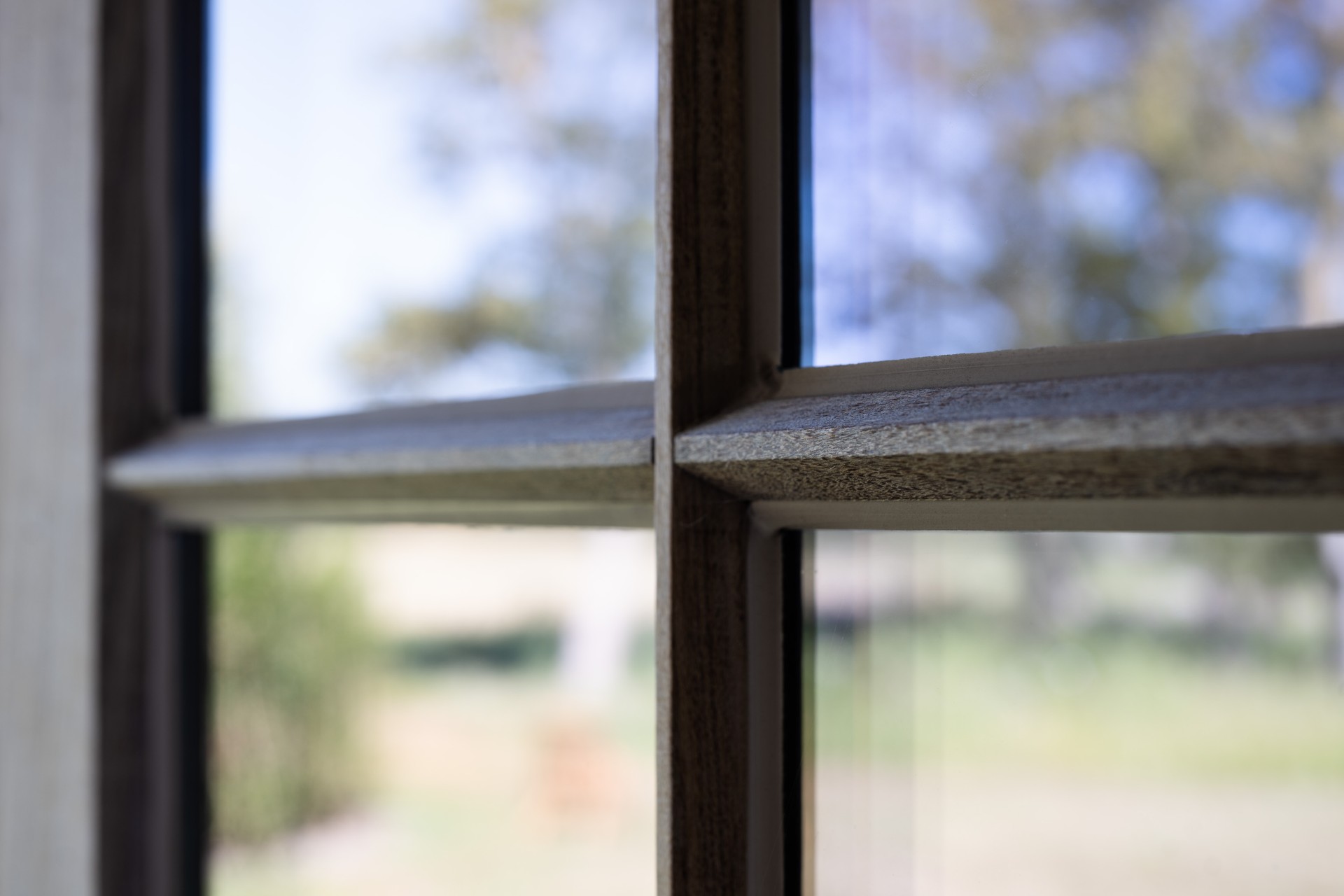
Several openings show the same approach to glazing division. Slim muntins window patterns break the glass into narrow vertical fields, turning each window into a sequence of measured cuts. It also changes the way daylight lands inside: instead of spreading as one broad wash, the light traces the thin muntin lines and respects the depth of the reveal.
Deep wood-finished reveals and the way light hits them
Deep wood-finished window reveals extend beyond the frame line, making the wall thickness read as intentional. The timber finish runs along the angled edges, so when you look into the rooms the first contact between daylight and wood happens before the light reaches the glass. From different viewpoints, the brightness shifts slightly because the reveal surfaces catch the sun at different stages of the day.
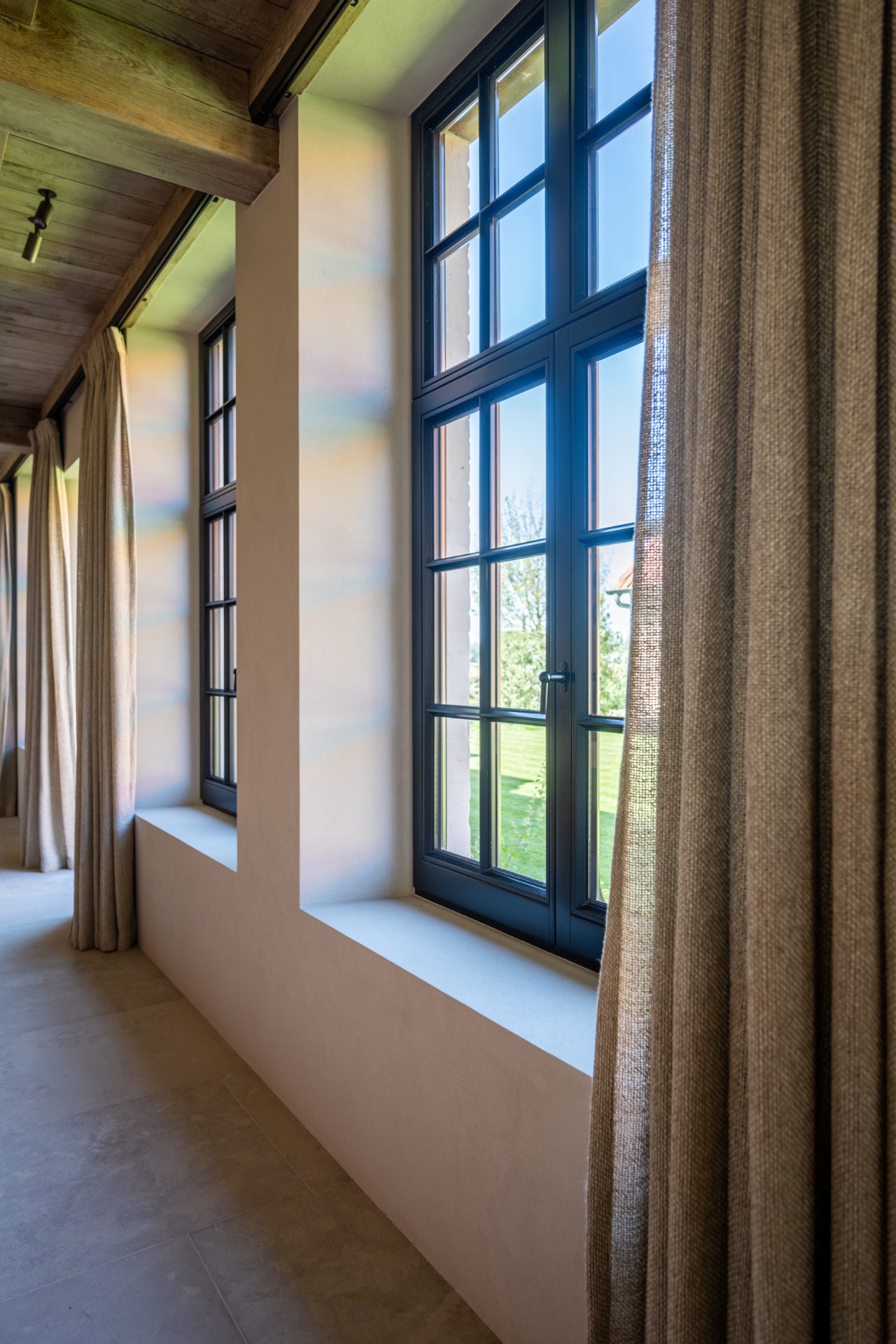
Curtains in beige or taupe shades hang in front of the openings, but they don’t erase the timber lines. You can still see where the window sits in relation to the wall, including the depth and the angle where wood meets masonry. In interiors where more than one opening appears in the same image, the repeated timber accents become a reference point for where brightness lands and how it moves across the space.
The timber-to-wall edge: profiles, joint lines, and layered assembly
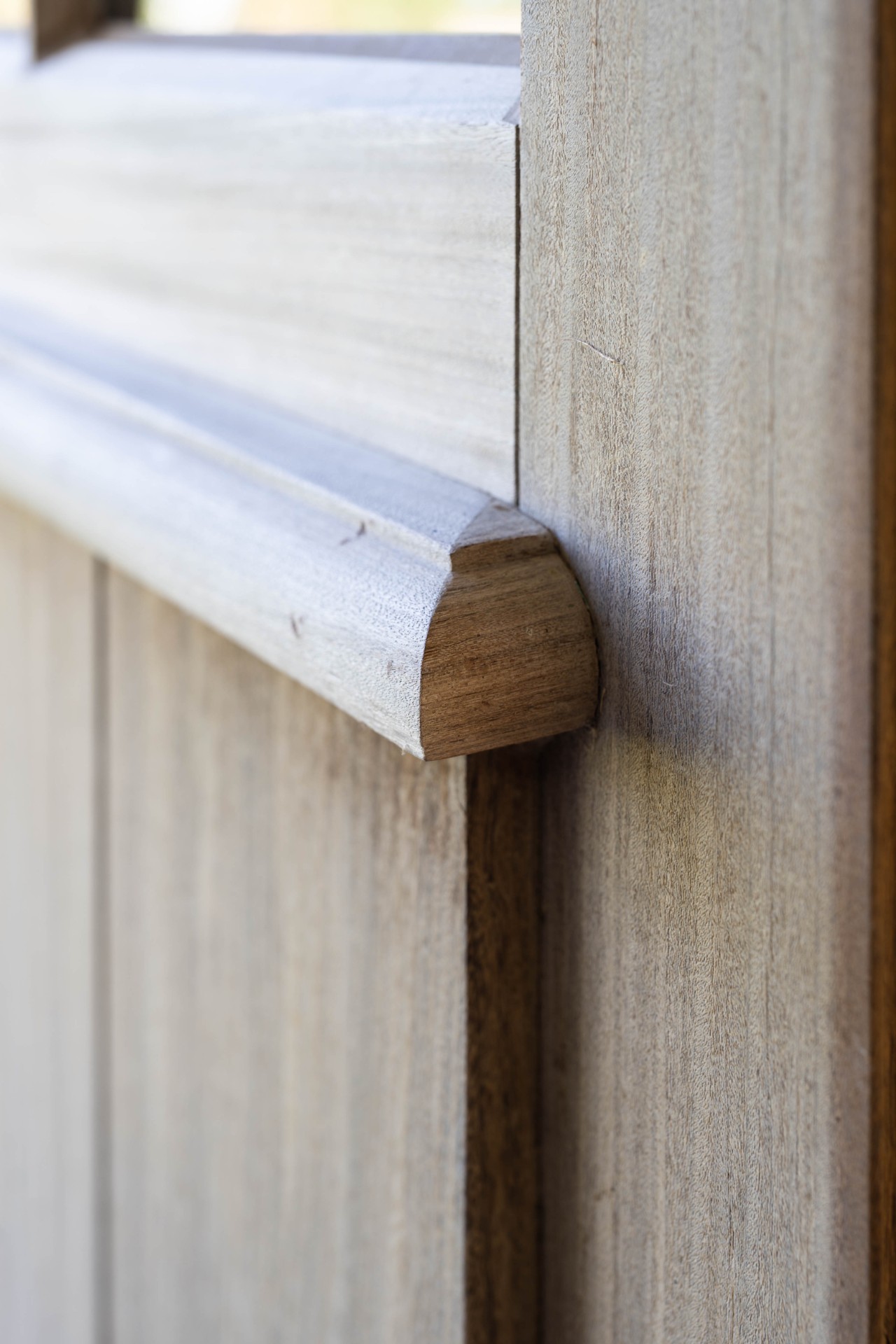
Close-ups focus on the meeting point between masonry and wood. A rounded timber profile appears along the edge, paired with a narrow joint line that follows the finishing approach across the openings. One detail reveals layered structure within a single assembly: a vertical post area, a lower sill zone, and adjacent masonry that sits within a continuous setup. On exposed surfaces, natural wood grain joinery is visible, with small variations that keep the frames from looking over-painted or overly uniform.
Alignment choices also show up here. Certain junctions reveal slightly lighter-looking surrounds, which makes the layers feel built up as part of the same carpentry line rather than fitted as separate components after the fact. The result is subtle but practical: the edges stay readable, even where materials meet.
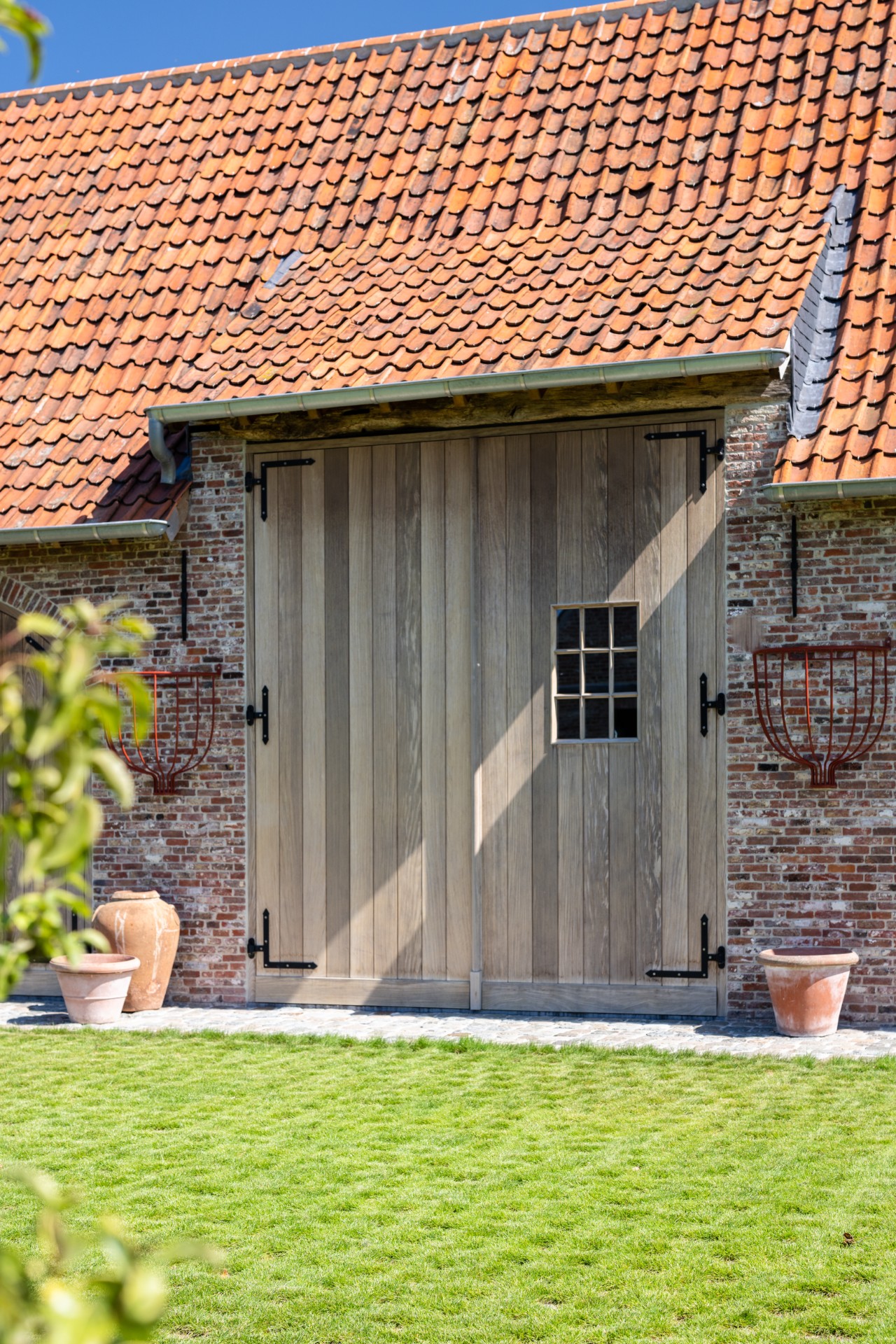
Double wooden farm gates with vertical battens and solid hardware
The double wooden farm gates are not treated as a background feature. Each leaf reads as a constructed panel, anchored by the vertical battens that give the doors their strong direction. The natural timber’s grain variation spreads across the larger surfaces, keeping the dark tone from becoming flat. Because the gate leaves are massive and clearly built, the garden entry feels anchored rather than purely ornamental.
Hardware plays its role in the credibility of the carpentry. Hinges and visible fixings appear in proportion to the gate leaves, and they remain legible even in wider photographs that include the lawn and the path leading toward the entry. In some views the gates line up beside brickwork, while in others a brick arch element sits above the entrance area. The contrast between dark timber and light plaster, and between warm brick and the gate’s outline, helps the threshold stay clear.
A brick arch wooden gate detail that softens the entry
Where a brick arch is present, it acts like a second boundary around the timber opening. The rectangular rhythm created by the two gate leaves becomes softer under the curve of the arch, turning the entry into a more sculpted passage. Inside the brick setting, the timber fits with intent, so the gate frame remains distinct from the masonry edge.
In close-ups, the hierarchy of layers is visible: first the arch shape, then the reveal line of the opening, and finally the gate’s own battens and hardware. In other exterior images where brickwork appears more simply, the effect remains in the same logic. The darker wood finish still defines the opening, while brick introduces a firmer line above and around it. The threshold becomes easier to follow visually because you can track the masonry line and then read the gate frame within it.
Inside the same window logic carries through
Interior photographs mirror the exterior approach, especially around openings. Dark wood joinery reappears around window areas, while deep wood-finished edges show the wall thickness. Beige or taupe curtains hang in front of the glazing and still leave the frame outline visible. That matters for daylight: brightness follows the reveal angles, and the slim muntins pattern forms a finer grid of light instead of a broad surface glow.
Some scenes also include timber ceiling elements above the window line. Those beams add a horizontal layer to the room’s structure. When windows sit alongside those beams, the joinery doesn’t rely on matching colors alone; the material rhythm connects what you see from outside with what you experience indoors.
Daylight gradients: muntins and reveal depth
The most persuasive interior detail is how daylight interacts with deep reveals. Because the reveal surfaces are finished in wood, the light picks up the timber’s tone before it reaches the glass, sharpening the window edge. Across viewpoints, the same opening can appear slightly different in brightness simply because the angled surfaces change what they catch. The slim muntins window pattern strengthens the effect, breaking the glass into narrow verticals so shadows and highlights distribute in thin bands.
Seen together, double wooden farm gates remain the clearest arrival marker. Dark wood window and wood door and window frames keep a consistent rhythm across the home, and deep wood-finished reveals carry that construction story indoors. Where brick arch detailing appears, it adds structure above the opening without hiding the timber. Across exterior and interior scenes, legible joints, shaped profiles, and natural wood grain joinery repeat with purpose, making the rural look easy to read through every set of images.
Source credit: Houten hardhout Afrormosia class I hardwood for windows, doors, and gates. Photography: Sten Van Slycke. Double wooden farm gates remains connected to the layout, materials and daily use of the home.
Want to see more of Pouleyn? View the page of Pouleyn for even more great projects and company information.


NEW 2026 Jubileum Edition The Best Interior Designers Benelux
Order Now €125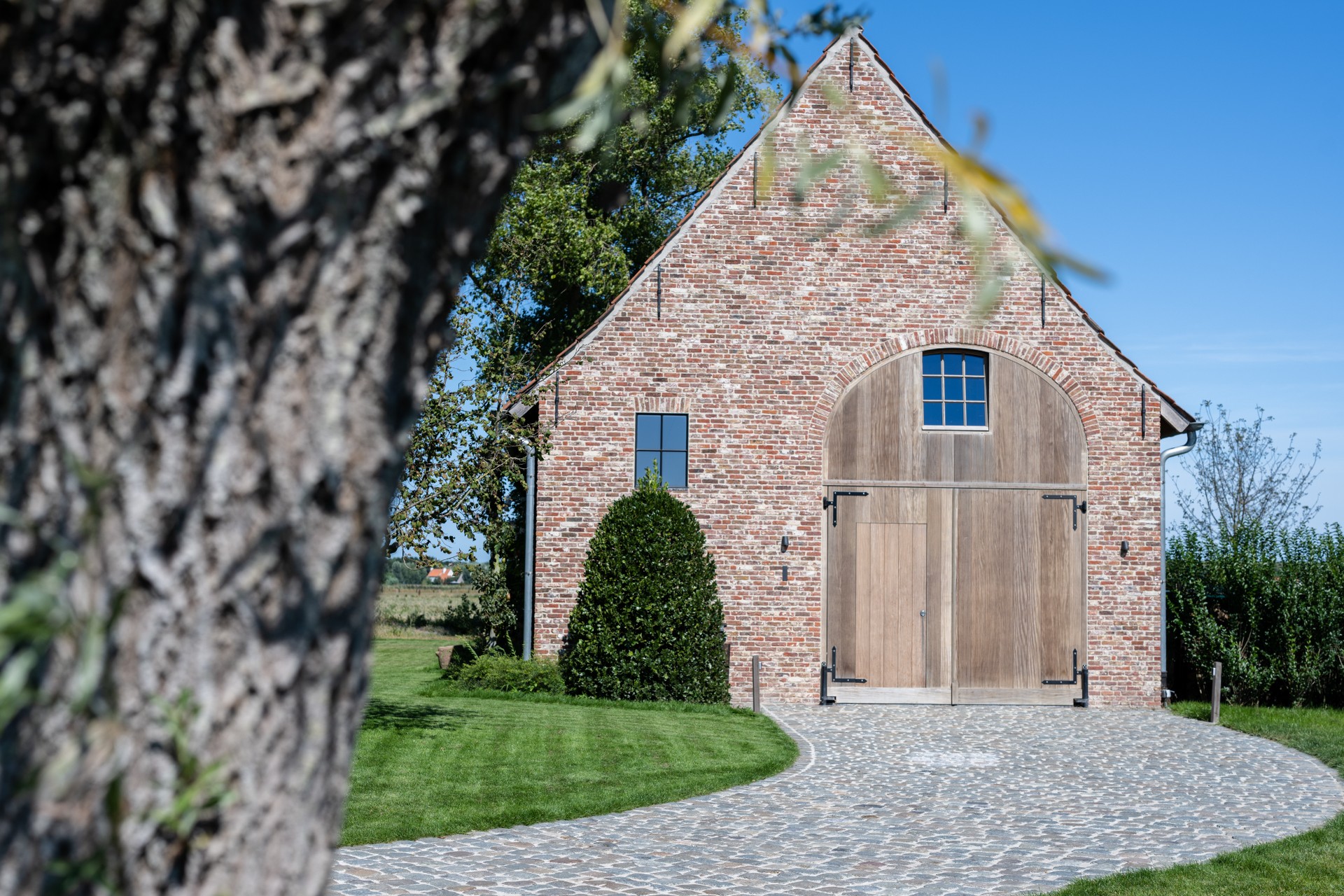
NEW 2026 Jubileum Edition The Best Interior Designers Benelux
Order Now €125