








Home renovation with warm minimal interior and natural stone details
Light lands first on the tall windows, then on the wood grain of the cabinet wall. That sequence sets the tone for this home renovation: a characterful villa-like house reworked with a warm minimal interior, while its older elements remain visible in the structure and details. The rooms feel calm, but not blank. Stone, wood, plaster, and glass each have a clear role, and the route through the house keeps revealing new surfaces and soft curves.
Home renovation as a spatial starting point
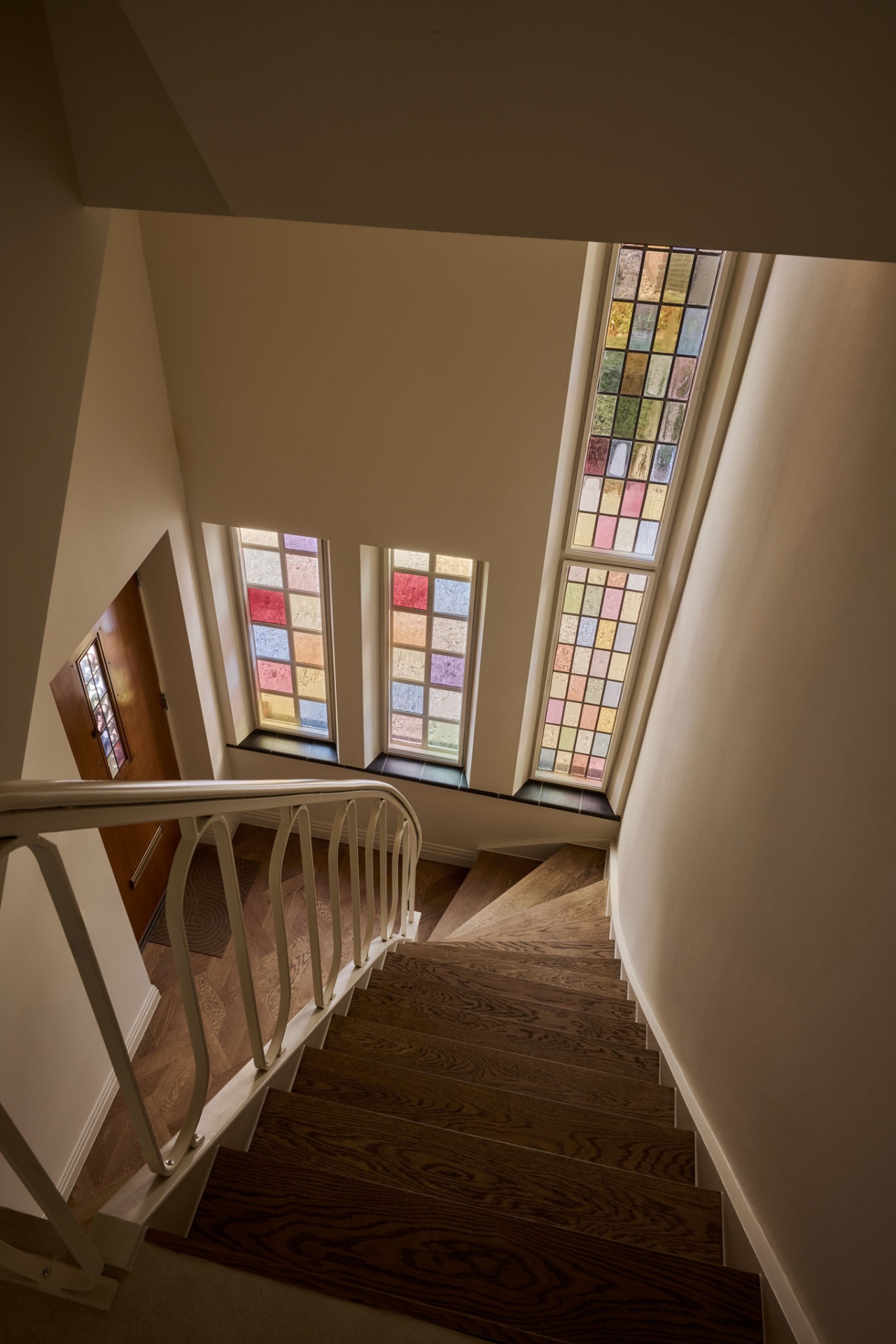
The starting point was a home with authentic elements and a strong spatial presence. Rather than stripping that away, the interior was shaped around what was already there. High windows pull daylight deep into the rooms, while neutral walls and pale floors give the larger spaces room to breathe. The result is not about decoration layered on top; it is about letting the original structure and the newer finishes speak to each other through proportion, light, and material.
Working with an architect, the project was designed, executed, and guided through the build from start to finish. That scope shows in the way the rooms connect. Open areas run into quieter niches, and the material palette stays restrained enough for the joinery, stonework, and wall and floor finishes to stand out. The house keeps its character, but the interior now reads as a considered whole rather than a series of separate interventions.
A warm minimal interior built from wood, stone, and light
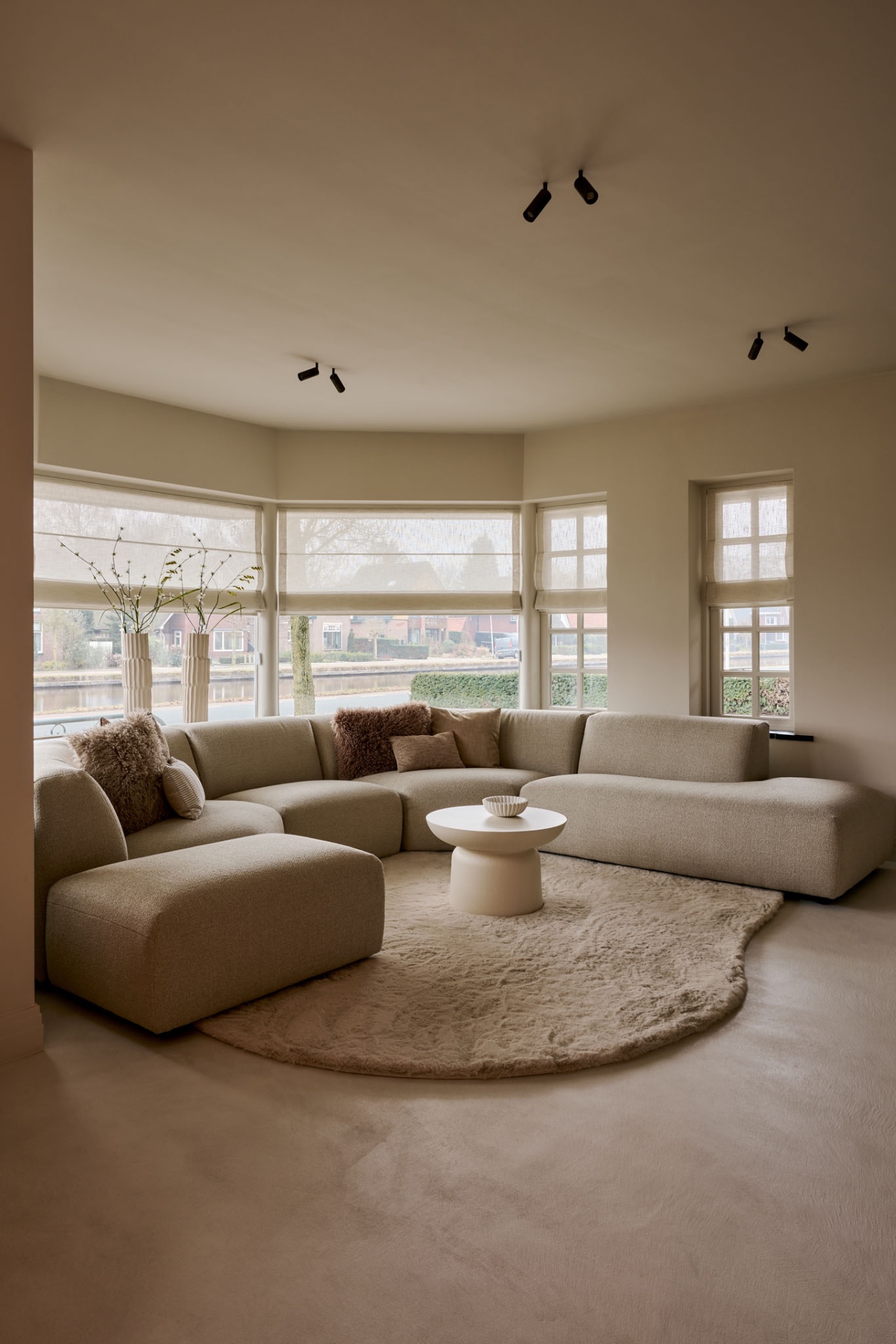
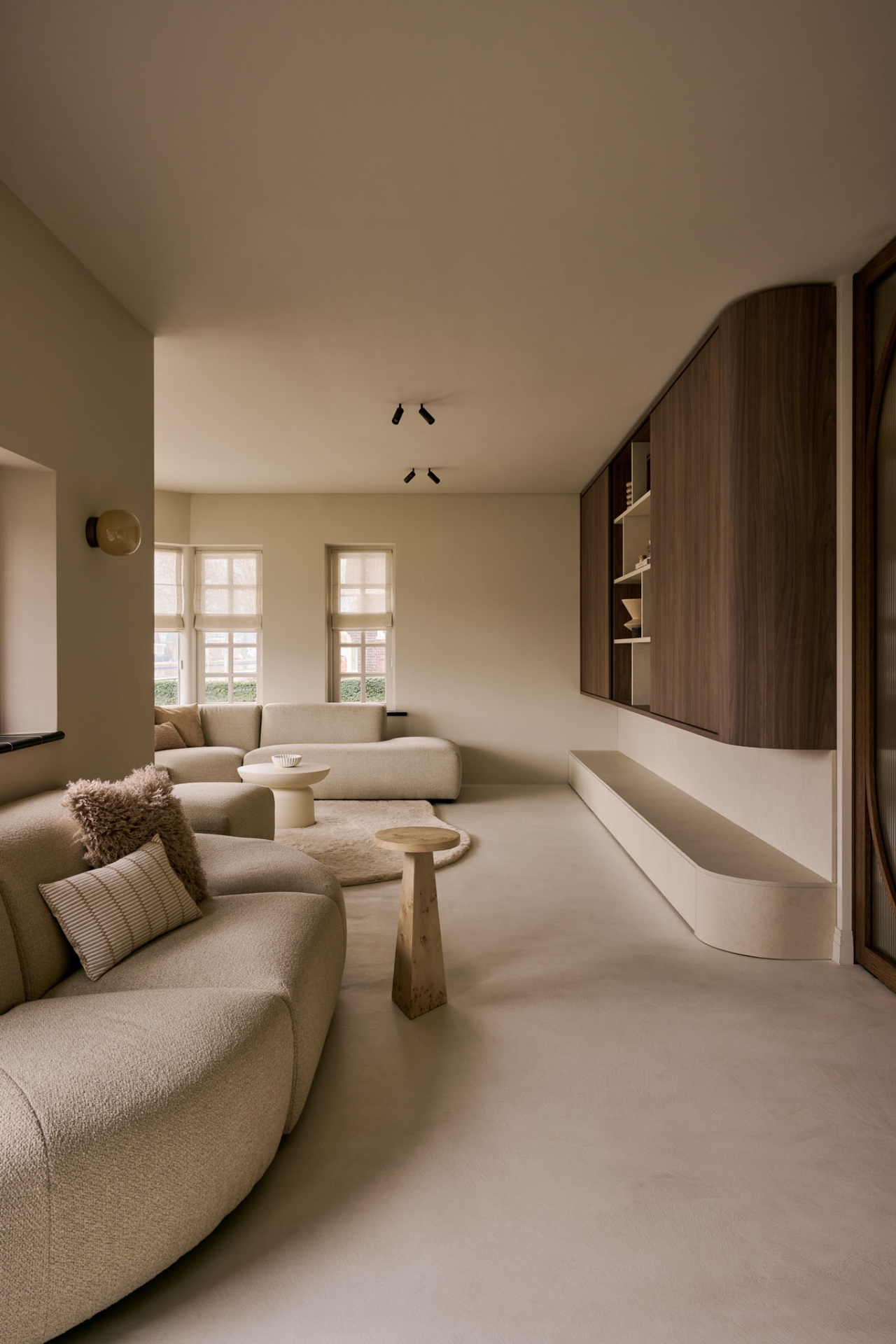
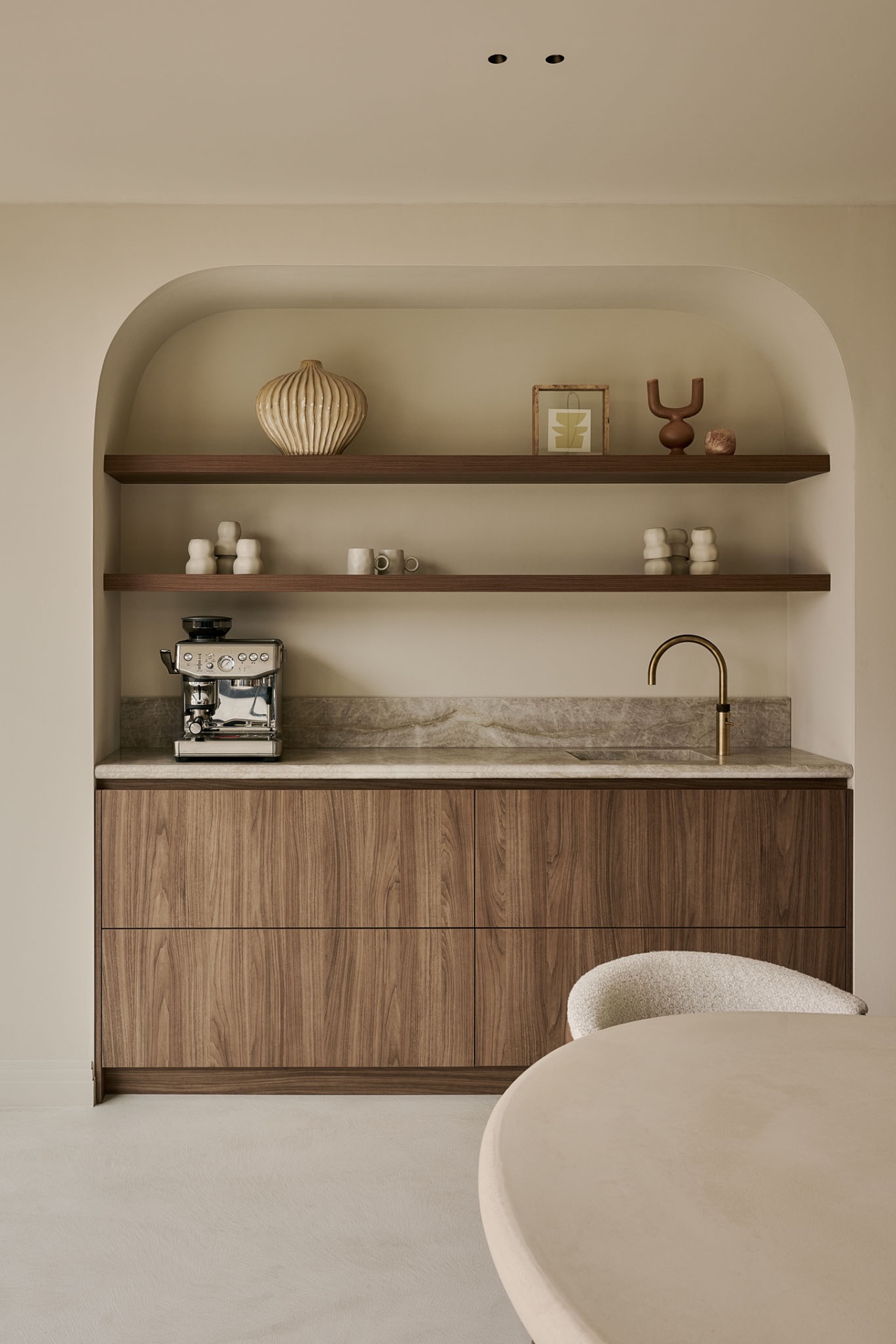
The warm minimal interior comes through in the details rather than in any grand gesture. Wood-fronted cabinets soften the stronger lines of the architecture. Rail spots and other integrated lighting keep ceilings visually quiet while directing attention to the surfaces below. Across the living areas, a neutral base allows the built-in pieces to carry more weight, especially where recessed shelving and cabinetry create depth in the walls without breaking the room open with clutter.
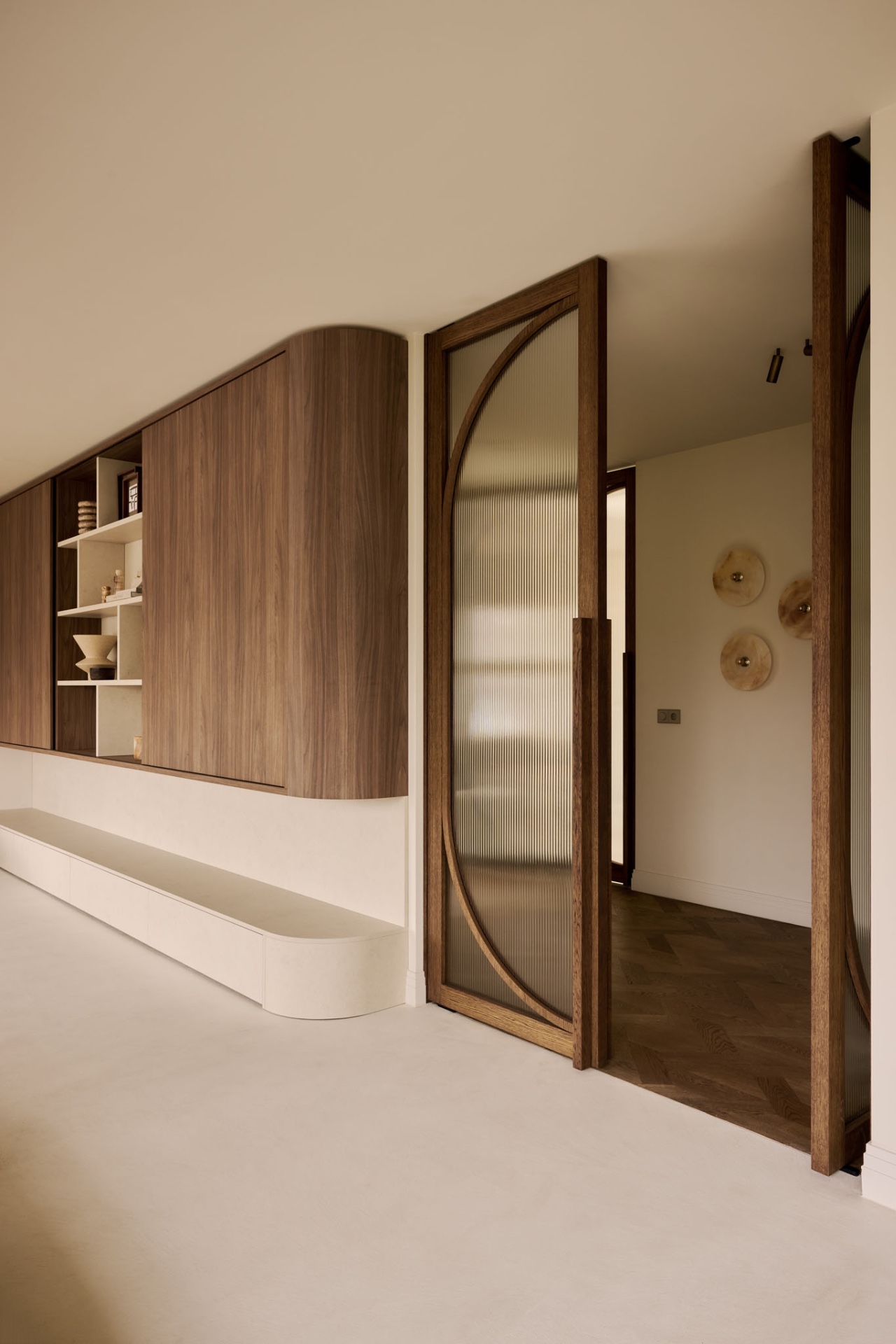
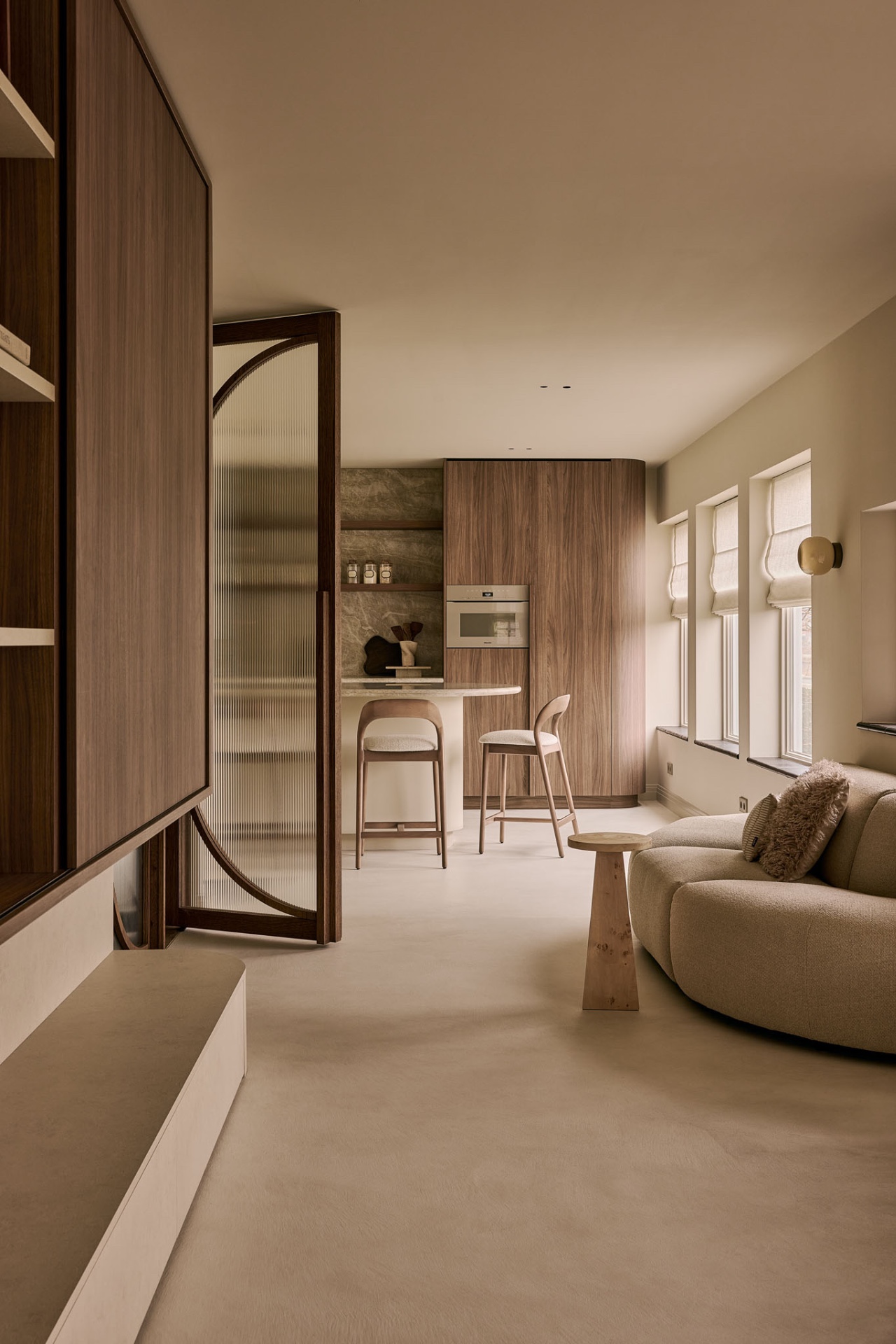
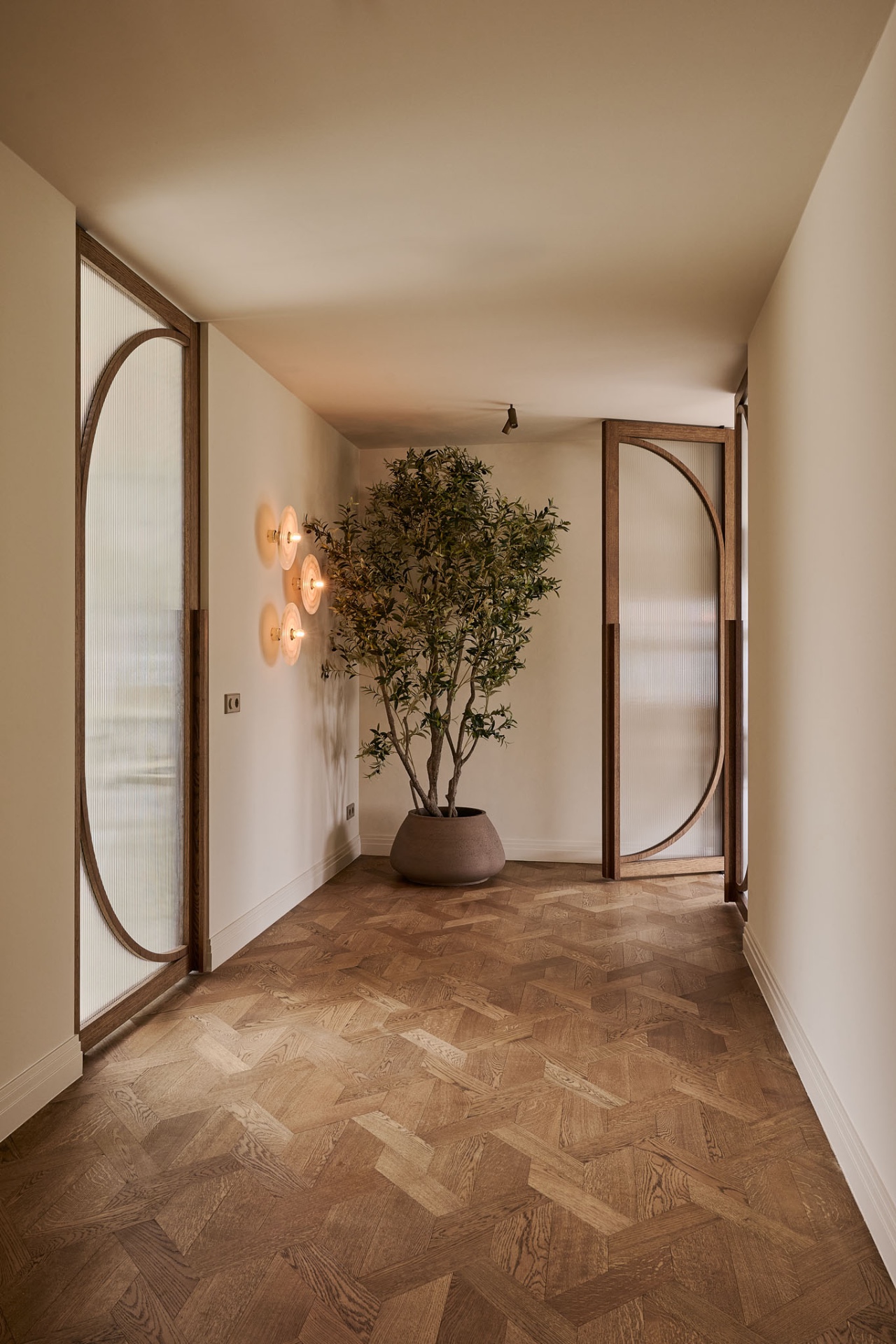
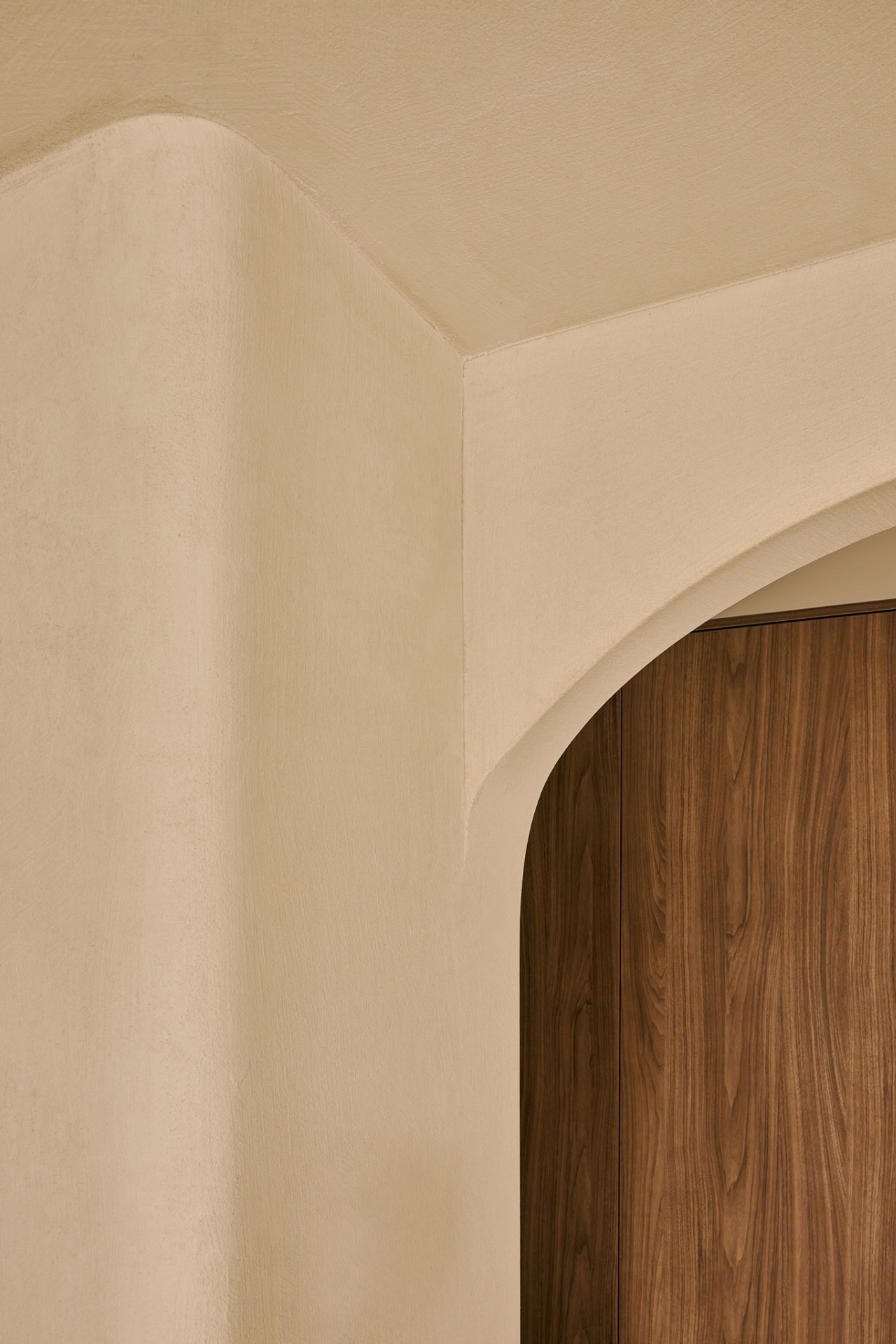
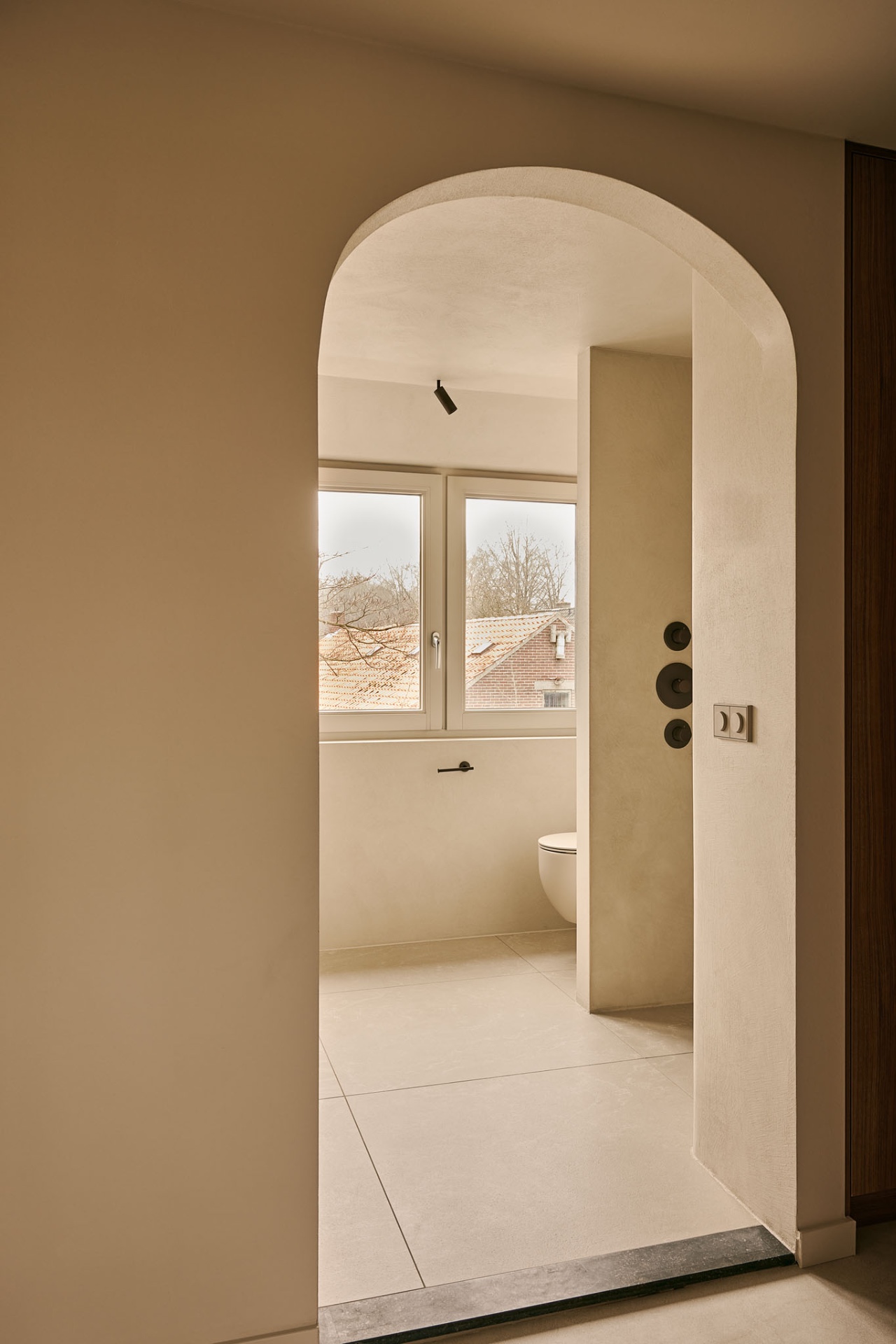
Curves interrupt the straight lines in a few precise places. A half-round door detail appears as a deliberate transition, and the rounded form is echoed in tabletop edges and mirror shapes elsewhere in the house. These softer moments matter because they stop the interior from becoming too rigid. In a home renovation like this, the shift from straight to curved is enough to change how a room feels as you move through it.
Custom built-in cabinet wall in the living spaces
The custom built-in cabinet wall is one of the clearest anchors in the living areas. Its wood finish gives the room a warmer register, but the layout stays disciplined: open niches, closed storage, and clean edges keep the wall from reading as a heavy block. In the images, it sits beside low seating and a round coffee table, which helps the built-in element feel part of daily use rather than a display piece. The cabinetry also makes use of height, drawing the eye upward toward the ceiling lights and the tall windows nearby.
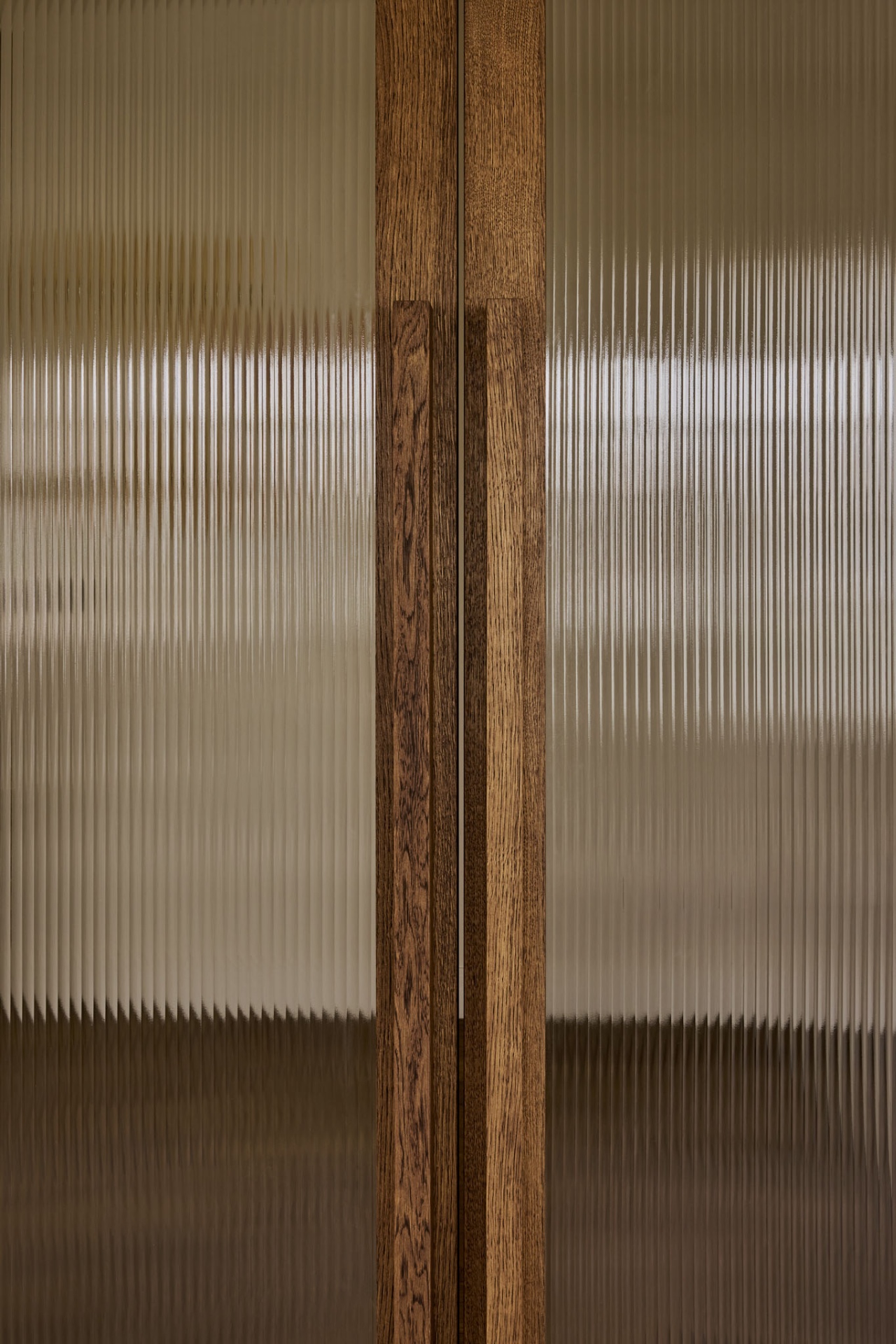
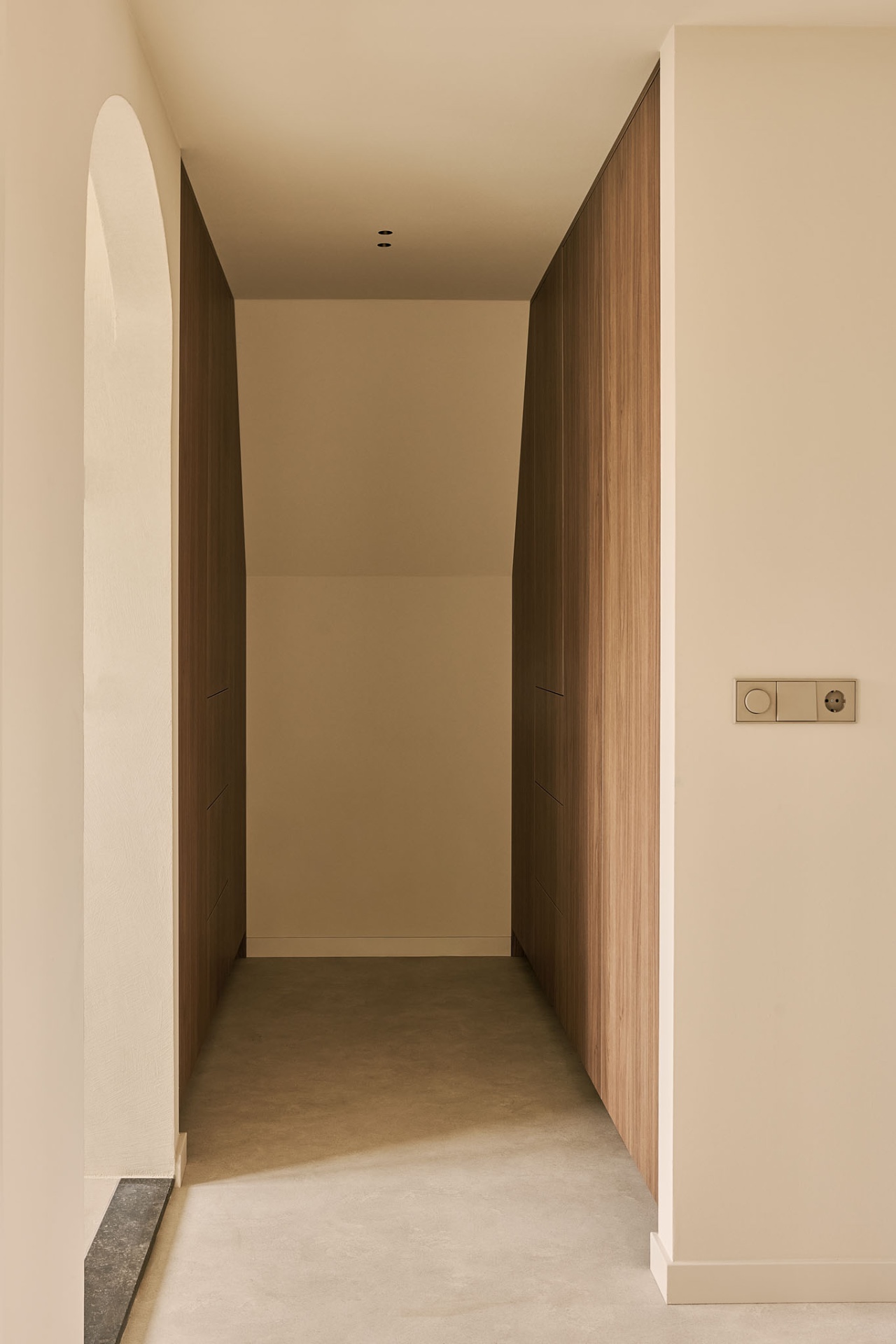
Elsewhere, a ribbed wall surface and narrow vertical timber accents introduce texture without changing the calm palette. These surfaces are not loud; they are tactile. They catch daylight differently from the smoother painted walls and make the passage between rooms more legible. In a project focused on home renovation, those transitions matter just as much as the larger plans, because they tell you where one part of the house hands over to another.
The open-plan kitchen with island as the working center
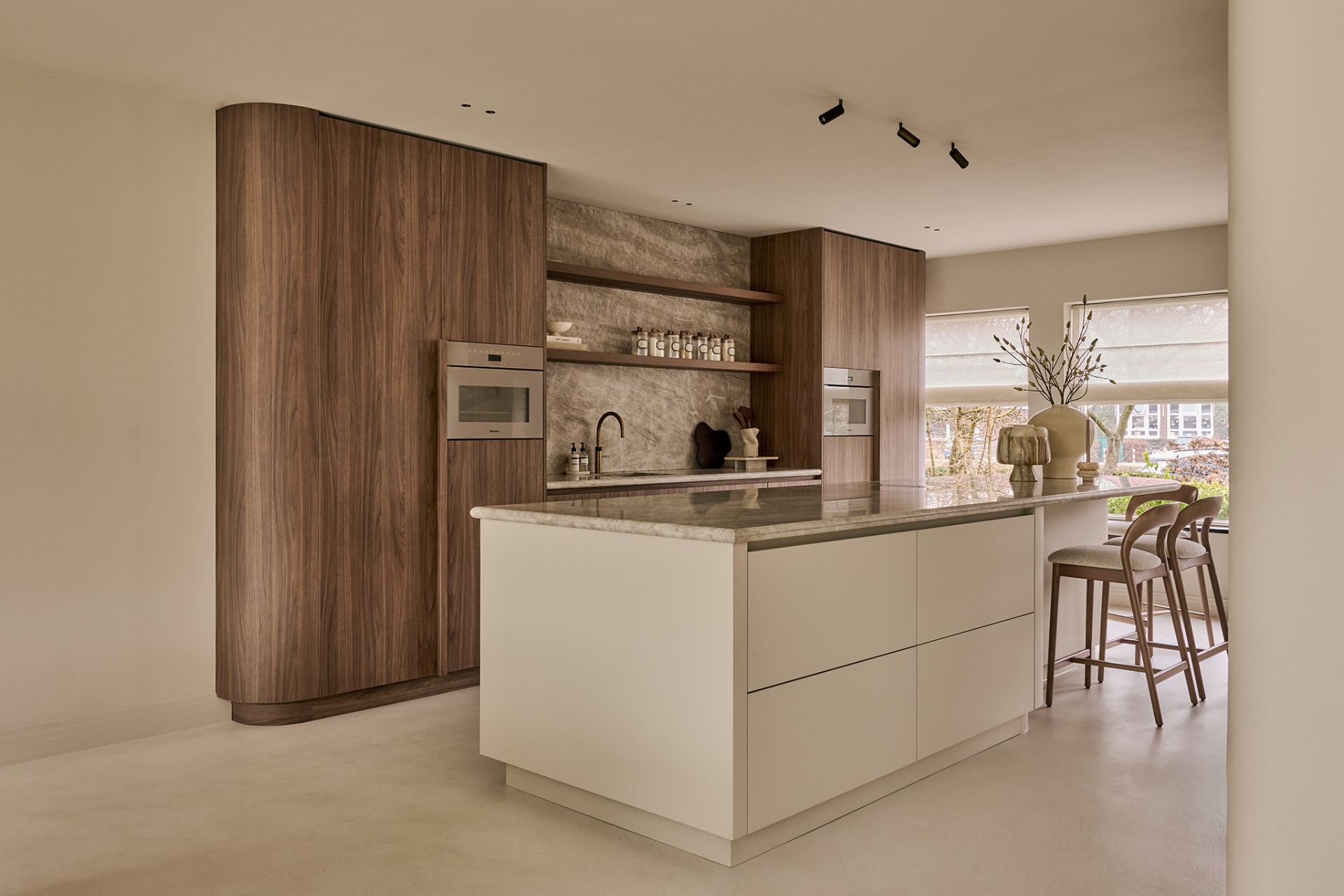
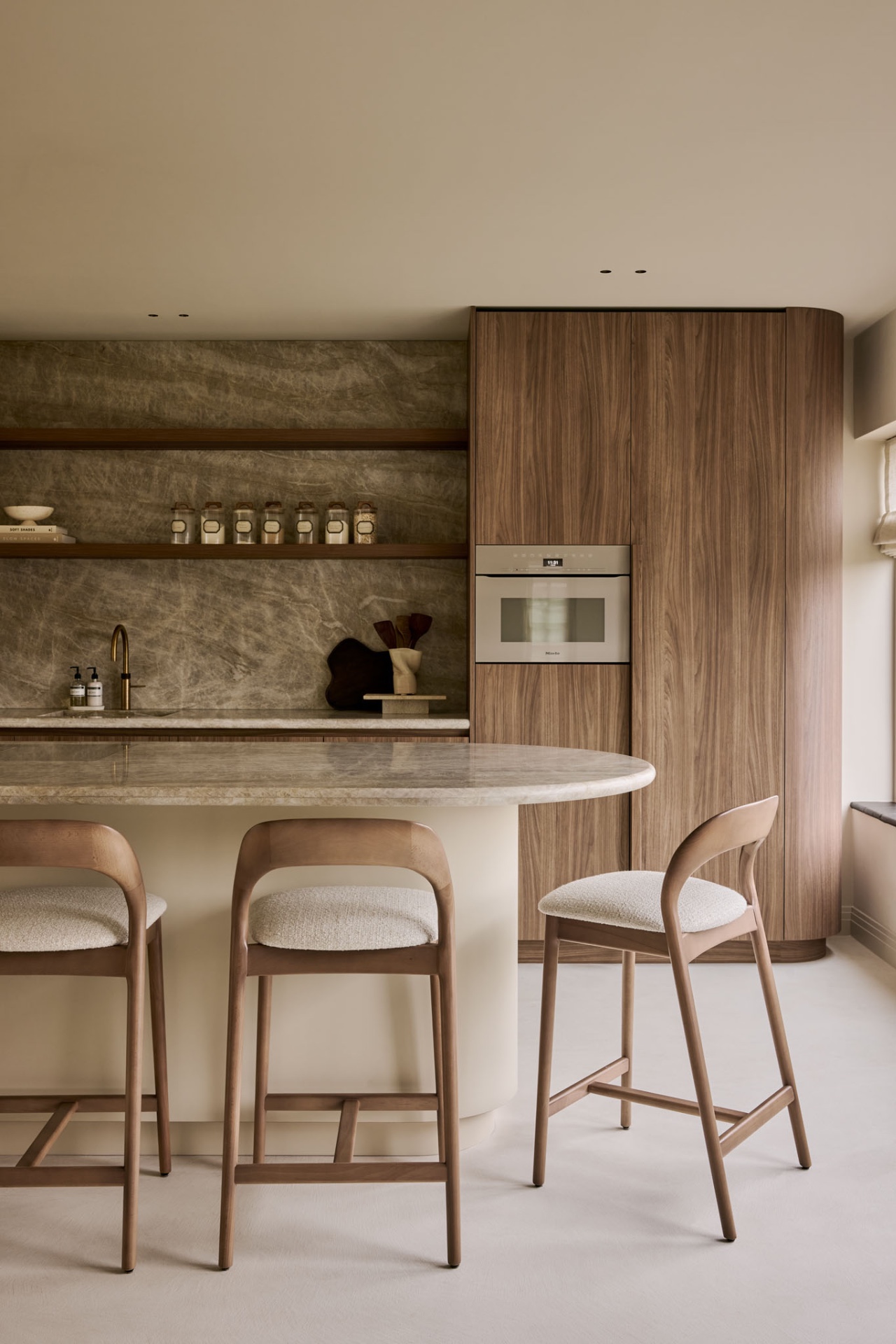
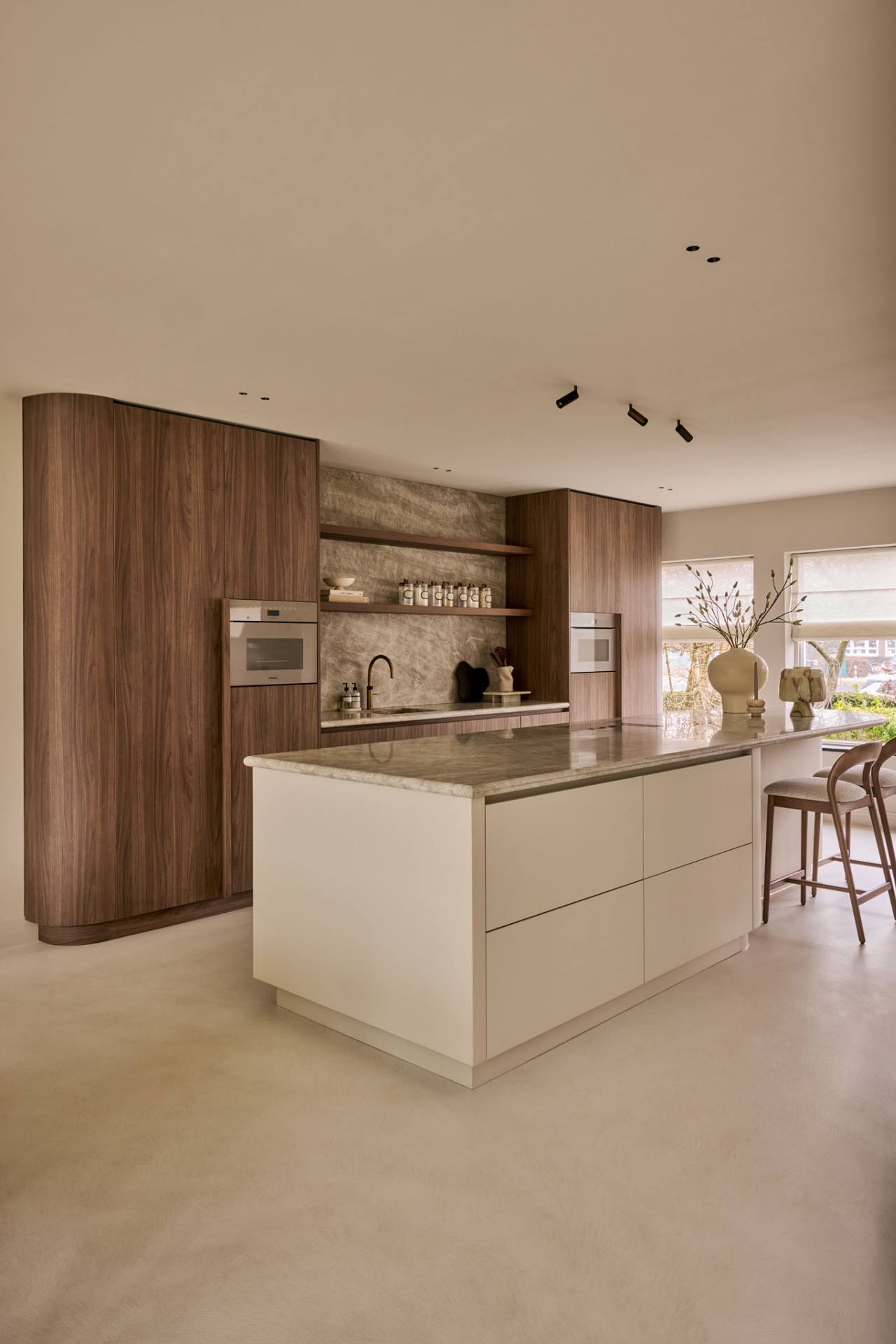
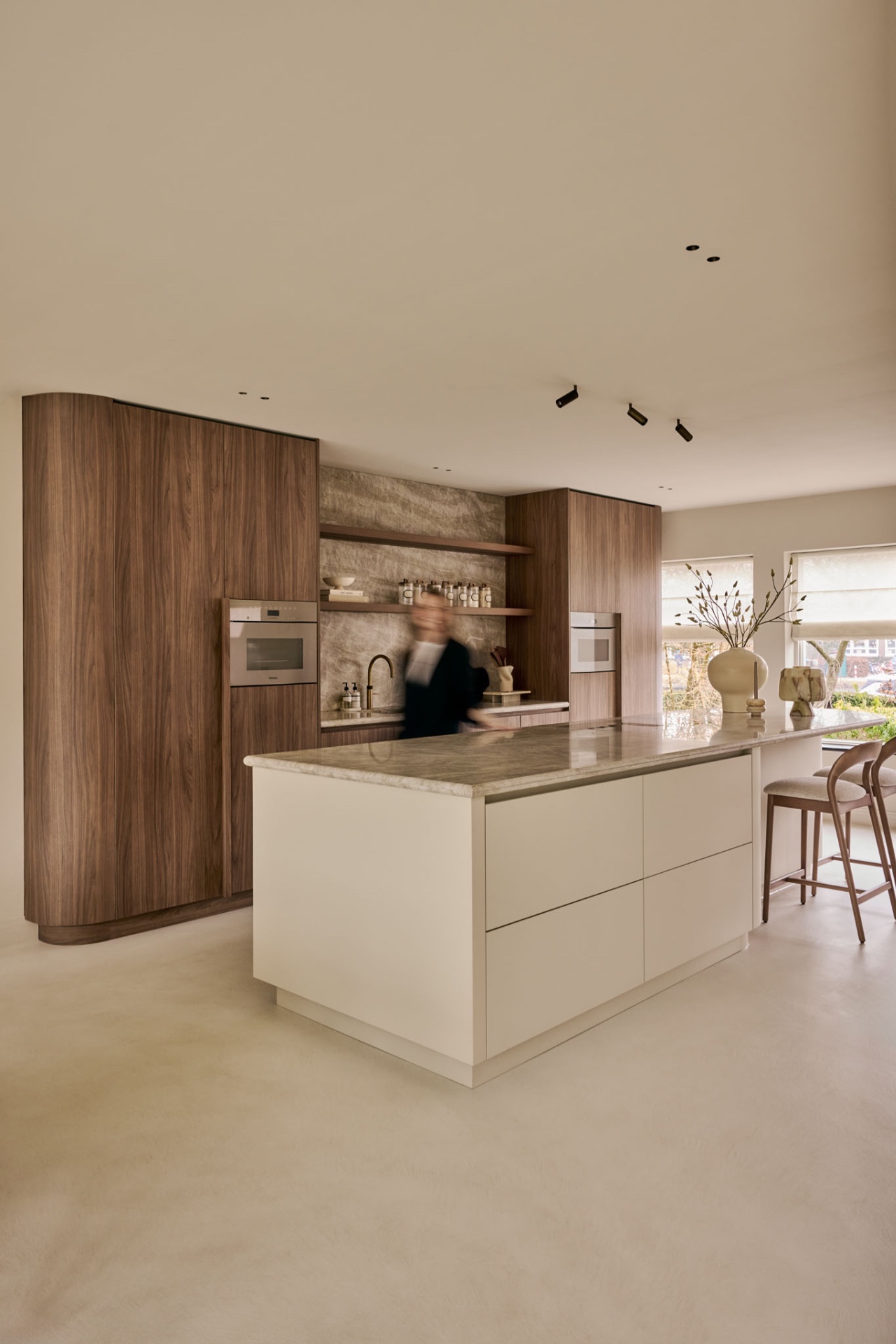
The kitchen is arranged around an open-plan kitchen with island, and the island does much of the visual work. It combines a pale base with a natural stone kitchen island top that carries visible movement in the surface. The stone appears again at the backsplash and on adjacent work zones, tying the preparation area together without making it feel busy. Tall wood cabinets frame the composition and hold the appliances in a vertical rhythm that keeps the wall steady.
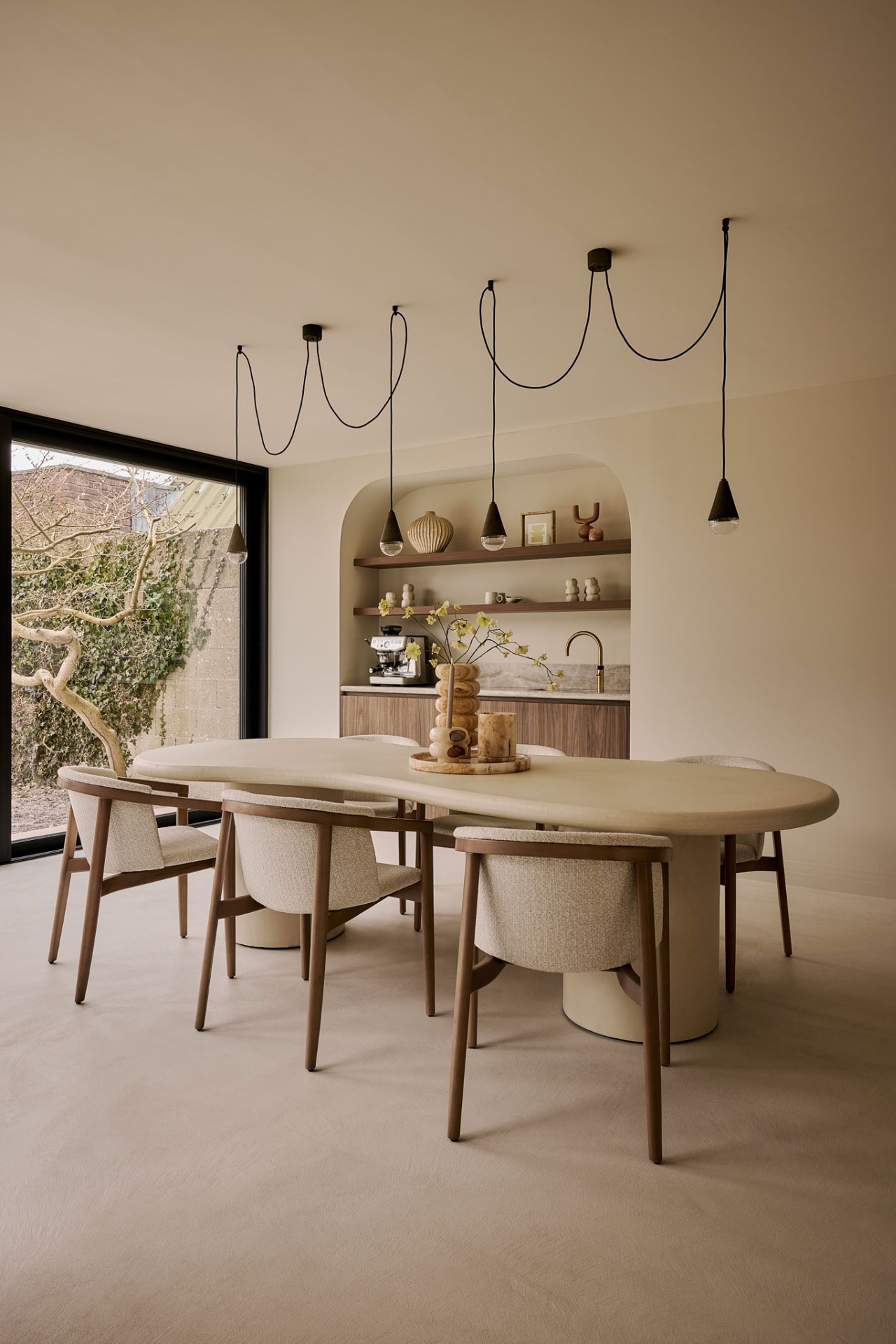
What stands out is how the kitchen handles contrast. The lighter lower units, the wood-toned tall fronts, and the stone surfaces each hold their own, yet nothing shouts for attention. The lighting above the island is direct and practical, which suits the working zone. In the dining views, the kitchen opens toward a round table and a large window, so the room reads as a place for movement, preparation, and daily gathering in one continuous line. Home renovation remains connected to the layout, materials and daily use of the home.
Natural stone kitchen details that carry through the room
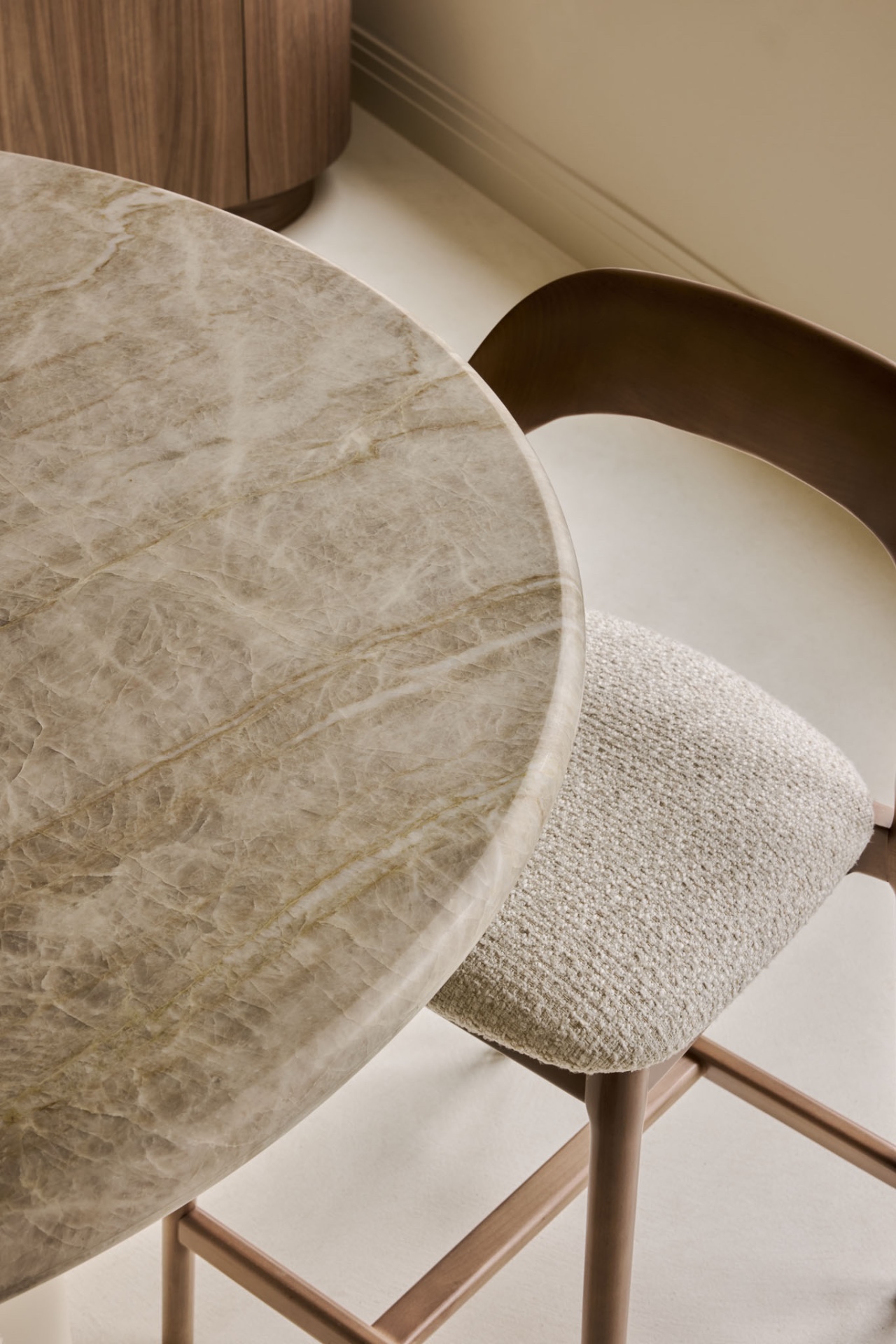
Several kitchen images show the same material from different angles, and that repetition gives the space clarity. The natural stone kitchen island has a rounded front edge in one view, and in another the stone backsplash sits behind the worktop as a strong horizontal plane. These stone elements are not decorative inserts; they define the counter line and give the room a firmer edge. Around them, the cabinetry remains visually quiet, which lets the stone do the speaking.
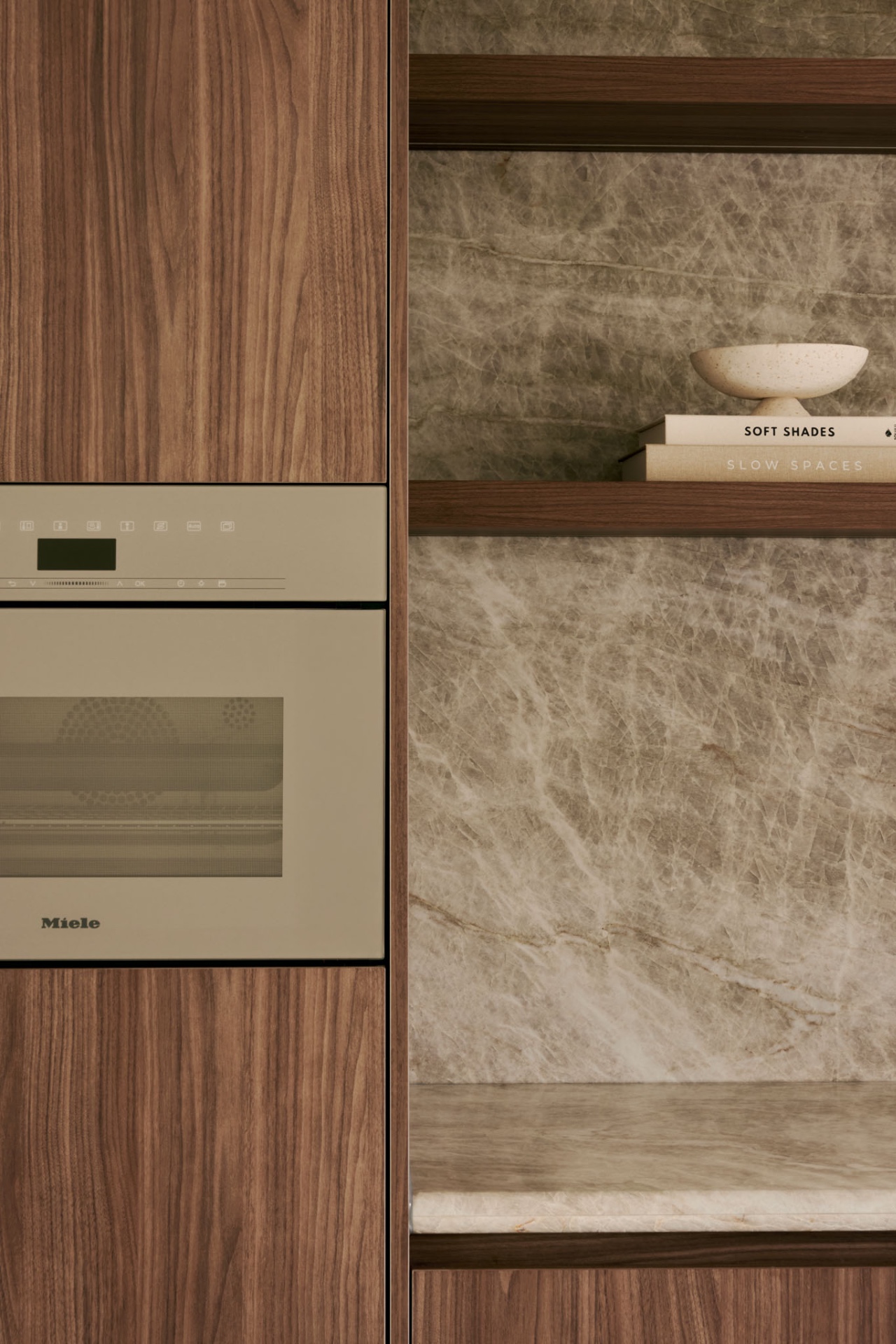
The joinery around the appliances is equally controlled. A stone panel meets wood framing in a crisp seam, and the built-in ovens sit flush with the tall units rather than breaking the wall apart. That restraint gives the kitchen its order. It is also where the home renovation feels most exact, because the room combines use, storage, and material contrast without losing the relaxed tone that runs through the rest of the house.
Hallway and transitions with a different pace underfoot
The entrance sequence changes pace with a herringbone hallway floor that immediately distinguishes the circulation zone from the larger living spaces. The pattern brings movement underfoot, but the colour stays quiet enough to sit with the neutral walls and timber details. A half-round door detail marks one of the transitions nearby, turning a simple passage into a more defined architectural moment. The combination keeps the hall from feeling like a connector only; it becomes part of the room story itself.
Across these transitions, the wall and floor finishes do more than provide a backdrop. They create pauses. A smooth plaster wall meets a ribbed surface. Wood touches stone. The floor pattern changes when the route narrows. Those shifts help the interior read in layers, which is especially effective in a large home where scale can otherwise flatten the experience. Here, each surface seems positioned to guide movement rather than simply contain it.
Bathroom spaces with stone, texture, and a double vanity
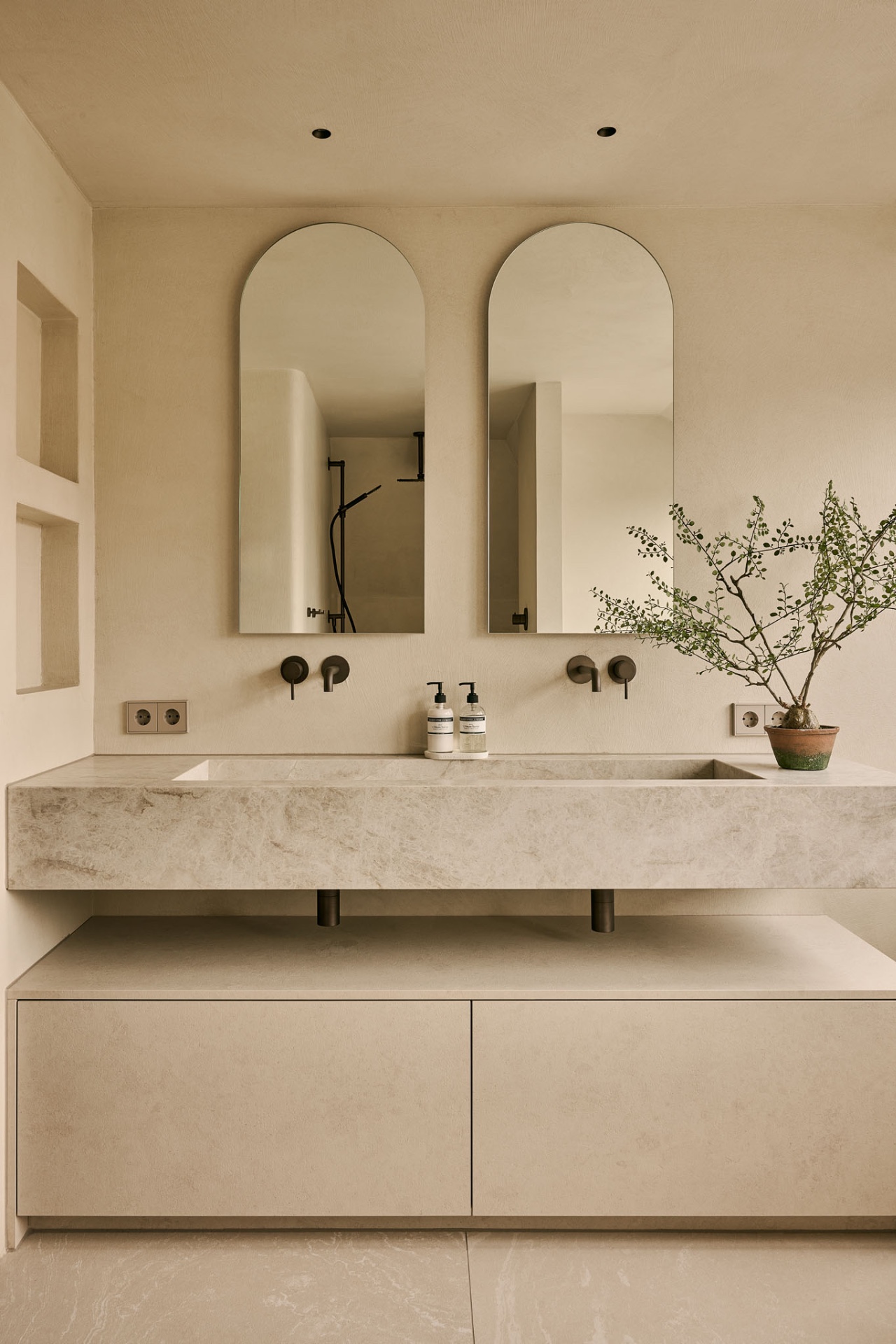
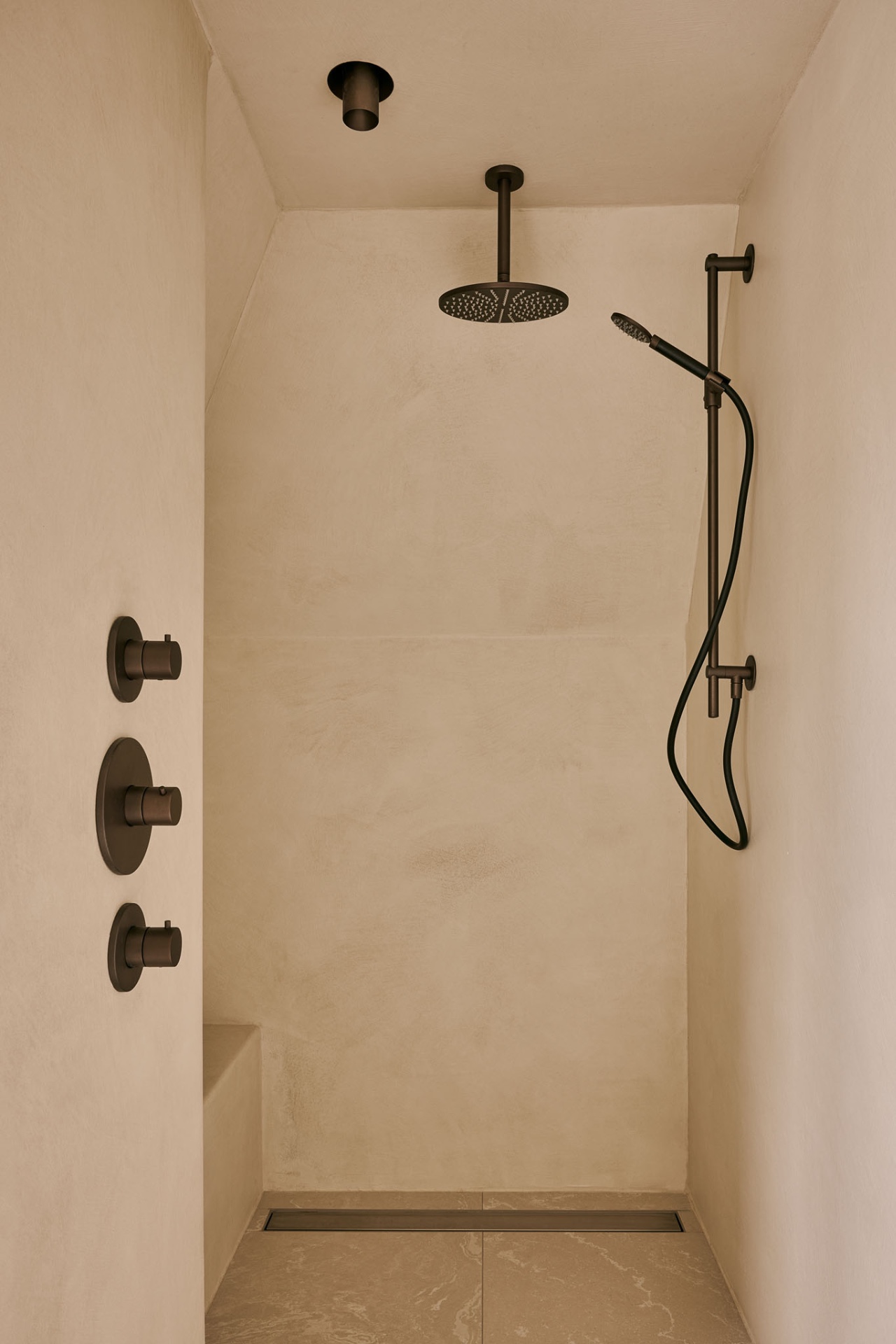
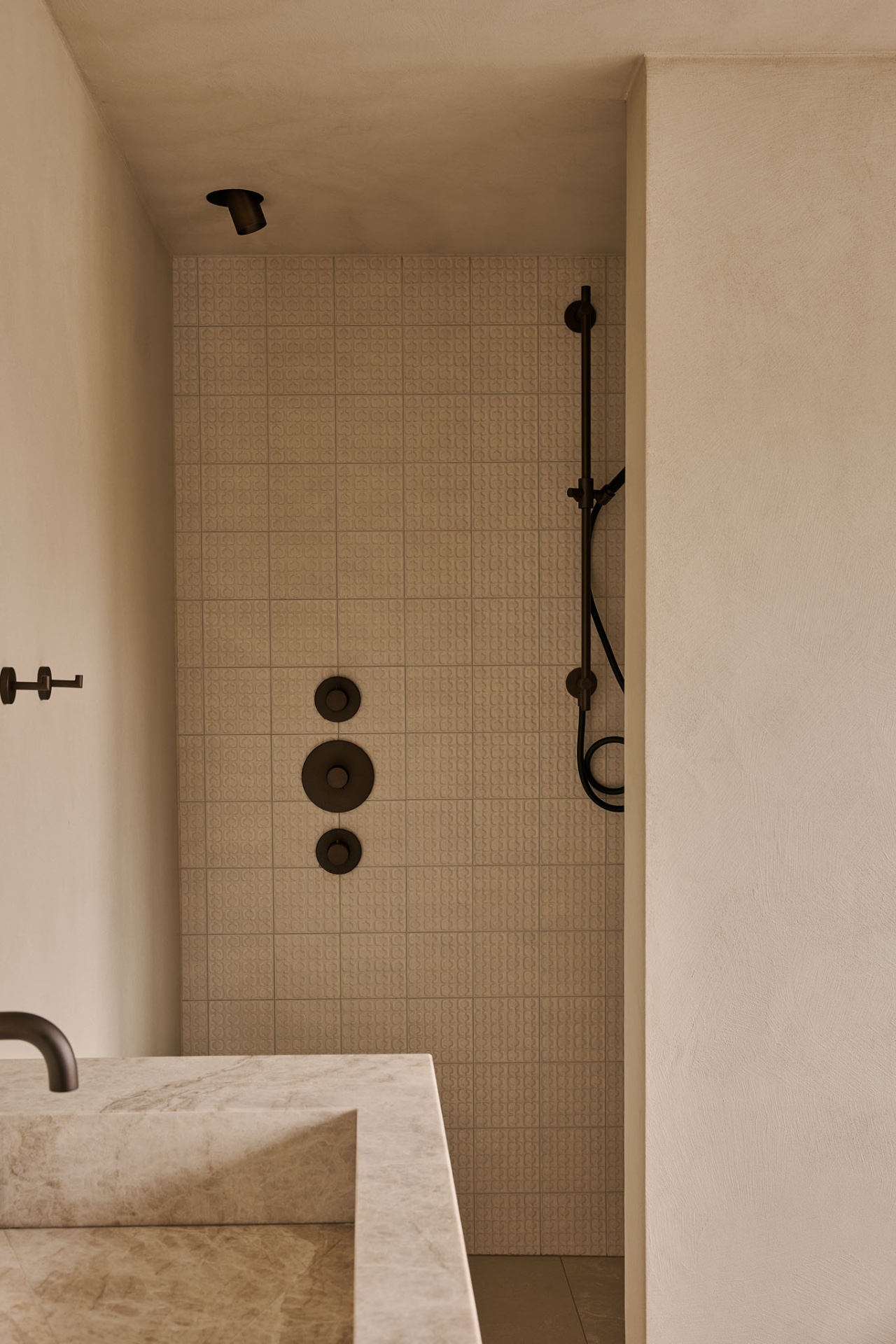
The bathroom continues the same material discipline, but with a sharper focus on wet-area finishes. A double vanity bathroom features a stone countertop with a clear edge and a pair of round mirrors above it, which softens the geometry without turning it ornamental. The cabinetry below stays low and streamlined, leaving the countertop and mirror line to carry the composition. In another room, the shower zone uses a natural stone shower finish with textured tilework and dark metal fittings that draw a darker line through the lighter enclosure.
These rooms rely on surface changes rather than on excess detail. One wall shows a more textured tile pattern, while the adjacent stone reads smoother and denser. That difference is enough to separate washing, storage, and circulation within the same room. Seen together, the bathroom and shower spaces show how a home renovation can keep the palette controlled while still giving each function its own material identity.
Built, finished, and styled as one sequence
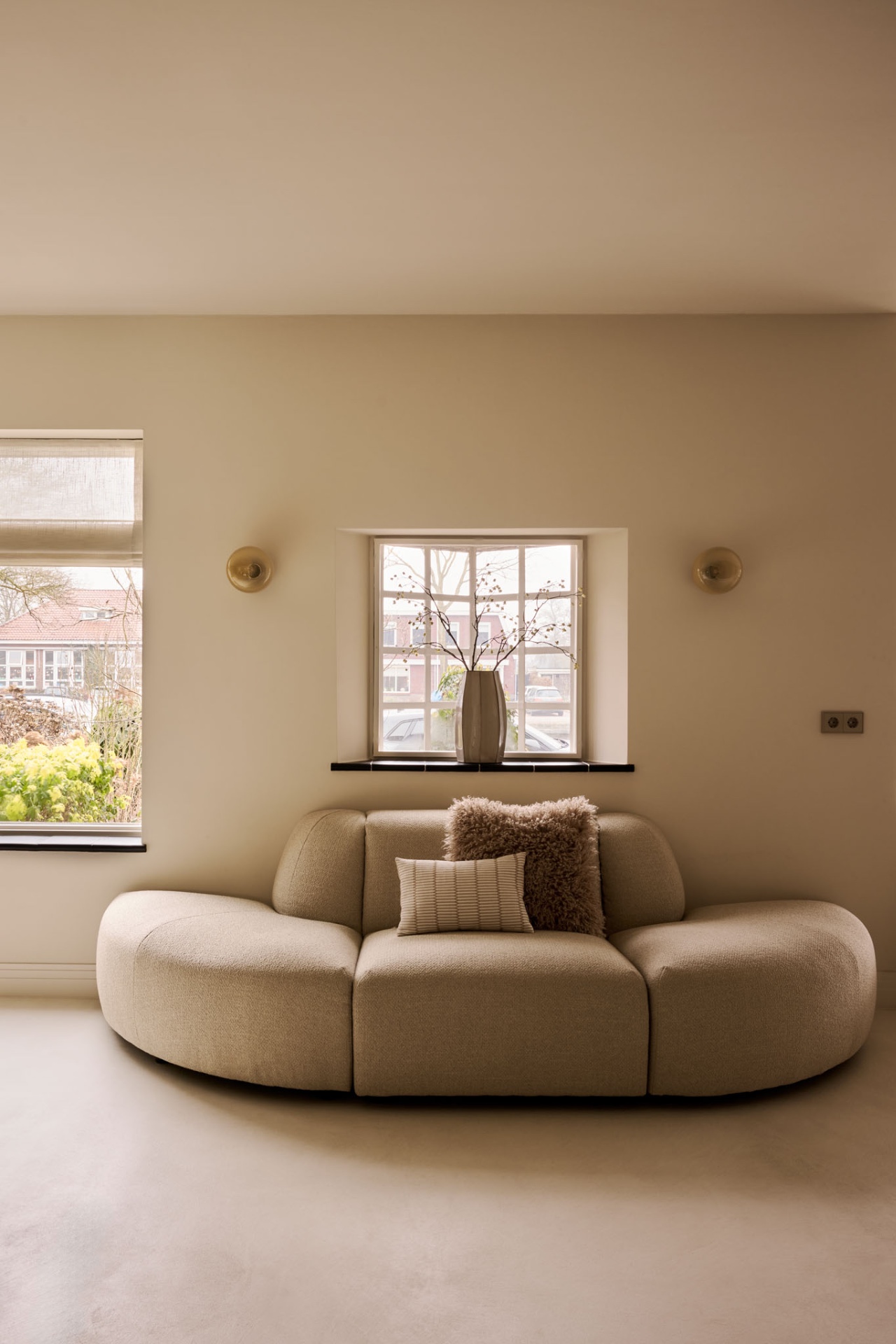
What the project shows most clearly is the degree to which the interiors were developed as one continuous process. Wall and floor finishes, fitted furniture, styling, and the kitchen all belong to the same visual language. The beige seating, round tables, wood grains, and stone surfaces are not treated as separate layers added at the end; they are part of the room composition from the start. That is why the house reads so steadily from one space to the next.
Integrated lighting/spotlights reinforce that reading. They keep the ceiling line clean while making the textures below more visible, especially on the built-in cabinet wall, the stone countertop, and the ribbed wall surface. In a home renovation with this much material restraint, those small decisions carry real weight. They give the rooms definition without crowding them, and they allow the architecture, the joinery, and the finishes to stay in view.
Want to see more of LDE Interiors? View the page of LDE Interiors for even more great projects and company information.