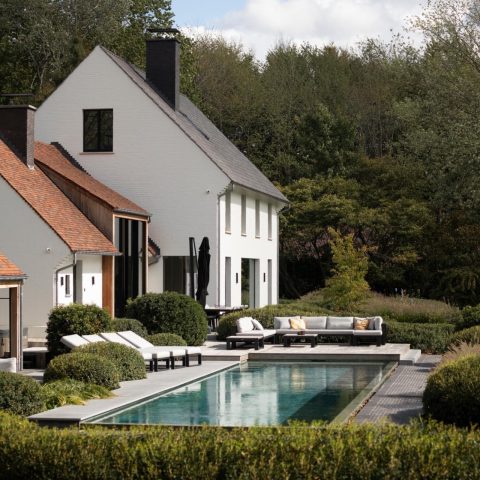









Villa with lime plaster and microtopping finishes
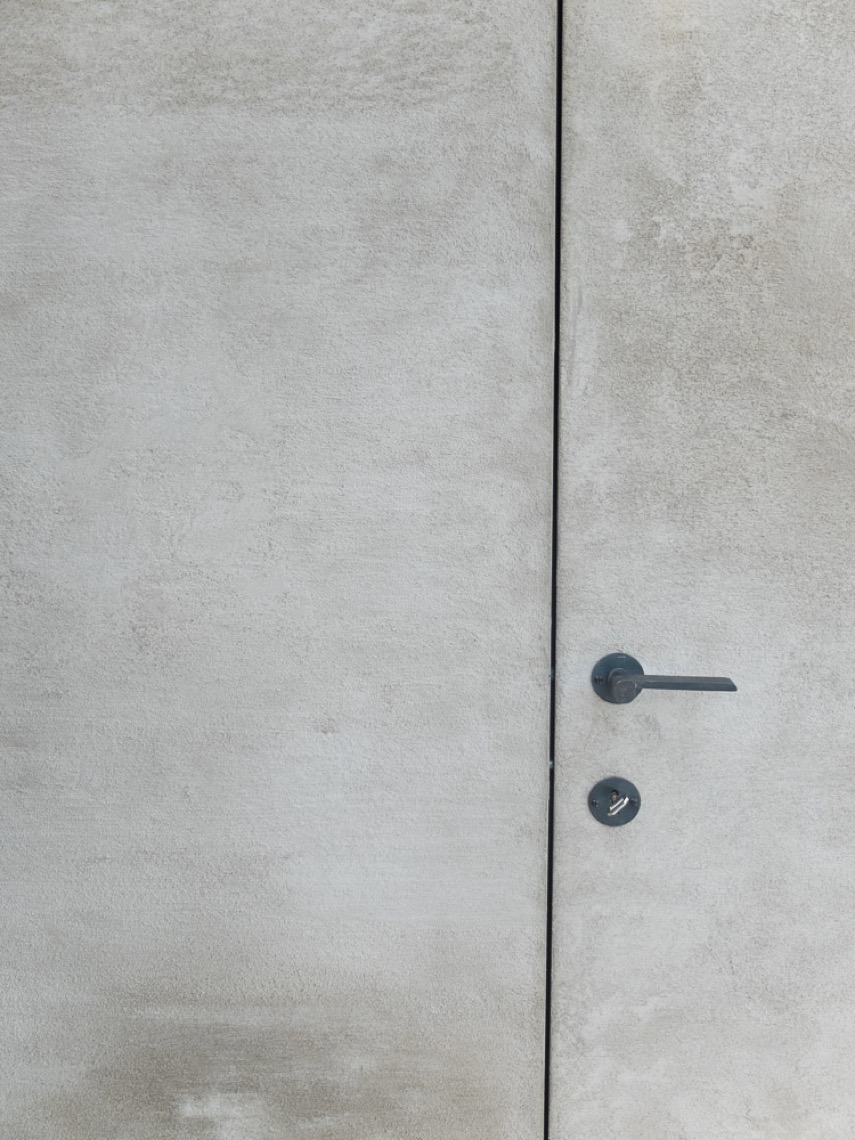
Lime plaster microtopping villa shapes the way the rooms are organized and described. Clouded lime paint sets the tone before the furniture appears. Across the villa, it is layered with refined lime plaster, so the walls hold a soft depth rather than a flat coat of color. That continuous wall finish runs through rooms with large openings, black metal frames and pale curtains, keeping the eye on surfaces, light and the way each space meets the next. The material palette stays restrained, but it is never blank.
Lime plaster microtopping villa as a spatial starting point
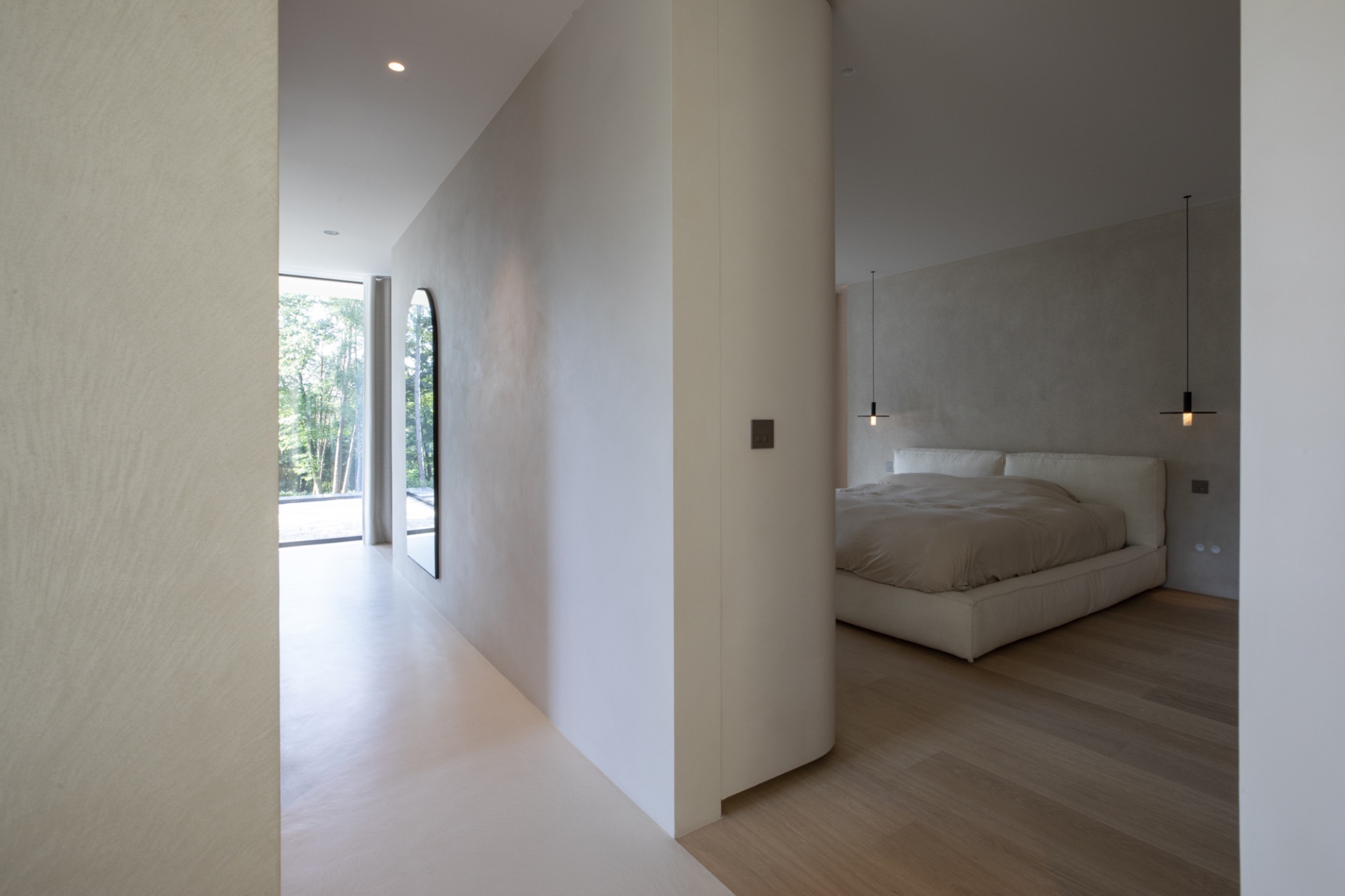
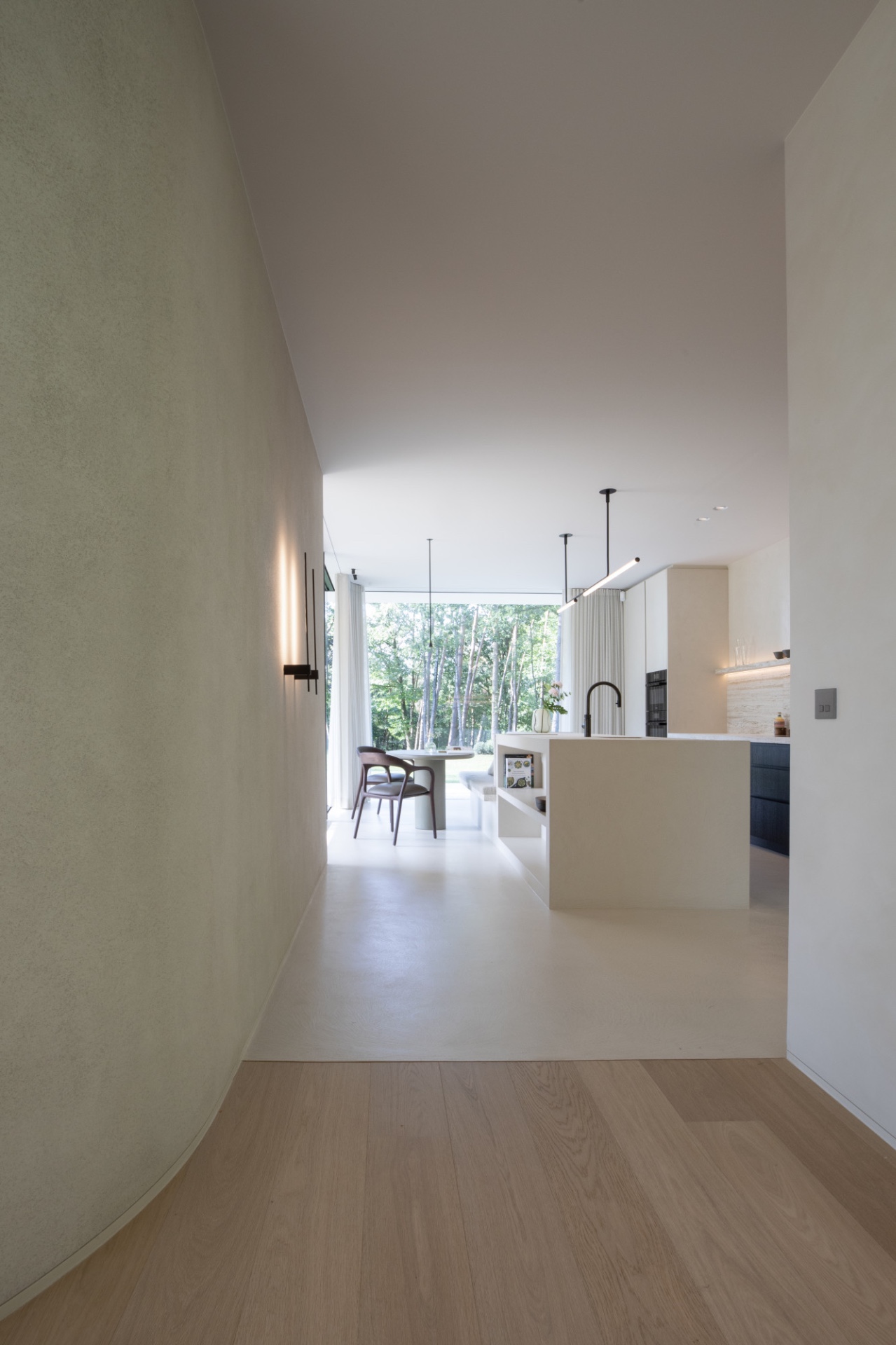
The first impression comes from the walls themselves. Clouded lime paint and refined lime plaster were used throughout the house to build a matte lime finish with a slightly muted, tactile look. The effect is strongest where daylight grazes the surface and picks up the subtle variation in tone. In the interiors shown here, that finish supports the architecture instead of competing with it. Corners, openings and ceiling lines read clearly because the walls do not reflect glare back into the room.
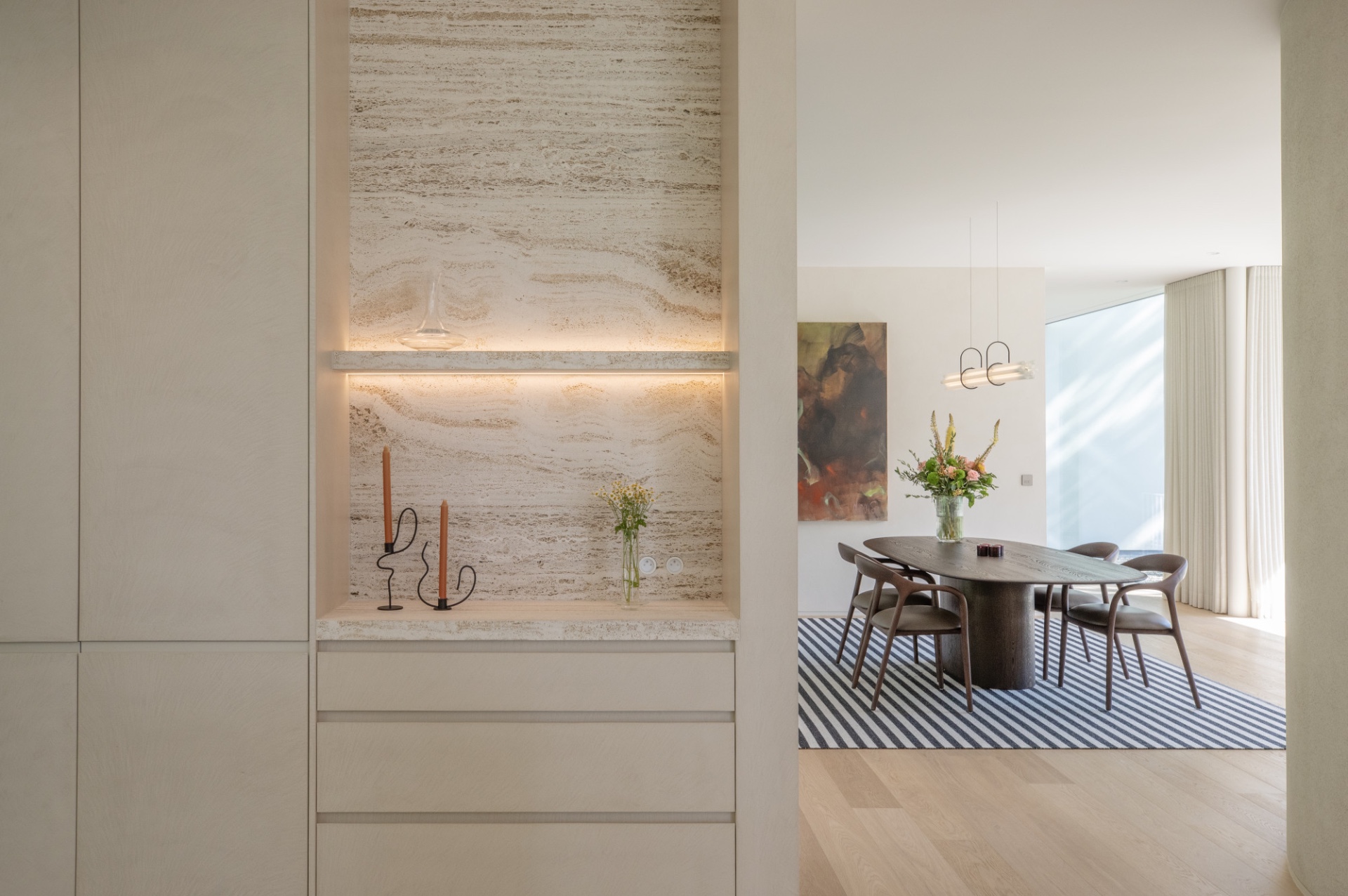
Several spaces show how the same treatment can shift with the light. In one room the plaster appears almost chalky and even; in another it catches a warmer beige note. A wall niche with indirect light reinforces that layered reading, turning a shallow recess into a visible line in the composition. The result is a house where the wall finish is not a backdrop but part of the spatial structure.
A microtopping kitchen that ties the room together
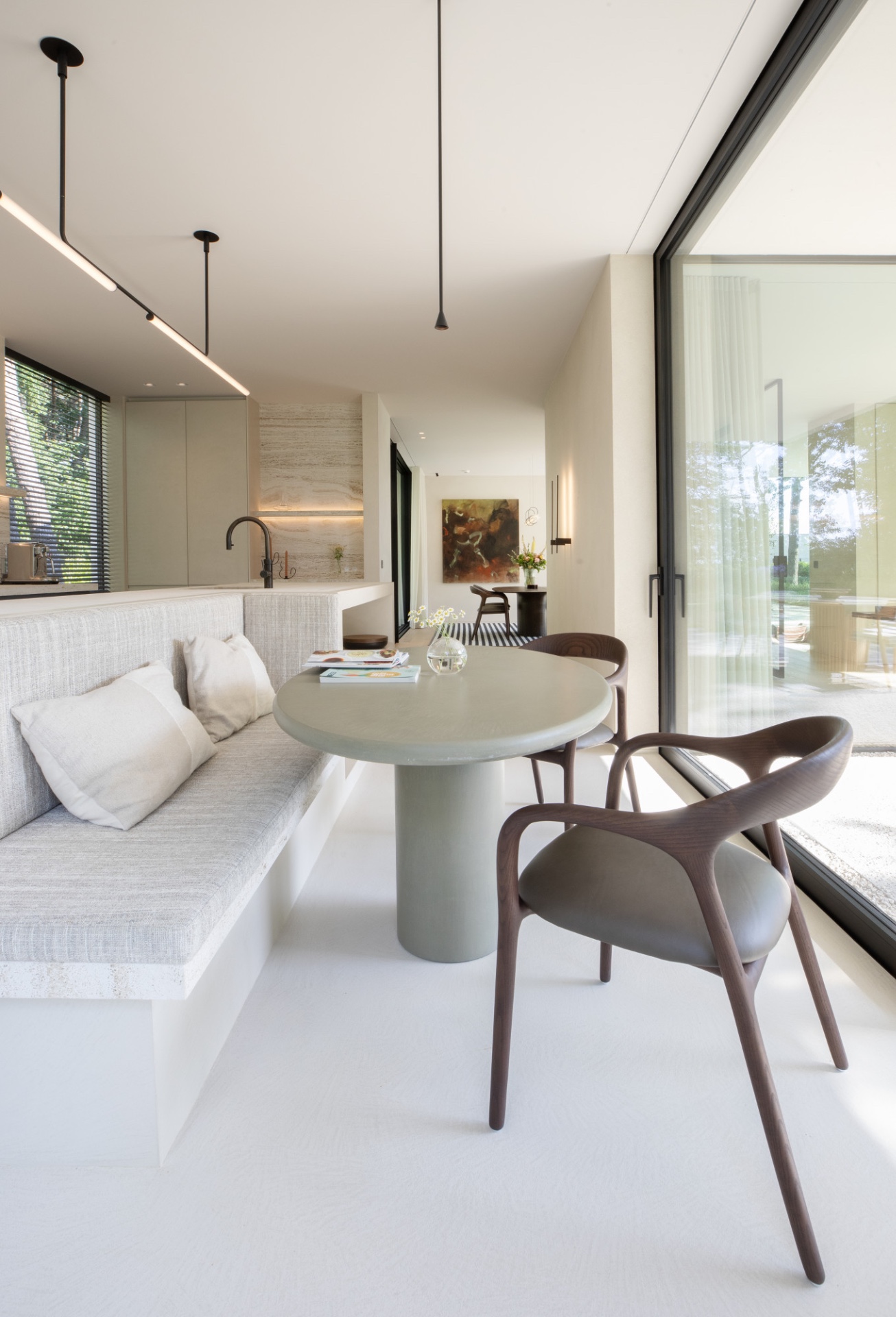
The kitchen takes the most unified approach in the project. Floors, island, table, bench and cabinetry were all executed in microtopping, which lets the kitchen read as one continuous field rather than a set of separate parts. The surface keeps the room visually quiet, while the shape of the island and the built-in bench still defines how people move and sit around it. Light from the large window softens the pale finish and makes the edges of the joinery stand out.
Seen in the wider interior, the microtopping kitchen also anchors the rest of the layout. The same restrained palette of white, sand and light grey carries into nearby rooms, with wood flooring adding a warmer note underfoot. The kitchen does not rely on contrast for effect. Instead, it uses a consistent surface from one element to the next, so the room feels measured and deliberate in its proportions.
Built-in pieces that stay visually calm
The island, table and bench follow the same surface language as the cabinetry, which keeps the room from breaking into visual fragments. Even the line of the worktop reads as part of a single composition. That is why the kitchen feels especially resolved when seen with the adjacent glazing and curtain fall: the microtopping surface holds the room together while the openings bring in movement, shadow and reflection.
The sunken seating area as a clear architectural move
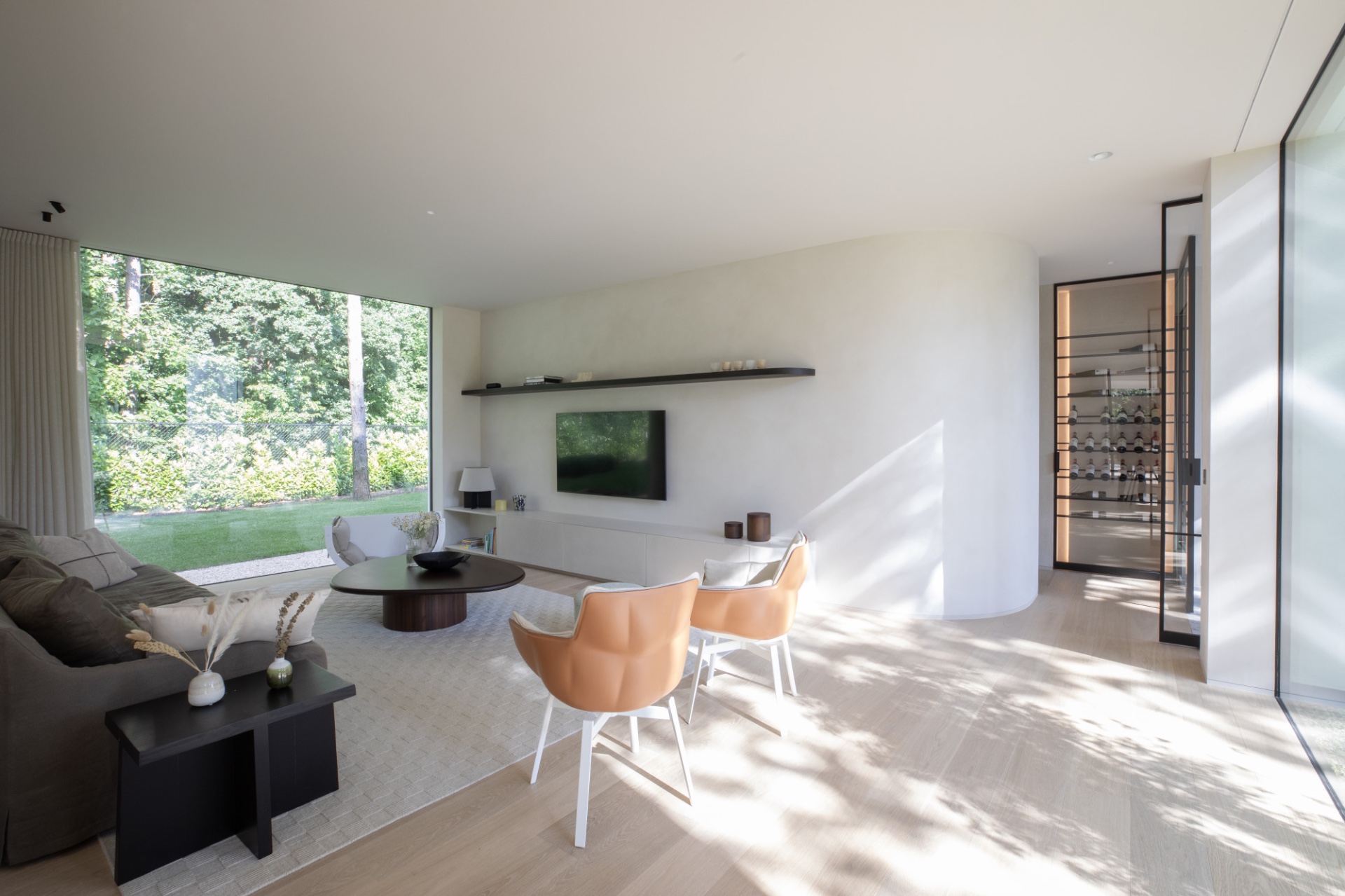
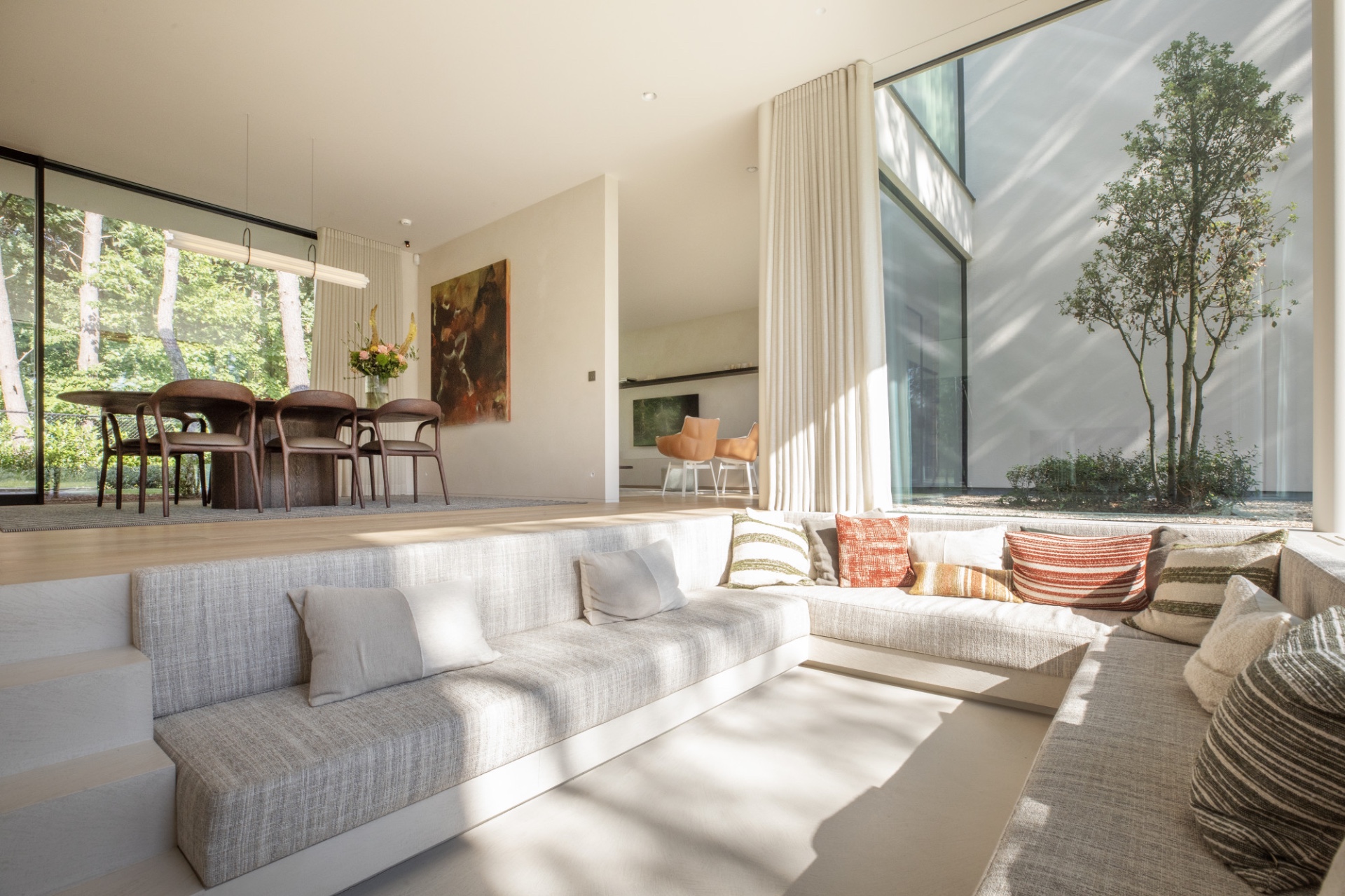
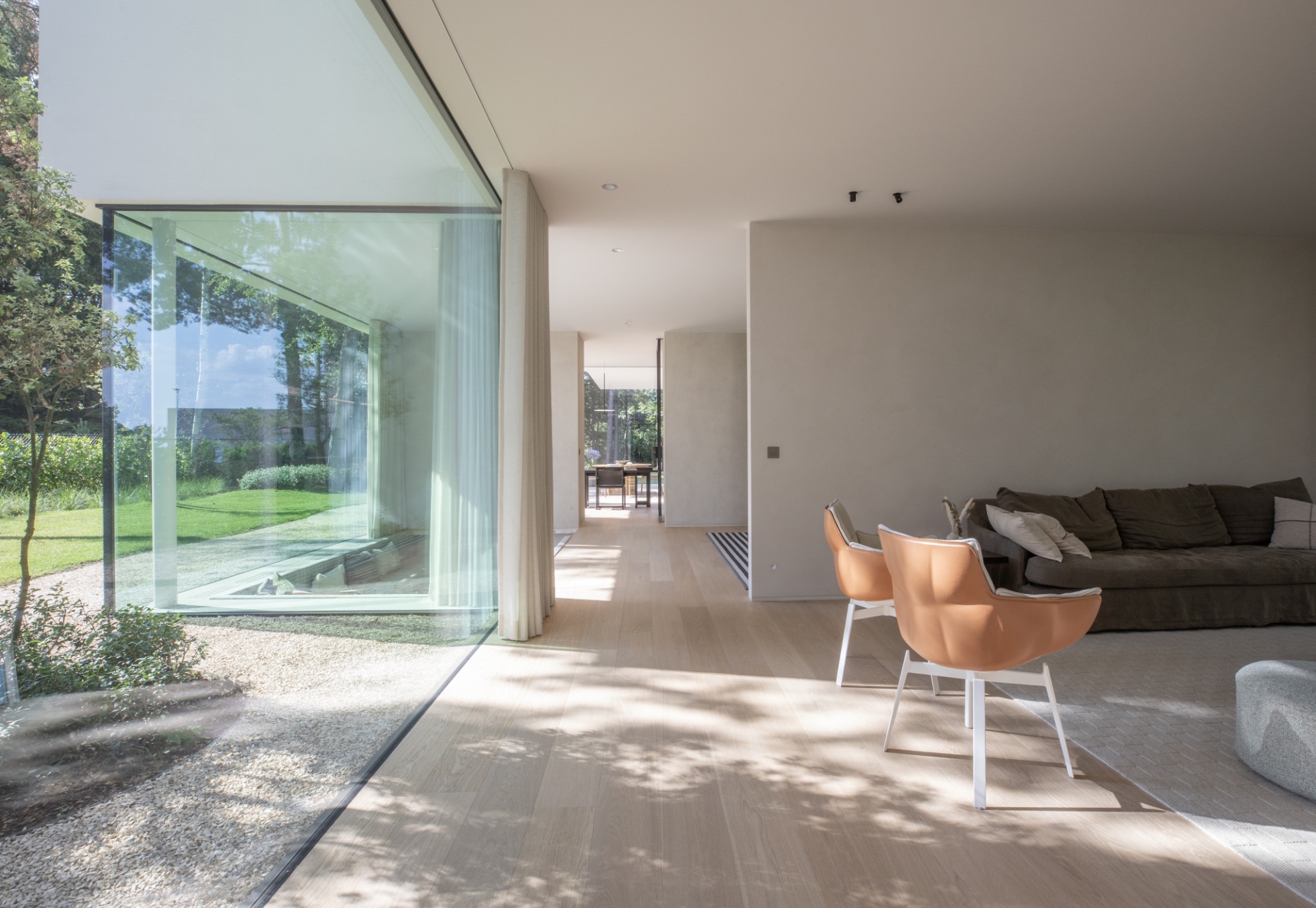
In the living room, the sunken seating area is the feature that changes the floor plan most clearly. Instead of a loose arrangement of chairs, the room drops into a lower zone with clean edges and a smooth finish. The gesture is simple, but it gives the space a strong sense of direction. From the surrounding level, the seating pit reads as a carved-out volume that holds the room without closing it off.
That lowered zone works well with the broad glazing nearby. Daylight reaches the seating area across the floor plane, and the pale upholstery and finishes keep the volume open to the view outside. The room’s black window frames, light curtains and soft wall treatment create a measured contrast, but the main reading remains architectural: a seating area that is built into the space rather than placed on top of it. Lime plaster microtopping villa remains connected to the layout, materials and daily use of the home.
Bathrooms finished as one surface
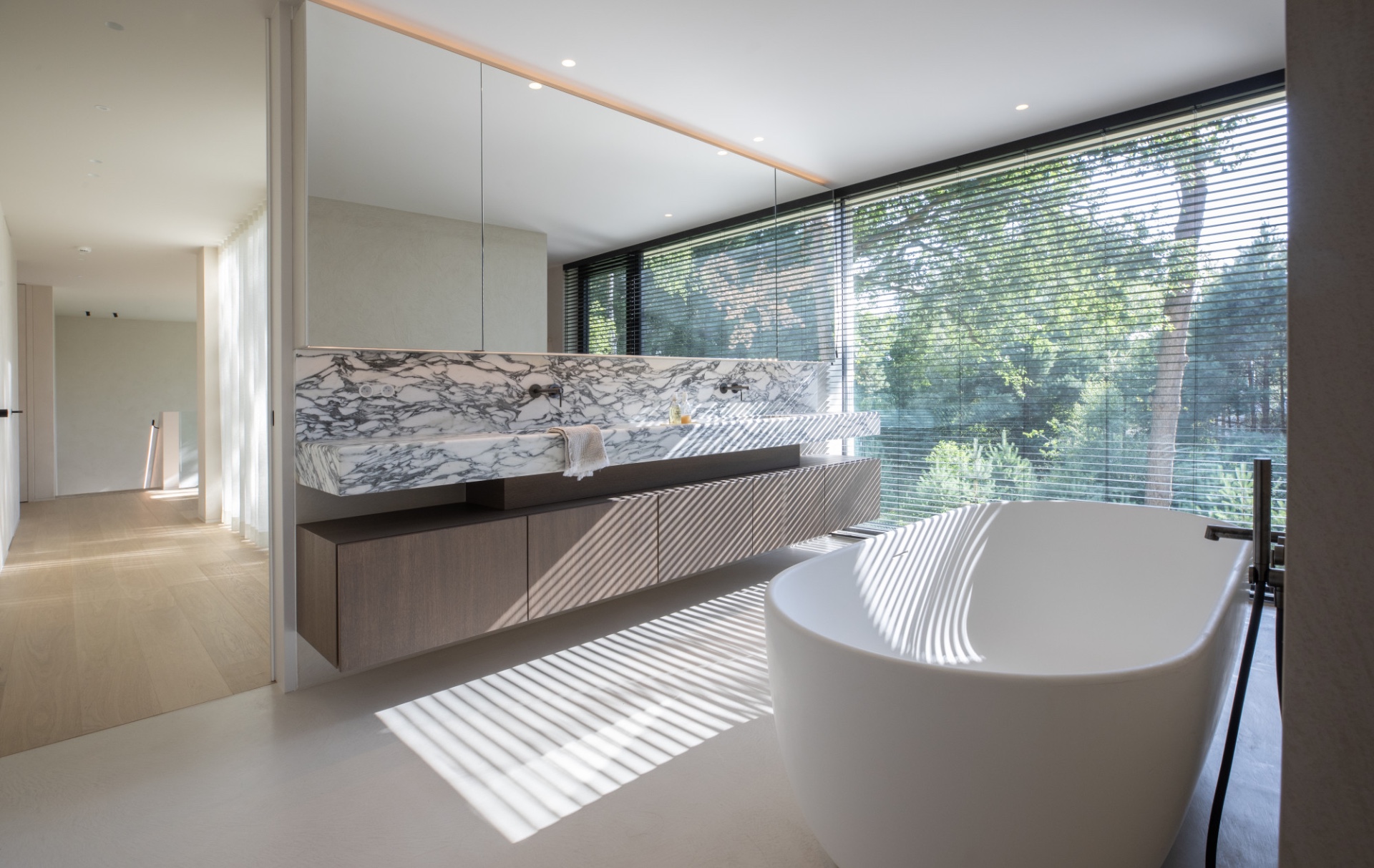
Upstairs, both bathrooms were executed entirely in microtopping. Floors, walls and furniture follow the same material, which removes the usual breaks between parts and gives the rooms a compact visual rhythm. The master shower continues that treatment, so the shower zone does not feel appended to the bathroom but integrated into it. In the images, the effect is calm and precise, with the pale finish carrying light across every plane.
One bathroom shows a bath set against a wall with a marbled look, while another uses the same light-toned finish to keep the room open around the fixtures. The microtopping bathrooms gain their character from the way the surfaces wrap around corners, basins and built-in pieces. Nothing calls attention to itself through color. The interest comes from the continuity of the material and the way it responds to the room’s geometry.
A dressing piece with a different note
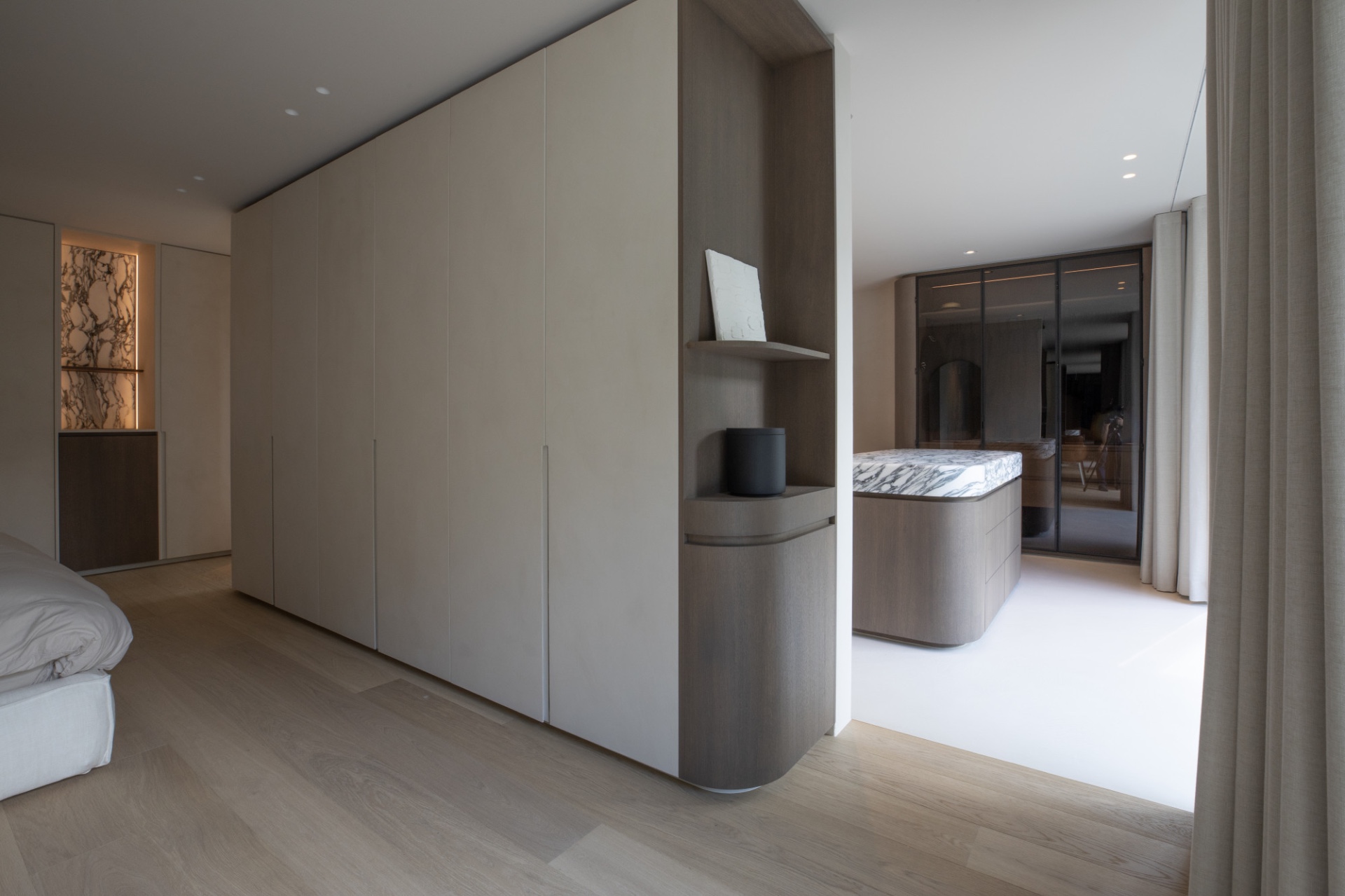
In the master suite, the dressing furniture was given a custom paint technique. That detail is smaller than the microtopping rooms, but it matters because it introduces a more individualized surface among the otherwise muted finishes. The furniture keeps the same disciplined line, yet the painted treatment gives it a distinct reading when placed against the pale walls and the light coming in from the adjacent glazing.
Elsewhere in the suite, built-in wardrobes and a glass door appear in the visual field, showing how storage is folded into the architecture. The surfaces stay quiet, but the arrangement is not anonymous. A matte wall, a sharp cabinet front and a glazed opening are enough to shape the room without adding unnecessary layers.
Inside and out tied to the same visual logic
The project extends its material language beyond the interior. The same visual alignment was carried to the exterior so the house reads consistently from inside and outside. In the images, that connection shows up through large glass facades, a covered terrace and light curtains filtering the boundary between room and garden. The house does not separate interior finish from exterior view; it lets the one inform the other.
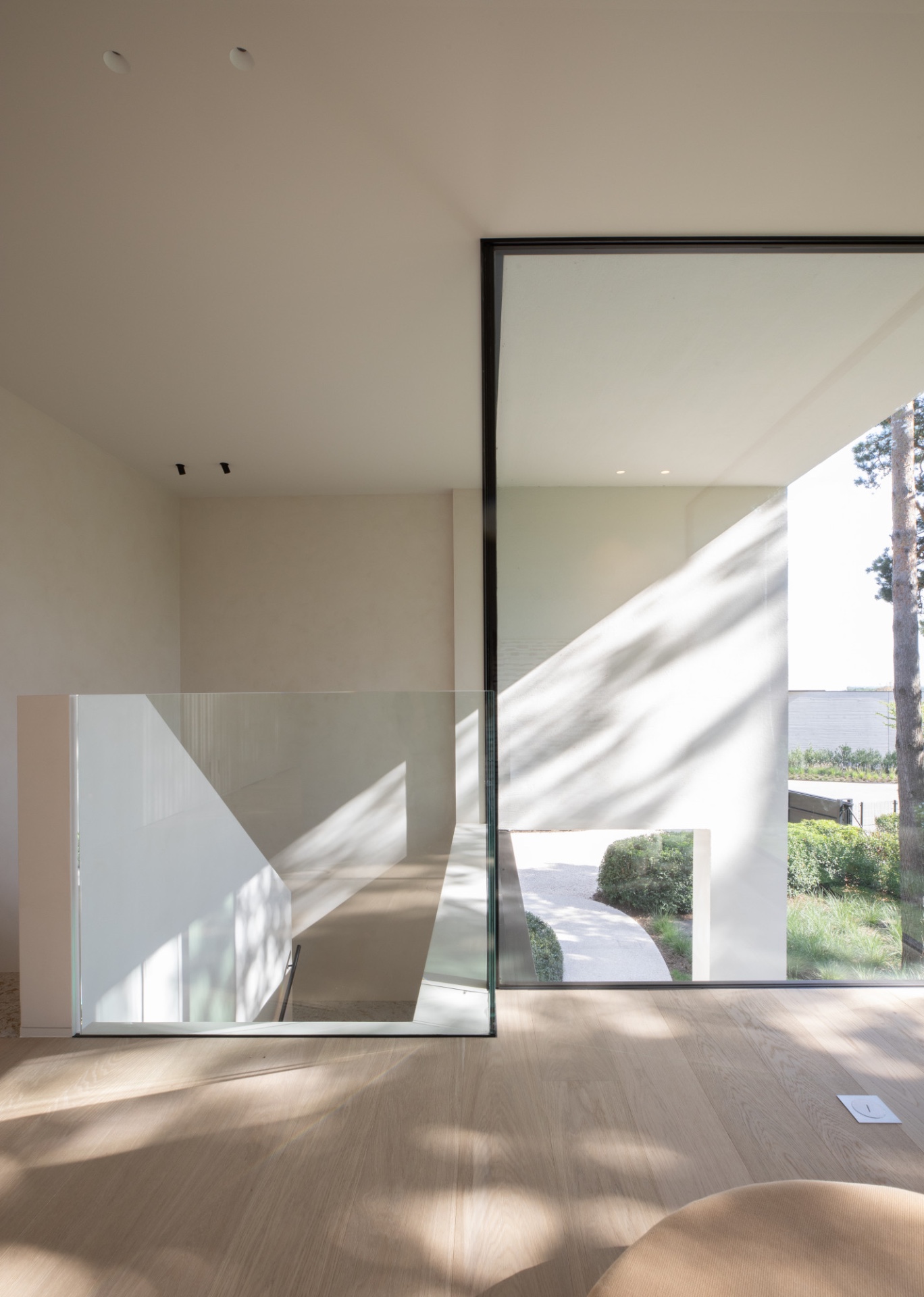
This seamless indoor-outdoor alignment is strongest where the glazing meets the terrace and the greenery outside. Black frames outline the openings, while the pale wall surfaces keep the interior brightness controlled. Sunlight falls across the thresholds and overhangs, and the result is less about a dramatic gesture than about measured continuity. The same calm material vocabulary carries from the living spaces to the edge of the house, which keeps the whole project visually aligned without flattening it.
The strength of the villa lies in how few moves it needs. Clouded lime paint, refined lime plaster and microtopping are used with restraint, but they shape nearly every room. A wall niche with indirect light, a lowered seating area, a continuous kitchen surface and a dressing piece with a custom finish each contribute a different layer. Together they give the villa its clear internal order and a direct relationship to the outdoors.
In samenwerking met:
ardeinarchitecten Lime plaster microtopping villa remains connected to the layout, materials and daily use of the home.
Want to see more of Texture Painting? View the page of Texture Painting for even more great projects and company information.


NEW 2026 Jubileum Edition The Best Interior Designers Benelux
Order Now €125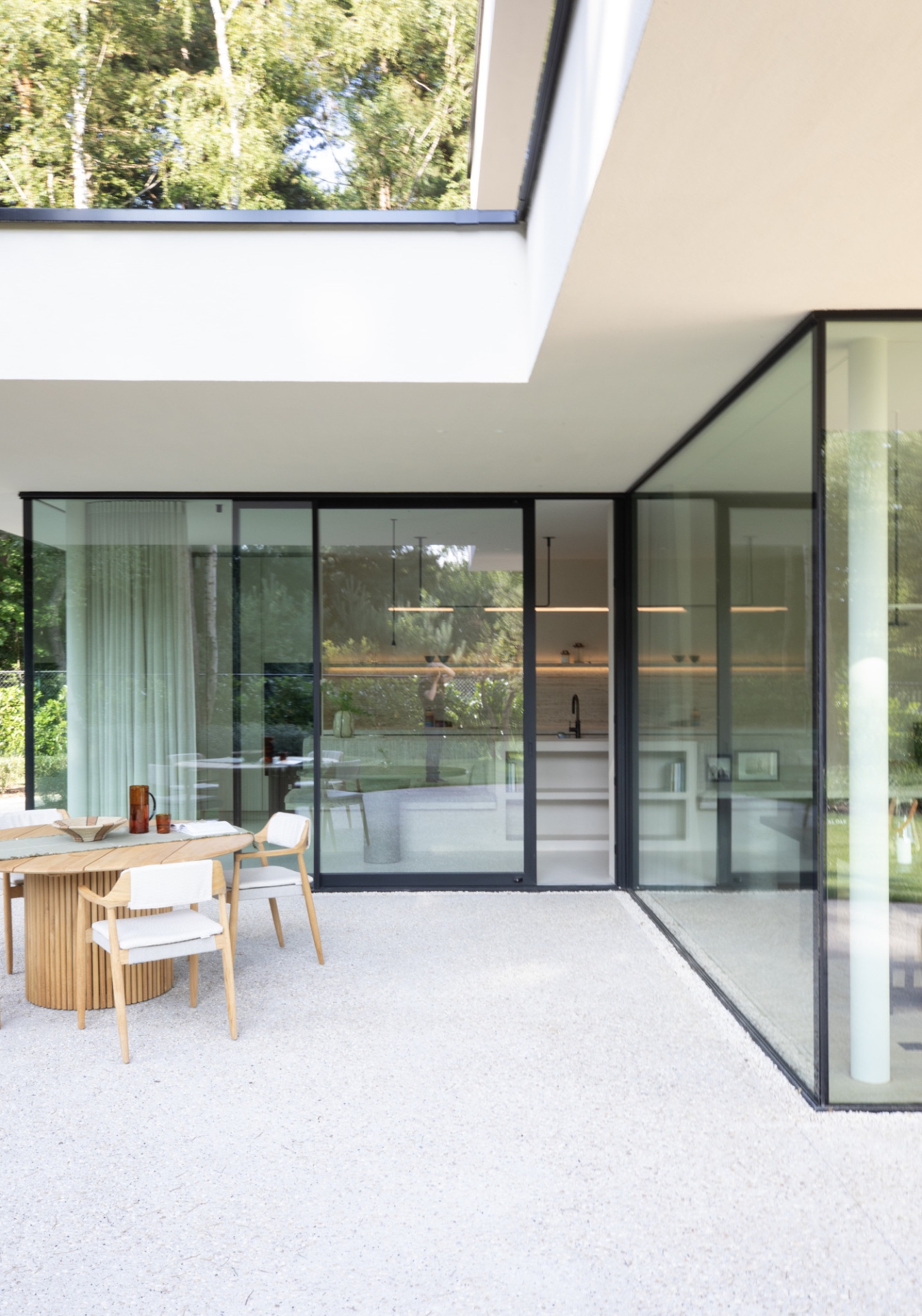
NEW 2026 Jubileum Edition The Best Interior Designers Benelux
Order Now €125