






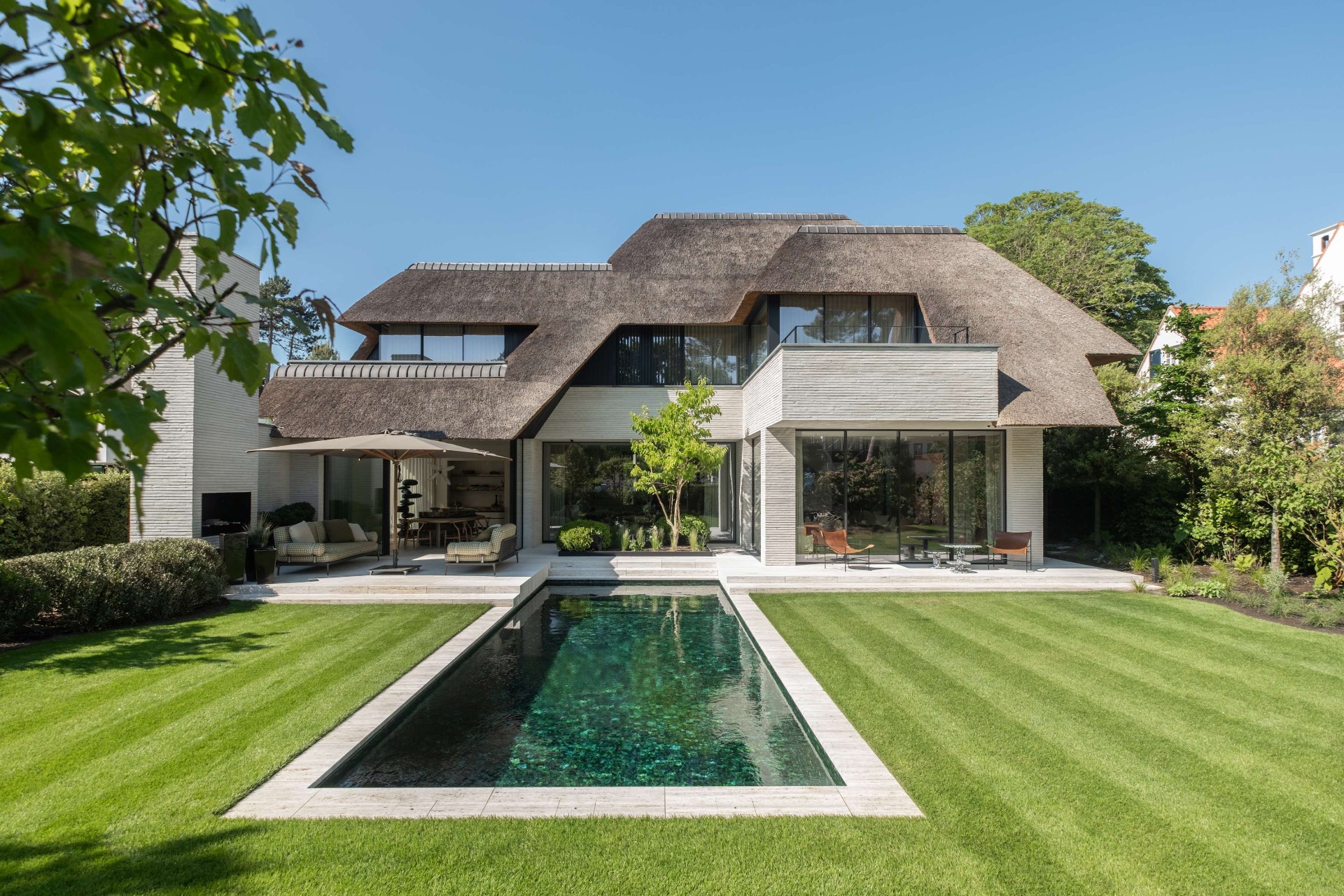
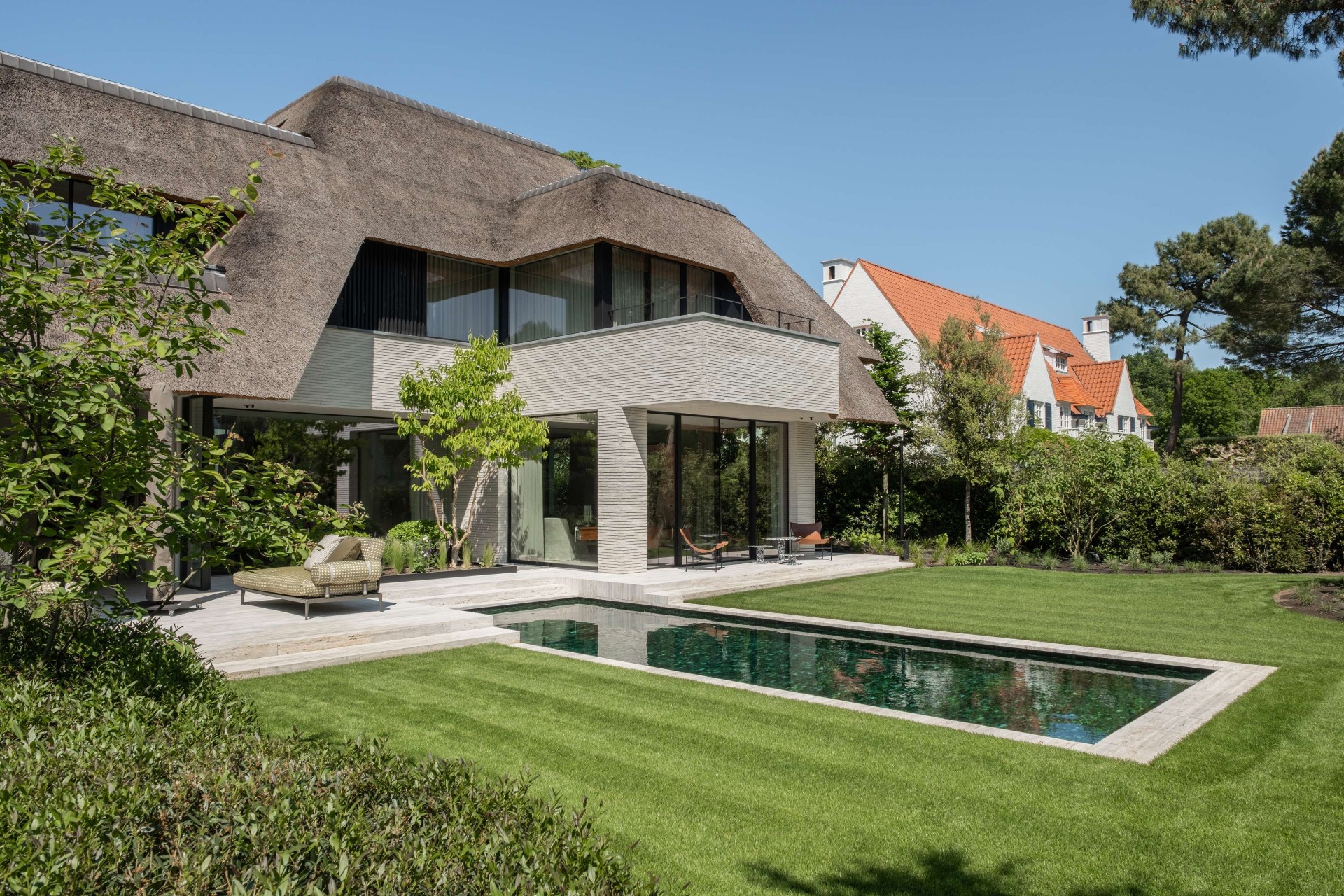
Garden with a natural swimming pond and organic harmony of water and greenery
The waterline sets the tone here. Rounded stones sit partly in the pond, the edge falls softly into the grass, and a wooden deck runs beside the water as a place to pause. The garden was redesigned as a functional outdoor space, with natural swimming pond filtration at its centre. The result is not just a pond to look at, but a swimming pond with filter system that supports clear water and a natural swimming experience without chemical additives, as described in the project text.
A pond edge built from stone, water, and movement
The pond reads as a landscape element rather than a separate insert. Brown-edged contours and pond edge stones shape the shoreline, while patches of planting soften the transition to the lawn. In several views, the water reflects the sky and the surrounding shrubs, but the composition stays grounded by the visible materials: stone, timber, and clipped green. This is where natural swimming pond filtration becomes part of the look of the garden, not just the technical side of it.
The deck sits close enough to the water to make the change in level feel immediate. It gives the edge a clear line and adds a dry route along the pond, which is especially visible where the timber meets the stones in the shallows. The surface of the deck is simple and restrained, leaving the planting and water to carry most of the visual weight. That clarity suits a garden design water and greenery approach, where each material has a readable role.
Water that stays part of the garden, not apart from it
The filtering system is mentioned in practical terms in the project, and that practicality is visible in the calm surface and the way the pond sits within the wider planting. There is no ornamental separation here. Instead, the swimming pond with filter system is woven into the garden so the water feels usable and present all day. The composition avoids heavy ornament; the eye moves from deck to stones to planting, then back to the water.
Planting for colour, structure, and biodiversity
New trees give the garden height, while layered borders fill the lower level with colour. The planting is not limited to one moment in the season. Clusters of flowering plants, including purple blooms seen along the edges, bring a clear rhythm to the paths and pond border. This biodiverse garden planting was selected to do more than decorate the space; the project text links the plant choice directly to biodiversity, and that intent is reflected in the mix of species and textures.
Closer to the water, the flower border near the pond breaks up the harder edges of paving and timber. The result is a garden that shifts gradually from open lawn to denser planting, then to the pond itself. The change in height and texture is important: slim stems, broader leaves, and flowering clusters keep the border active without making it busy. Even in a still image, the planting suggests movement through the seasons.
Front and back garden rooms connected by planting
Both the front and back garden were part of the makeover, and that wider scope matters. The same language of planting and stone is carried through the site, so the garden does not rely on a single focal point. Gravel paths, low planting beds, and a mix of trees and shrubs guide the eye from one area to the next. The spaces feel related because the materials repeat, but each zone keeps its own scale and function.
The pond is the anchor, yet it does not dominate every view. In the wider scenes, the garden design water and greenery approach can be read in the way the lawn meets the edge, how the timber deck runs parallel to the water, and how the borders close in around the paths. That layering gives the garden depth. It also lets the planting do real work, screening, softening, and framing without hiding the structure underneath.
Small shifts in level make the garden legible
What stands out is the precision of the transitions. The pond edge stones, the timber deck, and the planted margins each mark a different zone, so the outdoor space remains easy to read as you move through it. Nothing is overdrawn. The strongest moments are often the simplest: a strip of water beside timber, a border of purple flowers against green foliage, a stone line disappearing into the shallow edge. Those details keep the project grounded.
A natural swimming pond shaped by use and planting
The project’s strength lies in how it connects use with view. The natural swimming pond is clearly intended for swimming, but it also works as a visual centre in a garden that has been replanted with care. The water is framed, not isolated. Trees rise behind it, the borders add colour at ground level, and the deck gives the edge a place for standing, sitting, or crossing. Because the planting is varied, the scene changes with the angle and the light.
Seen as a whole, the garden has been turned into an outdoor setting where the water, the stone, and the vegetation support one another. The swimming pond with filter system provides the base layer, while the new trees and flowering borders bring structure and seasonal variation. Nothing here depends on excess. The appeal comes from the way each element has a clear task: hold the edge, soften the line, filter the water, or fill the border.
Photography: Jaro van Meerten
Tiles supplied by: Janssen – Sierbestrating
Want to see more of Vlassak-Verhulst? View the page of Vlassak-Verhulst for even more great projects and company information.



NEW 2026 Jubileum Edition The Best Interior Designers Benelux
Order Now €125
NEW 2026 Jubileum Edition The Best Interior Designers Benelux
Order Now €125

NEW 2026 Jubileum Edition The Best Interior Designers Benelux
Order Now €125
NEW 2026 Jubileum Edition The Best Interior Designers Benelux
Order Now €125
NEW 2026 Jubileum Edition The Best Interior Designers Benelux
Order Now €125
NEW 2026 Jubileum Edition The Best Interior Designers Benelux
Order Now €125