







Bathroom with brass finish and microtopping
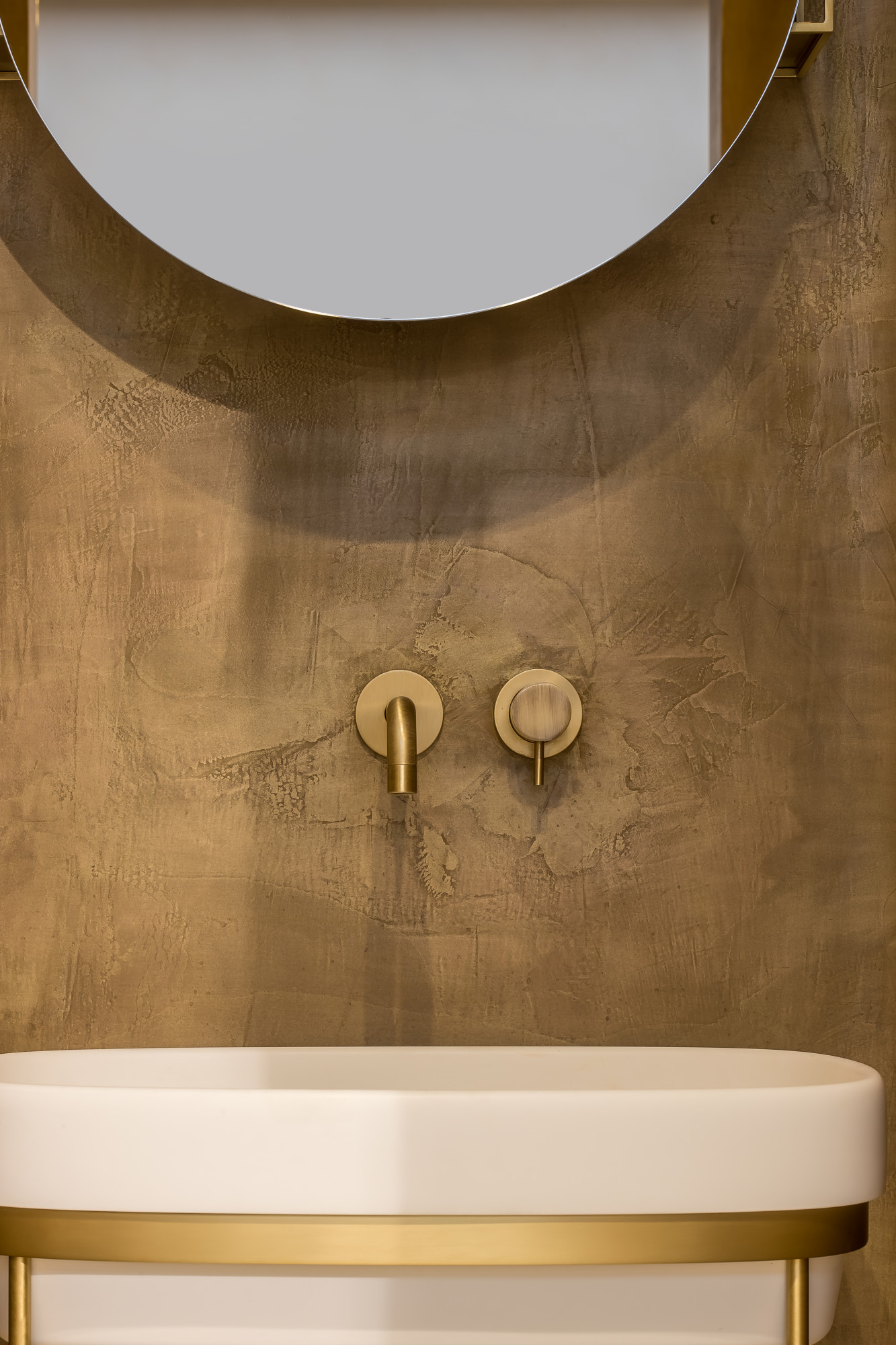
Warm brass tones cut across the wall before the texture settles into view. In this bathroom, the shower and basin are linked by a continuous surface treatment, with microtopping carrying the wall while brass-colored details set the rhythm. The result is read through the details first: a round opening in the wall, two circular controls, and a shower zone that avoids a hard break at the threshold. It is a compact composition, but every edge is doing something visible.
Microtopping as the surface behind the scene
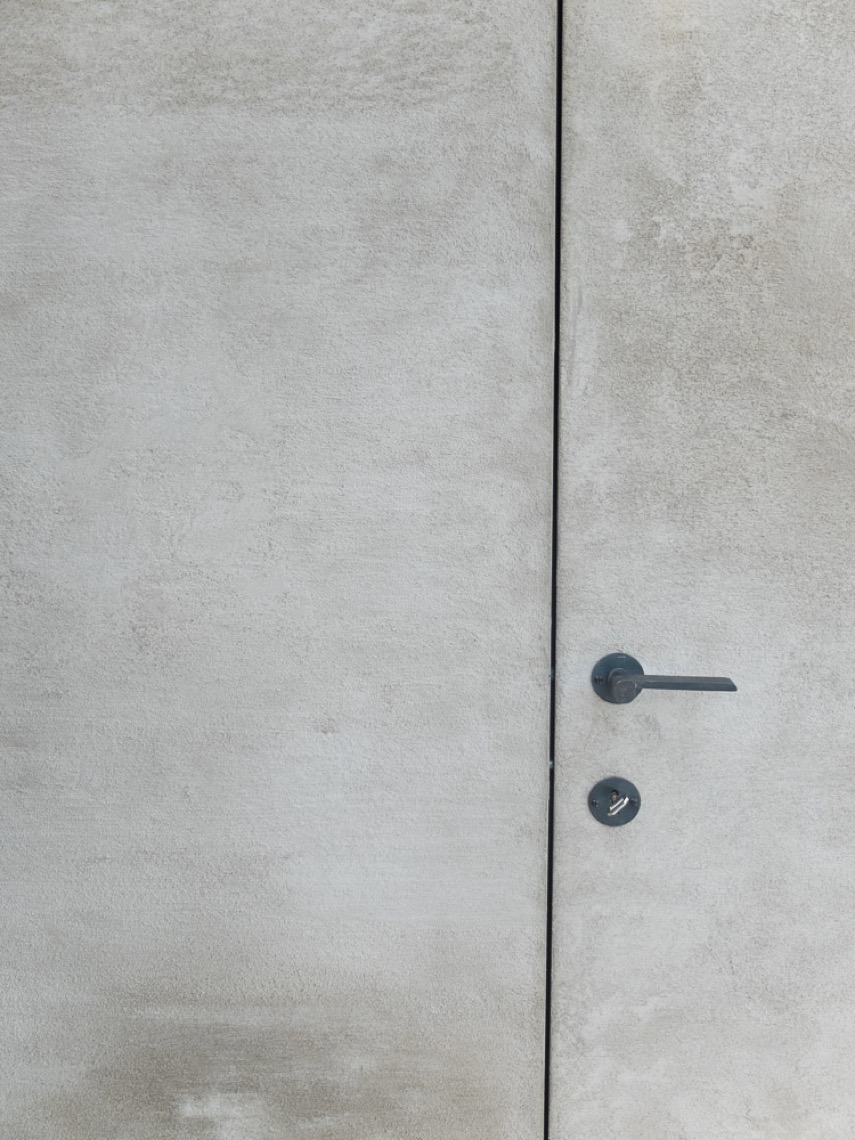
The wall finish gives the room its grain. Seen up close, the microtopping has a stone-like texture that softens the light and prevents the brass from feeling too sharp. Rather than acting as a backdrop, the surface becomes part of the room’s structure, especially where it meets the basin and the shower area. The finish holds the eye long enough to notice the slight variations in tone, which makes the bathroom read as a made object rather than a decorative set.
That texture also keeps the composition grounded. Against the pale opening in the wall, the warmer finish reads more clearly, and the contrast is strongest where the curve interrupts the flat plane. The microcement wall texture described in the project title appears here as a practical visual field: calm enough to frame the fittings, detailed enough to reward a closer look. It is this surface, more than any single fixture, that gives the bathroom its identity.
Where the shower turns into the wall
The most striking move is the seamless shower transition. Instead of a marked boundary, the shower area slips into the surrounding surface, so the wall line remains legible from one side to the other. That kind of transition changes how the room is read. The shower does not sit on top of the room; it folds into it. The basin area follows the same logic, with the finish continuing so the two functions feel tied together by the same material language.
A round arch bathroom detail interrupts the geometry and gives the wall a softer outline. It is small, but it changes the proportion of the scene. The curved opening draws attention upward, then sends it back down to the fittings below. In a space dominated by plane surfaces, the arc acts almost like a pause. It breaks the straight lines without adding clutter, which is why it remains memorable even in a close crop of the room.
Brass-colored controls as the clearest accents
The brass shower finish is most visible in the controls and rosettes. Two round elements sit against the wall like measured punctuation marks. Their shape repeats the curve above, but their finish does the opposite: it introduces reflection, catching a slightly richer tone than the surrounding surface. Because the hardware is restrained in scale, the brass bathroom hardware does not dominate the view. It sharpens it. The viewer notices where water, wall, and control points meet.
These fittings give the bathroom its most direct material contrast. The warm metal sits against the textured wall and the pale opening, creating a small set of differences that are easy to read. Nothing here relies on ornament. The visual effect comes from the precision of placement and the way the brass edges relate to the broader surface. That is also why the project feels coherent when seen in fragments: each detail speaks the same material language.
Shower and basin in one continuous reading
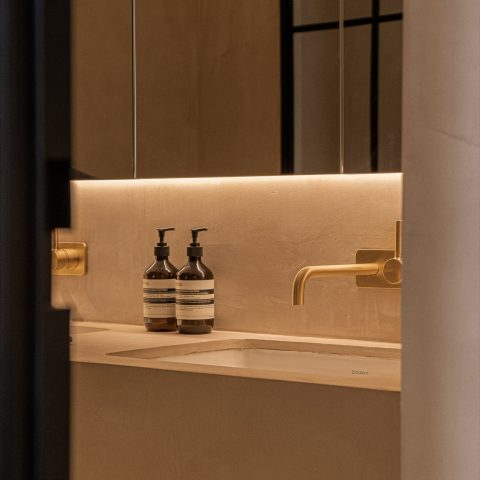
The source text refers to both the shower and the basin, and the image reinforces that link by showing a space built around a shared finish. The bathroom microtopping runs through the composition so the eye does not stop at a single fixture. Instead, it moves from the wall texture to the opening, then to the controls, and finally to the area where the basin would sit in relation to the shower. The room is organized by adjacency, not separation.
That shared reading is what makes the project feel deliberate. The shower zone is not isolated as a technical corner, and the basin is not treated as a separate scene. Both sit inside the same material frame, which allows the brass and the textured surface to do the work of connecting them. In project pages like this, that connection matters more than a long list of components. The visible transition tells the story faster than explanation can.
What the close-up reveals
At close range, the wall finish shows its uneven grain and the fittings show their rounded edges. Those two facts define the image. The warm brass tones become stronger next to the matte surface, while the white arch softens the composition and prevents it from becoming too dense. The detail is minimal, but not bare. Each element has a job: one frames, one reflects, one marks the point where the shower begins. Together they create a bathroom that reads clearly from a distance and even better up close.
The project also shows why microtopping works well in a room of this size and type of arrangement. It allows the wall to stay continuous, which leaves room for the brass shower finish to stand out without extra decoration. The result is a bathroom where material and proportion carry the visual weight. The finish on the wall, the curve in the opening, and the round controls are enough to define the whole scene.
The bathroom microtopping concept is therefore not only about the surface itself, but about how that surface holds the shower, basin, and brass details together. The room is quiet, yet every part is legible. The wall keeps its texture, the metal keeps its glow, and the transition between them remains clear. In that direct relationship lies the strength of the project: a small set of materials, carefully placed, with no need for excess.
Want to see more of Texture Painting? View the page of Texture Painting for even more great projects and company information.