








Black marble interior in a very luxurious apartment
Black marble sets the tone from the first view, moving from the living area into the kitchen and bathroom as one continuous material line. The stone is not used as a small accent. It covers floors, wraps walls, forms worktops and reappears in framed details where the white surfaces need something stronger to stand against. The result is a black marble interior that reads through surface and proportion rather than decoration.
Stone that holds the room together
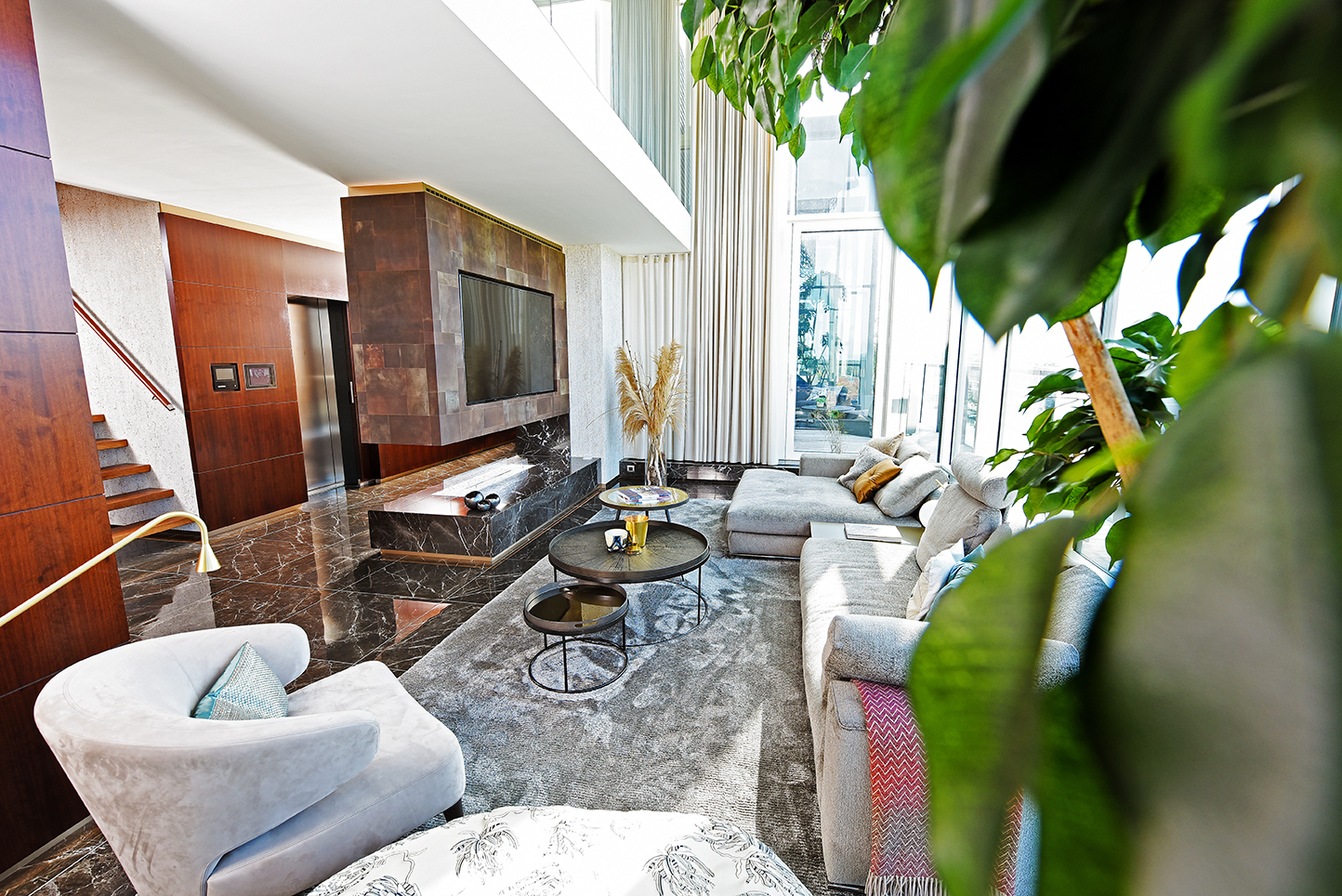
In the living zone, wide black stone slabs run across the floor and rise again around the central wall element, where the dark surface gives weight to the room’s open volume. Light from the large glazing softens the edges, while pale curtains and white walls keep the stone from disappearing into shadow. The marble veining stays visible at a distance, so the floor does more than ground the space: it draws the eye forward and makes each transition feel deliberate. This is where the black marble interior begins to define the apartment’s rhythm.
Warm wood details interrupt the dark surfaces at just the right points. A timber console, panel, or trim line appears beside the stone and changes the temperature of the room without breaking the material story. The contrast is clean, not decorative. It lets the black marble floor and wall surfaces stay dominant, while the wood keeps the room from becoming visually flat. Across the seating area, the strong black-and-white field is held in place by those smaller wooden notes.
A kitchen built around marble veining
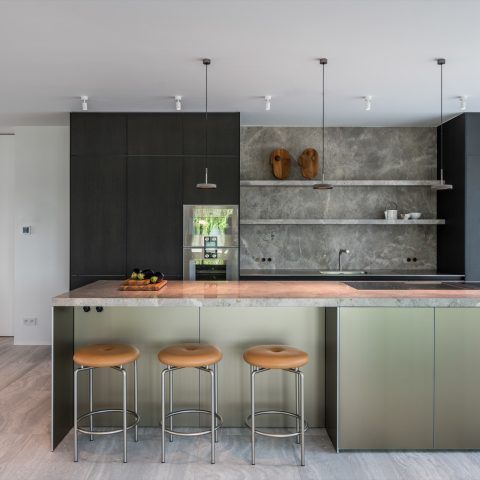
The kitchen uses black marble as both work surface and backdrop. A marble countertop meets a matching backsplash, and the white cabinetry beside it sharpens every edge of the stone. The veining is visible enough to carry across the room, especially where the slab meets the lighter cabinet fronts. Modern built-in appliances sit quietly in the composition, leaving the countertop and wall panel to carry the visual weight. In this black marble kitchen, the stone reads as the main architectural layer.
One of the clearest details is the way the marble wraps around the kitchen and bar area. A dark accent band frames the zone, and in another view the stone appears as a bar or coffee ledge beside a timber console. That shift from polished stone to wood gives the room a measured pause. It also shows how the apartment uses the same material language in different scales: a broad kitchen surface, then a smaller hospitality-like corner, both held together by the same black marble interior palette.
Stone, glass and a sharp edge to the room
Glass is used as a counterpoint to all that stone. In the kitchen, a window with horizontal blinds brings in daylight that lands across the marble without washing out its dark tone. In the bathroom, a glass shower enclosure with metal profiles draws a straight line through the space, so the black marble bathroom feels precise rather than heavy. The transparent surfaces keep sightlines open and let the veining on the walls and floor remain visible from more than one angle.
Bathroom surfaces with clear lines
The bathroom continues the same material story with black marble tiles on both wall and floor. The stone is large in scale and reads as one continuous skin, broken only by the shower enclosure and the fitted basin zone. A white washstand sits inside the darker frame, which gives the sink area a sharper outline. The contrast is immediate: white sanitary surfaces against dark stone, with the marble veining working as the link between them. This is where the black marble bathroom feels most structured.
Another view shows the basin wall from closer range. A white countertop projects from a black marble surround, and a mirror and tap sit above it like a neat line of fixtures against the stone. Nearby, a brown timber wall panel changes the texture of the room and keeps the bathroom from becoming visually cold. The stone remains dominant, but the wood and glass prevent it from becoming static. Here, the black marble bathroom is built from surfaces that each do a different job: reflecting, framing, grounding, or opening the space.
Living with contrast instead of ornament
What gives the apartment its strength is not pattern for its own sake, but the way the surfaces are allowed to meet cleanly. White walls, black marble, timber accents and glass panels sit in direct contact, so the eye moves from one material to the next without distraction. In the living room, the stone floor supports that movement. In the kitchen, the marble countertop and backsplash turn the same idea into a more compact composition. In the bathroom, the shower glass adds another layer of depth. The black marble interior stays consistent, yet each room changes the scale of it.
The veining is important because it prevents the dark surfaces from becoming one flat field. On the floor, it reads as long lines that follow the room. On the worktop and wall panels, it appears in shorter, more concentrated marks. That difference matters. It means the marble can carry both a broad architectural effect and a closer material detail. The apartment uses that dual character well, especially in the kitchen and bathroom where each edge, joint and panel frame is visible.
Where the darker surfaces soften
The timber elements do not compete with the marble; they break it up. A console edge, a panel behind the basin, or a brown-toned wall section creates a visual stop between the dark stone and the white architecture around it. These details are small, but they change how the room is read. The apartment never depends on a single material alone. Instead, the black marble interior is balanced by light-filled openings, white planes and carefully placed wood parts that show the stone to advantage.
Seen as a whole, the project is less about individual rooms than about a repeated material language. The black marble floor establishes the base, the marble countertop and wall panels extend that language into the kitchen, and the black marble bathroom completes the sequence with stone, glass and a fitted basin zone. The apartment’s luxury comes through in the size of the surfaces and the confidence of the contrast, not in ornament. A visitor sees stone first, then light, then the quieter details that keep the composition clear.
If you would like to explore this kind of stone application further, you can make an appointment with a natural stone specialist to look at marble options for kitchen, bathroom or living areas.
Want to see more of Ariës Natuursteen? View the page of Ariës Natuursteen for even more great projects and company information.





NEW 2026 Jubileum Edition The Best Interior Designers Benelux
Order Now €125