







Brick country house with refined wood joinery
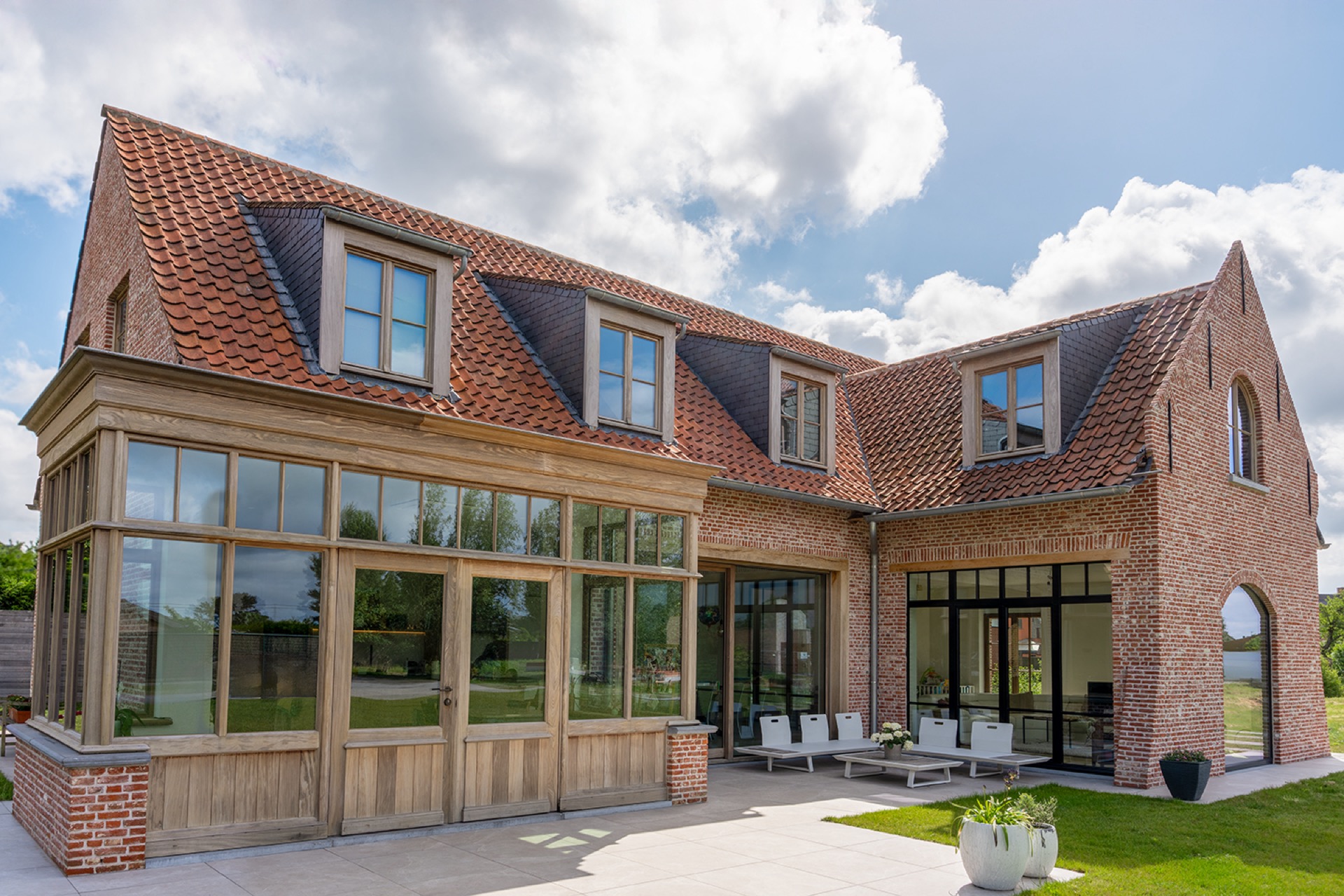
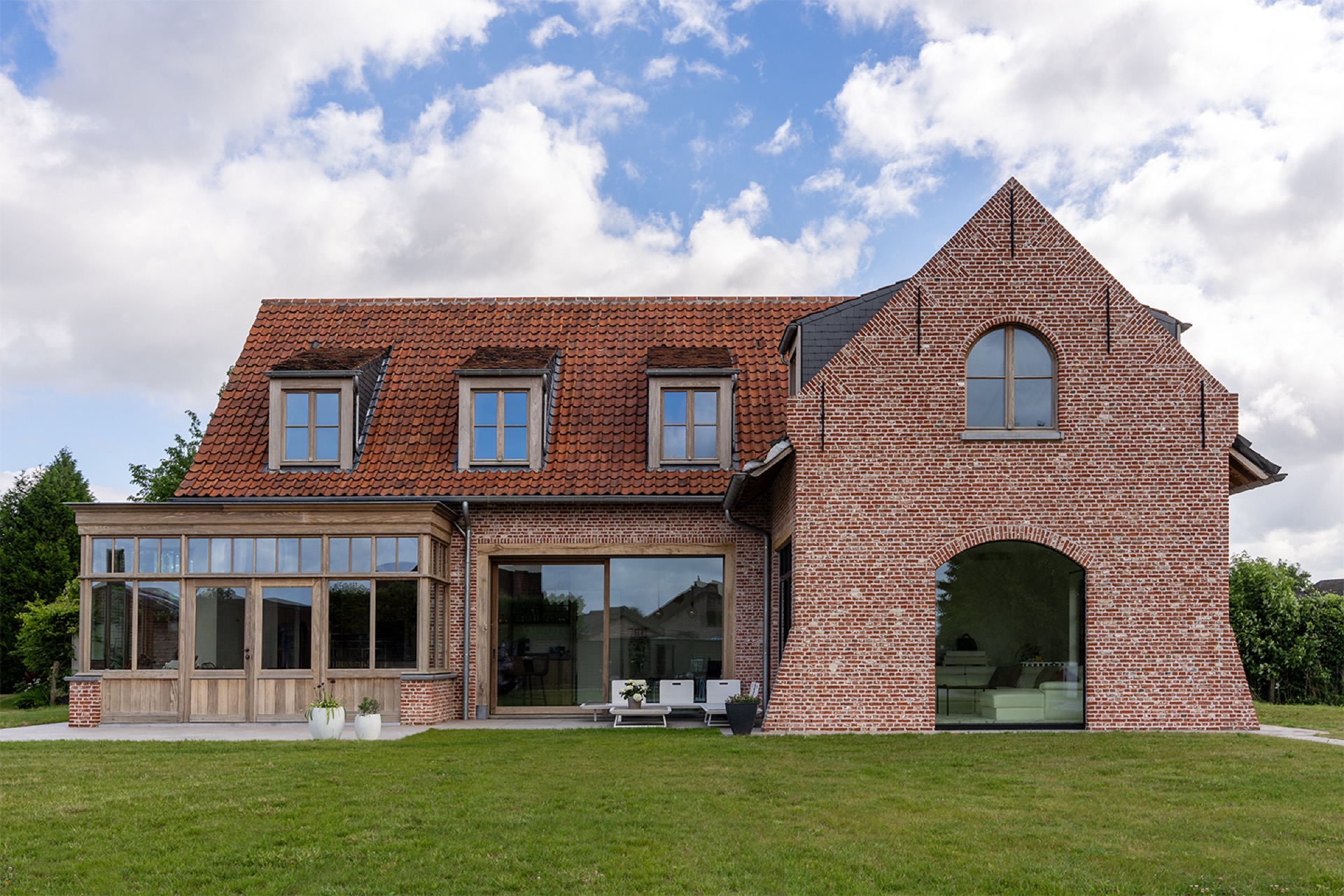
Red-brown brick, a pitched roof volume and deep window reveals set the tone before the eye reaches the joinery. The house reads as a brick country house with wood joinery, where the material shift from masonry to timber is part of the composition rather than an afterthought. Large glass openings cut through the facade and let daylight reach further inside. The result is a rural house with a strong outline, but one that opens generously toward the garden.
Brick walls, roof volumes and a clear profile
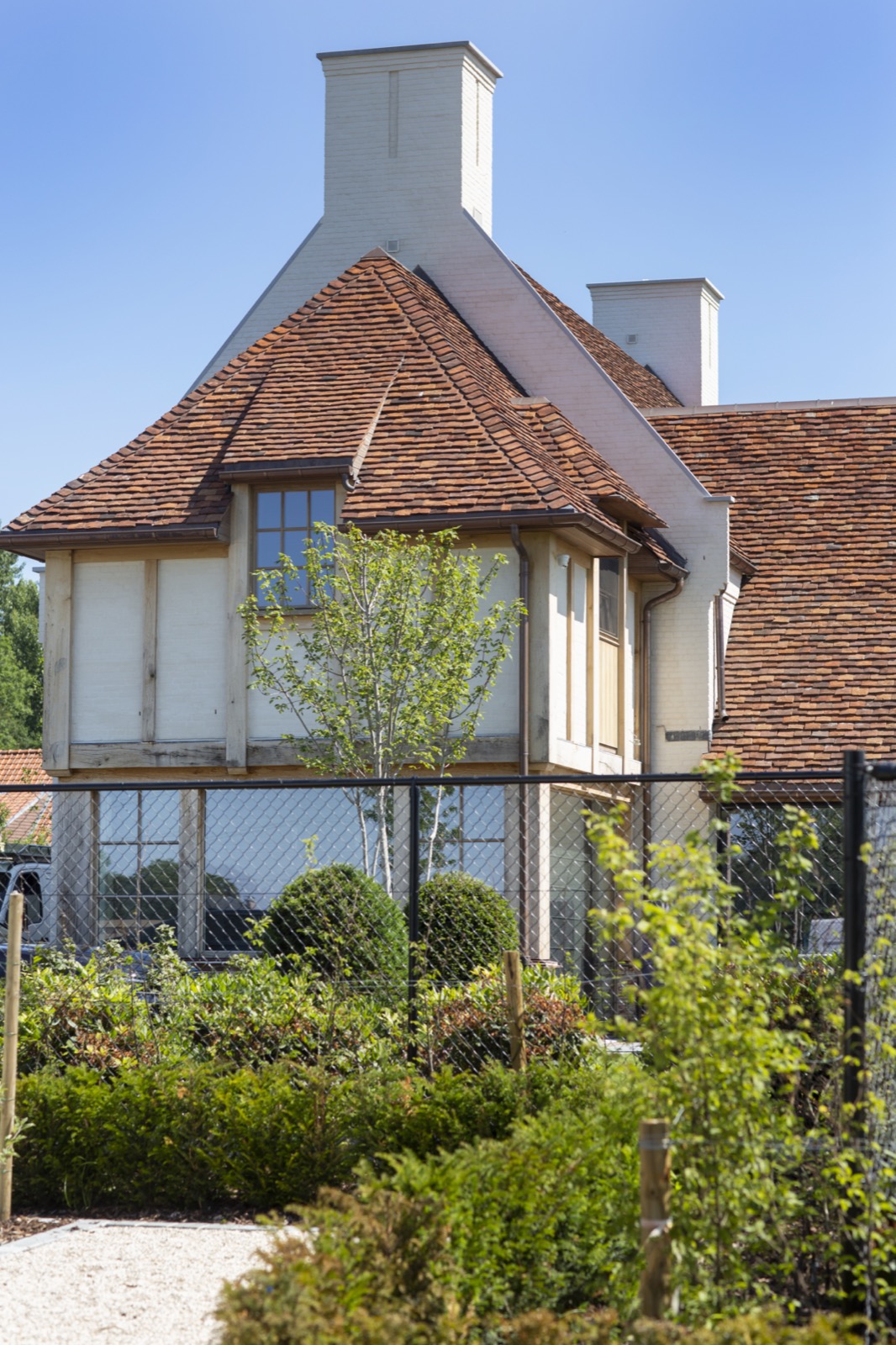
The brickwork carries most of the visual weight. Its red-brown tone is repeated in the roof tiles, which sit over several roof volumes and give the house a compact, almost layered profile. That pitched silhouette is interrupted by a rounded opening and by generous window bays, so the elevation never feels static. Instead of a flat front, the eye moves from wall to opening, from masonry to glass, and from the darker recesses of the frames back to the light on the surface of the brick.
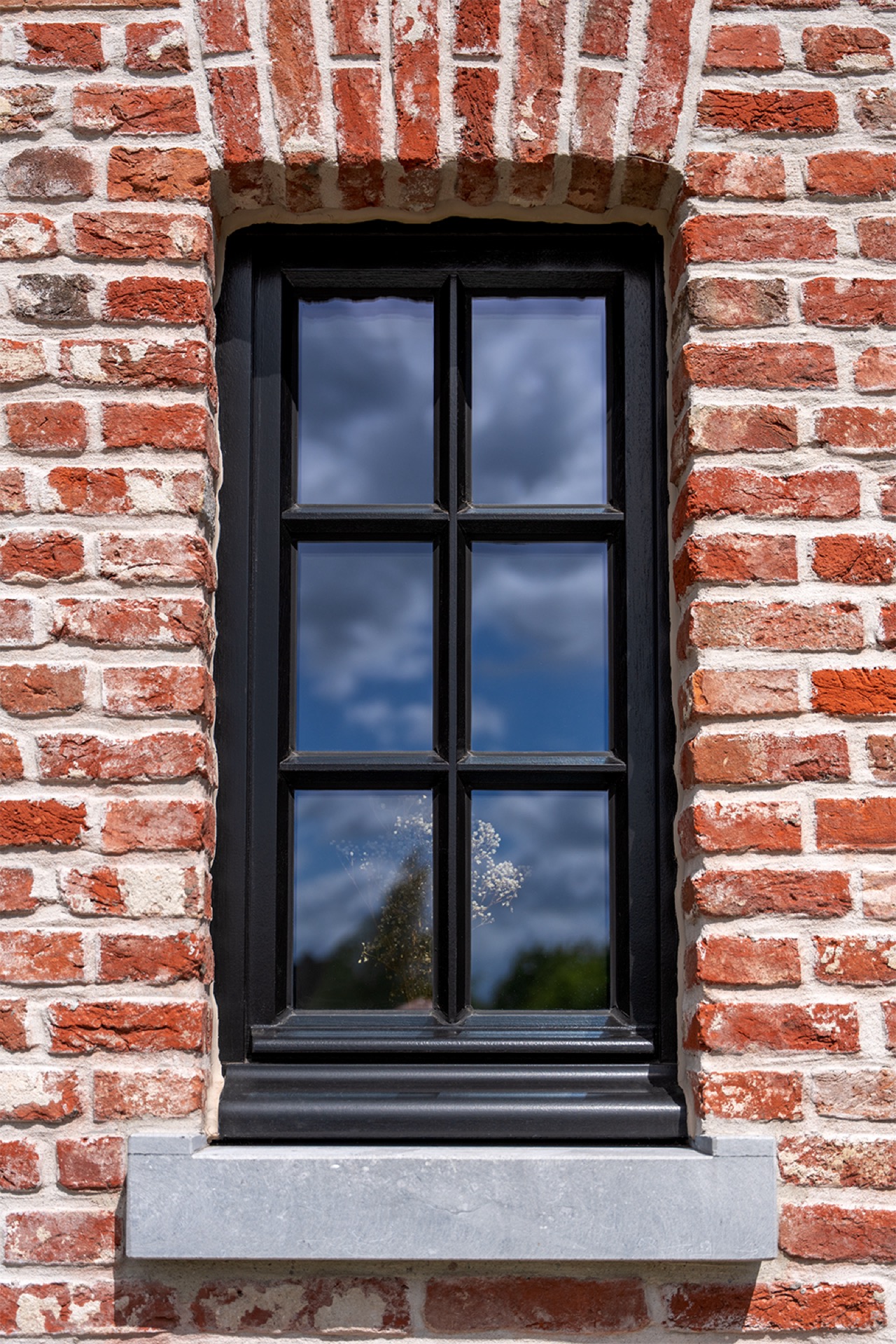
The project sits comfortably within the language of brick houses, yet the detailing keeps it from becoming blunt. Window sizes vary. Some openings are broad and glazed, others are narrower and more contained. A light stone sill appears beneath one black-framed window, while the brick jambs remain visible around it. These shifts are small, but they shape the reading of the house. The mass feels grounded, while the openings bring a clearer rhythm to the facade.
Wood joinery that softens the masonry
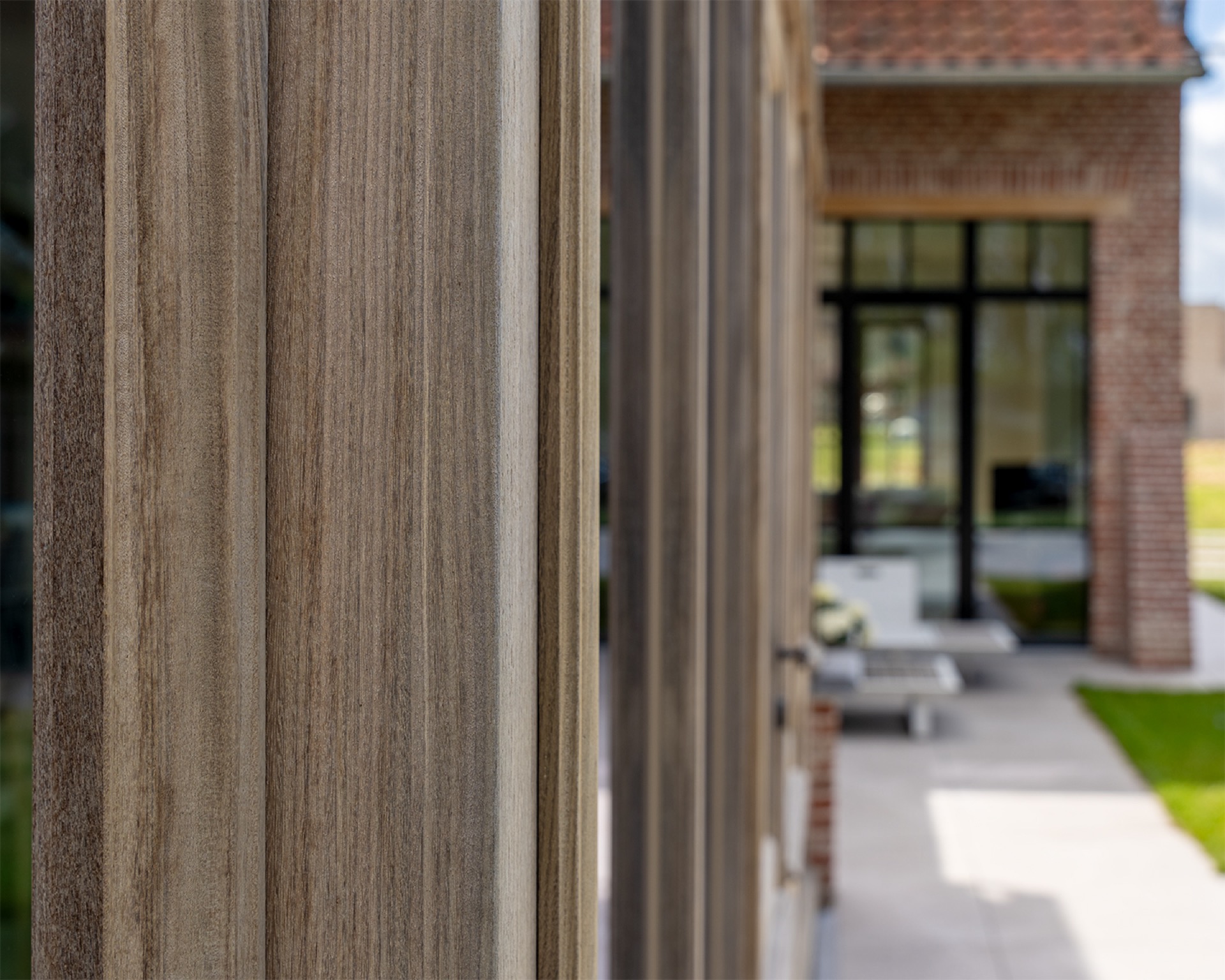
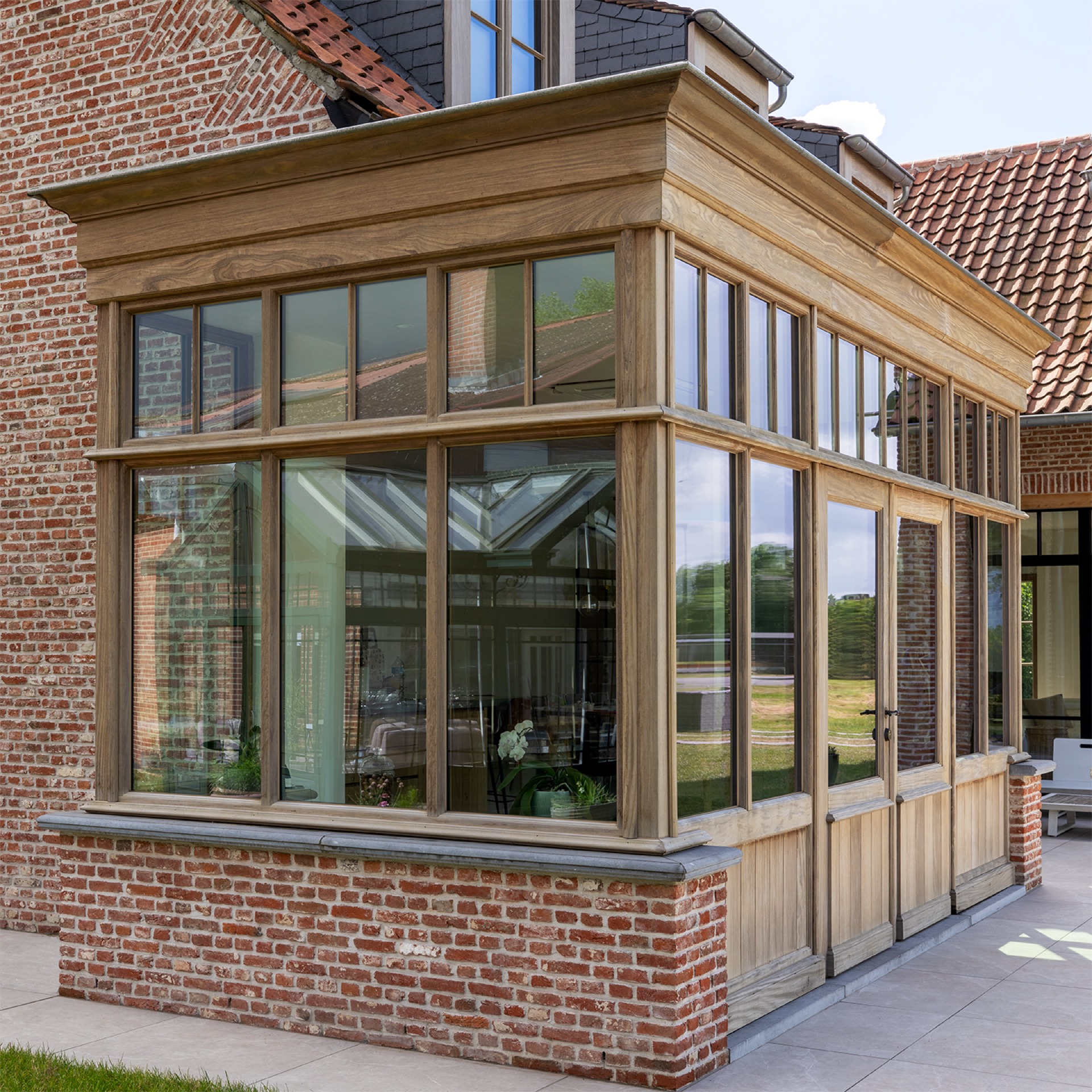
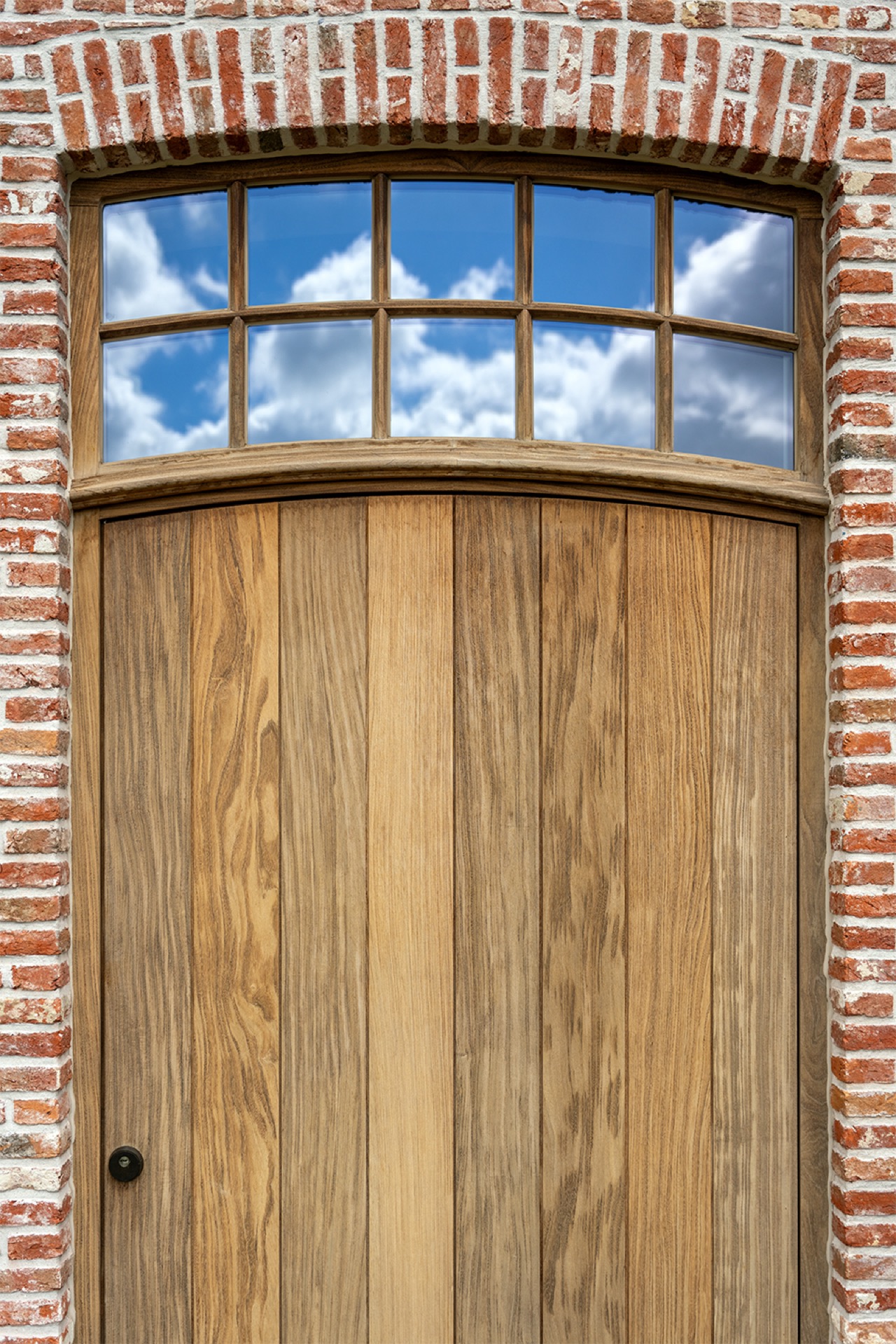
Wood joinery gives the house its most tactile layer. The afrormosia hardwood is visible in the door and window elements, where the grain and the vertical line of the panels break the harder edge of the brick. The timber does not try to imitate the masonry; it sits against it with a distinct surface and a warmer depth. On the front door, the wood is read in broad vertical panels, while on the windows it appears in slimmer frames and mullions that hold the glazing in place.
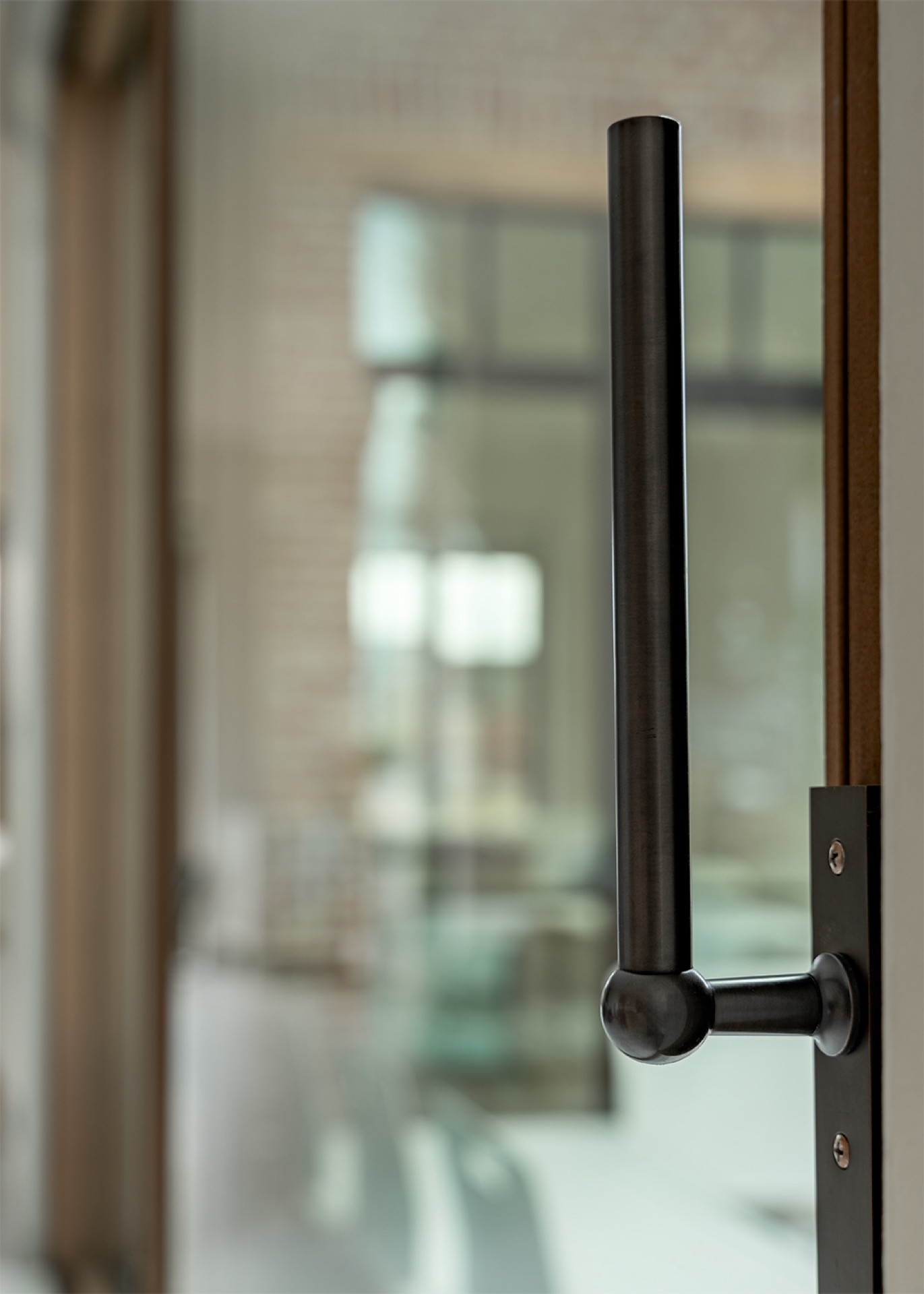
That contrast matters in a brick country house with wood joinery. Brick sets the mass, but timber brings precision to the openings. The door hardware is visible in close-up as well, and it underlines how much attention goes into the contact points rather than just the larger surfaces. A handle, a plate, the line where the door meets the frame: these are the parts that make the joinery feel specific. In the images, that specificity is what pulls the eye in after the first view of the house.
Afrormosia beside black painted window frames
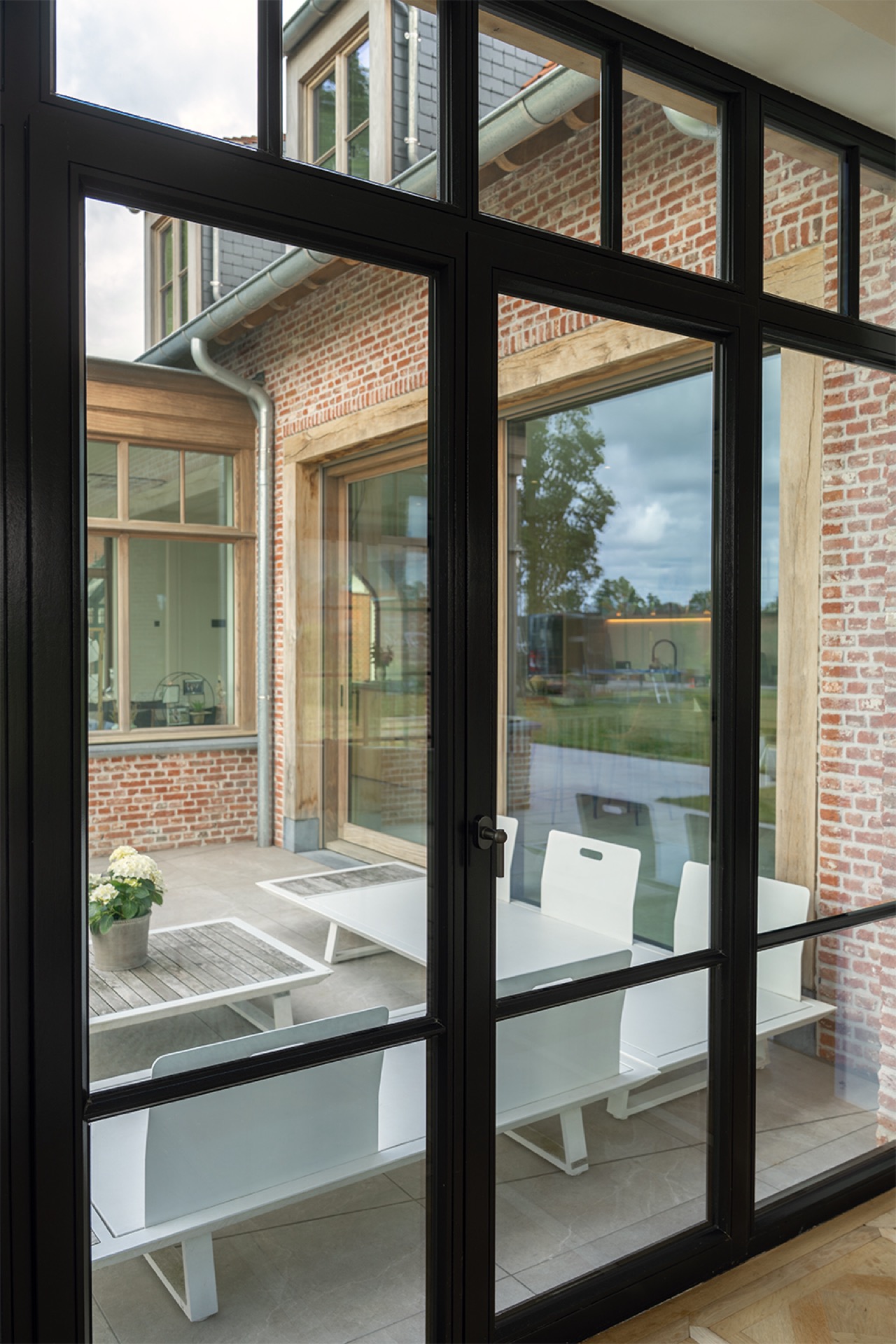
The material palette stays restrained: natural afrormosia hardwood and black painted window frames. That black paint changes the reading of the glass. It sharpens the outlines of the openings and makes the panes sit more firmly within the masonry. Against the brick, the frames act like thin graphic lines. Against the timber, they create a darker edge that keeps the glazing from disappearing into the wall. It is a simple contrast, but it does a lot of work in the composition.
Because the frames are black, the reflections in the glass become more noticeable. In some views, the interior lightness and the garden outside meet in the same surface. In others, the frame divides a window into four smaller panes, adding a more measured cadence to the elevation. This is where the project moves beyond a generic rural house. The brick country house with wood joinery is not only about material presence, but about how those materials shape the pace of the openings.
Large glass openings that draw the garden closer
Large glass openings open the house to the outside without losing the sense of enclosure that the brick provides. A set of glass doors leads toward the garden, and from inside, the path outside is easy to read. The threshold is not exaggerated. It is marked by the frame, the glass plane and the change in surface from interior floor to the space beyond. That plain movement gives the house its quietest detail: a direct line between room and garden.
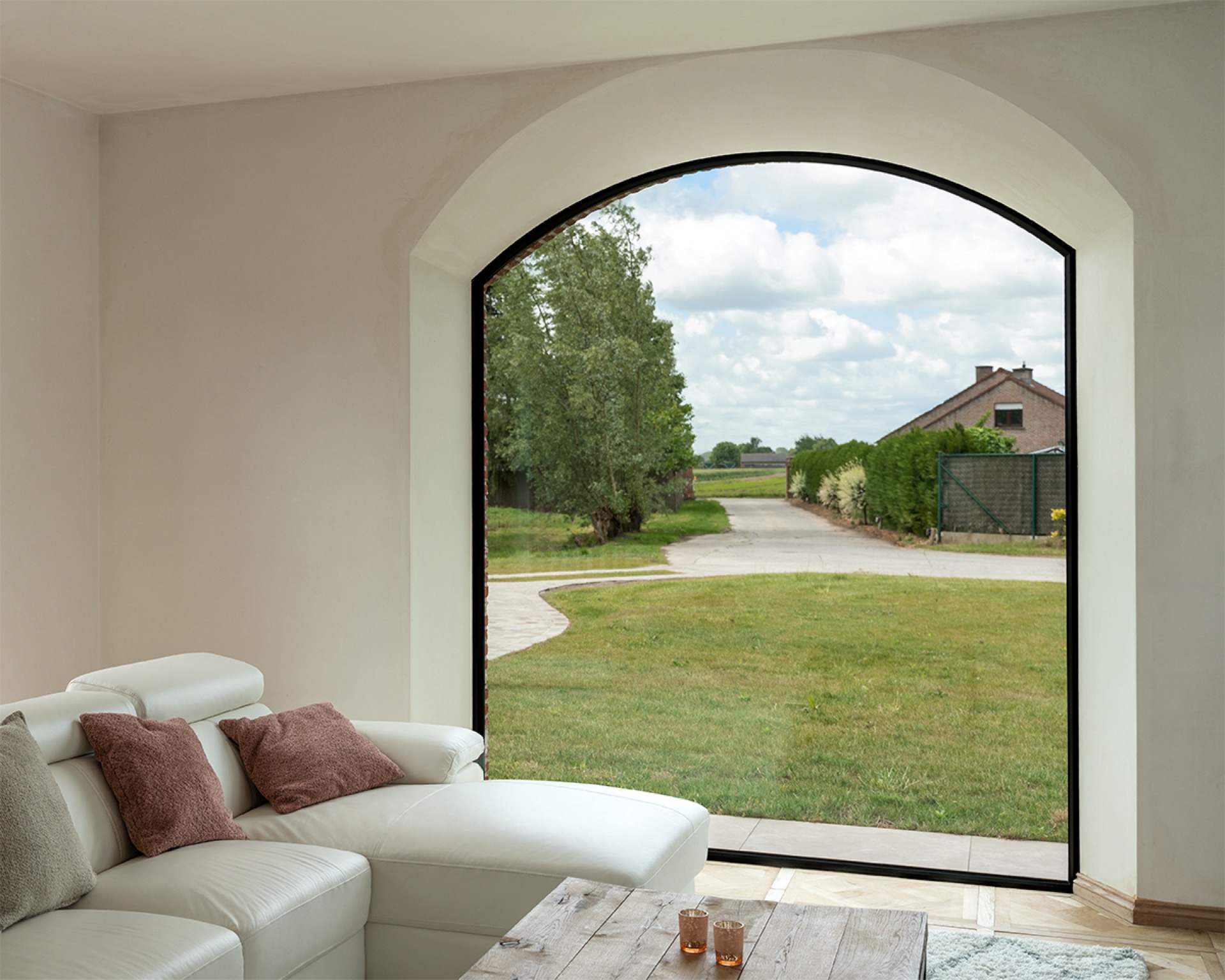
In one of the views, a glazed opening looks toward a terrace and then to the planting beyond. In another, the opening is shaped by an arch, with the white inner wall curving around it and a black frame holding the glass. That rounded form changes the mood of the otherwise rectilinear composition. It also makes the garden connection more gradual, as if the wall pauses before opening outward. The brick country house with wood joinery gains a softer spatial gesture here, without giving up its clear structure.
A rounded opening within a precise envelope
The arched opening is one of the most memorable details in the set of images. It sits against a smooth, pale interior wall and leads the view toward the outdoor path and planting. Nearby, other openings remain square or rectangular, so the curve stands out without feeling decorative. It simply alters the geometry of the room. The effect is subtle but direct: a rounder edge in a building otherwise defined by straight lines, timber frames and brickwork.
This mix of forms is reinforced by the detail shots. A close-up of the glass and hardware shows how the doors close and turn, while another image isolates a black-framed window set into the brick. Together they show that the project is built from small, legible pieces rather than broad gestures. The brick country house with wood joinery keeps returning to that idea: strong masonry, clear openings, and carefully finished edges where hand and material meet.
Details that hold the whole composition together
The most convincing moments are often the smallest ones. A round metal handle against wood. A four-pane black window set deep in the wall. A stone sill under the frame. A doorway whose timber surface shows its grain in the light. These details are not separated from the architecture; they are what make the larger volumes readable. They give the brick walls scale and make the glazing feel intentional rather than simply extensive.
Seen as a whole, the house balances enclosure and openness through material, not through decoration. Brick gives the building its weight, afrormosia adds a warmer touch to the joinery, and the black painted frames draw the openings into a sharper line. The garden then becomes part of the daily view, reached through glass doors and framed by large openings. It is a clear example of how a brick country house with wood joinery can use a limited palette to produce a precise and measured domestic setting.
Photography – Sten Van Slycke
Want to see more of Pouleyn? View the page of Pouleyn for even more great projects and company information.


NEW 2026 Jubileum Edition The Best Interior Designers Benelux
Order Now €125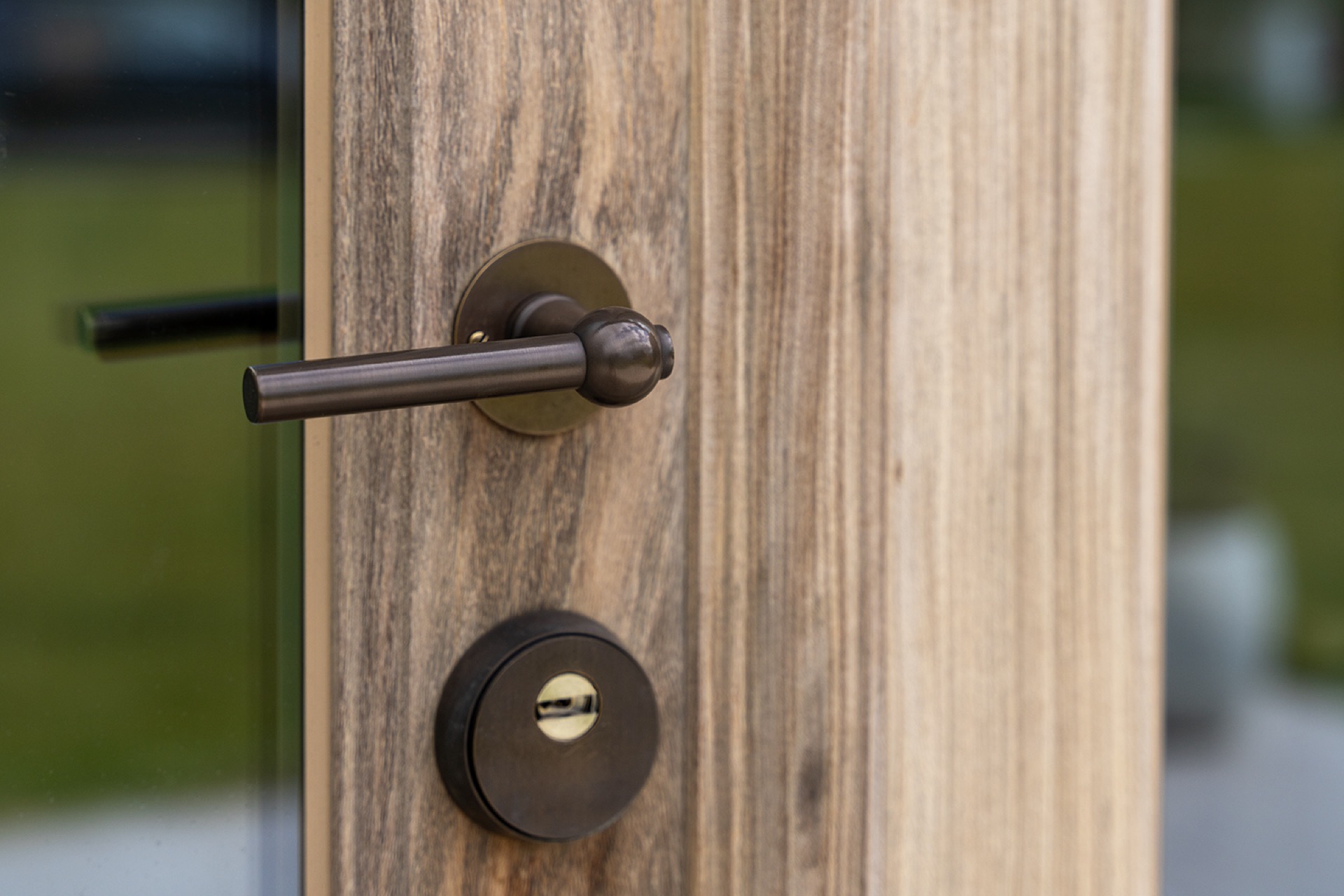
NEW 2026 Jubileum Edition The Best Interior Designers Benelux
Order Now €125