








Bronze aluminum door in a modern interior
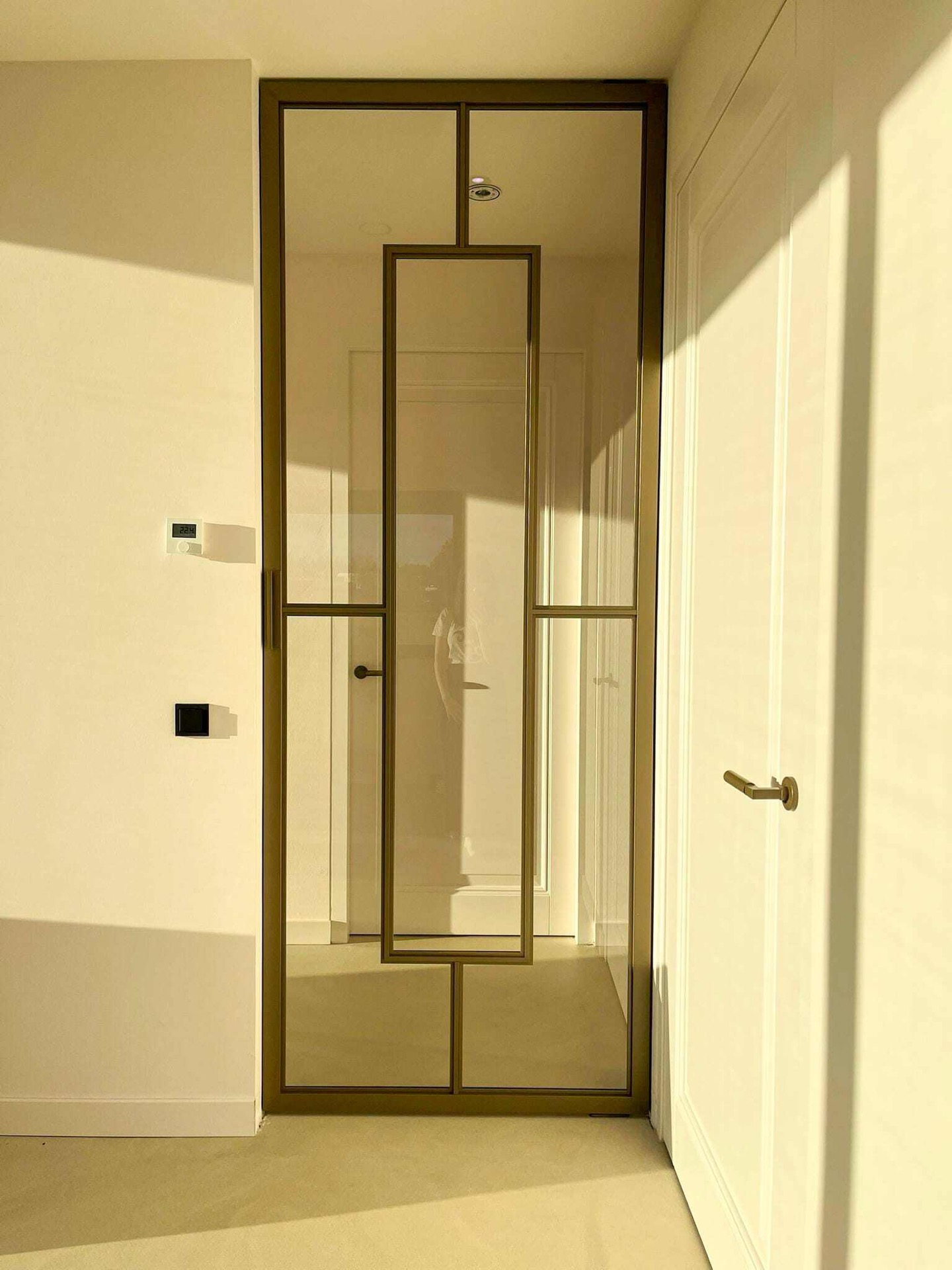
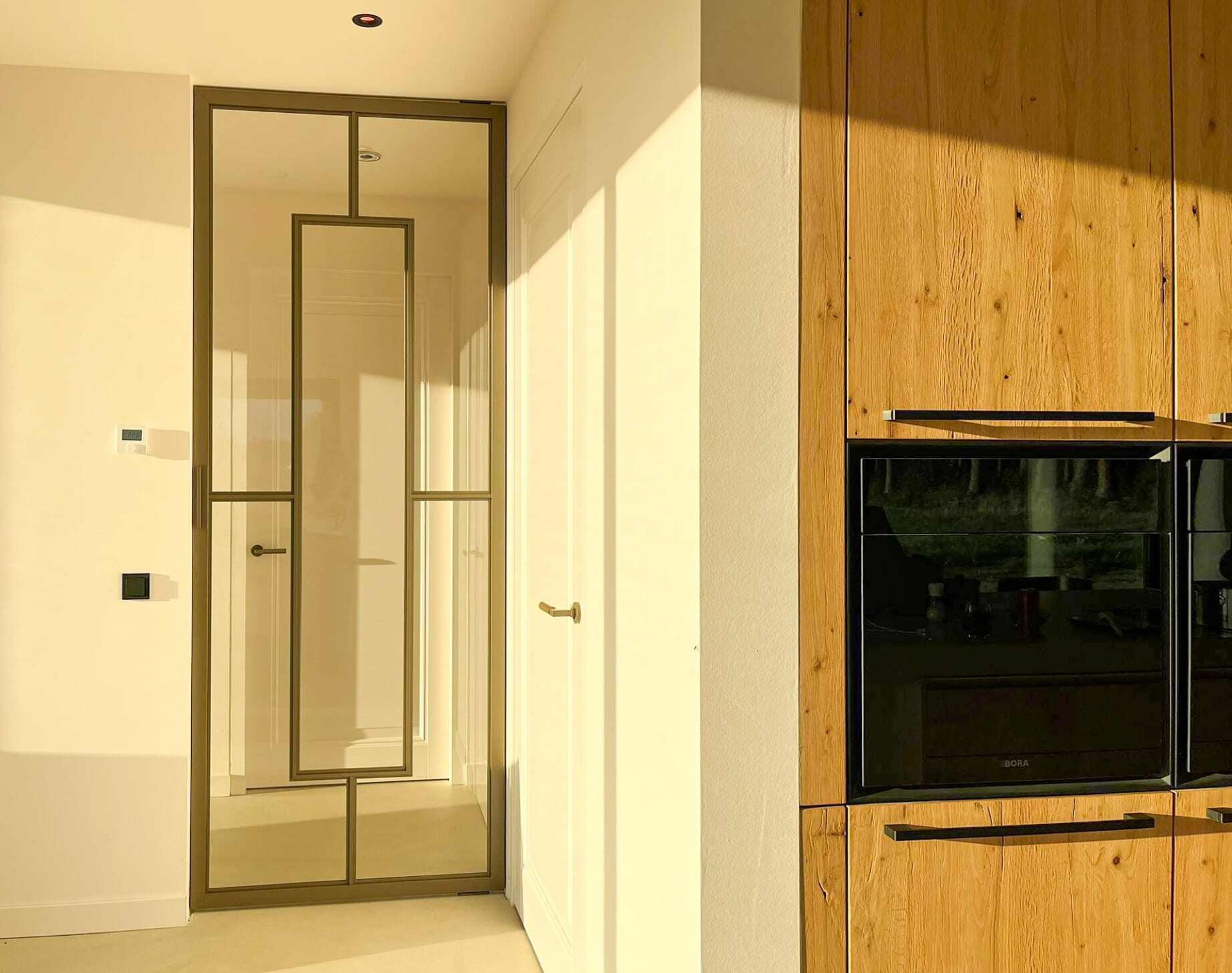
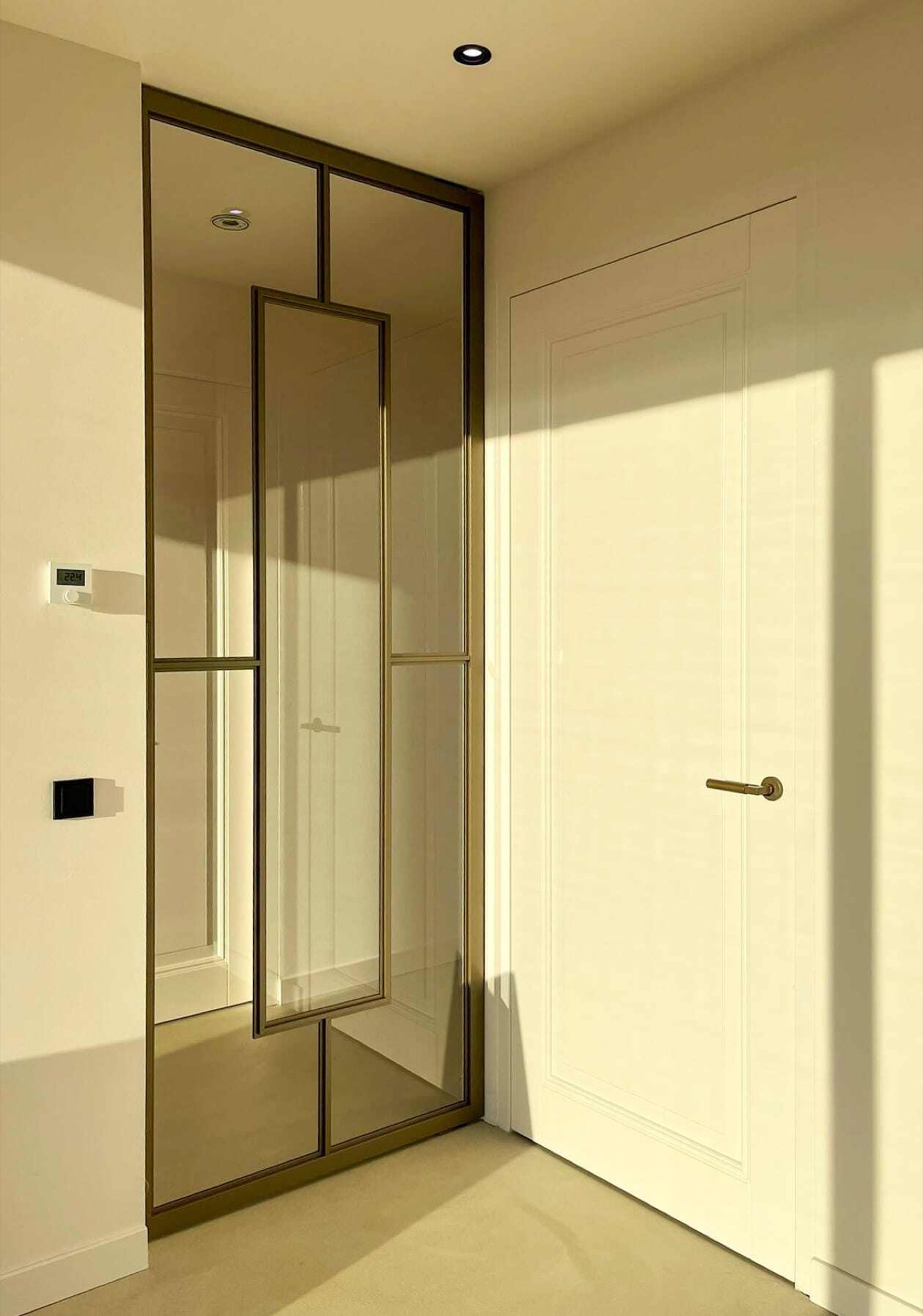
A bronze aluminum door sets the tone as soon as the eye reaches the glazed opening. The frame reads as a slim line against pale walls, while the bronze finish shifts the surface from practical joinery to a visible part of the room. Light catches the glass and the metal edges differently, which gives the assembly a layered look without adding visual noise. In this modern bright interior, the custom door works as a measured transition rather than a hard stop between spaces.
A glazed opening with a clear rhythm
The glass door assembly is built around straight verticals and a symmetrical glass layout that keeps the composition steady. Small changes in reflection move across the panels, especially where daylight lands on the bronze profile. The result is easy to read: glass, frame, edge, and opening, each with its own line. That clarity suits the surrounding white walls and the restrained trim, where every junction is left visible instead of hidden behind extra material.
Seen from farther back, the door does more than connect two rooms. It sets up a view through the interior, letting the eye travel across the opening and into the next space. The proportions stay calm because the frame remains narrow, and the glass sections keep the construction open. A clean frame detail gives the assembly its precision, especially where the corner joints meet and the profile changes direction without exaggeration.
Bronze tone against pale surfaces
The bronze aluminum door gains much of its effect from contrast. Pale walls and a light ceiling keep the room bright, so the darker frame reads sharply without feeling heavy. A warm wood panel appears in the background and adds another note to the setting, but the door stays in charge of the composition. The metal finish brings a deeper color to the center of the view, and the glass lets that color repeat in faint reflections rather than in solid blocks.
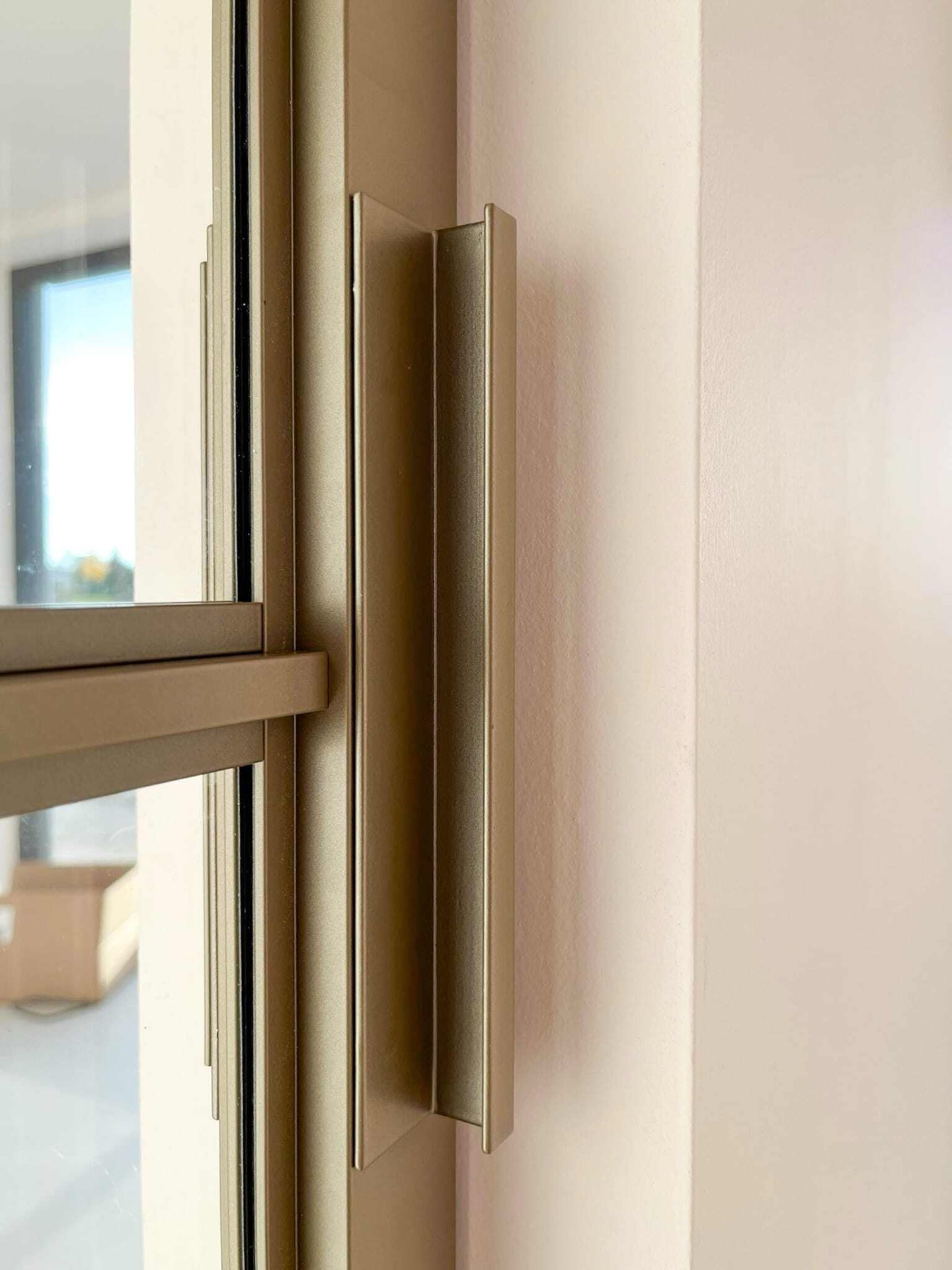
That mix of materials is easy to trace in the details. The profile follows the edge of the opening with a steady line, the glazing sits neatly within it, and the handhold on the door leaf marks the practical side of the assembly. Nothing here depends on ornament. The custom door makes its point through proportion and alignment, where the spacing between frame elements stays consistent and the visible parts meet with a crisp edge.
Where the frame does the work
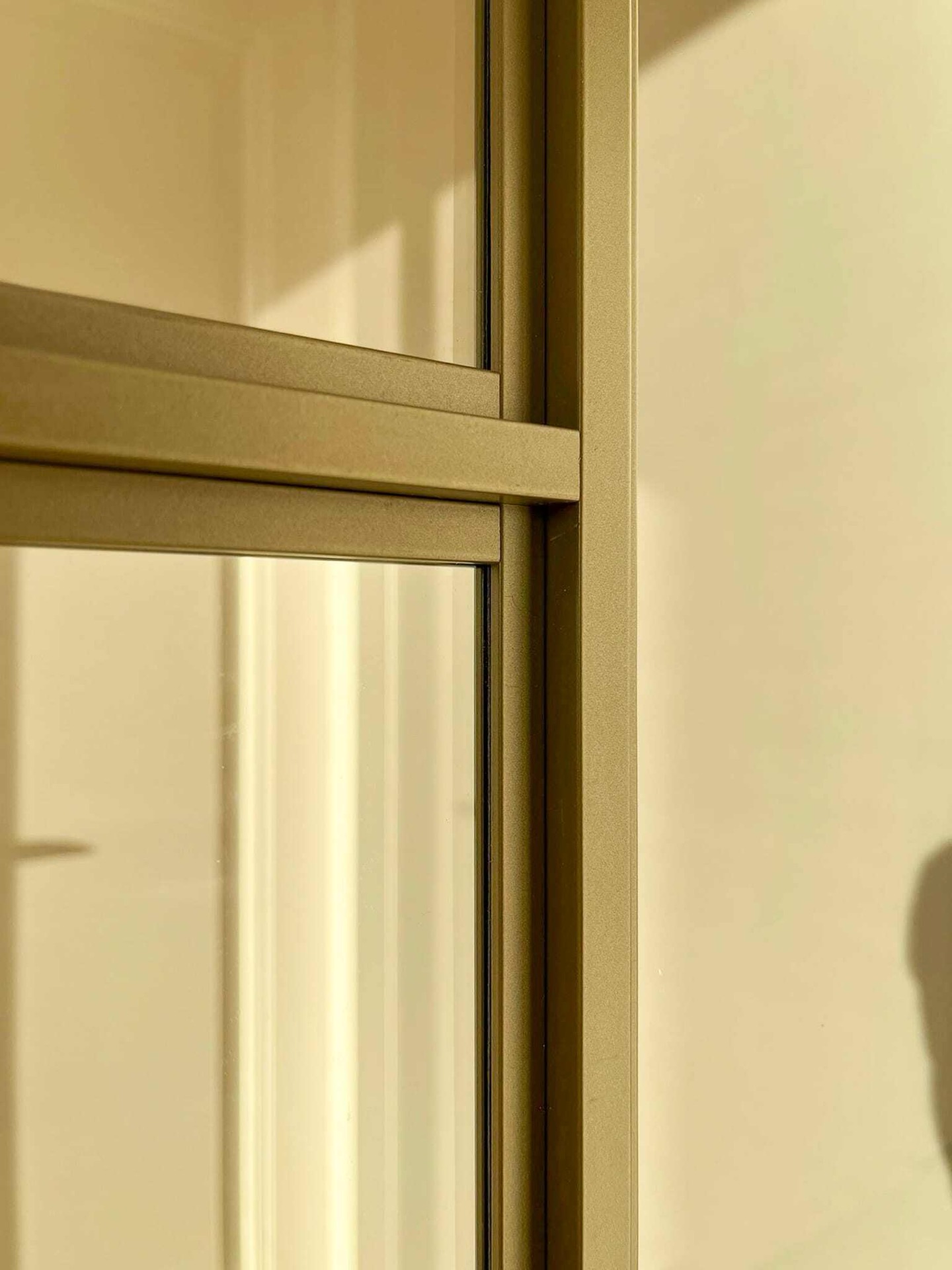
Close-up images show how much depends on the frame itself. The bronze surface is narrow, but it carries the composition by holding the glass in place and by drawing a clear outline around each panel. At the corners, the lines stay straight and the junctions are tight, which keeps the opening from feeling fragmented. These details matter because the door is not treated as a separate object; it is woven into the room through its edges and its exact fit.
The same precision appears in the vertical profile strips around the glazing. They give the door its cadence and make the symmetrical glass layout read from both near and far. In the bright setting, sunlight glances off the metal and lands on the white wall beside it, sharpening the border between opening and surface. That is where the project becomes most legible: in the way the bronze line, glass plane, and adjacent wall hold their positions.
A custom door that keeps sightlines open
This custom door belongs to a layout that values visual continuity. Through the glass, one space remains connected to the next, and the opening never feels sealed off by a solid panel. The arrangement supports movement without drawing too much attention to itself, even though the bronze finish gives it a strong presence. Because the framing stays slim, the eye keeps reading through the doorway and past the reflected light on the glass.
The door leaf includes visible hardware, which adds a small but important counterpoint to the refined frame lines. It reminds the viewer that this is a working interior element, not only a display piece. At the same time, the geometry stays disciplined: straight uprights, measured spacing, and repeated glass openings. Those parts turn the assembly into a clear architectural line within the modern bright interior, where light and reflection do much of the visual work.
Details that stay visible
What stands out in the details is the refusal to overstate anything. The bronze aluminum door does not rely on thickness or decoration. It uses alignment, proportion, and material contrast. The frame edges sit cleanly against the wall finish, and the glazed sections keep the room open to sightlines that continue beyond the doorway. Even in close view, the construction remains easy to read because the parts are separated clearly and the transitions are left plain.
That clarity is what gives the project its character. A glass door assembly like this can disappear if the frame is too weak, or dominate if it becomes too heavy. Here, the balance comes from the slim profile, the bronze tone, and the symmetrical glass layout working together in a restrained way. The door becomes a structural line in the interior, guiding the view through the space while keeping the room bright and visually open.
Why the bronze finish changes the room
Bronze changes how the opening reads. Against the light interior, it adds depth to the doorway and makes the frame stand out without turning it into a dark block. The finish also softens the glass, since reflections pick up the metal tone and spread it across the panels in a subtle way. That effect is strongest in daylight, when the profile edges sharpen and the glazing shows both transparency and reflection at once.
The project depends on that measured contrast. The bronze aluminum door, the clean frame detail, and the glass door assembly together create a passage that looks precise from every angle shown in the photographs. In a modern bright interior, that kind of restraint is hard to miss: the door holds the room together through line, light, and exact placement rather than through size or ornament.
Want to see more of Pro Ovi? View the page of Pro Ovi for even more great projects and company information.

NEW 2026 Jubileum Edition The Best Interior Designers Benelux
Order Now €125