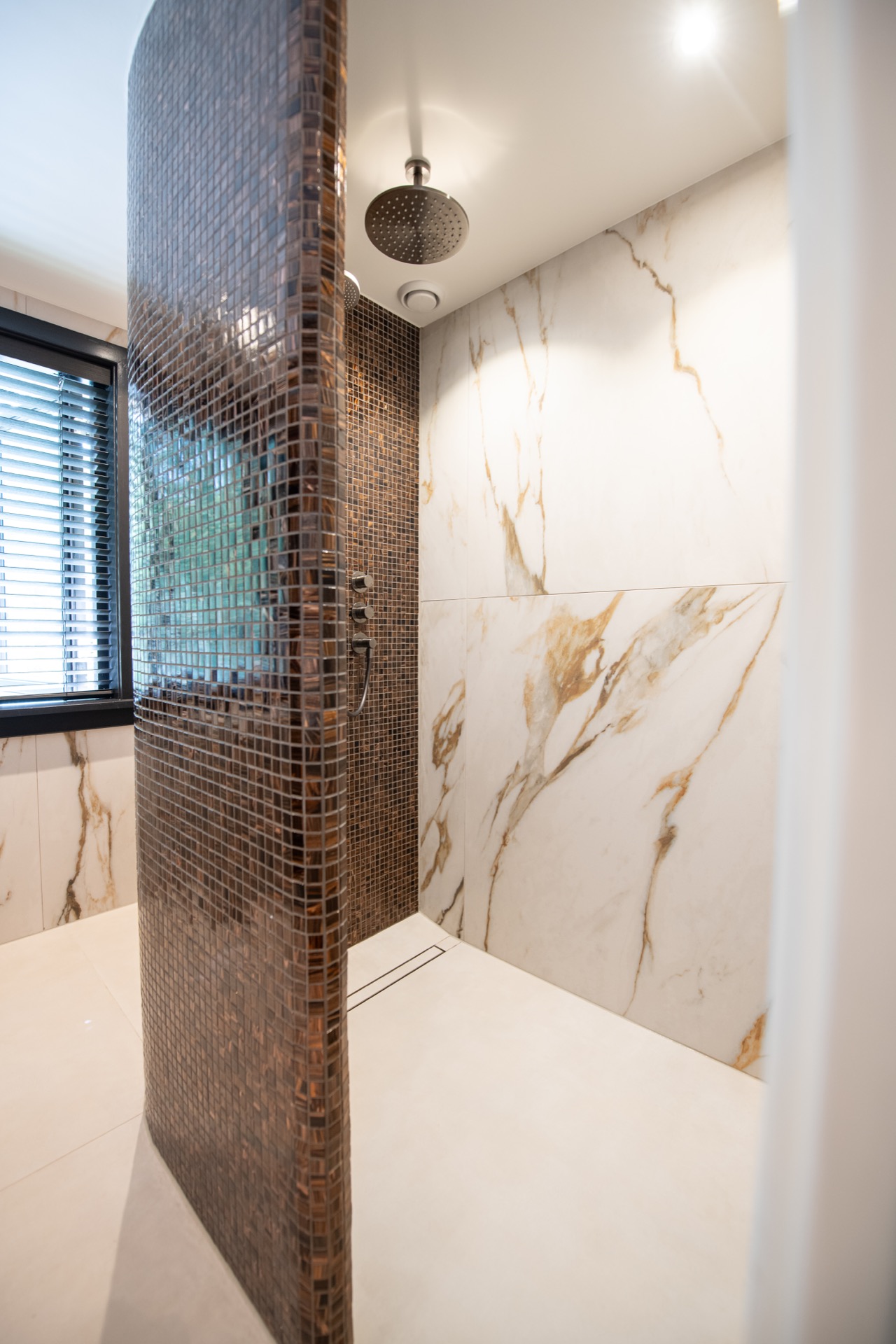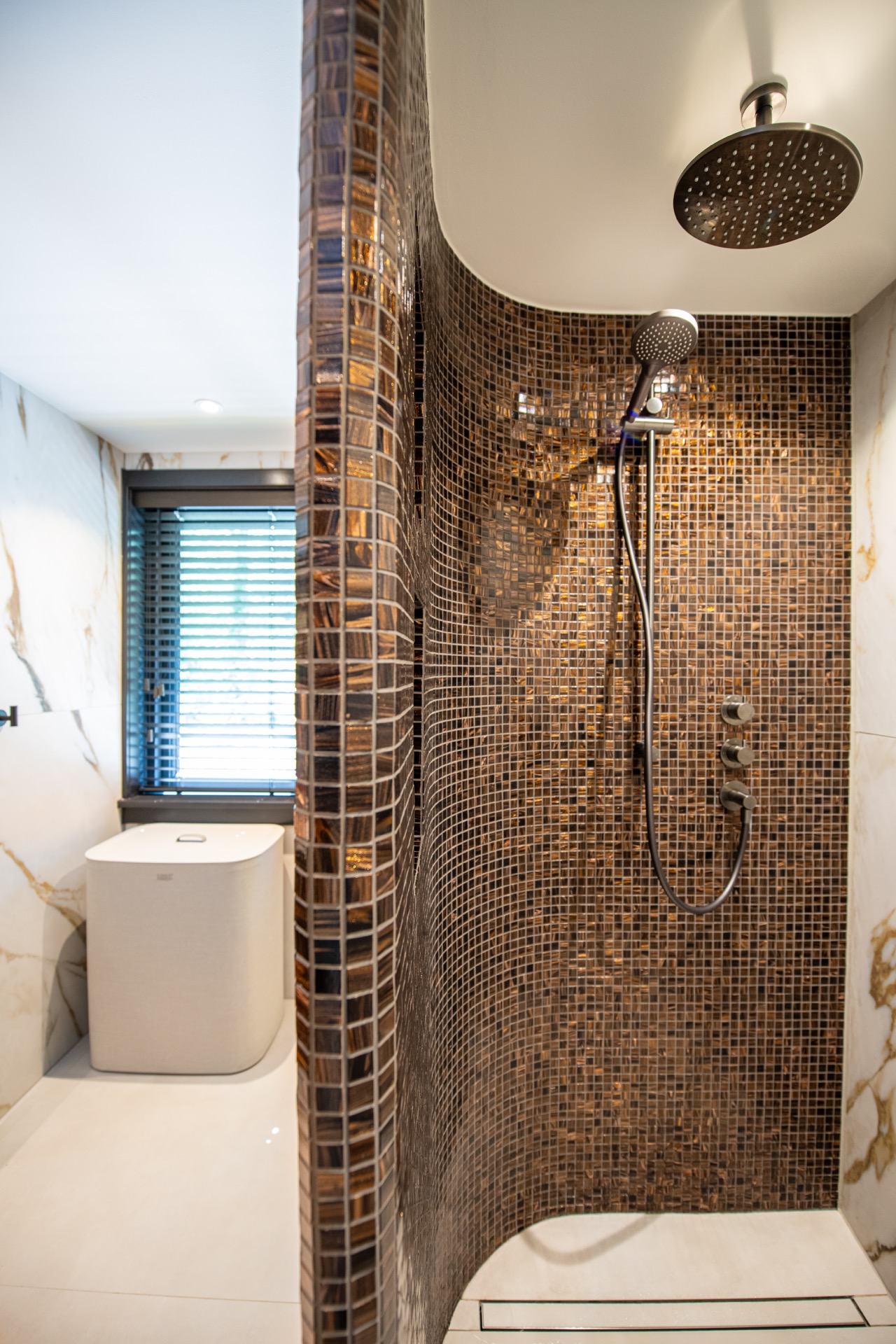






The bronze mosaic shower catches the eye first. A transparent glass panel keeps the walk-in zone open, while the curved glass mosaic in warm bronze tones turns the shower wall into the clearest gesture in the room. Around it, marble-look bathroom tiles hold the background steady with soft veining and a calmer surface. The contrast is direct: gloss against matt, curve against plane, bronze against pale stone tones.
bronze mosaic shower as the architectural starting point
From across the room, the bronze mosaic shower reads as a vertical strip of light. The glass mosaic has a rounded, almost column-like geometry, so the surface does more than catch reflections; it also shapes the edge of the shower area. In the opening, the transparent glass panel keeps the line of sight open to the marble-look wall tiles, which makes the shower feel set into the room rather than closed off from it.
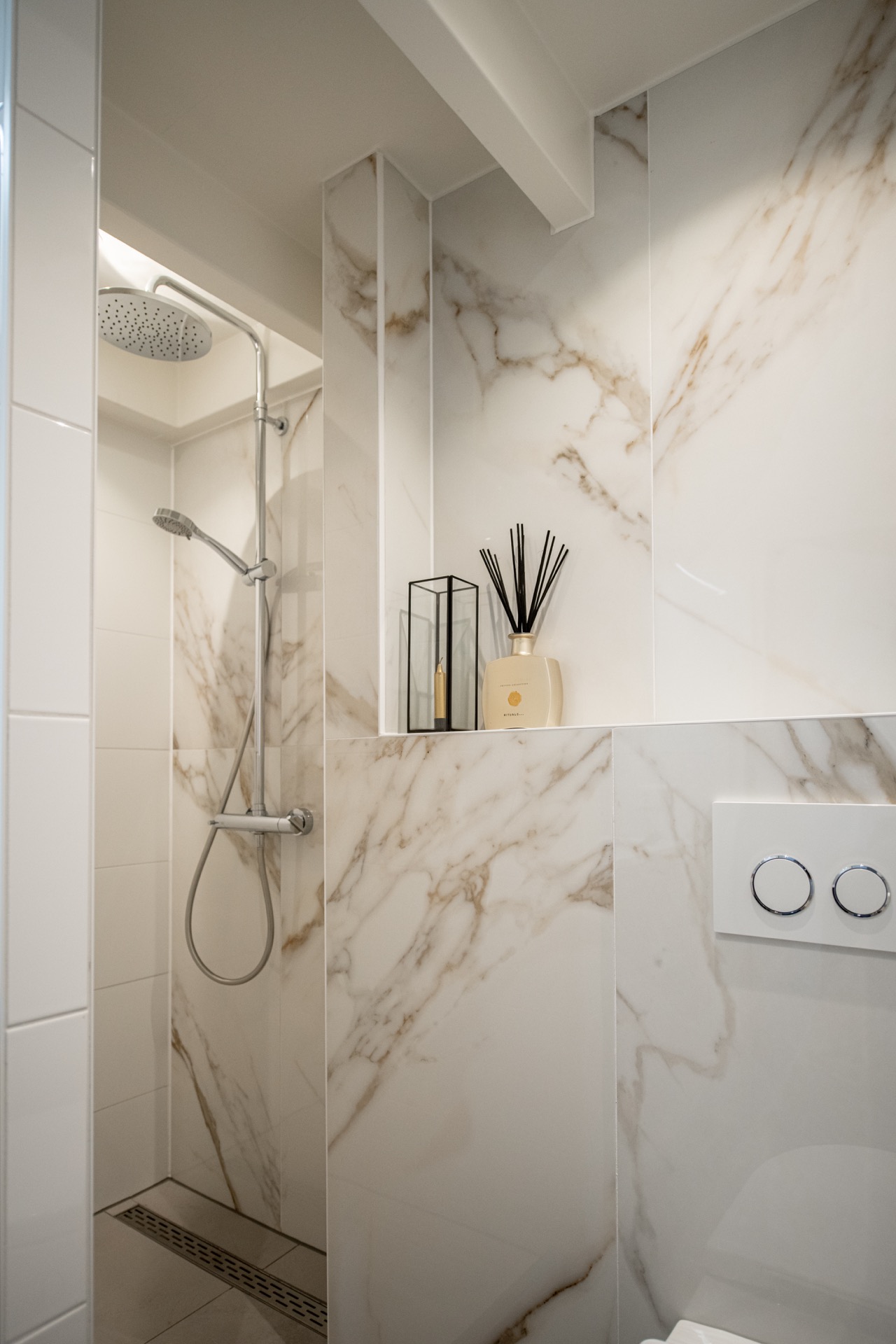
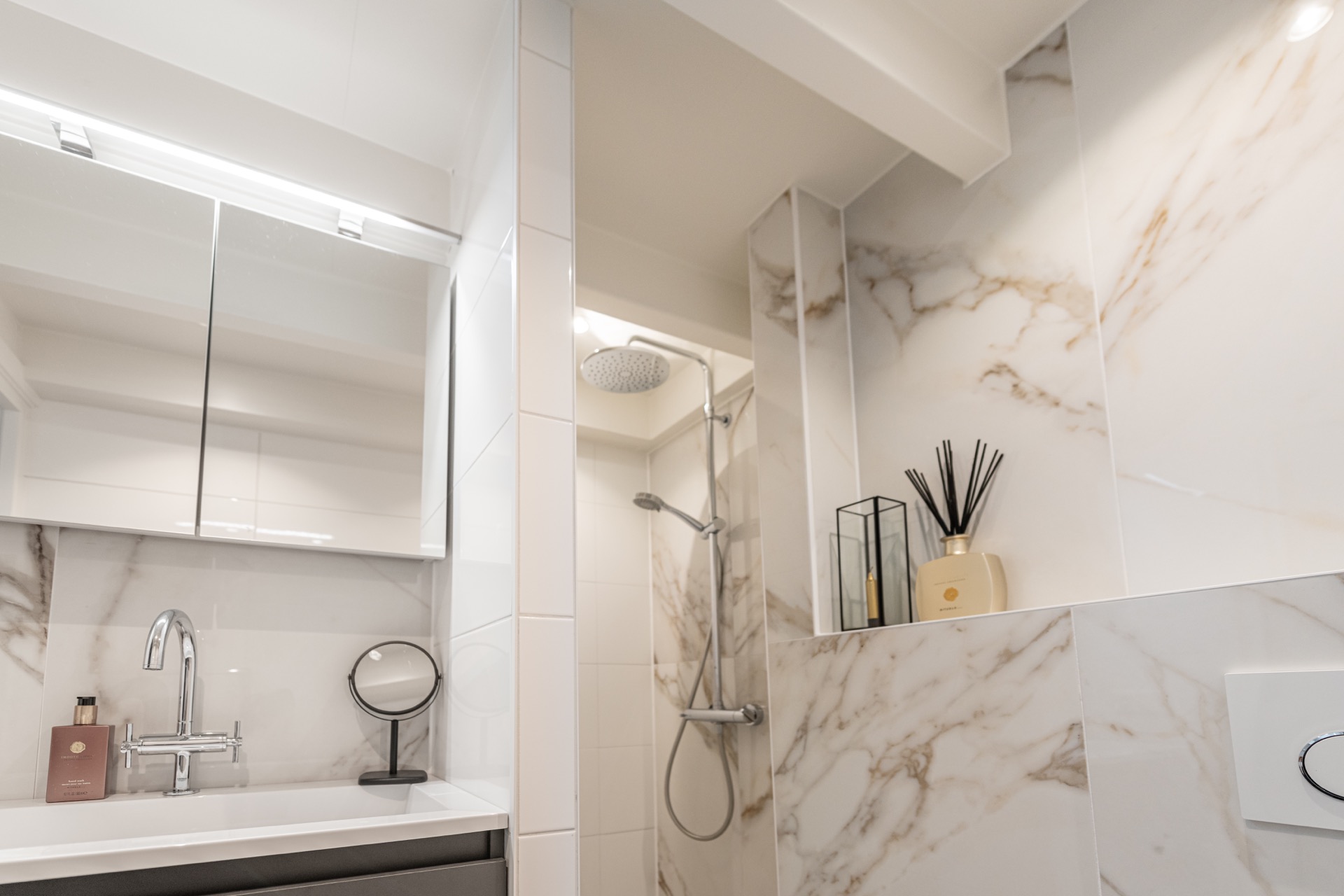
The wall finish around the shower stays restrained. Large marble-look tiles frame the area with broad joints and a calm tone, letting the bronzed mosaic do the talking. That choice matters in a bathroom of this size and layout: the eye moves from the quiet tile field to the shimmering shower wall and then back again. The effect depends on proportion as much as material.
Large-format tiles that keep the room open
The bathroom is finished with 120 x 120 cm tiles, and their scale changes how the surfaces are read. Instead of breaking the room into many small parts, the large-format tiles create longer lines and fewer interruptions. On the walls, they support the marble-look effect; on the floor, a complementary tone carries the same calm rhythm underfoot. The result is not decorative in itself. It lets the bronze accents stay sharp.
Because the tiles are so large, the corners and transitions become easier to notice. The shower area, the floor edge and the wall returns all sit in a clean grid. That grid gives the room its structure, especially where the transparent shower screen meets the bronze mosaic and where the marble-look tiles meet the darker stone-like surfaces elsewhere in view.
Marble-look bathroom tiles with warmer accents
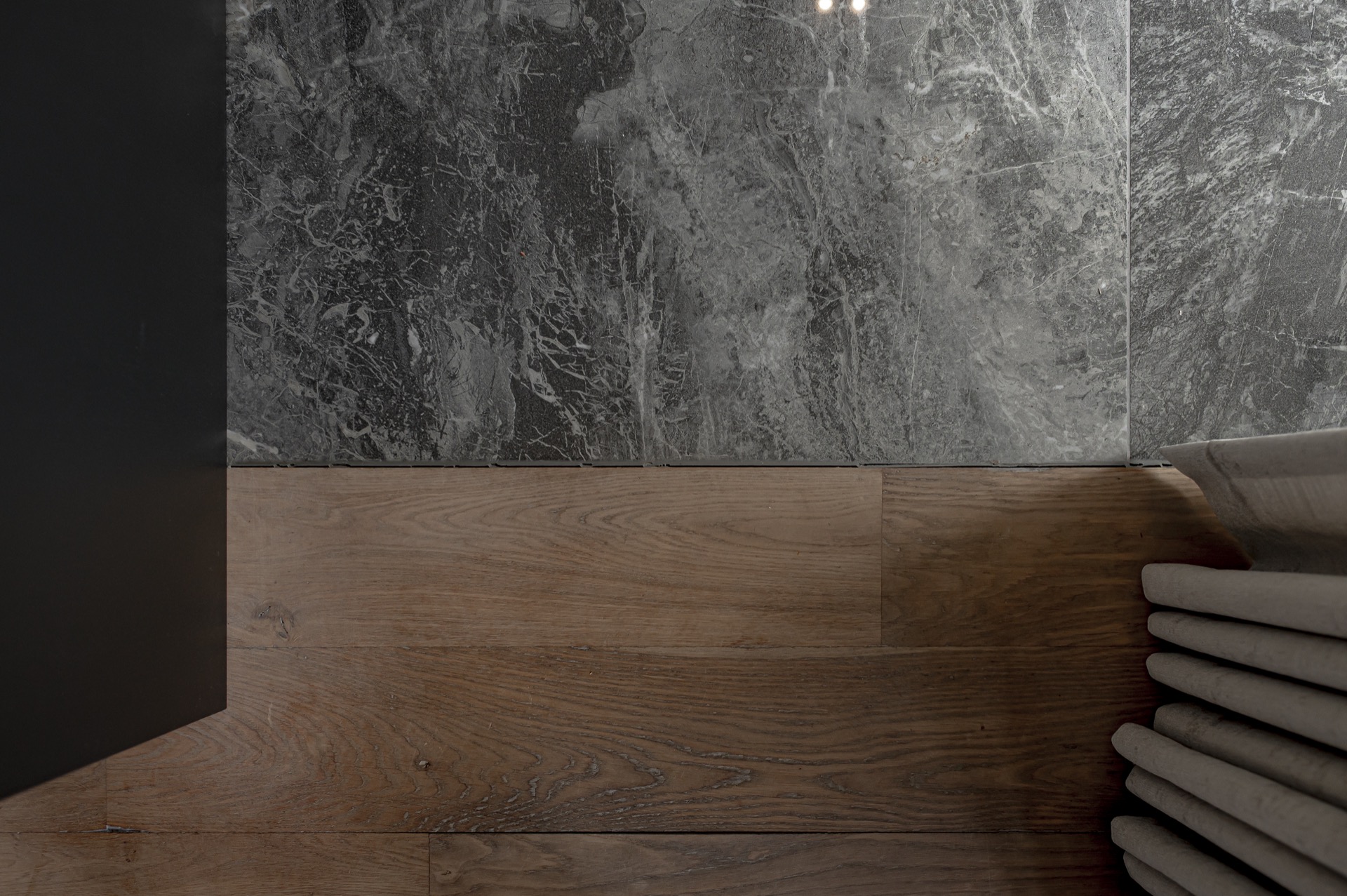
The marble-look bathroom tiles are the most continuous surface in the composition. Their pale base and warm veining keep the room from becoming too cold, even with the glass and chrome details. A grey stone-look wall appears in the broader bathroom view as well, which strengthens the sense of layered materials rather than a single tiled envelope. These surfaces are quiet, but they are not blank; their subtle patterning gives the bathroom a slower pace.
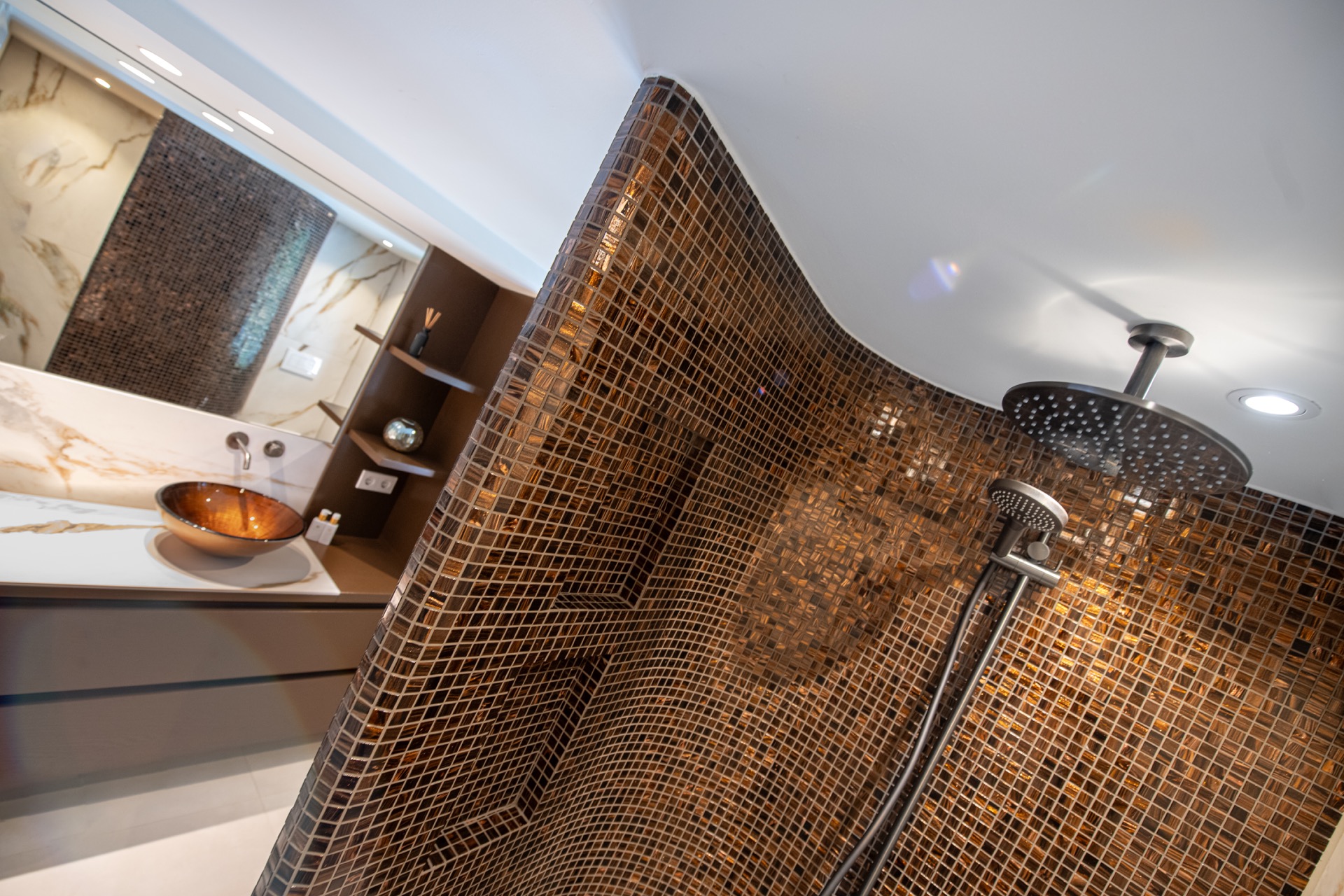
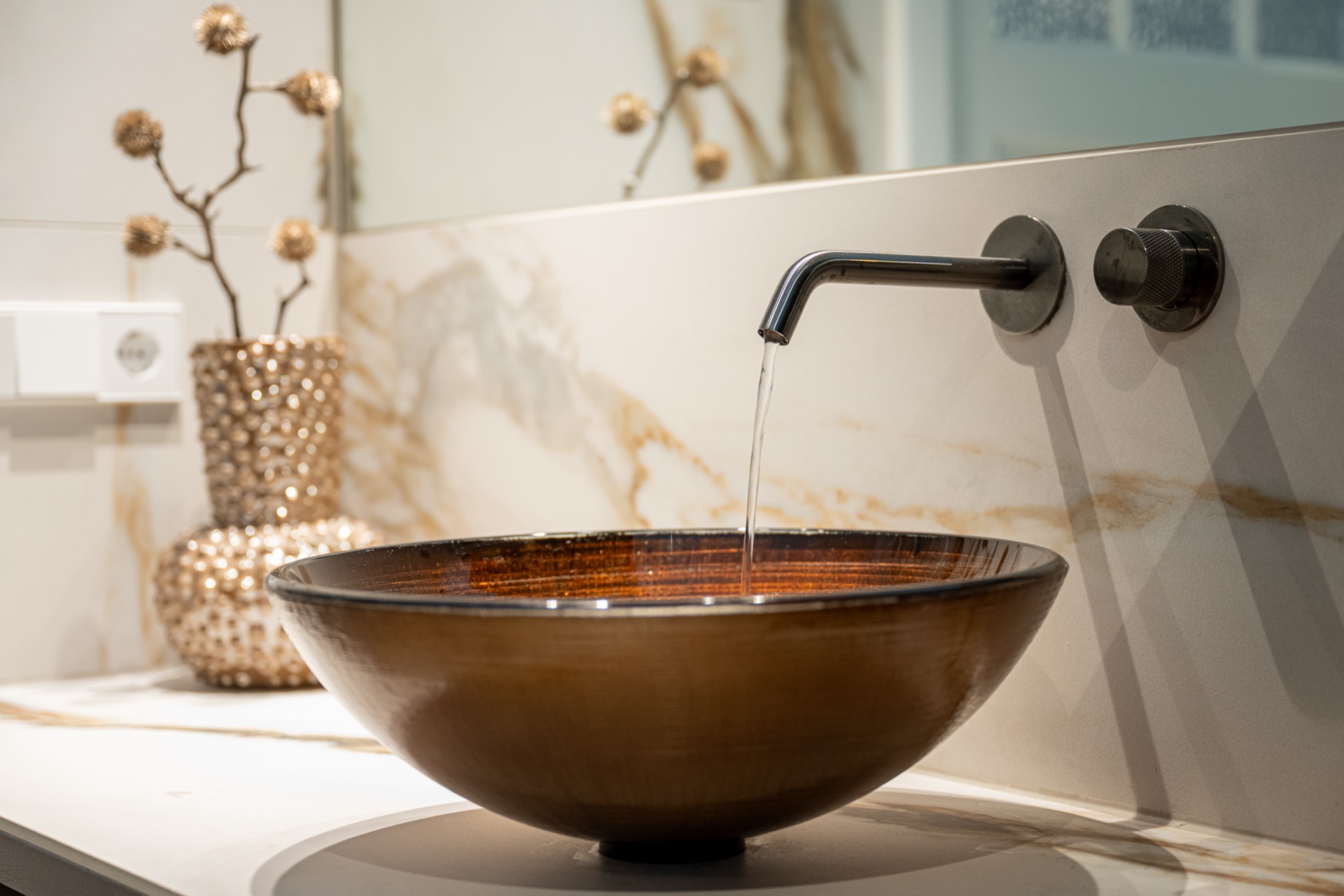
That calm background is what makes the bronze details work. The round bronze washbasin, seen beside the shower area, repeats the warmer palette in a smaller object. It connects the shower wall to the basin zone without copying the same finish exactly. The chrome-look tap beside it adds a sharper note and keeps the basin from blending into the surrounding tiles. That makes the bronze mosaic shower part of the architectural character rather than a loose finish.
Curved bronze glass mosaic in the shower niche
The most detailed part of the shower sits in the niche. Here, the curved bronze glass mosaic wraps the indentation and brings the shower fittings into the same visual field. The niche is not treated as a hidden storage recess; it becomes part of the composition. Visible shower heads and controls sit against the bronze mosaic, so the functional elements are framed rather than left to disappear into the wall.
Seen closely, the mosaic has a rounded quality that softens the harder tile edges around it. This is where the bronze mosaic shower becomes more than a single accent wall. It bends around the opening, follows the line of the niche and then reappears in smaller surfaces elsewhere in the bathroom. The repetition is measured, which keeps the room from feeling overworked.
A rounded mosaic accent wall near the toilet
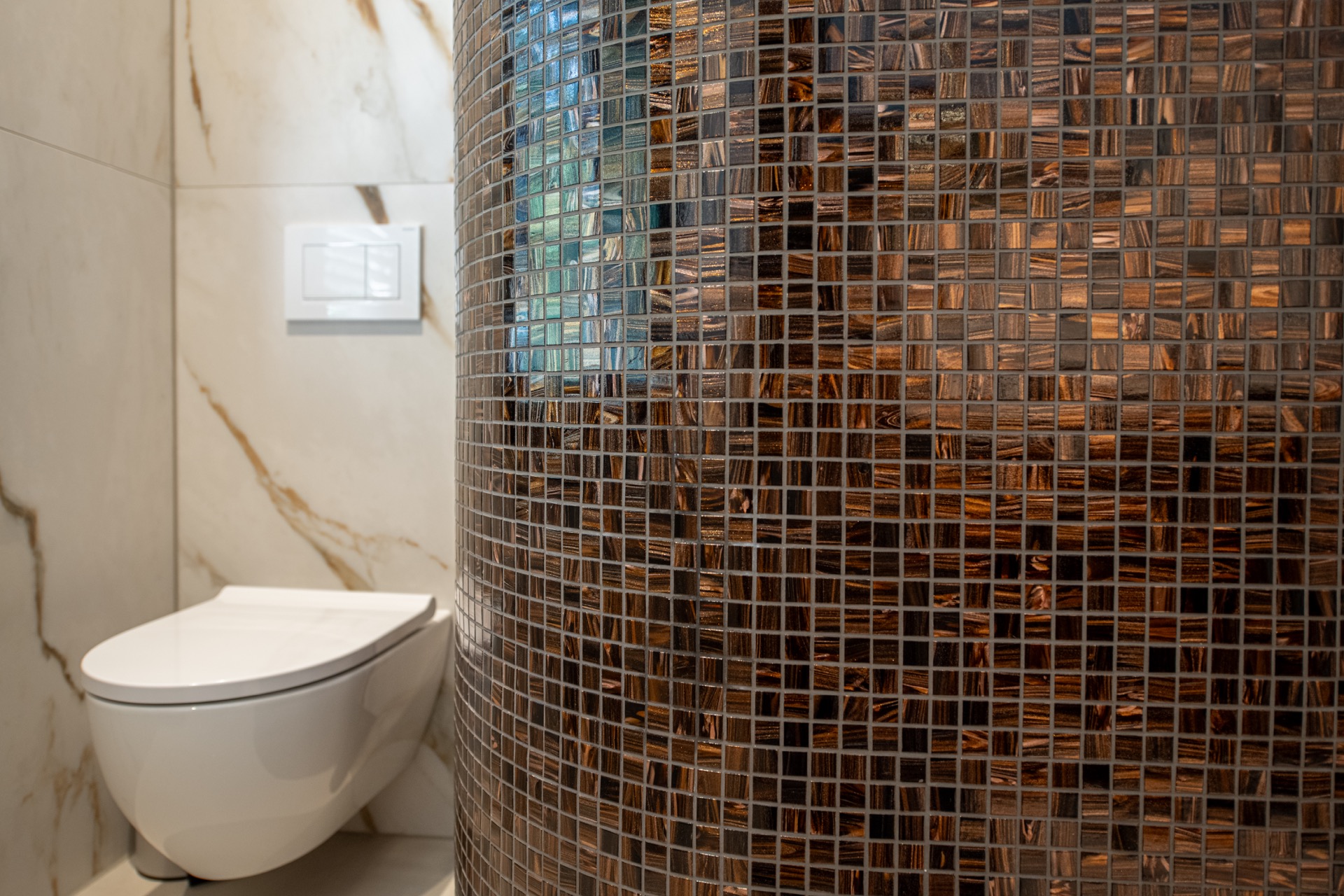
The toilet area brings the same language back in a different scale. A rounded mosaic accent wall sits beside the sanitary fixture and echoes the curved geometry seen in the shower. The brons-toned hexagon tiles add texture without turning the wall busy. Their shape is visible enough to register from a distance, yet small enough to read as a detail once you are closer to the toilet zone.
That accent wall also shows how the bathroom uses mosaic in short, precise moments. It does not cover every surface. Instead, it appears where the layout changes or where a smaller wall can take a stronger pattern. The rounded form helps the toilet area relate to the shower wall, so the room feels connected through shape rather than through a repeated finish.
Small details that keep the material palette consistent
Across the bathroom, the material choices stay focused. The bronze mosaic shower remains the main feature, but the basin, the toilet wall and the stone-look floor all support it in different ways. A wood-look or stone-look floor detail appears in the broader view, adding another layer of texture beneath the tiled walls. Nothing here is overstated. Each surface has a role, and each one stays readable on its own.
What gives the room its strength is the way the shapes repeat. The shower niche curves, the basin rounds off, the mosaic accent wall turns soft at the edge. Even the transparent glass panel contributes to that reading by removing visual weight from the shower front. In the end, the bathroom is defined less by ornament than by the line of the bronze mosaic shower, the marble-look bathroom tiles around it, and the careful pauses between those surfaces.
Photography – TEGL That makes the bronze mosaic shower part of the architectural character rather than a loose finish.
Want to see more of ? View the page of for even more great projects and company information.
.png)