









Modern home with a bronze niche in the kitchen
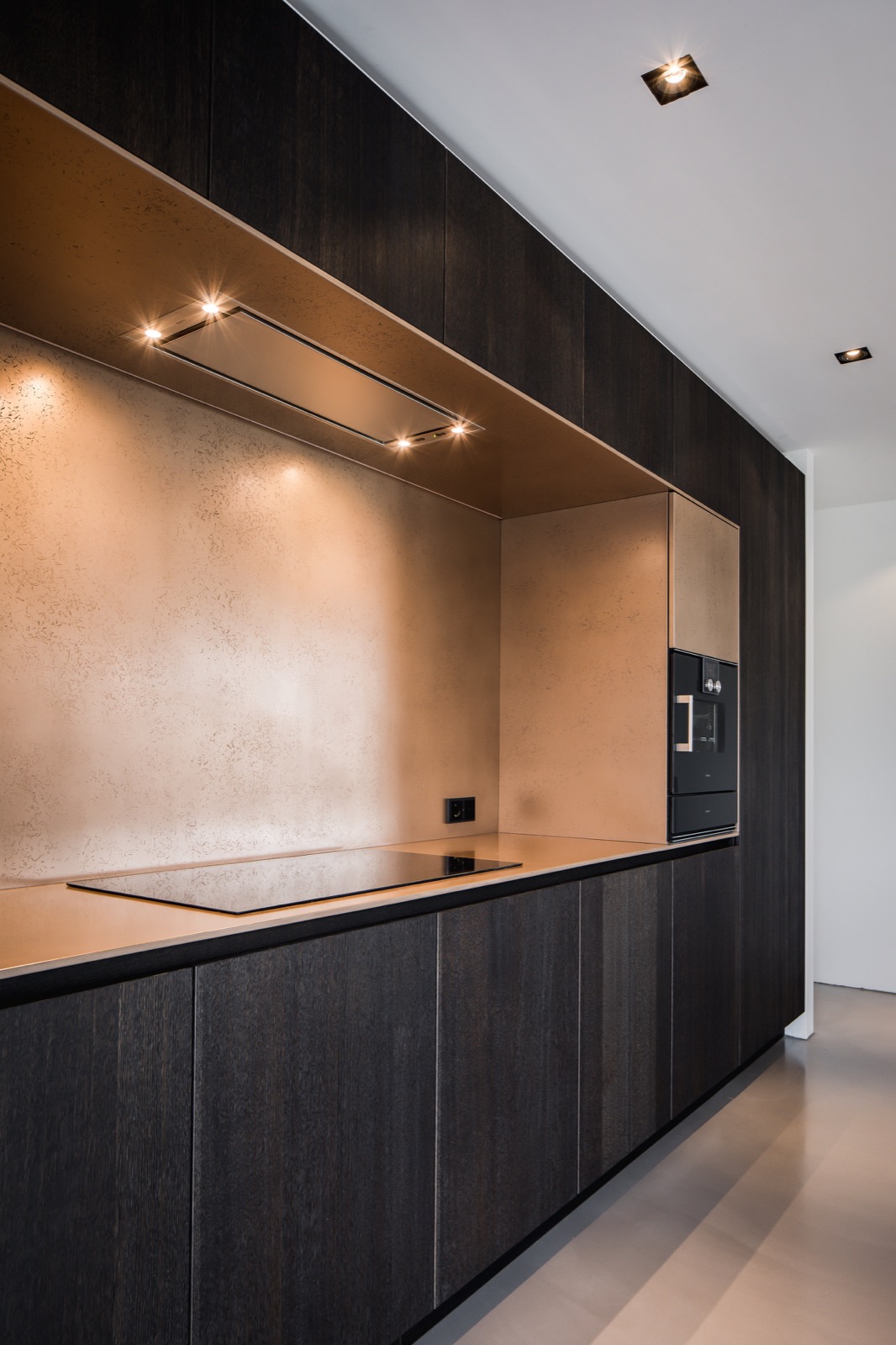
The bronze niche in the kitchen catches the eye before anything else. Set into the wall like a measured cut-out, it breaks the otherwise restrained interior with a material that reflects light in a subdued way. The result is not loud, but it is memorable. Within this bronze niche kitchen, the surface acts less like decoration and more like a precise intervention, one that gives the room its strongest line of tension.
Bronze set into the kitchen wall
Brass-colored metal would have felt too familiar here; bronze gives the opening a denser tone. That choice matters because the niche is not treated as an add-on. It sits in the kitchen as a built-in feature, shaped through a special process that made this form possible. The source notes that bronze had not been used in a kitchen in this way before, and that detail explains why the bronze niche kitchen reads as a clear design decision rather than a passing accent.
The surrounding interior keeps its distance from the bronze. Surfaces remain calm, allowing the recessed form to carry the weight of the composition. That quiet interior design is visible in the way the room avoids competing gestures. Nothing around the niche tries to outshine it. Instead, the wall opening becomes a focal point because the rest of the kitchen stays controlled, direct, and free of excess.
A unique kitchen interior built from restraint
The project works because the materials do not crowd one another. The bronze niche is the most expressive element, yet it sits inside a broader unique kitchen interior that relies on restraint rather than spectacle. The architect behind the concept is known for calm forms and unusual materials, and that approach comes through here in the measured use of surfaces. The kitchen does not rely on color shifts or decorative layering; it relies on one clearly defined intervention.
That restraint also gives the room a slower rhythm. A niche opens into the wall, pauses the eye, and then sends it back across the room. It is a small move, but a deliberate one. Because the bronze finish sits within an otherwise quiet setting, the kitchen keeps its clarity even while it carries a distinct material presence. The effect is specific rather than broad, which suits a room intended to be seen in detail.
How the bronze niche changes the room
What the niche does best is alter proportion. A recessed opening changes how a wall is read, especially when the finish has enough depth to catch shadow along its edges. In this bronze niche kitchen, the opening becomes a line of focus that gathers light at its surface and darkens at its recess. That contrast is subtle, but it gives the kitchen more structure than a flat wall would have offered.
The project text makes clear that the bronze finish was realized through a special process, carried out to meet the design challenge set by the interior plan. That matters because the material is not simply applied; it is formed into a shape with a specific architectural role. The niche then supports the kitchen as a practical and visual element at once, which is why it reads as an interior solution rather than a loose decorative gesture.
Quiet interior design beyond the kitchen
The same controlled mood continues outside the kitchen zone. A white door hallway appears in the image as a transition space, with black door hardware set against flat white plastered walls. The light wood floor hallway softens the passage without drawing attention away from the doorway. It is a simple sequence of white, black, and pale timber, but the effect is clear: the circulation space prepares the eye for the stronger material move in the kitchen.
That hallway scene helps frame the rest of the interior. The black door handle and fittings are crisp against the white doors, while the light floor keeps the route from feeling heavy. There is little visual noise. Instead, the passage depends on clean lines and open light at the end of the corridor. Seen beside the kitchen, this quieter zone reinforces the project’s preference for measured gestures over busy decoration.
Materials kept in check
Much of the strength of the project lies in what is left understated. The bronze niche carries the highest level of material emphasis, but it is supported by a broader palette that avoids clutter. White surfaces, dark hardware, and pale wood create a frame around the more assertive finish. In a bronze niche kitchen, that frame is essential: without it, the niche would lose some of its clarity and the room would feel overworked.
The contrast between the kitchen and the hallway is useful here. One space concentrates attention into a single recessed form; the other reduces itself to lines, doors, and floorboards. Together they show a house that prefers exactness over display. The interieurbouw behind the interior gives the project its physical precision, while the design concept keeps the mood calm enough for the bronze to stand out without becoming heavy.
A kitchen detail that carries the whole interior
What makes the bronze niche kitchen convincing is the way it changes the feel of the room without demanding extra elements. The niche is the point where craft, material, and spatial thinking meet. It is also the detail that gives the interior its identity. Even as the rest of the house remains restrained, this opening in bronze signals that the project is willing to use a strong material when the form calls for it.
That is the lasting impression of the interior: a calm setting shaped around one carefully realized intervention. The hallway’s white door surfaces, the black hardware, and the light wood floor all prepare the scene, but the bronze niche resolves it. It gives the kitchen a sharper focus and leaves the rest of the rooms free to stay quiet. The result is a bronze niche kitchen that feels considered from the first glance, yet never overstates itself.
Want to see more of Medie Interieurarchitectuur? View the page of Medie Interieurarchitectuur for even more great projects and company information.


NEW 2026 Jubileum Edition The Best Interior Designers Benelux
Order Now €125


NEW 2026 Jubileum Edition The Best Interior Designers Benelux
Order Now €125


NEW 2026 Jubileum Edition The Best Interior Designers Benelux
Order Now €125


