







Built-in steam oven: steam, hot air, and multi-rack cooking
The black front sits flush in the cabinet wall, with the display breaking the surface just enough to show that this is a built-in steam oven, not a standard oven tucked away behind a door. In the lighter kitchen image, the appliance is set into a pale run of fronts; in the darker version, it reads almost as one line of steel and glass. That quiet integration suits a kitchen where the equipment is meant to work hard without taking over the room.
Steam, hot air, and the shift between them
The page describes steam and hot air cooking as the core of the oven’s use. Steam can be selected on its own, hot air can take over on its own, and the two can be combined when the dish calls for both. The text also refers to chef-made presets, which suggests that the built-in steam oven is meant to shorten the path from selecting a program to putting food on the shelf. Nothing about the operation feels theatrical; the logic is direct and close to the cooking itself.
That clarity matters in a kitchen where the oven is expected to handle more than one type of dish. The source text points to an intuitive steam oven control system that releases the right amount of steam and heat at the right moment. On the images, the front panel and program list support that idea: small text, a dark screen, and a compact layout that keeps the interface in view without crowding the appliance face.
Multi-rack cooking without losing consistency
The most practical detail is the way the oven handles multiple levels. The description says that cooking or baking on more than one rack at the same time is no problem, and that the system is designed to keep the result consistent across those levels. With three fully pull-out oven racks, the cavity offers room for different dishes to sit side by side, each on its own shelf. That makes the built-in steam oven read less like a single-purpose machine and more like a compact cooking station.
In the open-oven image, the rails are visible in full extension, and the stainless steel interior gives the levels a clear structure. The pull-out oven racks are not hidden behind a decorative frame; they are part of the working view. That visible movement is useful in a page like this, because it shows how the oven is meant to be loaded, checked, and used while several trays are active at once.
Three pull-out racks, shown openly
The three levels create a vertical rhythm inside the appliance. From the outside, the front stays calm and dark. From the inside, the view shifts to metal runners, shelf edges, and level markers along the side. The contrast is straightforward. One side deals with the kitchen line, the other with the cooking space itself. Together they explain why the page places so much emphasis on multi-rack cooking rather than on appearance alone.
Flush built-in installation with a tight cabinet line
The installed images show a flush built-in installation that sits neatly with the surrounding fronts. The oven is drawn into the cabinet wall rather than standing apart from it, and that makes the surrounding materials—pale lacquer, dark blue panels, wood grain, and stone or tile accents—feel more deliberate. The appliance can be combined with other ovens as well, which is relevant in the tall kitchen compositions shown here, where the built-in stack reads as a single vertical field.
The handle alignment note in the source text adds another layer to that integration. It is not presented as decoration, but as a way to match the oven hardware with the handles of adjacent equipment. In the dark-blue kitchen image, the linear metal handle above the door helps that reading: a straight horizontal detail that echoes the cabinet geometry around it. The result is an appliance that joins the joinery instead of fighting it.
A front that keeps the interface visible
The control panel is one of the clearest visual cues in the set. A dark screen, a concise list of programs, and a small cluster of touch points make the panel easy to read in close-up. The built-in steam oven controls are presented as intuitive, which fits the way the interface is arranged: legible, compact, and positioned where the hand naturally reaches. In the lighter kitchen, the appliance front disappears into the wall of cabinetry until the screen catches the eye.
That restraint extends to the oven door itself. The dark glass panel and slim metal frame keep the front flat, while the open-door image gives a better sense of depth. Inside, the cavity is structured rather than ornamental. Stainless steel runners, precise edges, and the full extension of the shelves are the details that define the view. The page does not need extra language; the appliance already shows its use through those parts.
Designed to sit with other ovens
Because the oven can be paired with other ovens, the overall impression is one of stacking and repetition rather than a single isolated unit. In the tall cabinet compositions, the appliance becomes part of a larger vertical composition, where door lines, gaps, and display windows are lined up across the wall. That is the point of the flush built-in installation: the oven belongs to the cabinet rhythm, while still giving the user a clear interface and access to the cooking space.
The different kitchen settings in the images make that flexibility easy to read. A pale room with minimal fronts shows the appliance almost disappearing. A darker room with blue cabinetry turns it into a stronger visual band. A warm wood setting introduces another layer, with the black display window set against grain and tiled texture. Across all three, the built-in steam oven remains the same object, but the surroundings change how sharply it is perceived.
What the page makes clear at a glance
The source content is focused, and the imagery supports it. This is a built-in steam oven with steam and hot air cooking, combined modes, and steam oven presets. It is built for multi-rack cooking, with three fully pull-out oven racks that make the interior feel organized rather than cramped. It is also meant to sit flush in cabinetry and to align visually with other appliances. Those are practical points, but they also shape the way the kitchen reads: straight lines on the outside, working depth on the inside.
Seen across the different kitchen views, the appliance is less about spectacle than about control. The display, the open rack system, and the flush front all point in the same direction. Food is handled across several levels, the interface stays readable, and the unit can be folded into a larger run of ovens without breaking the line. That is what gives the built-in steam oven its presence here: not ornament, but a clear arrangement of door, screen, and rack.
Want to see more of MoreSenz? View the page of MoreSenz for even more great projects and company information.

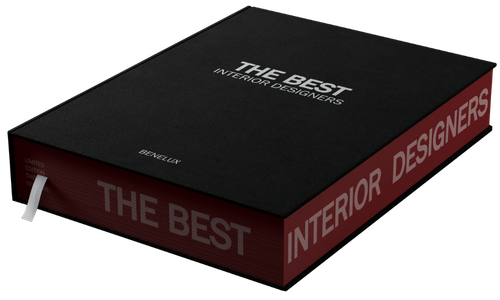
NEW 2026 Jubileum Edition The Best Interior Designers Benelux
Order Now €125
NEW 2026 Jubileum Edition The Best Interior Designers Benelux
Order Now €125
NEW 2026 Jubileum Edition The Best Interior Designers Benelux
Order Now €125

NEW 2026 Jubileum Edition The Best Interior Designers Benelux
Order Now €125
NEW 2026 Jubileum Edition The Best Interior Designers Benelux
Order Now €125