





Characteristic new-build villa with natural materials
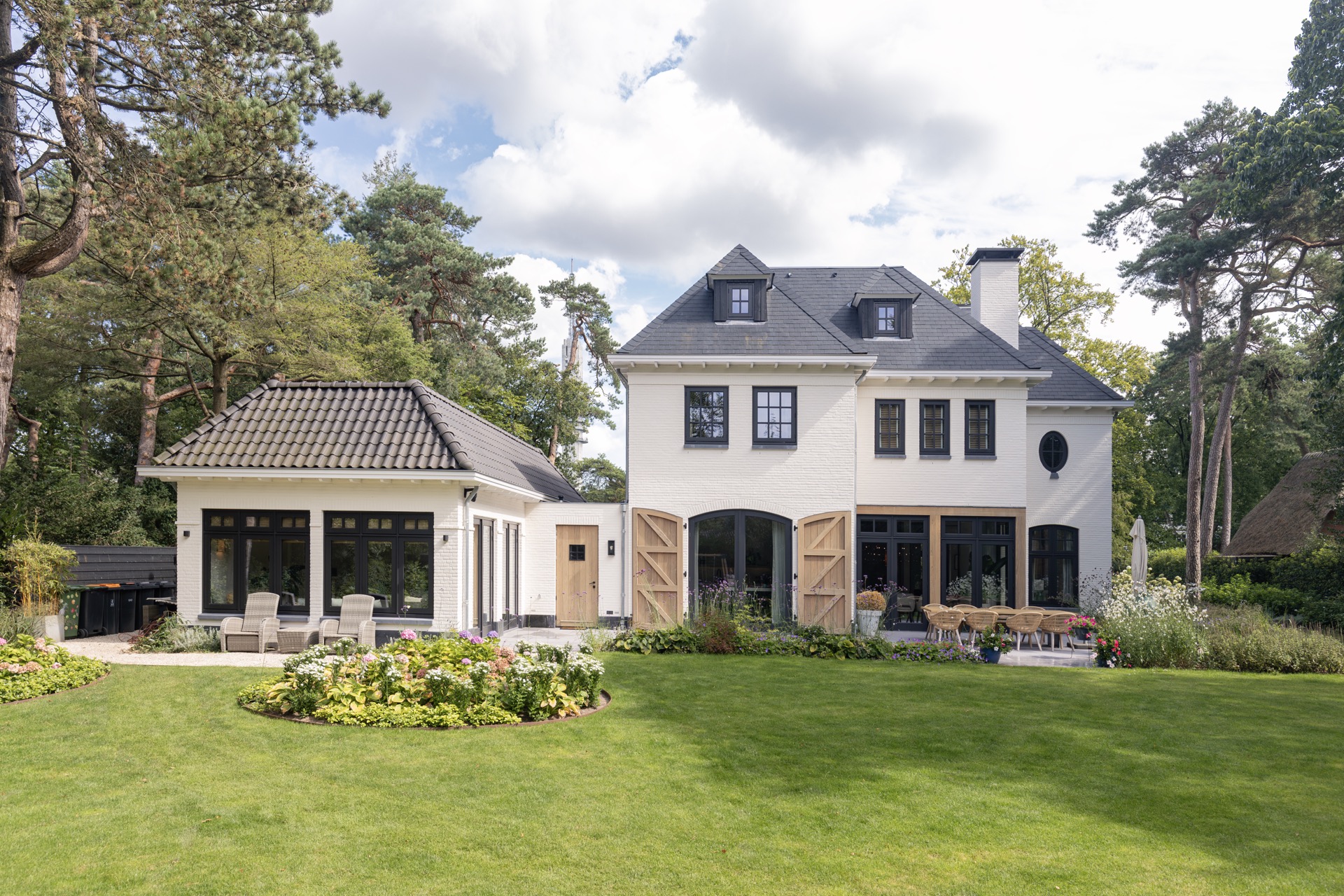
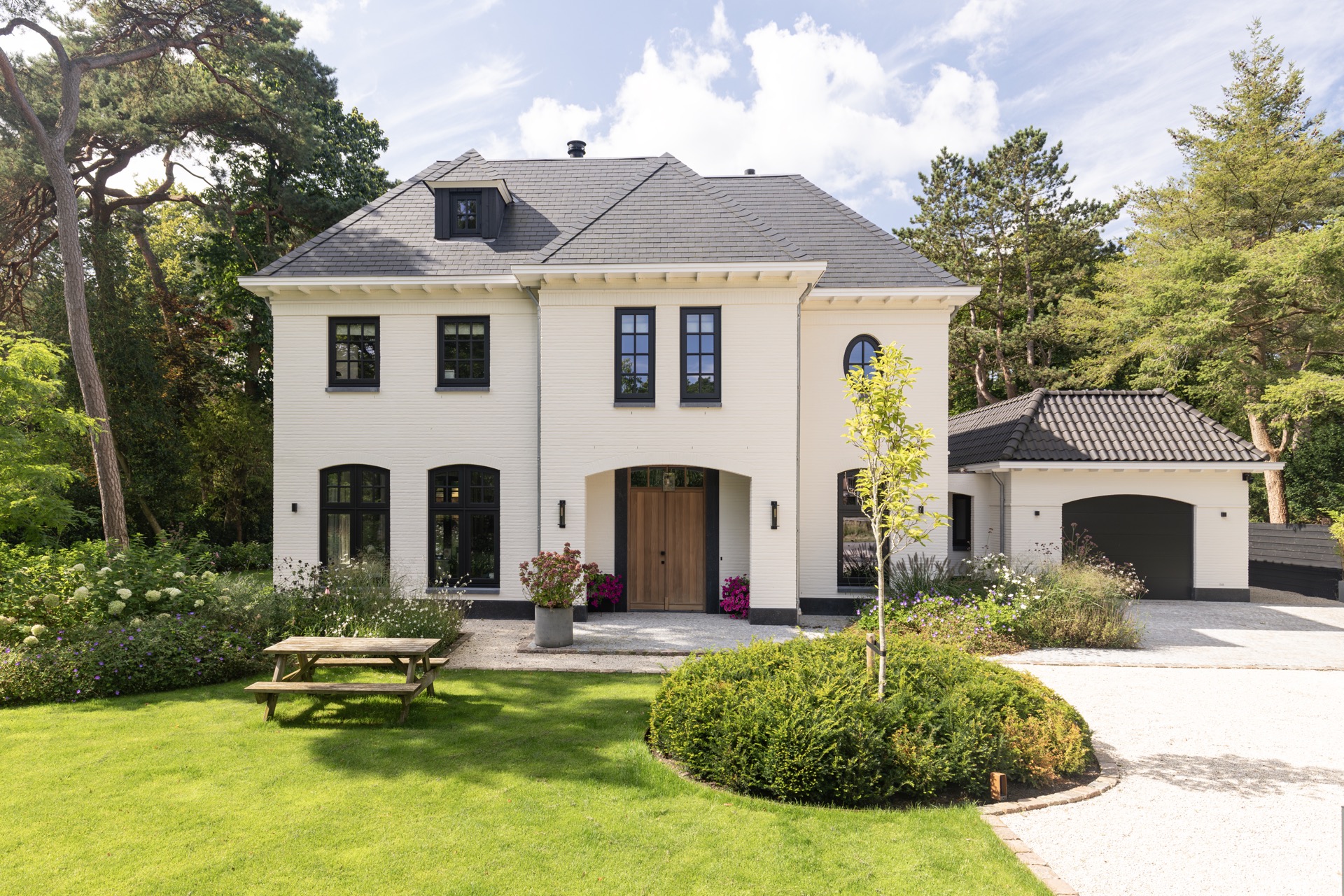
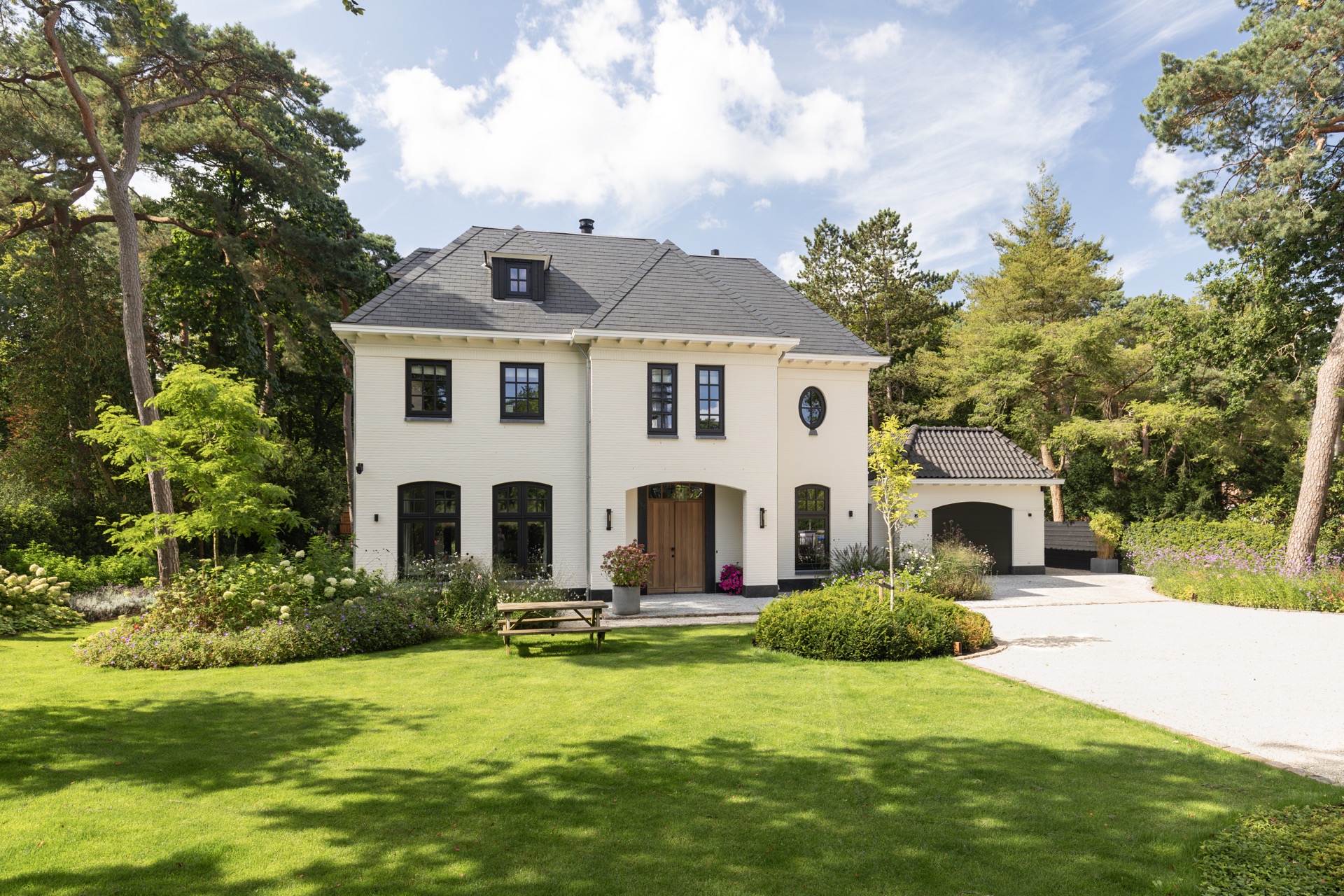
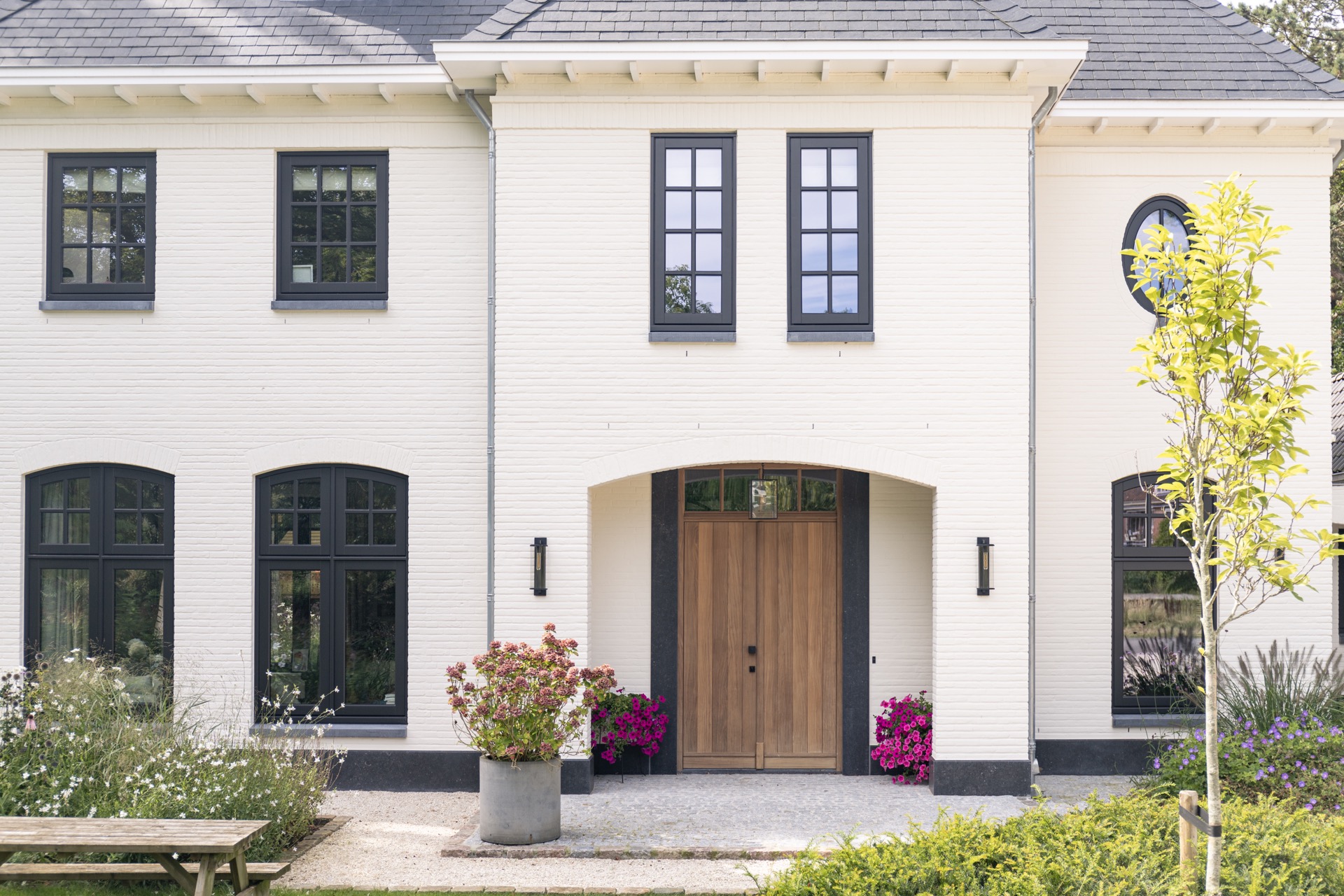
The characteristic home is immediately visible in the way the project is framed. White plastered façades serve as a canvas for dark window frames that punctuate the villa’s varied volumes. This variation continues in the asymmetrical roofline, which shapes shifting silhouettes rather than imposing uniformity. At the entrance, double oak doors present a diagonal pattern, their wood grain inviting closer attention to textures that exist beyond smooth surfaces.
characteristic home as the architectural starting point
Two stories rise beneath a pitched roof whose sloping angles avoid the predictability of symmetry. Windows placed irregularly on the east and west façades open the interiors to varying light conditions throughout the day. This intentional layout animates the exterior elevations while responding to interior functions, drawing the eye along volumes that seem to play against one another rather than stand in perfect rows.
Expressive oak structures blend indoors and out
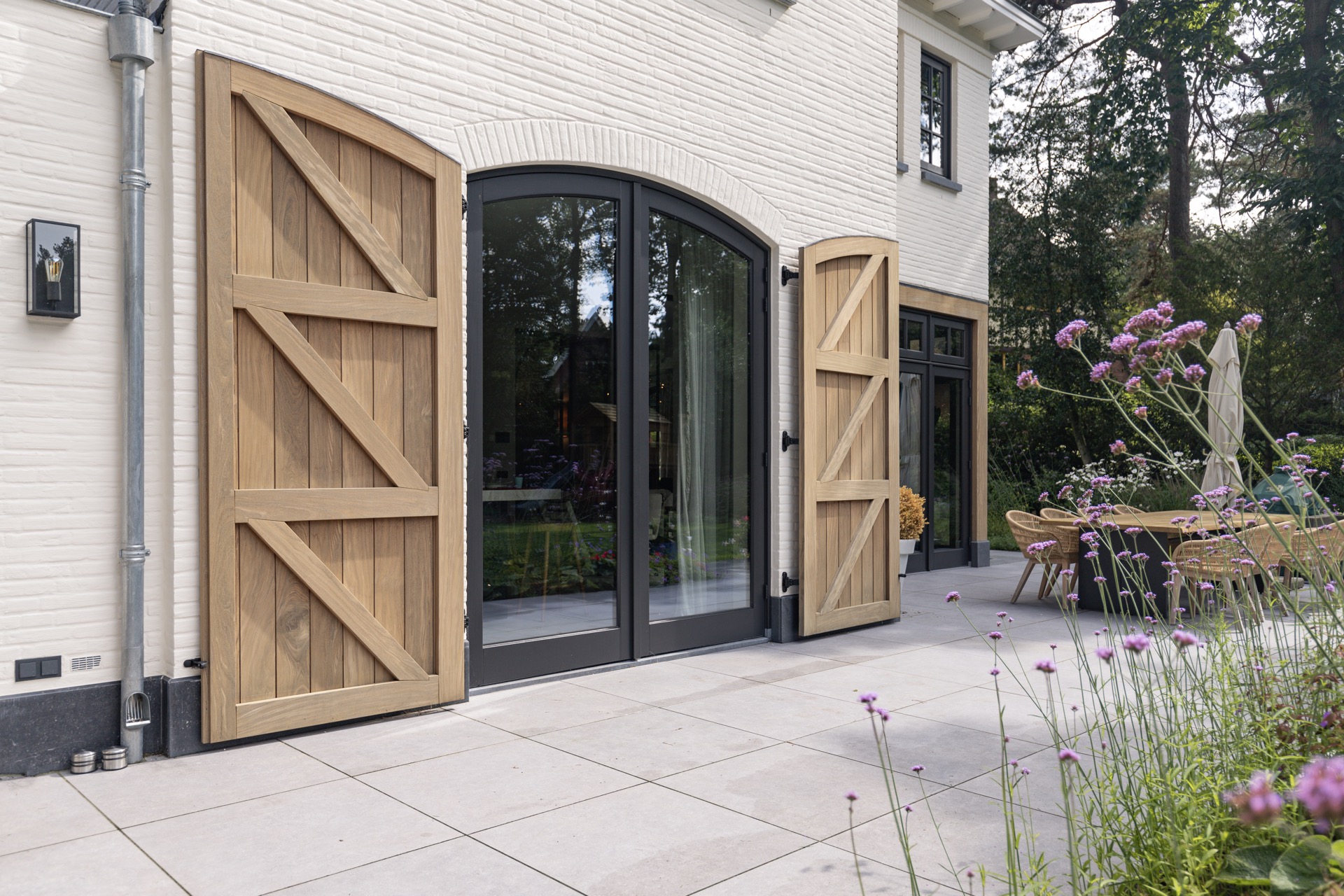
Toward the rear, exposed oak beams stretch beyond the plaster plane, forming structural elements that support an overhanging terrace. Their rough, natural grain offsets the smoother wall finishes, complemented by matching oak shutters and doors. This interplay of textures creates a tactile perimeter, marking thresholds between built form and outdoor space.
Material choices ground the villa in its context
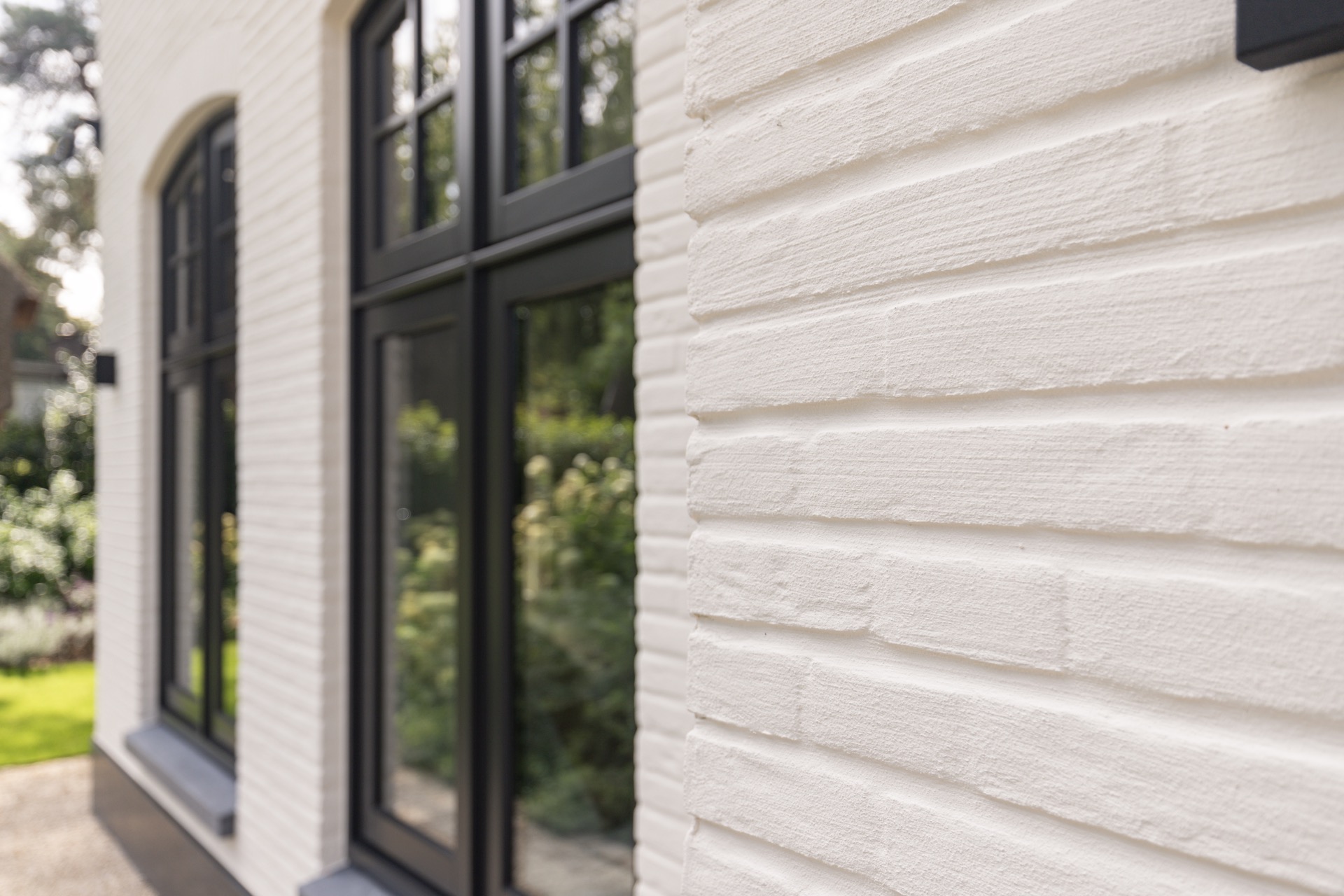
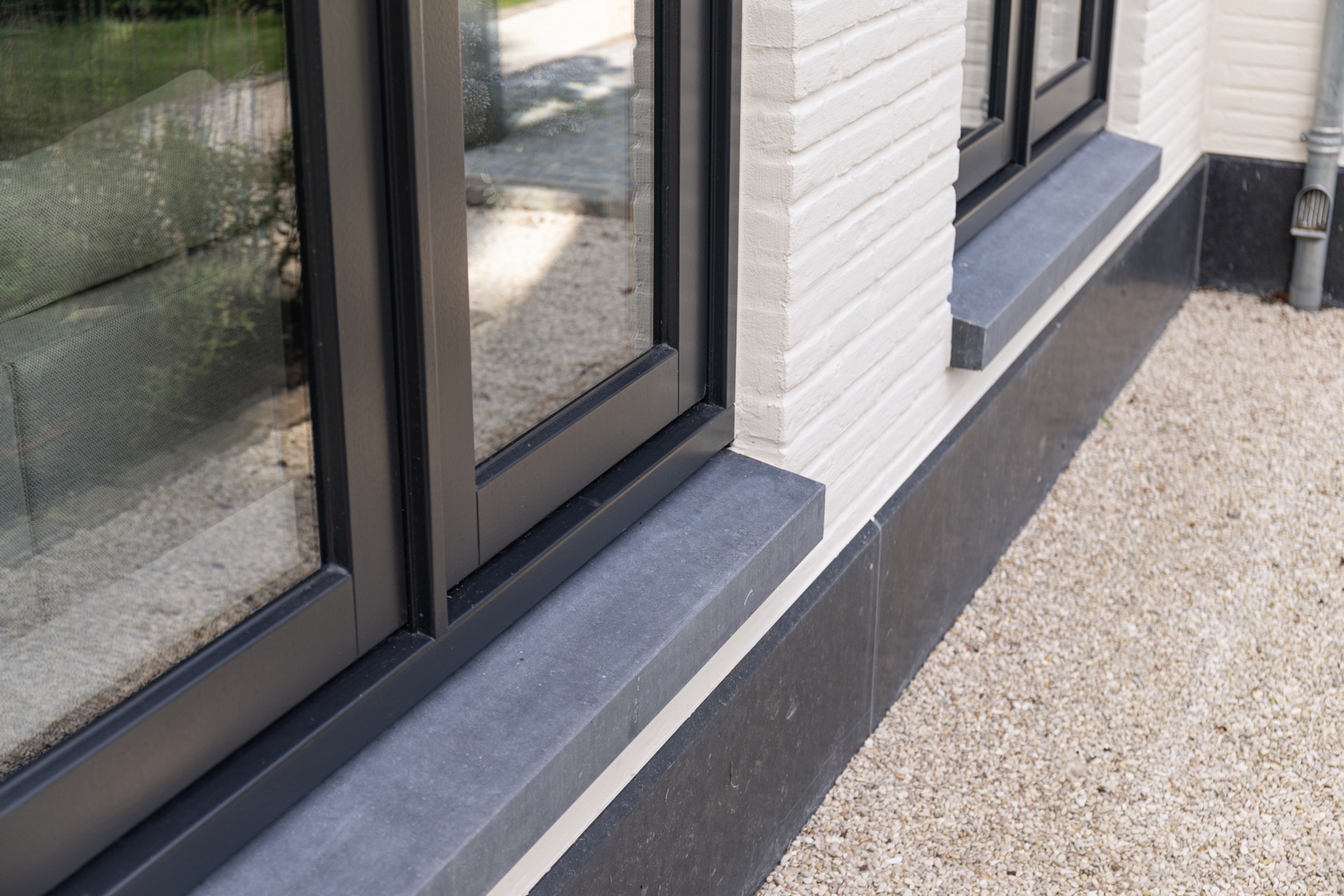
The pale gray masonry walls, finished in a breathable keim render, reflect muted tones found in the surrounding landscape. Belgian hardstone grounds the structure with dense, dark bases and window sills. Its fine-grained surface contrasts gently with the plaster’s softness. These durable materials hold a quiet presence, anchoring the villa without overwhelming the design.
Oval windows introduce irregular light patterns
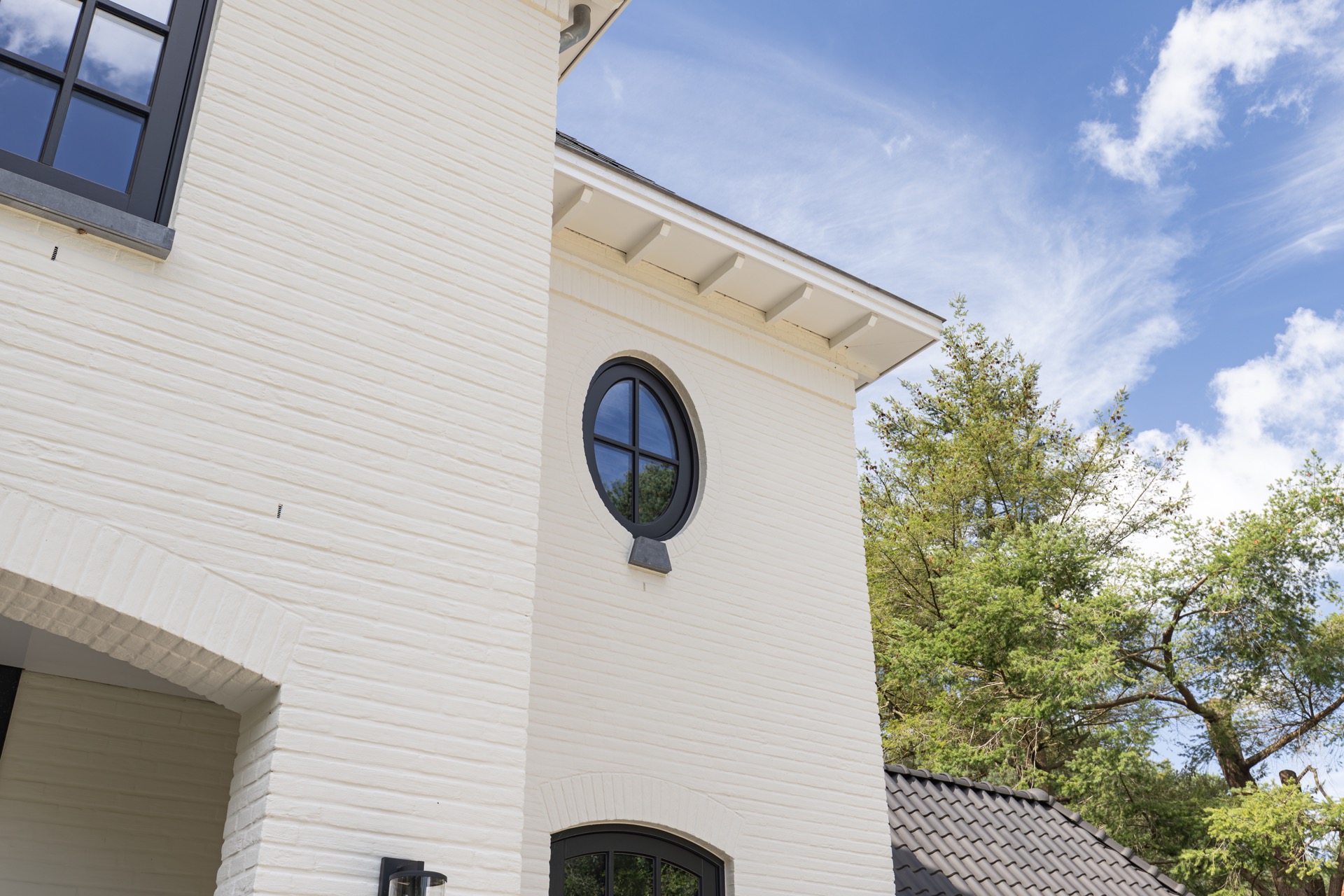
Distinctive elliptical windows nestle within black aluminum frames, softening the rectangular rhythm common in most façades. These forms filter daylight in shifting patterns, animating rooms with irregular washes of light and shadow. The slender casings add a crisp graphic element, subtly emphasizing shape without interrupting the overall clarity of the wall planes.
Expanding outdoor living through textured transitions
Beneath the oak overhang, a terrace finished in earth-toned tiles extends outside. The rough texture of the flooring pairs with wood and stone elements, blurring borders where interior extends into garden. Oak doors and shutters open fully, dissolving enclosures and inviting a sensory connection to surrounding vegetation and lawn.
Architectural moldings evoke tradition without imitation
Window frames incorporate half-rounded moldings above openings, adding gentle arches that soften edges. Traditional gutter brackets punctuate the roofline, lending restraint and rhythm. Together these elements draw from local architectural customs, weaving history into a contemporary composition without direct replication. That makes the characteristic home part of the architectural character rather than a loose finish.
Design respects protected historic environment
Within a regulated neighborhood, the villa’s shallow roof pitch and subdued colors maintain alignment with historic fabric. Absence of overt modernist gestures emphasizes integration rather than contrast. Chosen materials age naturally, minimizing need for coatings or interventions that might disrupt texture and color over time.
Irregular volumes shape engaging interiors
Inside, varied ceiling heights and niches reflect the asymmetric exterior. Elliptical windows channel daylight deeper into rooms, creating interplay of shadow and glow as the sun moves. Large glazed openings frame views of greenery beyond, embedding the landscape within everyday living spaces.
Ancillary building echoes the main villa’s language
A smaller, secondary structure occupies the grounds, employing the same pale masonry, dark framing, and timber elements as the main house. Its pitched roof and balanced placement preserve privacy and line of sight, extending the livable area while maintaining cohesion across the site.
Materials reveal local resources and craftsmanship
The combination of rough-sawn oak, precise joinery, natural stone, and soft plaster achieves a sensory layering. The smoothness of plaster contrasts with the tactile grain of wood and the denser texture of stone bases, rewarding attentive inspection of surfaces and junctions.
Choices prioritize durability and sustainability
Materials were selected for longevity and environmental care. The keim render breathes and weathers gently, avoiding synthetic coatings. Belgian hardstone bases offer resistance to wear, while regionally sourced oak ages gracefully without artificial finishes. This approach limits maintenance and extends the villa’s visual and physical presence.
A contemporary response to villa design conventions
Rather than adopting clichés or pastiche, this villa crafts character through proportioned asymmetry, material tactility, and a measured dialogue with historic references. Its clear volumes and modest detailing assert identity without excess.
Subtle craftsmanship invites close viewing
Details include slender metal fittings that punctuate oak surfaces and emphasized horizontal mortar joints. Joinery reveals wood grain and minimalist profiles, underscoring the interplay between natural materiality and refined human touch. These elements coalesce into an architecture grounded and deliberate, free from superfluous ornamentation. That makes the characteristic home part of the architectural character rather than a loose finish.
Want to see more of EVE Architecten? View the page of EVE Architecten for even more great projects and company information.


.png)