





Chef’s table kitchen with invisible induction and integrated cooking zones
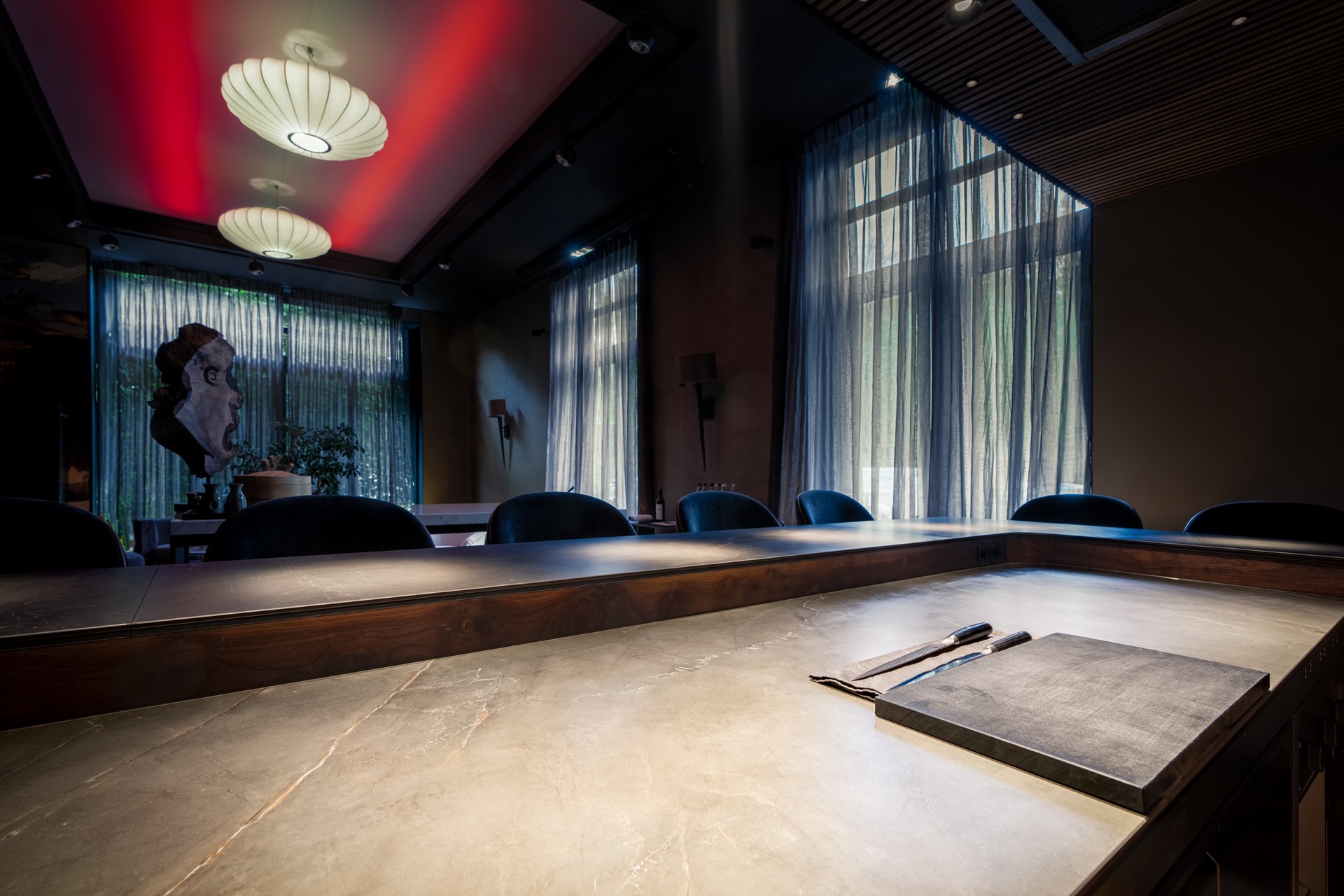
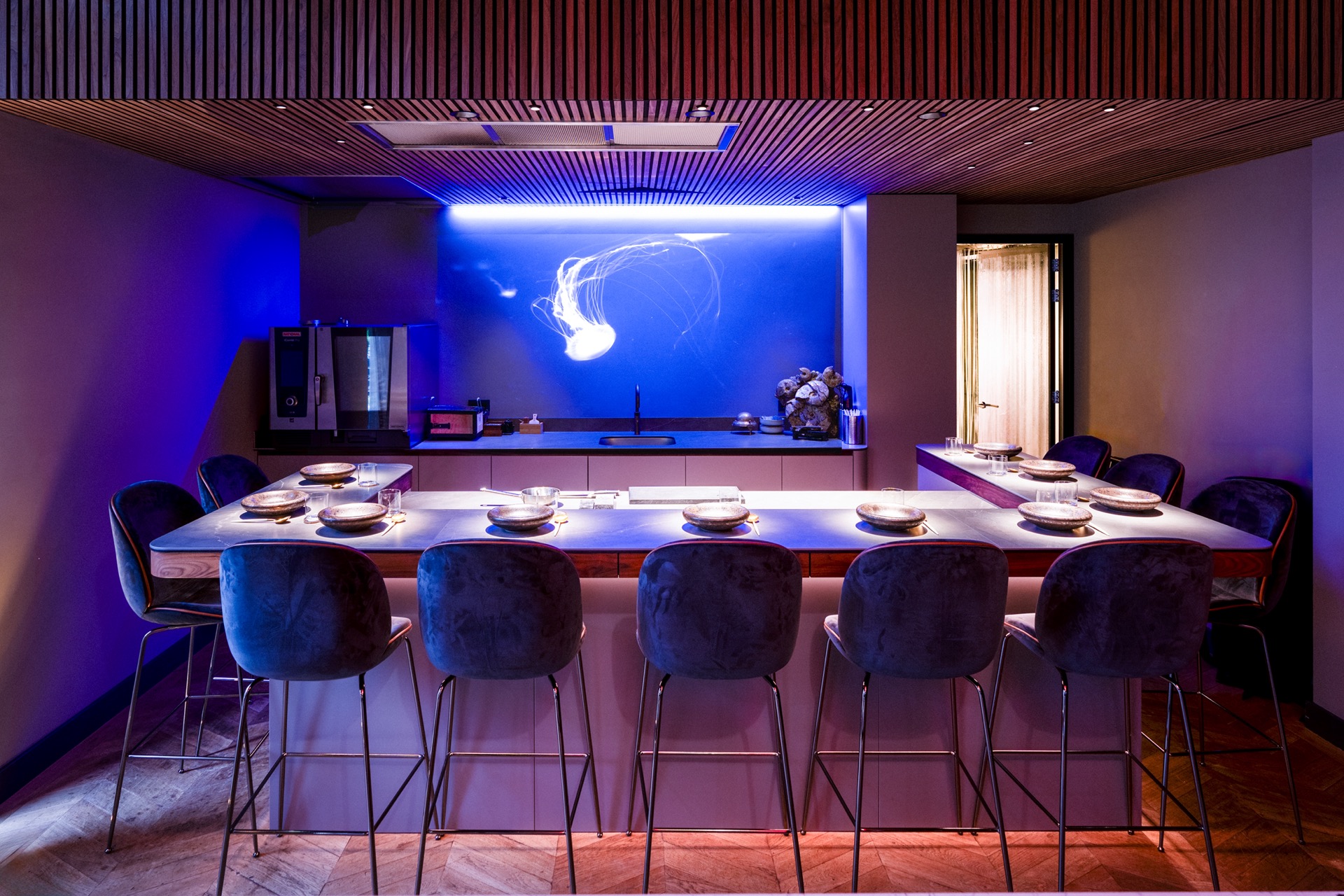
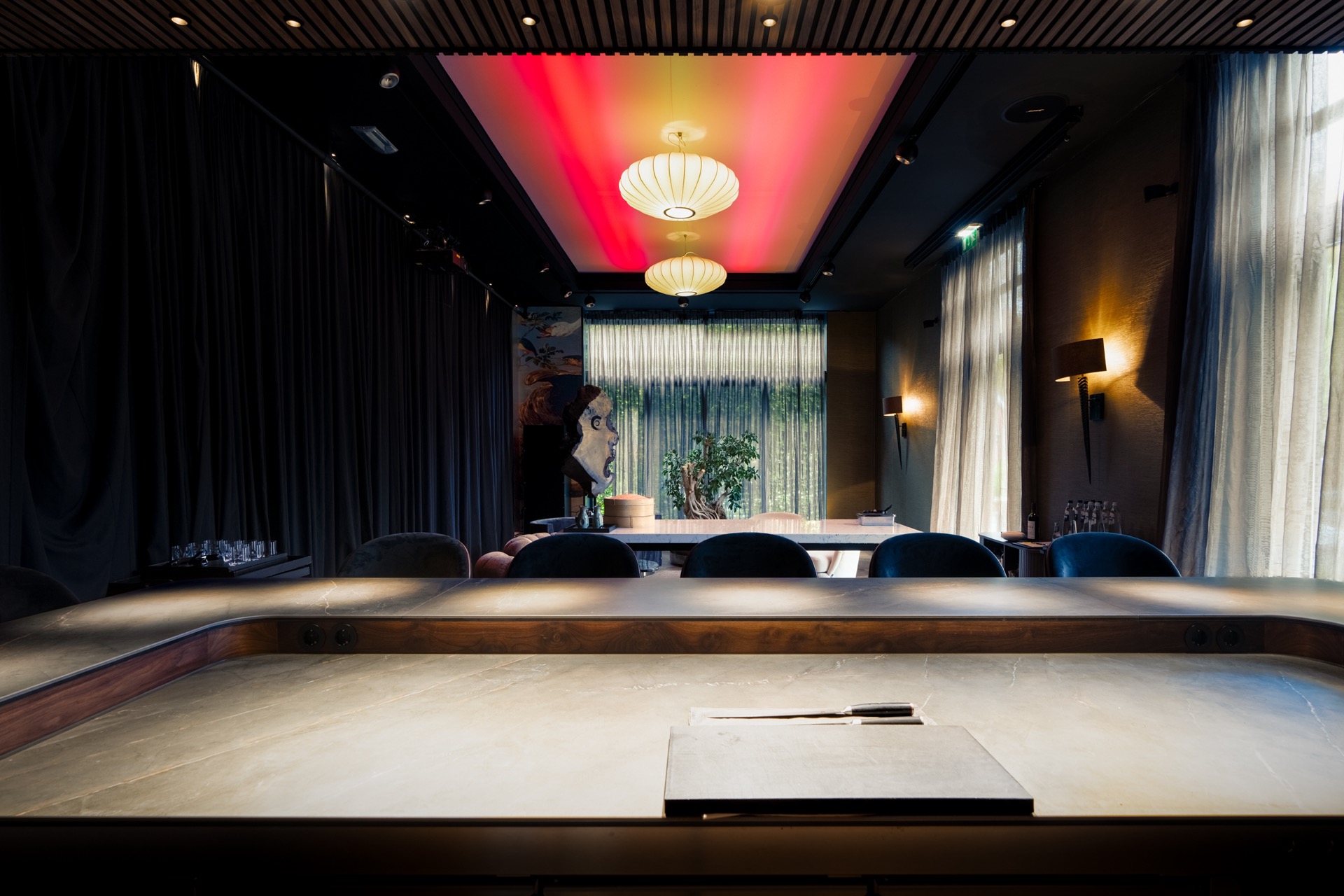
The first thing you notice is the long worktop. It runs through the room like a stage edge, with blue seating gathered close and curtains pulled around the sides. In this chef’s table kitchen with invisible induction, the aim is not to hide the cooking, but to frame it so guests sit right in front of the action and stay focused on the surface where it happens.
The worktop is described as both practical and visually quiet, and that dual role shows in the way the cooking area is folded into the surface rather than placed on top of it. The invisible induction countertop turns the plane into one continuous field, while the chef’s table setup keeps the room intimate. From the dining side, the eye reads stone-like texture, straight edges and a clear line of sight across the cooking position.
chef’s table kitchen with invisible induction as the architectural starting point
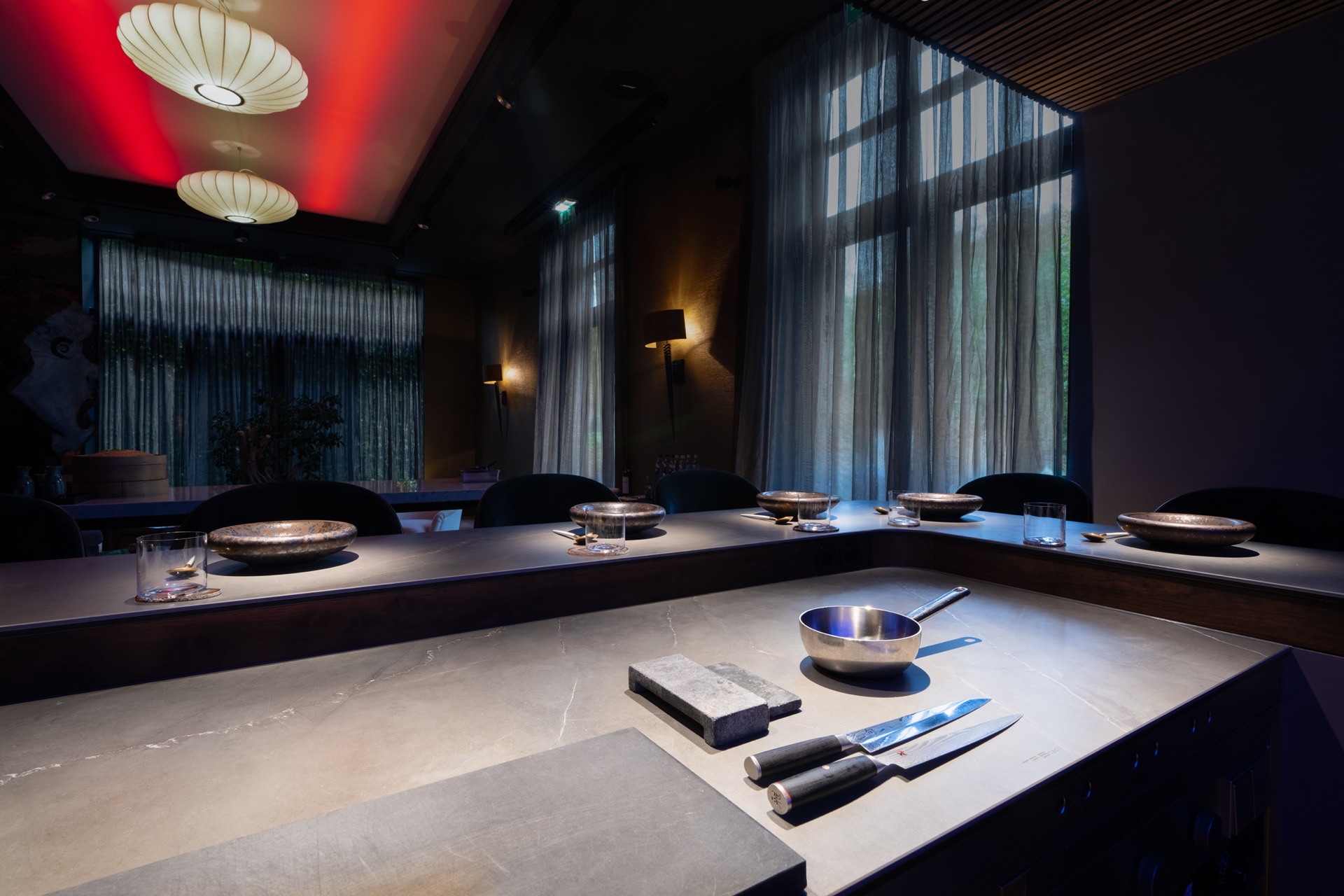
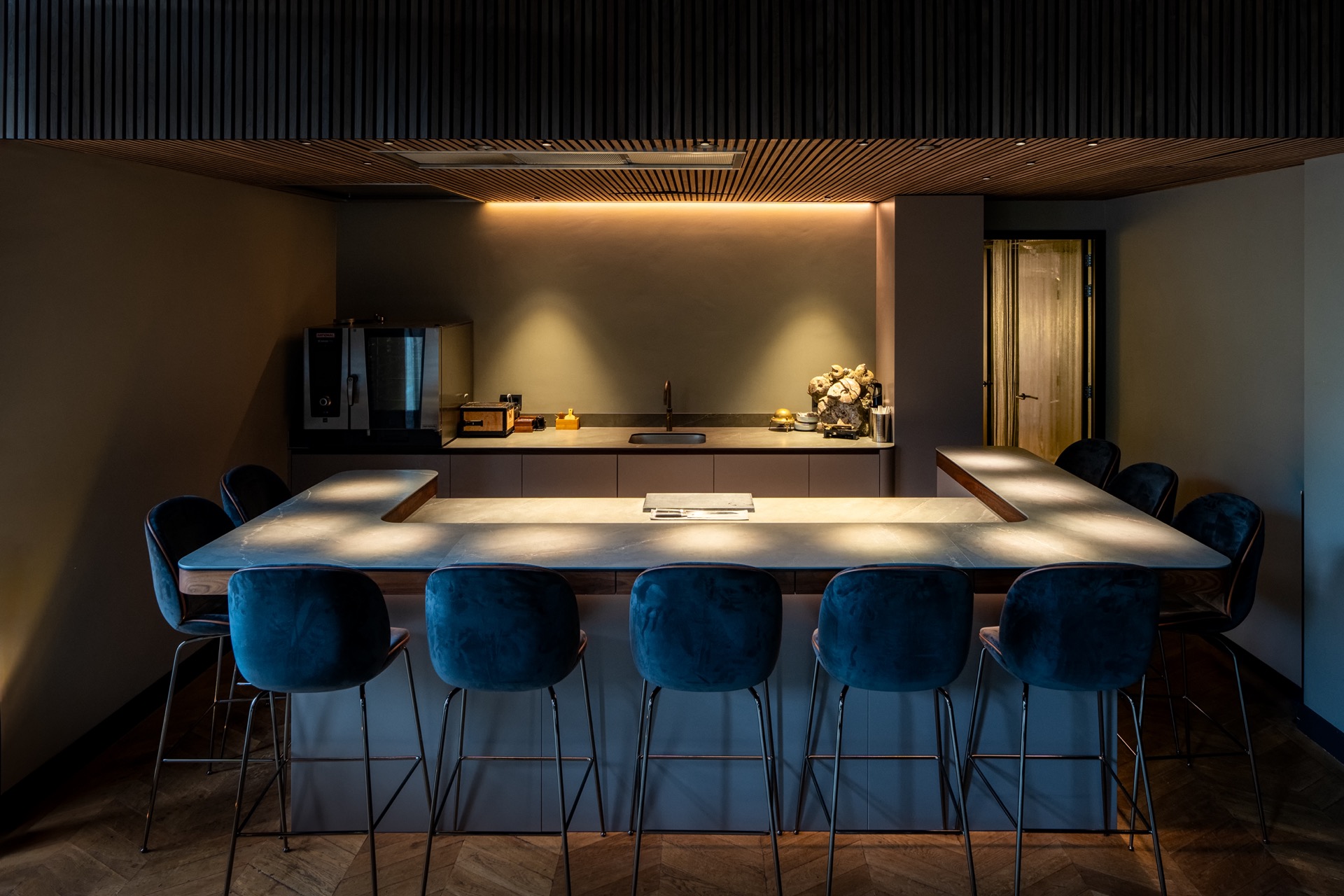
At the center of the layout is a large continuous worktop with three integrated cooking zones. That number matters because it gives the chef room to move without breaking the line of the counter. The surface feels generous, with enough length for plating, conversation and preparation to share the same span. Instead of separating display and function, the chef’s table kitchen with invisible induction brings them onto one plane.
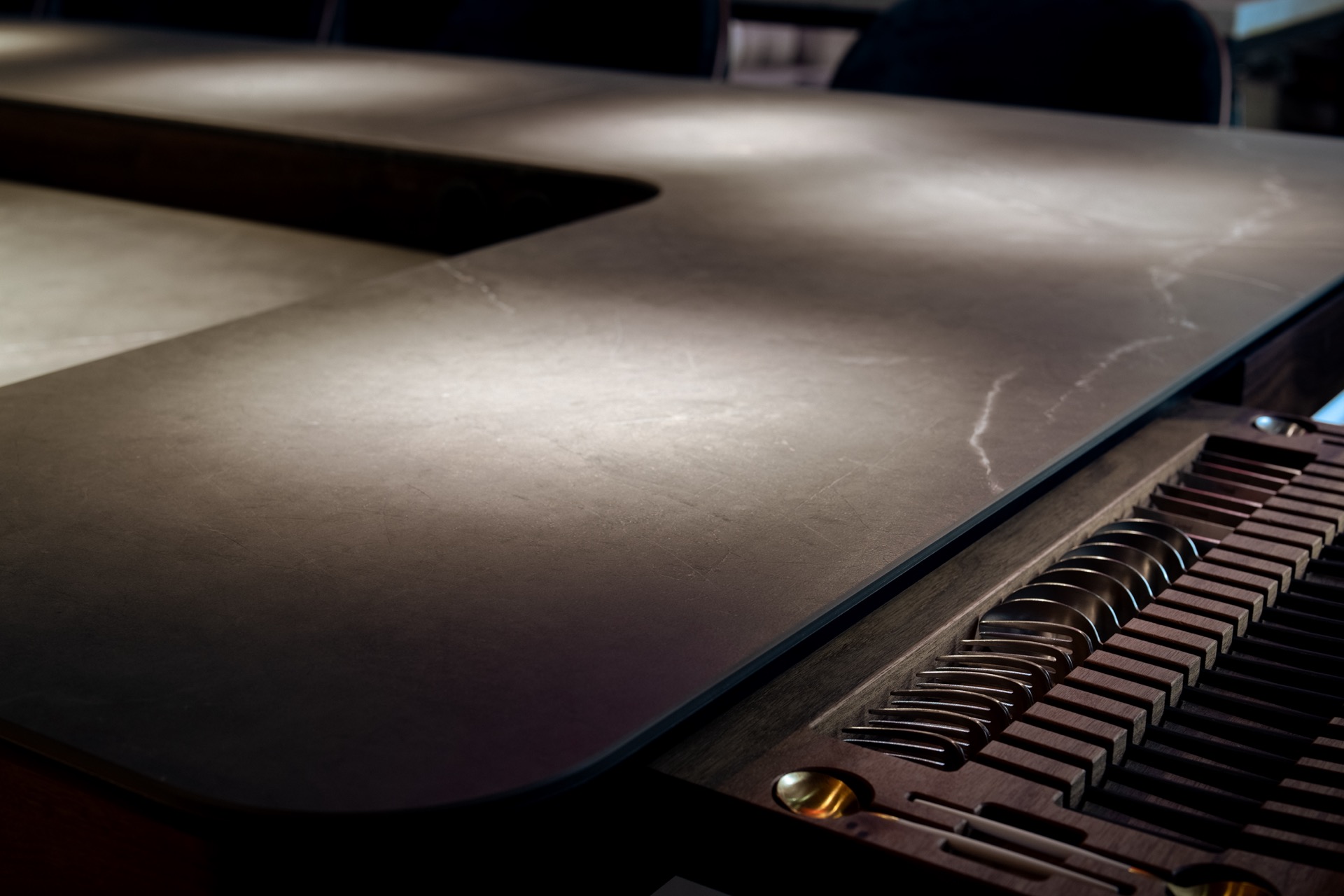
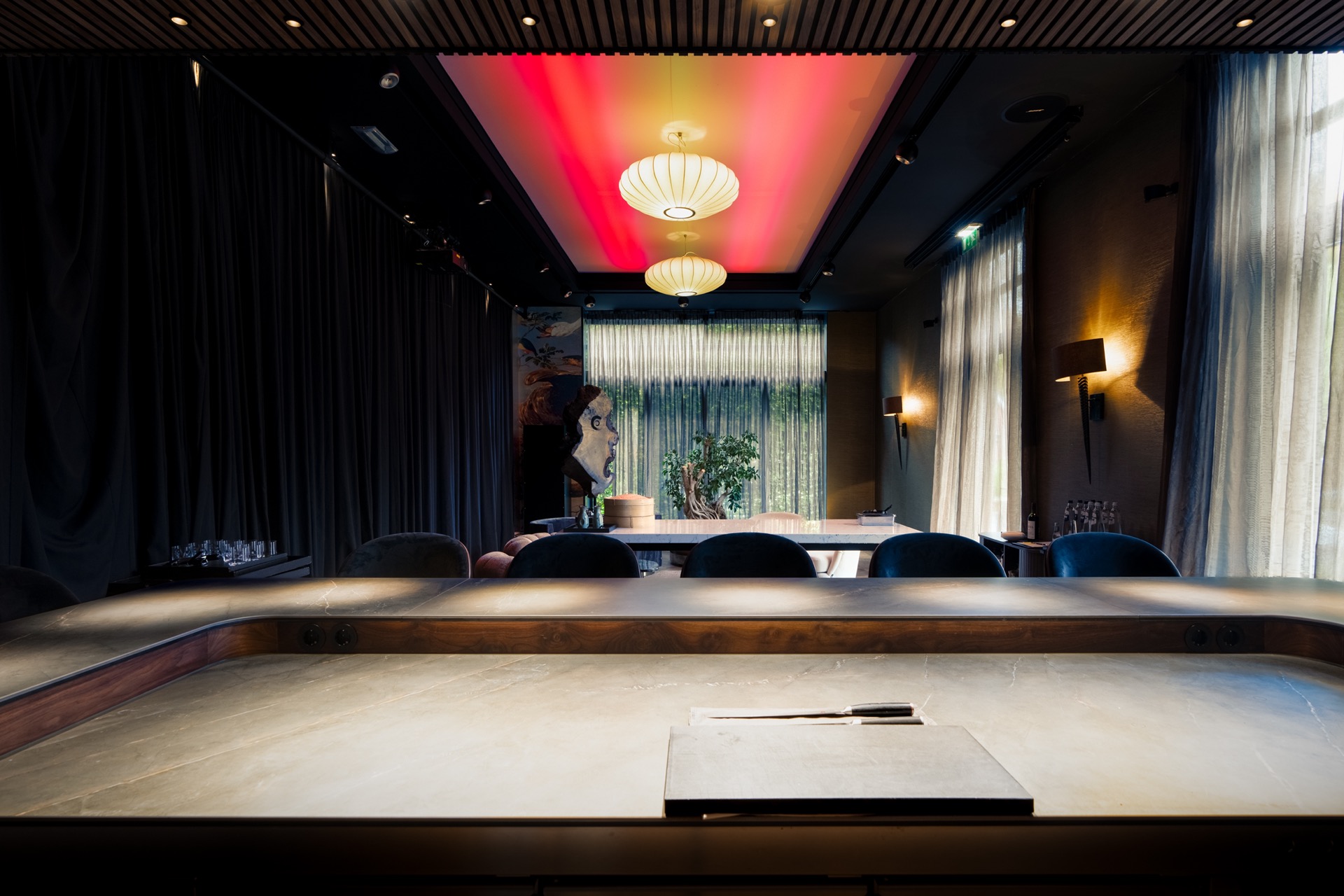
The material reads as light and solid, with a smooth finish that catches the room’s color rather than competing with it. In close-up, the top has the look of stone or composite, while the built-in cooking areas sit flush enough to keep the surface visually calm. This is where the invisible induction countertop changes the reading of the room: the cooking zone is present, but the surface remains open and easy to use.
Three integrated cooking zones, one uninterrupted edge
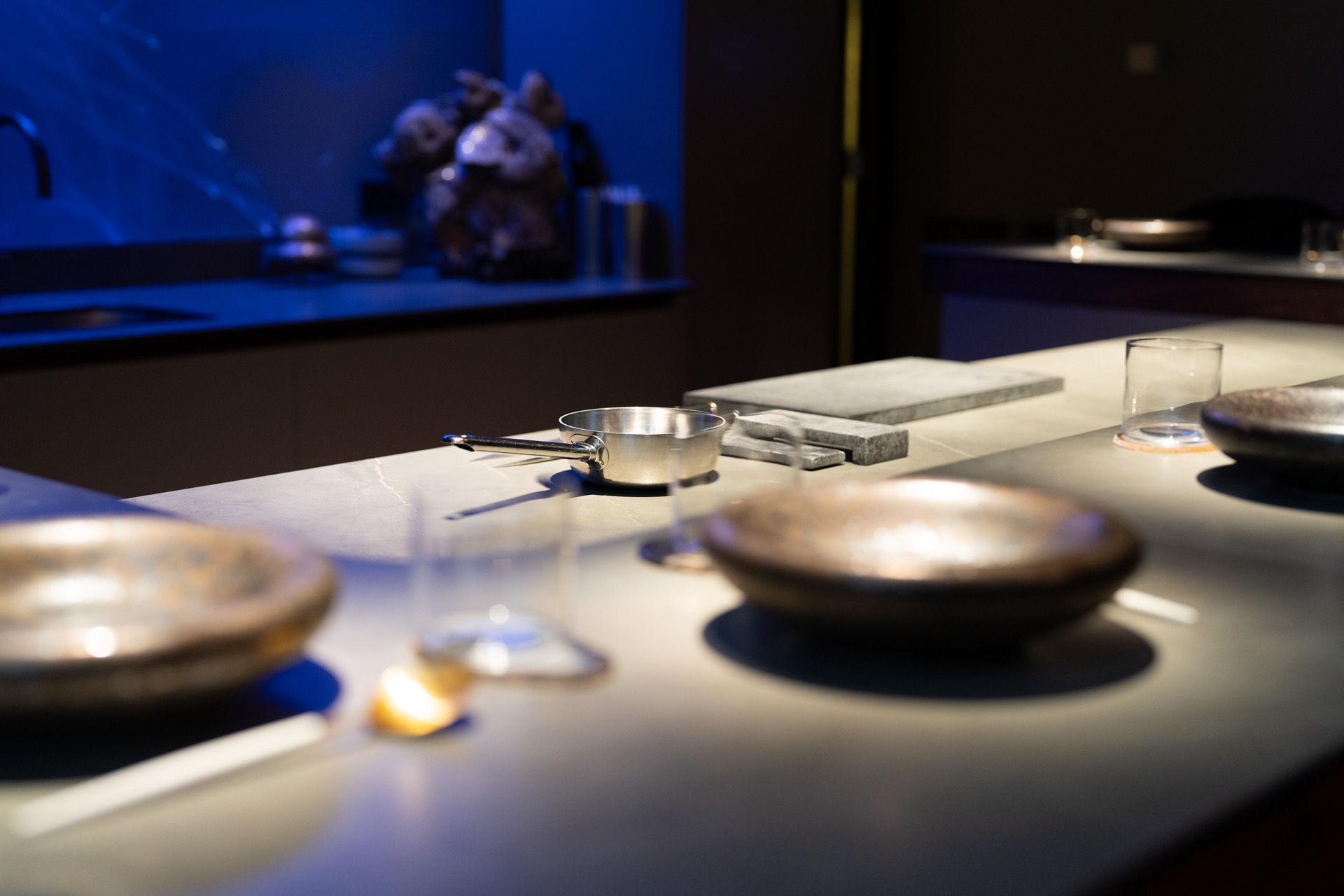
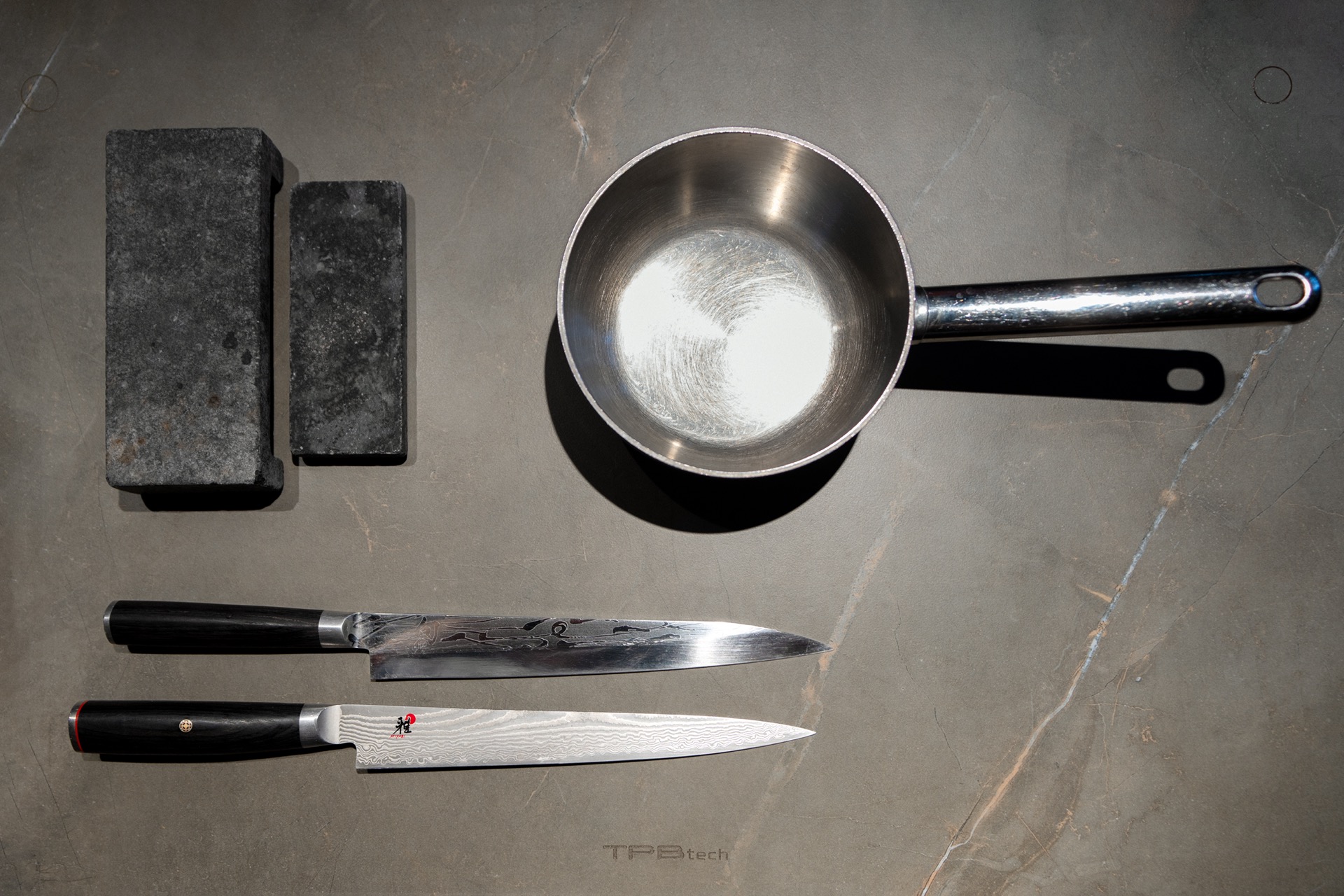
Seen from different angles, the integrated cooking zones sit close to the outer edge of the counter and define how the table is used. Pans, dark elements and clear work areas are all laid out within the same width, so the chef can work while guests remain seated beside the action. The result is less like a separate kitchen island and more like a shared working table with a controlled cooking rhythm.
The arrangement also explains why the page focuses on the large continuous worktop. It has to carry more than one task at once. Plates can be set down, ingredients can be arranged, and the cooking surface still leaves room for the eye to move across the full length of the table. That balance is visible in the broader room shots, where the cooktop edge stays aligned with the seating and the wall behind it.
An intimate dining setup close to the cooking line
The chef’s table setup is tight by design. Blue upholstered seats curve around the worktop, and that rounded furniture softens the long horizontal line of the counter. Dark curtains collect the room at the sides, creating a sense of privacy without closing it off completely. The space feels staged for attention, with the chef and guests sharing the same visual field rather than occupying separate zones.
Because the seating sits so close to the surface, the dining arrangement changes the pace of the room. Guests look toward the cooktop, the pans and the preparation area instead of facing away from it. That intimacy is part of the project’s intent: to surprise and hold attention while the cooking unfolds across the counter. The chef’s table kitchen with invisible induction becomes a performance surface as much as a preparation area.
Light, curtains and dark accents shape the mood
Light does a lot of the work here. Warm spots from the ceiling cut through the wooden slats overhead, while colored washes in blue, red and purple shift the room away from a neutral kitchen look. Those theatrical kitchen lighting elements are not decorative afterthoughts; they draw the eye along the table and make the long room feel deeper. The light lands on the worktop, the curtains and the chairs in different layers.
Dark surfaces hold the composition together. The curtains sit heavy against the windows, the kitchen wall reads as a restrained backdrop, and the metal details stay visually quiet. Against that darker frame, the pale worktop stands out more sharply. The contrast helps the invisible induction countertop read clearly in photographs, because the cooking area is defined by line and placement rather than by a raised appliance.
Wood slats overhead and a clear room edge
Above the table, the ceiling is lined with wooden slats that run in a steady direction. They guide the room toward the kitchen wall and echo the long shape of the counter below. Built-in spotlights are tucked between the slats, giving the surface below a directed wash of light. It is a simple move, but it sets the room’s pace and keeps the chef’s table kitchen with invisible induction visually ordered.
The background stays disciplined. Stripped-back cabinetry and a clean wall plane leave the worktop to carry the main visual story. In one view, the room opens toward a large window filtered by curtains; in another, the lighting takes over and the space becomes more cinematic. That shift between daylight and colored light gives the room range without changing its basic layout.
A kitchen setting designed to be watched
The most memorable aspect is the way the cooking surface is treated as part of the guest experience. Glasses, bowls and a pan appear on the long worktop, but they never crowd it. The surface keeps its length, and the zones remain legible even when the table is set for service. The chef’s table kitchen with invisible induction is built around that readability, so the room can function during a meal and still look composed in a wide shot.
What the images show is not excess, but control over spacing. The table, the seats, the curtains and the ceiling all hold their place. The integrated cooking zones sit inside that framework instead of interrupting it. That is where the project’s strength lies: a large continuous worktop that supports preparation, presentation and guest interaction, while the invisible induction countertop keeps the surface visually open.
In the broader view, the room feels deliberately framed rather than open-ended. The seating wraps the counter, the curtain line softens the perimeter, and the wooden ceiling panels pull the eye back to the center. For anyone looking at chef’s table kitchen with invisible induction as a design reference, this project shows how integrated cooking zones and a theatrical lighting scheme can turn a practical work surface into the focus of the whole room.
Want to see more of TPB tech NL? View the page of TPB tech NL for even more great projects and company information.


.png)