





Classic interior styled with rugs and rich color accents
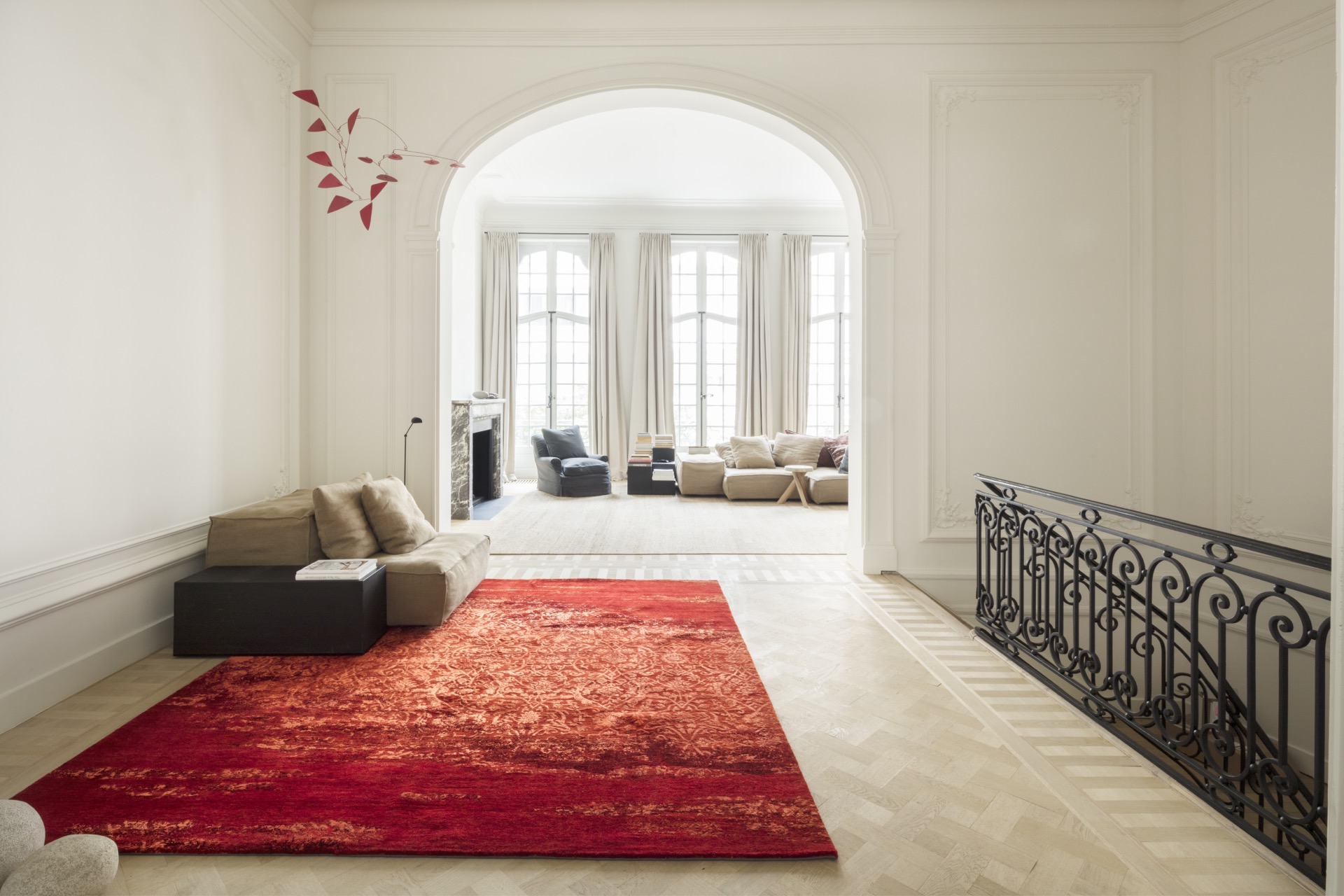
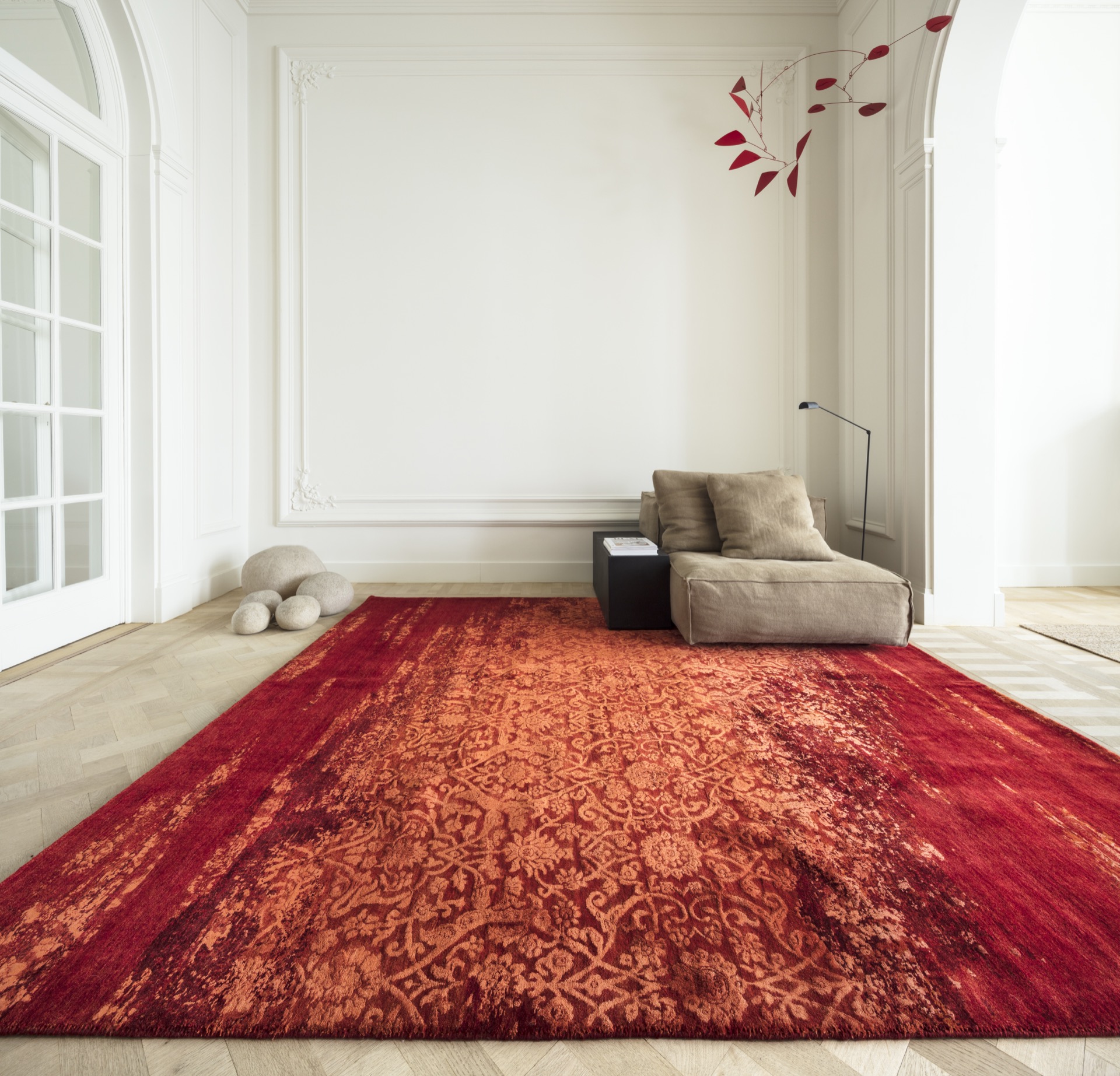
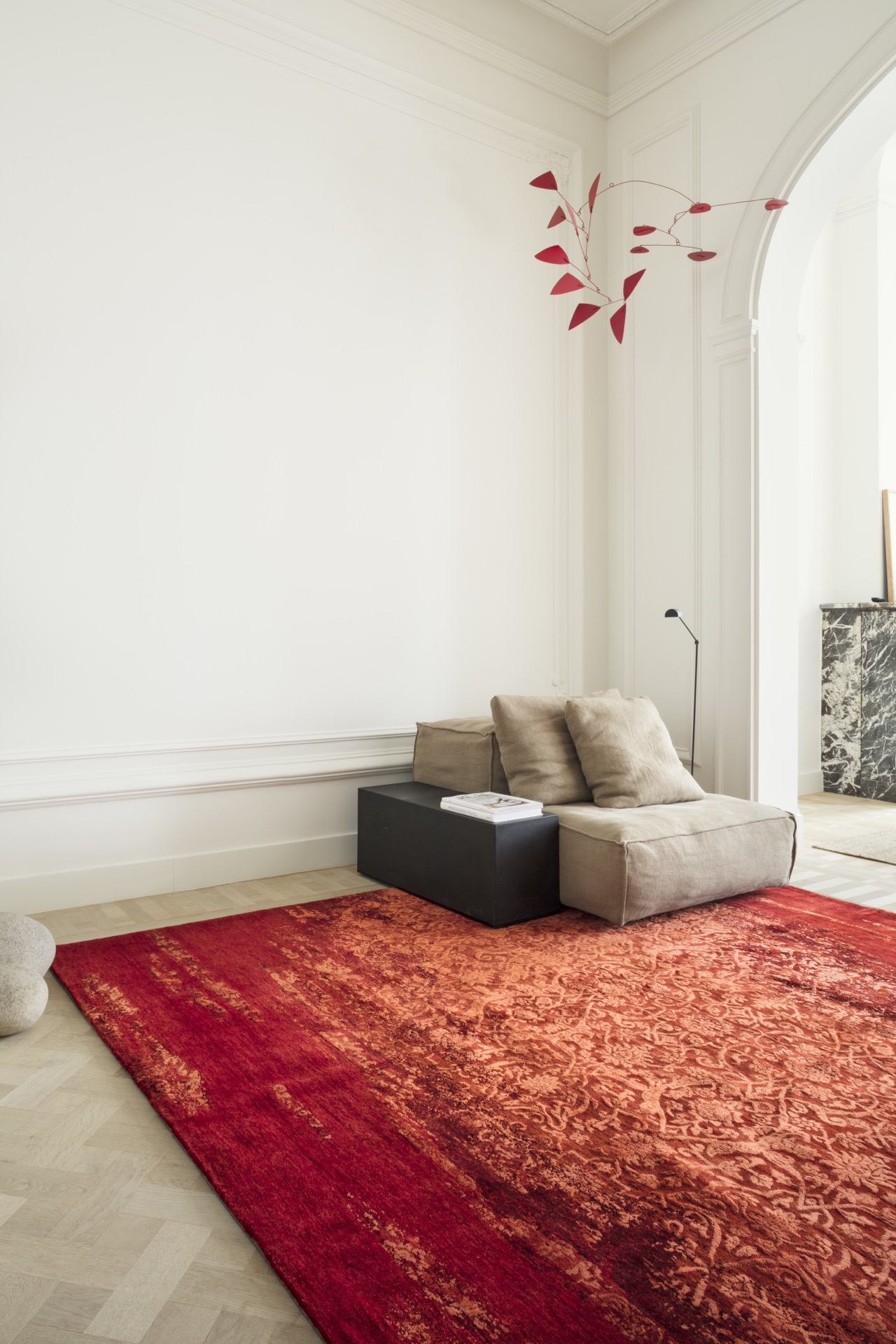
Color lands first on the floor. In the rooms of this classic interior, rugs shift the mood from spare to specific, with each piece setting its own tone through pattern, scale, and material. One space takes a red note, another leans into blue-grey, and the architecture around them stays quietly present: arches, tall openings, and the pale surfaces that frame the textile work.
The rugs in interior spaces do more than cover the floor. They pull attention toward the center of each room, where the seating groups, the fireplace, and the circulation lines begin to make sense. The project shows how a statement rug can work as a color accent without overpowering the room. Instead of one repeated look, each area receives a different textile presence, while the classic shell remains legible in the background.
Statement rugs as the main color accent
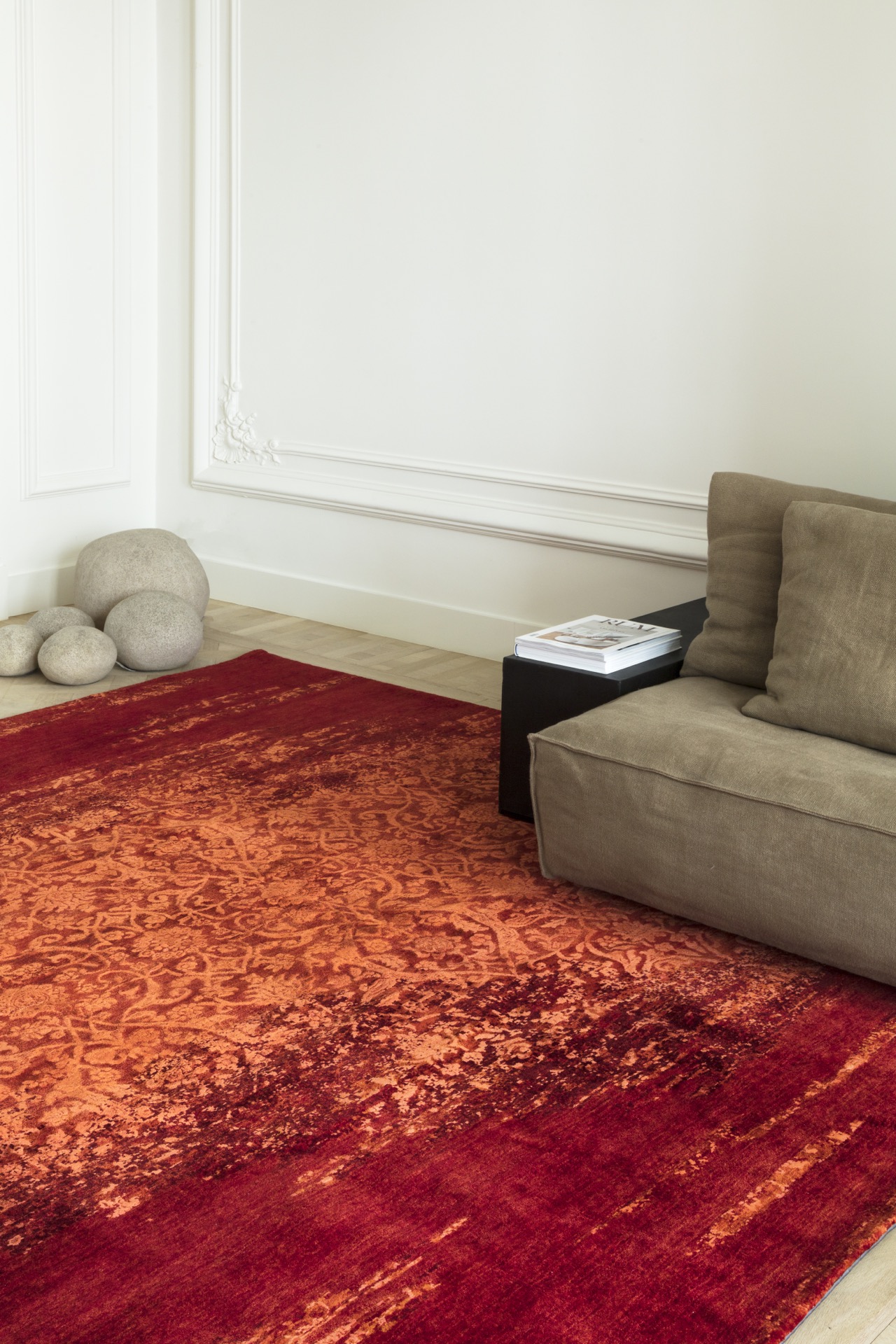
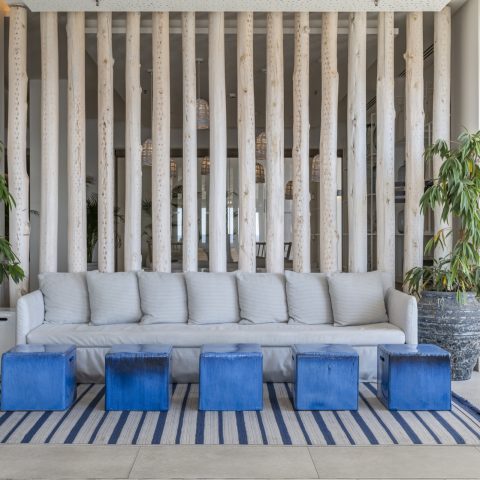
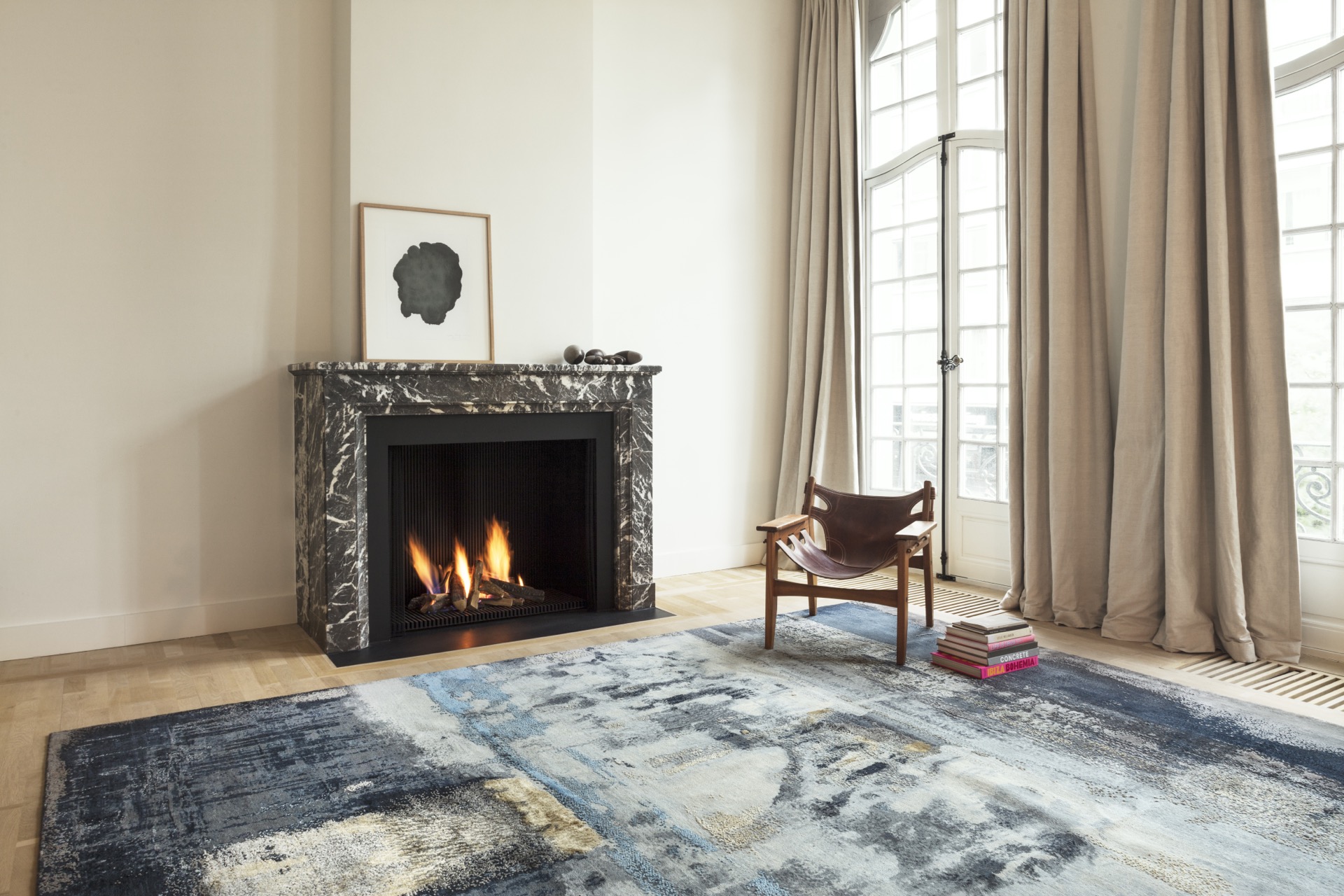
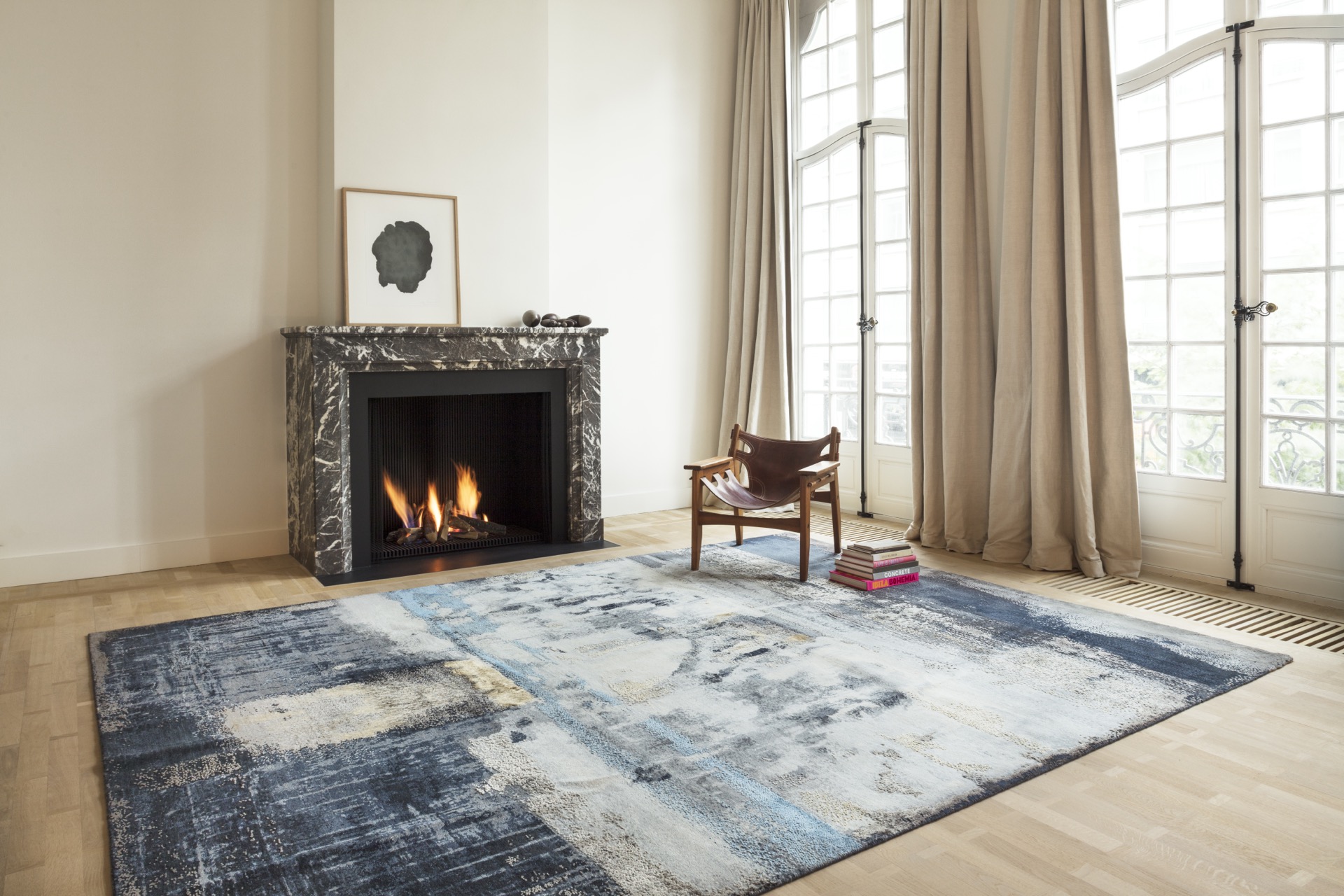
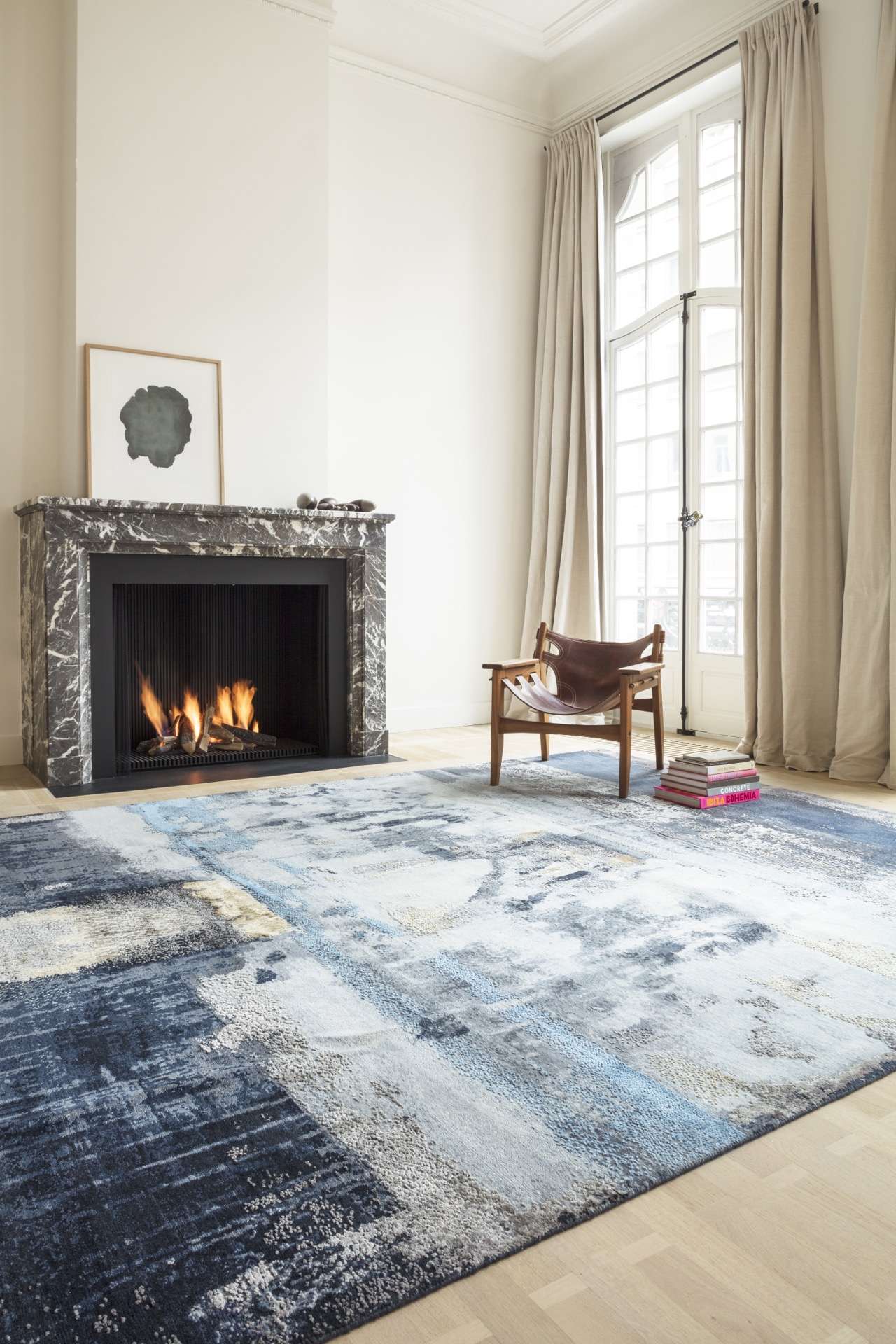
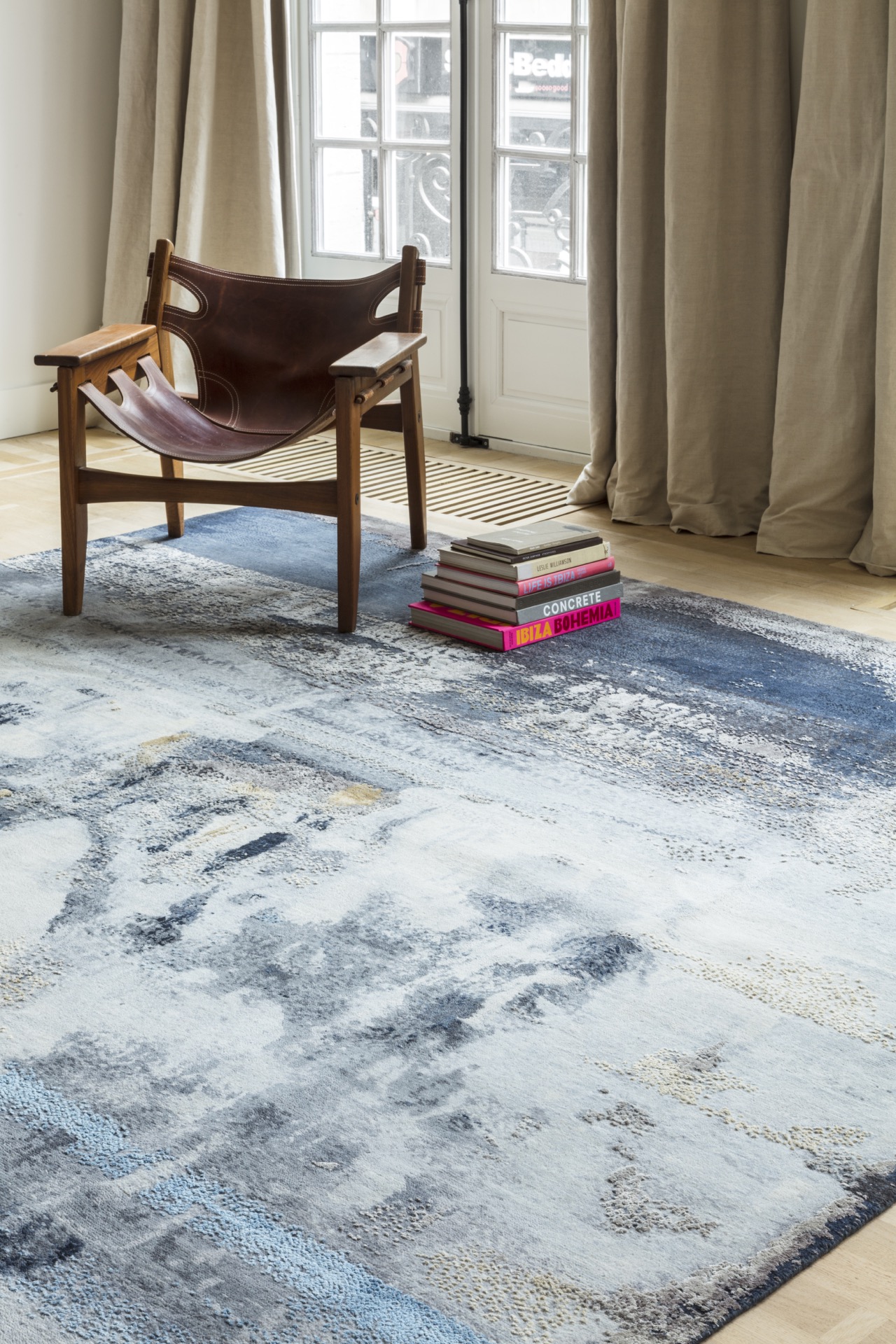
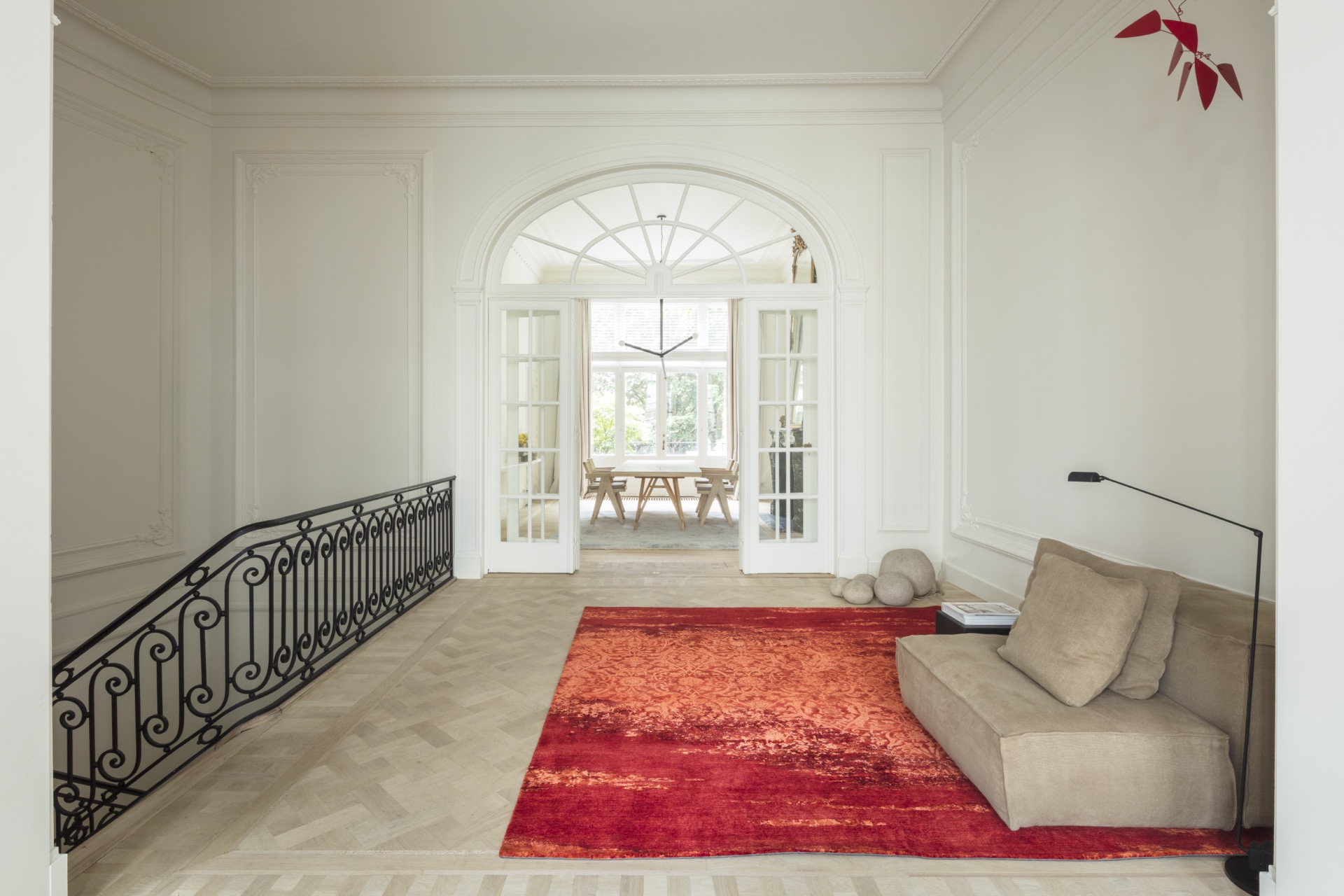
A red rug brings a stronger pulse to one room, especially where the motif spreads across a larger floor area and sits beside a rounded opening. The pattern is visible at a glance, but it does not read as decoration only. It also guides the eye across the room, from the arch on one side to the wrought-iron balustrade on the other. In the image set, the blue rug takes a different role: its abstract surface settles the seating area and softens the sharpness of marble, wood, and panelled walls.
That difference matters. The classic interior with rugs is not built on repetition but on variation. Each carpet changes the room it sits in, giving one zone a denser palette and another a cooler base. The result is a series of rooms that feel distinct without needing new furniture or major structural changes. The rugs carry the visual weight, while the architecture keeps its measured rhythm.
Wool and natural silk underfoot
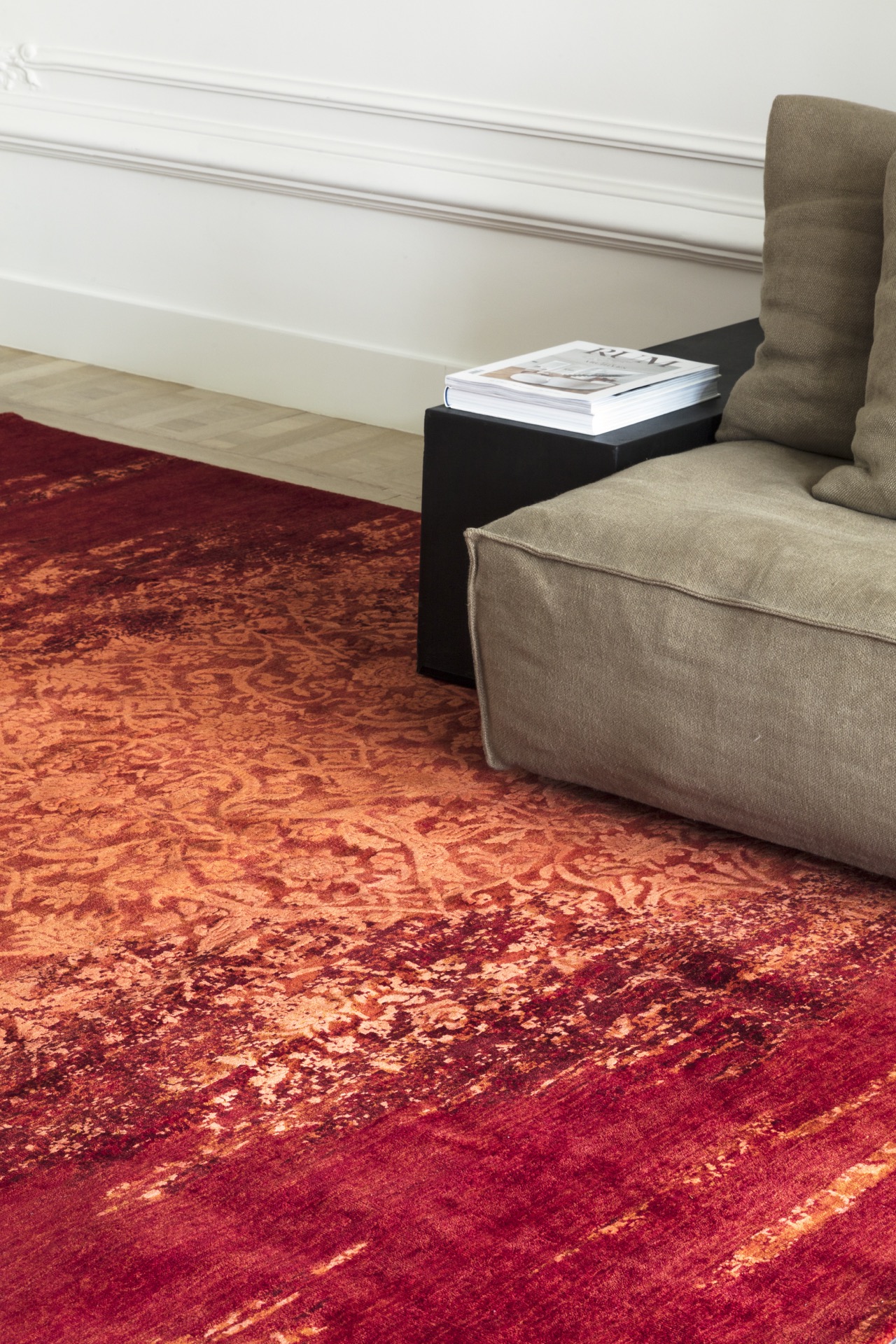
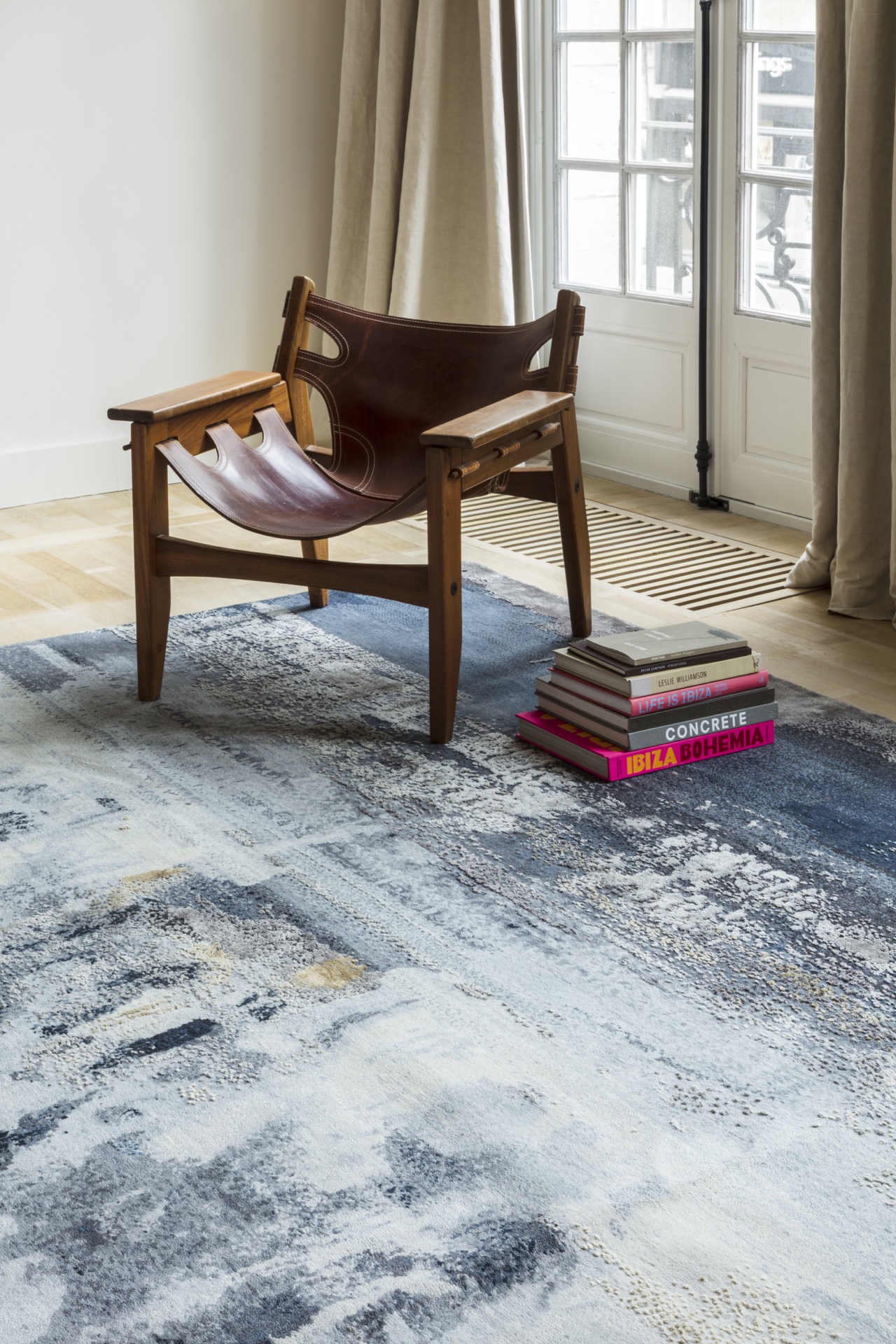
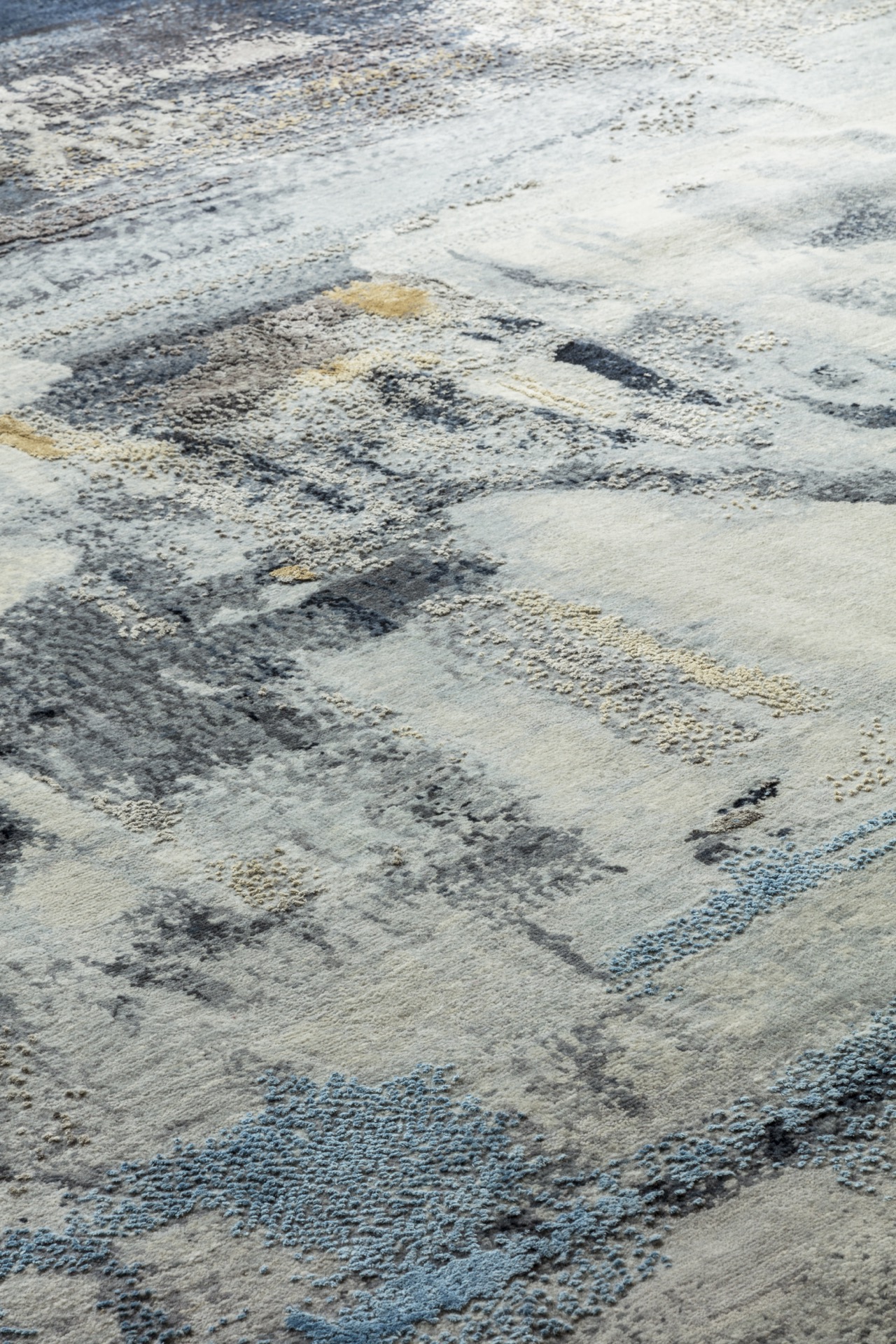
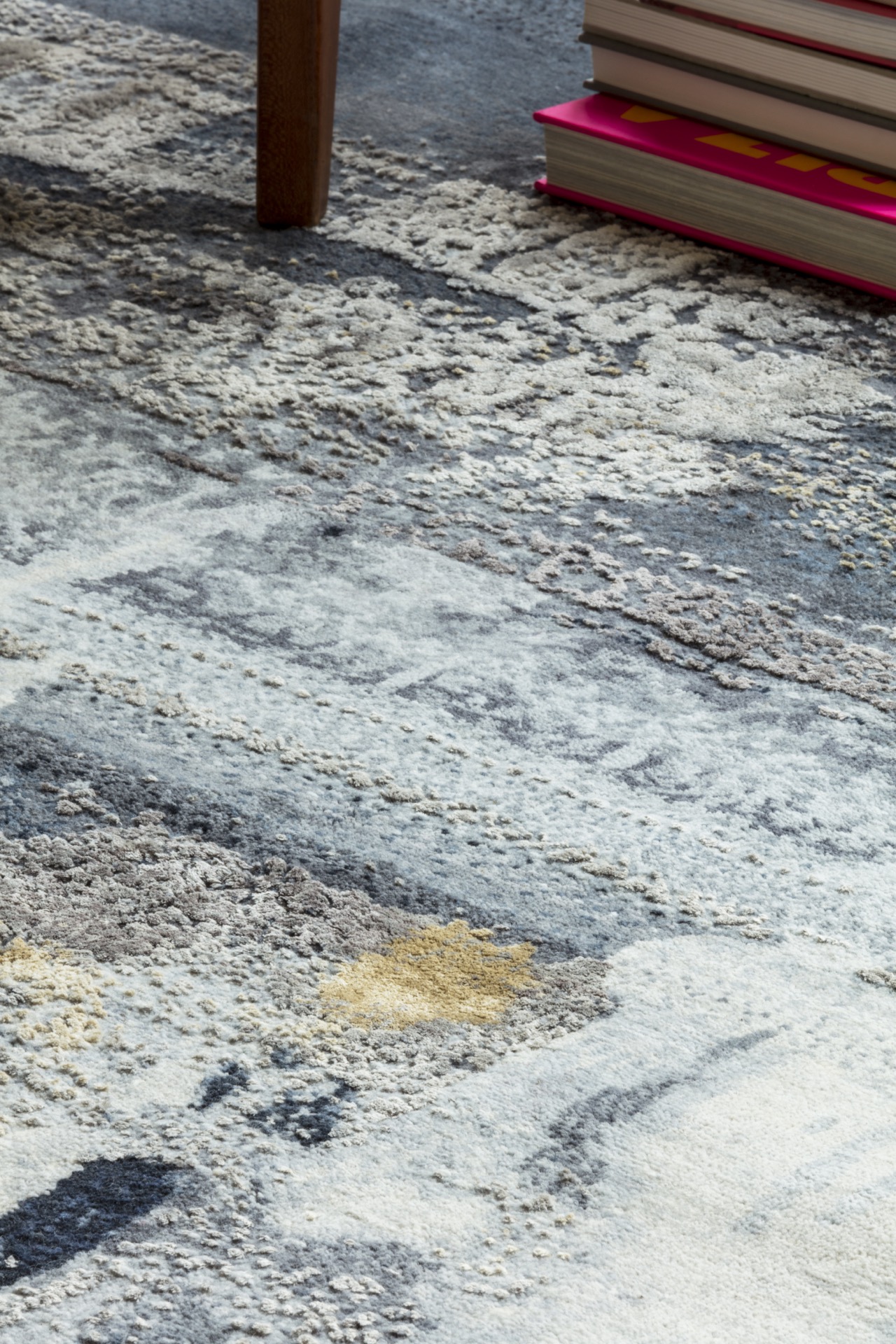
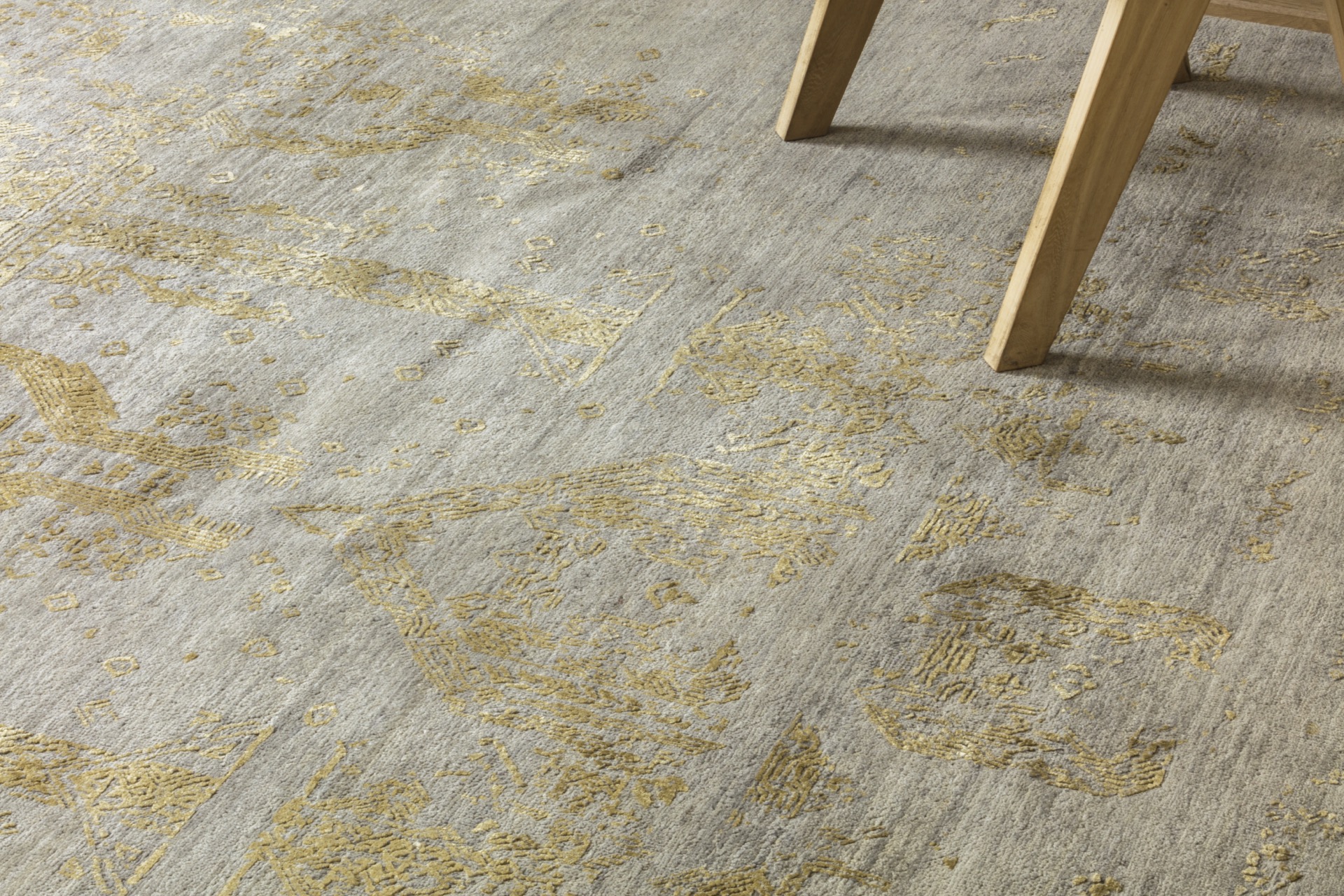
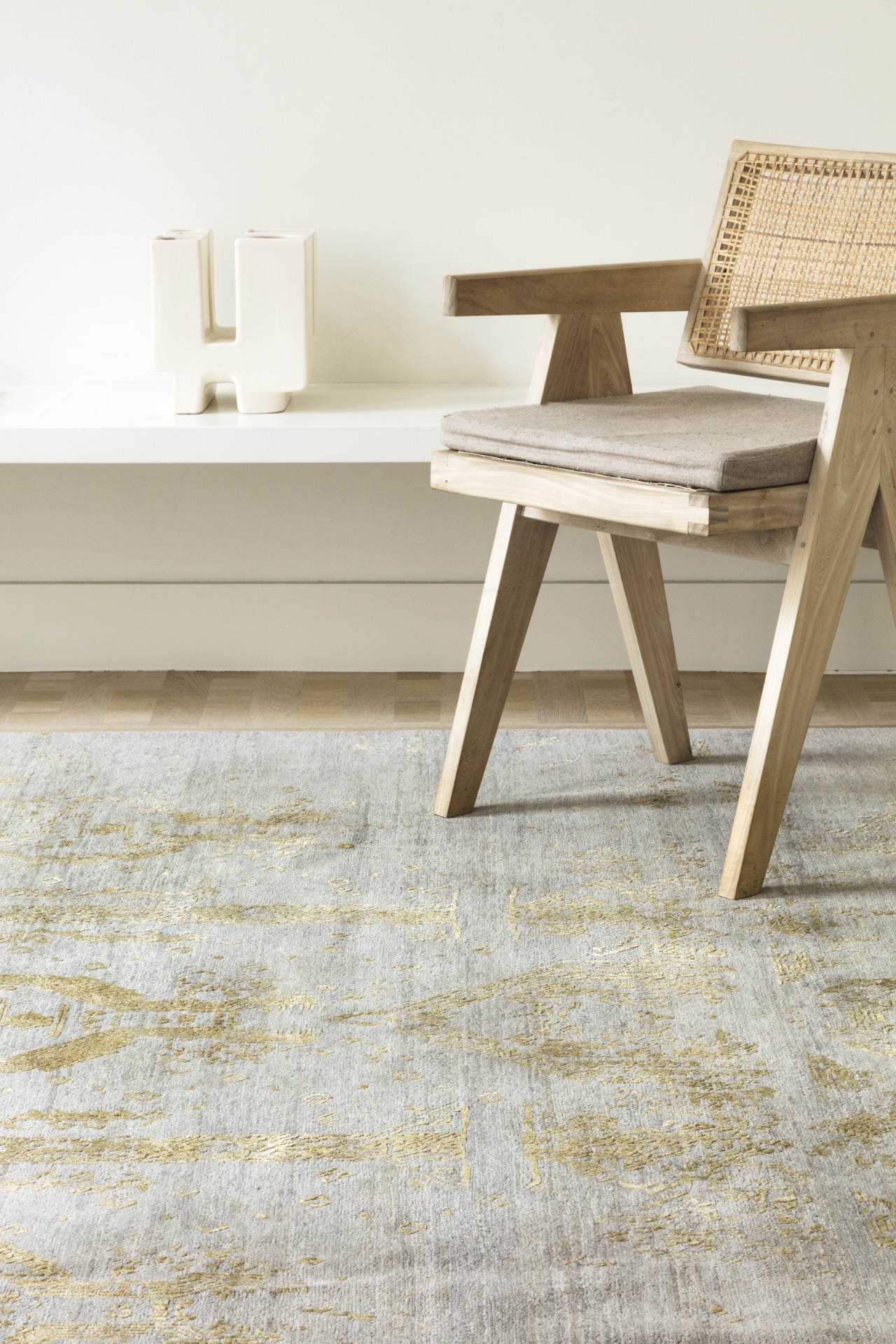
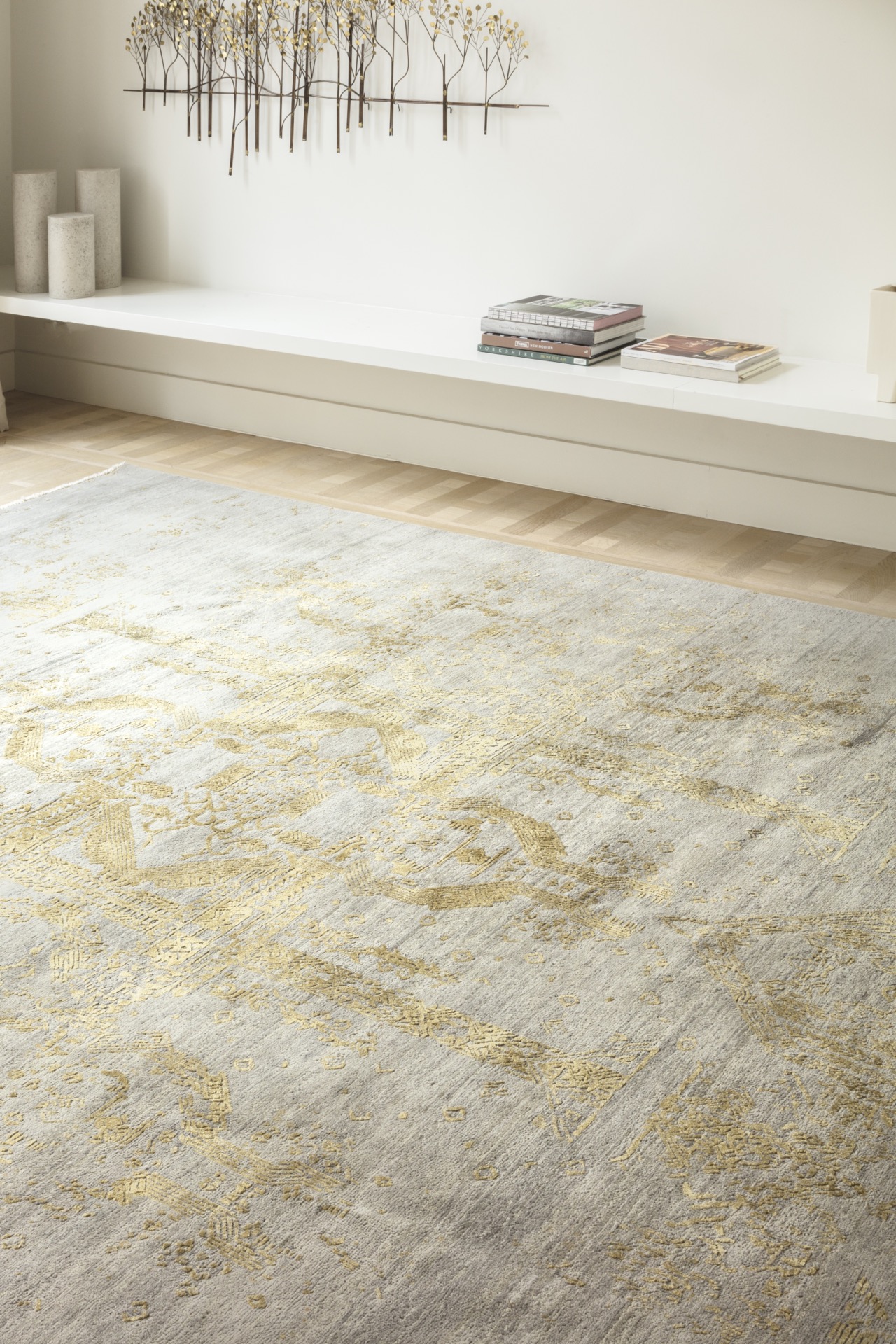
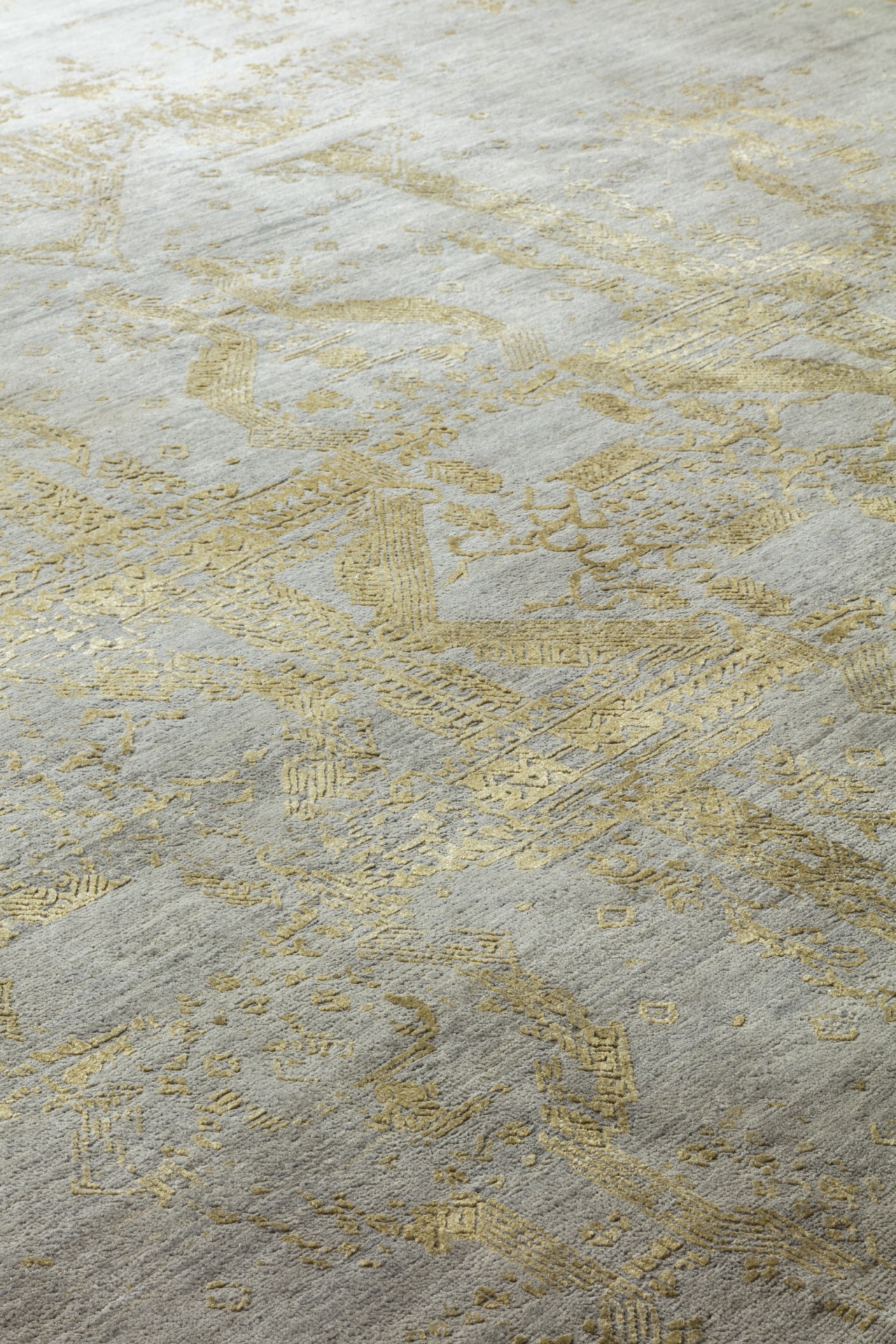
The source notes wool and natural silk, and that material mix is easy to read in the surface depth shown in the close-ups. Some areas look dense and slightly raised; others catch the light more softly. That texture gives the rugs in interior settings a visible presence even before the full room is seen. A Persian knot rug, in this context, is not just a technical detail. It points to the way the surface holds pattern, edge, and wear across a floor that is meant to be used.
The promise of lasting use is part of the story too. These are rugs designed to be lived with, not treated as background filler. In the larger rooms, that durability is matched by scale: the rugs sit under seating, near circulation paths, and close to architectural thresholds. The material choice supports that role. Wool gives body, while natural silk adds a finer sheen and helps the pattern read more clearly under daylight.
Light, arches, and the room lines around them
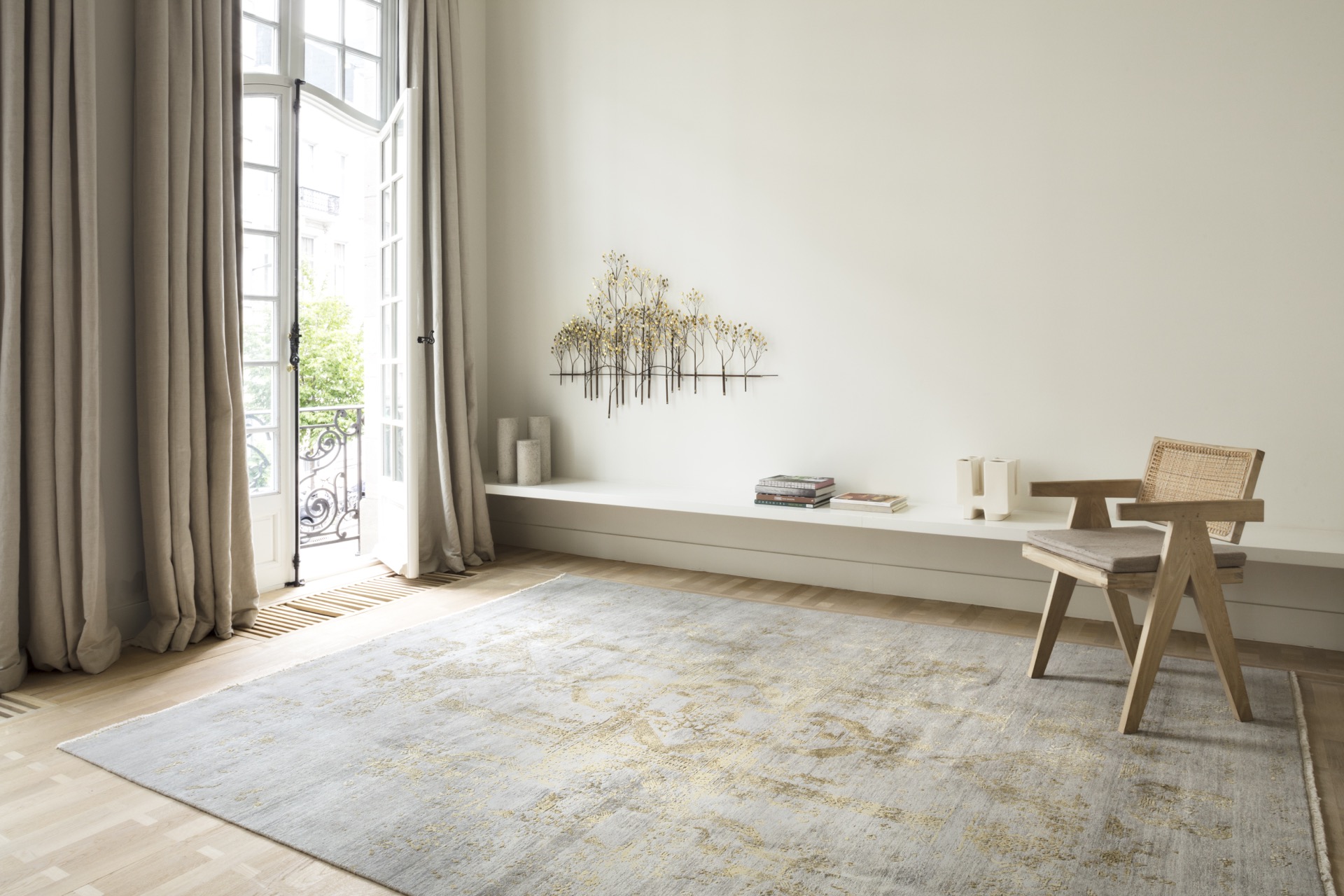
Daylight shapes the whole scene. Large windows pull soft light across the floor, and beige curtains filter it before it reaches the rugs. The classic interior with rugs gains depth from those light changes: red appears stronger against pale walls, while blue-grey looks flatter and calmer where the room is brightest. Arches cut into the architecture and create a slow transition between zones, so the eye moves from one room to the next without a hard break.
Those arches are not just decorative. They help the rugs read as part of a sequence rather than isolated objects. One room opens into another, and the carpets mark the change in tone. In a setting with panels, baseboards, and pale plaster, the textile surfaces become the quickest way to register a different mood. That is where rugs as color accents do the most work: they change the room immediately, but they do it on the floor, where the shift feels grounded rather than imposed.
A marble fireplace as an anchor
The marble fireplace gives the seating area its strongest fixed point. Flames sit inside a pale surround, and the stone surface reflects the room in a restrained way. Nearby, the blue rug spreads under the furniture and cools the scene, preventing the fireplace from dominating the whole composition. The balance comes from placement rather than contrast alone: textiles, seating, and stone all remain readable, each in its own layer.
This is also where the project’s classic language becomes most visible. The fireplace, the arches, and the wrought-iron balustrade belong to the same architectural register, yet the rugs alter how the room feels from one angle to the next. In one view the fireplace is the focal point; in another, the carpet pattern takes over. The result is a room that changes with viewpoint, not with decoration added on top.
Close-up pattern and surface depth
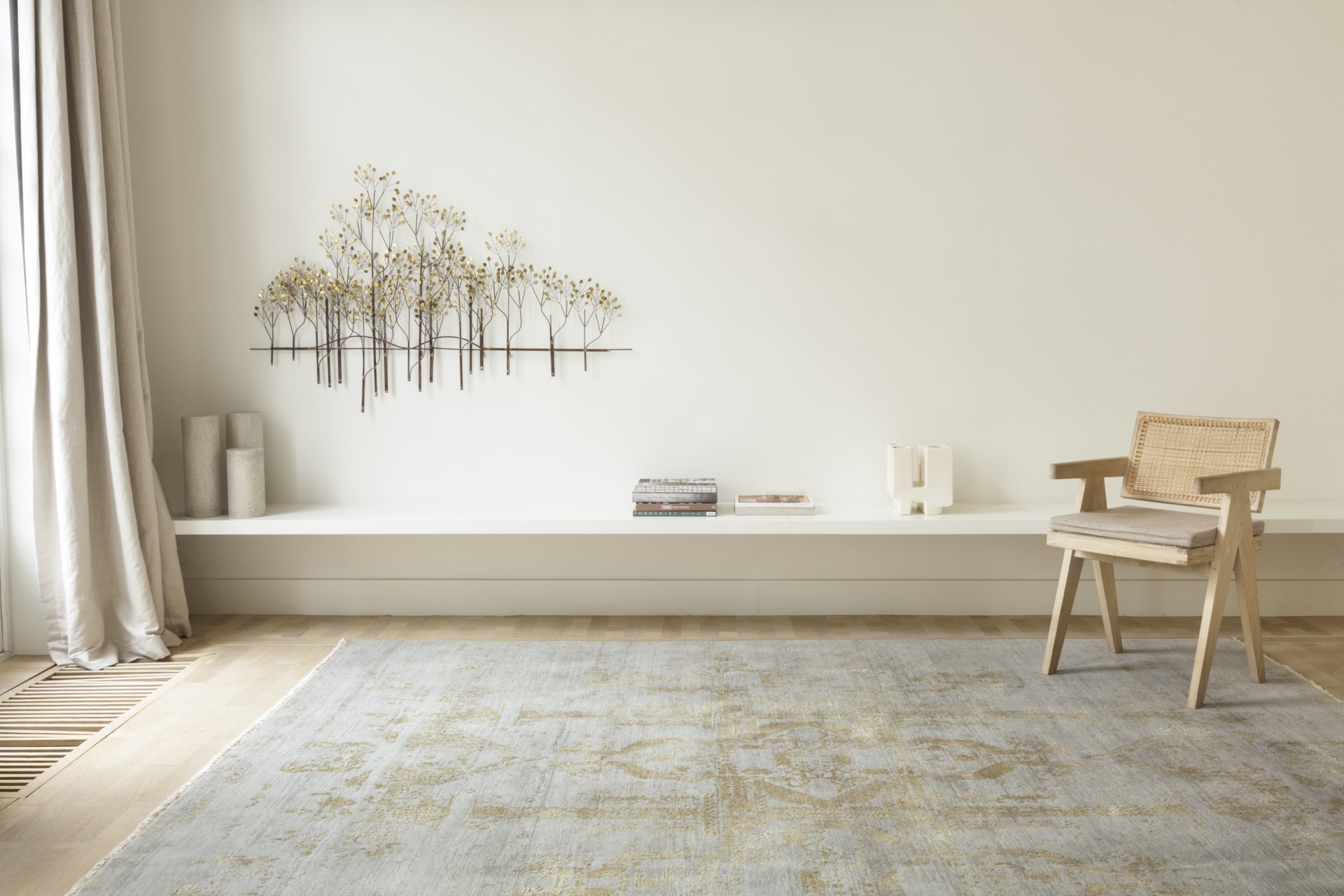
The close-up images shift attention away from the room and into the rug itself. Here the pattern becomes less about color blocks and more about relief, pile height, and the way light catches the surface. Beige and gold-toned shapes appear against a blue-grey base, and the texture gives the textile a slightly weathered, layered look. These details matter because they show why a statement rug can hold its own in a larger interior: the surface remains active even when the room is quiet.
Seen this way, the rug is not an accessory placed at the end of the process. It is one of the main structural elements in the composition. The floor becomes part of the narrative, especially when the pattern moves close to the edge of furniture legs or continues beneath a seating group. That is where the classic interior with rugs feels complete in a visual sense, because the carpet is doing more than filling space. It shapes how the room is read.
Soft curtains, open windows, and measured contrast
Beige and khaki curtains frame the tall windows and keep the light from turning harsh. Their tone stays close to the pale walls, which lets the rugs carry the stronger color notes. In one room, a brown armchair and wooden frame sit against this muted backdrop; in another, the same pale textiles allow the blue rug to become the cooler center of attention. The contrast is subtle, but it is clear enough to structure the view.
That measured contrast is what gives the project its clarity. The rugs in interior spaces define the rooms, while the curtains, marble, wood, and iron keep the setting grounded. Nothing feels overdesigned. Instead, each element has a visible role: the carpet marks the zone, the fireplace anchors it, the arches carry the eye forward, and the fabric around the windows tempers the light. Together they form a classic interior with rugs that reads room by room, detail by detail.
Photography – Annick Vernimmen
Want to see more of Thibault van Renne? View the page of Thibault van Renne for even more great projects and company information.


NEW 2026 Jubileum Edition The Best Interior Designers Benelux
Order Now €125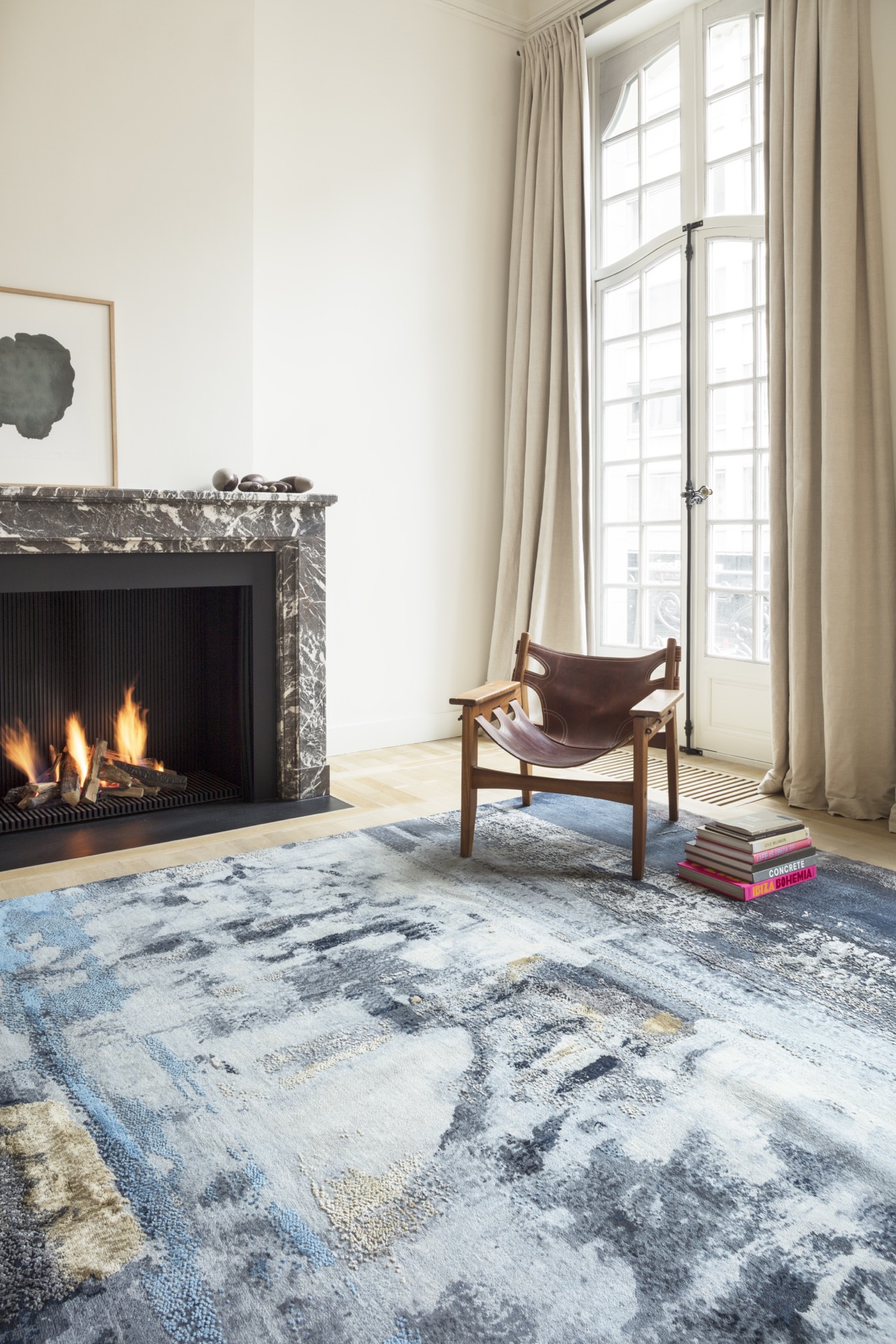
NEW 2026 Jubileum Edition The Best Interior Designers Benelux
Order Now €125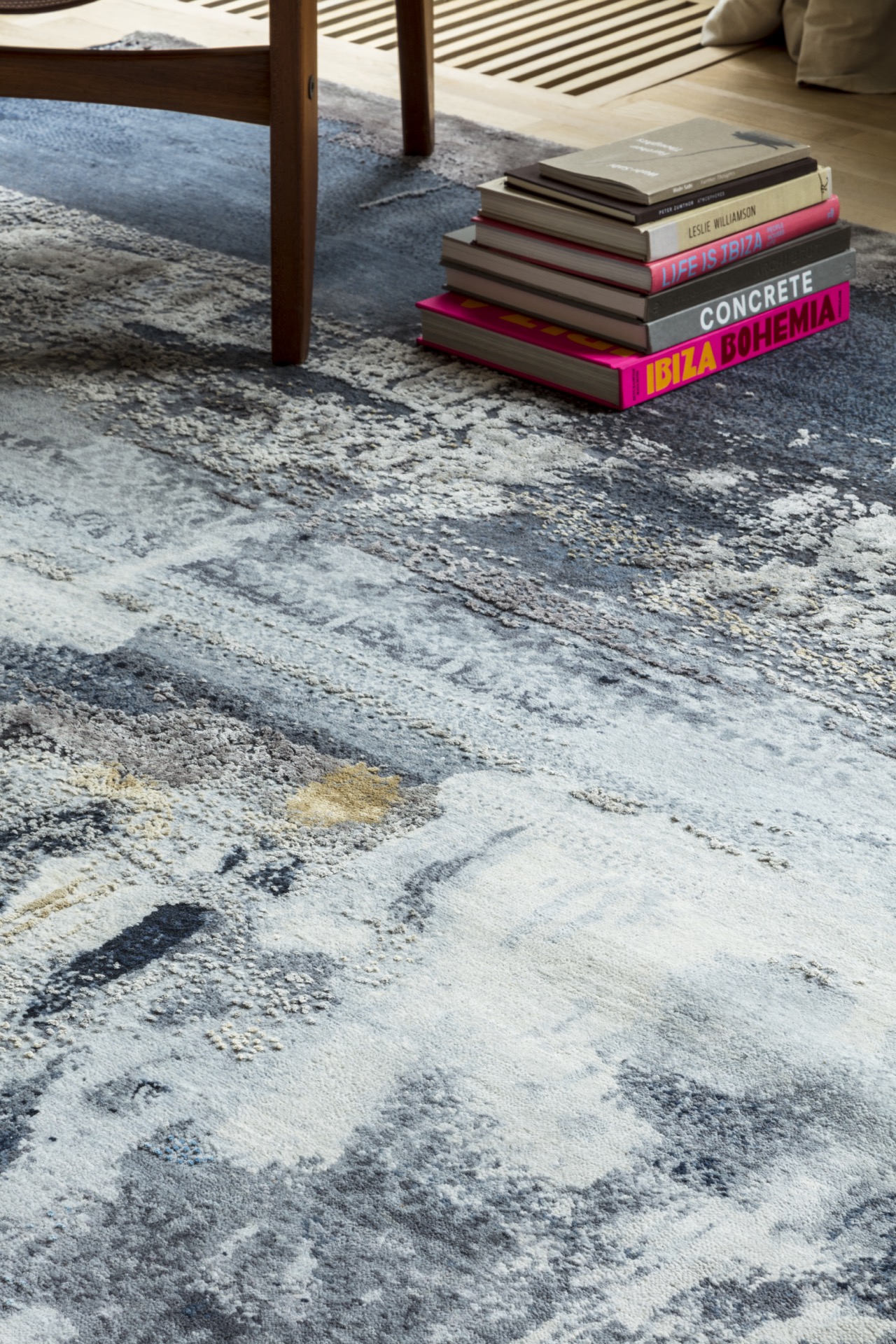

NEW 2026 Jubileum Edition The Best Interior Designers Benelux
Order Now €125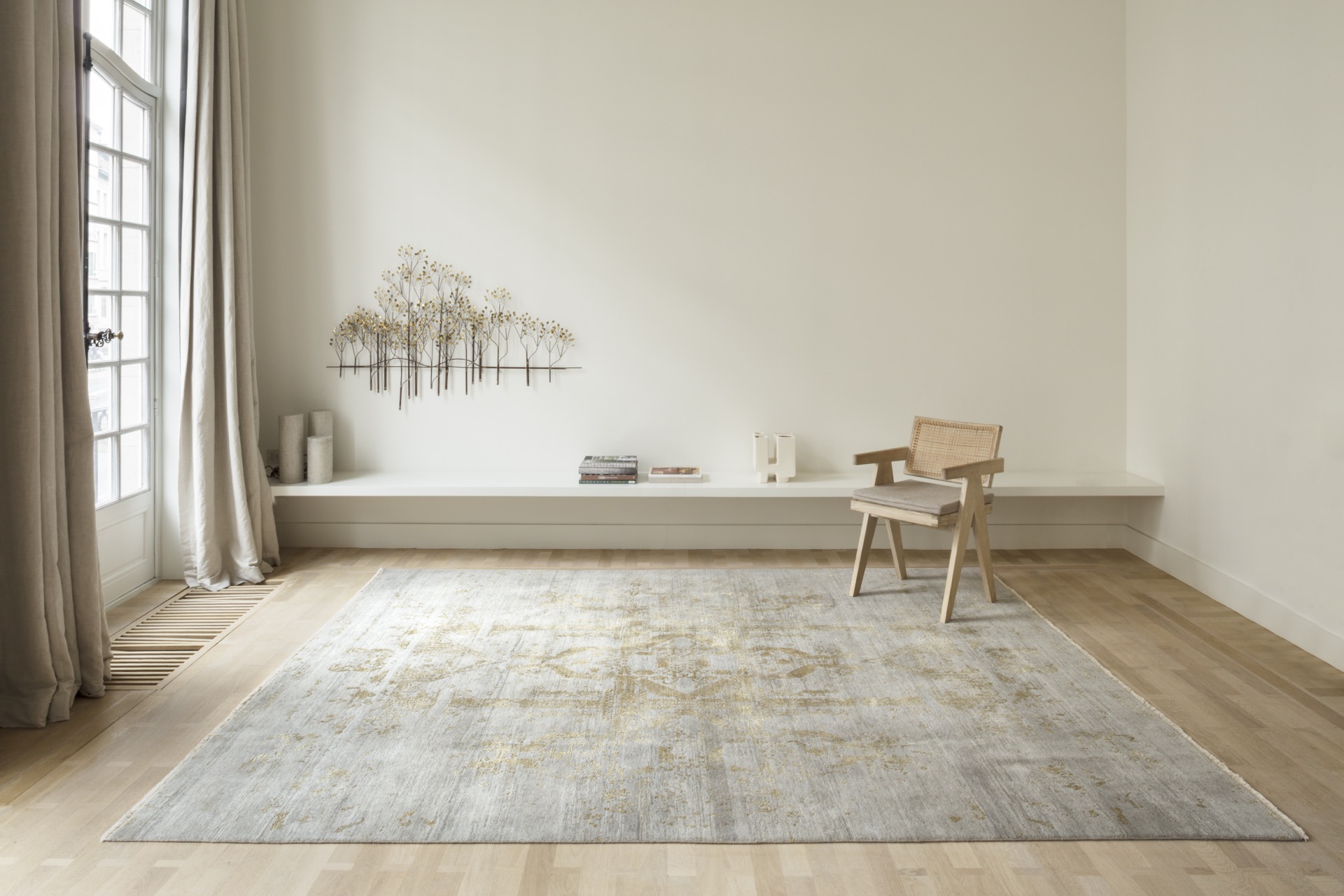
NEW 2026 Jubileum Edition The Best Interior Designers Benelux
Order Now €125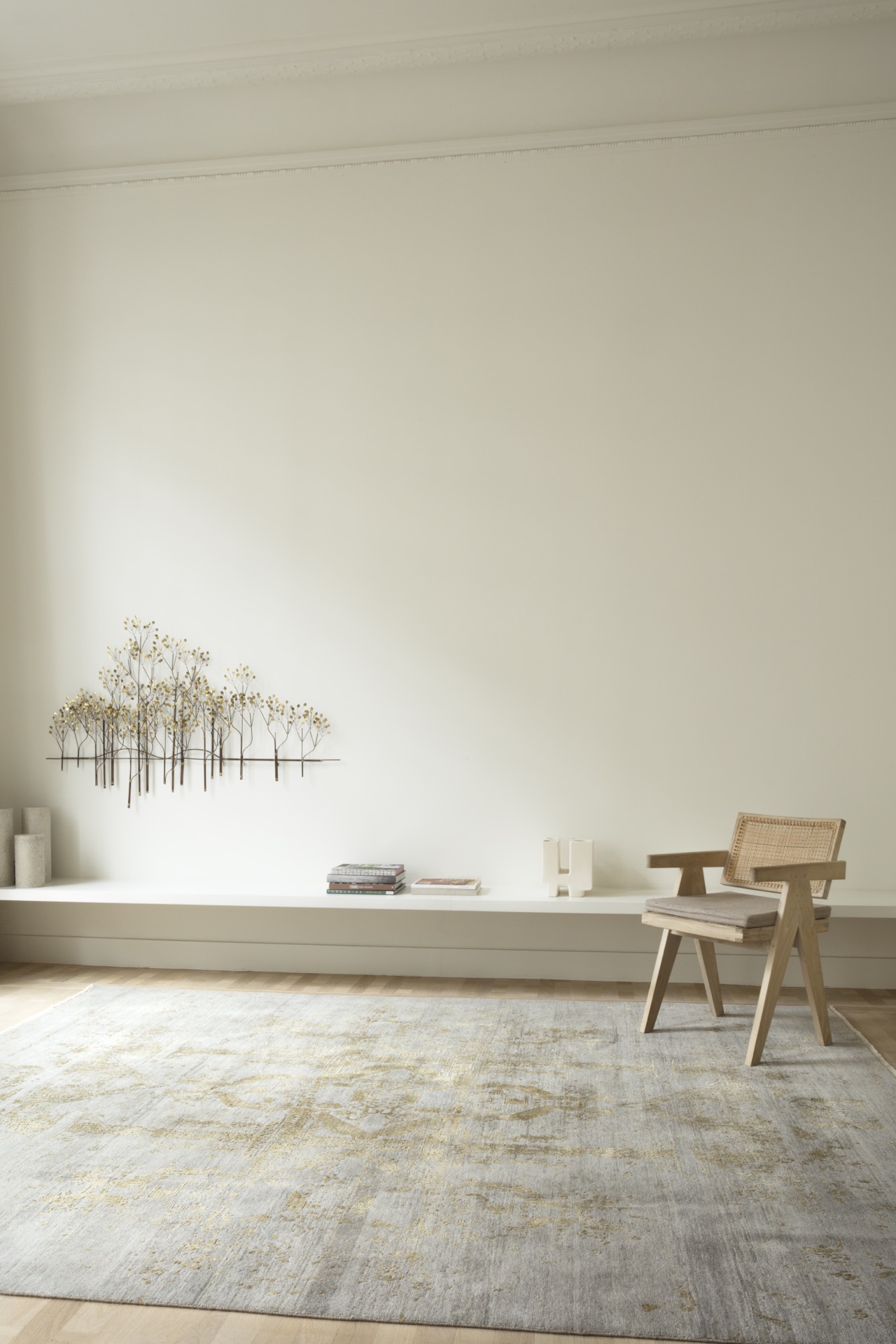
NEW 2026 Jubileum Edition The Best Interior Designers Benelux
Order Now €125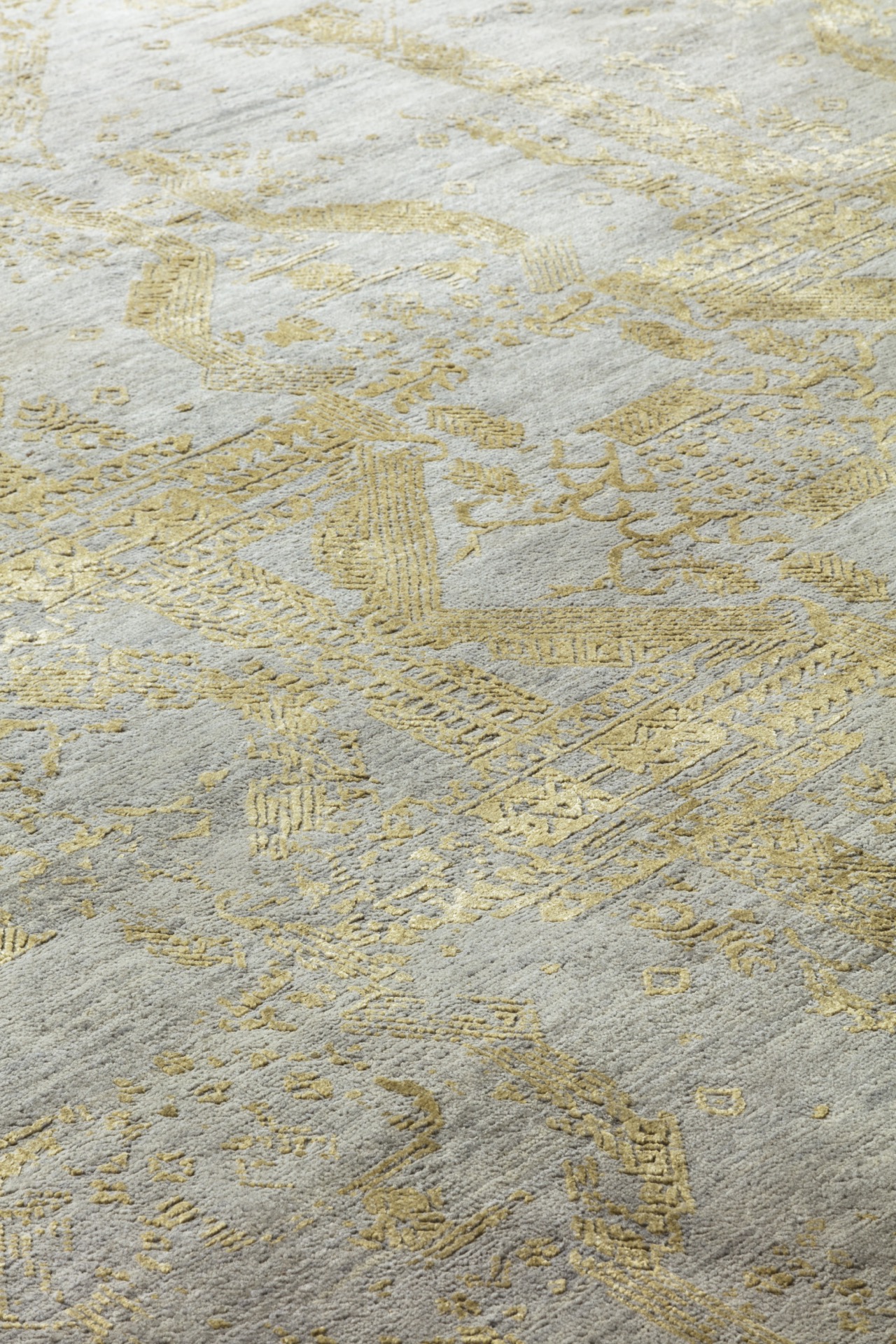
NEW 2026 Jubileum Edition The Best Interior Designers Benelux
Order Now €125