





Troweled gray concrete floor with bronze concrete plaster walls in a detached home
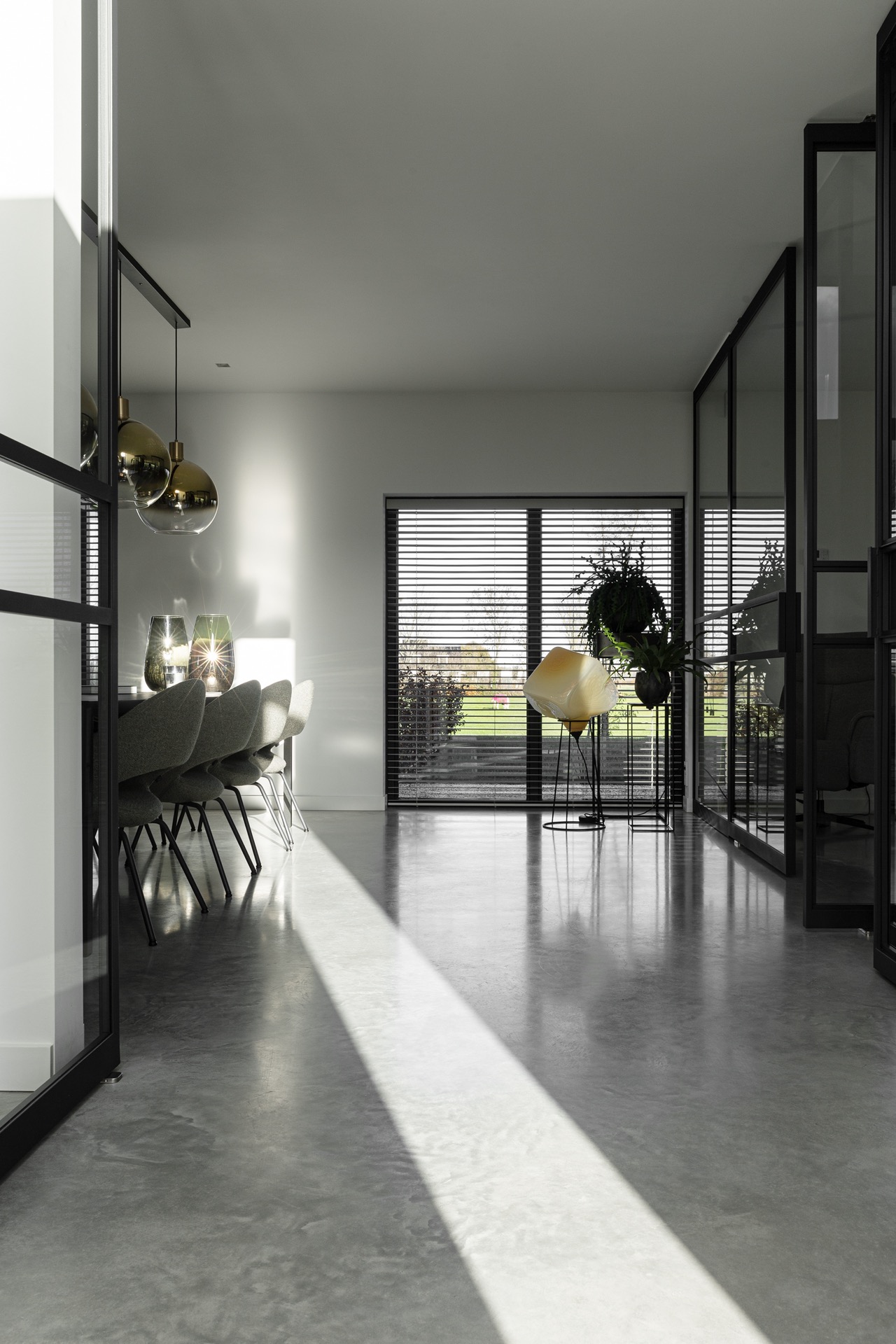
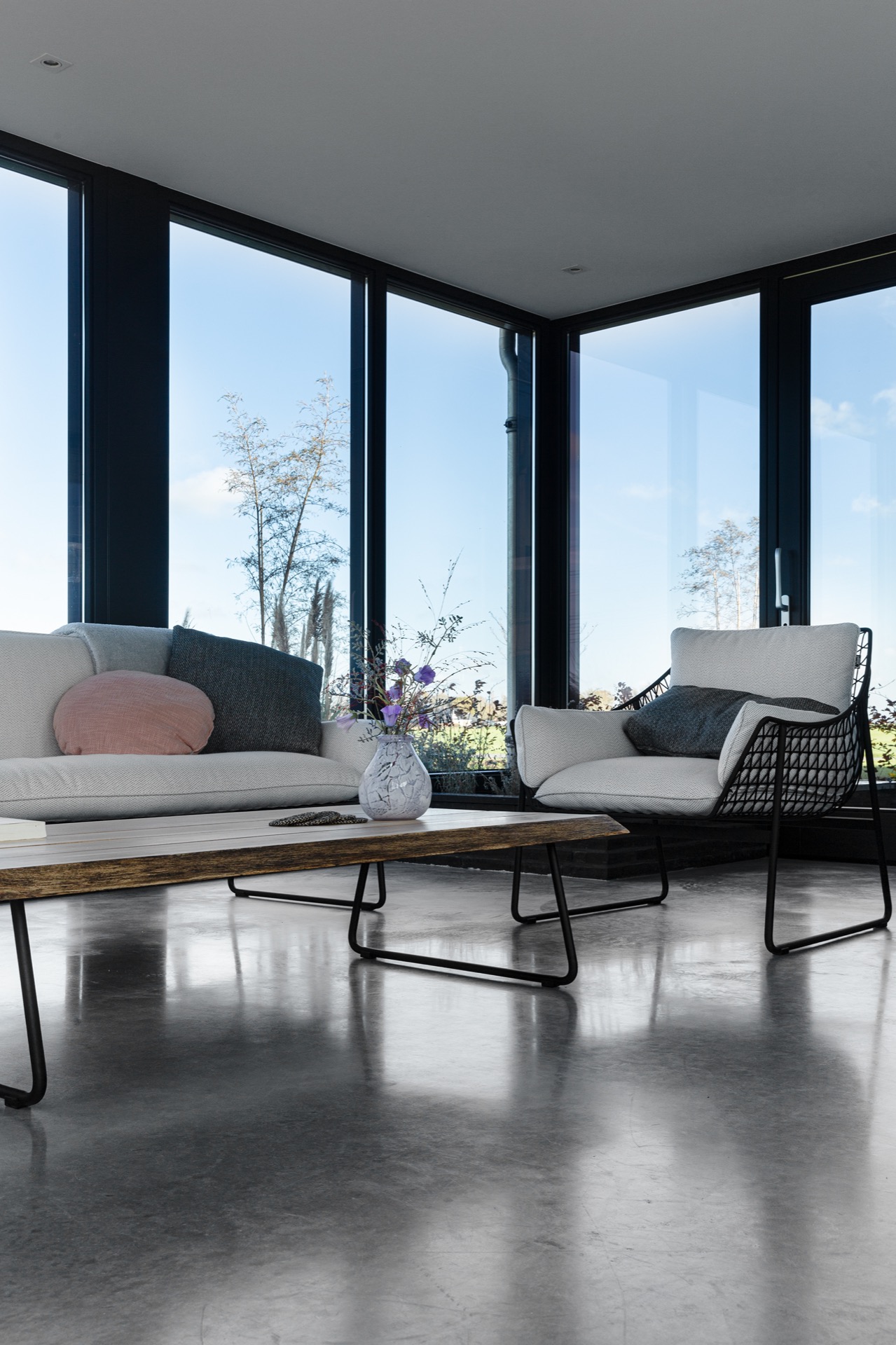
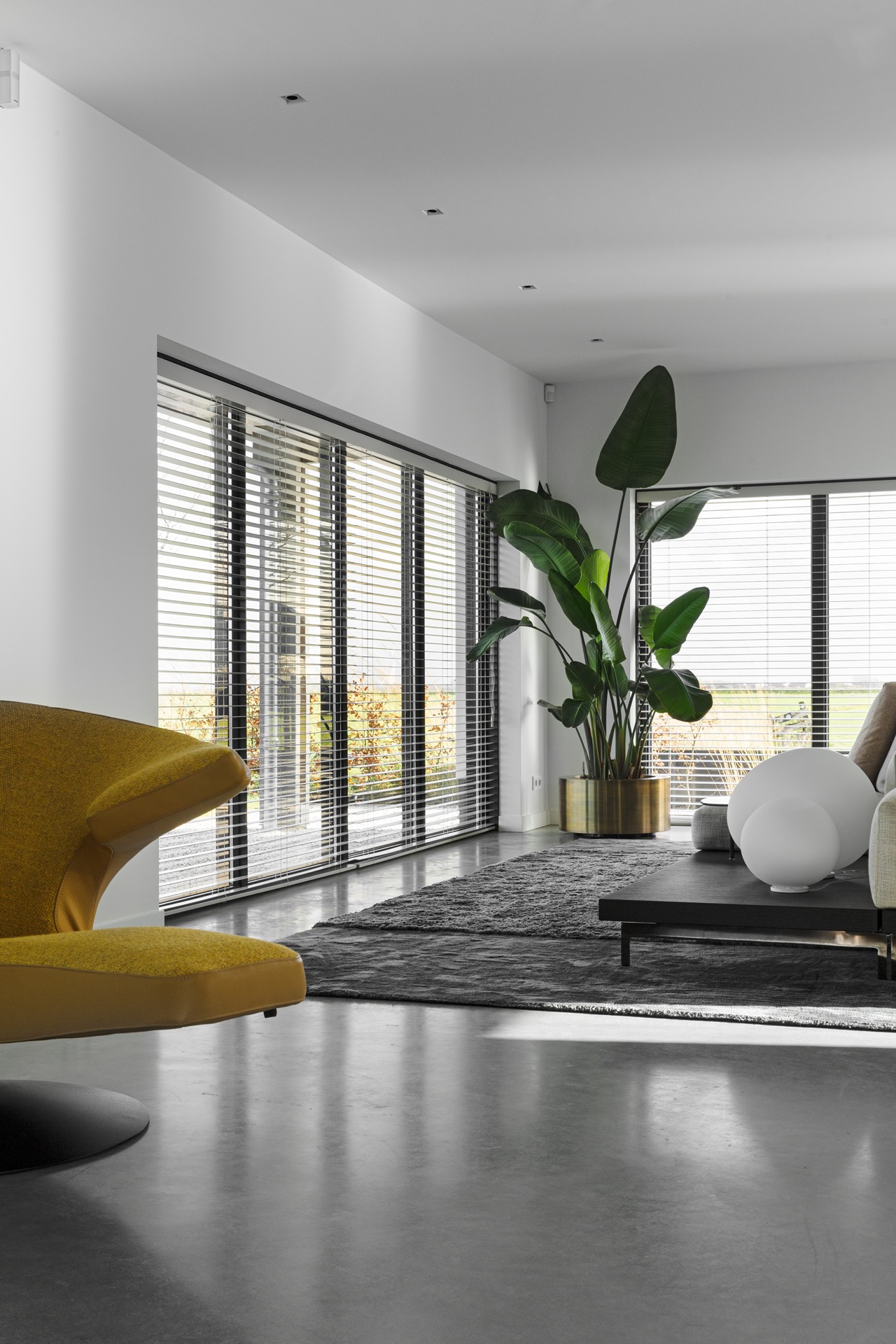
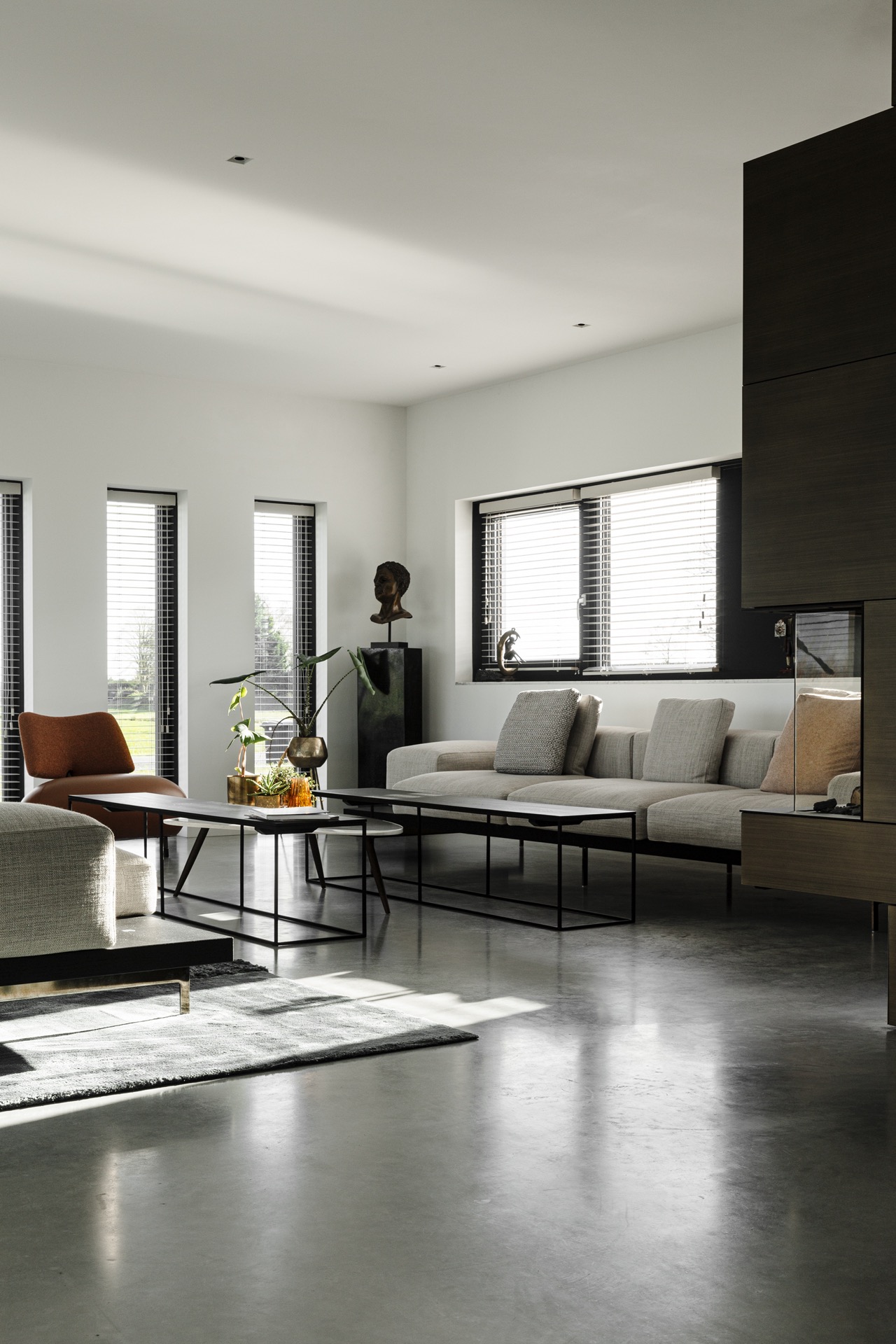
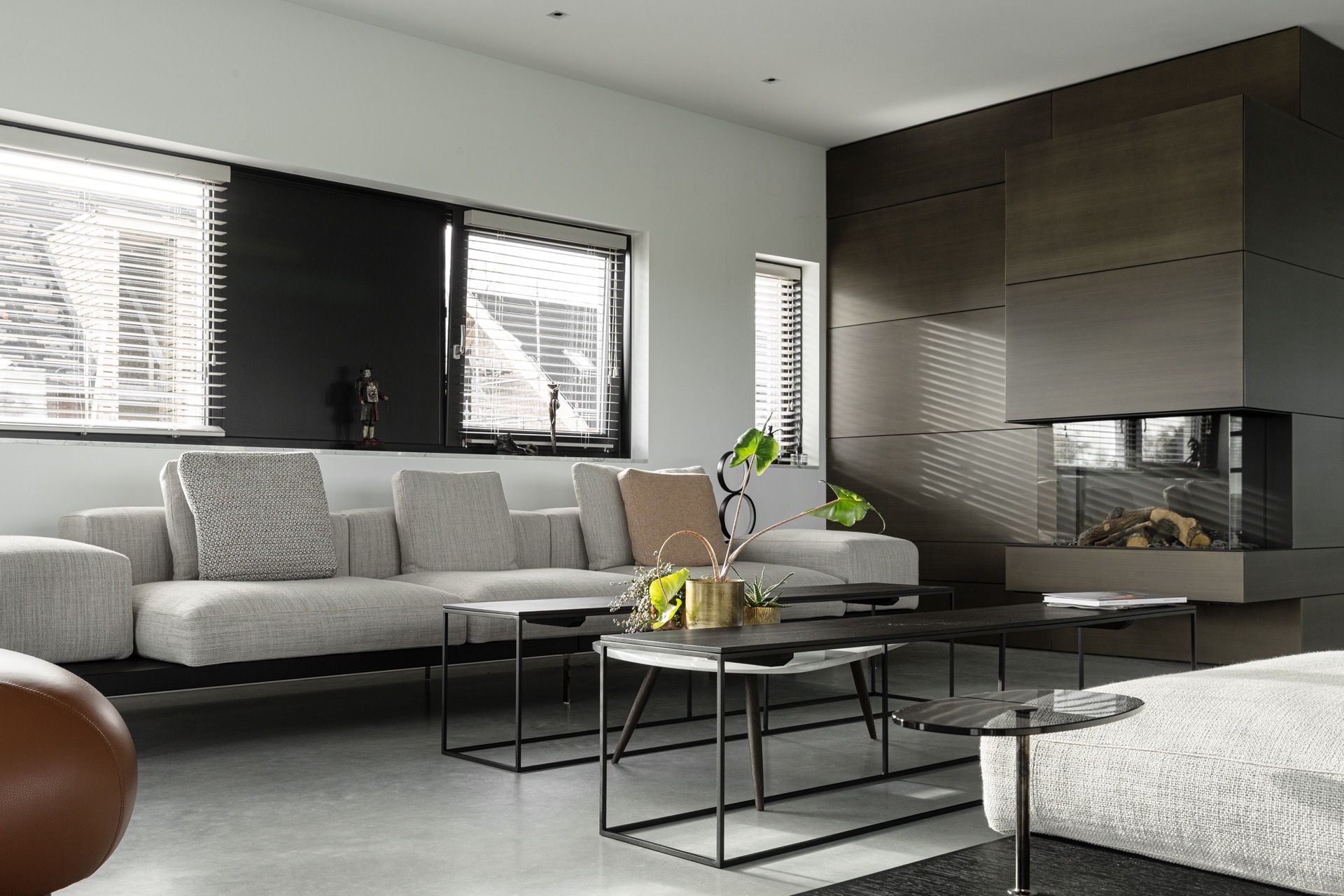
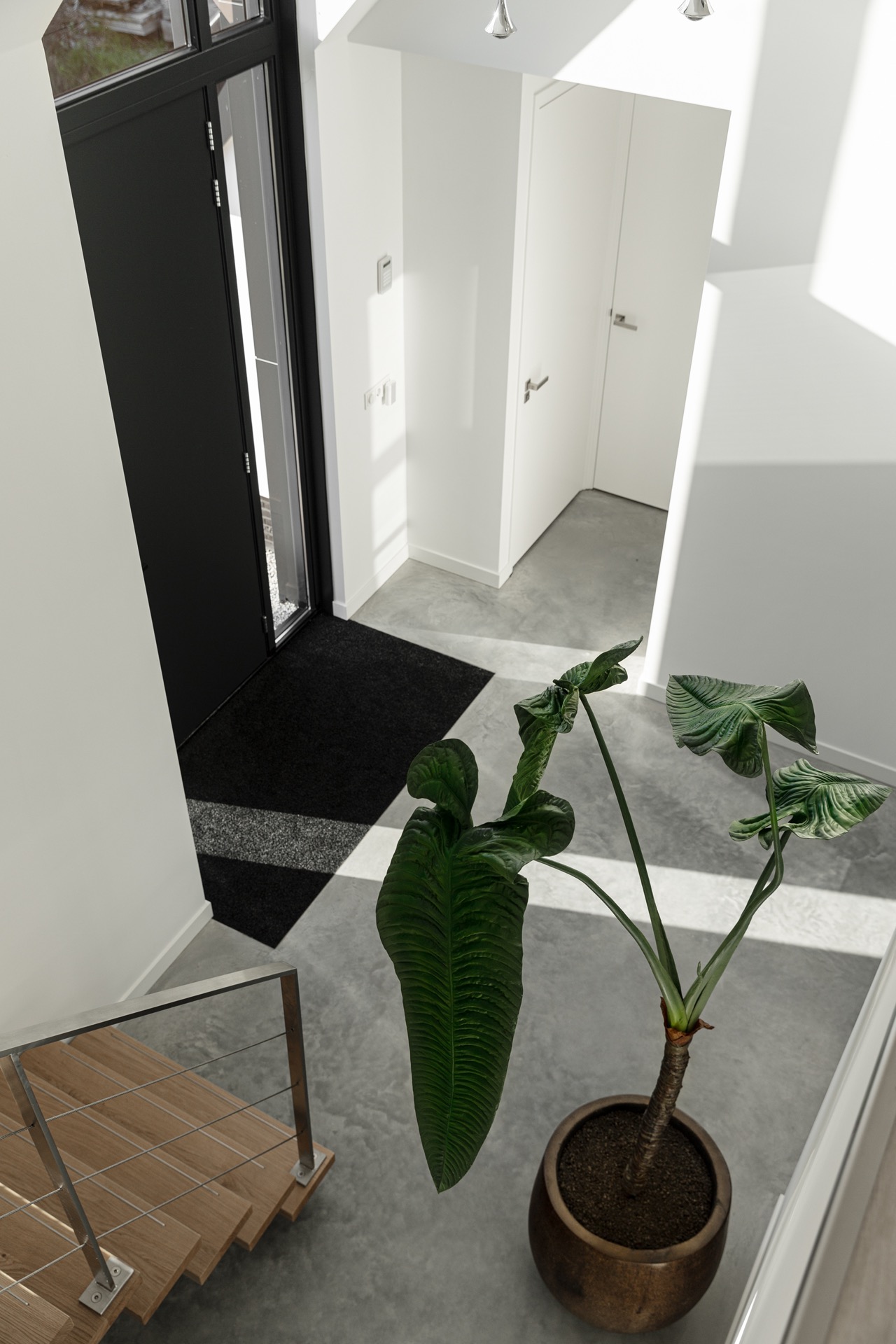
Concrete plaster walls shapes the way the rooms are organized and described. A continuous gray concrete floor sets the tone the moment you step inside. Its matte surface runs past the glazing and under the stair, drawing the rooms together without drawing attention to itself. Black window frames cut into the white walls, and the daylight that comes through them keeps the floor reading as one broad plane rather than a series of separate rooms. The result is a modern minimalist interior that lets material and proportion do most of the work.
Concrete plaster walls as a spatial starting point
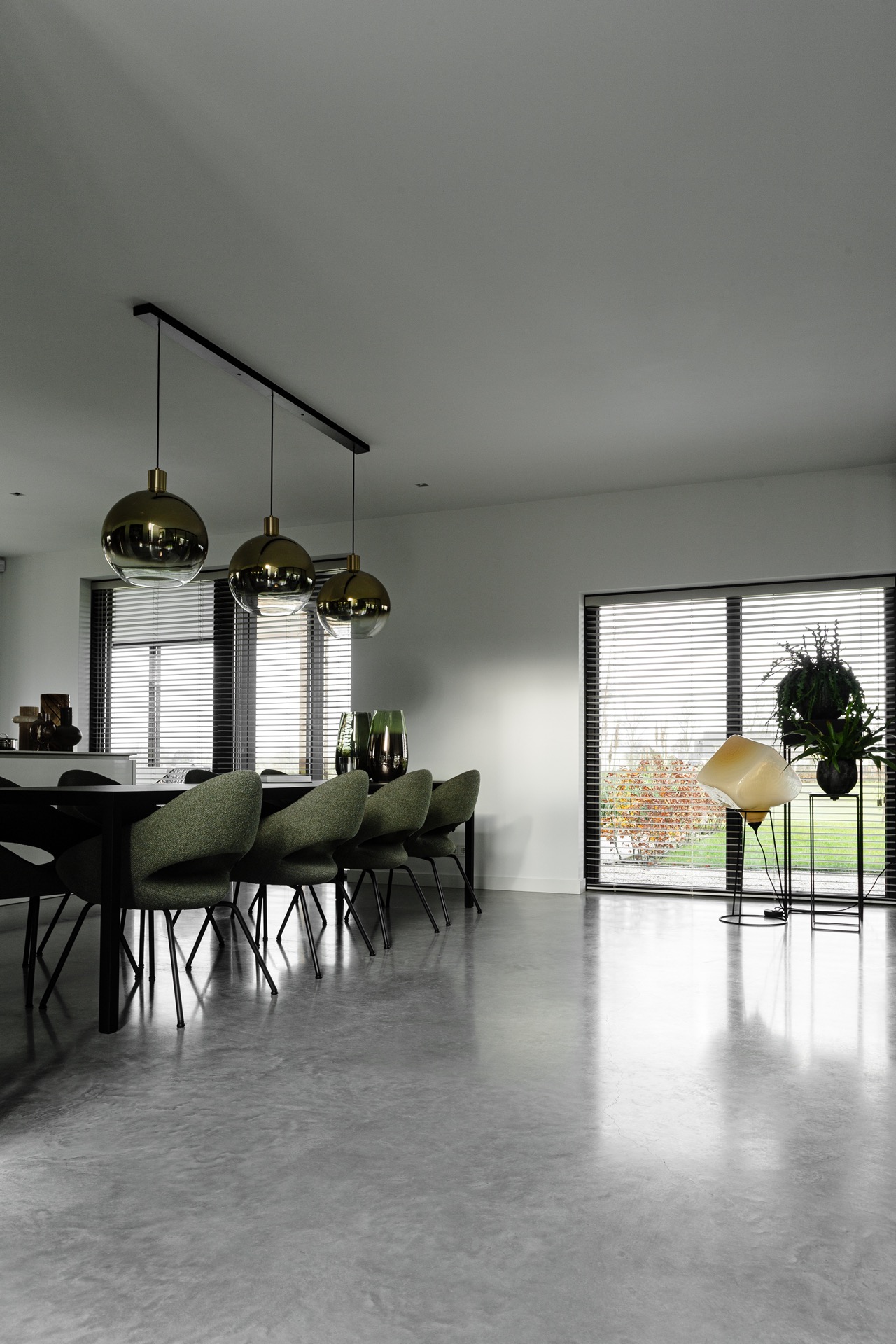
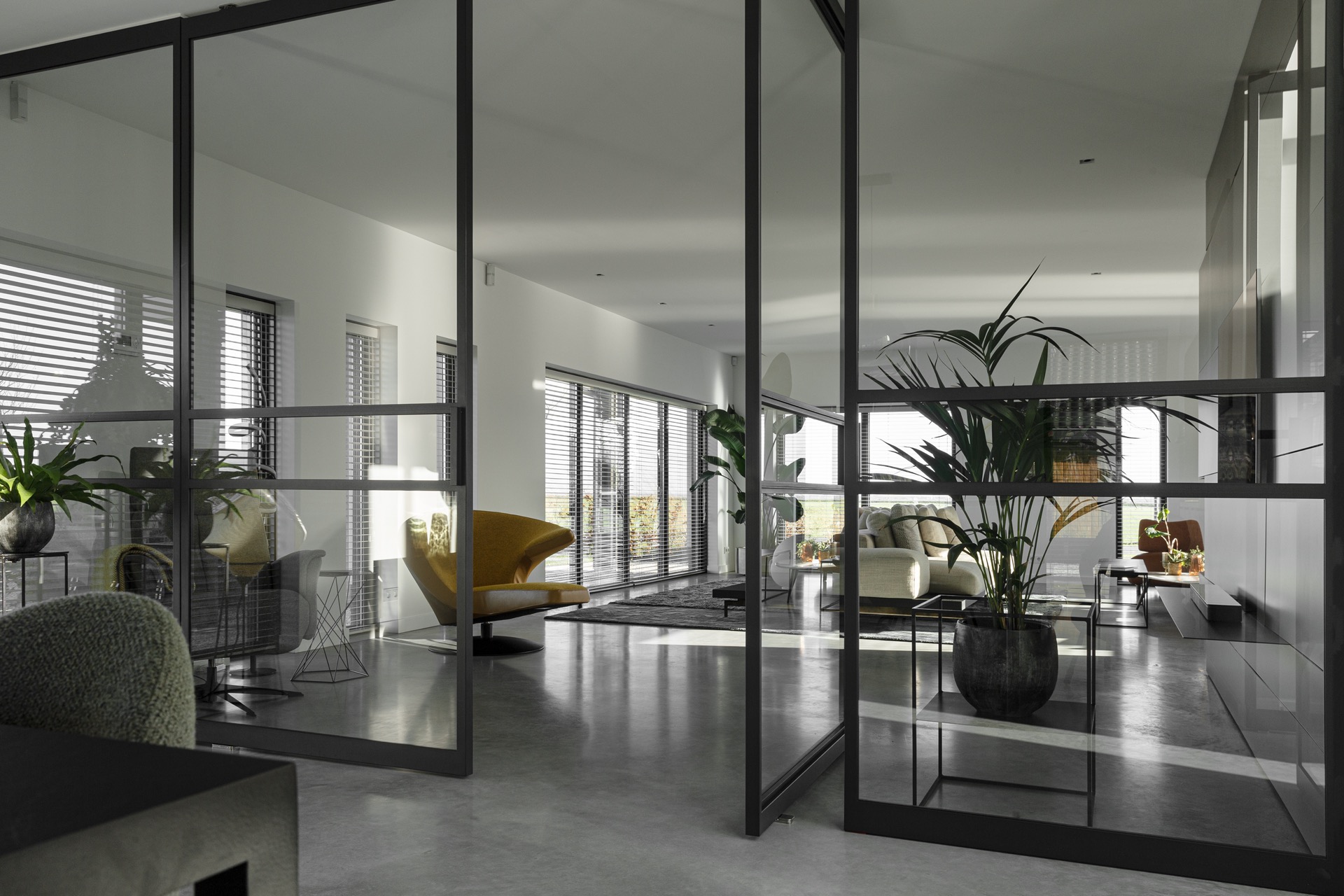
The troweled concrete floor is not treated as a background element here. It carries the eye from the entrance into the living spaces and past the open sightlines toward the large windows. The gray concrete floor has a calm, even tone, with just enough variation to keep the surface from feeling flat. Alongside the dark profiles of the windows, the floor sharpens the geometry of the interior and makes the long views outside feel even wider.
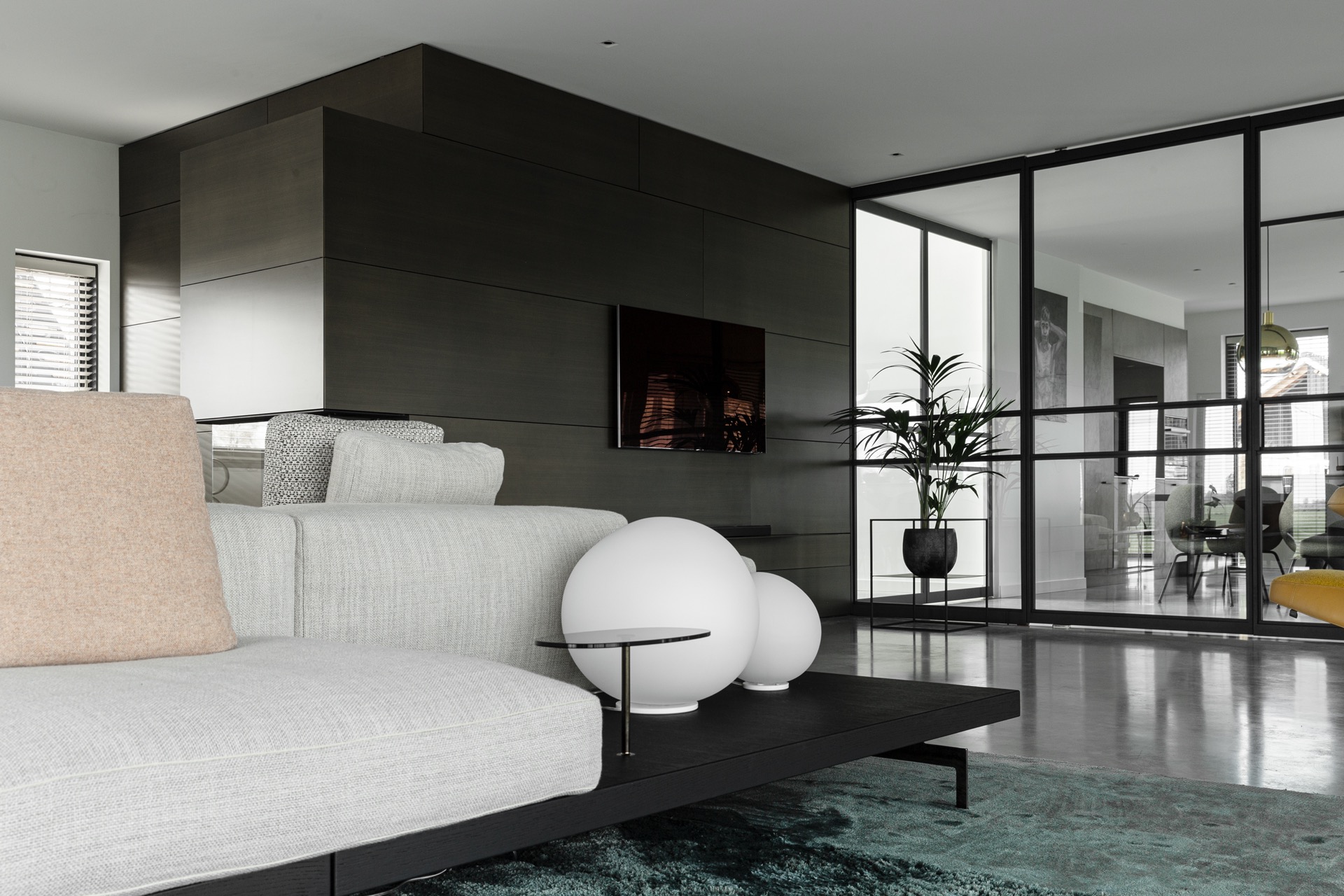
That effect becomes clearest where the room opens up around the seating and dining zones. The floor keeps its continuity as the furniture changes and the light shifts, so the room does not break into smaller parts. In several views, horizontal blinds sit behind the black frames, adding a second set of lines that echo the floor without competing with it. The interior stays restrained, but there is movement in the way the surfaces meet and reflect the daylight.
Black frames, glass, and a room that reads in layers
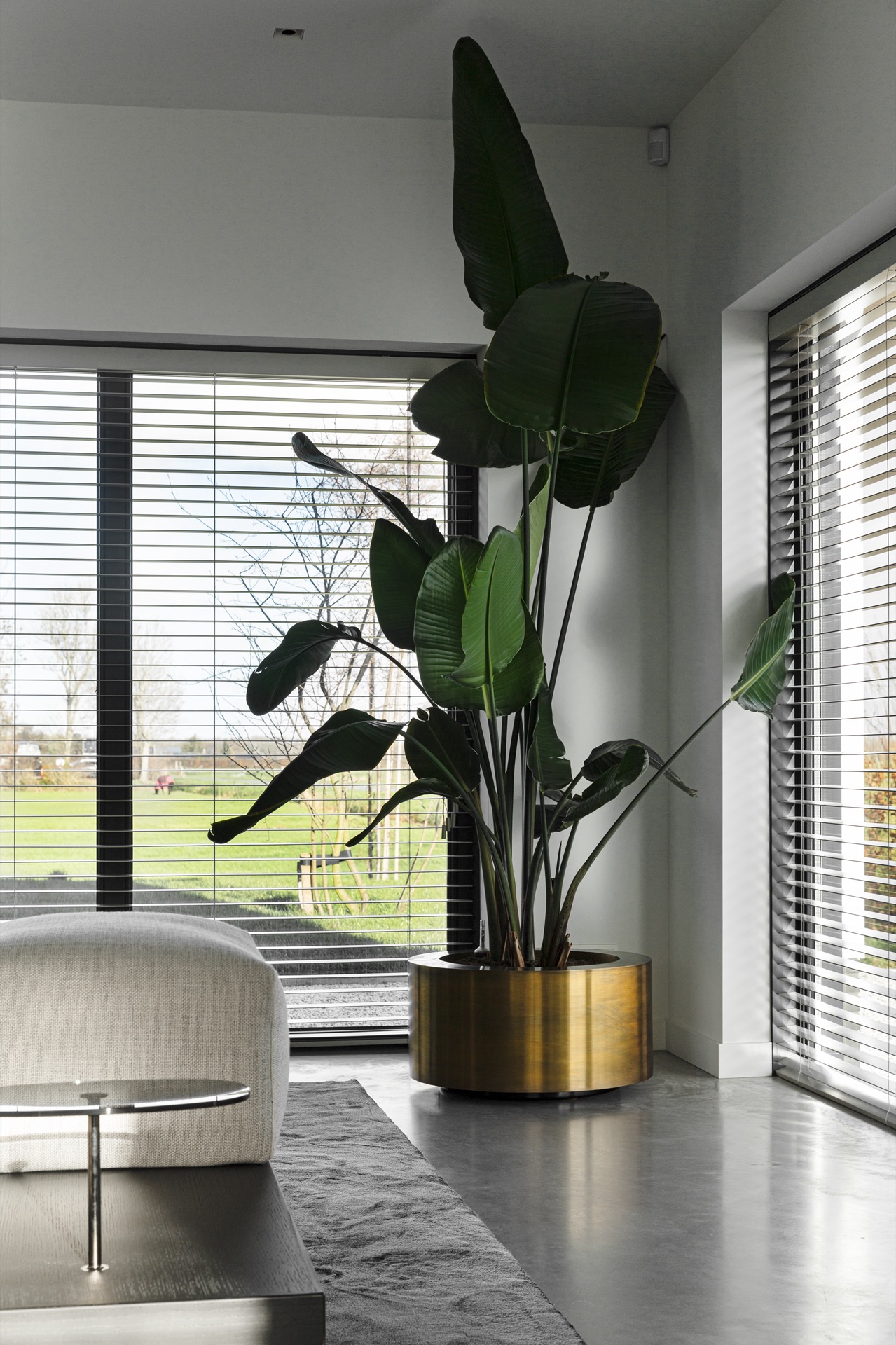
Large glazing plays a visible role throughout the house. The black window frames form a strong outline around the glass, and that contrast is what gives the rooms their sharp edge. Because the walls remain white in many of the living areas, the gray concrete floor has even more presence. It anchors the interior while the windows pull the view outward. The effect is measured rather than decorative, with each material doing a clear job in the composition.
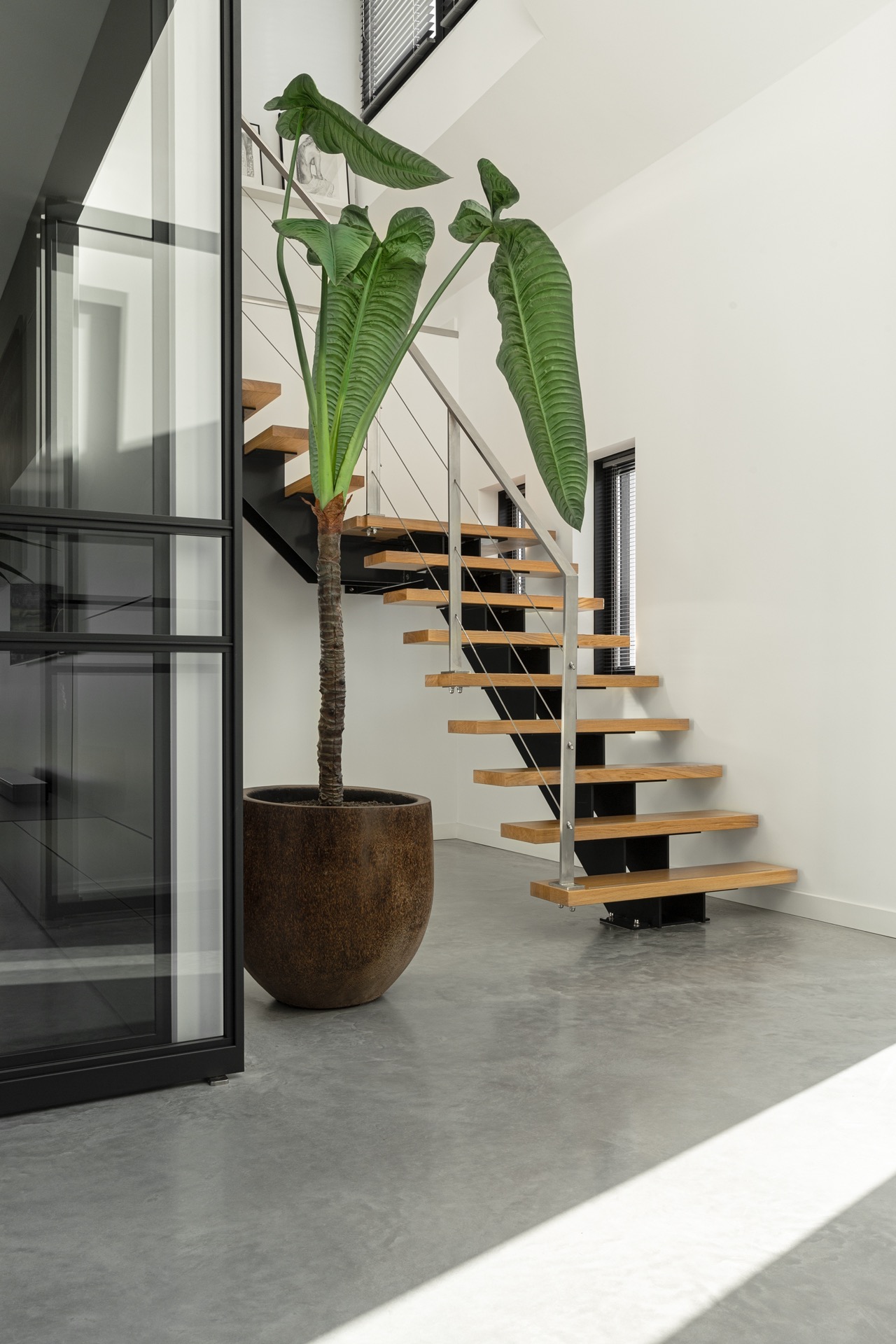
A glazed interior partition appears in the same visual language. The glass keeps the sightline open, and the dark framing gives it enough definition to hold its place next to the concrete floor. Nearby, the staircase adds another layer: wooden treads set into a metal structure, hovering against the lighter walls. The mix of wood, glass, and concrete never turns busy. Instead, each surface is legible, and the floor remains the material that ties the sequence together.
Bronze concrete plaster walls in the bathroom
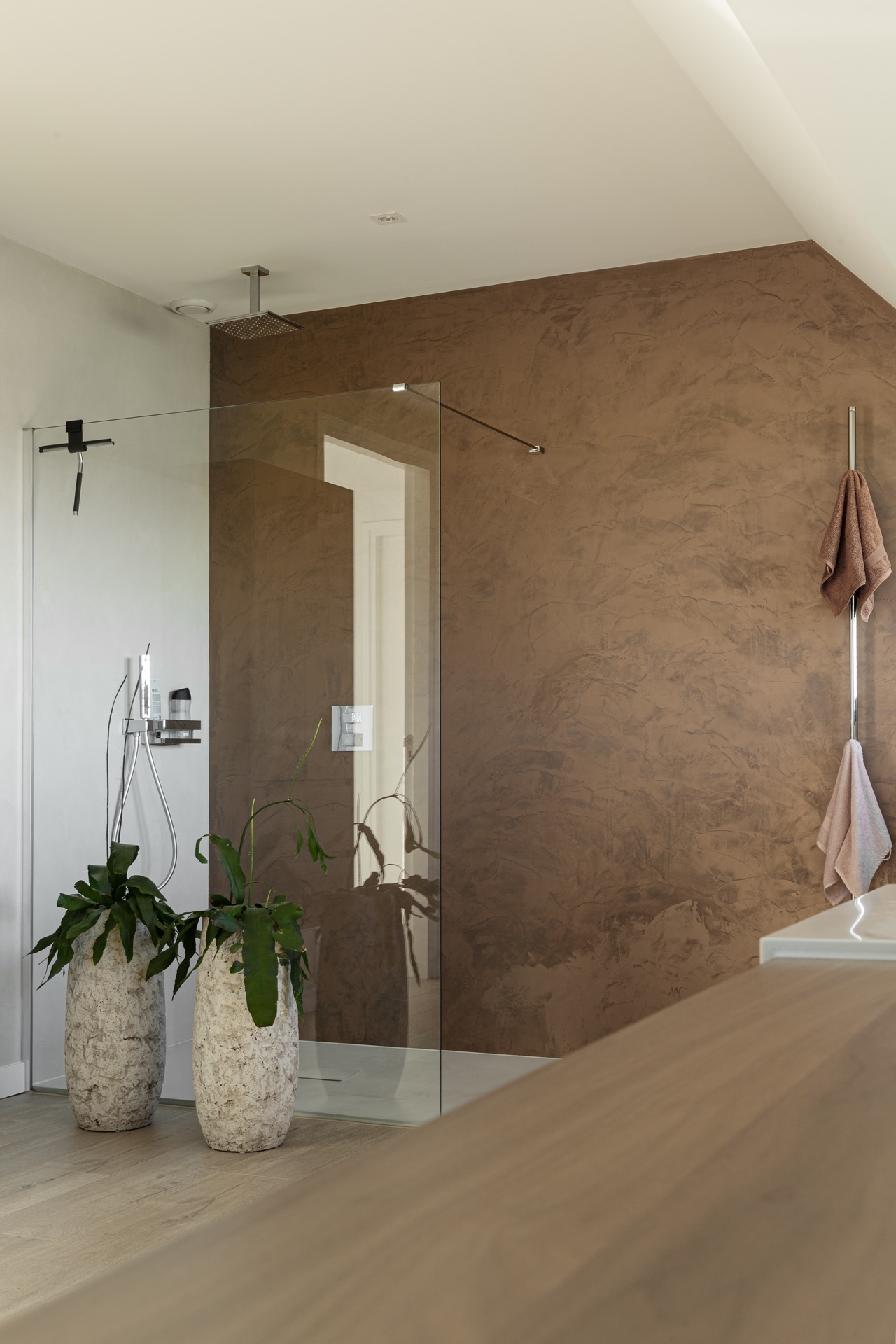
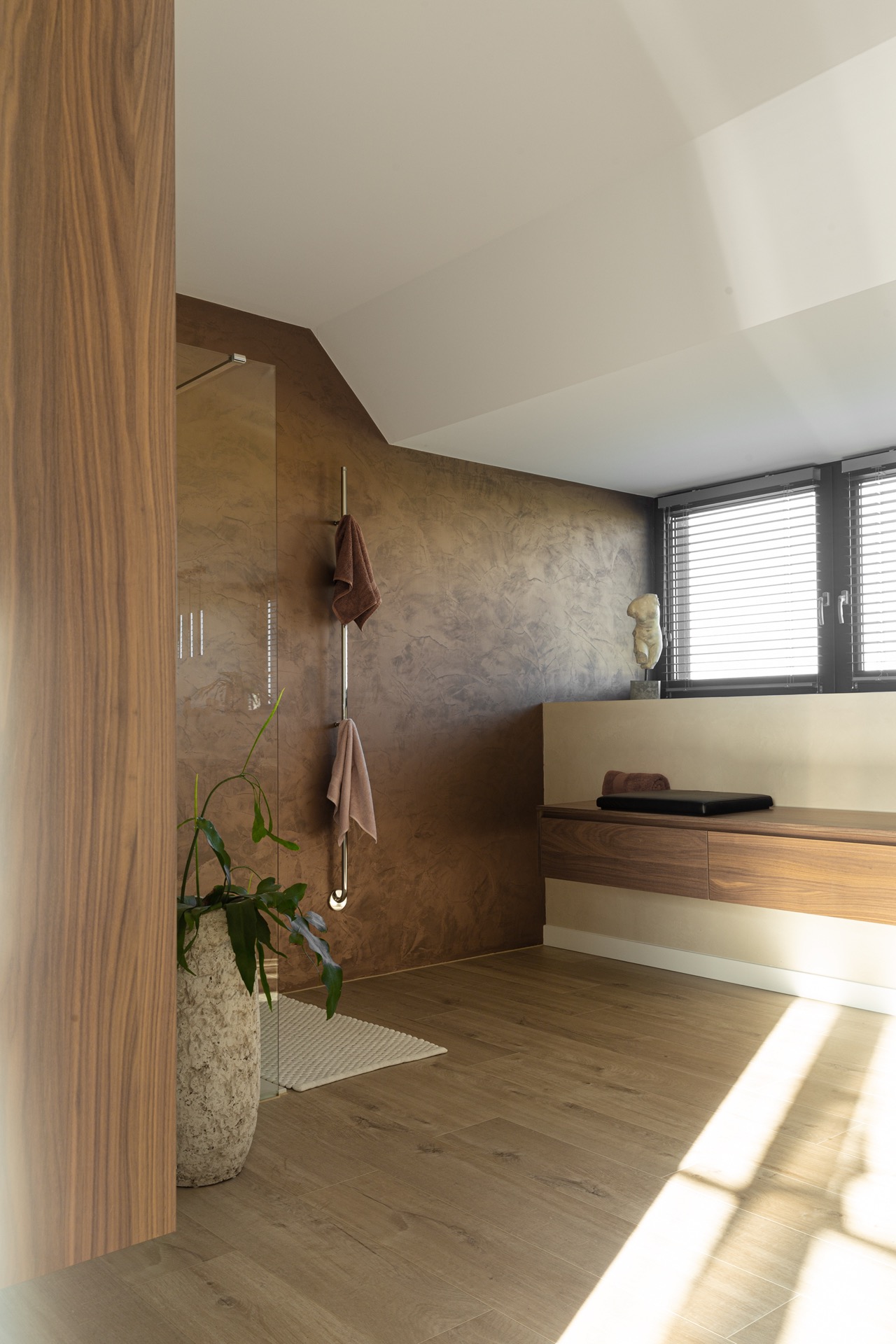
The bathroom shifts the mood without abandoning the house’s material logic. Here the concrete plaster walls take on a bronze tone, changing the room from cool gray to a deeper, earthier surface. The finish is smooth and even, with a subtle textured presence that becomes visible when the light hits it across the shower area. As a concrete plaster bathroom, it is defined less by fittings than by the way the wall surface wraps the wet zone.
A glass shower partition keeps the bronze concrete plaster in full view. Rather than hiding the wall behind a closed cubicle, the glass allows the material to read as a continuous backdrop. That makes the bathroom feel more open, even though the palette is tighter than in the living areas. The bronze concrete plaster works especially well beside the clear glass because it gives the room depth without using pattern or ornament. Concrete plaster walls remains connected to the layout, materials and daily use of the home.
A wet room surface that stays visually quiet
In the shower zone, the wall finish does the quiet work. The bronze concrete plaster sits behind the glass shower partition and continues across the visible surfaces, so the room reads as one enclosed field of material rather than a collection of separate components. The edges stay crisp. The shower zone does not depend on contrast for effect; instead, it uses the sheen of the glass and the density of the wall finish to define its boundaries.
That restraint suits the rest of the house. The same approach appears in the living areas, where the floor is kept matte and the windows are framed in black. In the bathroom, the bronze tone softens the cooler notes of the concrete plaster bathroom and gives the space a more layered surface. It is a change in color, but also in atmosphere, created entirely through material and light.
Details that keep the interior readable
The stair, the glazing, and the floor all rely on clear lines. Nothing is overdrawn. The wooden stair treads bring a lighter note to the interior, while the metal structure keeps the form visually light against the wall. Nearby, the window blinds add a repeat pattern that filters daylight without closing off the view. These elements matter because they prevent the broad surfaces from becoming monotonous. They also give the gray concrete floor a stronger setting, since the floor can be read against several different textures at once.
That clarity is what makes the project feel composed. The floor is visible from room to room, the black window frames stay consistent, and the bathroom introduces bronze concrete plaster at the right moment rather than everywhere at once. The house never needs a large gesture to hold together. It depends on the steady presence of the troweled concrete floor, the precise edge of the glazing, and the quieter pressure of the wall surfaces in the wet room.
Material changes that stay within the same language
What changes from one space to the next is not the overall approach, but the temperature of the materials. The living areas lean on the gray concrete floor and white walls, with black frames organizing the view. The bathroom brings in bronze concrete plaster and a glass shower partition, creating a denser surface where water meets wall. Because the material shifts are controlled, the interior keeps a clear reading. There is no need for decorative transitions; the change in finish is enough.
Seen as a whole, the house is built around a few strong decisions: a continuous troweled concrete floor, concrete plaster walls in the bathroom, and a disciplined use of black frames and glass. Those choices give the rooms their character without pushing them into excess. The surfaces stay honest, the lines stay sharp, and the light can move across the interior without interruption.
Contributors:
Seating: HORA Barneveld
Chairs: Studio B&R
Kitchen: Keukenmaxx
Steel doors: Stuimer metalworks Concrete plaster walls remains connected to the layout, materials and daily use of the home.
Want to see more of Willem Designvloeren? View the page of Willem Designvloeren for even more great projects and company information.


.png)