





Contemporary garden room with adjustable lamellen and screens
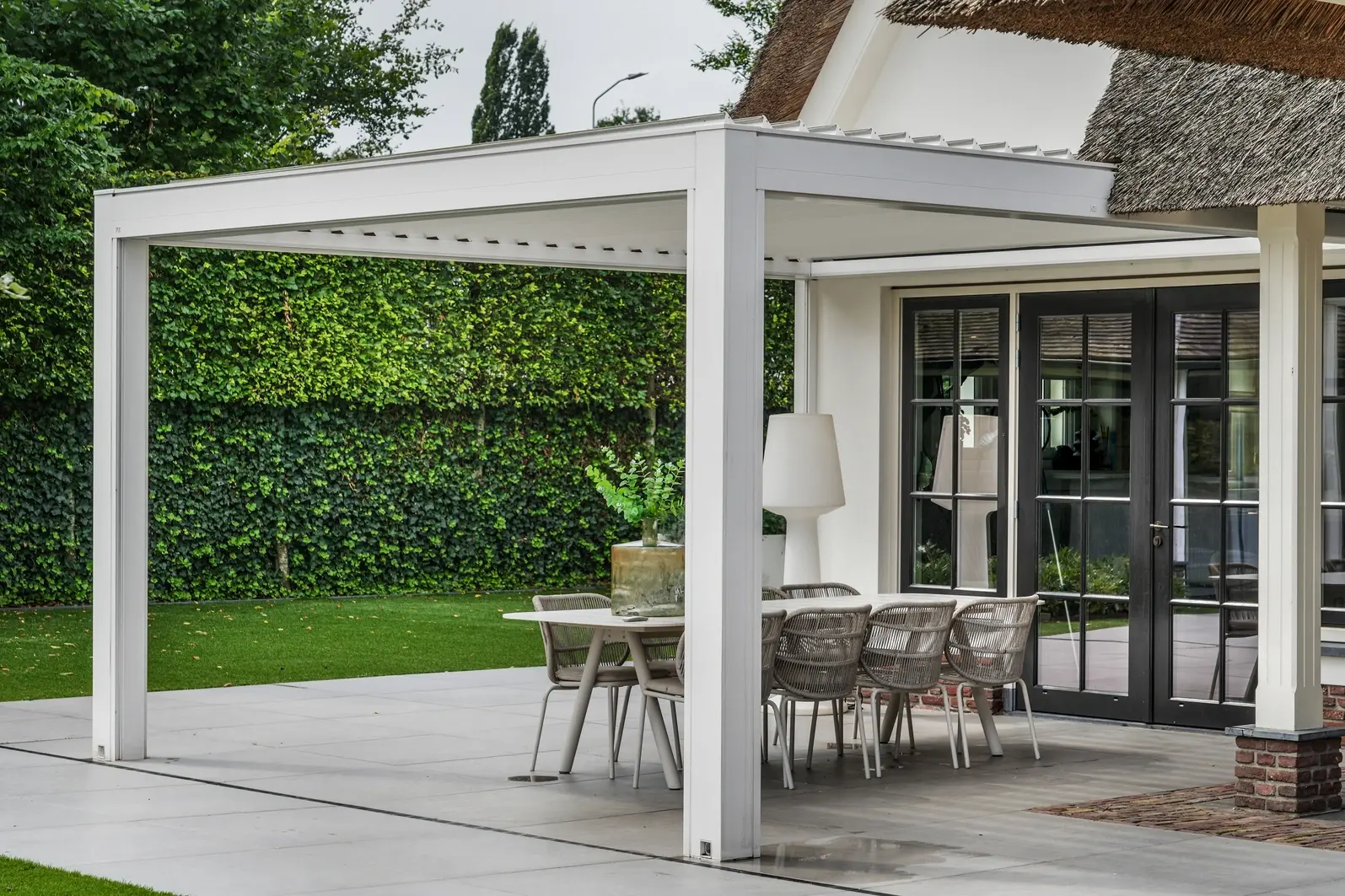
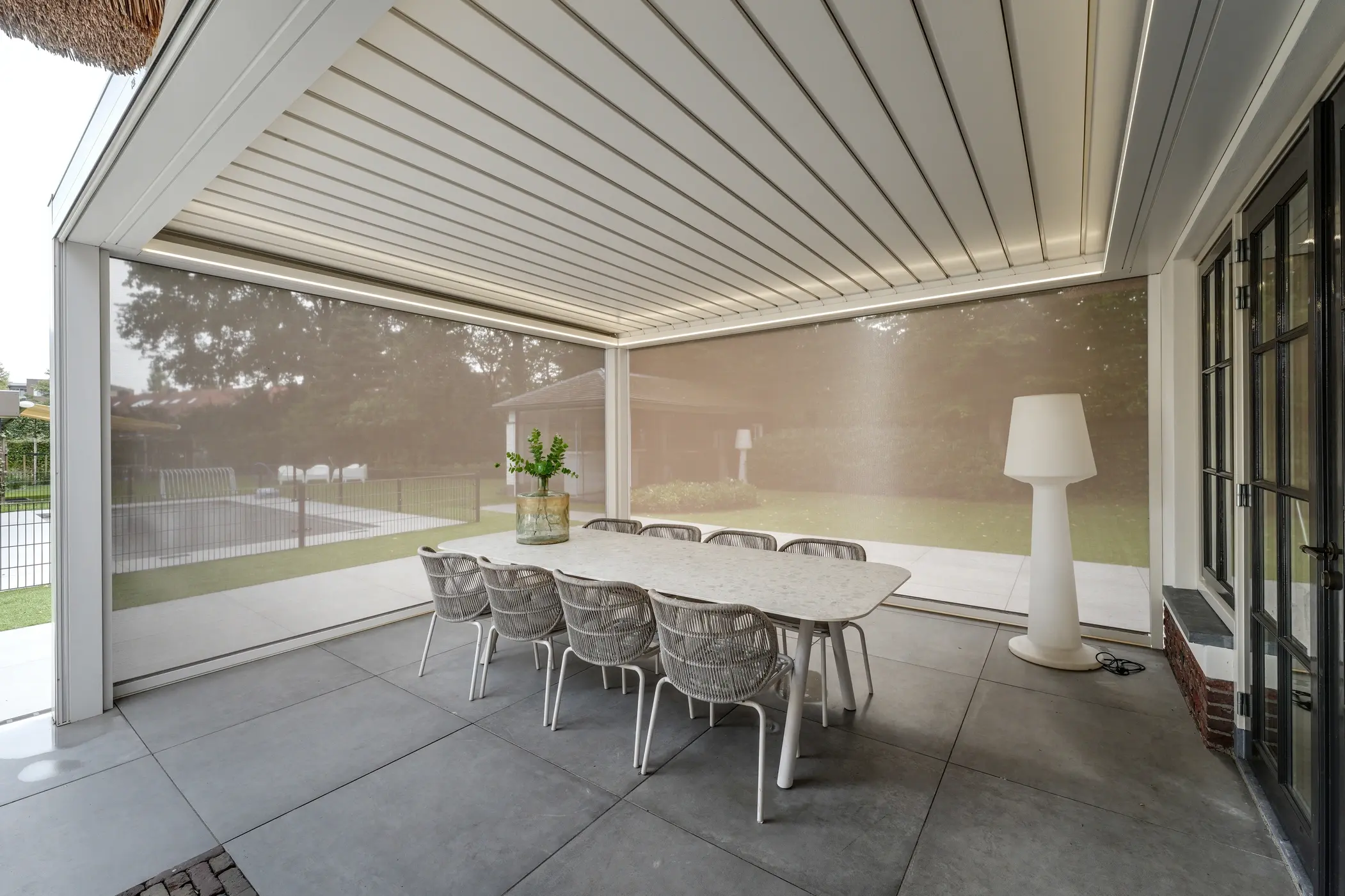
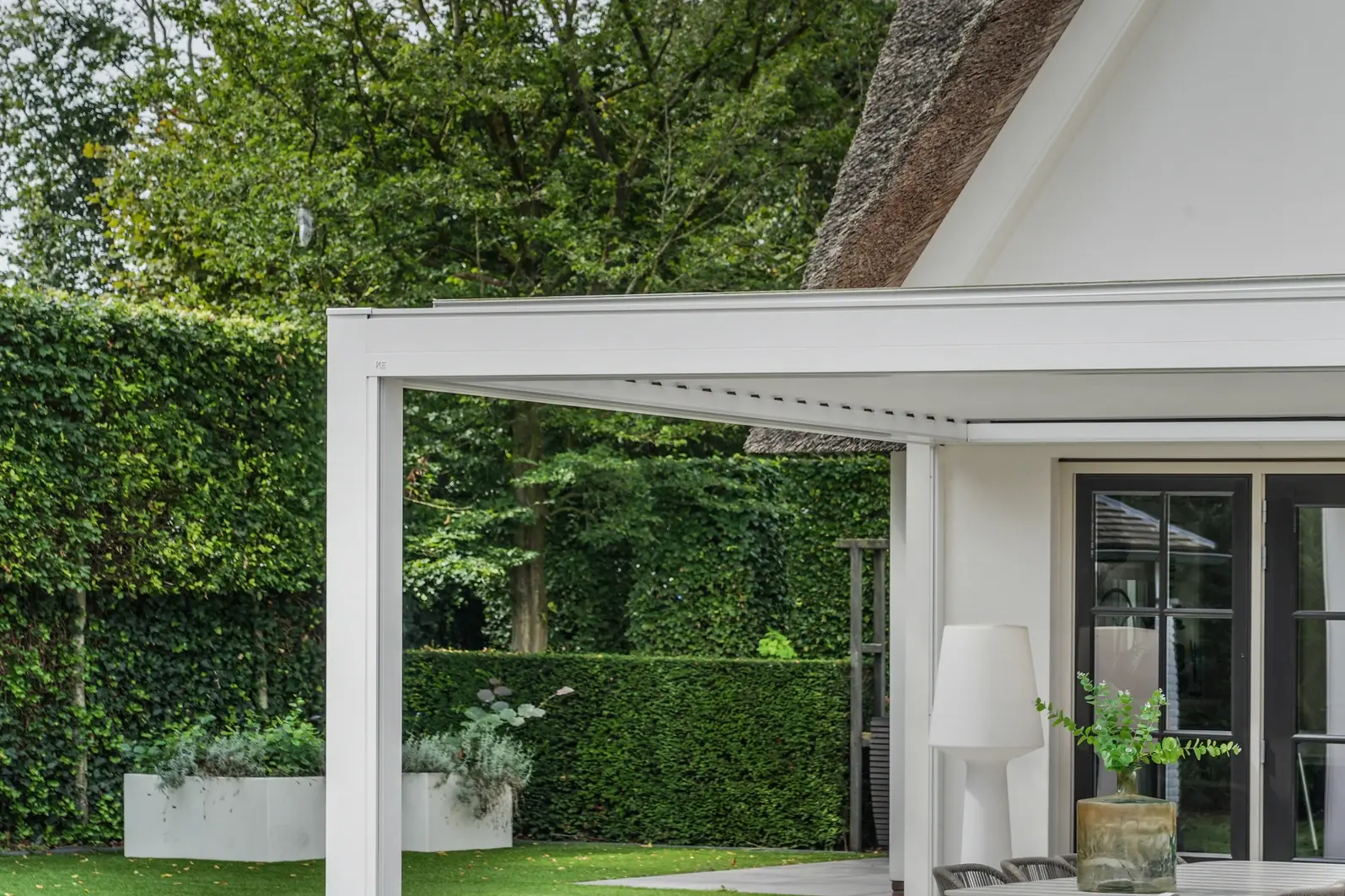
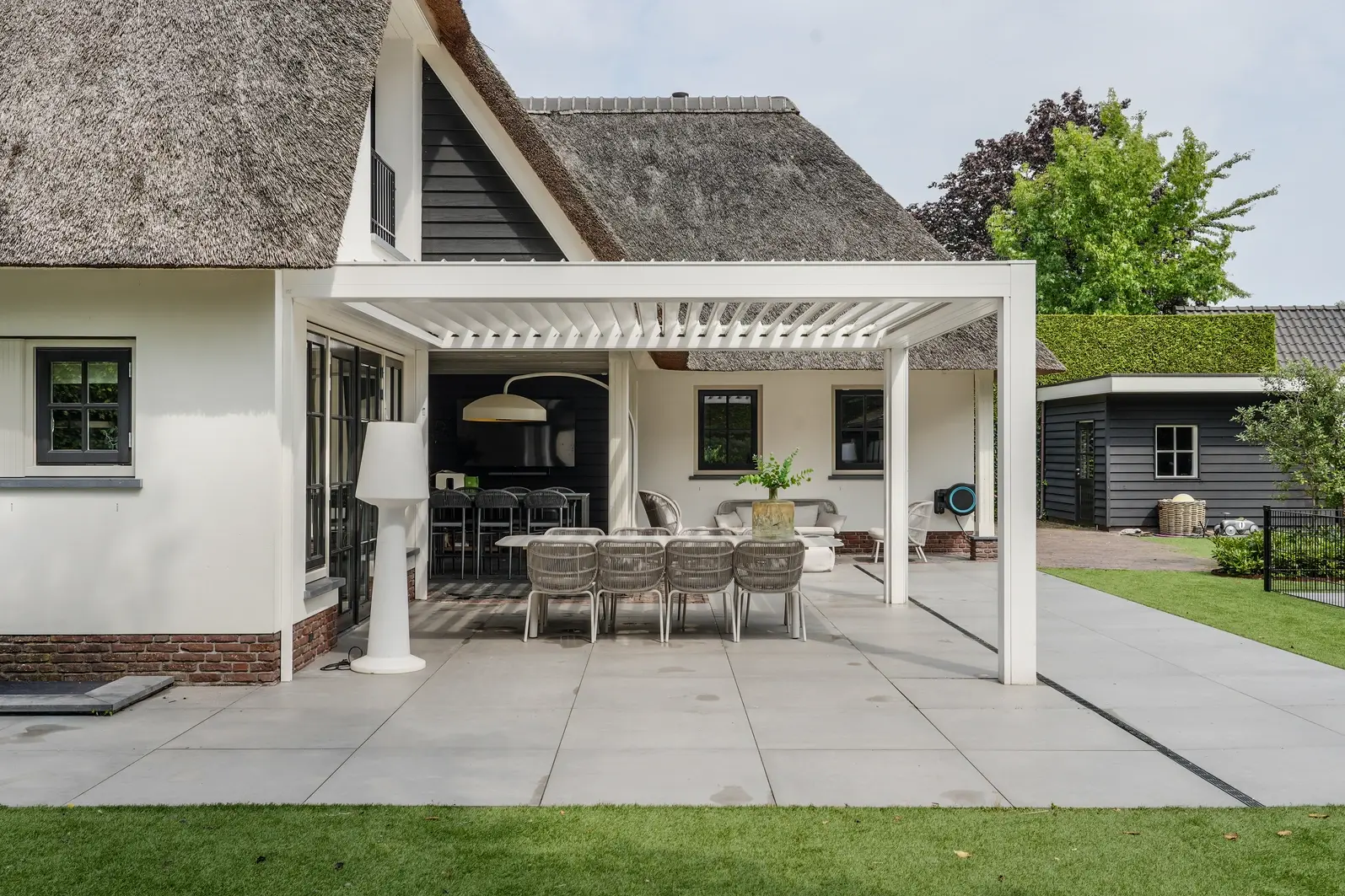
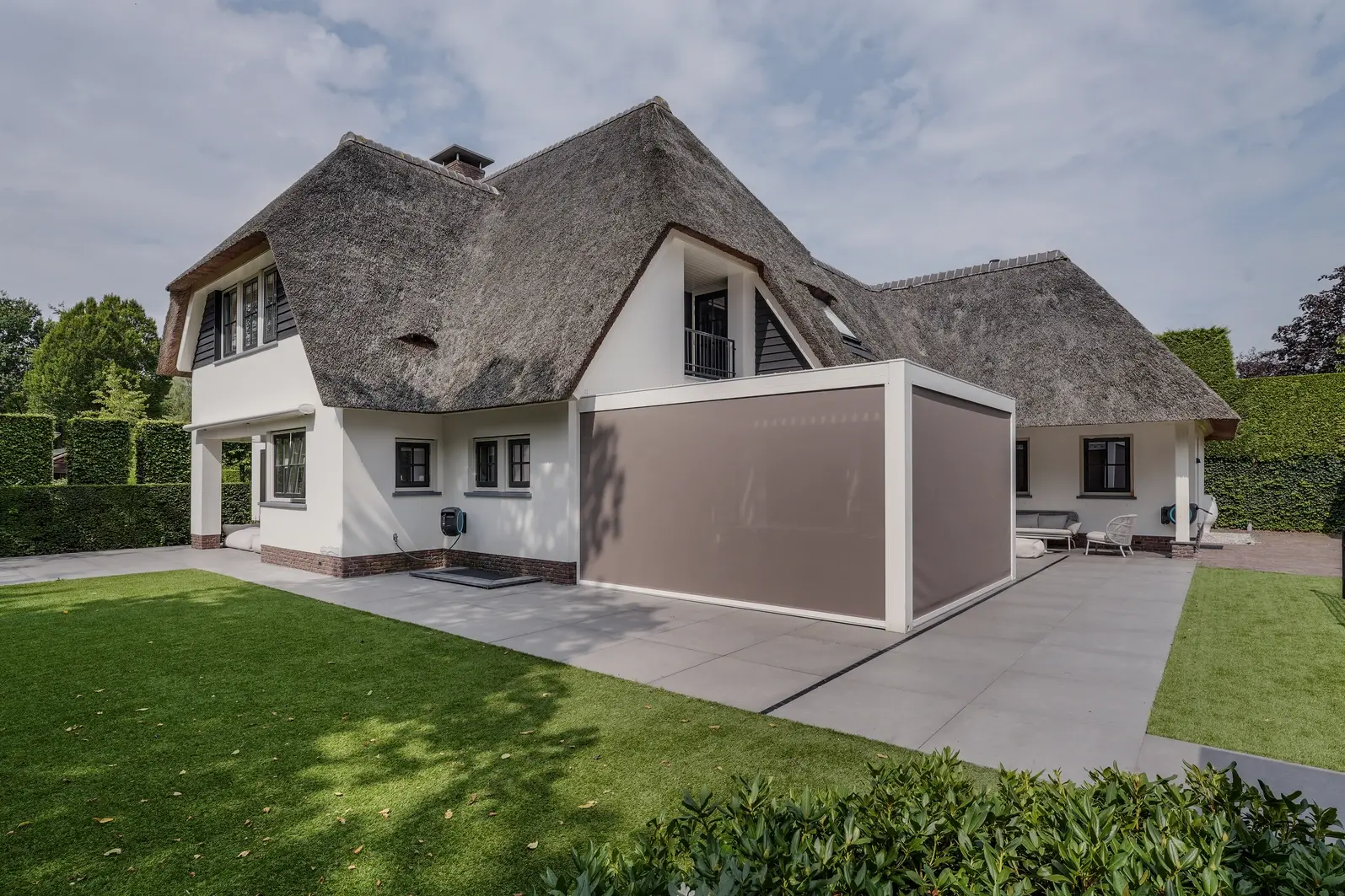
The garden room ideas is immediately visible in the way the project is framed. From beneath the terrace cover, slender lamellen pivot to frame dappled light across the extended living space. These vertical slats rotate smoothly, shaping daylight and shadow to vary privacy and illumination without blocking views toward the garden. When privacy or shade is needed, integrated screens slide quietly into their frames, disappearing when not deployed and preserving visual openness.
garden room ideas as the architectural starting point
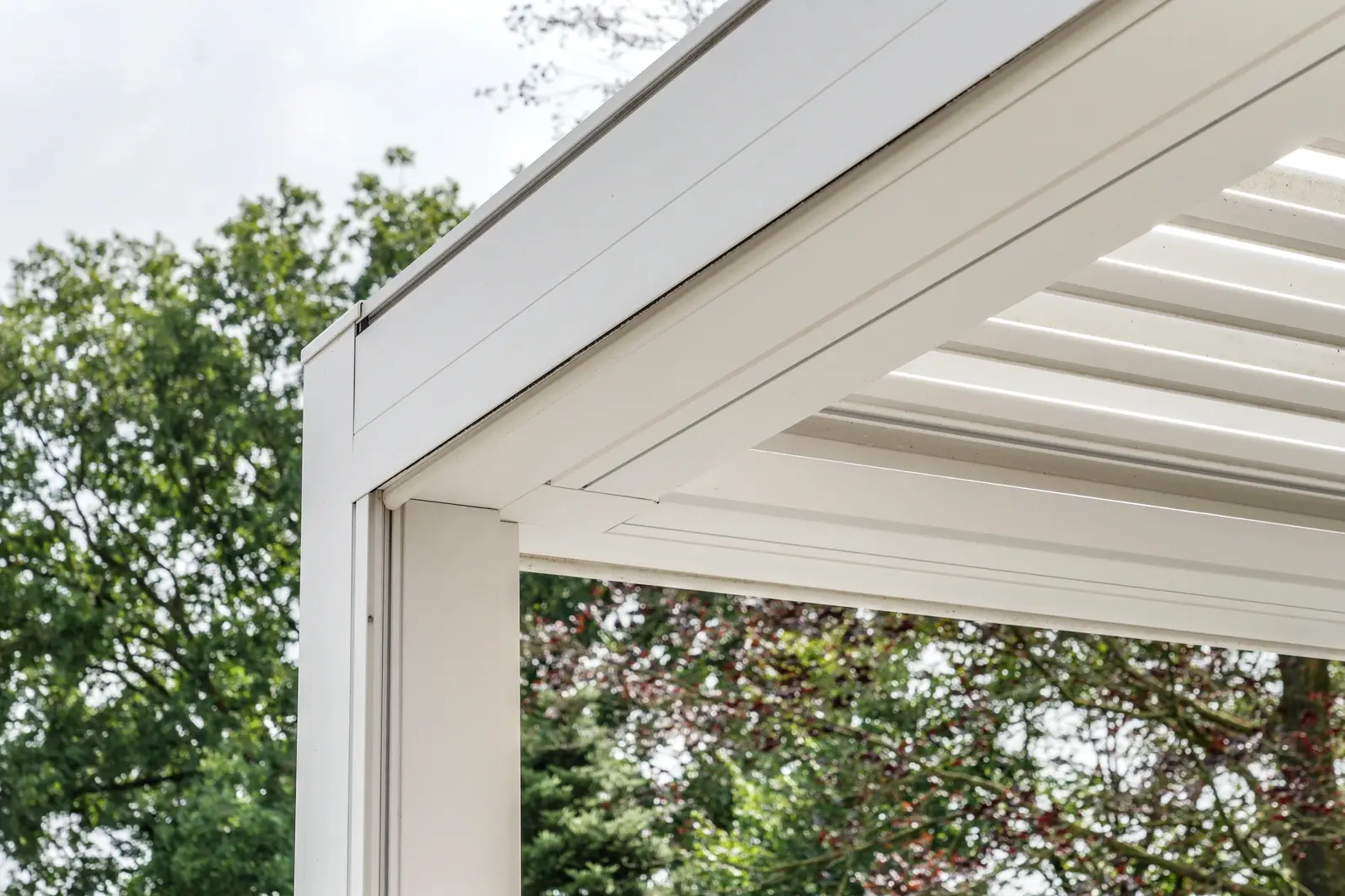
Mounted on a precise aluminium framework, the rotating lamellen offer nuanced modulation of sunlight. Their angular positions filter brightness or block direct sun, tailoring the garden room ambiance throughout the day. Complementing this, the recessed patio screens extend discreetly from the structure, granting shielded comfort while emphasizing transparency when retracted.
garden room ideas as the architectural starting point
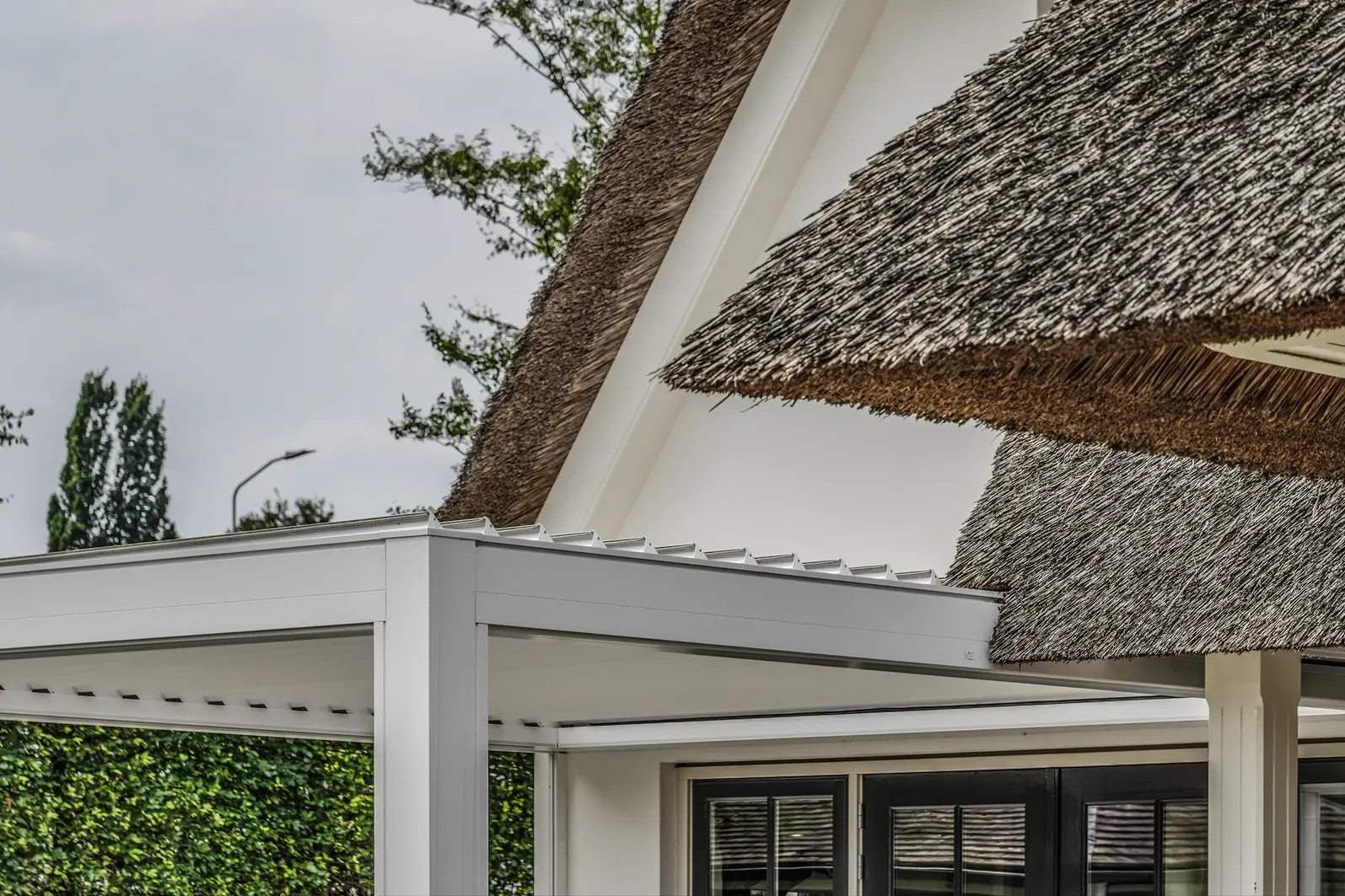
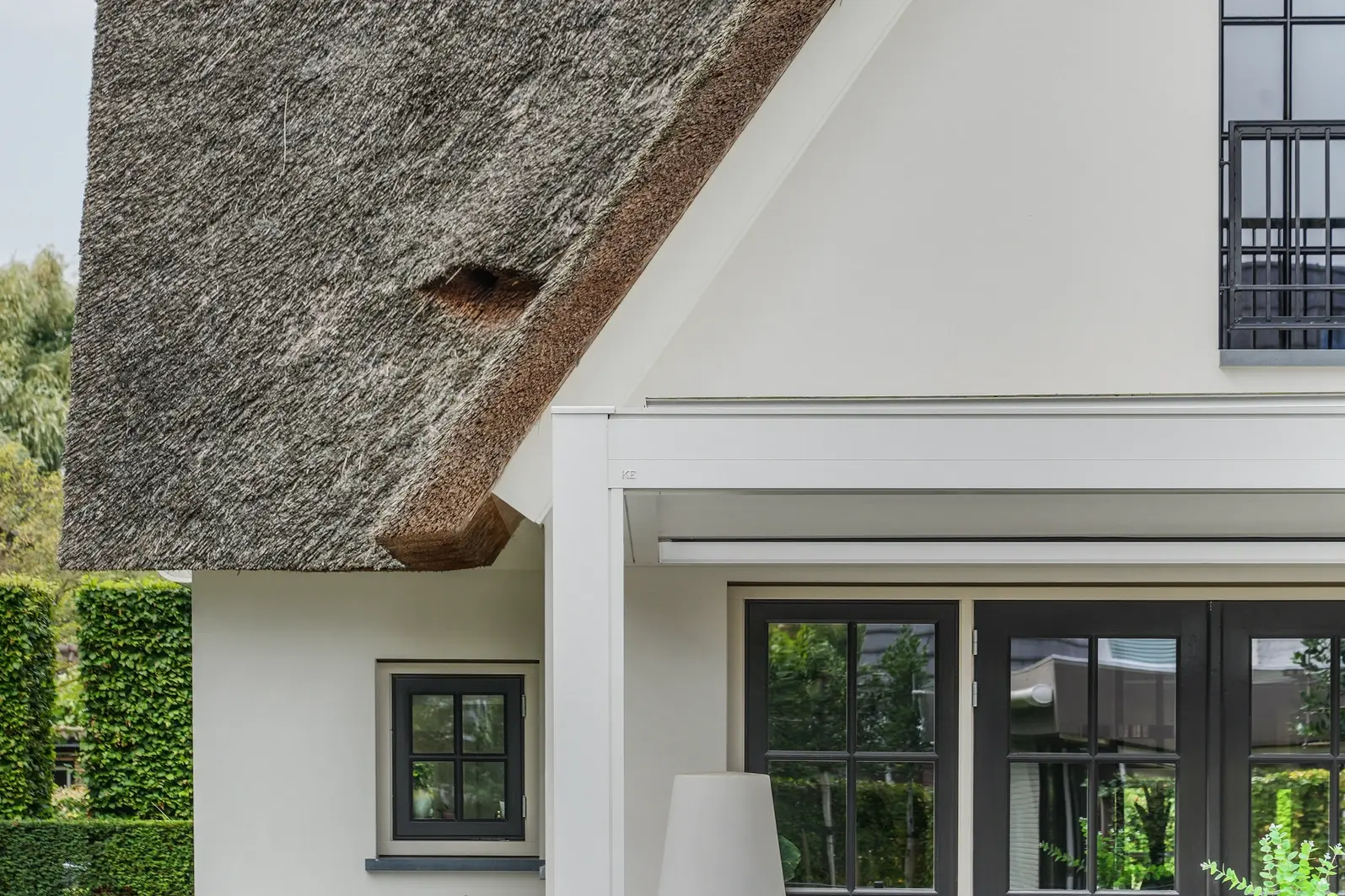
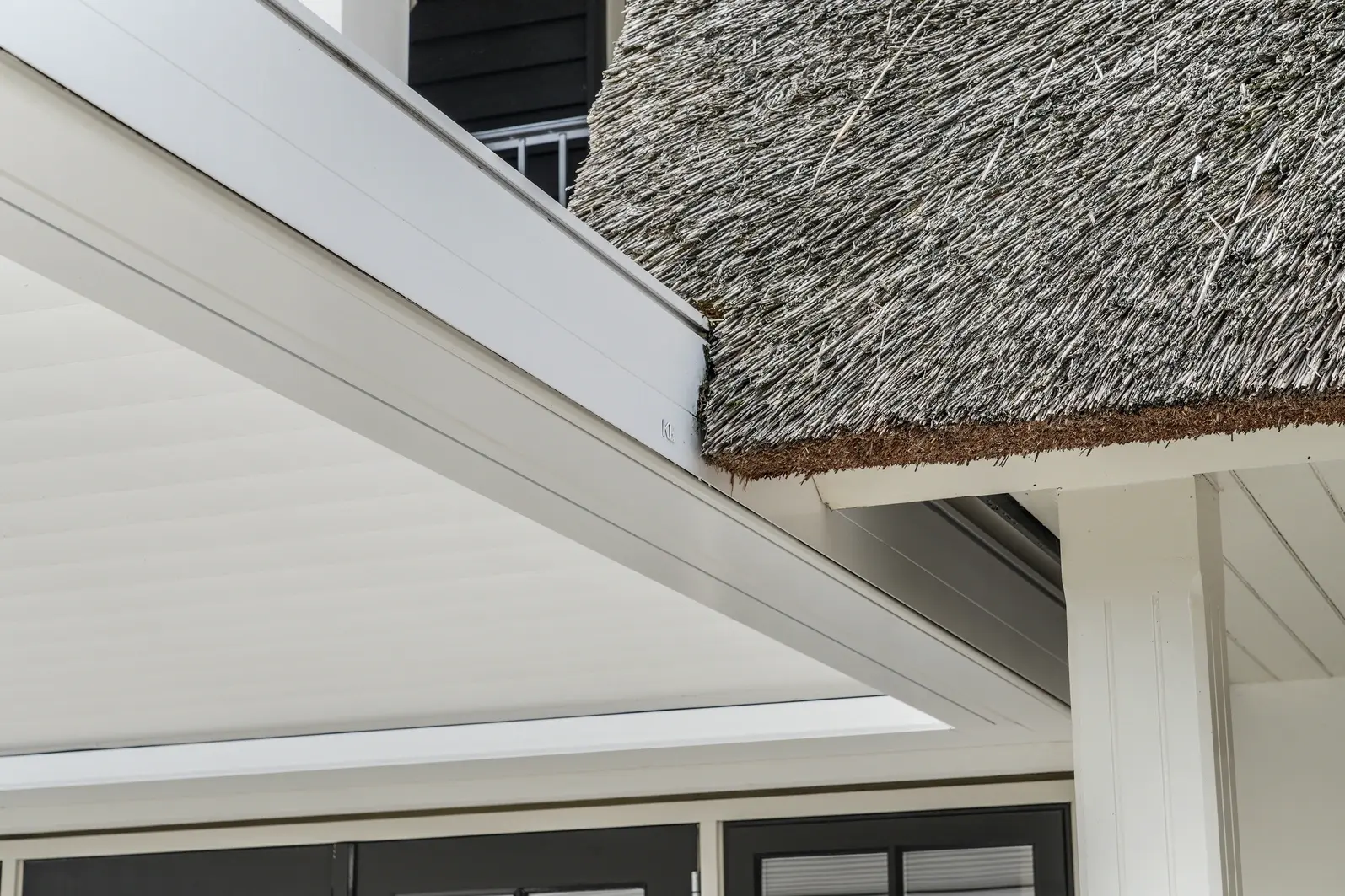
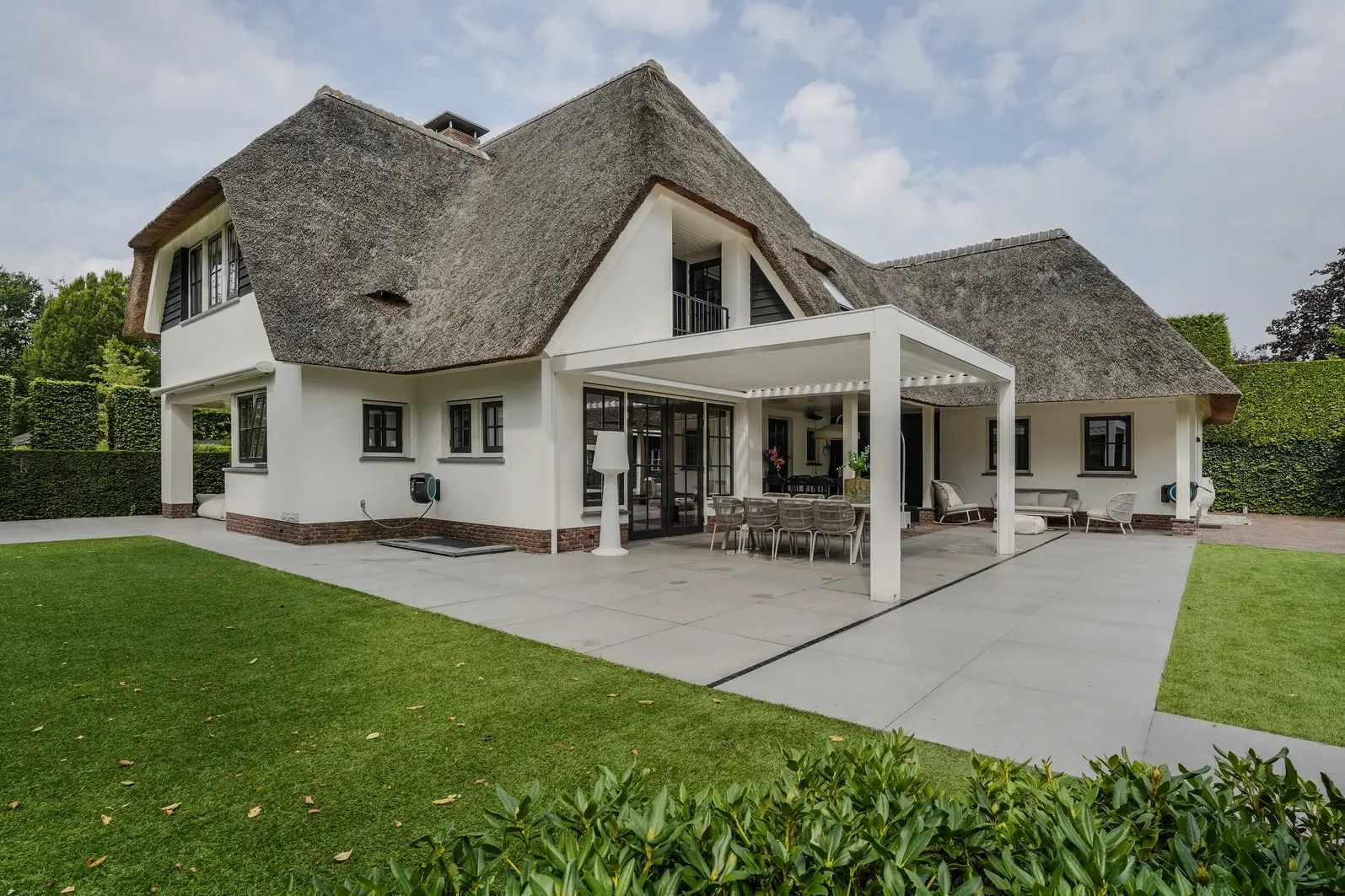
Where the terrace roof meets the existing facades, a crafted junction prevents water ingress effectively. The natural reed roofing overlaps the terrace edge with careful precision, while folded aluminium sheeting conceals the transition. This detailing upholds structural integrity and blends material joints without interrupting the façade’s rhythm.
Material transitions at façade and roof junctions
Behind the terrace, the potdeksel tile façade aligns clearly with aluminium profiles extending from the terrace frame. The mechanical folding sheets provide contrast to the textured reed roof while maintaining a crisp geometric edge. Visible joint lines are deliberate yet restrained, emphasizing construction accuracy over decorative effect.
Concrete floor slab defining spatial boundaries
The terrace rests on a smooth concrete surface that sets a grounded threshold between the outdoor garden and built structure. Its neutral, cool tone offsets the natural warmth of thatch and the muted metal finishes, articulating where the garden room begins and highlighting the shift from soil to solid floor.
Structural frame and fastening details
Robust aluminium profiles support the lamellen and screens, arranged with disciplined precision. Fastenings are minimal and recessed, maintaining clean lines throughout the framework. Vertical supports sit firmly on the concrete base, affirming the garden room’s cubic geometry with unembellished clarity.
Concealed electrical integration within framework
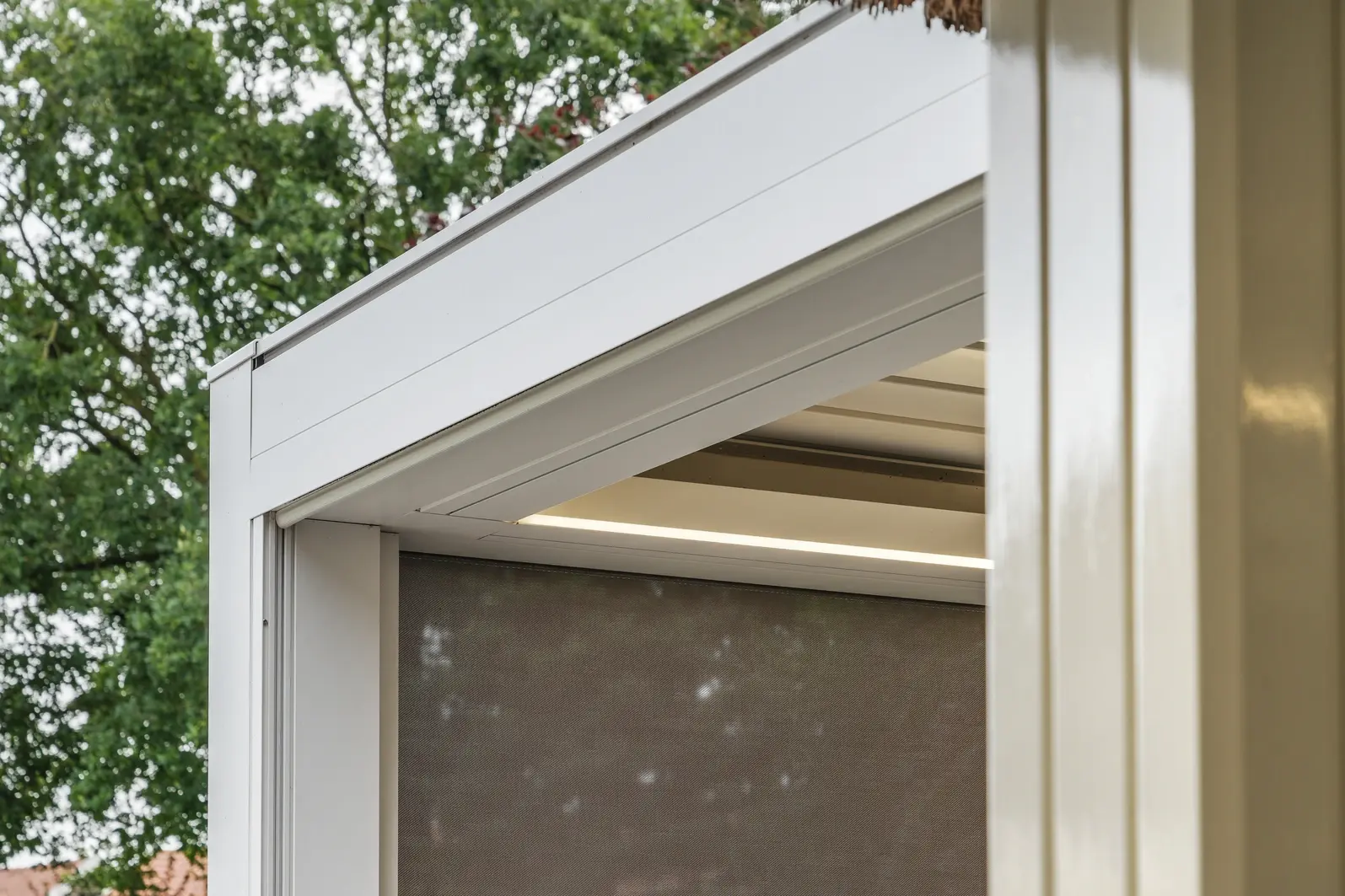
Electric systems for operating the lamellen and screens are routed discreetly through narrow channels in the aluminium members. Wiring and mechanical components remain out of sight, preserving uncluttered surfaces and ensuring smooth, silent adjustments to light and privacy controls.
garden room ideas as the architectural starting point
Clear glazing paired with adjustable lamellen extends sightlines seamlessly into the garden. When lowered, the screens soften sunlight and partially obscure direct views, creating a filtered transition that respects both openness and enclosure without rigid separation.
Rhythmic patterns formed by vertical lamellen
The regularly spaced lamellen produce shifting light patterns as they rotate throughout the day. This sequence of vertical blades creates a dynamic façade, enlivening the garden room’s character with movement and interplay of light and shadow visible inside and out. That makes the garden room ideas part of the architectural character rather than a loose finish.
Layering of reed, aluminium, and potdeksel tiles
At critical junctions, materials overlap with precision: reed roofing tucks securely beneath aluminium folds which adjoin the tiled potdeksel wall. This layering prioritizes waterproofing and material clarity, avoiding superfluous ornament while ensuring durability at exposed edges.
Approach to garden room design emphasizing adaptability
This garden room concept employs adjustable lamellen paired with integrated patio screens to adapt spatial qualities to changing light and privacy needs without modifying structural enclosure. The watertight connections and carefully resolved façade transitions illustrate practical solutions that respect existing architectural elements.
Technical detailing at roof edges and interfaces
An assembly of aluminium profiles caps roof beams, overlapping reed roofing to channel water away efficiently. The edges reveal crisp cuts and tight overlaps, evidencing precise craftsmanship aimed at longevity and simplified upkeep in an outdoor setting.
Interior finishes complementing external textures
Within the garden room, metal profiles cover mechanical elements overhead, presenting a smooth ceiling surface distinct from the coarse reed above. The pale tones reflect daylight filtered through the lamellen, augmenting spatial clarity and volume under the terrace.
Connections between garden room structure and masonry walls
The junction of aluminium terrace frames and masonry walls uses custom metal flashings inserted neatly between potdeksel tiles and framing. This ensures continuous lines free of gaps, preventing moisture ingress and maintaining visual coherence across façade surfaces.
Integration of adjustable lamellen and screens enhances versatility
The lamellen revolve to tailor daylight and views, while the integrated patio screens extend or retract to modulate shade and privacy unobtrusively. This system enables the garden room to respond flexibly to changing environmental conditions, enriching outdoor living possibilities.
Facade material transitions refined through sheet metal work
Sheet metal connections align reed thatching with potdeksel tiles, forming watertight seals at the transition between the garden room and adjacent facades. The detailing harmonizes diverse materials through layered fitting, supporting the extension’s durability and connection to its architectural context.
Concrete flooring as structural and visual anchor
The concrete floor slab marks a durable base beneath the garden room frame, defining spatial limits with its smooth, planar surface. This grounding element brings together wood, aluminium, and natural roof materials into a coherent platform integral to the terrace’s function and aesthetics.
Precision in structural and electrical components detail
fastening points within the aluminium structure receive careful treatment; visible elements are minimized and flush. Concealed electrical installations maintain a tidy, uncluttered appearance that enhances the garden room’s simple but deliberate structural expression. That makes the garden room ideas part of the architectural character rather than a loose finish.
Want to see more of Artino? View the page of Artino for even more great projects and company information.

.png)