





Bathroom renovation with natural textures and modern touches
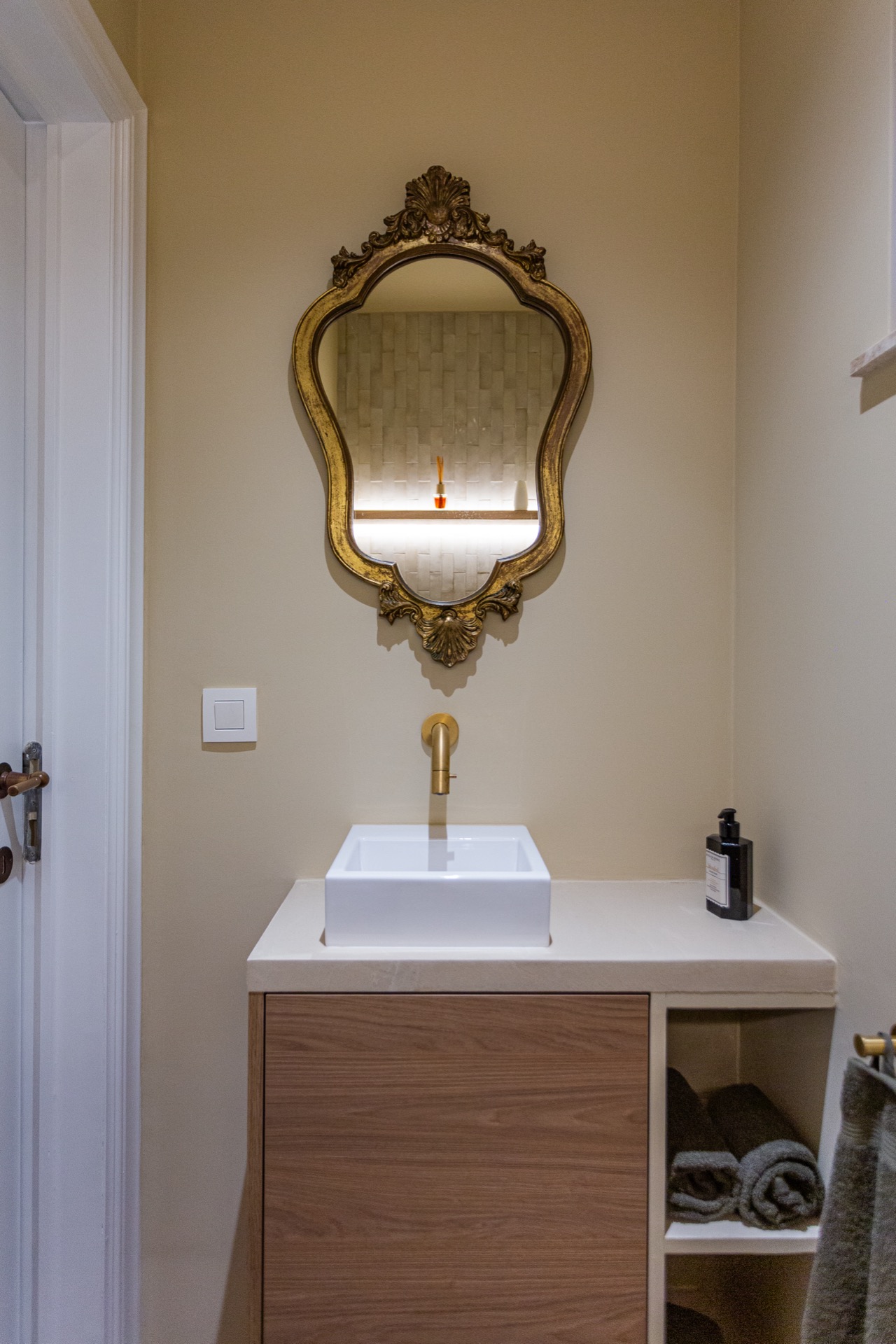
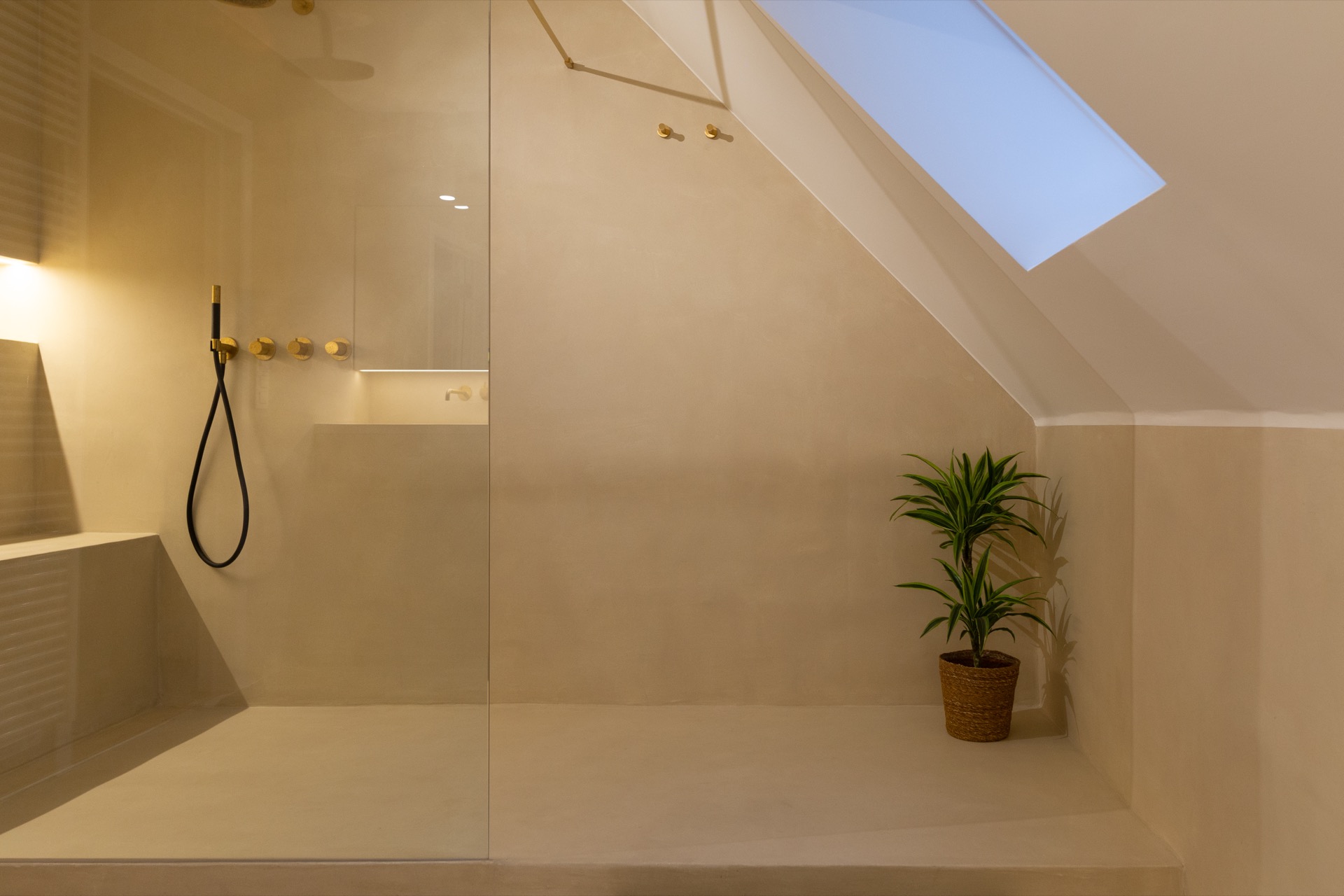
The bathroom renovation is immediately visible in the way the project is framed. The bathroom is defined by soft plaster walls, their tactile surfaces extending continuously across angles and built-in elements. Daylight from generous timber-framed windows shifts across the walls, revealing subtle grain and the irregularities of hand-applied finishes that lend the space an organic texture. The plaster’s muted beige hue forms a restful backdrop, prioritizing volume and materiality over pattern or gloss.
bathroom renovation as the architectural starting point
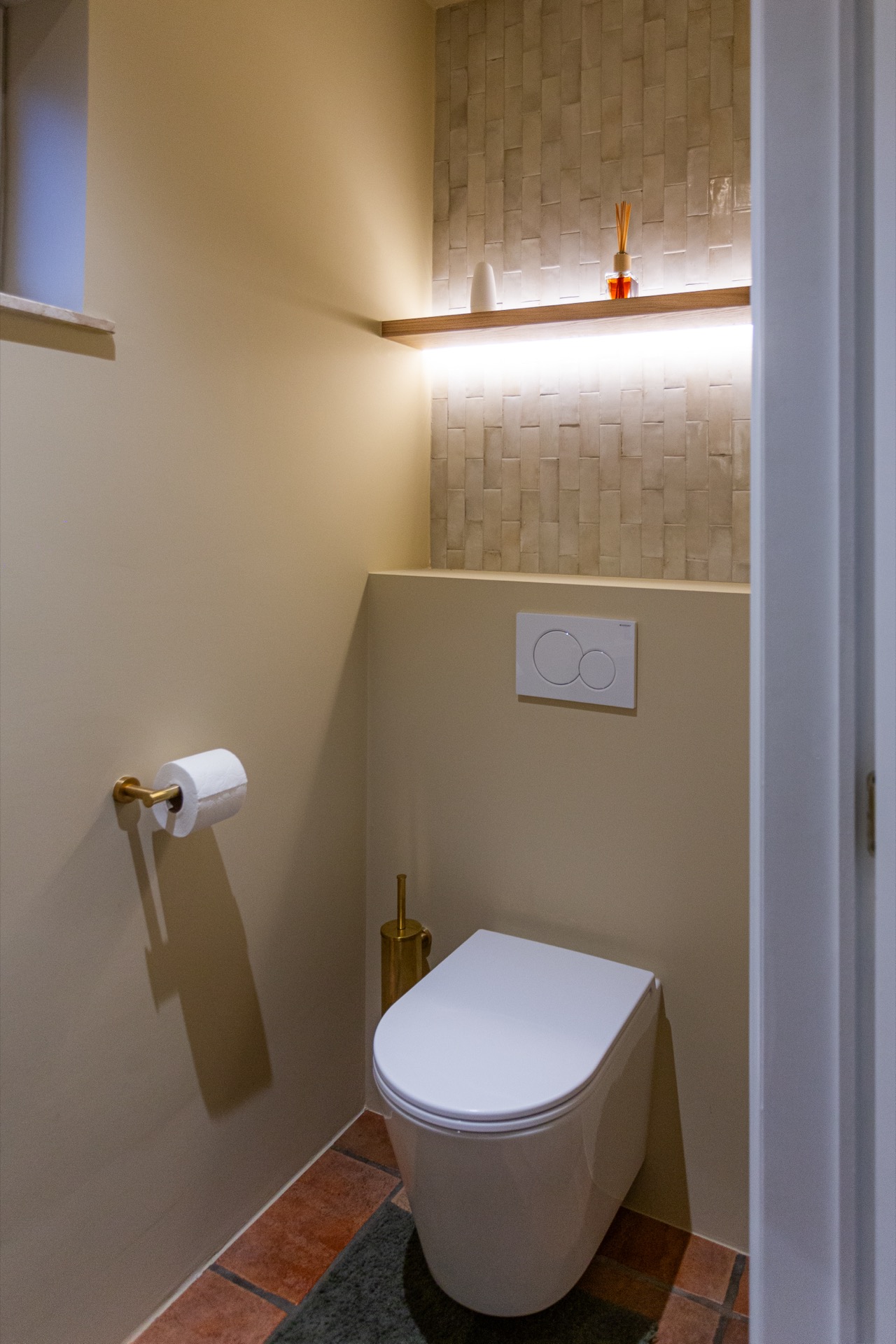
Every adjacent sanitary room shares a clay-toned plaster coat, introducing gentle tonal variations that visually link the suite without interruptions. This carefully developed color palette extends onto custom furniture, merging cabinetry and wall surfaces into an integrated composition. Fixtures, slim and minimal, introduce a sense of lightness that balances tactile solidity with practical function.
Wood cabinetry adapted to sloped ceilings
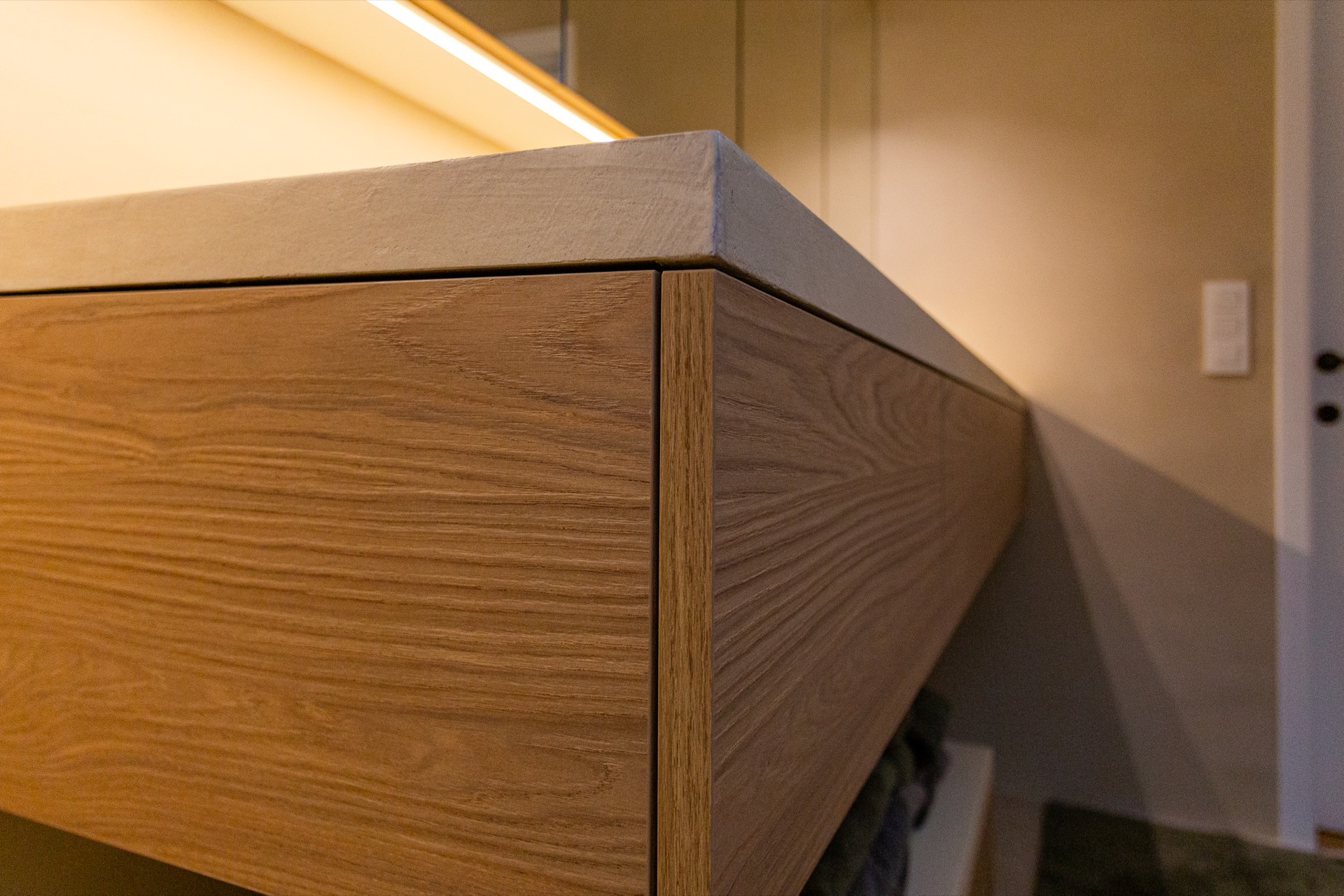
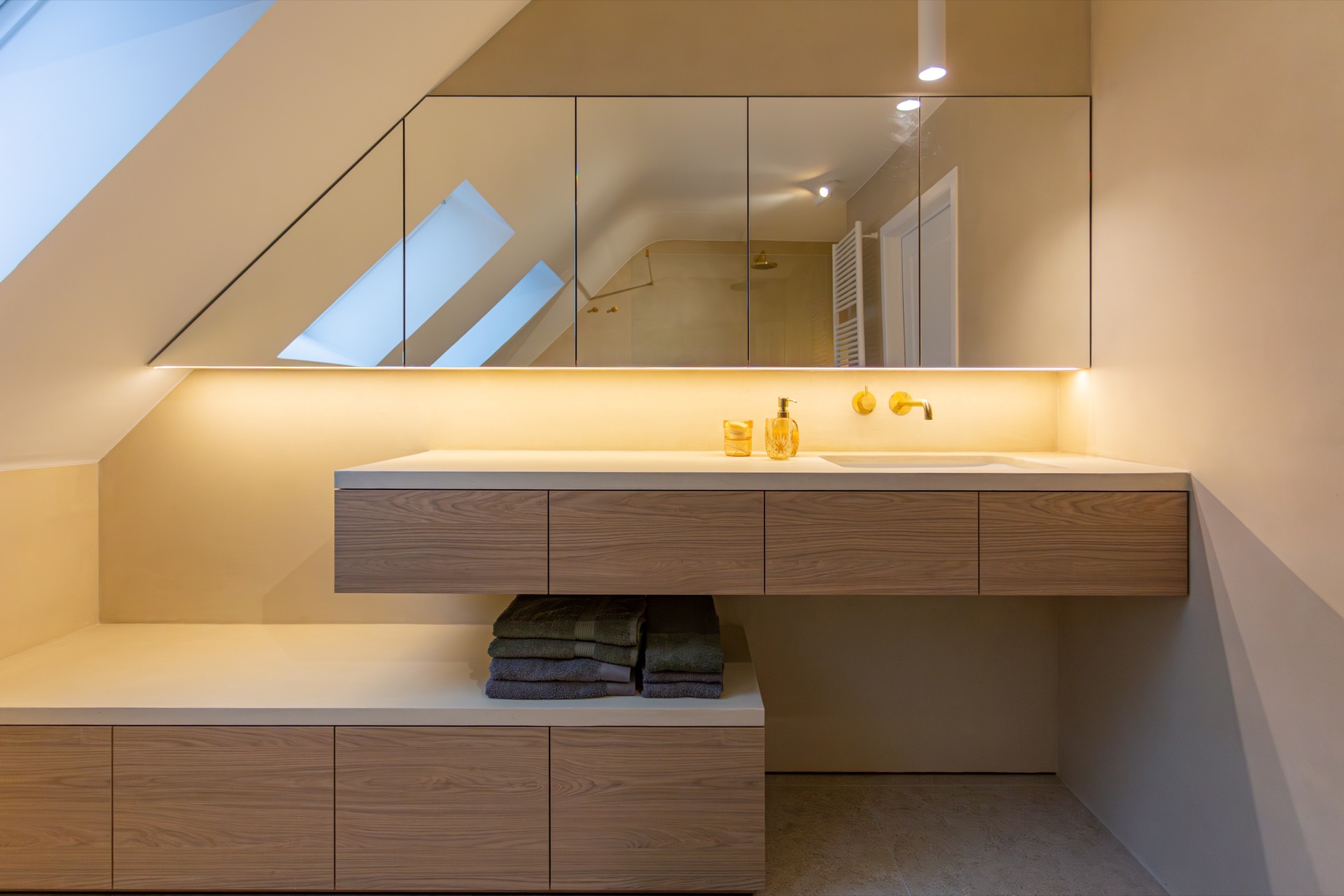
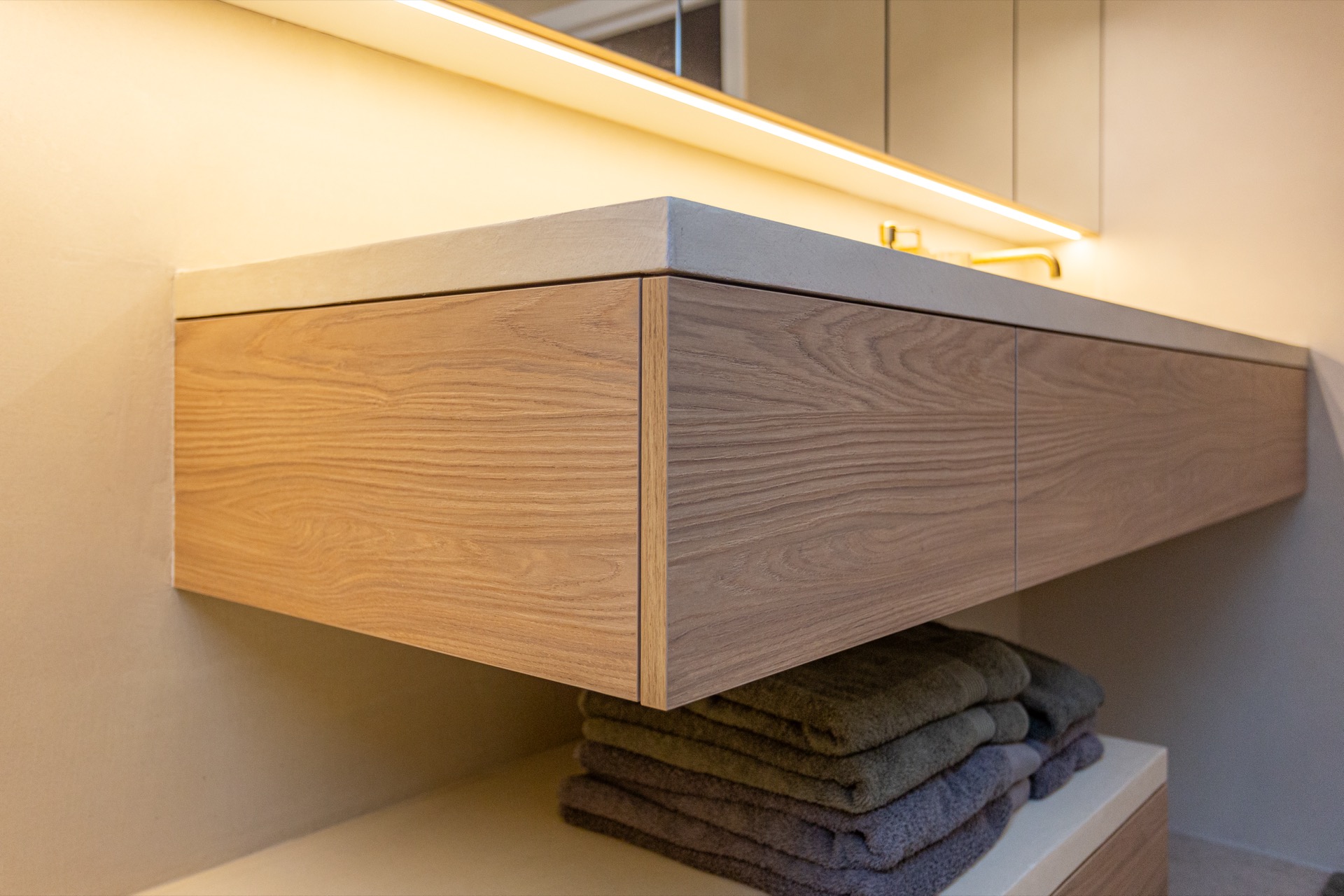
Where the ceiling pitches sharply, bespoke wooden units fit seamlessly, their warm oak surfaces showing natural grain and subtle texture contrasts to the plaster. A mirror cabinet cut along the ceiling angle optimizes storage in an otherwise challenging corner. Below, a wooden underbench contains spacious drawers and doubles as seating, preserving unobstructed movement in the compact layout.
Spatial layering defines the open shower
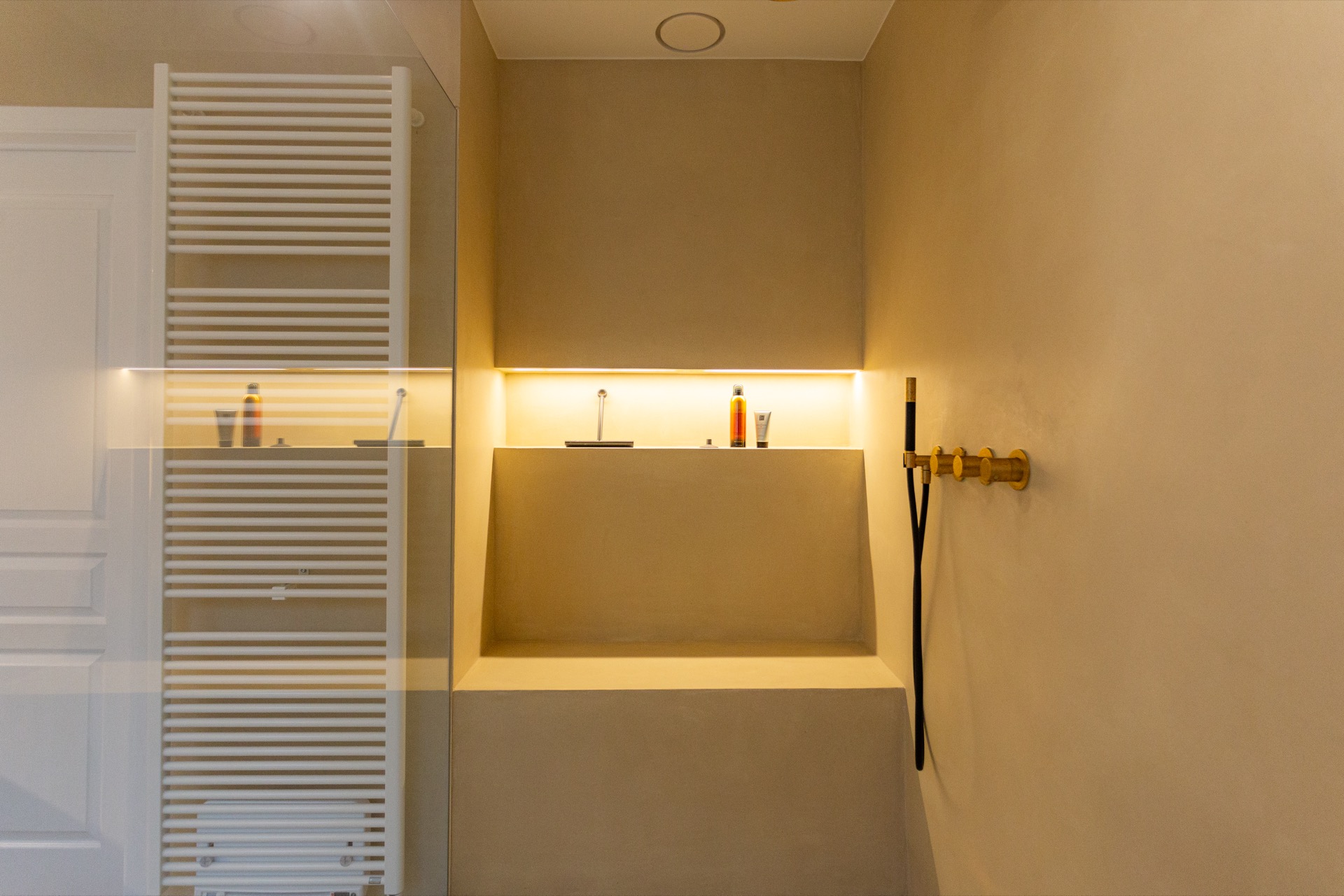
A built-in plaster bench aligns flush with surrounding walls, offering seating within the walk-in shower. The floor gently inclines to separate wet and dry zones subtly, without additional barriers that could fragment the space. Recessed niches nestle into the plaster walls, softening their edges with concealed LED strips that highlight textured surfaces and provide practical spot shelving.
Lighting arrangement deepens material interaction
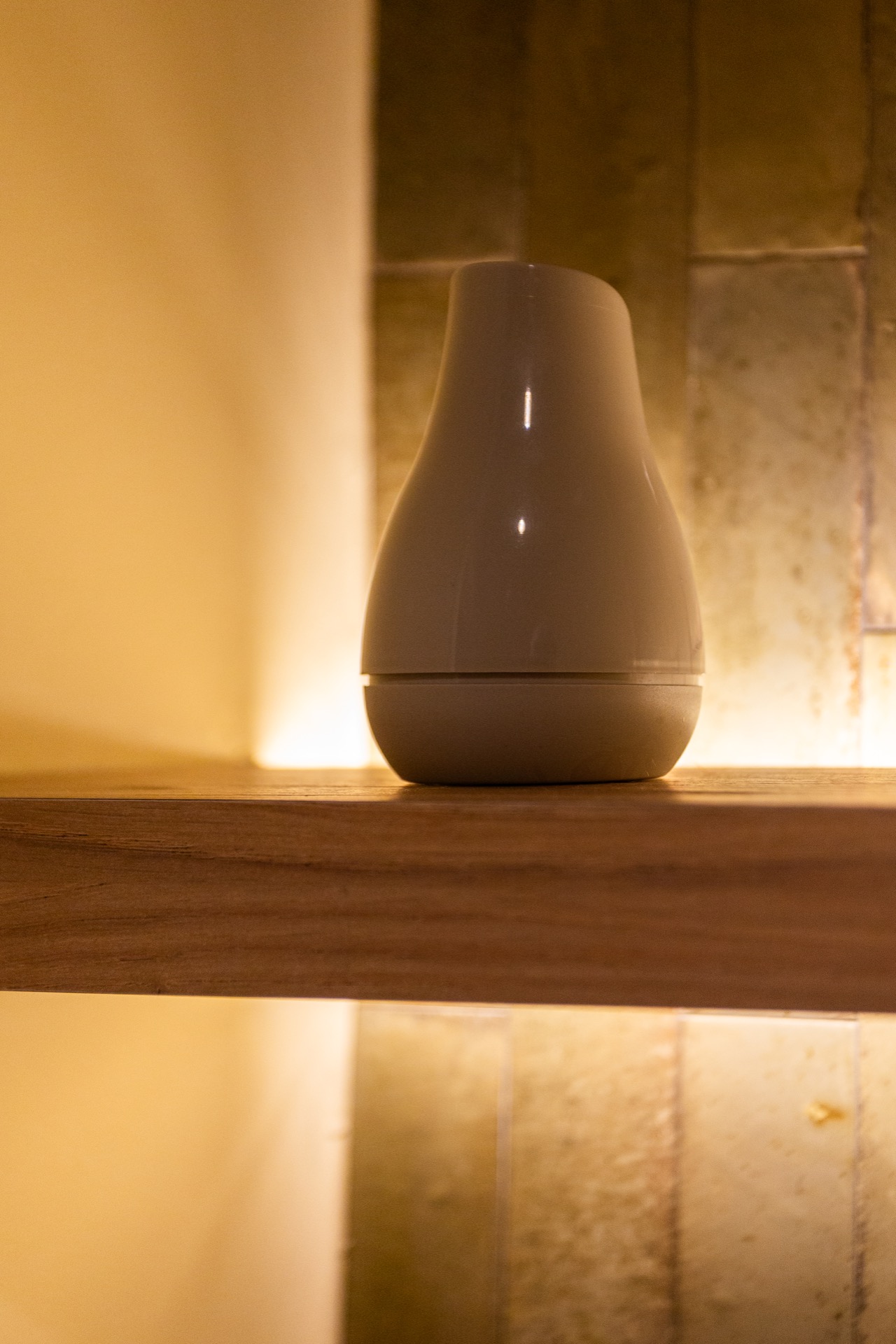
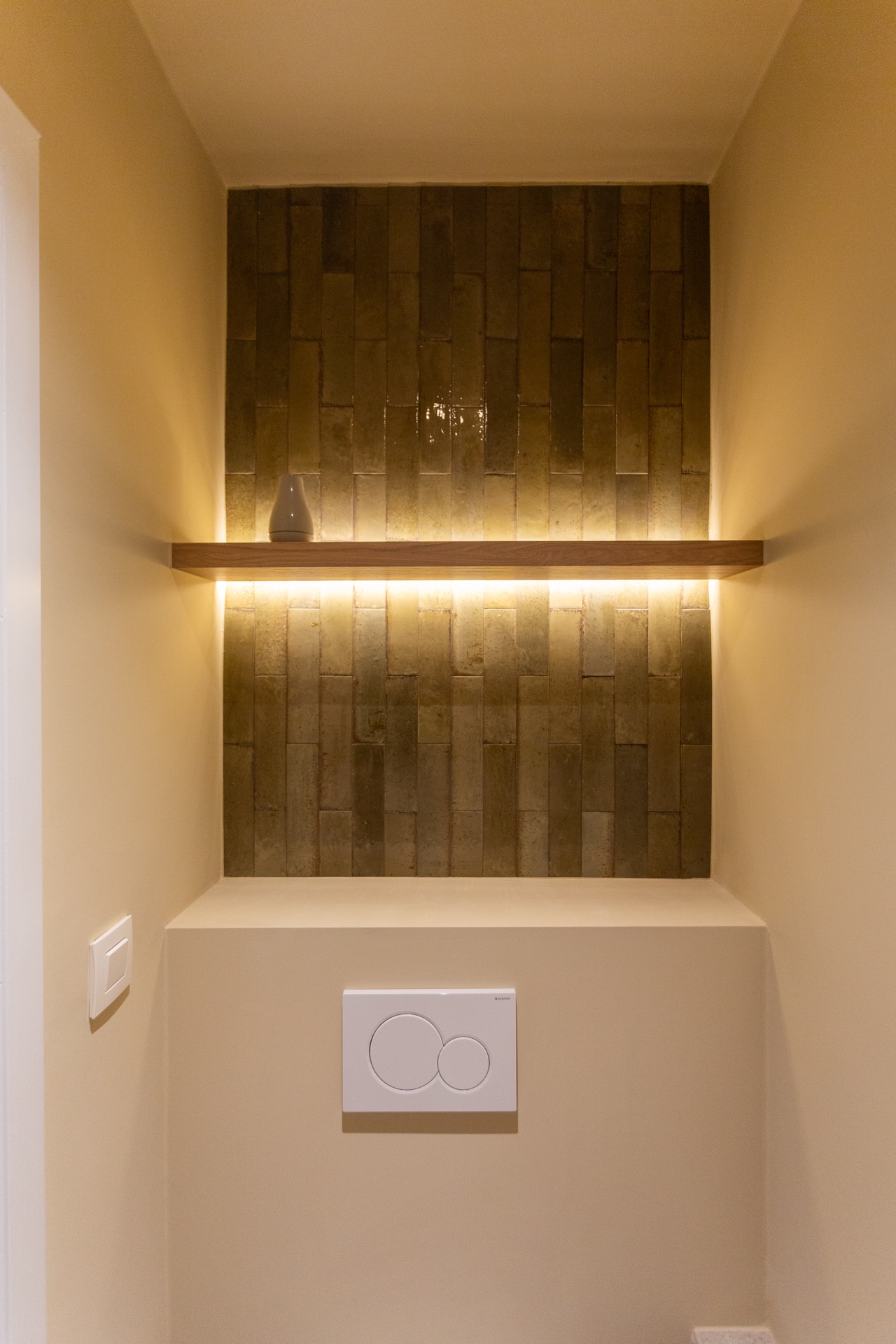
Indirect LEDs under shelves and around mirrors cast diffuse light, enhancing transitions between plaster, wood, and ceramics without glare. This lighting scheme varies naturally with the abundant daylight pouring through the broad windows, shifting throughout the day to heighten surface details and foster an intimate atmosphere grounded in subtlety.
Warm timber and cool ceramics in dialogue
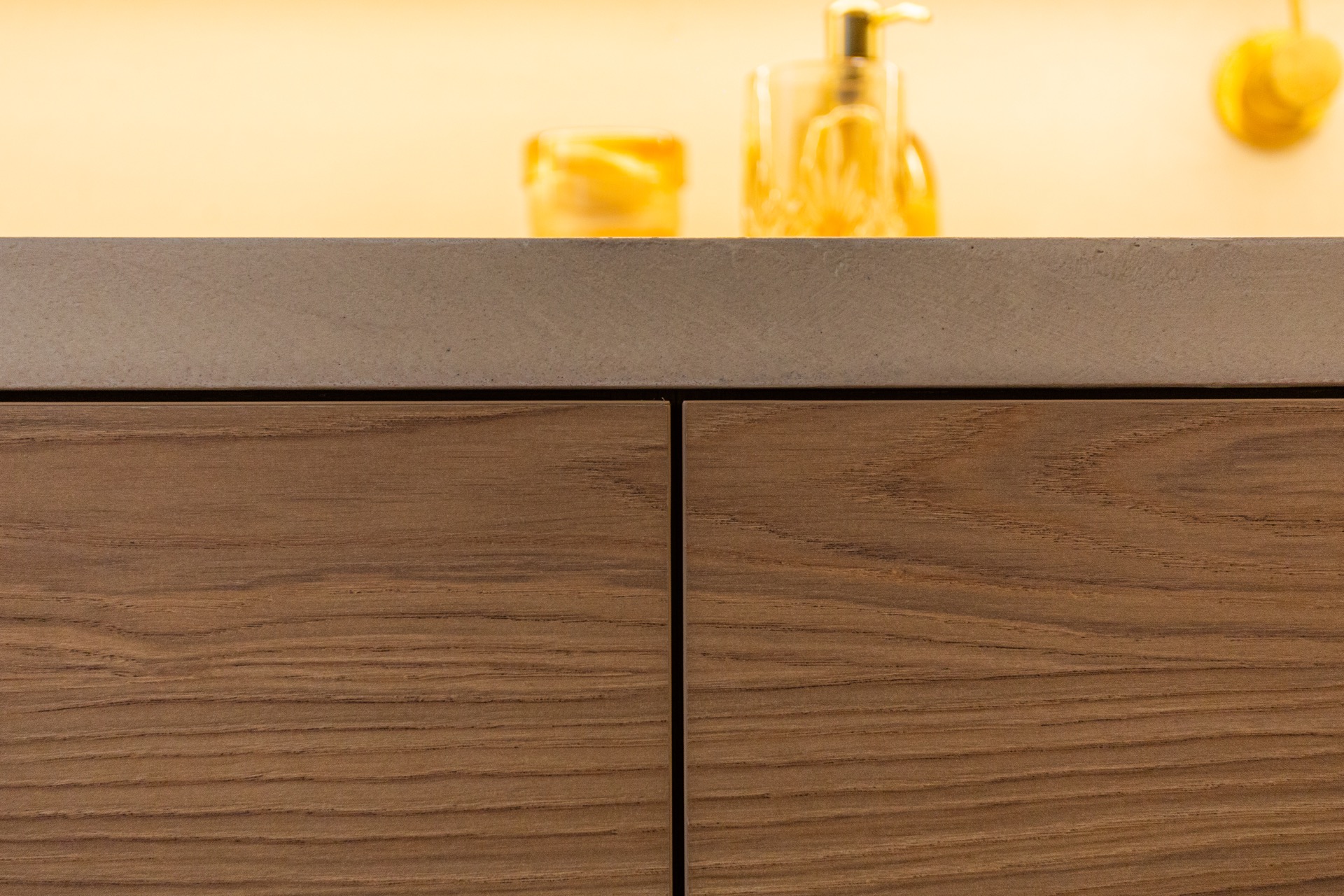
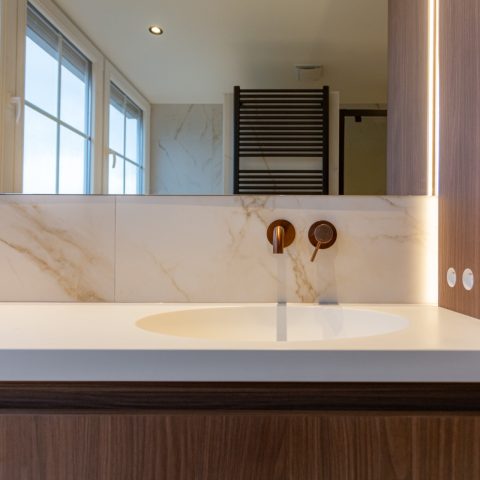
The oak cabinetry introduces irregular grains and warmth that contrasts with the matte plaster and smooth white ceramics. This tactile rhythm invites touch and interrupts the minimal surfaces with organic detail, creating a human scale within the restrained arrangement.
Concealed storage maintains clarity
Storage is layered beneath seating and between countertop elements, including a waste chute discreetly integrated to funnel refuse without disrupting lines. Built-in drawers support a streamlined room profile that avoids freestanding furniture, keeping the spatial impression open and functional.
Gradations guide spatial flow
The adjoining toilet’s walls bear a slightly lighter plaster tone compared to the main bathroom, producing a subtle gradient that structures the experience without visible thresholds. This approach maintains the textural continuity of plaster, creating a coherent yet nuanced spatial narrative. That makes the bathroom renovation part of the architectural character rather than a loose finish.
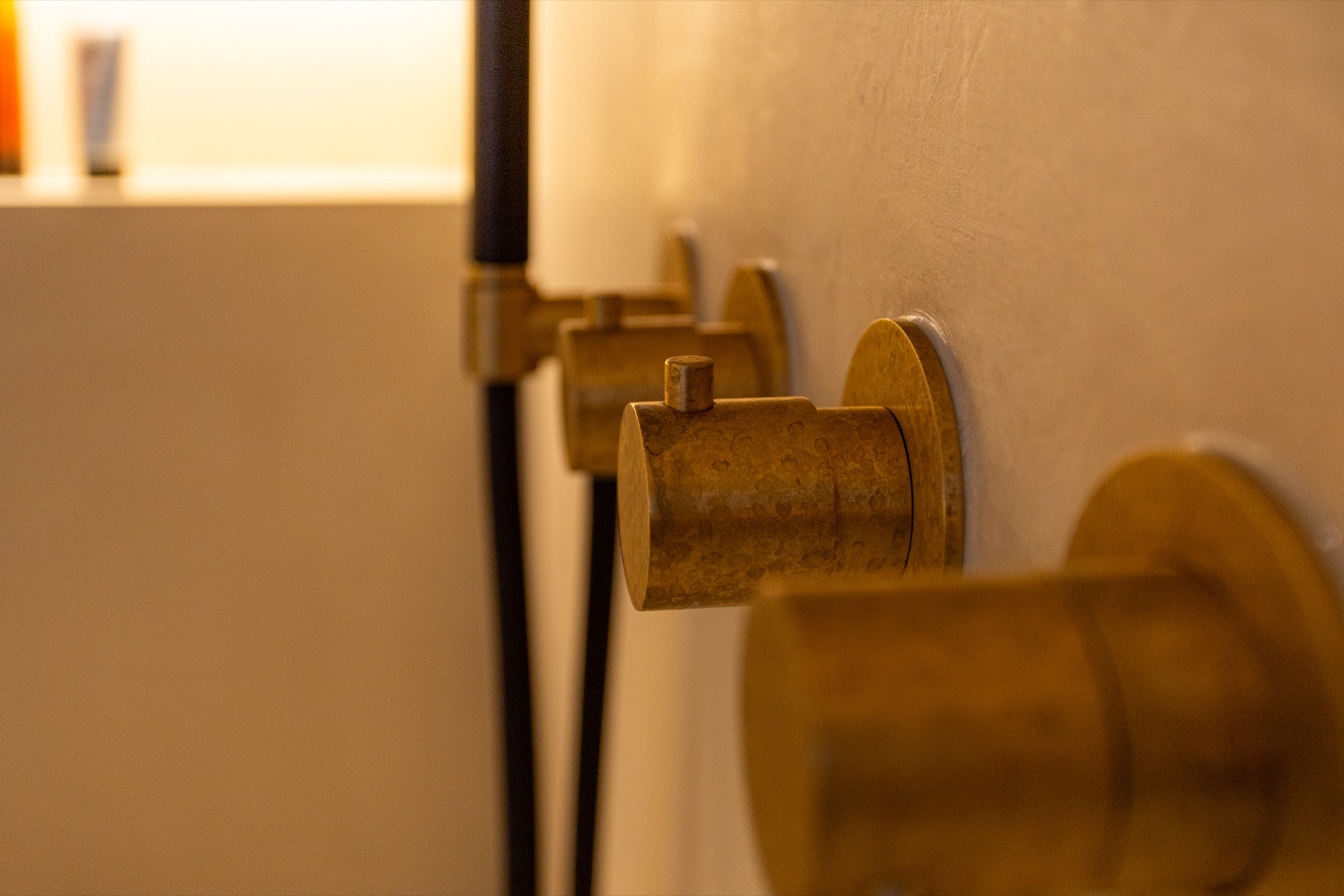
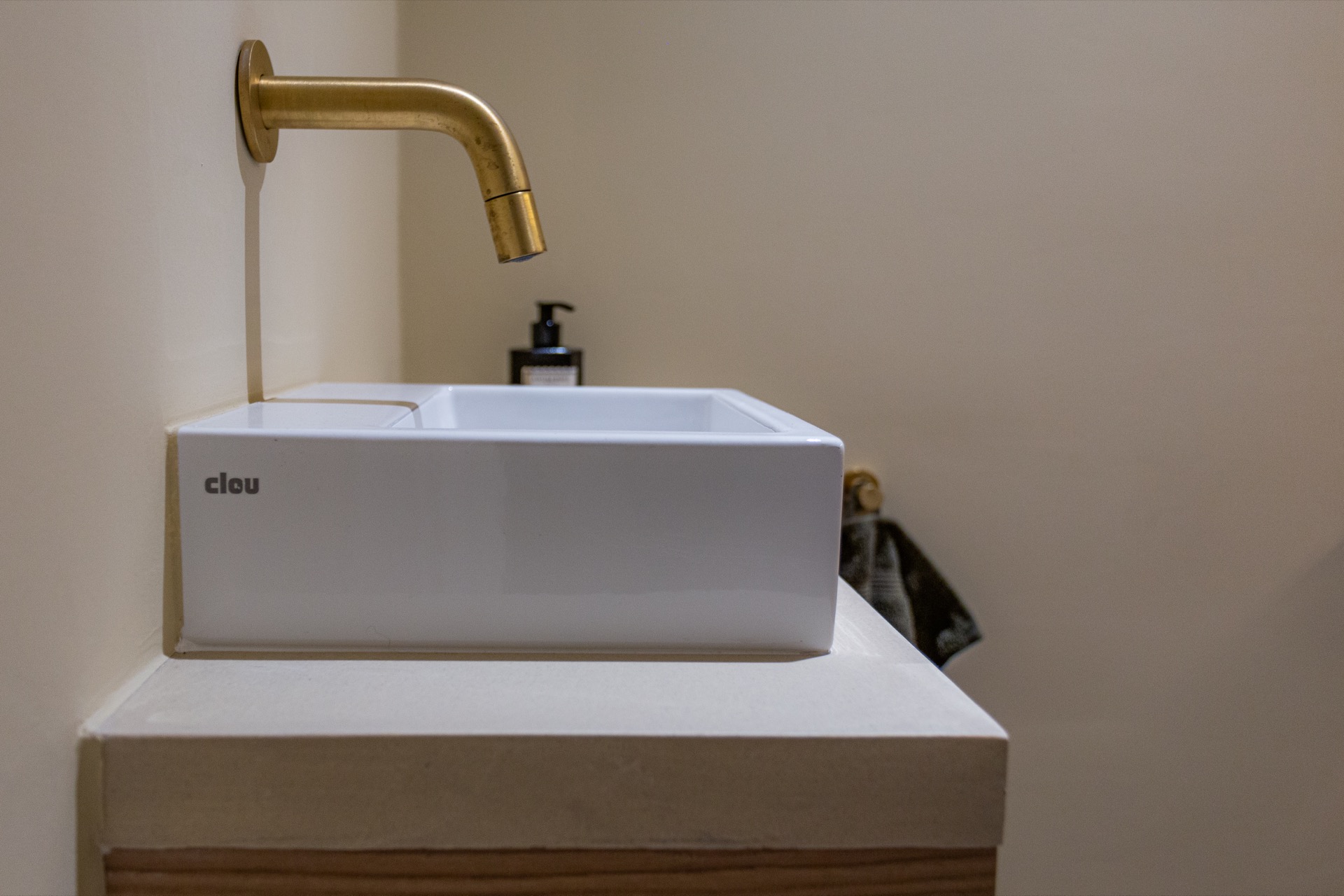
Muted gold fixtures introduce delicate reflections that softly catch light, their restrained finish contributing refined highlights without competing with the calm, natural palette. This interplay enriches the visual rhythm—glossy accents set against matte backgrounds—adding discreet depth to the material layering.
Natural light animates material surfaces
Timber-framed windows frame shifting daylight that plays across plaster trowel marks and wood grains. The changing angles enliven surfaces, while the combination with layered artificial light emphasizes the craftsmanship behind the materials and architecture.
Furniture zones respond to architectural constraints
Bespoke benches and drawer units precisely follow ceiling slopes and spatial proportions, adjusting storage and seating to the existing structure. These well-considered furnishings create functional divisions without interrupting the room’s openness.
Sanitary fixtures emphasize simplicity and ergonomics
White ceramic basins and toilets feature clean lines and slim profiles. Their placement supports intuitive circulation, aligning quietly within the space without adding visual weight or distraction.
Palette highlights texture over color
Careful selection of warm beige plaster, honeyed wood, and crisp white ceramics avoids stark contrasts in favor of subtle tonal shifts. This invites close observation of surface qualities such as grain, aggregate, and finish rather than vivid color variation.
Embedded lighting integrated with material transitions
LED strips integrated into recesses and niches provide multi-directional layers of illumination that adapt to changing daylight. Avoiding overhead glare keeps architectural details prominent, while soft, indirect light stitches together plaster surfaces to emphasize their hand-crafted nature.
Practical storage that preserves openness
Beneath counters and seating, well-planned drawers alongside discrete waste management sustain uncluttered surfaces. This careful organization supports user convenience while upholding the bathroom’s Material- and light-focused design language. That makes the bathroom renovation part of the architectural character rather than a loose finish.
Want to see more of STUDIO LOEWAK? View the page of STUDIO LOEWAK for even more great projects and company information.

.png)