










Core smoked oak floor in double herringbone
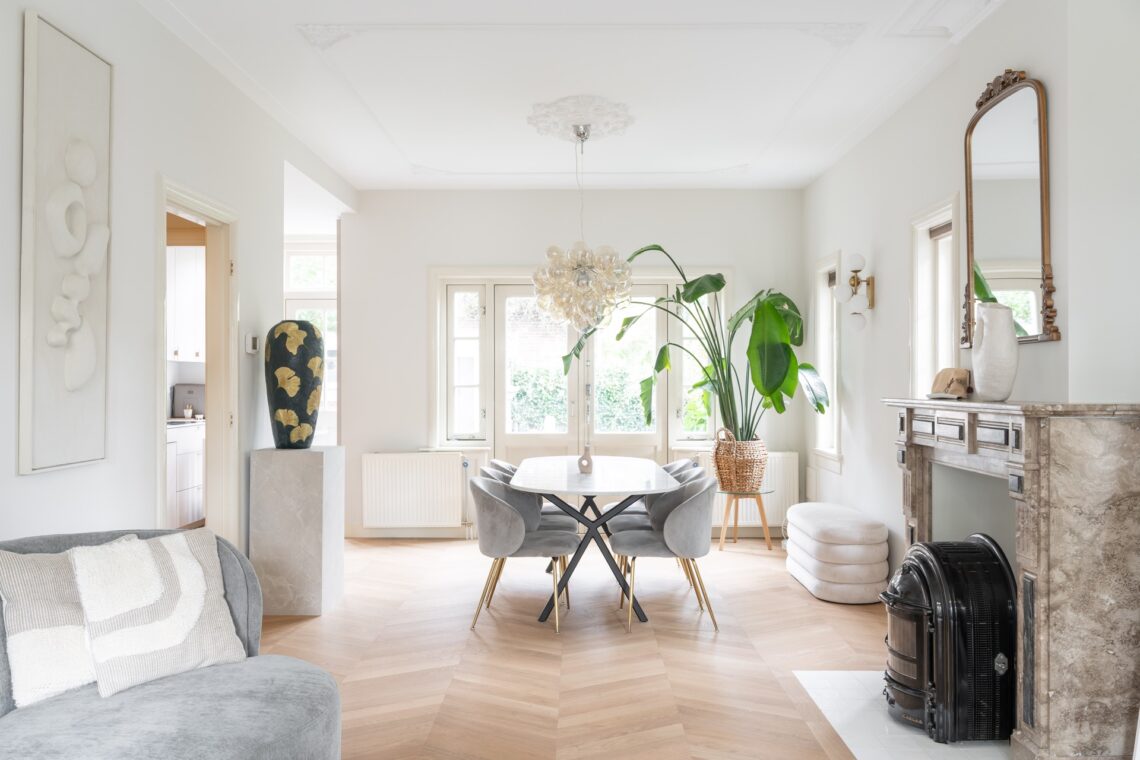
A core smoked oak floor in double herringbone sets the tone as soon as you enter. The pattern reads wider and longer than a traditional herringbone, so the floor draws the eye forward instead of breaking the room into small pieces. Its deep brown surface gives the interior a grounded look, while the repeated angles keep the composition crisp and legible.
Wide long herringbone with a stronger rhythm
The double elbow herringbone makes a different impression from a standard oak herringbone floor. The individual blocks feel more generous in length, and that extra scale is visible in the way the pattern moves across the rooms. It is not a busy floor. The geometry stays clear, even when the light shifts across the boards. That is where the material and the laying pattern work together: the smoked oak adds depth, the wider format keeps the surface open.
The dark brown oak herringbone floor also changes the way the rooms are read. Against light walls and pale trim, the floor becomes the strongest horizontal line in the interior. In several spaces, the pattern continues without interruption, so the eye moves from one zone to the next over the same wood surface. That continuity is especially noticeable where the floor meets door openings and larger glass areas.
Light from the large windows lifts the brown tones
Large windows sit close to the floor in several views, and they pull natural light deep into the rooms. On the smoked oak boards, that light does not flatten the color. It shifts the surface from almost black-brown in the shaded parts to a lighter cocoa tone near the glass. The result is a floor that looks different throughout the day, yet remains steady in character. The warm brown tones become most visible when the sun lands across the herringbone.
A raamscherm or curtain softens the window edge in some of the images, but the main effect still comes from the open glass planes. They reveal how the floor behaves in a brighter room: the angled blocks catch light on one side and fall into shadow on the other. That small change is enough to give the oak herringbone floor a drawn, almost graphic quality. It is a quiet project, but the surface never disappears into the background.
Doorlopende lijnen langs trap en overloop
The stair detail gives the project another layer. A white stair structure rises beside the darker floor, and the contrast is immediate: pale balustrade, dark treads, smoked oak below. On the landing, the herringbone continues and keeps the same direction of movement as it turns toward the upper level. Because the floor pattern does not stop at the base of the stairs, the route through the house stays visually connected.
In the stair images, the white construction sharpens the edge of the composition, while the dark wood steps echo the tone of the floor. It is a simple move, but it makes the material reading clearer. The eye can compare the smooth painted surfaces with the grain of the oak. That contrast gives the herringbone floor stair detail a strong role in the project, even without decorative additions or extra finishes.
Where wood meets tile, the shift stays visible
Several images show a herringbone floor to tile transition. The join is direct and easy to read, with the wood pattern meeting a different surface at a clear line. That break matters, because it shows how the oak floor settles into the interior without losing its own identity. The tiles introduce a cooler, flatter surface, while the smoked oak keeps its texture and movement. The transition is not hidden; it is part of how the rooms are organized.
Near the threshold, the change of material also changes the mood of the space. The darker floor pulls the eye inward, while the tiled zone holds its own as a separate field. That difference is useful in a project like this, where the pattern already carries much of the visual weight. The line between wood and tile gives the layout a readable edge, especially in rooms where the floor is seen from a distance.
Rooms that let the pattern breathe
The project images move through several rooms, including a bedroom view where the herringbone floor appears beneath the window line. Even there, the floor stays part of the whole interior language. The pattern does not compete with furniture or textiles; it sits lower, anchoring the room with the same smoked oak tone seen elsewhere. In the bedroom, that makes the surface feel calm without becoming flat.
What stands out across the set of images is how consistently the floor supports the architecture around it. The large openings, the white stair, the tiled edges and the open circulation all give the double herringbone something to respond to. Its wider, longer layout keeps the floor visually legible in each room, while the deep brown color ties the different views together. It is a strong oak herringbone floor, but the strength comes from proportion and placement rather than decoration.
Seen as a whole, the core smoked oak floor in double herringbone gives the interior a clear direction. The pattern has enough scale to read from room to room, the smoked finish gives the boards depth, and the daylight softens the brown tones without washing them out. Between the window fronts, the stair landing and the tile transitions, the floor remains the constant element that holds the views together.
The result is a project where the material speaks through surface and line. The double elbow herringbone brings movement, the dark brown oak herringbone floor brings weight, and the large windows keep shifting the tone from one space to the next. Nothing in the interior needs to be overstated for the floor to register. The pattern, the color and the route through the house already do that work.
Want to see more of Vloerenhuis Amsterdam? View the page of Vloerenhuis Amsterdam for even more great projects and company information.




NEW 2026 Jubileum Edition The Best Interior Designers Benelux
Order Now €125


NEW 2026 Jubileum Edition The Best Interior Designers Benelux
Order Now €125


