






Covered outdoor living room with light strip, built-in spotlights and automatic screens
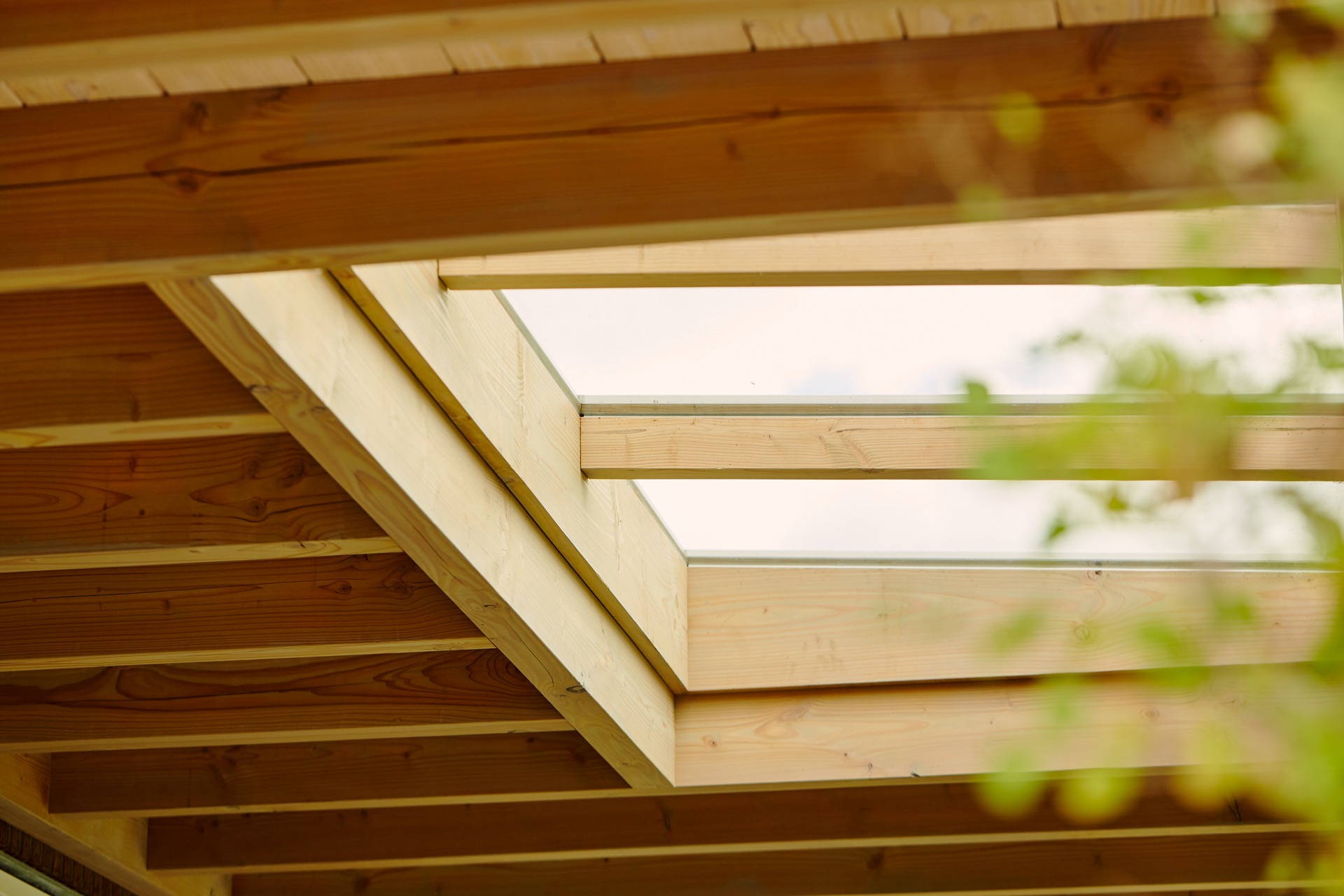
A central light strip runs through this outdoor living room with light strip, so daylight reaches far into the covered space instead of stopping at the roofline. The room reads as an extension of the house, with a wooden canopy overhead, brick around the openings and large panes that keep the connection to the garden clear. It is a modest intervention on paper, yet the effect is direct: the room stays bright during the day, while the structure gives it a defined indoor-outdoor character.
outdoor living room with light strip as the architectural starting point
The most visible move is the opening in the middle of the ceiling. That skylight or roof opening keeps the center of the room from feeling closed in, even under the canopy. Light drops through the middle and softens the long lines of the timber construction. Seen from inside, the roof becomes part of the experience rather than a lid above it. The result is a covered outdoor room that keeps daylight present in a way that feels practical and calm at once.
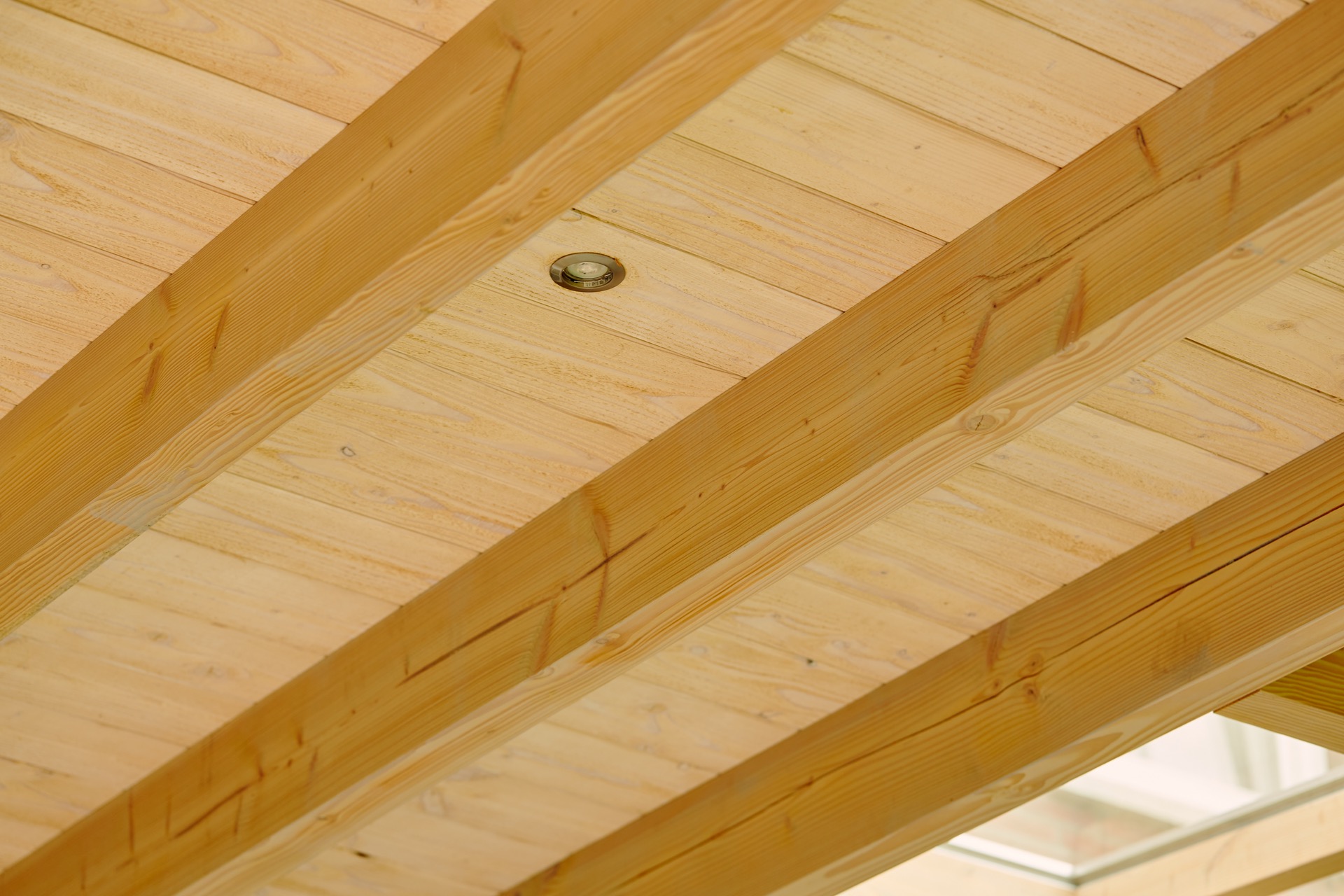
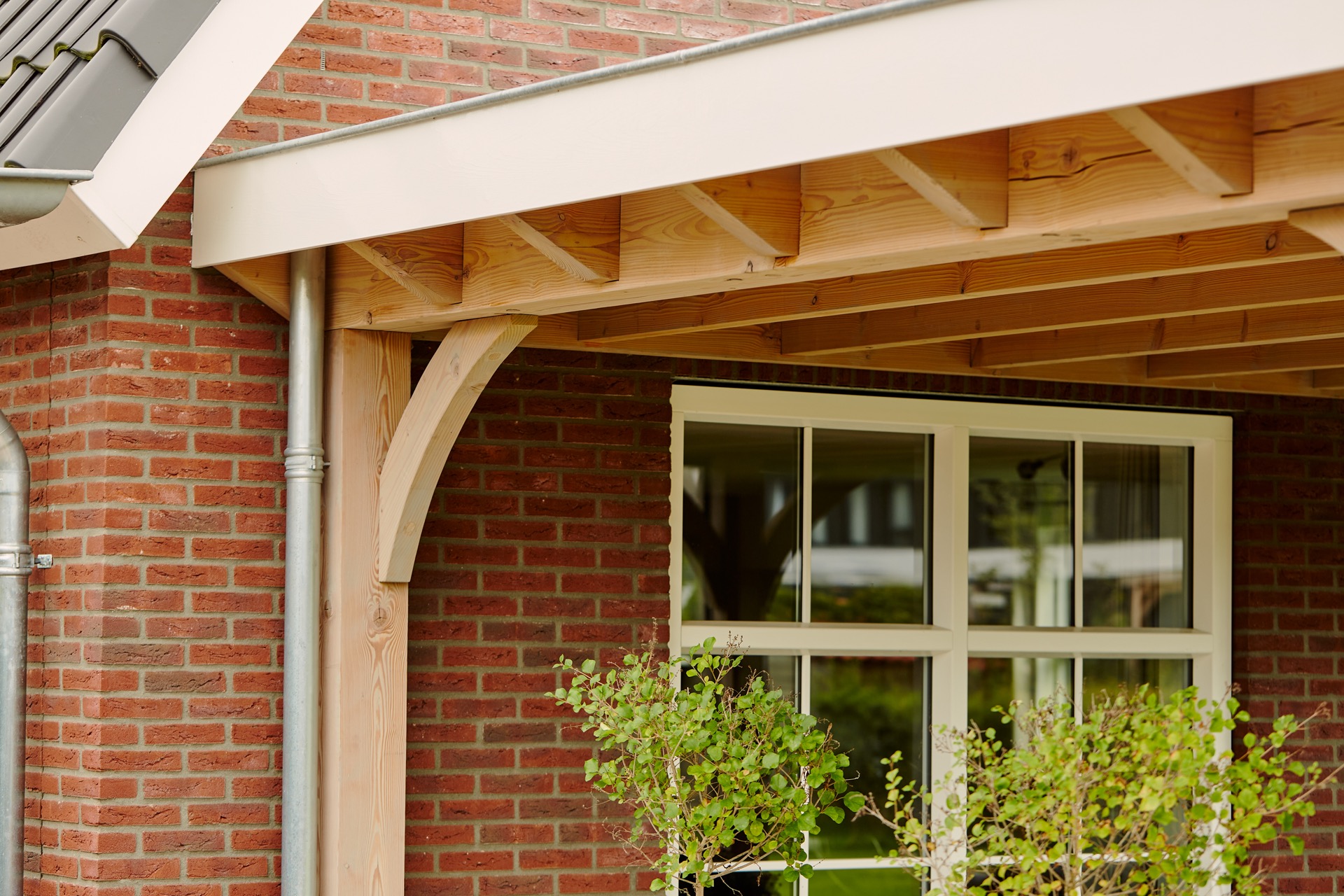
Wooden beams run across the ceiling in a steady rhythm, and that repetition is what gives the room its order. Against the brick walls and dark frame lines, the timber stands out without trying to dominate the scene. The glass facade opening brings in views of the terrace and planting beyond, so the enclosure never turns heavy. The space still belongs to the house, but the materials let the eye move outward.
Built-in lighting changes the room after sunset
Once the built-in ceiling spotlights are switched on, the room shifts from daytime shelter to evening use. The light is tucked into the ceiling, where it sits alongside the beams instead of interrupting them. That matters here, because the construction already has a strong line. With the spots on, the underside of the canopy becomes legible in a different way, and the table or sitting area beneath it can be used without losing the clear view of the structure above.
This is where the covered outdoor room shows its second layer of use. The daylight from the central opening remains present earlier in the day, while the built-in ceiling spotlights take over as the light falls away. Nothing about the room has to be rearranged for that shift. The ceiling, the glass openings and the brick edge simply take on a different register, one that is more enclosed but still open to the outside.
Automatic privacy screens shape the experience
Integrated screens are part of the setup, and they move down automatically when needed. That movement is subtle in the room itself, but it changes how the space is read. The openings can stay open when the light is welcome, then close down further when shade or more privacy is needed. Because the screens are built into the arrangement, they do not compete with the timber ceiling or the brickwork around the perimeter.
The screens also give the room a clear daily rhythm. In the morning, daylight from the roof opening reaches deeper into the space. Later, the screens can drop and the spotlights can take over. The room then works as a sheltered place at several moments of the day rather than only at one. That flexibility is visible in the way the structure is set up: a fixed canopy above, glazed openings around it, and screen lines that can move when the light changes. That makes the outdoor living room with light strip part of the architectural character rather than a loose finish.
A traditional frame with a measured finish
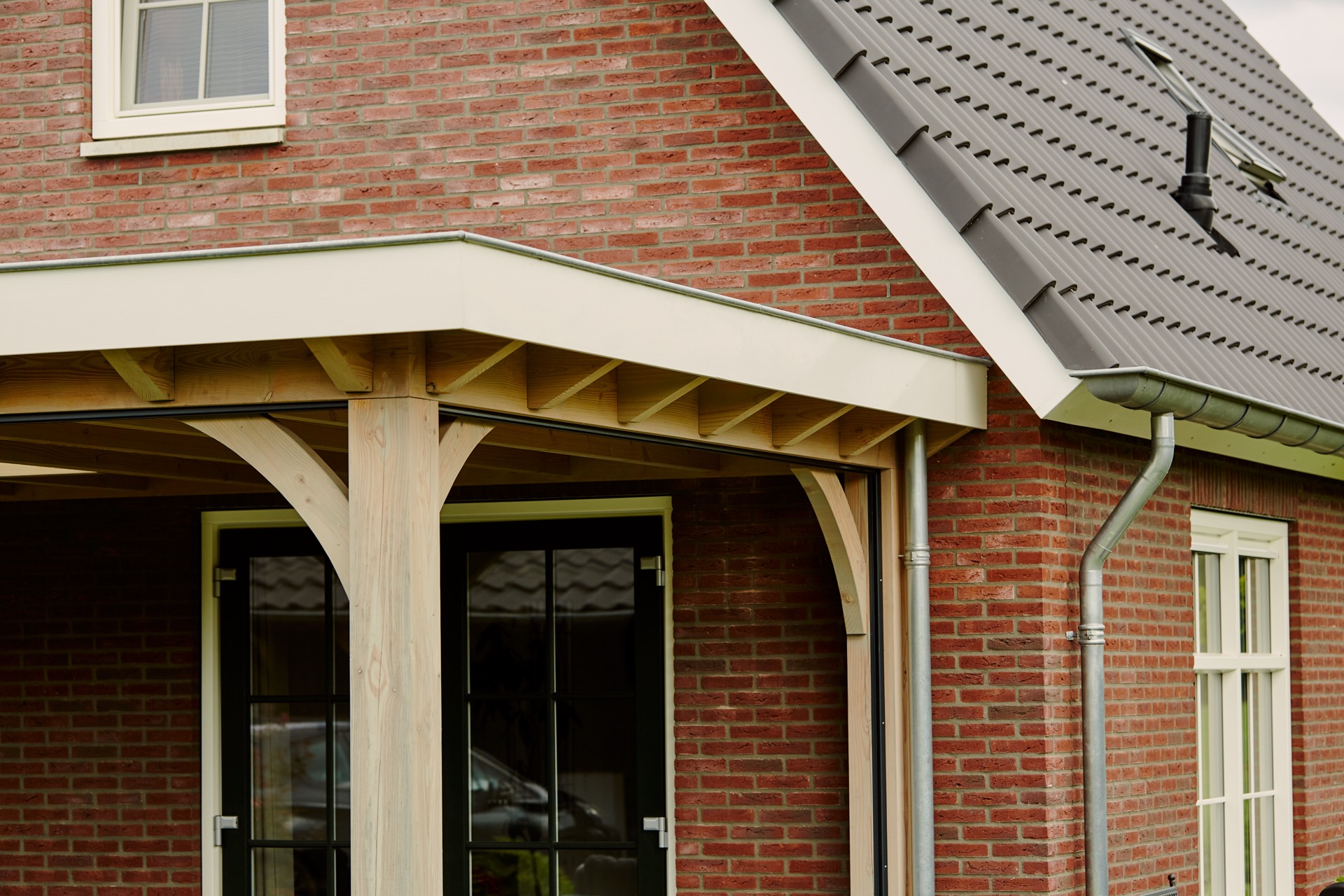
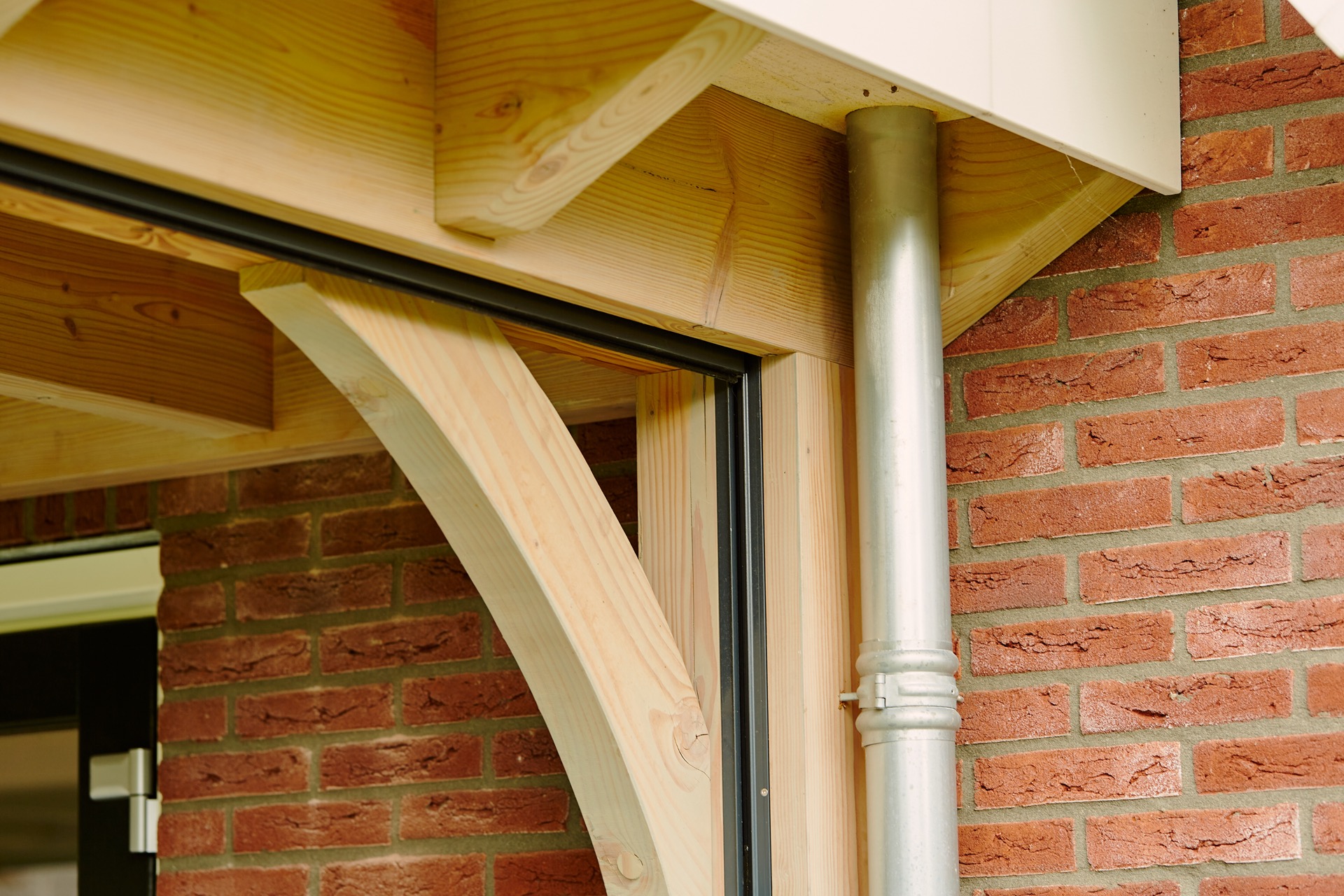
The construction is described as fairly traditional, and that feeling is easy to see in the timber canopy, the visible beams and the straightforward way the room meets the brick house wall. There is no attempt to hide the structure. The posts, ceiling lines and openings remain readable, which gives the room its directness. The material palette is limited to wood, glass and brick, and that restraint keeps the attention on proportion, light and the way the room sits against the house.
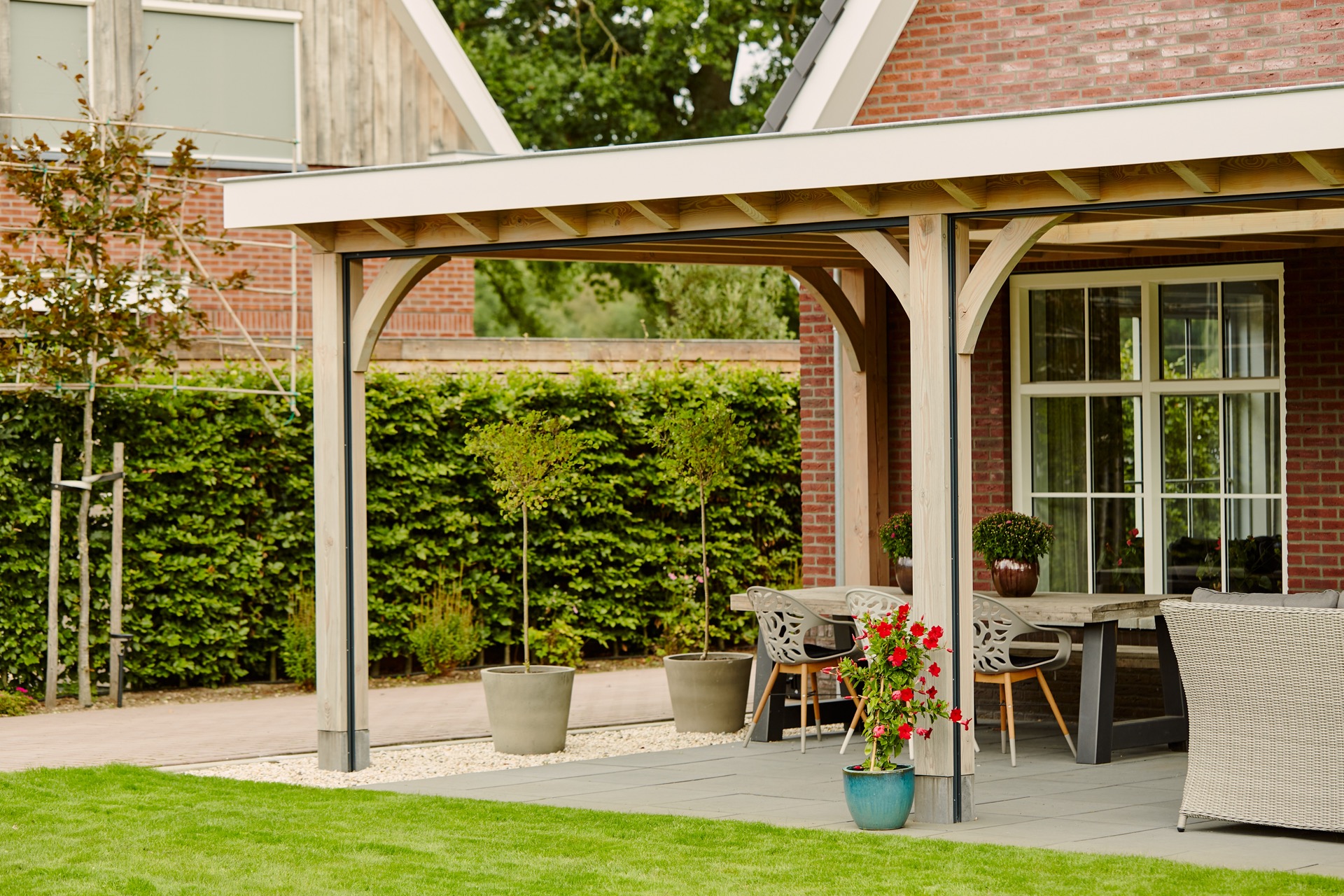
In the side views, the wood canopy outdoor living arrangement is especially clear. The wooden posts support the roof, the glass openings cut through the brick enclosure, and the terrace surface continues outward in stone. Even the visible rainwater pipe and gutter contribute to the reading of the project, because they underline the practical side of the structure. Nothing here is hidden for effect; the details are left visible and honest.
Openings, frames and the terrace beyond
The glass openings do more than bring in light. They frame the view from the covered room toward the terrace and the planting in the background, so the outside remains part of the composition. The dark frame lines sharpen that boundary, while the brick gives the opening a solid edge. From different angles, the room feels both enclosed and permeable, with the wooden construction and the glass doing different jobs at the same time.
On the ground, the paving gives the room a firm base. It extends the use of the space beyond the threshold and reinforces the sense that this is part of the home rather than a separate structure in the garden. Because the roof opening keeps daylight moving through the center, and the built-in ceiling spotlights can take over later, the room can stay in use through the day without losing its calm reading. The outdoor living room with light strip works precisely because each of those parts is visible and useful.
The photography shows that clearly: timber overhead, brick around the openings, glass to the garden and a ceiling light set neatly into the structure. The room does not need ornament to make its point. Its strength lies in the way light, enclosure and movement are organized across one covered outdoor room. The central opening preserves daylight, the spotlights extend use into the evening and the automatic privacy screens make the transitions in between.
Photo: Daan Blankesteijn That makes the outdoor living room with light strip part of the architectural character rather than a loose finish.
Want to see more of Donker Buitenkamers? View the page of Donker Buitenkamers for even more great projects and company information.


.png)