








Covered Patio with Fire Pit in a Modern Garden
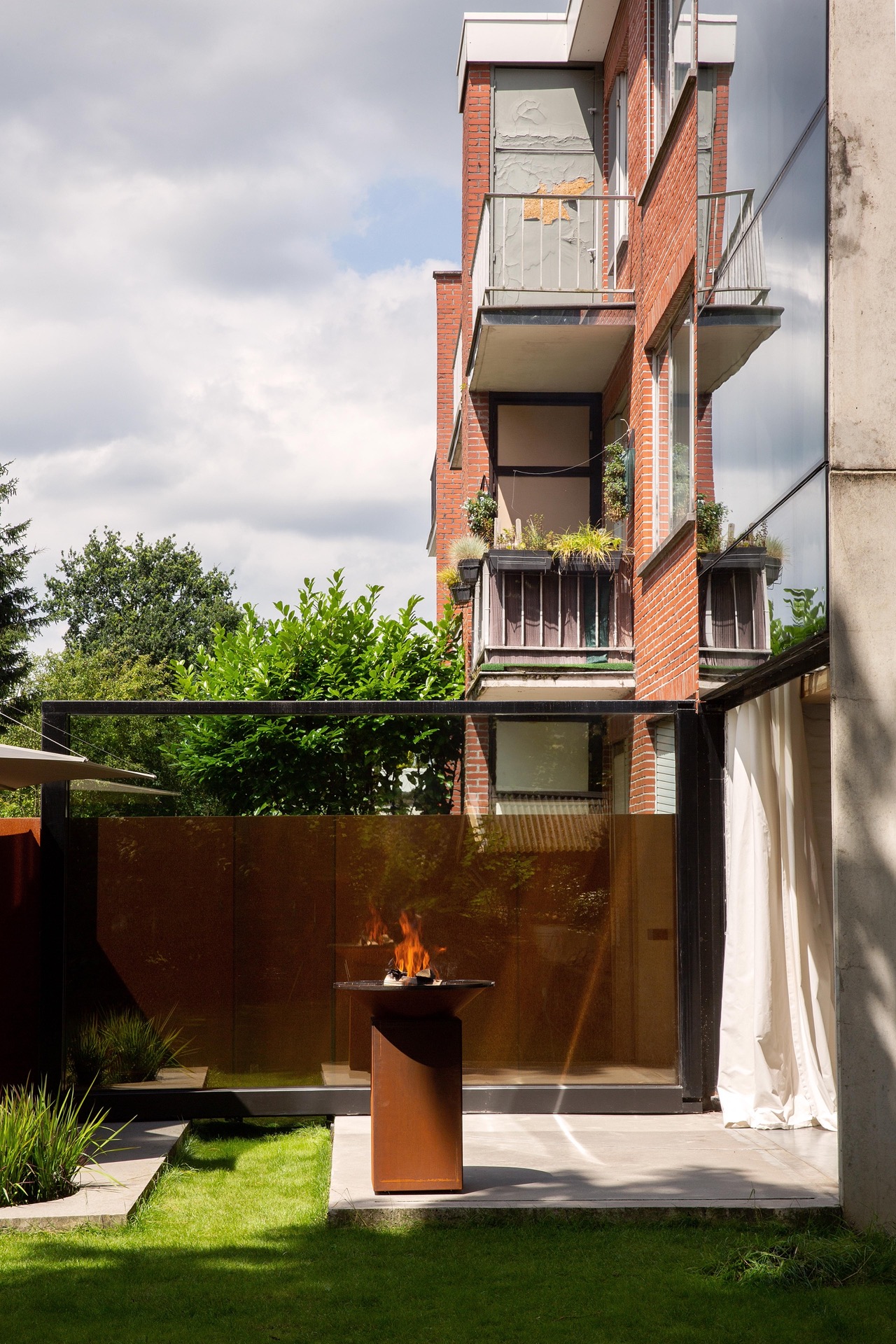
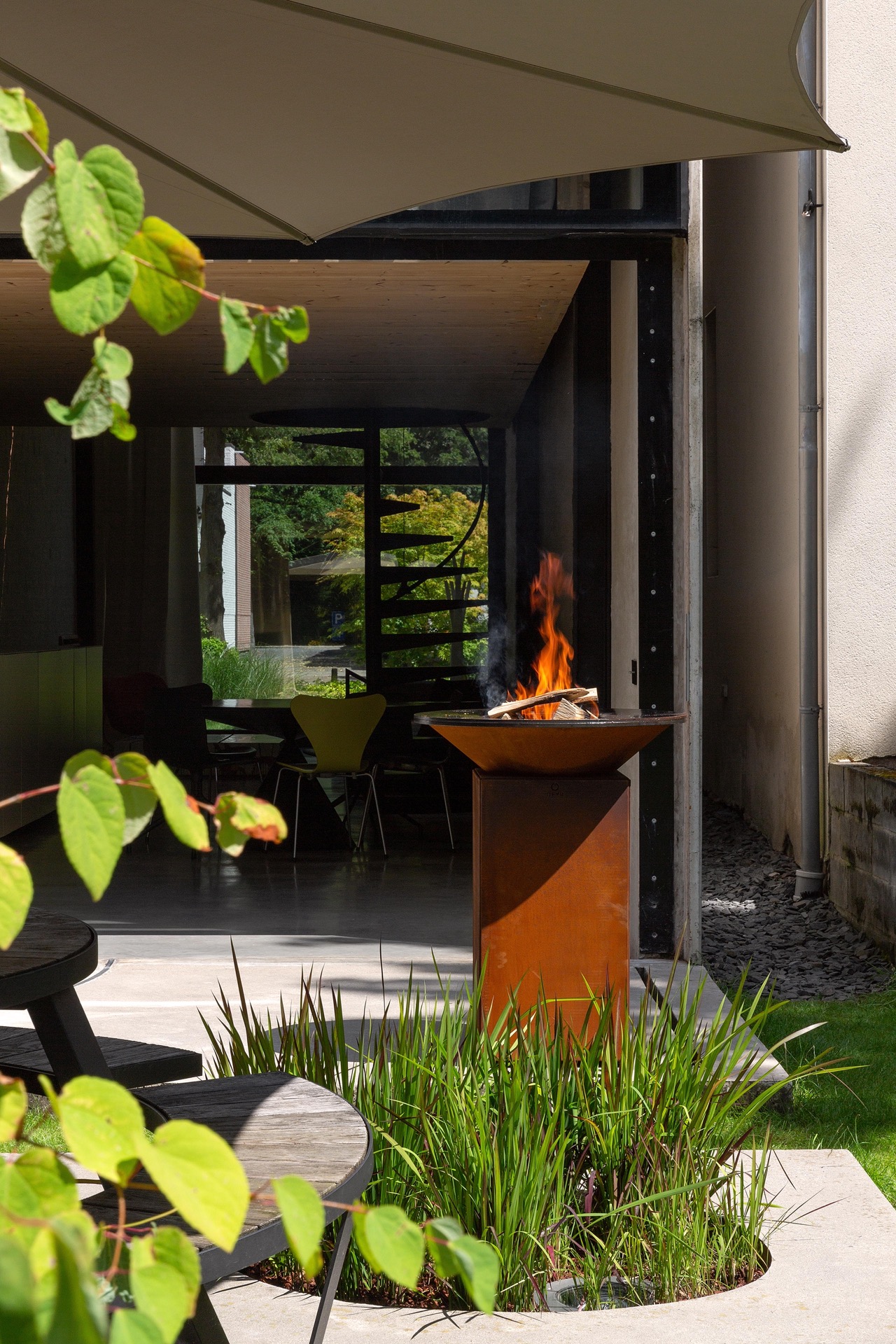
Under the wood ceiling, the first thing you notice is the fire bowl. Its flame sits low in the terrace, close to the seating and dining area, so the whole covered patio with fire pit reads as one outdoor room rather than a separate corner in the garden. Brick, glass, and dark frames set a clear edge around the space, while the planted borders and lawn soften the hard surfaces outside it.
A covered outdoor room built around the flame
The fire pit as centerpiece gives the terrace its rhythm. In the wide view, the round metal bowl stands on the paving with a clean gap around it, leaving space for chairs to gather without crowding the opening. That simple placement changes how the room works. People can sit facing the heat, turn toward the dining table, or move toward the glass opening that connects the covered area to the lawn. The project feels designed for evening use, with the fire pulling attention inward.
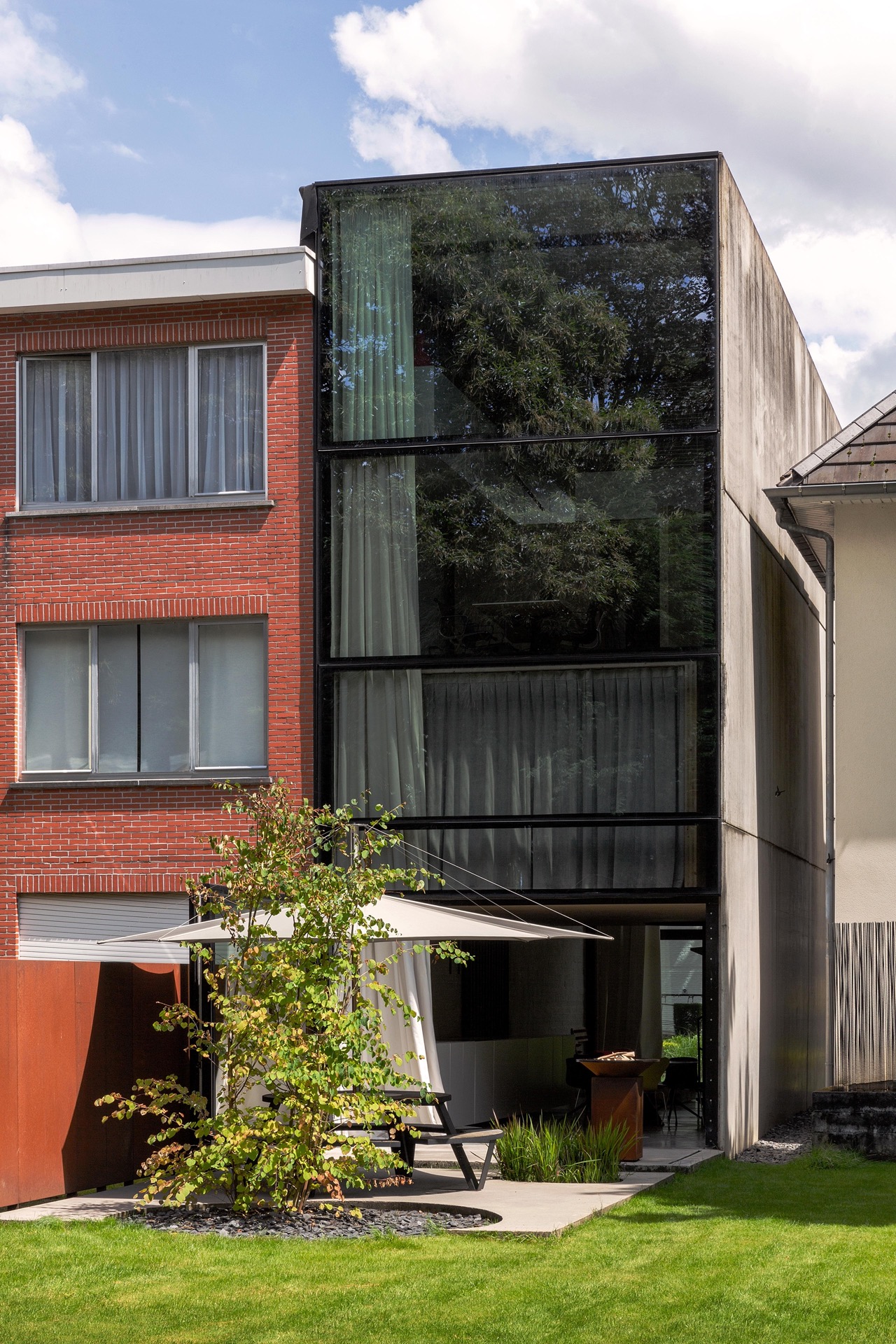
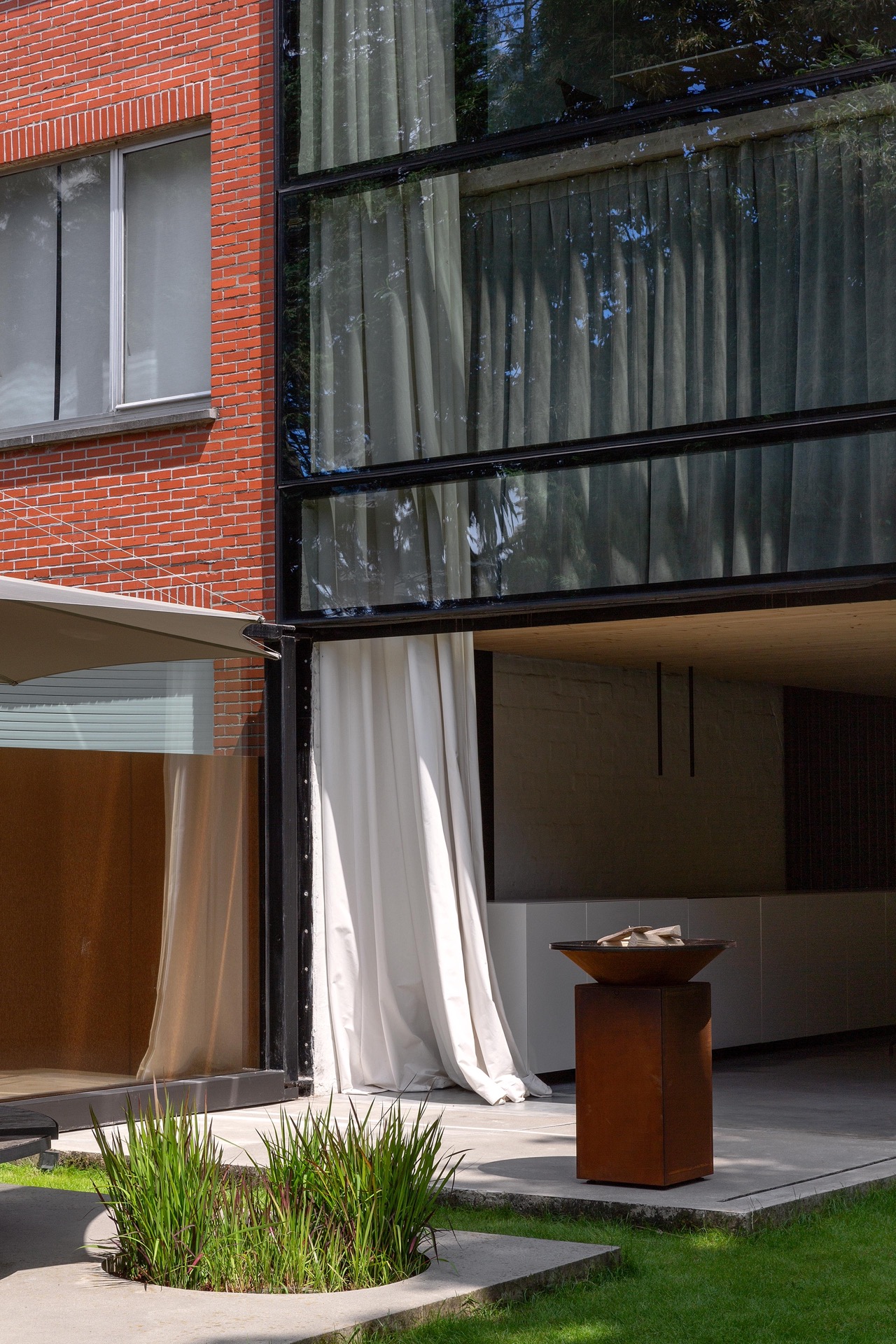
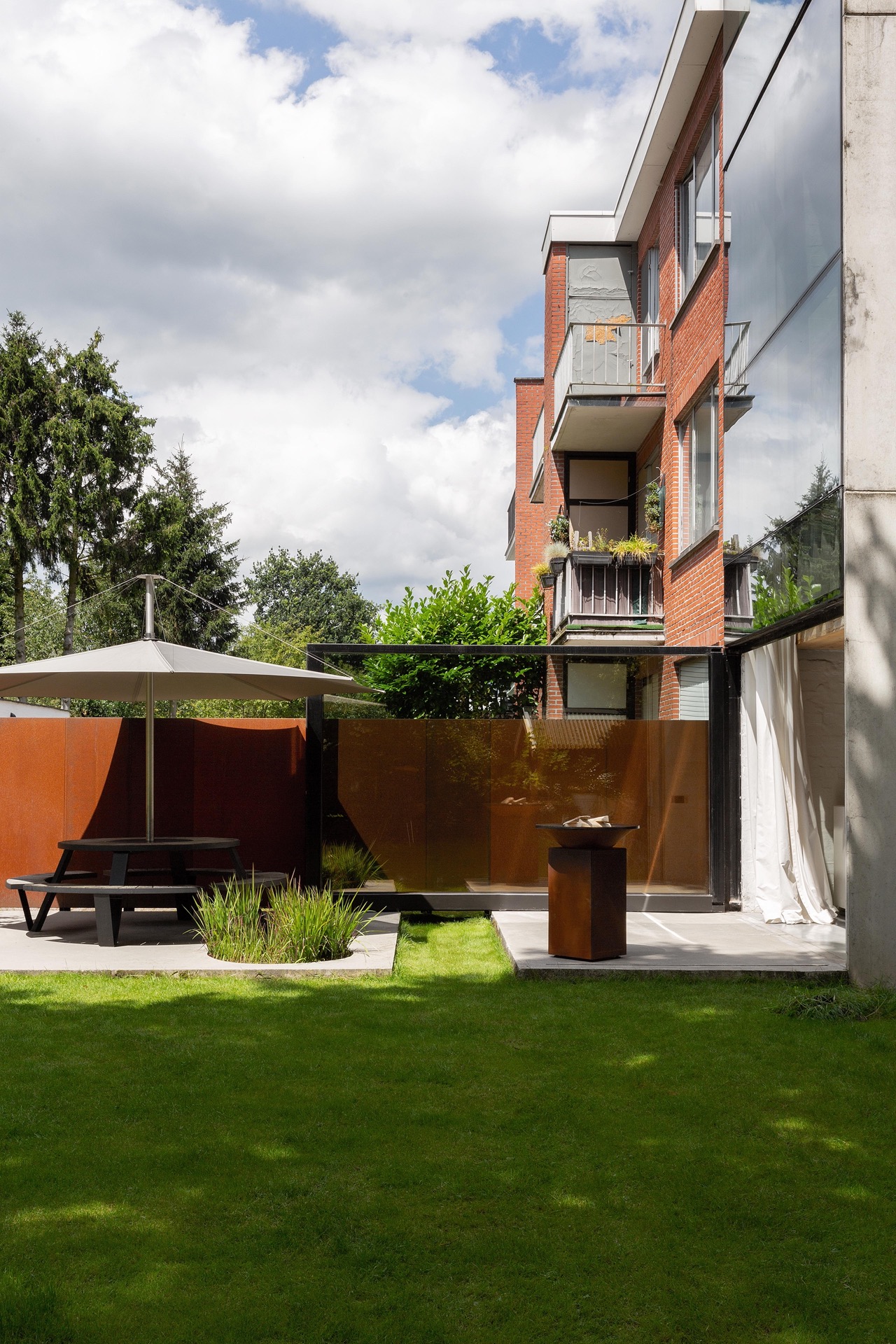
Seen from the house side, the covered patio with fire pit becomes a layer between inside and garden. Large glass panels reflect the darker lines of the frame, while the textile curtains hang in soft folds at the edge of the canopy. They break up the harder geometry of brick and glazing. The result is not decorative in a loud way; it is practical and quiet, with the fire bowl doing the visual work instead of extra furniture or ornament.
Wood above, metal below
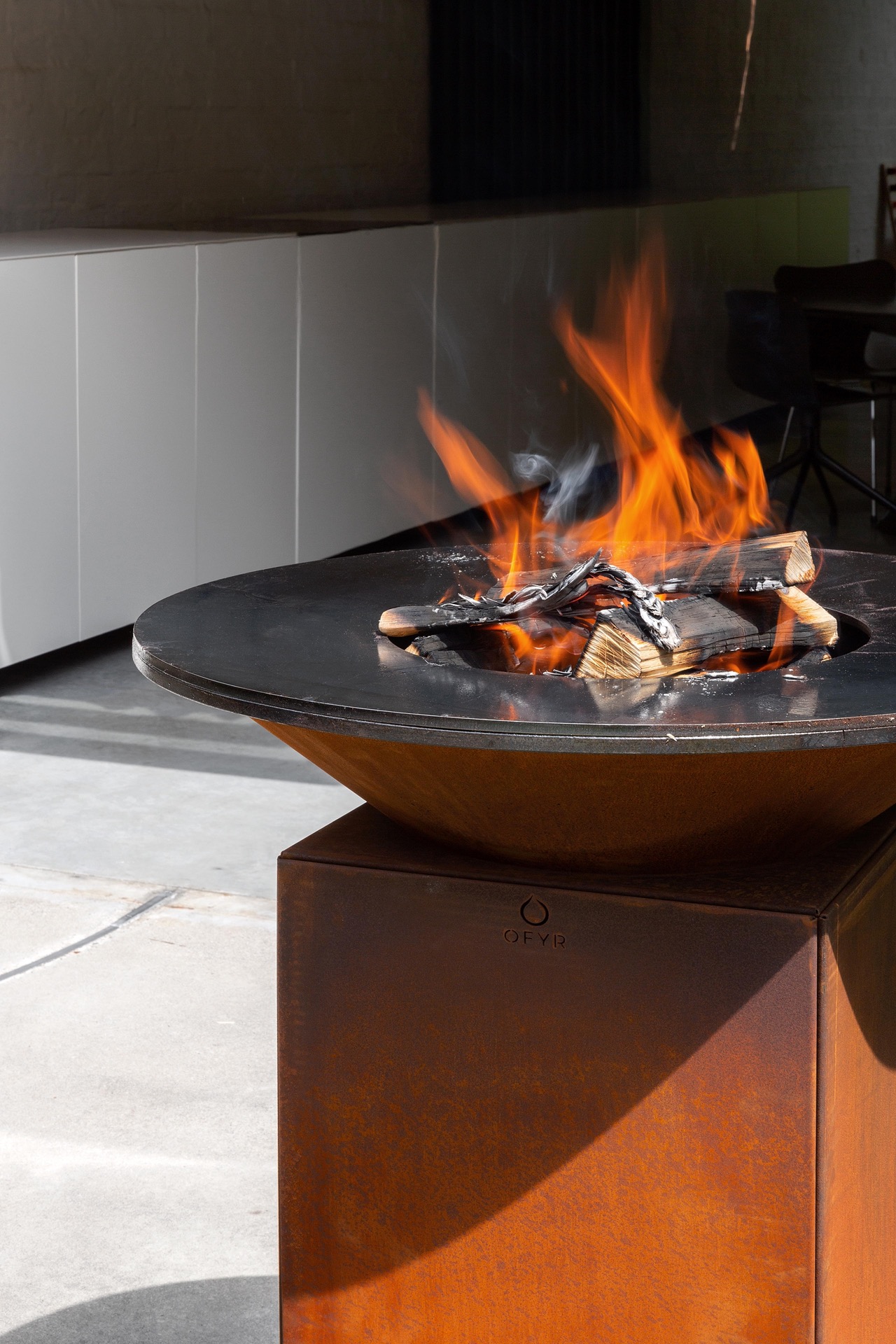
The ceiling in warm timber is one of the strongest parts of the composition. It runs across the covered zone in narrow boards, giving the overhead plane a clear grain and a steadier scale than the open garden around it. Below that, the fire pit sits in a rust-toned metal shell, with flames rising in a compact circle. The contrast is direct: wood overhead, metal at floor level, and between them the grey paving and black window frames hold the scene together. This mix is what makes the space read as luxury garden outdoor living without relying on excess.
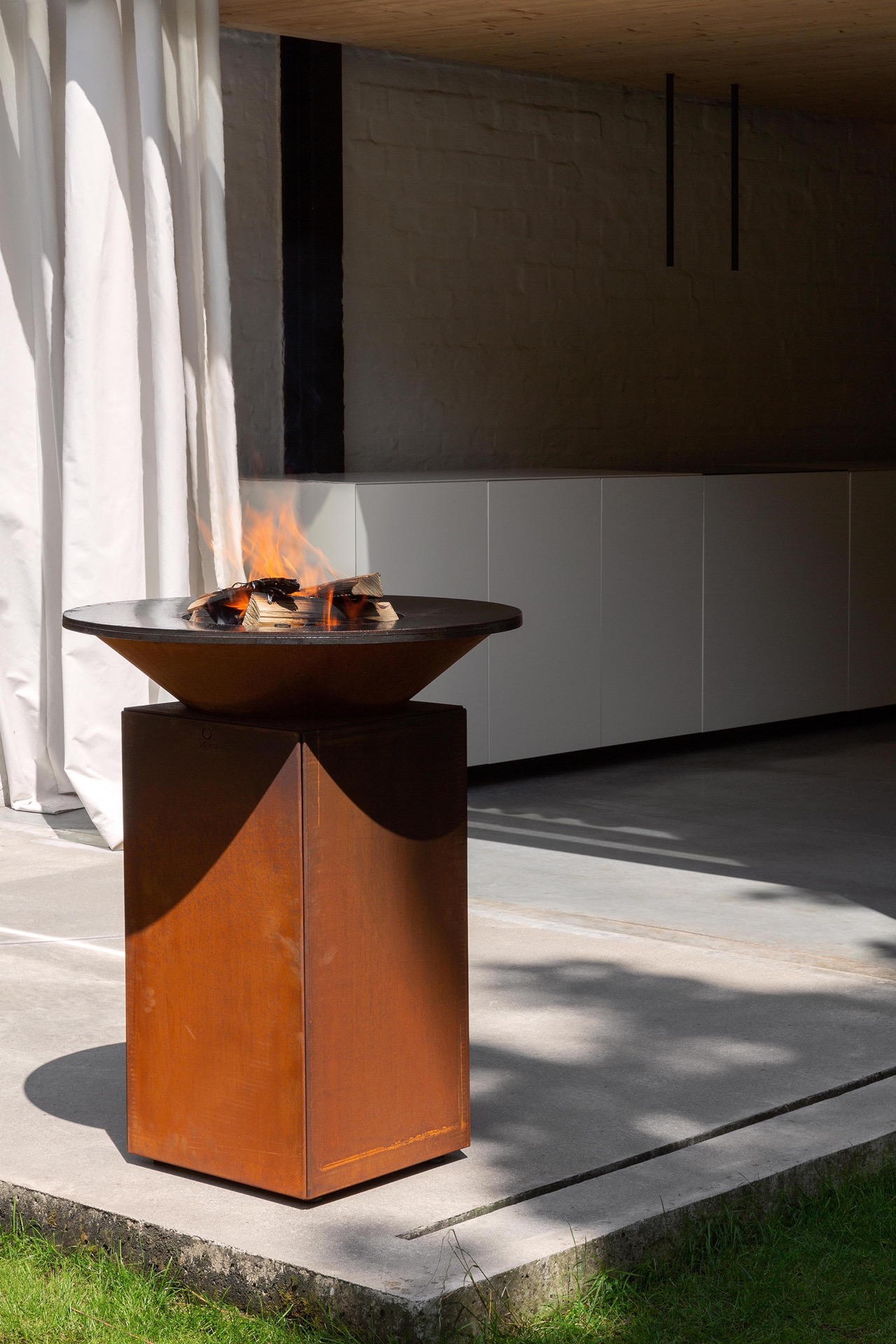
From the closer images, the bowl and the flames become almost sculptural. The curved rim catches the light, while the fire itself leaves a bright core against the pale wall behind it. That wall gives the fireplace area a sharper outline, so the flame is not lost in the garden. It becomes the most active element in the frame. Even at a distance, the outdoor fire pit remains visible as a point of focus, not just a source of heat.
Material contrast that stays restrained
Brick, glass, concrete paving, and timber each hold a separate role. The brickwork marks the house as solid and grounded. The glazing opens the rear edge and lets the covered terrace feel connected to the rooms inside. Concrete and stone-like paving keep the floor plane calm and level, while the timber ceiling brings texture overhead. Nothing here competes for attention. Instead, the materials are repeated in blocks and edges, which gives the modern garden design a measured pace.
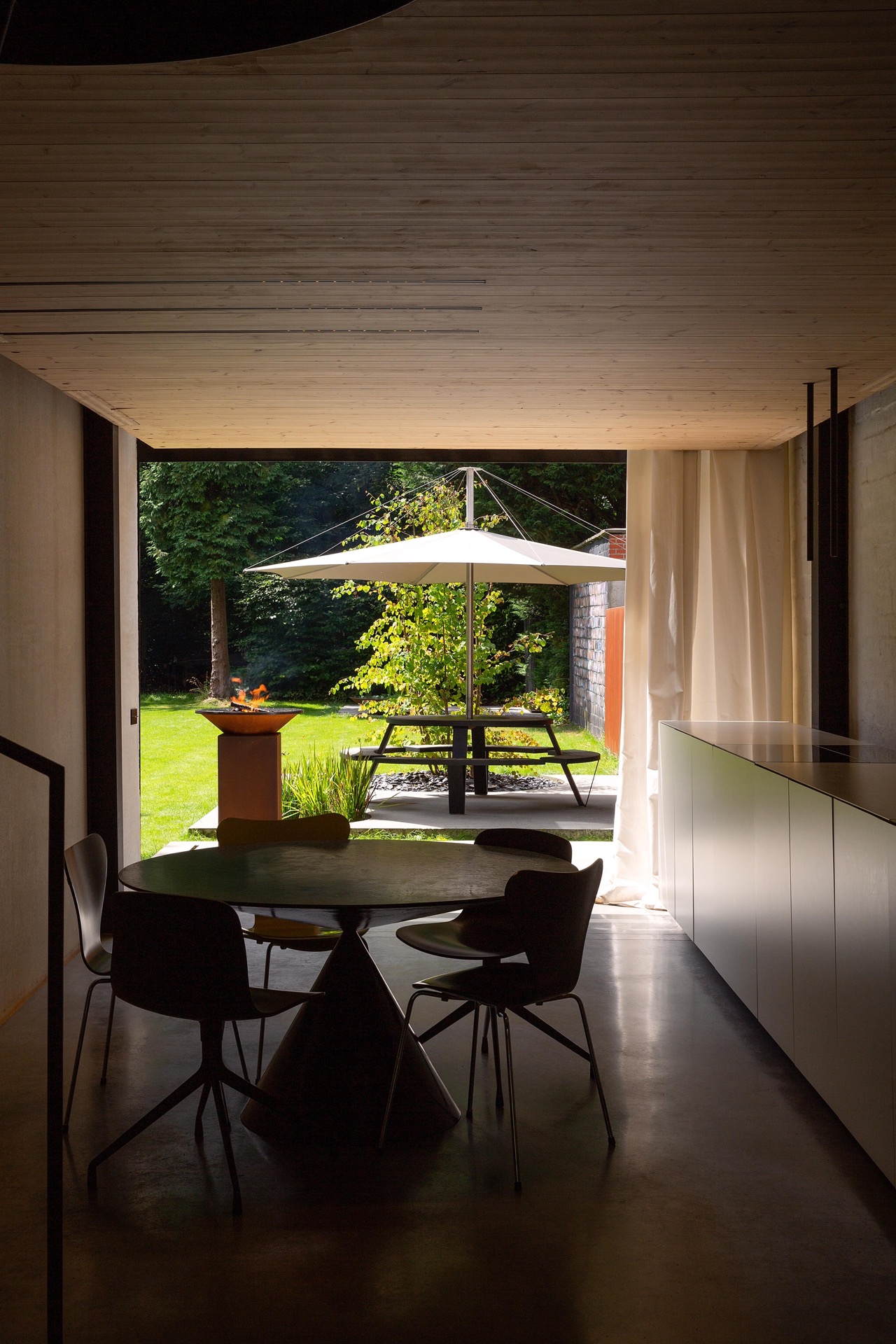
Textile curtains are used with the same restraint. They hang beside the opening in pale folds and shift the mood of the terrace without closing it off. In one view, they frame the dining zone under cover; in another, they partly screen the side of the patio and make the opening feel deeper. Their softness matters because the rest of the project is built from hard lines and flat planes. They are not there as decoration, but as a way to slow down the edge of the room.
Outdoor dining under cover, close to the heat
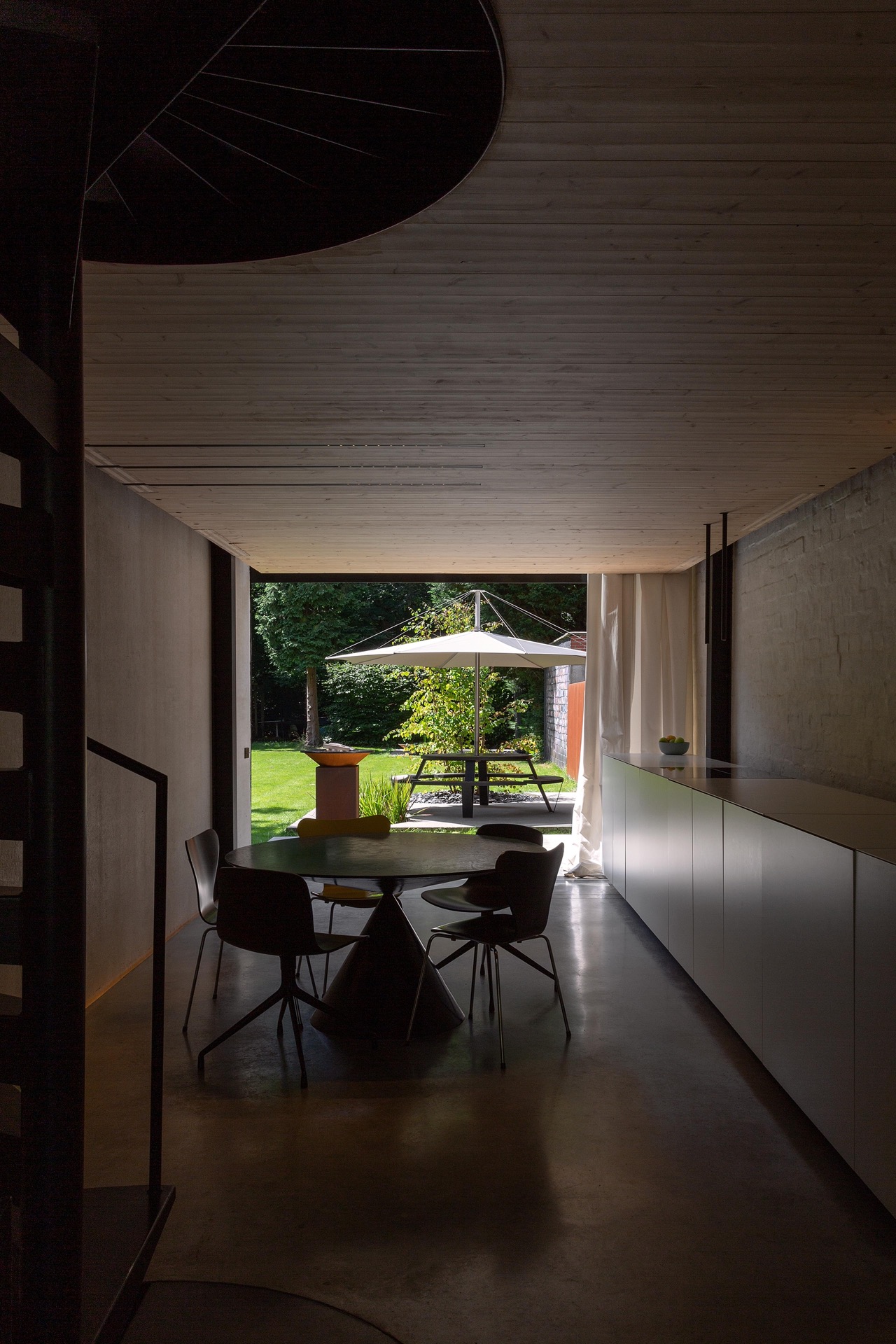
The dining area sits under the canopy, close enough to the fire to belong to the same social zone. A round table and simple chairs occupy part of the covered space, and the layout keeps the route open toward the garden. That is what makes the outdoor dining under cover setting effective: the table is protected, but it does not feel sealed off. You can look past it to the lawn, the borders, and the rectangular paving outside the roofline.
In the wider garden view, the terrace lands into a carefully ordered patch of grass and planted edges. The lawn does not fight with the architecture. It acts as a breathing strip around the paved surface, easing the transition from the covered zone to the open garden. The strong lines of the patio are still clear, but they are not isolated. They sit inside a garden that has been drawn with visible edges and a limited set of materials.
A terrace that works from inside and outside
One image reads almost like an interior shot, even though the fire bowl is outside. The viewpoint looks through the covered patio, past the chairs and table, and out toward the fire. That sense of depth is important. It shows the terrace as a usable room with a clear back-and-forth between the sheltered seating area and the open hearth beyond. In projects like this, the best moments often happen in the transition zones, and here that transition is framed by the canopy, the glazing, and the fire.
The project also shows how a covered patio with fire pit can give structure to a garden without adding clutter. The seating zone, the dining table, and the fire bowl each have their place. The roof provides shelter, the curtains filter the edge, and the paving holds everything at one level. Because the layout is open, the garden still reads as a single landscape. Because the fire is central, the space also has a clear reason to gather. That combination gives the project its strength.
In the final views, the flames, the rust-colored bowl, and the pale wall behind them create a simple composition that stays with you. The fire pit is not hidden at the back of the plot; it is set where the terrace can use it. Around it, the wood ceiling, brick walls, and black frames keep the scene grounded. It is a measured piece of modern garden design, shaped by a central flame and a covered room built to hold it.
Photography: Yannick Milpas
Want to see more of OFYR? View the page of OFYR for even more great projects and company information.



NEW 2026 Jubileum Edition The Best Interior Designers Benelux
Order Now €125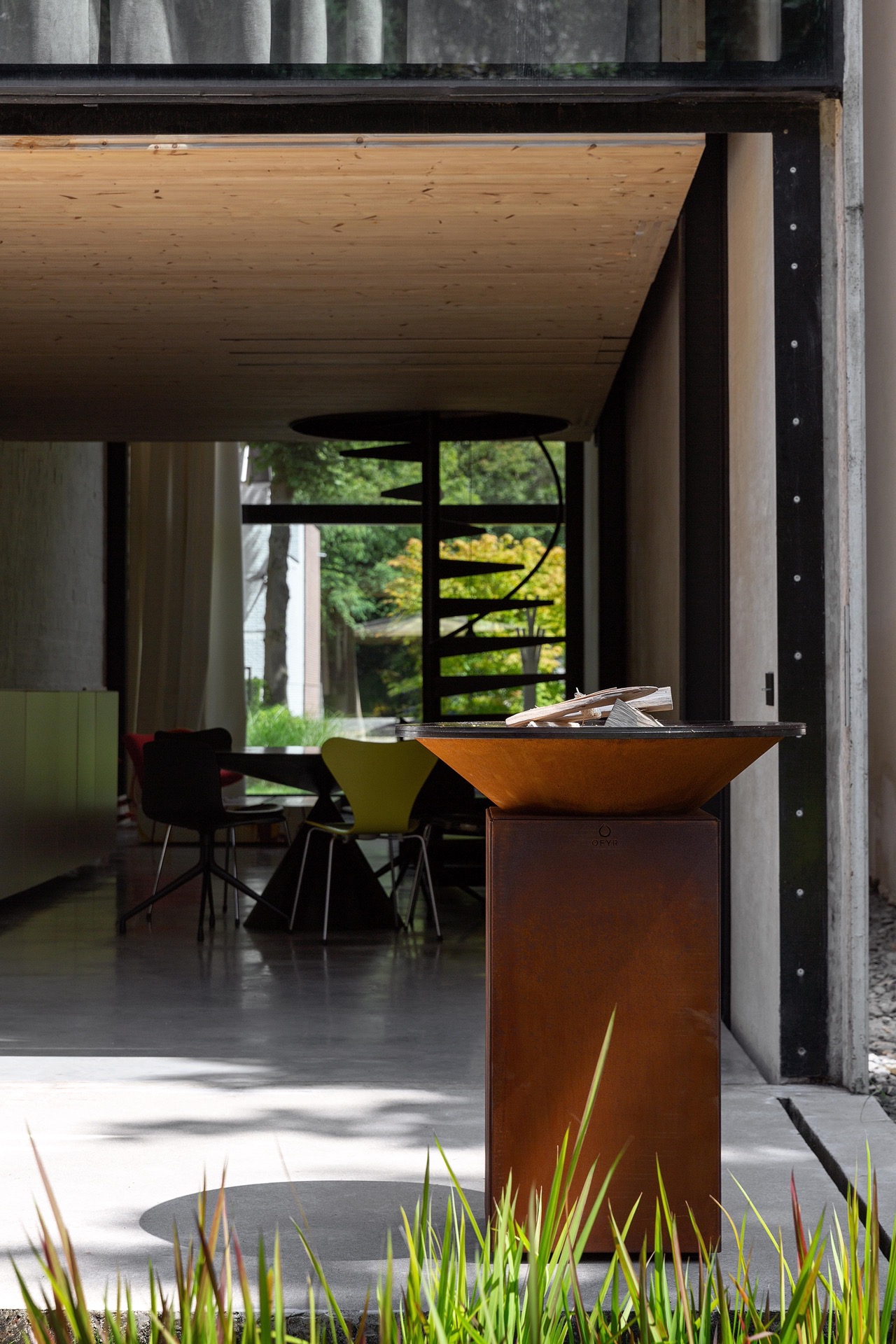
NEW 2026 Jubileum Edition The Best Interior Designers Benelux
Order Now €125