





Custom penthouse interior with stone, wood and warm lit niches
A dark cabinet wall sets the tone before the rest of the penthouse reveals itself. Stone, wood and glass keep appearing in different scales: as a kitchen island with a clean stone countertop, as lit niches inside tall joinery, and as a bathroom vanity where the grain of the wood sits against pale, stone-like surfaces. The result is a custom penthouse interior that feels built around fixed elements rather than placed in after the fact.
custom penthouse interior as the architectural starting point
The kitchen centers on a custom kitchen island with sprayed sides and a stone countertop in kitchen that continues around the sink area. That wrap of surface gives the island a clear block-like presence, while the worktop stays visually calm. Behind it, tall wall units hold integrated appliances and closed storage, so the room reads as one controlled composition instead of a collection of separate units. The kitchen wall cabinetry uses natural materials and darker tones to give the joinery depth.
Above the bar edge, a pendant lamp drops a focused pool of light onto the work surface. It is a small move, but it changes how the island is used. The counter becomes both prep space and informal perch. Underneath, a custom support detail rises from the floor line with enough restraint to stay visible without dominating the island. It connects the lower architecture to the countertop and keeps the volume grounded.
Dark wall cabinet niches and built-in storage
One of the strongest features in the kitchen is the wall of tall cabinetry. The fronts sit flush, and the built-in elements are absorbed into the composition rather than displayed separately. Dark wall cabinet niches break up the mass and bring in depth where the room could otherwise feel flat. In the photos, vertical structure, recessed pockets and integrated lighting give the cabinet wall a measured rhythm. It is this careful repetition of lines, not ornament, that makes the joinery hold the room together.
The sink sides are finished in the same stone as the worktop, which keeps the island visually compact. A brass-toned tap sits on the surface as a small reflective counterpoint. It catches the light from above and marks the point where stone, water and metal meet. The kitchen reads clearly from a distance, but the closer details are what keep it interesting: the edge around the island, the hidden joins, the shift from matte cabinetry to a denser, mineral surface.
The living room opens through texture and light
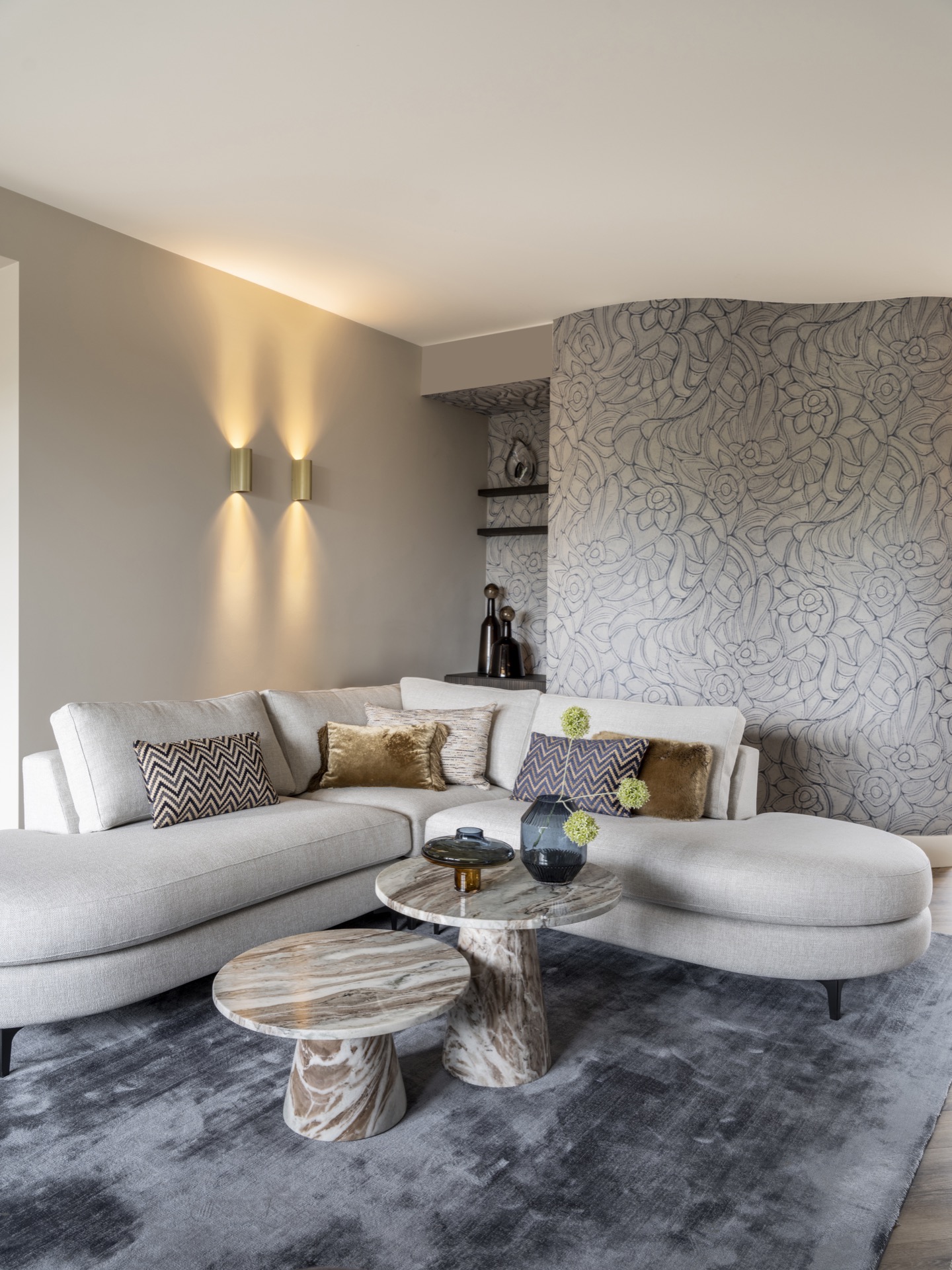
In the living room, a sectional lounge sofa sits low against the floor and draws the seating area inward. The upholstery softens the sharper lines of the joinery nearby, while the dining table and chairs introduce a more upright rhythm beside it. A modern wall cabinet with drawers and presentation niches sits along one side of the room. Its open sections are used sparingly, so the cabinet can work as storage without turning into display clutter.
A pattern accent wall in living changes the room with texture rather than color. In the images, the surface shifts with light and shadow, so the wall feels active even when the room is still. Nearby, a gold pendant hangs over the seating zone and gives the darker wall a clear point of focus. The lighting does not flood the room. It settles into smaller pools, leaving the edges of the space slightly quieter. That makes the custom penthouse interior part of the architectural character rather than a loose finish.
Lit display cabinet niches in the main room
The main room also includes a lit display cabinet niche, and it is one of the clearest examples of how this penthouse handles storage. Glass, dark wood tones and recessed lighting sit together inside a narrow volume, so the cabinet reads almost like an architectural insert. The shelves are not overfilled in the photos; the light remains visible around the objects, which keeps the niche legible. That decision helps the wall feel edited rather than crowded.
Across the room, the dining area is lit by a Candle Fusion fixture, which throws warm light down onto the table surface. The chairs around it are shaped for longer sits, but the room never leans into a formal dining-room posture. Instead, the table sits as part of the living zone, with the sofa, the cabinet and the wall surface all sharing the same visual field. The luxury penthouse interior depends on those overlaps.
Bathroom furniture in wood and stone
The bathroom shifts to a quieter material palette. Two vanity units run along the wall, each made from Cambria Summerhill and stained oak. The wood fronts give the furniture a grounded frame, while the lighter, stone-like surfaces keep the tops and basins visually sharp. It is a wood and stone bathroom that stays close to the form of the furniture itself. The surfaces are not decorative additions; they define the edges of the room.
Each double vanity bathroom furniture piece works as its own block, with enough width to make the twin basins read clearly. The pair of units creates a measured repetition, which suits the room’s long wall and keeps the layout easy to understand at a glance. A window with horizontal blinds brings in daylight in thin bands, and the glass shower screen beside the vanity adds another layer of reflection without interrupting the linear plan.
Material shifts that stay visible
What makes this custom penthouse interior convincing is the way the material shifts stay visible from room to room. The kitchen uses darker cabinetry and a stone island. The living room moves toward softer upholstery, textured wall surfaces and display niches. The bathroom returns to oak and stone, stripped back to the essentials of the vanity wall. None of the spaces tries to outshine the others. Each room uses a different proportion of the same vocabulary, which keeps the apartment readable while still allowing each zone to hold its own.
Warm recessed lighting appears throughout the project, but it is used with restraint. In the kitchen it lands on the island and pendant area. In the living room it sharpens the display cabinet niche and the dining table. In the bathroom the daylight does more of the work, but the furniture still carries the room through its material contrast. The penthouse is complete because the details are specific, not because they are repeated everywhere.
Photography: Denise Zwijnen Photography That makes the custom penthouse interior part of the architectural character rather than a loose finish.
Want to see more of DubbelM BV? View the page of DubbelM BV for even more great projects and company information.


.png)