







Custom solid oak interior doors
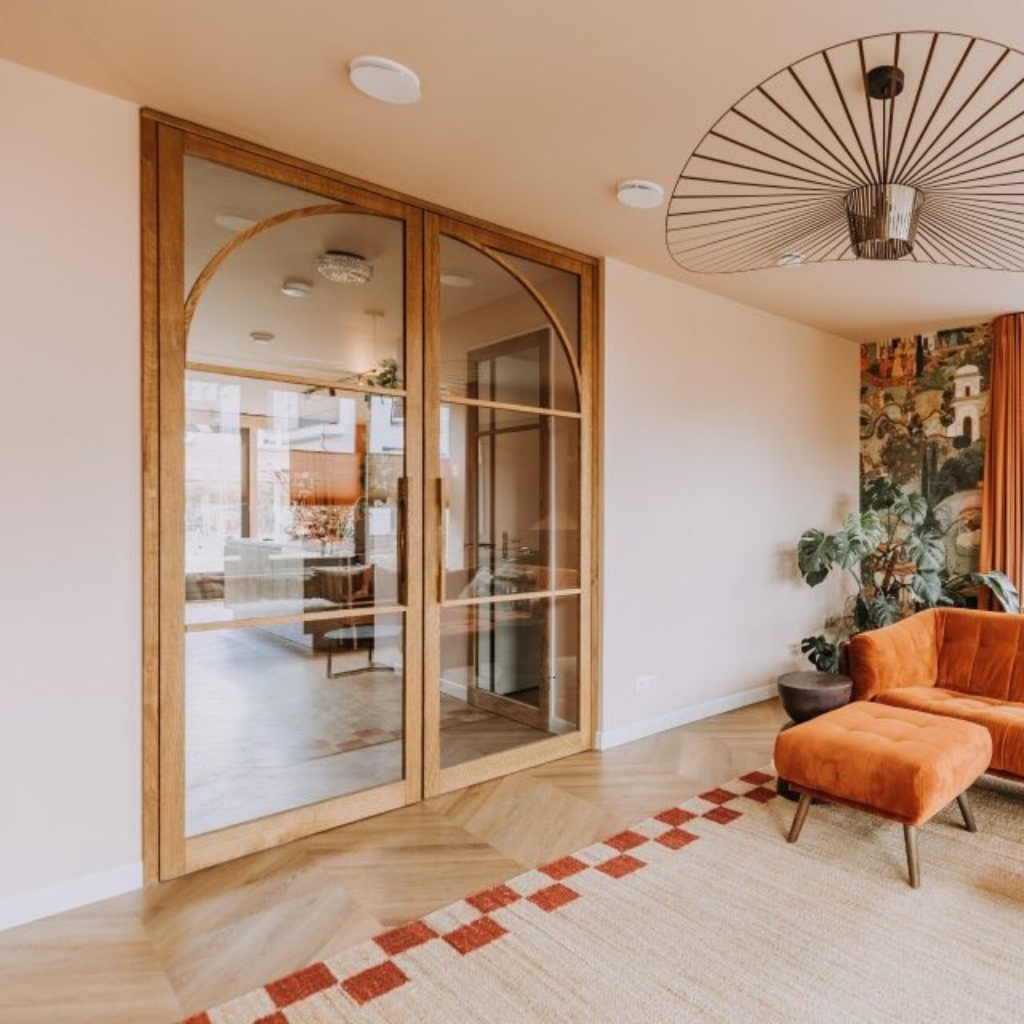
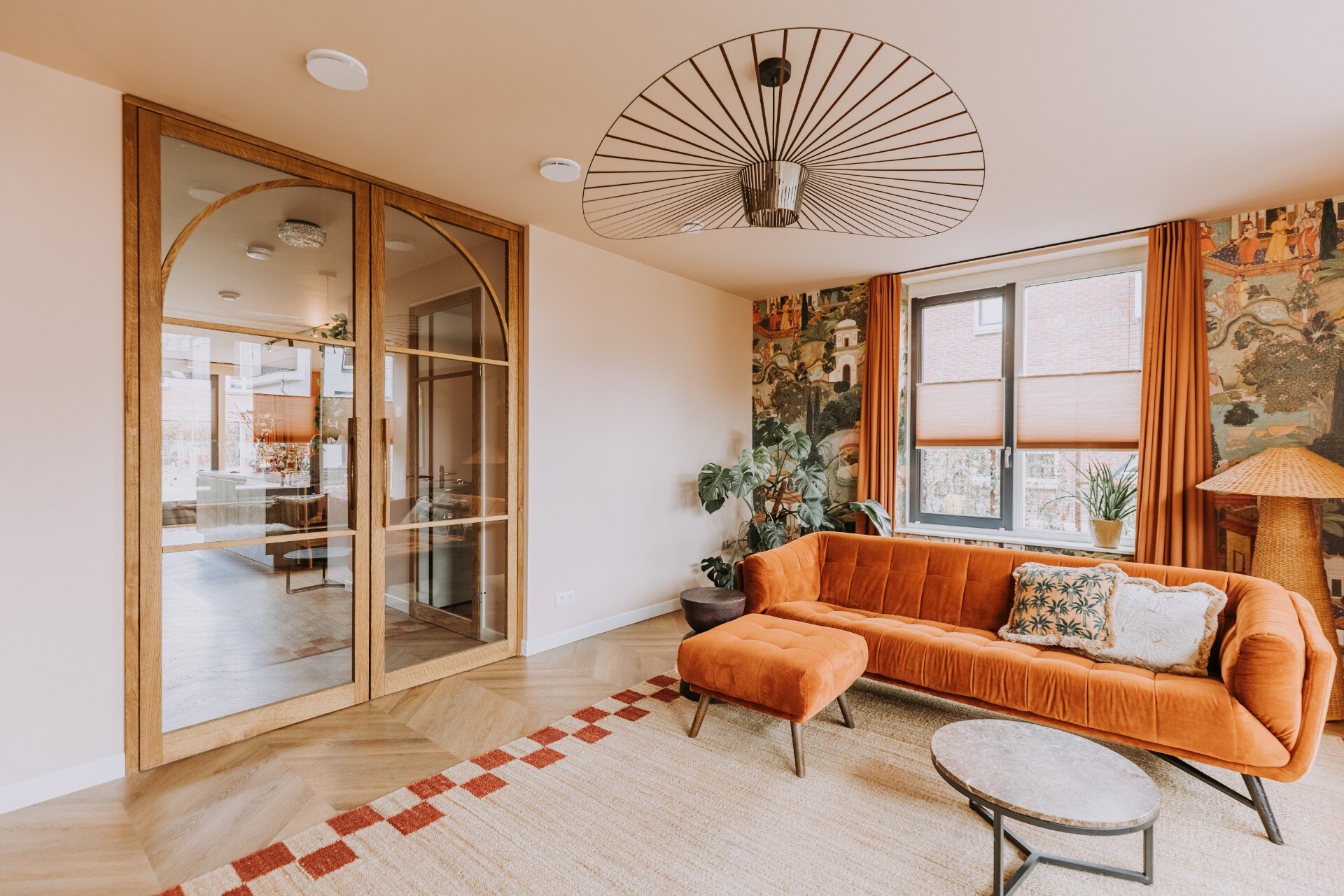
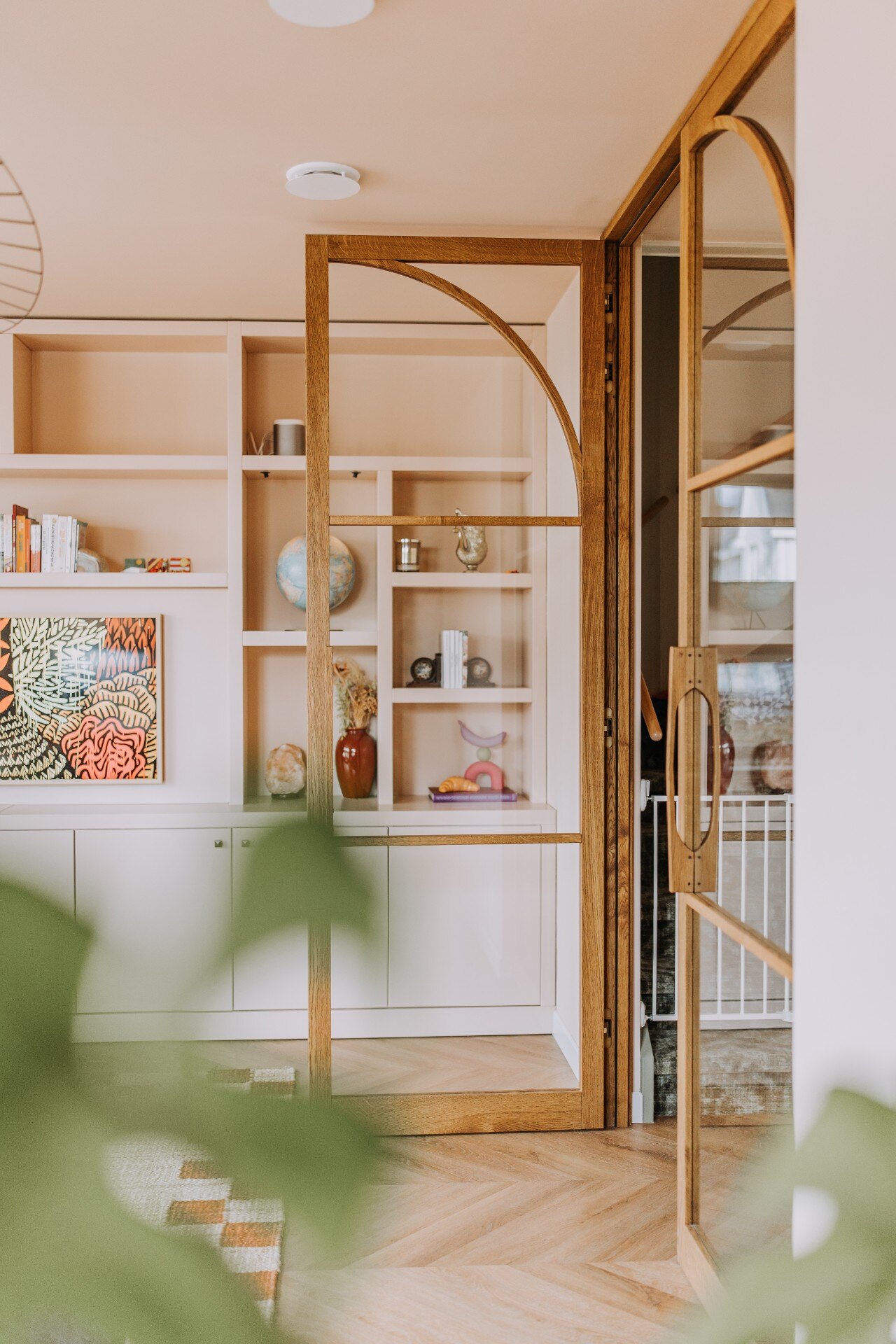
The first thing you notice is the curve above the opening. It breaks the straight lines of the room and gives the custom double interior door a slower, more measured profile. Built in solid oak, the doors sit within a light interior where the wood floor, pale walls, and soft daylight keep every line visible. The oil finish follows the grain instead of masking it, so the surface reads as oak first and finish second.
Arched lines set the tone
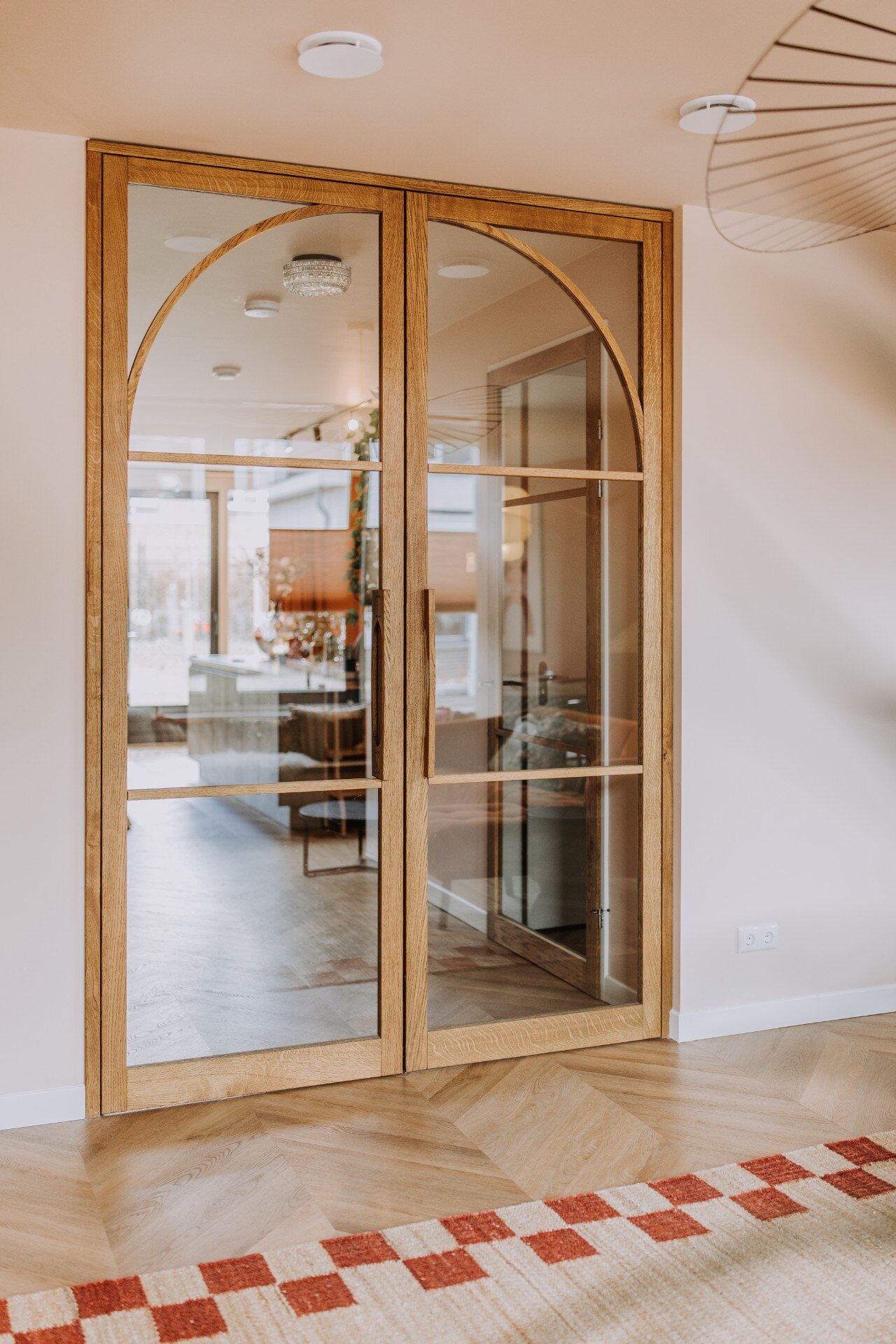
From a distance, the upper arc is what anchors the composition. It turns a simple passage into a defined piece of joinery, with the arch repeated in the frame and carried through the glass sections below. That shape appears again in several views, where the top line lifts the door leaves above the usual rectangular opening. For a project built around wood interior doors, the detail does most of the visual work without adding noise.
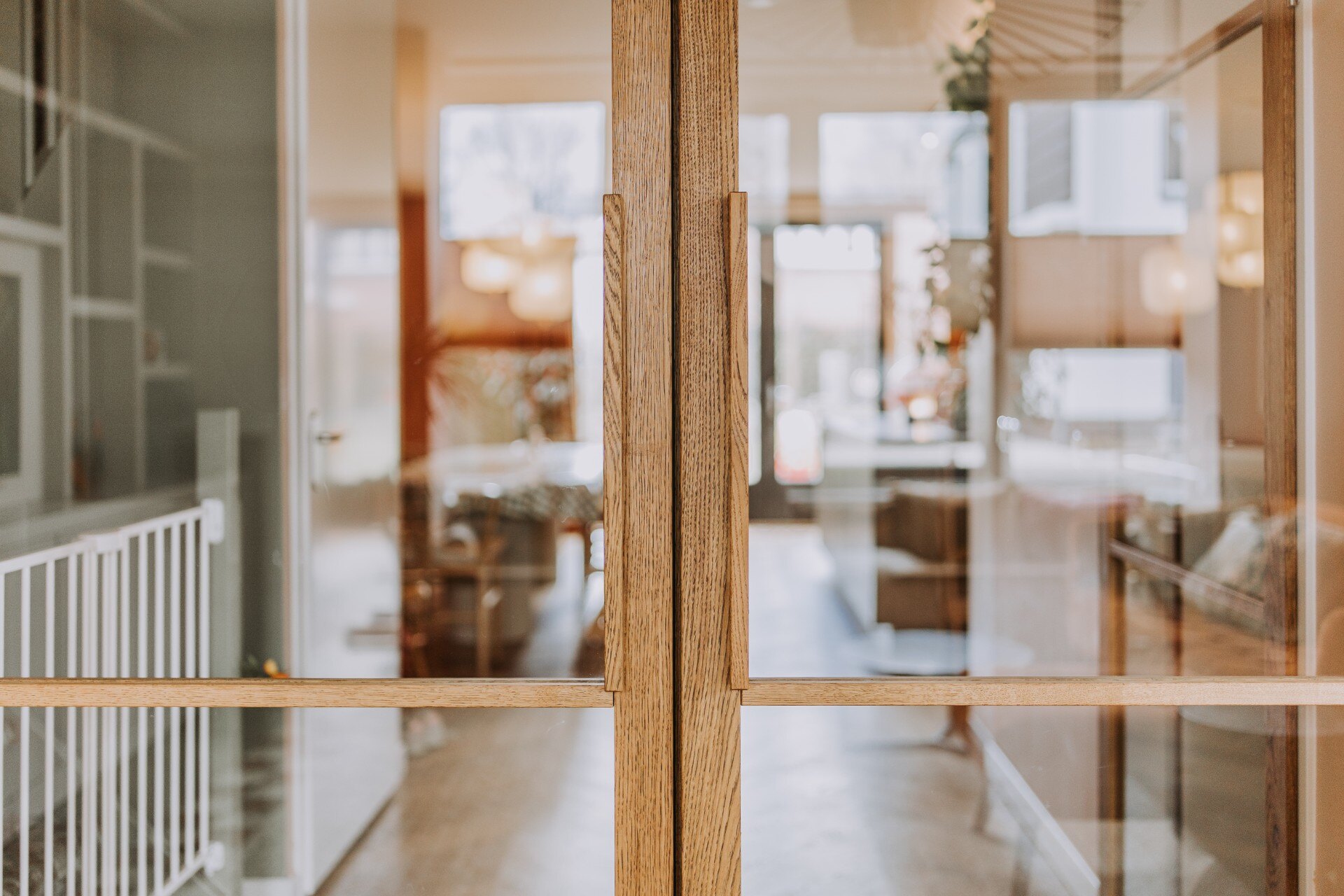
The oak itself has a steady, linear grain that becomes clearer in the close-up images. Narrow stiles, slim rails, and clean joinery lines keep the pair of doors disciplined, while the hand-applied oil leaves the timber readable in changing light. This is where solid oak interior doors gain their presence: not from ornament, but from proportion and the way the material holds its edge around the opening.
Glass panels open the view
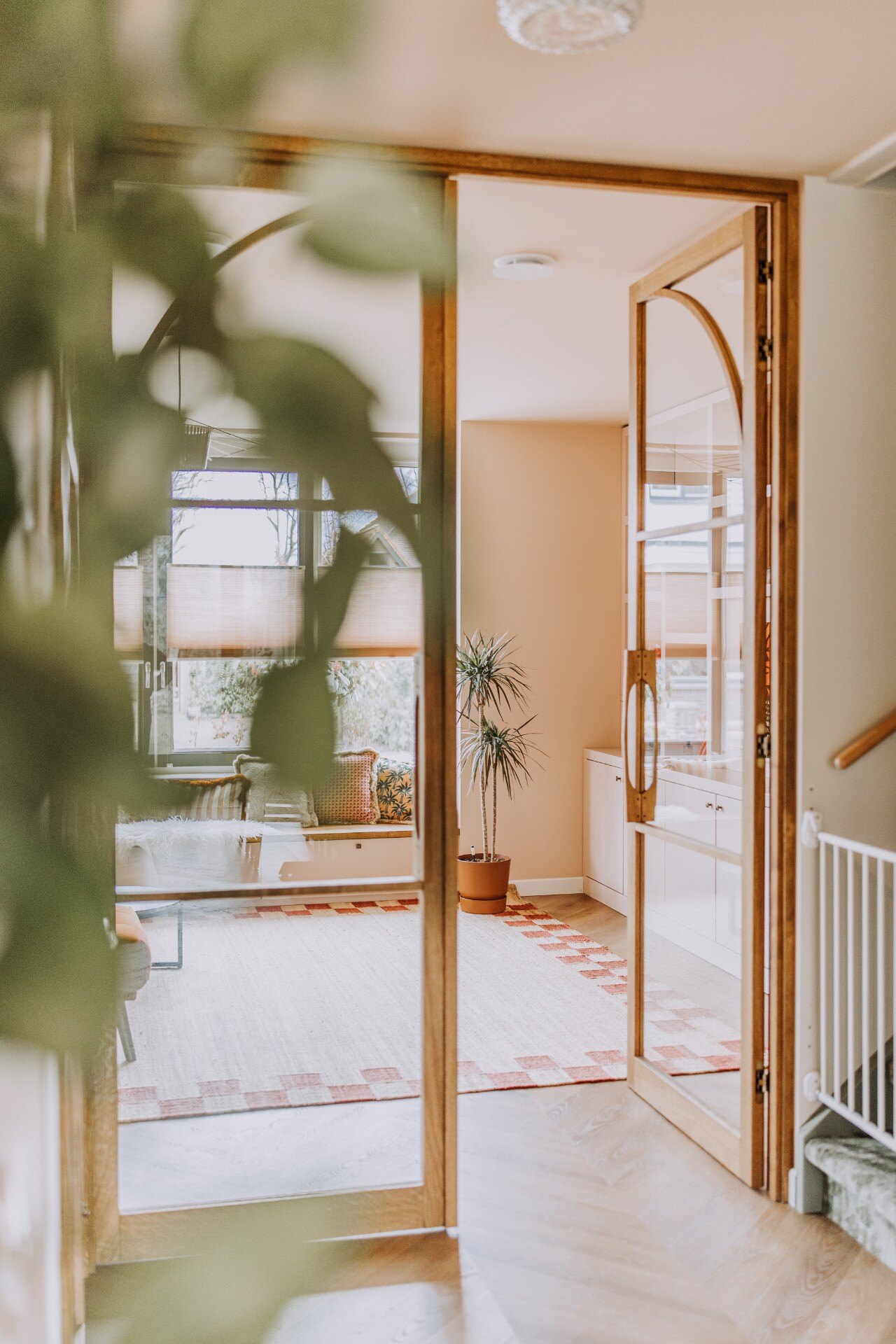
The glass panels change how the door behaves in the room. When the leaves are shut, they still allow a view through to the adjoining space; when open, the opening broadens the line of sight and lets the floor run on uninterrupted. One image shows the connection clearly, with light passing through the glazing and the adjacent room visible beyond the oak frame. The effect is practical, but it also keeps the door from reading as a closed barrier.
Because the glazing sits within the oak framework rather than on top of it, the composition stays visually tight. The glass does not compete with the timber. Instead, it breaks up the surface and introduces reflection, depth, and a second layer of space. For anyone looking at oak doors with glass panels, that detail matters: it gives the door a lighter presence while preserving the weight of the wood around it.
A custom double interior door with a clear profile
The project is built as a custom double interior door, and the pairing gives the opening a stronger rhythm than a single leaf would have offered. In the open-door views, the two sides frame the passage and emphasize the width of the transition. The result is straightforward to read in the photography: a jointed pair of oak leaves, an arched top line, and glass sections that pull light from one room into the next.
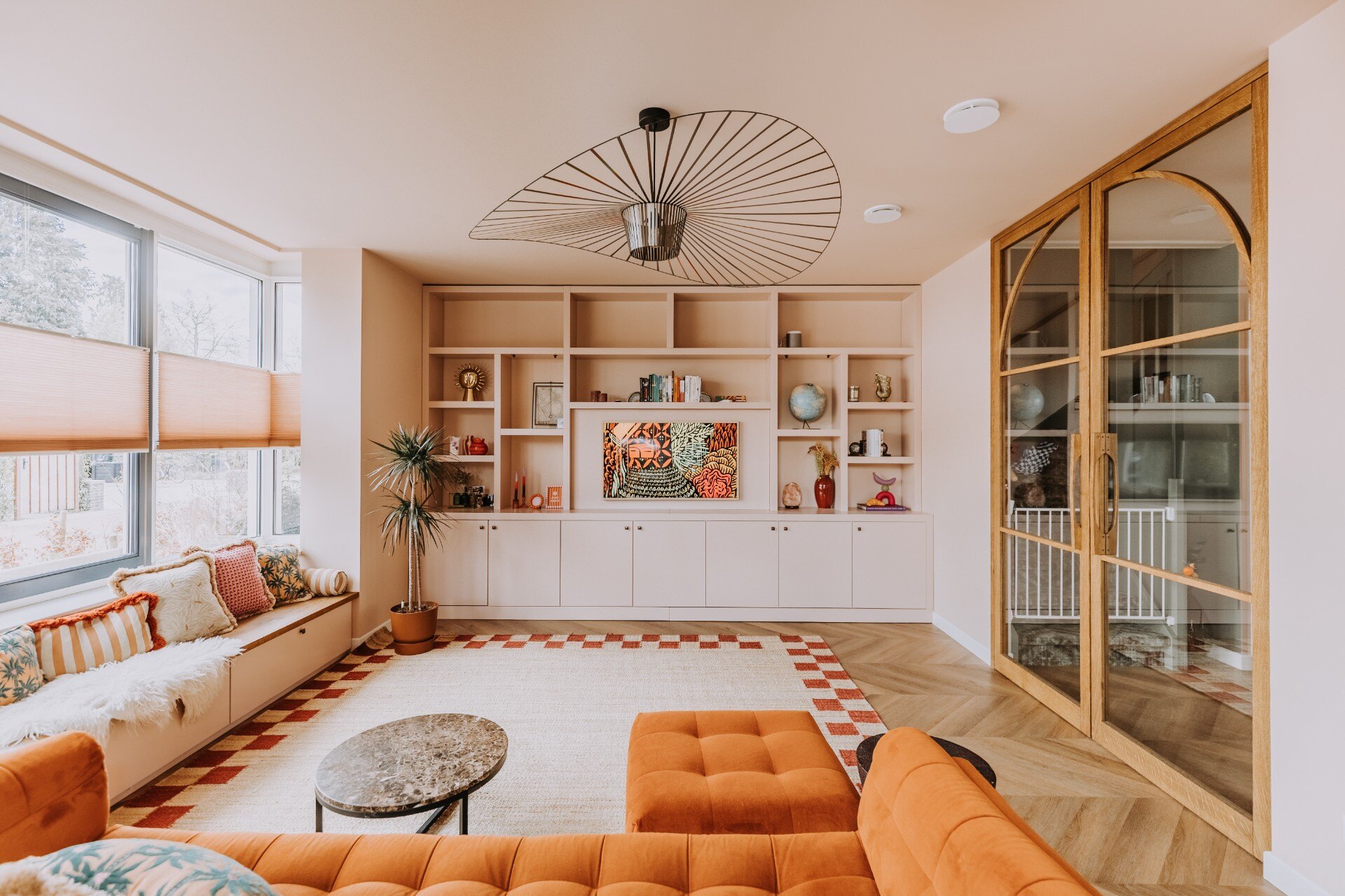
That custom work also appears in the way the door follows the architecture around it. The frame meets a nearby wall unit, and the sightline shifts from the opening to the surrounding joinery without a hard break. In one image, the door is seen from a side angle where the opening, the wall, and the adjacent space all sit in the same visual field. It is a small move, but it shows how custom joinery can shape movement as well as appearance.
Handmade handles bring the detail closer
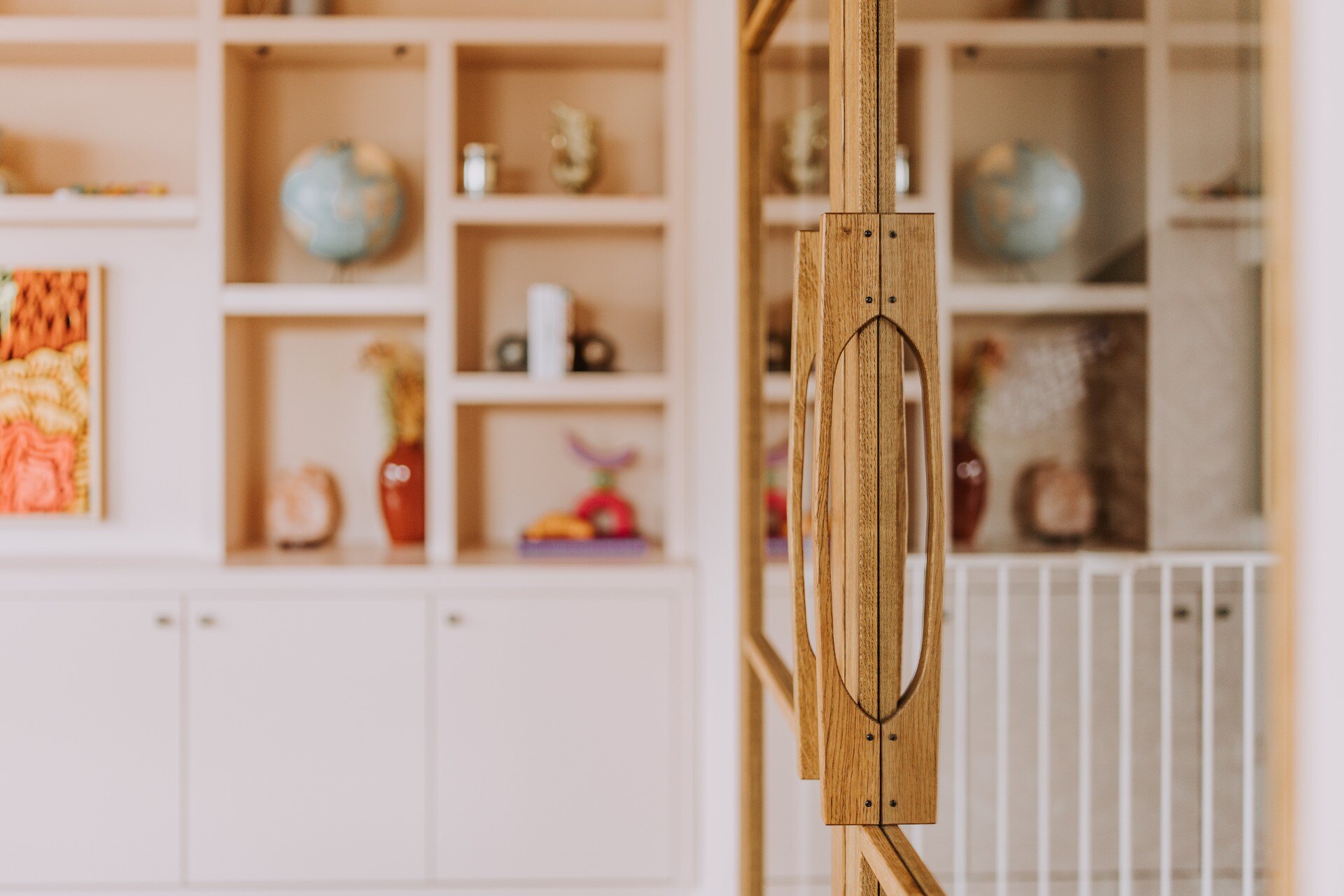
The handles are the part you meet at touch distance. They stand out because they do not feel standard or hidden; they are made to be noticed, and the photography brings them in close enough to read the handwork. Against the oak surface, the handle shape adds a quieter point of contrast, and that contrast becomes more visible when the door is viewed from the corridor side or in partial profile.
Seen in close-up, the hardware sits with the same discipline as the rest of the joinery. There is no excess decoration around it. The handmade door handles simply give the oak a clear point of grip and a finish line for the eye. Combined with the arched interior door profile, they help turn the opening into a measured object rather than just a passage between rooms.
Solid oak and oil finish in a lived-in setting
What makes this set of wood interior doors easy to place in the room is the restraint of the material palette around it. The wooden floor runs into the threshold, the walls stay light, and the oak is allowed to carry the darker note in the composition. The oil finish solid oak surface deepens the tone without flattening the grain, so the leaves reflect light softly instead of shining it back.
The photographs also show how the door responds to changes in viewpoint. From one angle you read the full double composition; from another, only the edge of a leaf, a strip of glass, and the curve above the frame. That shift keeps the project from feeling static. It also explains why solid oak interior doors continue to work so well in rooms like this: they can open out to the architecture, or settle back into it, depending on how they are seen.
Joinery that follows the room
The clearest strength of the project is the way the joinery follows the room instead of competing with it. The arch is not decorative in isolation; it is part of the frame. The glazing is not added for effect; it changes how the opening behaves. Even the handmade door handles remain tied to the oak surface and the scale of the leaves. Taken together, the details give the opening a calm structure that is easy to read from every angle shown in the series.
For viewers looking for custom joinery oak doors, this project offers a practical reference rather than a concept piece. It shows how an arched interior door can sit inside a warm interior, how a double leaf can carry glass without losing weight, and how a simple oil finish can keep the timber legible. The result is a door set that shapes the route between rooms and leaves the grain, the curve, and the glazing to do the talking.
Want to see more of Indu Doors®? View the page of Indu Doors® for even more great projects and company information.



NEW 2026 Jubileum Edition The Best Interior Designers Benelux
Order Now €125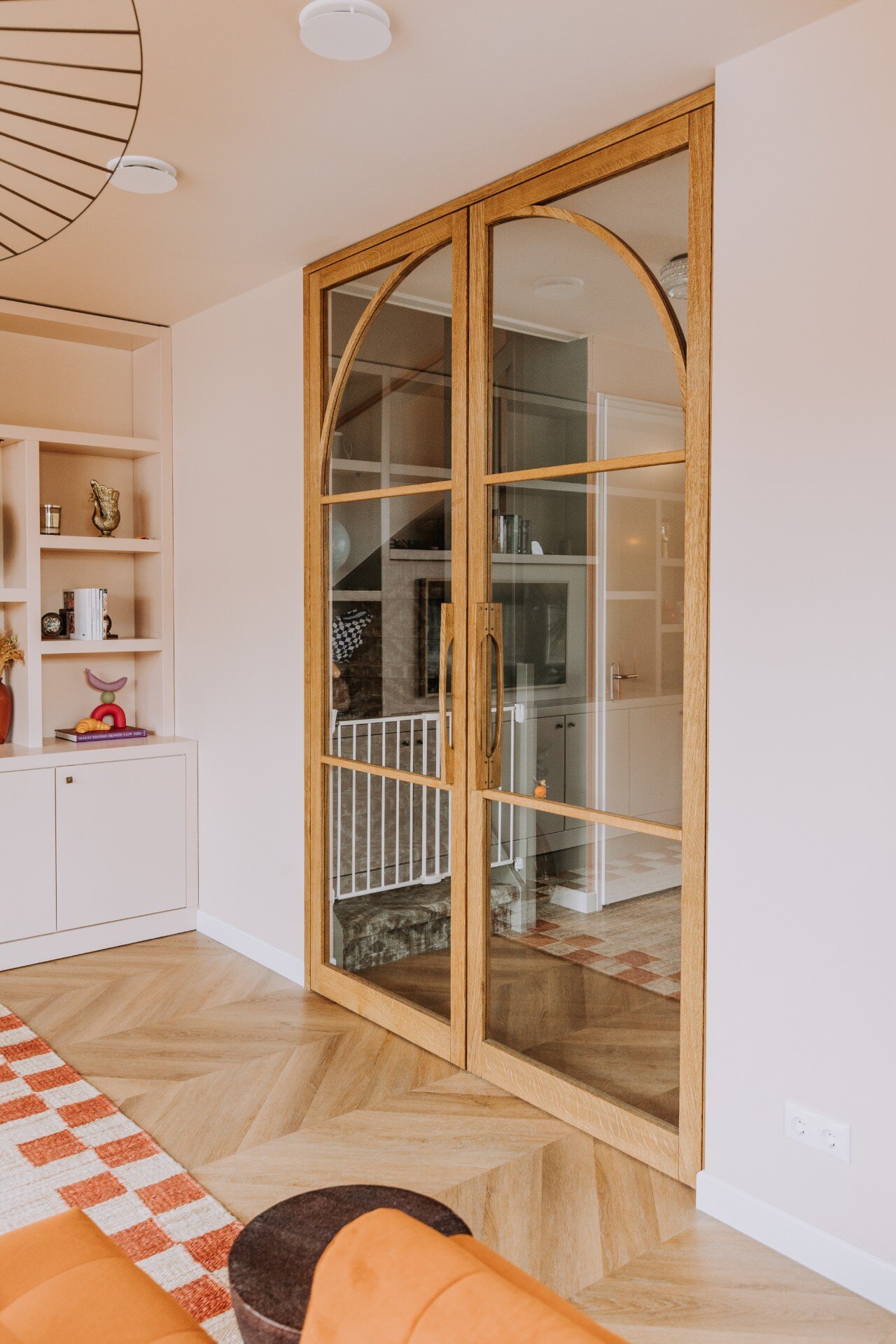
NEW 2026 Jubileum Edition The Best Interior Designers Benelux
Order Now €125