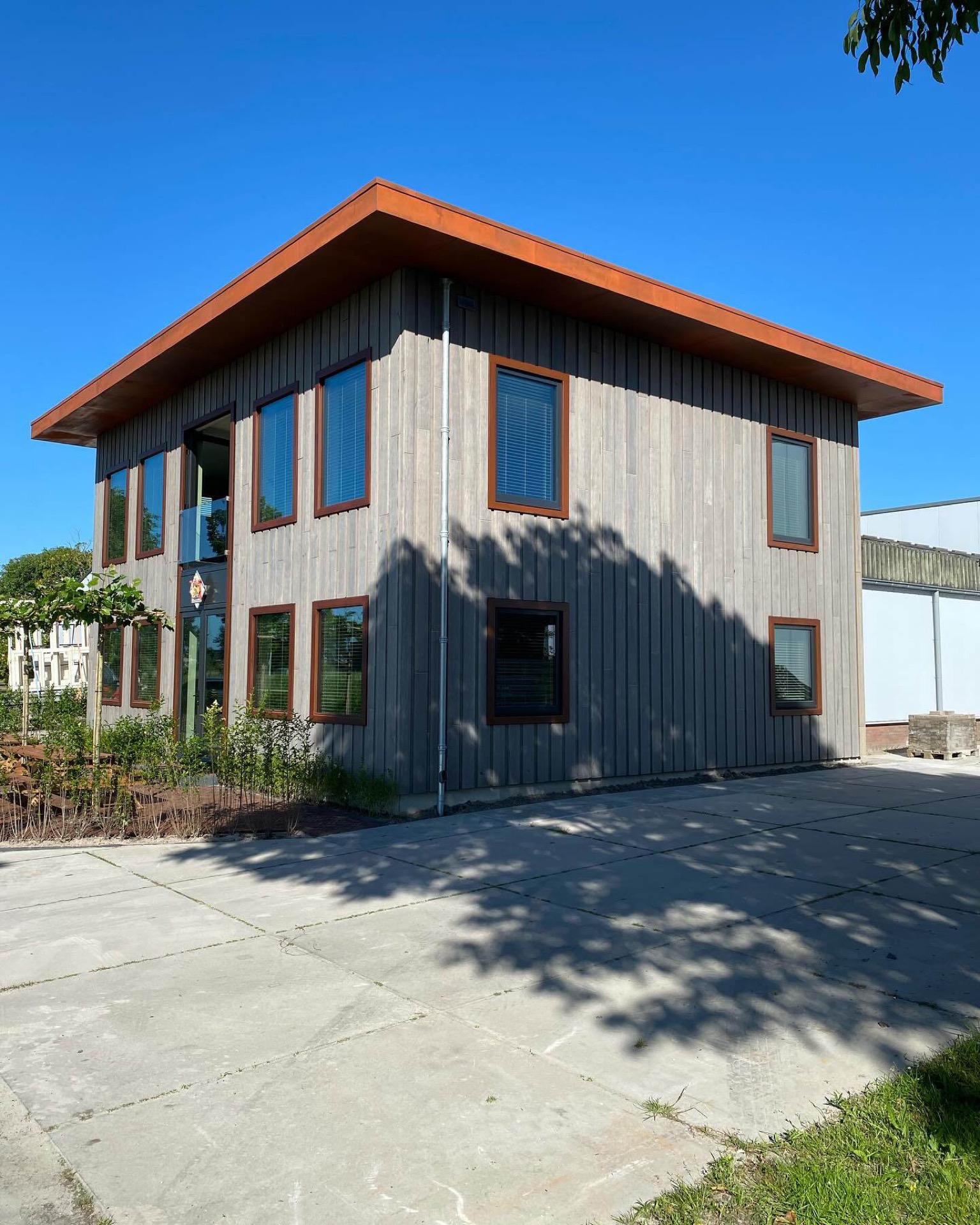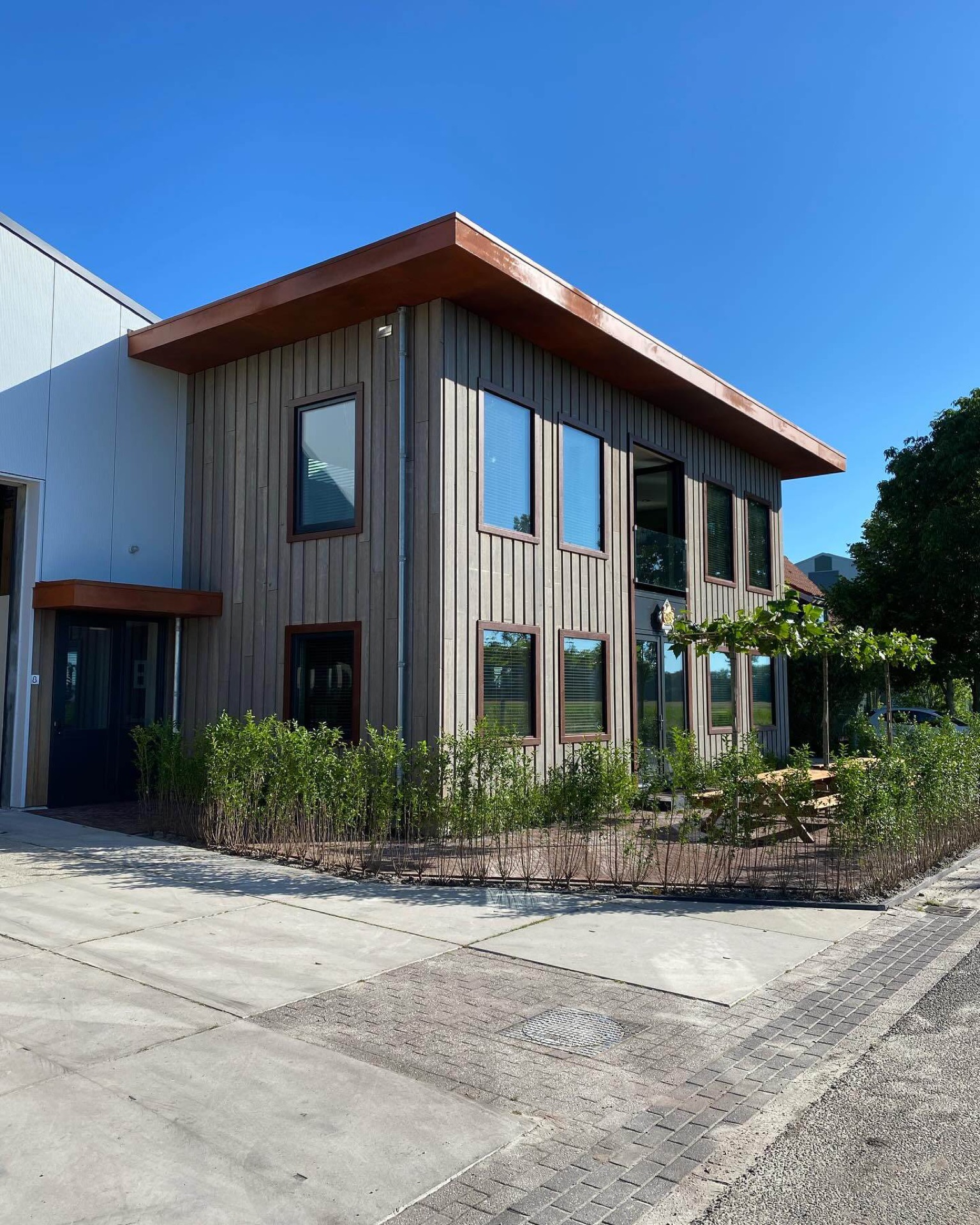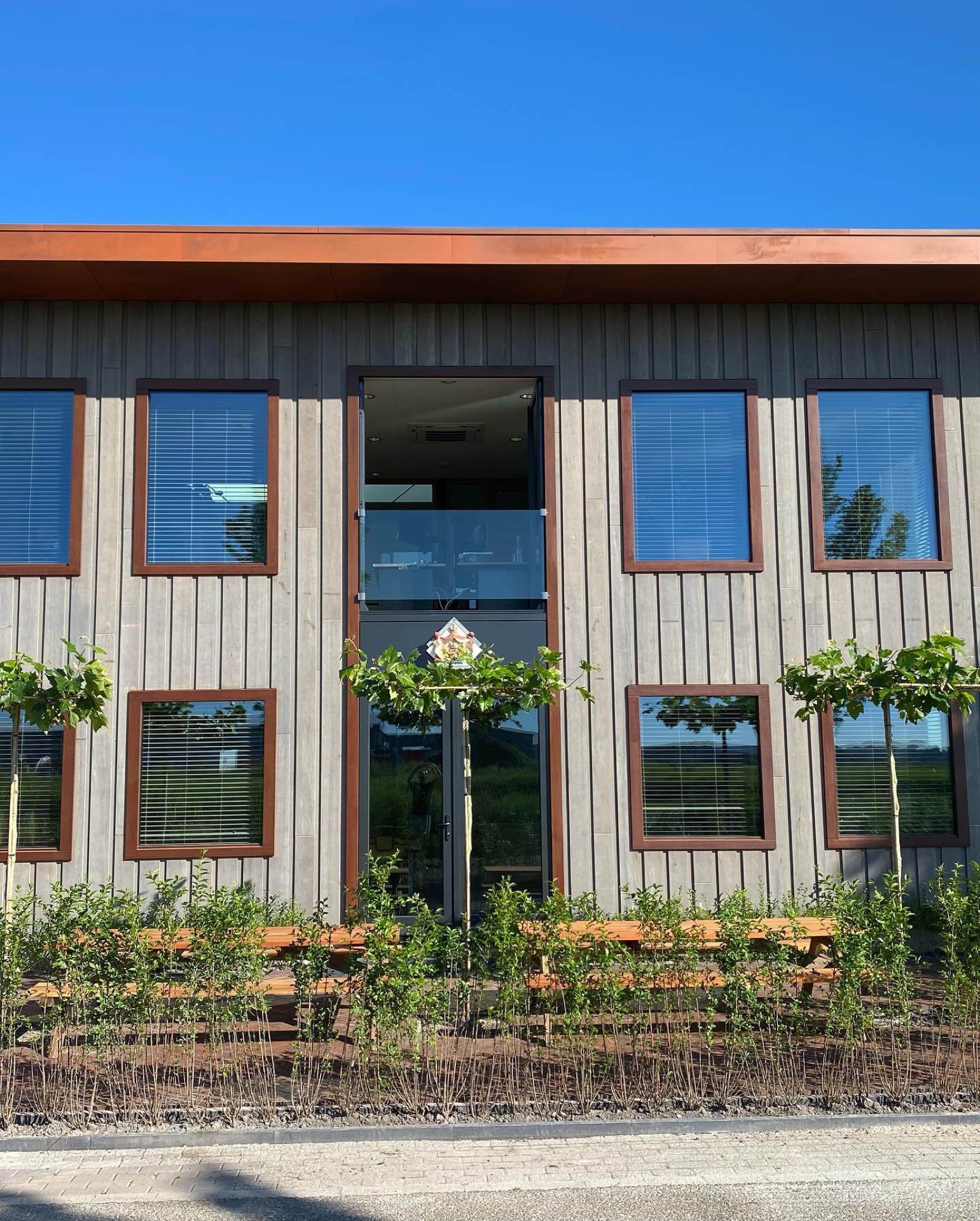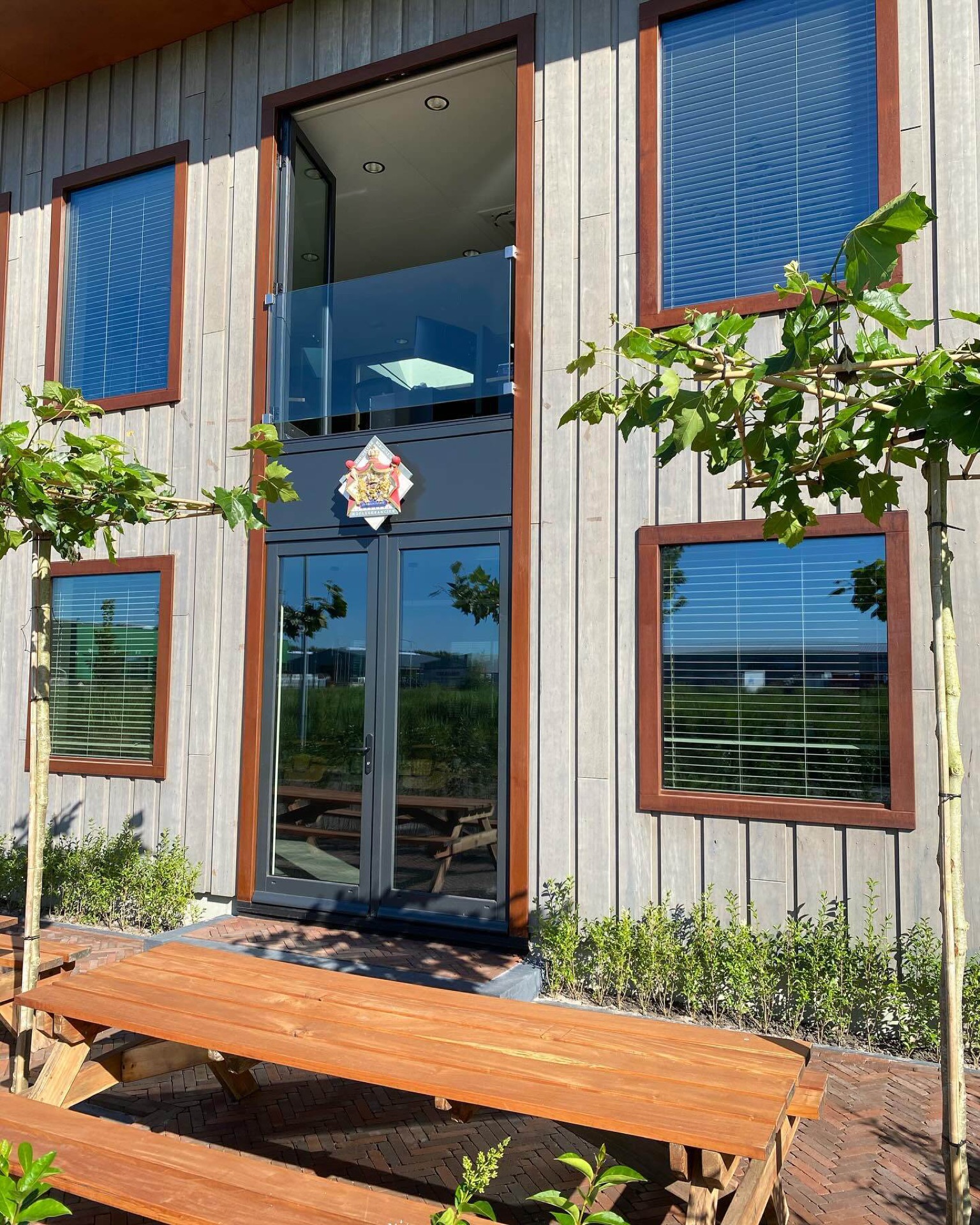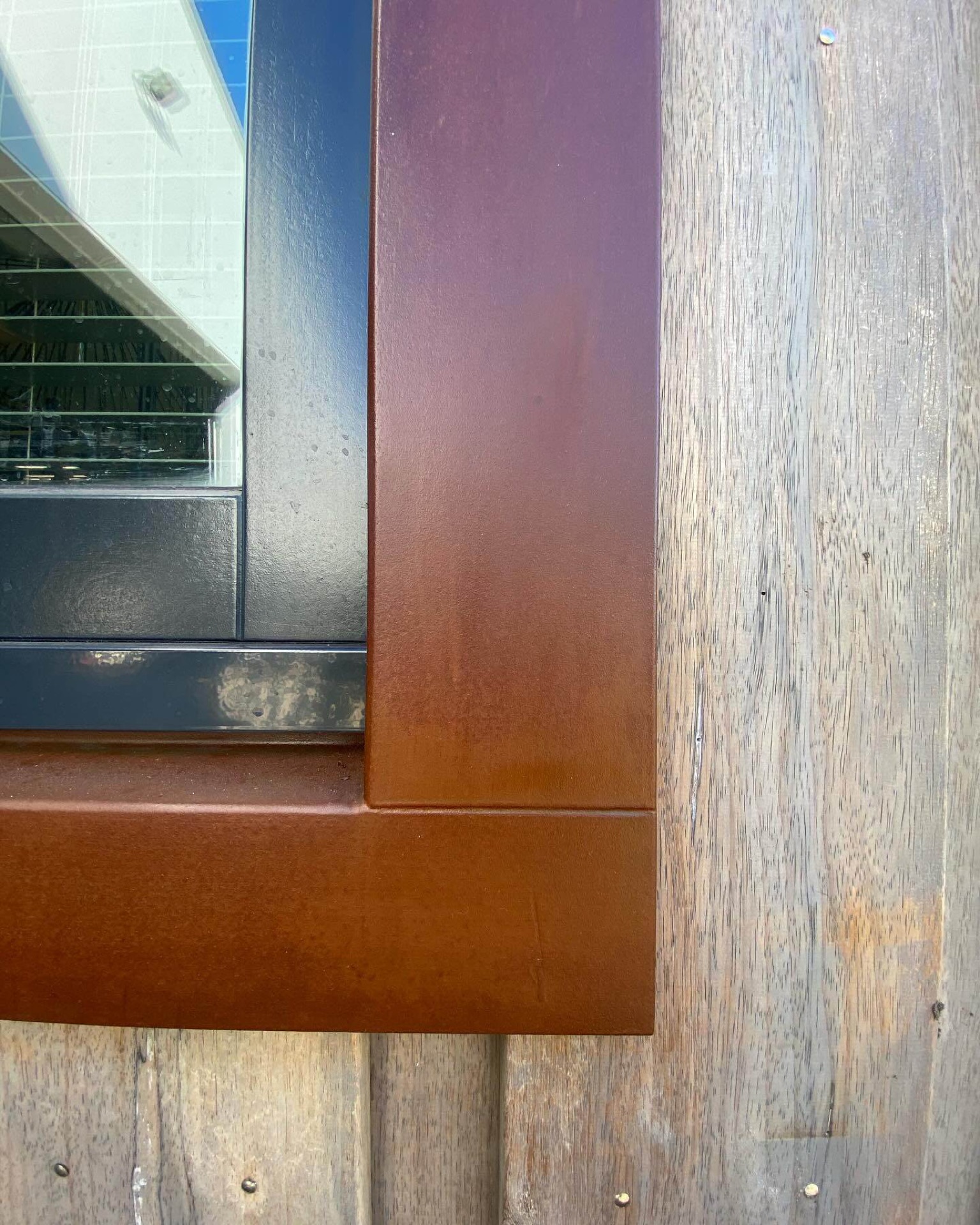








Dark blue wall panels and light grey strips set the rhythm of the building, but the eye soon lands on the frames: a warm rust-brown outline around the windows and the broad overhang above them. The exterior window frame coating ties those details together. It was applied to the window frames and fascia parts on the outside of a commercial building, where the coated metal meets glass, timber-like surfaces and vertical façade lines.
Exterior window frame coating as a spatial starting point
The coating was prepared and sprayed on site, outside a spray booth, using a water-based spray binder. That matters in this project because the frames could be treated in place, where the edges, corners and transitions are already fixed by the façade. The result is visible in the way the darker frame bands sit against the lighter panel fields and the large rectangular openings. Each opening keeps its own outline, while the coating gives the perimeter a distinct metal presence.
Seen from a distance, the building relies on repetition. Vertical profiling runs through the elevation, interrupted by broad windows and a projecting roof edge. The coated window frames give those openings weight. Up close, the warm brown and rust tones pick up the light differently from the adjacent grey cladding, so the frames do more than border the glazing; they mark the change from transparent plane to solid surface. That is where the exterior metal window frames coating becomes part of the architecture rather than a separate layer.
How the metal surface was prepared
Before the finish was closed, the metal surface was sanded and patinated in selected areas. The coating build-up is based on iron particles enclosed by the binder, which changes the appearance of the surface while keeping the lower layers protected. In the prepared and exposed areas, patina and rust on prepared surfaces can develop. The source project describes this as a controlled surface effect, not as a full cover of the whole layer beneath.
That approach is visible in the way the frames keep a dense, matte body while still showing variation across the surface. The coating does not hide the shape of the profile. Instead, it follows the joints, the returns and the narrower edges around each opening. On the façade, this gives the metal a material presence that sits somewhere between finish and skin. The window surrounds, fascia parts and overhang details all carry that same reading from near to far.
Water-based spray binder applied on site
The water-based spray binder was used on location, outside the spray booth, and the source notes that it can be used both inside and outside. That flexibility suits the kind of detail work seen here, where the frames sit within a finished elevation and the paint line has to follow existing geometry. The binder locks the iron particles into the layer, and the coated areas remain visually consistent across the frames and the overhanging board above them.
It is also what keeps the treatment specific to the parts it covers. The open-sanded and patinated sections can show rust, while the underlayer stays protected beneath the coating system. In the images, that reads as a controlled shift in tone rather than a flat colour field. The brown-red frame bands, the grey wall panels and the blue vertical cladding all sit close together, and the coating gives the window edges enough presence to hold that composition together. Exterior window frame coating remains connected to the layout, materials and daily use of the home.
Wax as a breathable finish
The last layer was a wax as a breathable finish. It leaves the surface open, so the metal remains exposed to weather and humidity and can continue to age naturally. In practical terms, that means the finish does not seal the surface into a glossy shell. It keeps the texture readable. On the building, that restraint suits the large panes of glass and the broad, sober mass of the wall panels. The coated details remain visible without pulling the focus away from the overall façade.
The wax finish also supports the material shift already present in the project: glass in the openings, vertical panels across the walls, and coated metal around the frames and fascia. The transition from one surface to the next is easy to read because each part keeps its own texture. The exterior window frame coating is therefore not only about protection. It is also about how the frame line sits in relation to the glass, the overhang and the panel joints.
What stands out in the close details
In close-up views, the coating sits beside light grey panels with a visible grain, while the frame edge stays in a darker rust-brown tone. That contrast is sharper near the openings and softer across the broader elevation. A glazed door, adjacent window frames and the underside of the overhang all show the same treatment language. The surfaces are not polished to uniformity; they keep the slight variation that comes with sanding, patina and the open finish.
The project is strongest where the material shift is easiest to read: at the perimeter of the glazing, at the fascia line, and where the roof edge projects beyond the wall plane. Those are the places where weather hits first, and they are also the places where the coating is most visible. The iron metal coating for exterior parts gives those edges a distinct tone without breaking the building’s measured rhythm. It is a detail-led finish, built for the outside, and kept clear enough to show how it was made.
Photography: W. de Bie
Contributors:
Client: Timmerfabriek Doedens B.V.
Materials: VeroMetal International Exterior window frame coating remains connected to the layout, materials and daily use of the home.
Want to see more of ? View the page of for even more great projects and company information.