







Fully Furnished Modern Luxury Apartment
Floor to ceiling curtains set the tone from the first view, softening the glass walls and tracing the height of the apartment. Behind them, the rooms unfold in clear zones: a living area with a round sofa and low tables, an open dining setting, and a bedroom arranged with bed, nightstands, a commode, and a bench. The result is a fully furnished apartment that reads as a finished sequence rather than a collection of separate rooms.
Living area framed by glass
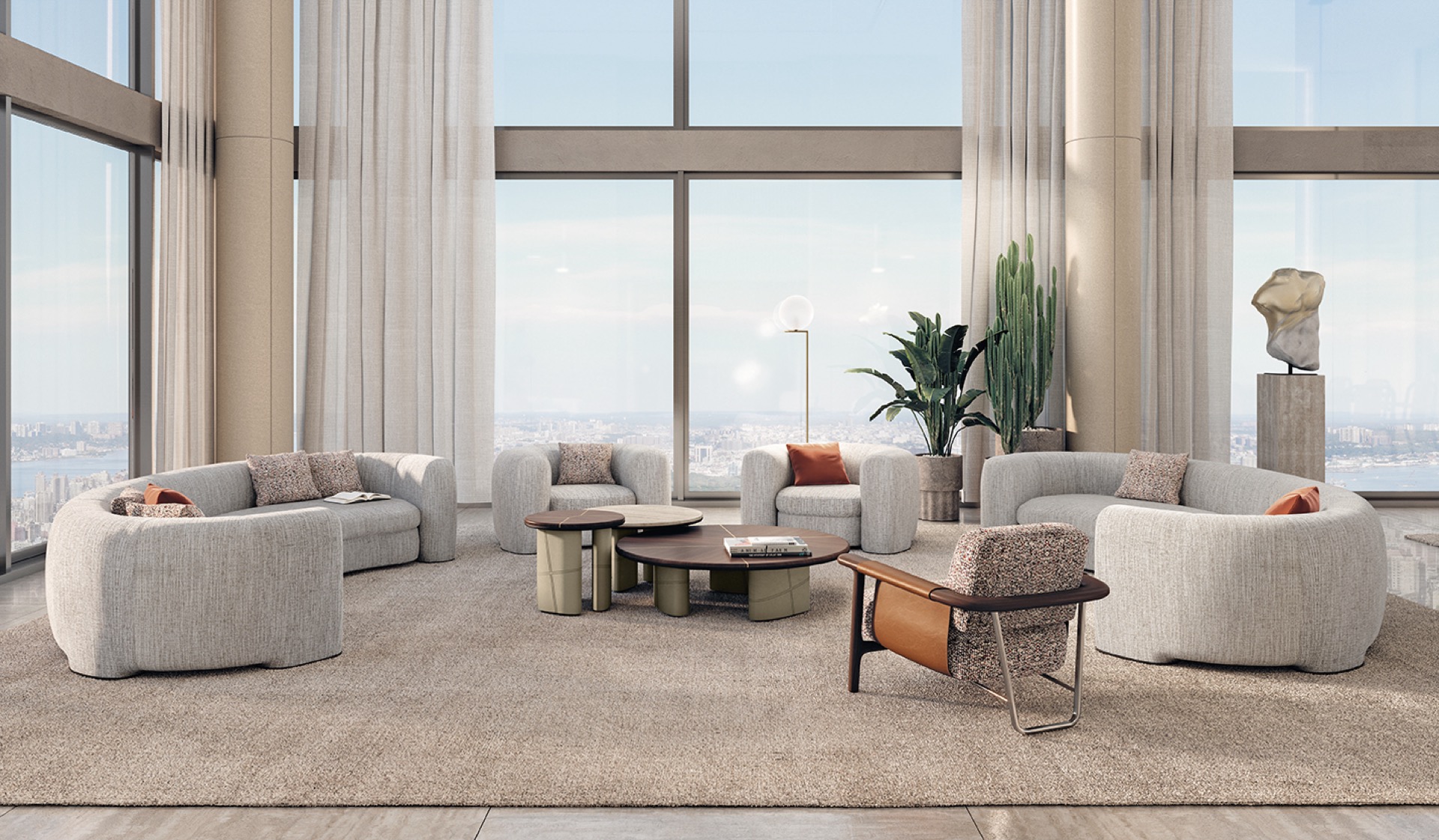
The living room is built around a curved seating group that interrupts the rectilinear shell. A round sofa and matching armchairs sit close to the panoramic windows, with low coffee tables holding the center of the room at an easy height. The palette stays near the surface of the materials: beige upholstery, pale carpet, brown accents, and the darker lines of side tables. Nothing shouts. The furniture does the work by marking out a place to sit and look outward.
From this angle, the modern luxury interior feels defined by proportion rather than ornament. Large panes of glass bring in the exterior light, while the curtains temper the view and keep the room from becoming hard-edged. The seating arrangement leaves enough room for movement around the tables, and the curved forms keep the living zone from reading too rigidly. It is a room shaped by restraint, with each object placed to hold its own line.
A dining room that holds the center
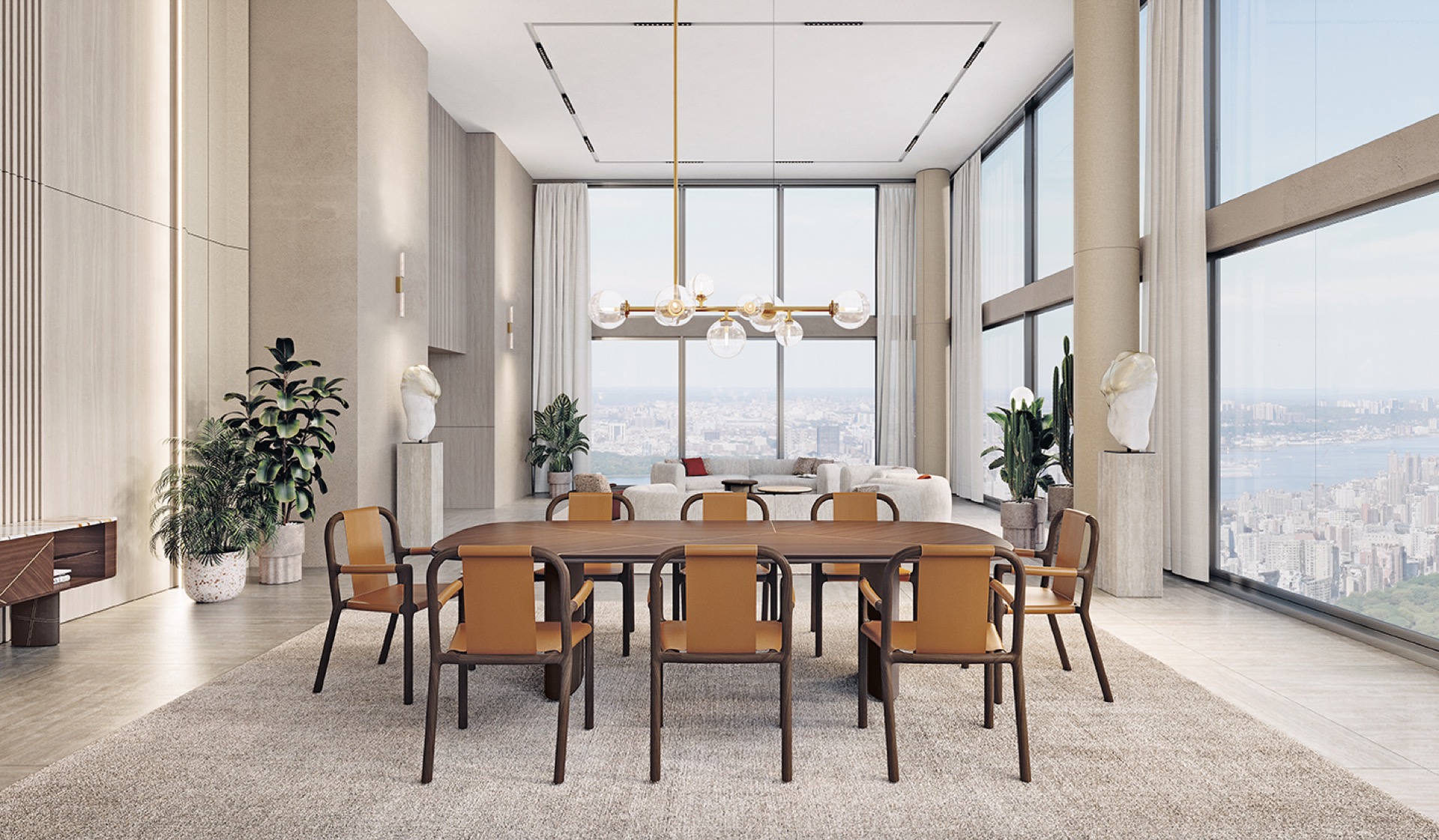
The dining area extends the same muted language, but the table changes the pace. A long dining table runs through the room with several clean-lined chairs set in a precise row, and a pendant hangs above it as the clear visual marker of the zone. The light fixture does not compete with the setting; it gives the table a vertical anchor under the ceiling and creates a pause between the living area and the more enclosed bedroom sequence beyond.
Here the panoramic windows matter again. Their scale keeps the table from feeling boxed in, while the floor to ceiling curtains add a second surface to the room, one that can absorb light and reduce glare. The composition is spare but not bare. A small cabinet and a console appear in the adjoining area, adding storage and a change of material rhythm through their wood fronts and geometric detailing. The room moves from open to measured without any hard break.
Vertical slat wall panels and built-in edges
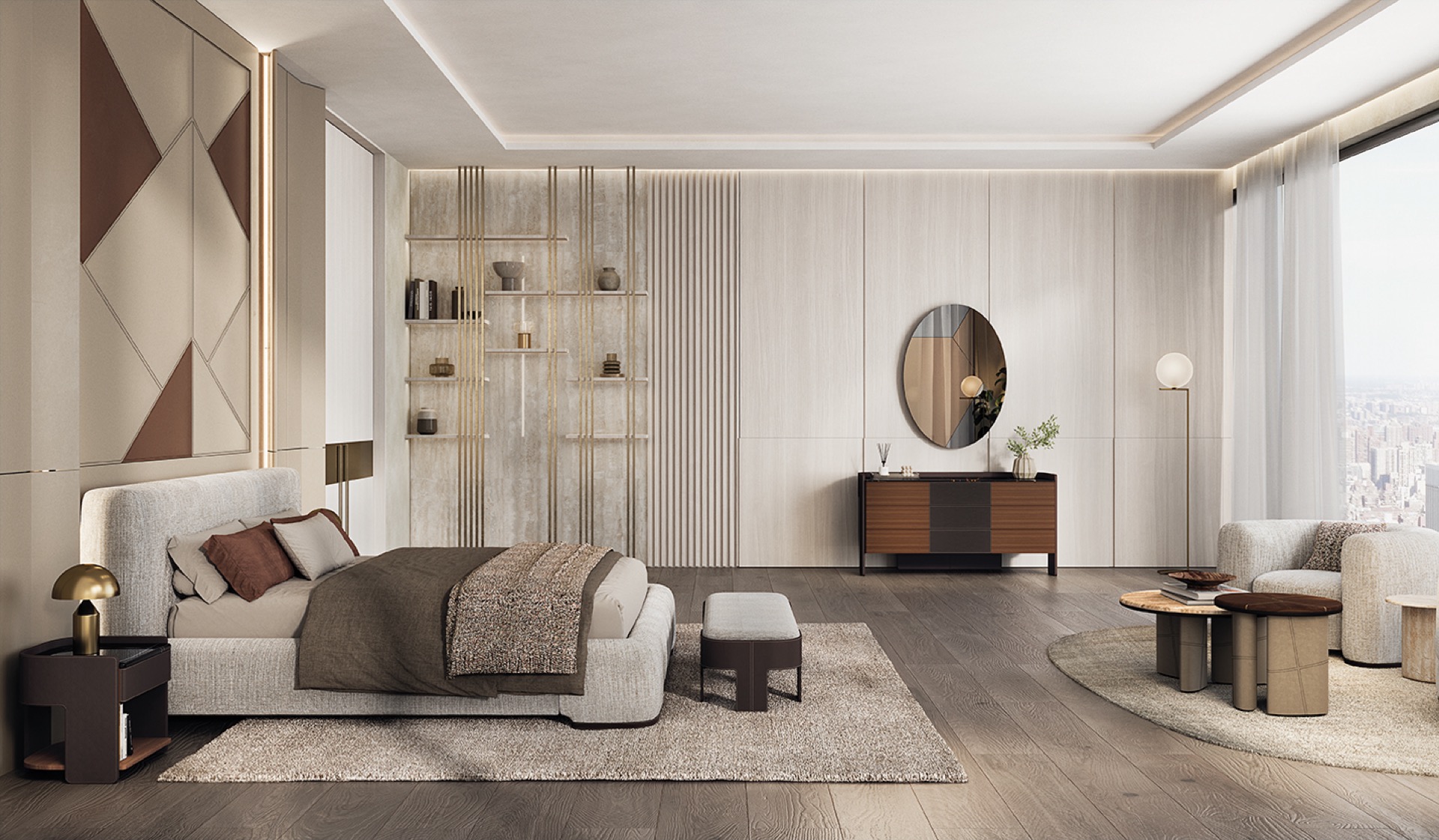
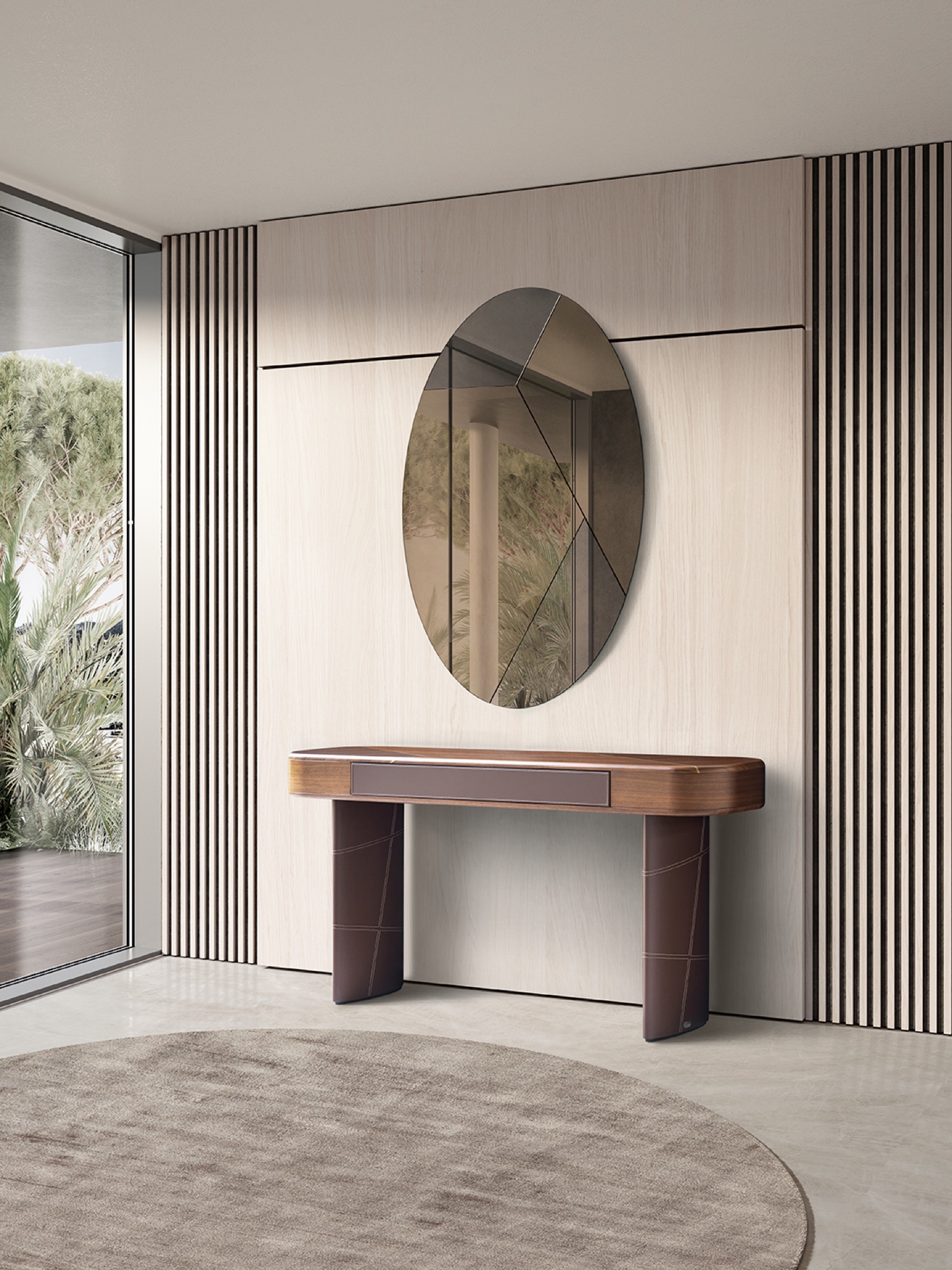
Several details sharpen the apartment’s character. Vertical slat wall panels appear as a structural-looking backdrop, and their repeated lines bring order to the wall surfaces. Nearby, built-in recesses and segmented panels break up the flat planes. A round or oval mirror softens those edges, especially where it sits inside a niche beside the console. The contrast between the linear paneling and the curved mirror is simple, but it gives the wall depth that plain paint could not.
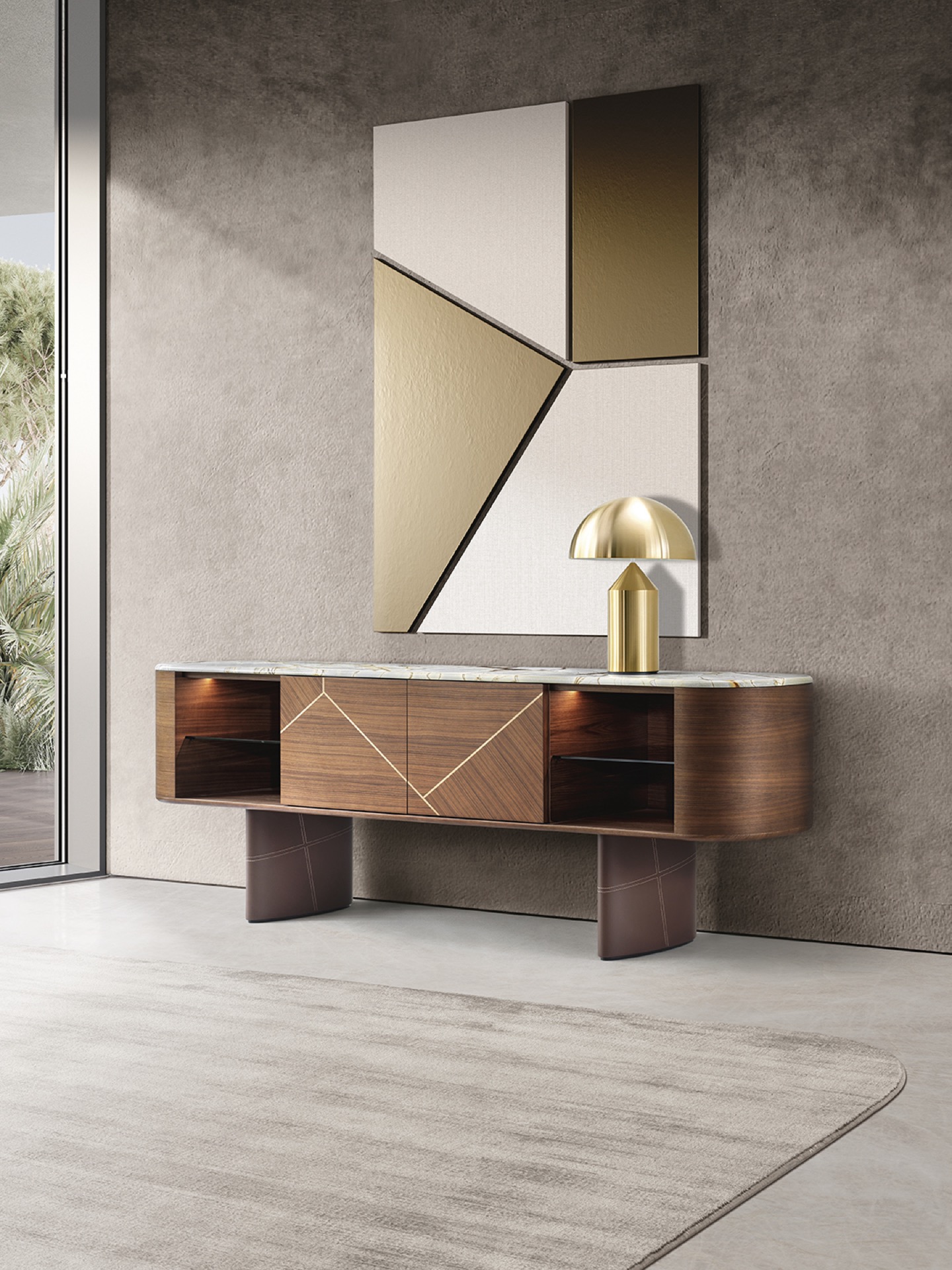
Geometric front panels on the sideboard-like piece continue that visual pattern. Their faceted surfaces catch the light differently across the day, while the stone-like top and the wall lamp above add another layer of texture. This is where the apartment’s modern luxury interior becomes most legible: not through excess, but through the way wood, light, and shadow are allowed to meet on small surfaces. Every line seems chosen to make the next one easier to read.
The bedroom keeps the palette quiet
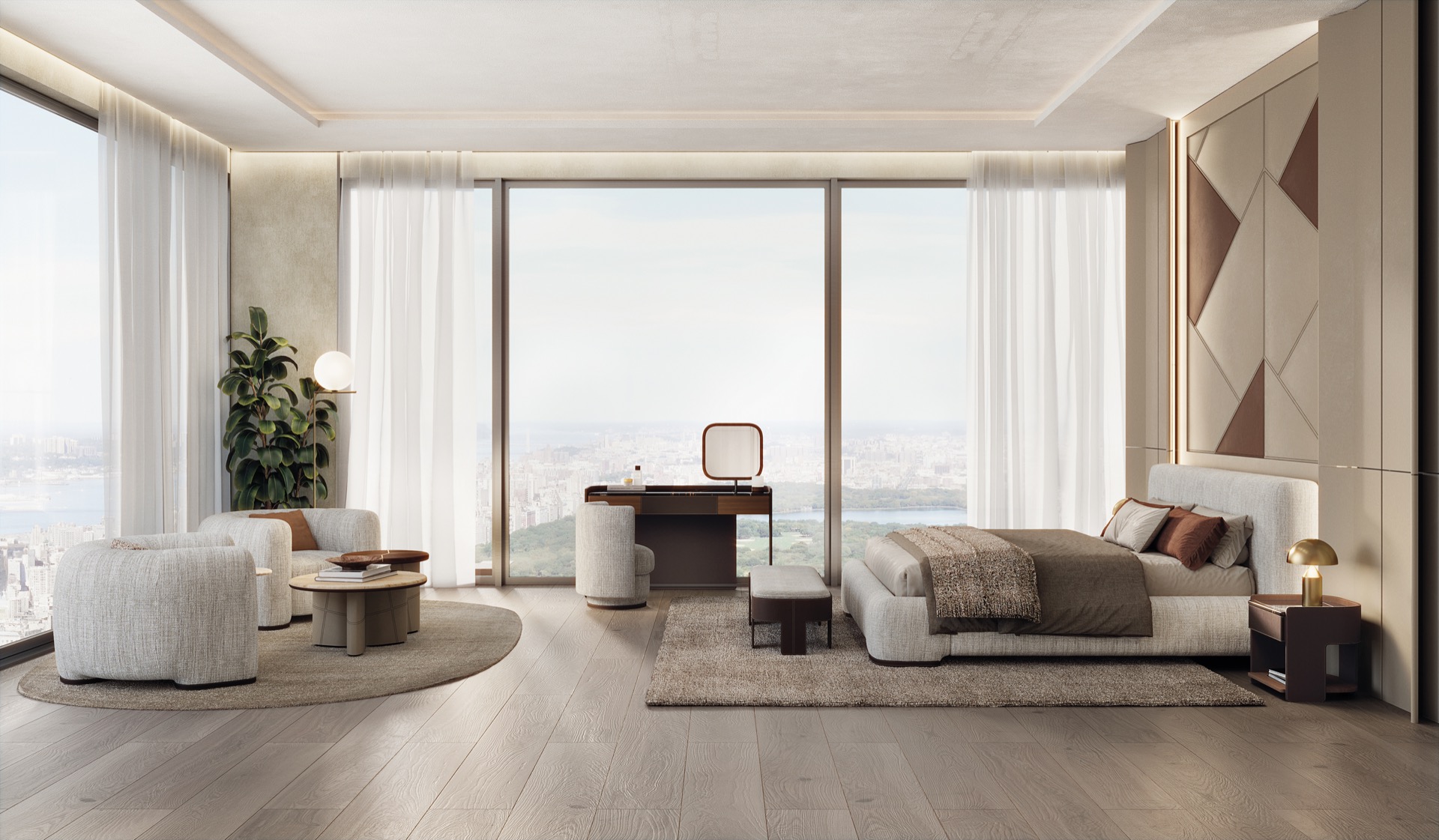
In the bedroom, the bed is placed against a wall of panels and niches that keep the room organized without heavy furniture. Nightstands sit close to the mattress, with a commode and bench extending the furnishing sequence along the wall. A single armchair and a few small tables complete the room. The arrangement leaves clear walking space, so the bed remains the main volume, with the surrounding pieces acting as supports rather than distractions.
Floor to ceiling curtains return here, but in a softer role. They stand beside the bed and frame the large window surfaces, pulling the room toward the light while keeping the material palette calm. Beige, cream, brown, and grey continue to dominate, with the floor and textiles carrying most of the tone. The room has enough detail to feel complete, yet the eye still rests quickly. That is partly the effect of the vertical slat wall panels, which bring rhythm to the headboard area without adding visual noise.
Furniture as a room-by-room sequence
The apartment is fully furnished in a way that makes each room legible as soon as you enter it. In the living area, the round sofa and low tables gather conversation around the windows. In the dining zone, the long table and pendant create a tighter, more directional arrangement. In the bedroom, the bed, bedside tables, commode, and bench form a practical line along the wall. Each set of pieces is distinct, but the finishes keep them tied together.
That sequence matters because the spaces do not rely on one dramatic gesture. Instead, they use repeated materials and shifting shapes to move from room to room. Rounded seating gives way to a long table, then to the rectangular mass of the bed. The transitions are quiet but clear. Glass, drapery, wood, and floor surfaces do most of the visual work, with the furniture acting as markers that tell you where one part of the apartment ends and the next begins.
Light, drapery, and the room edges
The strongest surface in the apartment may be the one that is least solid: the curtain layer. Hanging from ceiling height, it softens the scale of the windows and changes how the rooms read in depth. In some views it sits almost like a backdrop, in others it defines the edge of the living or dining area. The effect is especially clear where the windows span large parts of the wall, because the drapery interrupts the hard geometry and lets the rooms feel less exposed.
Against that softness, the built-in wall details bring control. Niches, panel segmentation, and vertical lines keep the apartment from drifting into an undefined open plan. The modern luxury interior works because the surfaces are calm but not identical. Textiles absorb light, wood adds grain, and the floor provides a stable base under both. Nothing in the apartment depends on ornament. Its character comes from the way the rooms are furnished and from the way the windows, curtains, and wall panels meet at the edges.
The final impression is of a fully furnished apartment that has been edited with a clear eye for sequence. Round forms, long table lines, and straight wall detailing all have their place, and the large windows keep the whole composition tied to daylight. Floor to ceiling curtains remain the softest and most visible thread through the rooms, linking the living space, dining area, and bedroom without forcing them into sameness. It is a quiet interior, but not an empty one.
Want to see more of EQUIDÉE DESIGN? View the page of EQUIDÉE DESIGN for even more great projects and company information.


NEW 2026 Jubileum Edition The Best Interior Designers Benelux
Order Now €125