






Glazed conservatory extension with lots of natural light
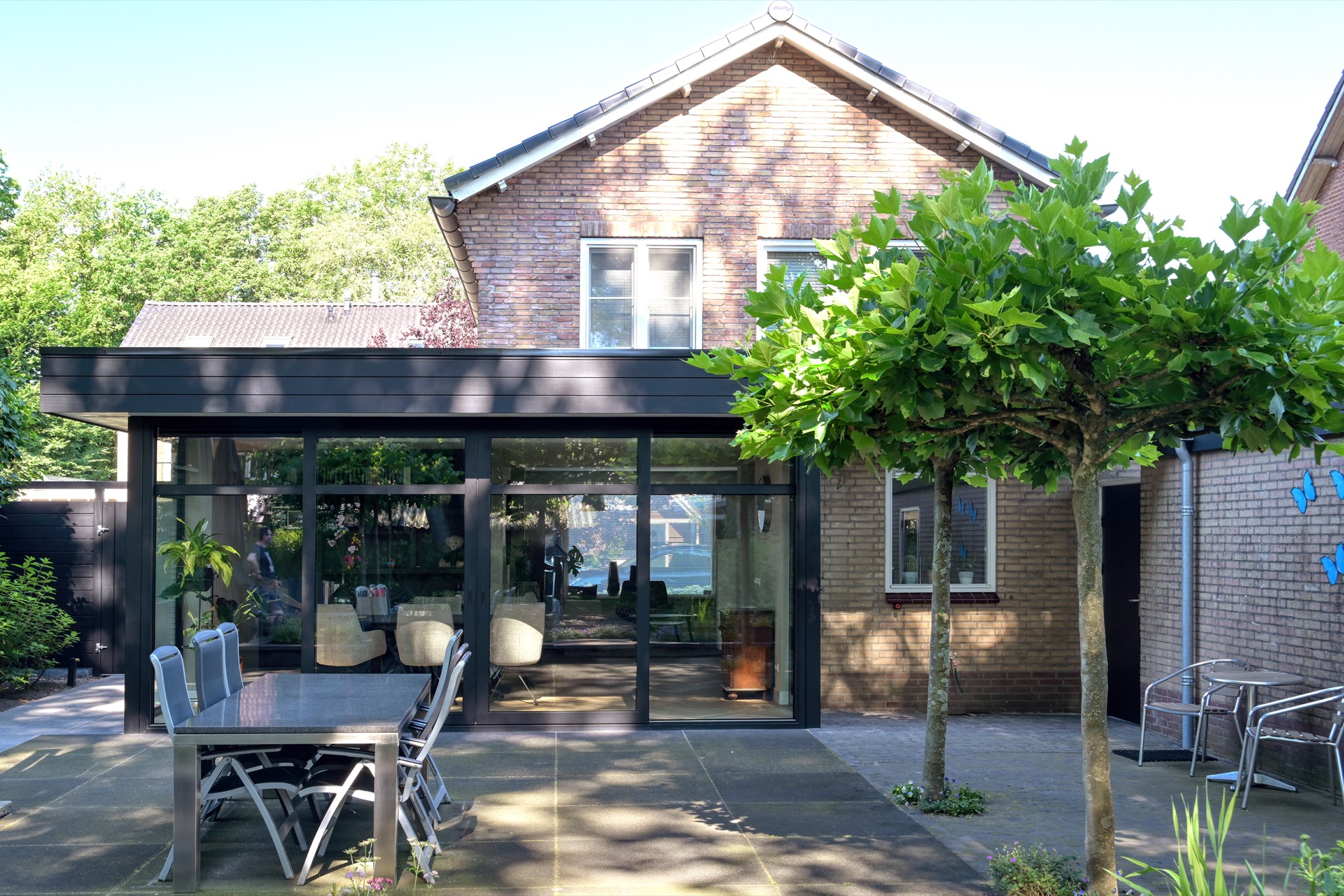
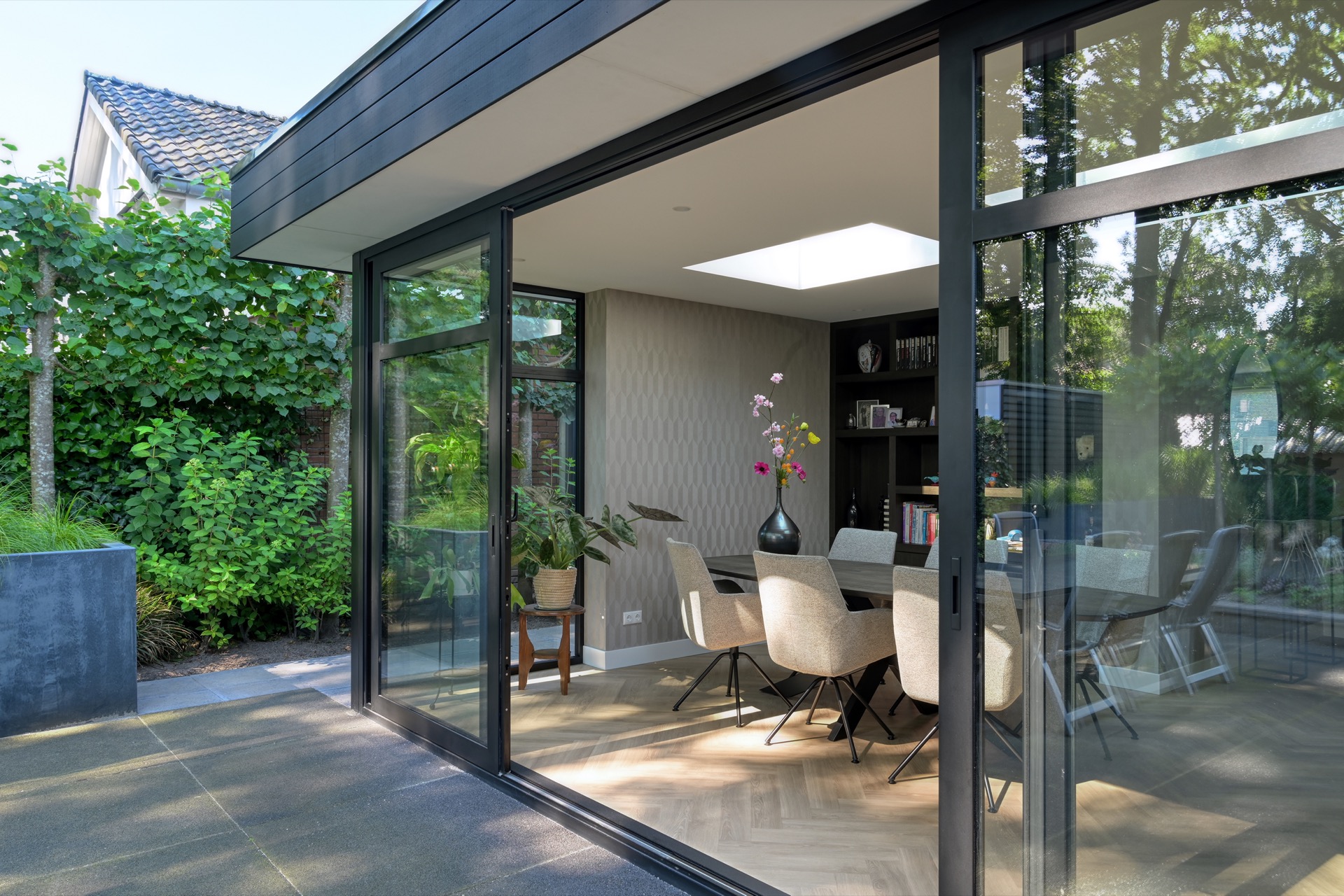
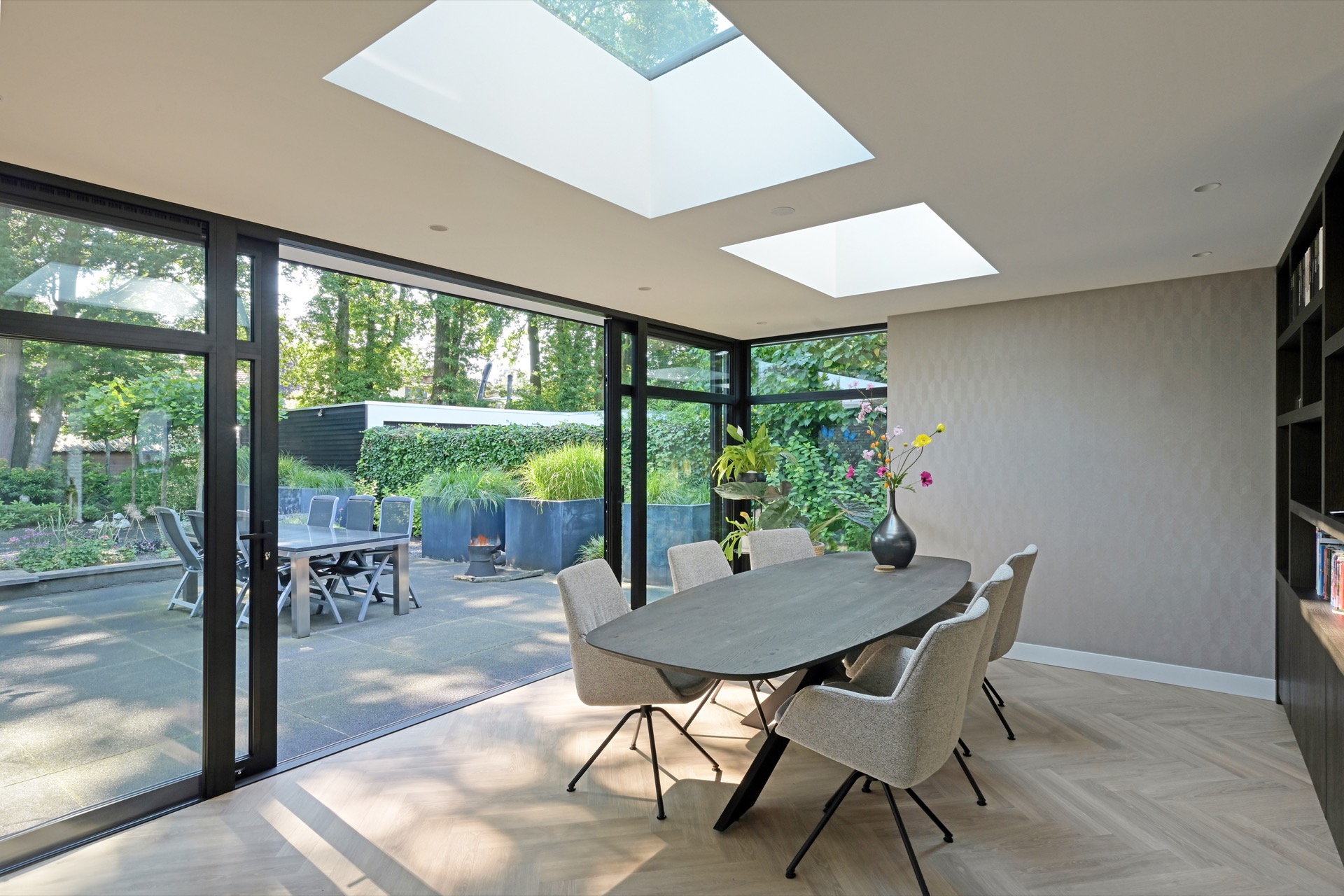
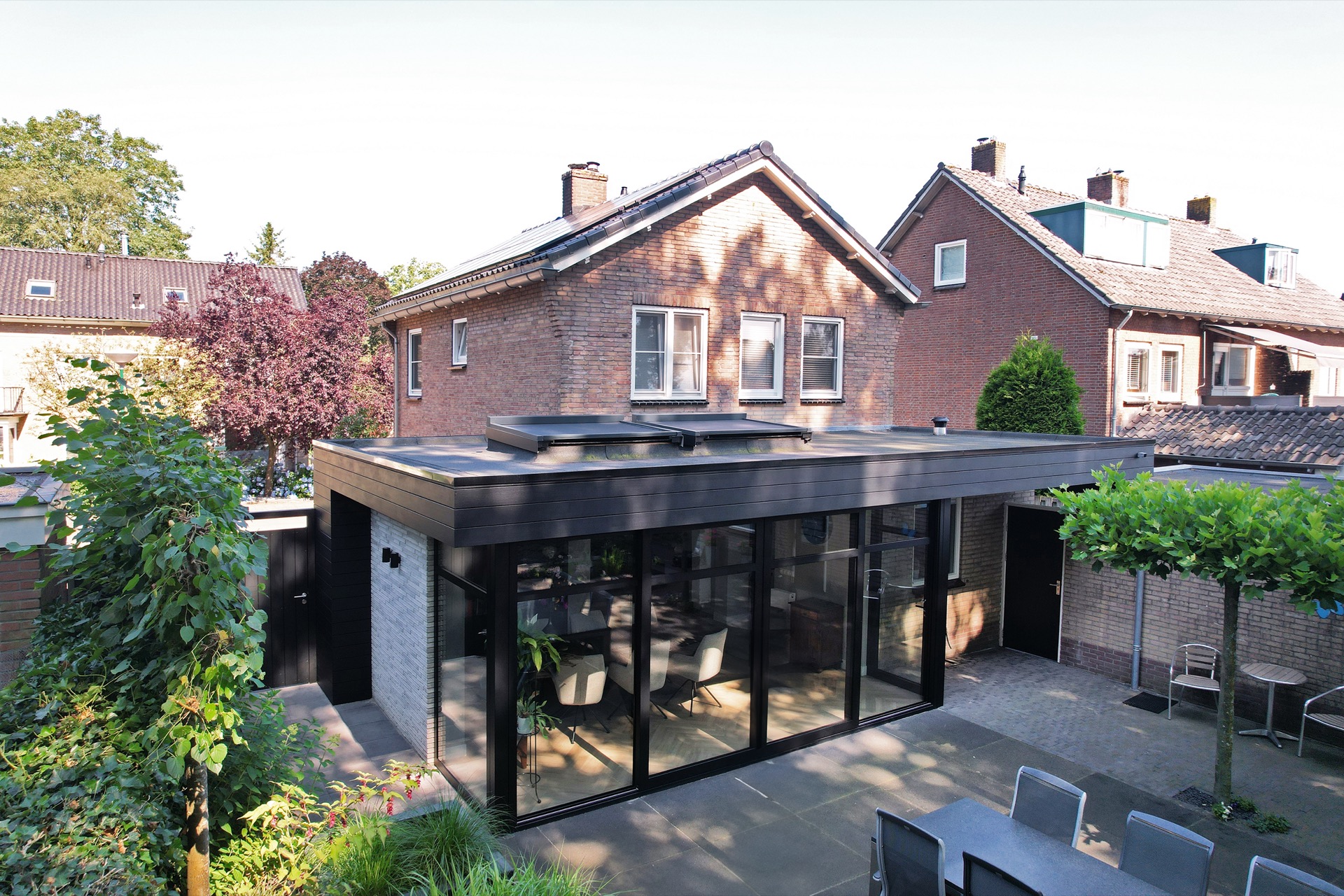
The glazed conservatory extension lots of light is immediately visible in the way the project is framed. The glazed conservatory extension opens the house up with wide panes, slim dark frame lines and two generous skylights overhead. Light reaches deep into the room, while the mix of brushed timber cladding and pale brick keeps the exterior from reading as one flat surface. The result is a conservatory extension with lots of light, but also with a clear material rhythm that you notice before you even step inside.
glazed conservatory extension lots of light as the architectural starting point
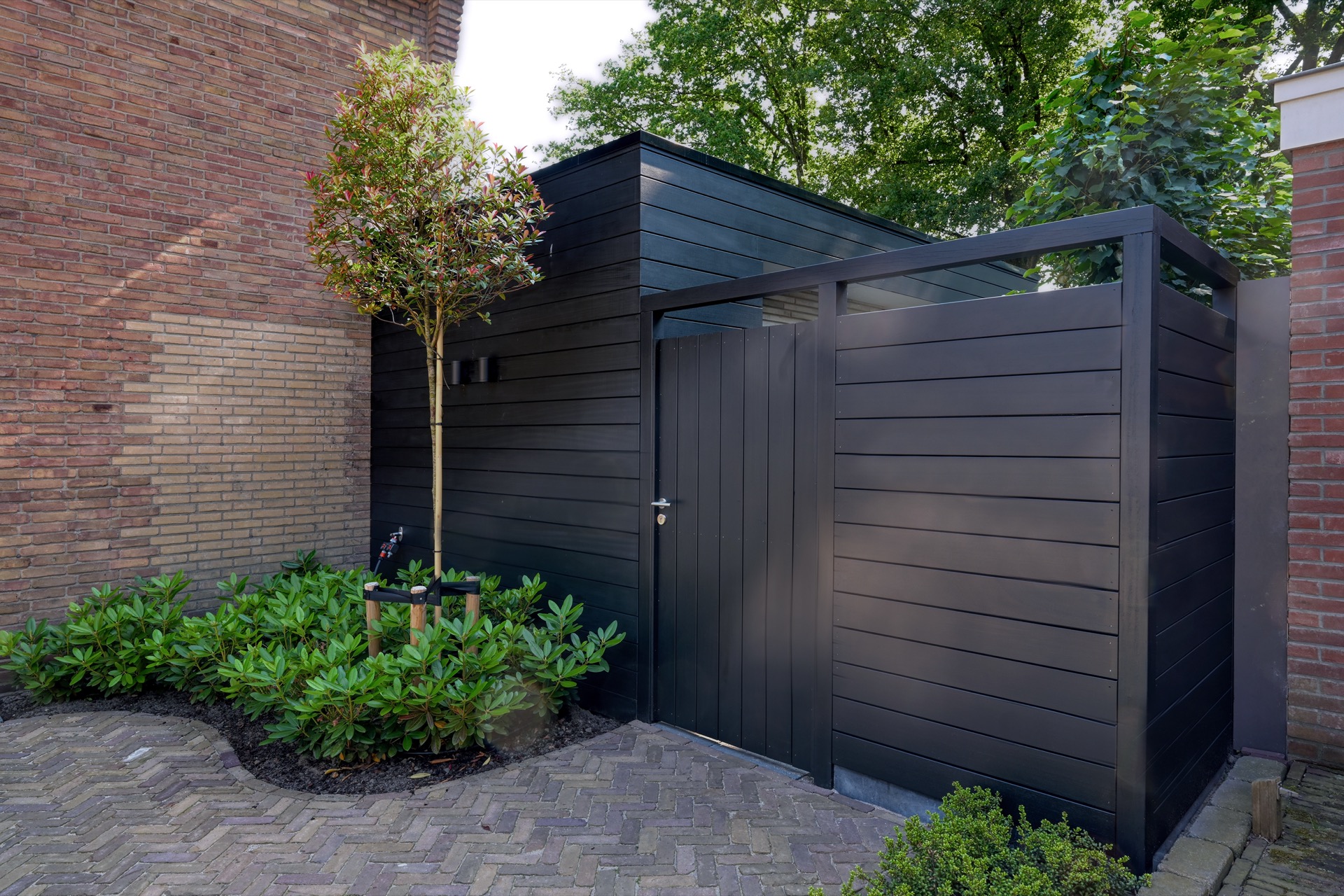
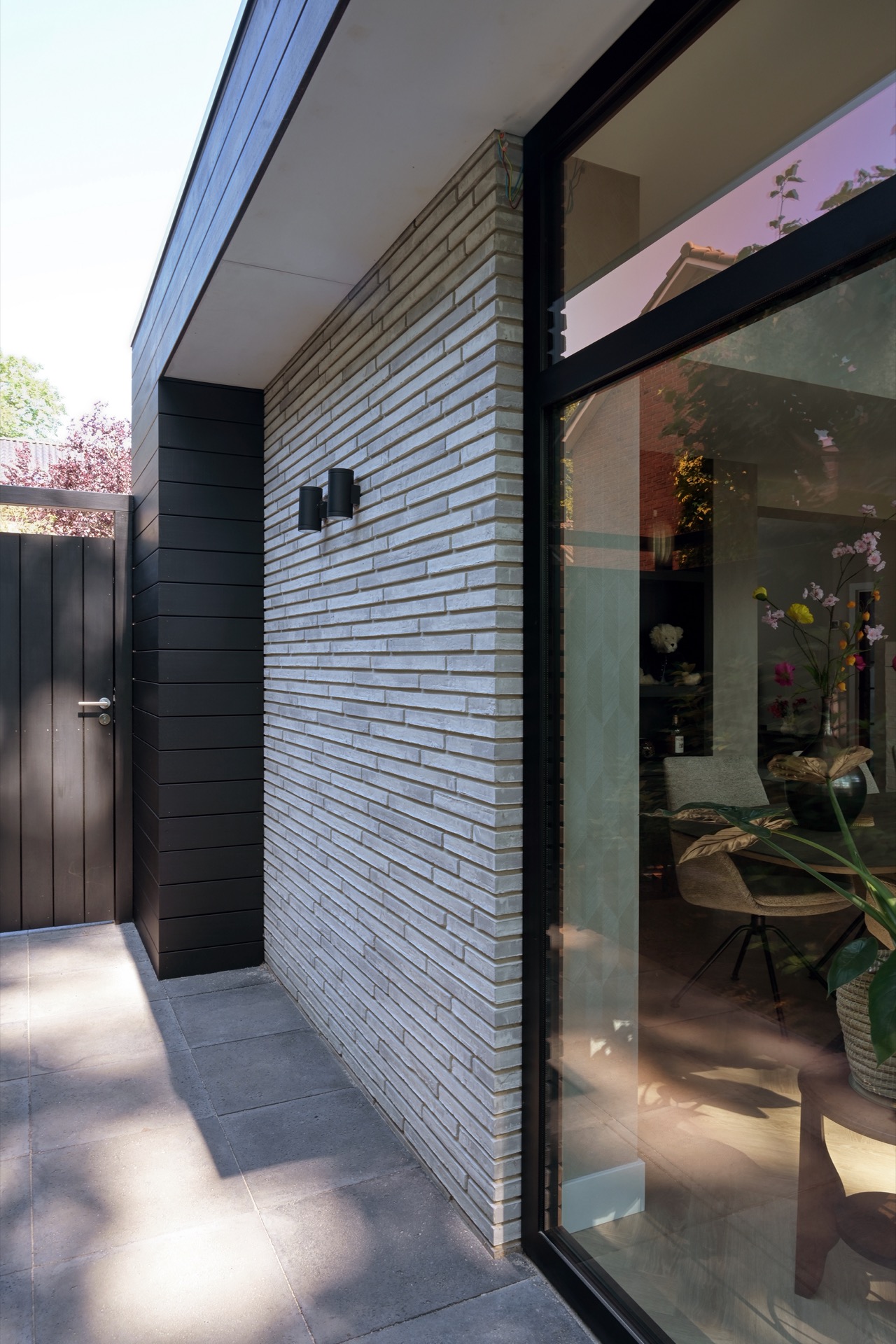
The outside is built around contrast. Horizontal channelsiding runs across one part of the extension, its brushed surface catching the light in a softer way than the darker boards would suggest at first glance. Next to it sit light Petersen bricks with a nuanced Wasserstrich appearance. Their slender profile gives the masonry a finer grain, and the shift between brick and wood is immediate rather than decorative.
That brick and wood facade contrast does more than split the elevation into two materials. It marks the volume as an addition, while still tying it back to the existing house through the brickwork. The timber siding stays low and horizontal, the brick reads more compact and tactile. Seen together, they give the glazed conservatory extension a measured exterior composition that changes as you walk along the terrace.
Channelsiding with a clear line
From close by, the channelsiding exterior cladding is defined by its joints. Each plank sits horizontally with a narrow groove between the boards, which gives the wall a paced, layered surface. Because the wood is brushed, the grain is visible without turning rough or heavy. It works especially well beside the lighter masonry, where the eye moves from the dark timber to the pale brick and back again.
Large glazing with heat-reflecting glass
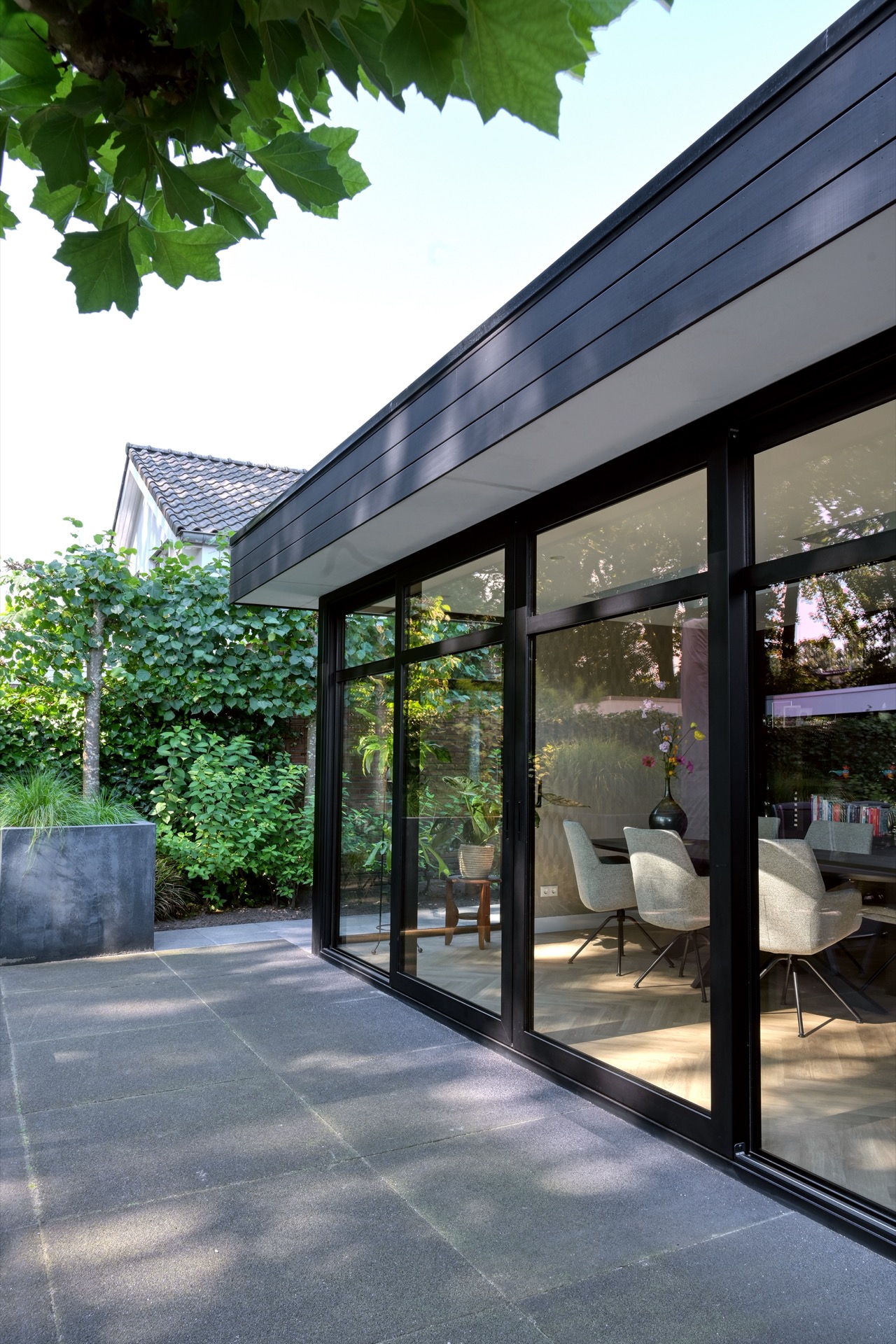
Big windows shape the extension’s interior as much as the walls do. The glazing is fitted with solar control heat-reflecting glass, a practical choice that lets the room stay visually open to the garden while filtering direct sun. In the photographs, the dark frames large glazing combination creates strong outlines around each opening, so the glass reads as part of the architecture rather than as a thin surface layer.
The conservatory extension with lots of light is not only about daylight from above. The long glazed walls also pull the terrace, planting and paving into the room’s field of view. That makes the transition from inside to outside easy to follow: a tiled floor at the edge, the frame line, then the garden beyond. The generous panes keep those layers clear instead of breaking them into small fragments.
Aluminium frames with a steel look
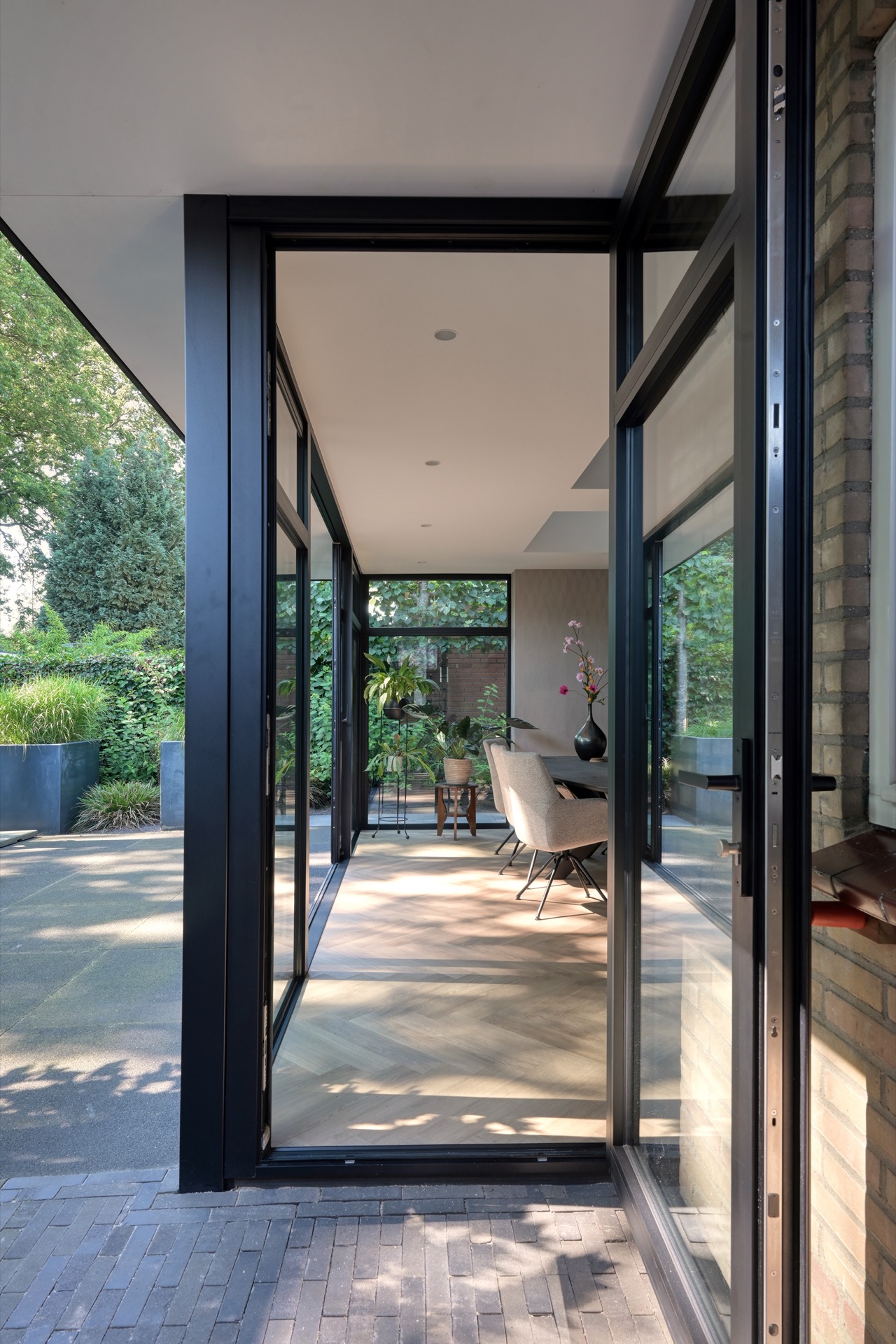
The aluminium window frames steel look gives the openings a crisp outline without the weight of actual steel. Their darker finish sharpens the edges of the glazing and suits the straight roofline above. Around corners and door openings, the frame depth is visible enough to read the construction, but not so much that it distracts from the light. It is a restrained frame language, and it suits the extension’s scale. That makes the glazed conservatory extension lots of light part of the architectural character rather than a loose finish.
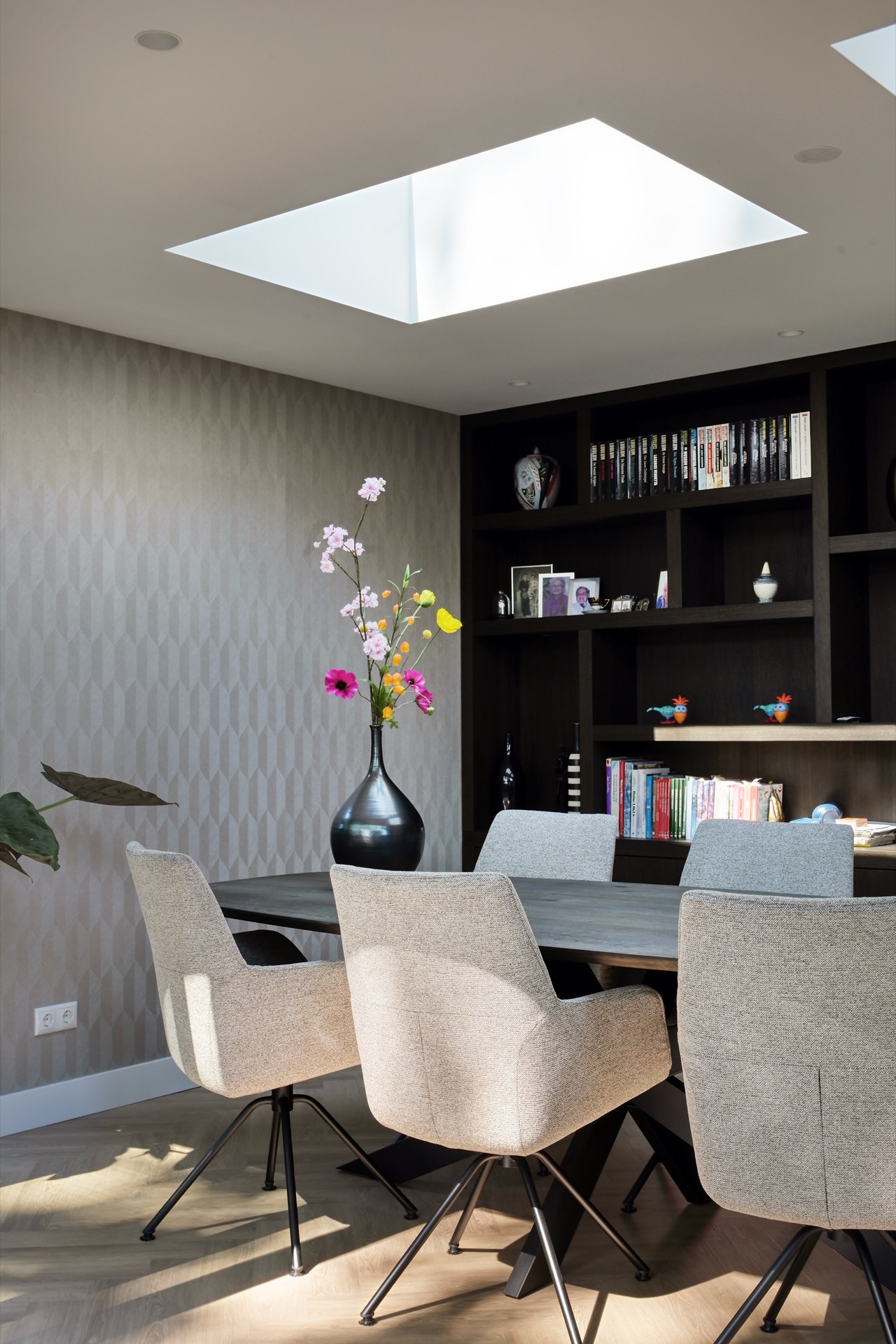
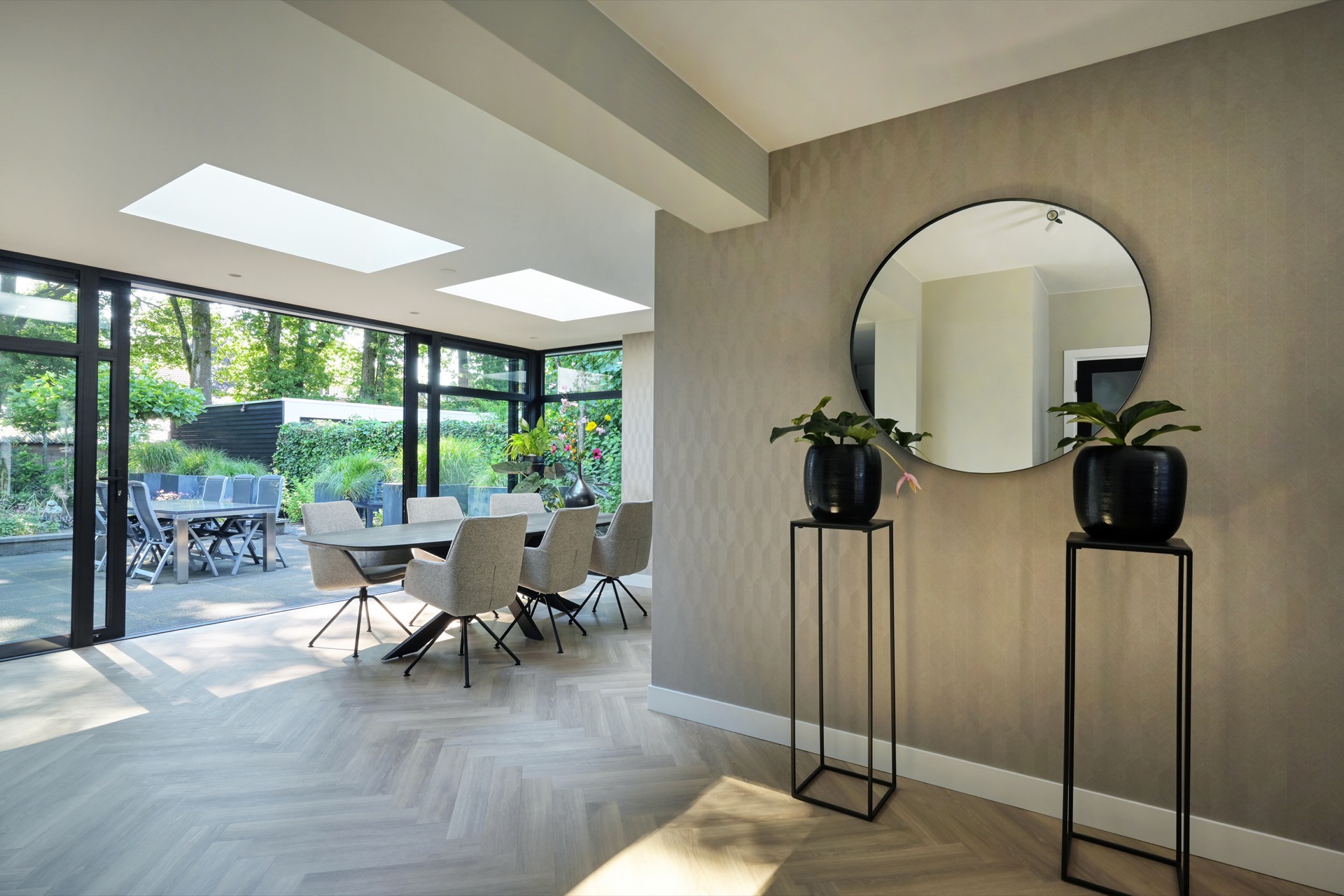
In the interior views, those same dark lines continue to structure the room. The glazing sits against pale ceiling planes and a lighter floor, with recessed lights conservatory interior details dotted into the ceiling. The spots are small, but they help define the evening atmosphere of the space without competing with the daylight. During the day, they disappear into the roof plane; at night, they become part of the room’s fixed pattern.
Two skylights that pull daylight deeper inside
Above the main sitting and dining area, two large openings in the roof bring light down from overhead. These skylights in conservatory extension change how the room feels across the day. Sun patches move across the ceiling, while the floor and table below stay evenly lit. In the images, the openings are rectangular and direct, a clear counterpoint to the vertical glass walls below.
That overhead light matters because the extension is used as a full room, not just as a passage between house and garden. The ceiling remains visually calm, with the round recessed spots sitting around the skylights rather than replacing them. Seen from inside, the roof openings give the room depth; seen from outside, they break up the roof plane and explain why the glazed conservatory extension holds so much daylight.
glazed conservatory extension lots of light as the architectural starting point
The interior is read through the glass as much as through the furniture. Chairs and a large table sit close to the windows, and the view continues out to the terrace paving and planting. Because the frames stay dark and slim, the room keeps its edges, even when the garden reflections start to move across the panes. The effect is open, but not vague: each surface still has a clear role.
Small junctions make that clarity stronger. The meeting point between frame, floor and wall is kept precise, and the ceiling lights are recessed rather than hanging into the room. That keeps attention on the long lines of the glazed conservatory extension and on the route from the interior floor to the terrace outside. The room reads as a sequence of surfaces, not as a single blown-out glass box.
Materials that do the talking
What gives this project its character is not one standout gesture, but the way each material is allowed to hold its own line. Brick, brushed timber, aluminium and glass all appear in distinct bands and planes. The light brick wasserstrich look softens the lower part of the elevation, while the darker wood and frames anchor the rest. In between, the glass keeps the composition open and shows the room beyond.
That balance is especially clear at the edge of the terrace, where the exterior paving meets the glazing and the extension settles into the existing house. There is no need for extra ornament. The surfaces already do enough: wood gives texture, brick gives weight, glass gives depth, and the roof openings pull the daylight through the centre of the plan. It is a glazed conservatory extension lots of light can describe, but the real story sits in the details you can see.
Want to see more of HABÉ? View the page of HABÉ for even more great projects and company information.

.png)