





Interior with wood paneling and open kitchen
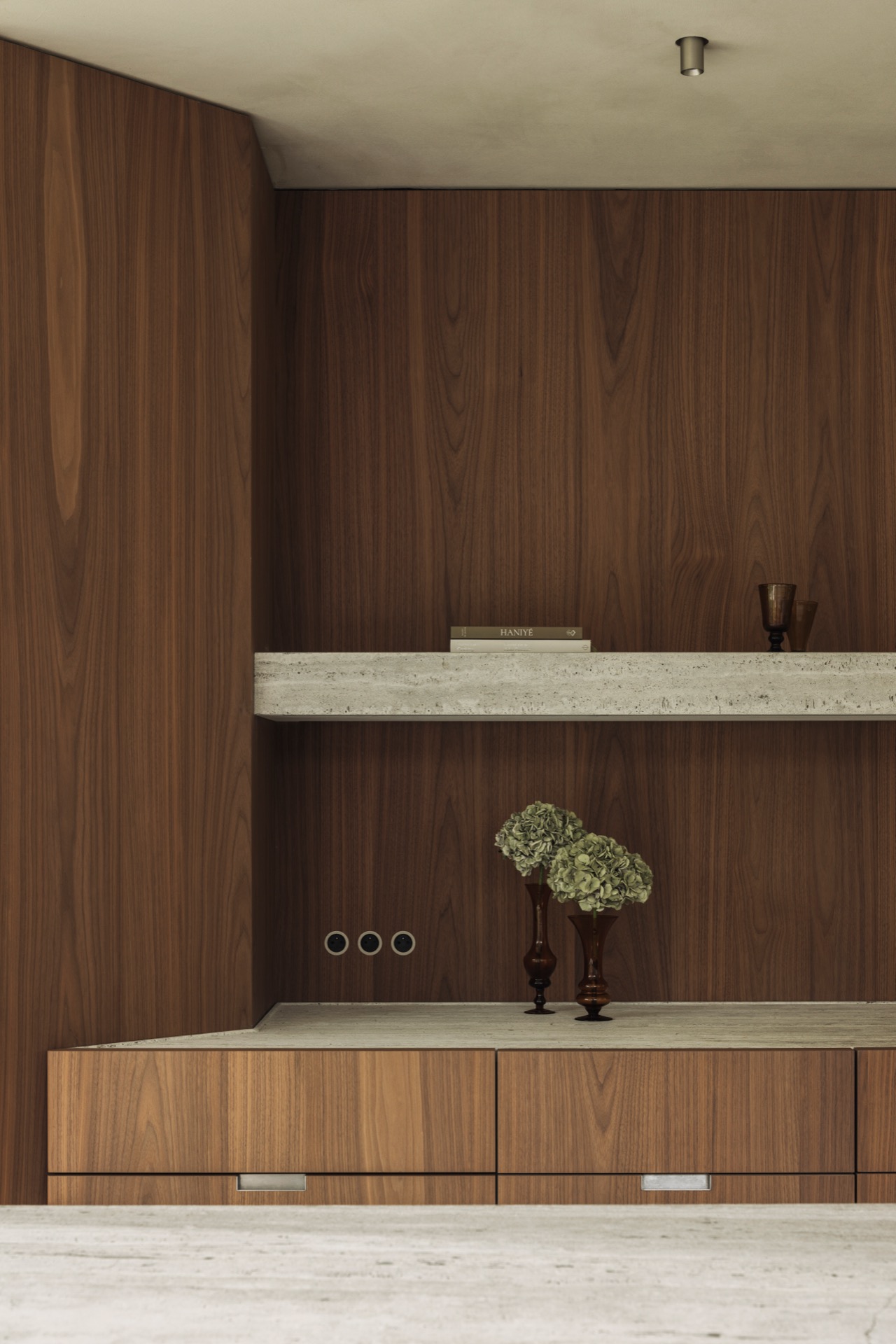
Sunlight pours through tall, slender windows, tracing the grain of wood panels rising along the walls. Each plank carries subtle shifts in tone and texture, creating a tactile rhythm that moves the eye upward, emphasizing the room’s height. The natural roughness of the wood contrasts with smooth stone surfaces assembled with precision in the open kitchen, crafting a setting that exudes quiet grounding, reminiscent of the organic presence found beneath a thatched roof.
thatched roof as the architectural starting point
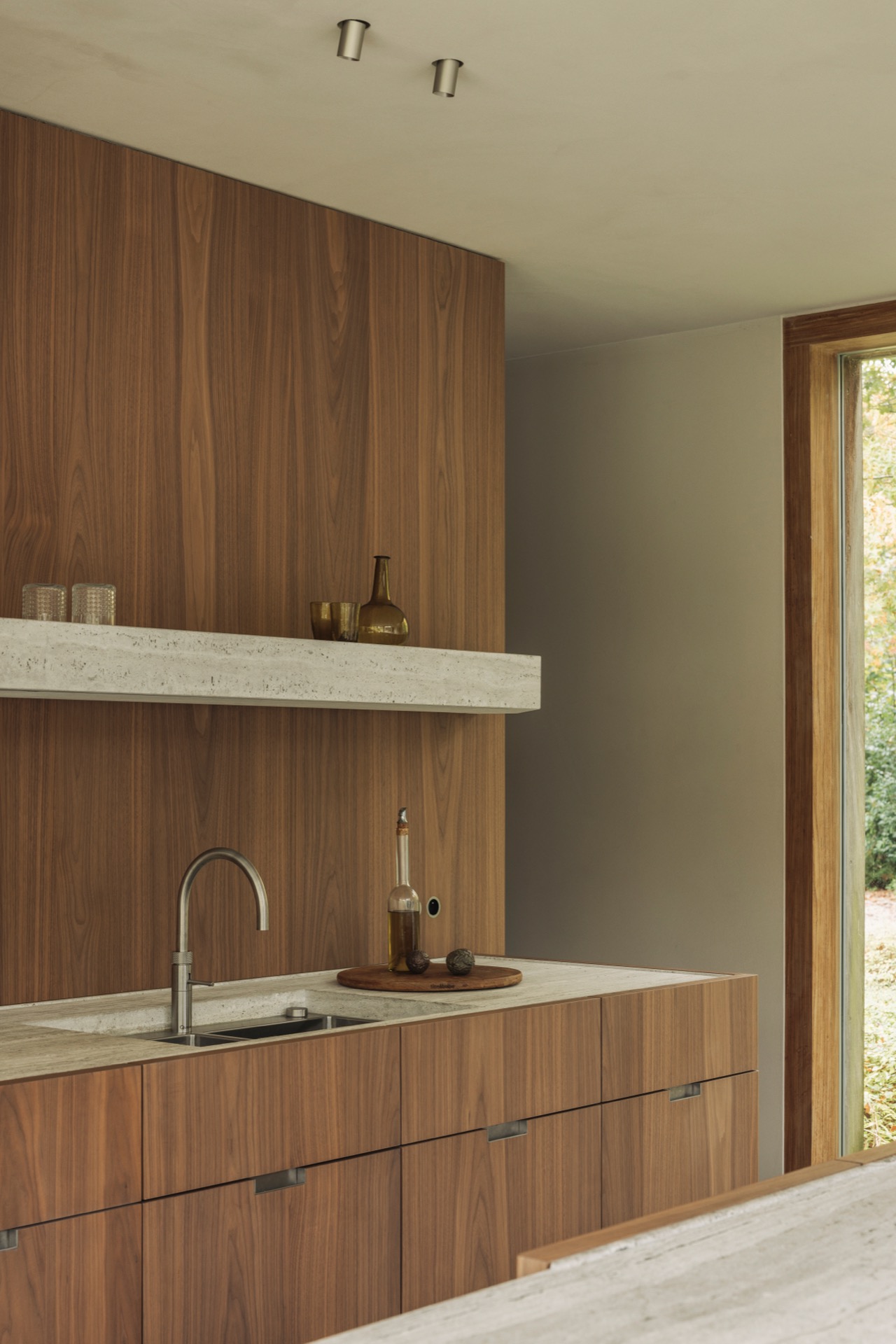
The vertical wood cladding extends from floor to ceiling, lending the living area structure without enclosing it. Variations in grain and color break uniformity, lending depth to what might appear as simple walls. Built-in elements such as cabinetry harmonize with these panels, their flush fittings blending storage seamlessly into architectural form. This measured layering tempers the coolness of exposed concrete surfaces nearby, offering a subtle counterpoint of warmth and tactility.
Stone Island Grounds the Kitchen with Natural Geometry
At the heart of the space, a stone island interrupts the wood’s linearity, its softly veined surface providing a tactile anchor. Its shape is restrained, avoiding ornamental complexity, instead carving a clear boundary between cooking and living zones. Overhead, understated light fixtures diffuse illumination along precisely the areas of food preparation and casual gathering, their matte metal finish echoing the room’s restrained palette.
Open Shelving Introduces Softness and Personal Texture
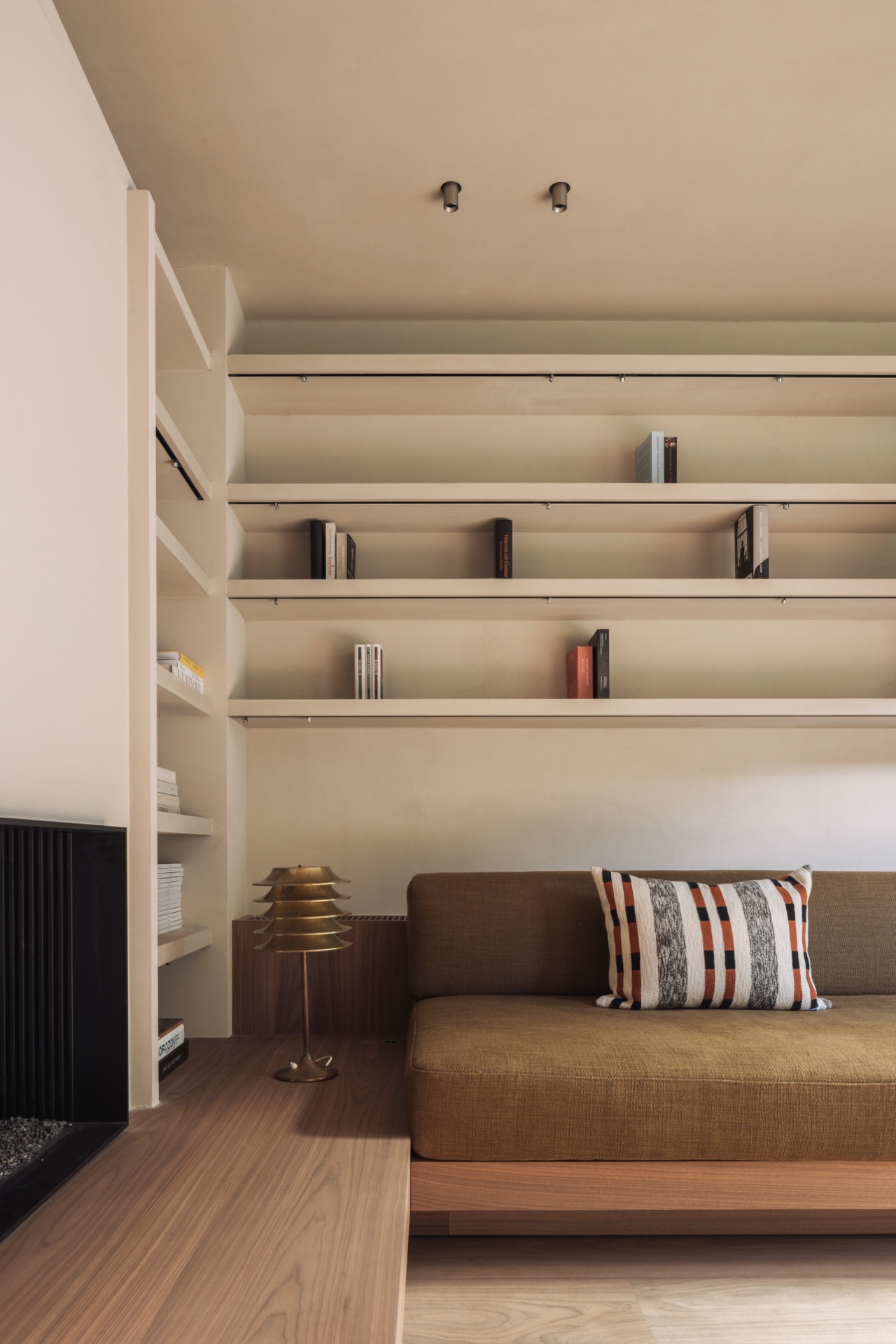
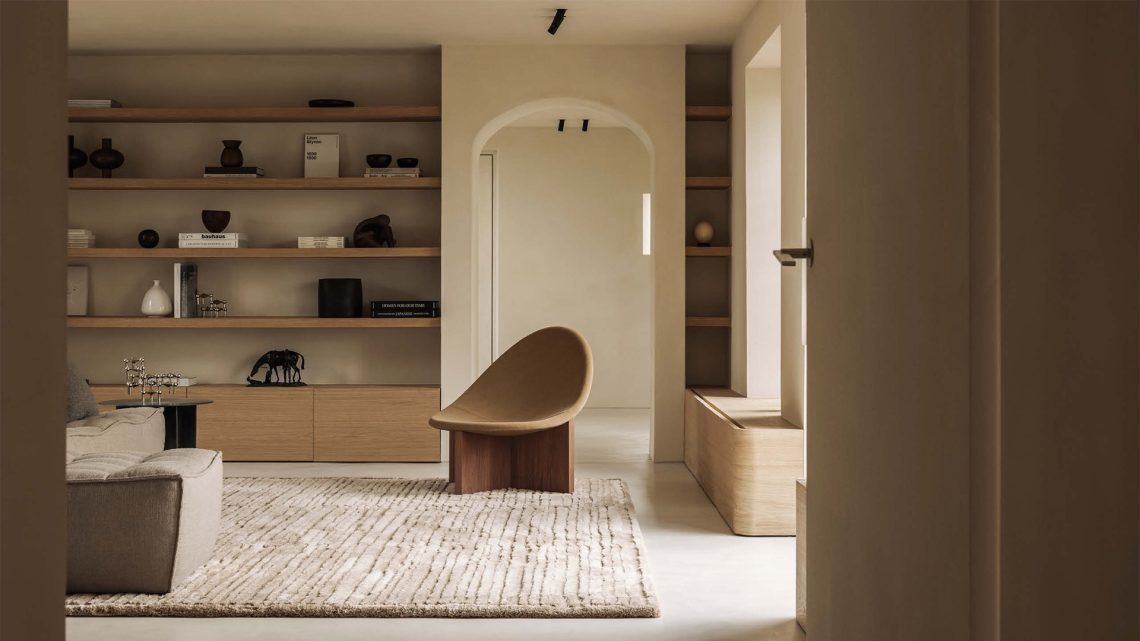
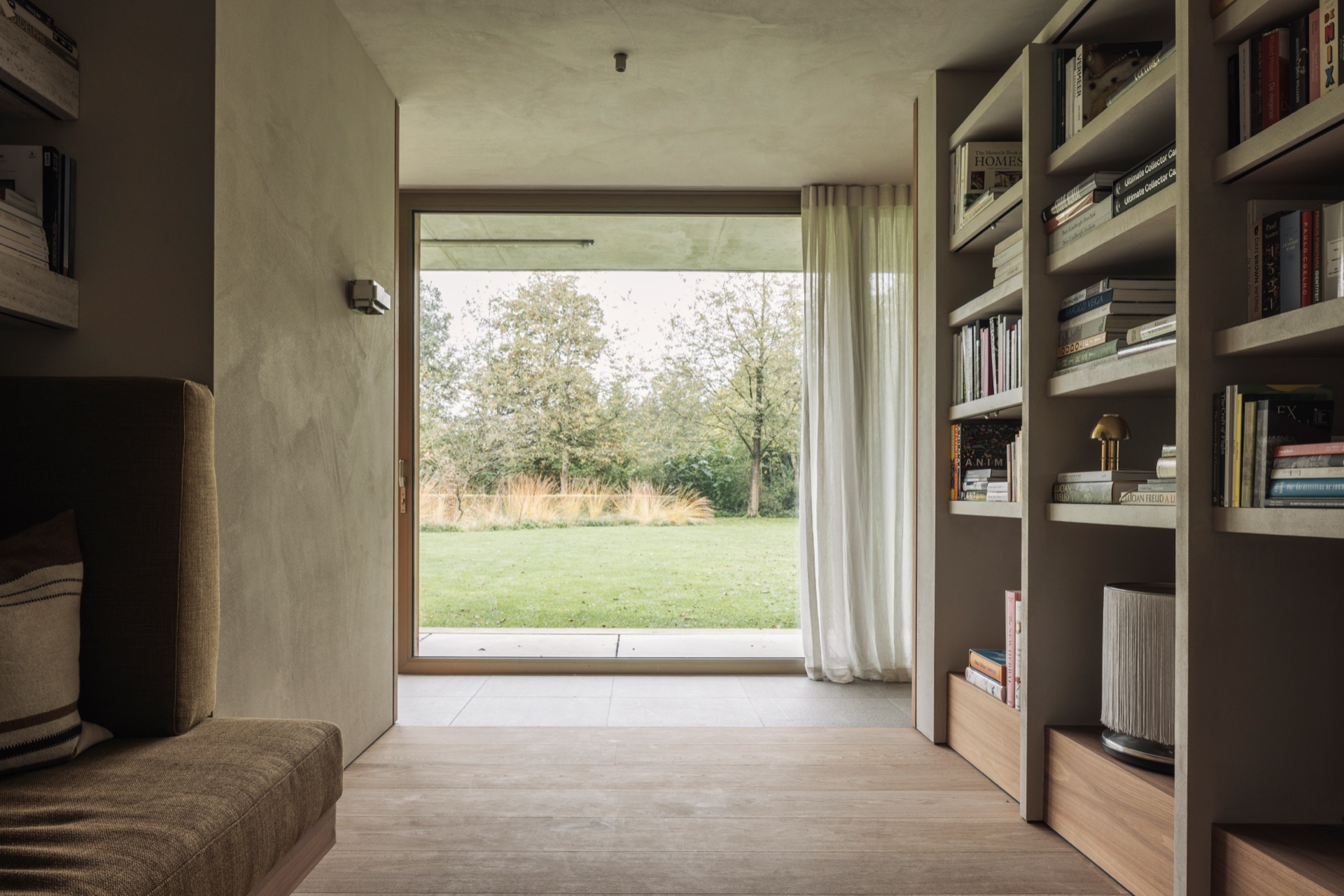
Near the kitchen, open shelves display a select array of books and folded textiles. Their layered surfaces soften adjacent wood and stone, while adding subtle color accents within the otherwise neutral framework. This approach fosters moments of human touch amid architectural clarity, while preserving spatial openness and flow.
A Soft Palette Frames Material Beauty
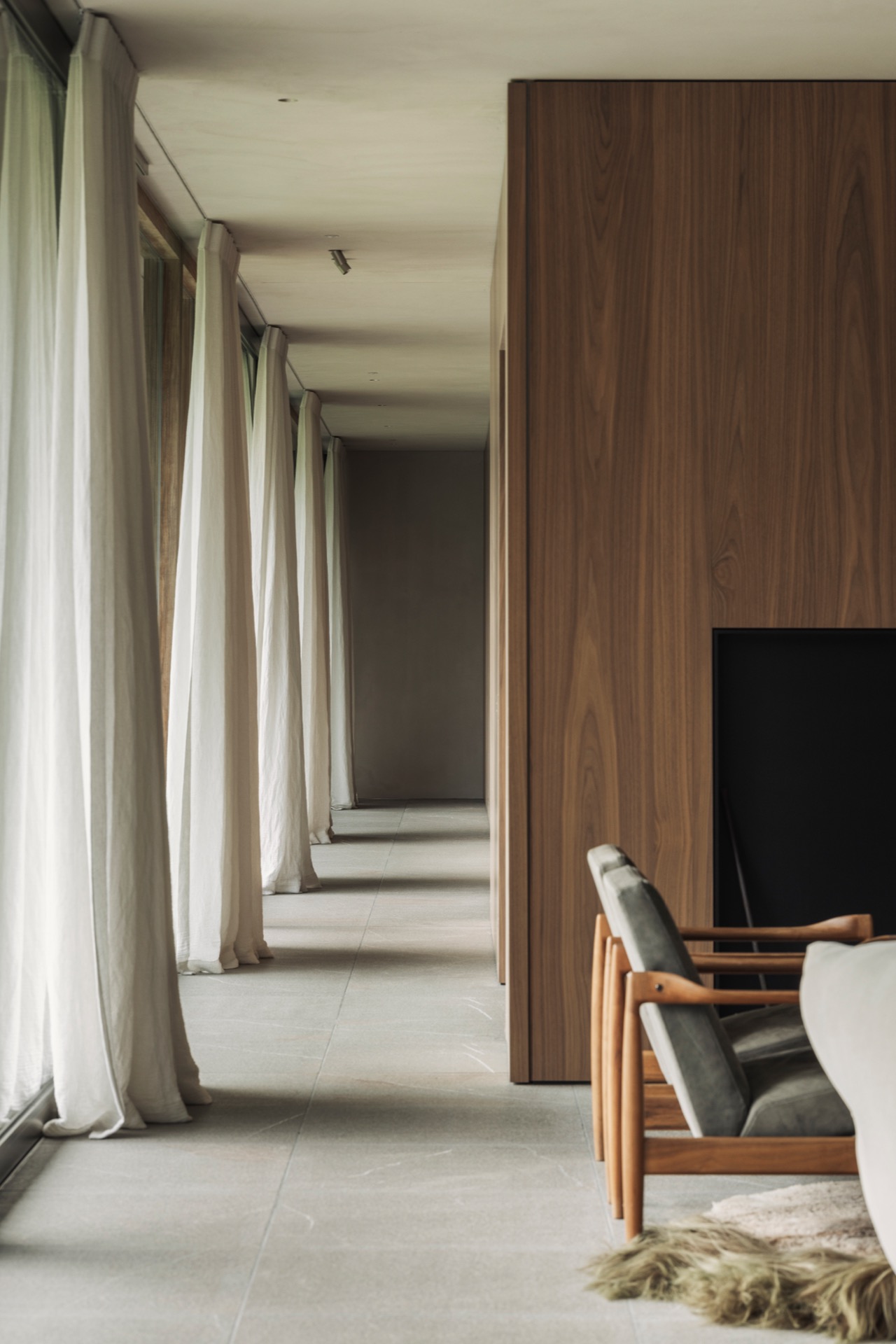
Walls are coated in pale hues that acknowledge the earthy spectrum of timber and stone. The muted colors act as quiet backgrounds, drawing attention to shifts in wood grain and stone veining rather than competing through brightness. Semi-transparent curtains filter daylight, introducing gentle shadows that modulate surfaces dynamically throughout the day.
Natural Light Animates Form and Surface
Windows set high send daylight cascading across the kitchen island and staircase, where shadows carve patterns on exposed brick walls. This interplay varies as the sun moves, lending a sense of rhythm to an interior where materiality and light sustain an understated dialogue.
Selection of Materials Evokes the Character of a Thatched Roof
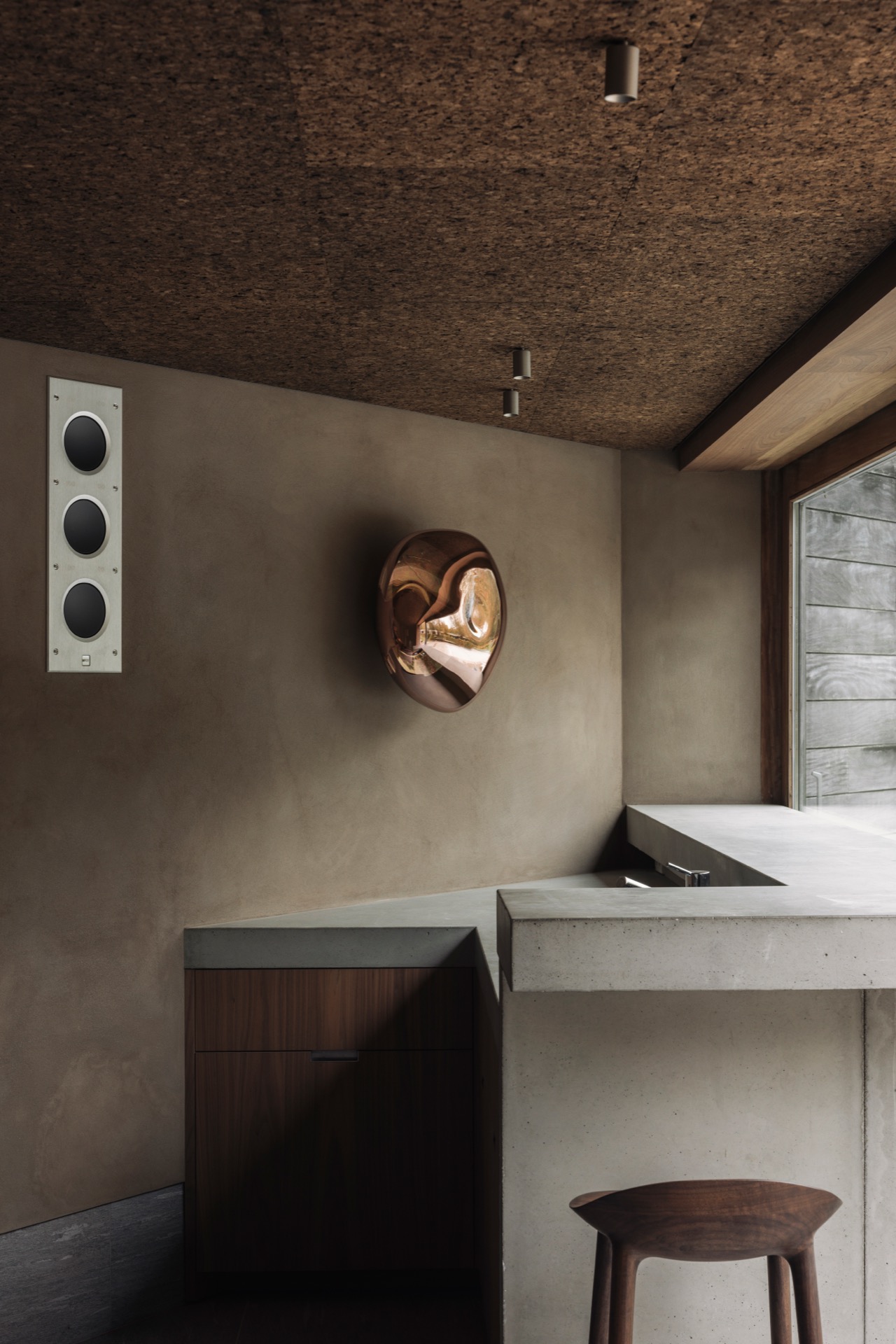
The interior echoes the spirit of thatched roofs through its tactile materials rather than literal reproduction. The contrast between smooth wood and rough concrete invites a sensorial experience akin to natural textures found in rural vernacular. Spatial openness enables easy movement and visual connection across the home, emphasizing a link to environment over architectural imitation.
Spatial Arrangement Promotes Easy Flow and Visual Connection
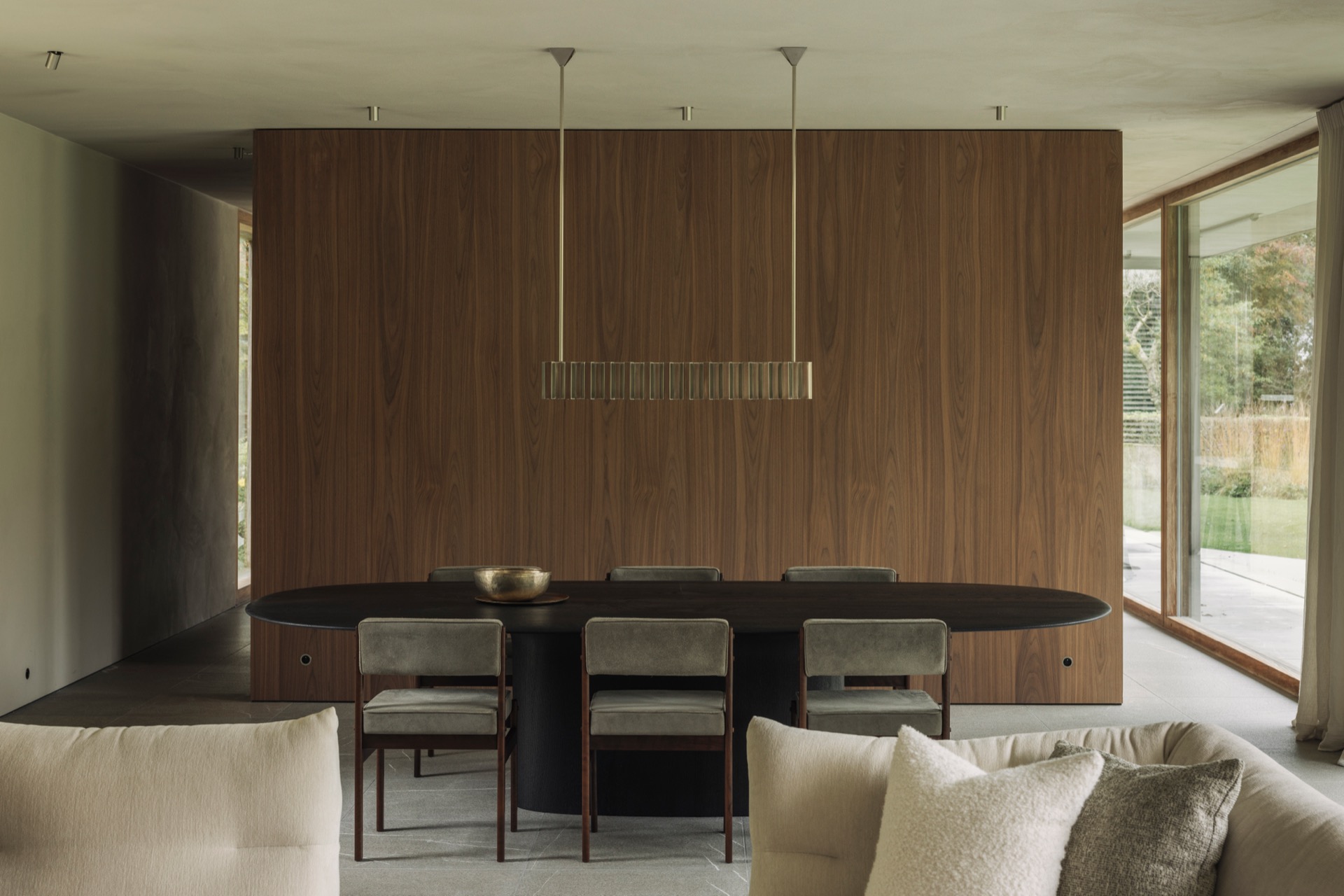
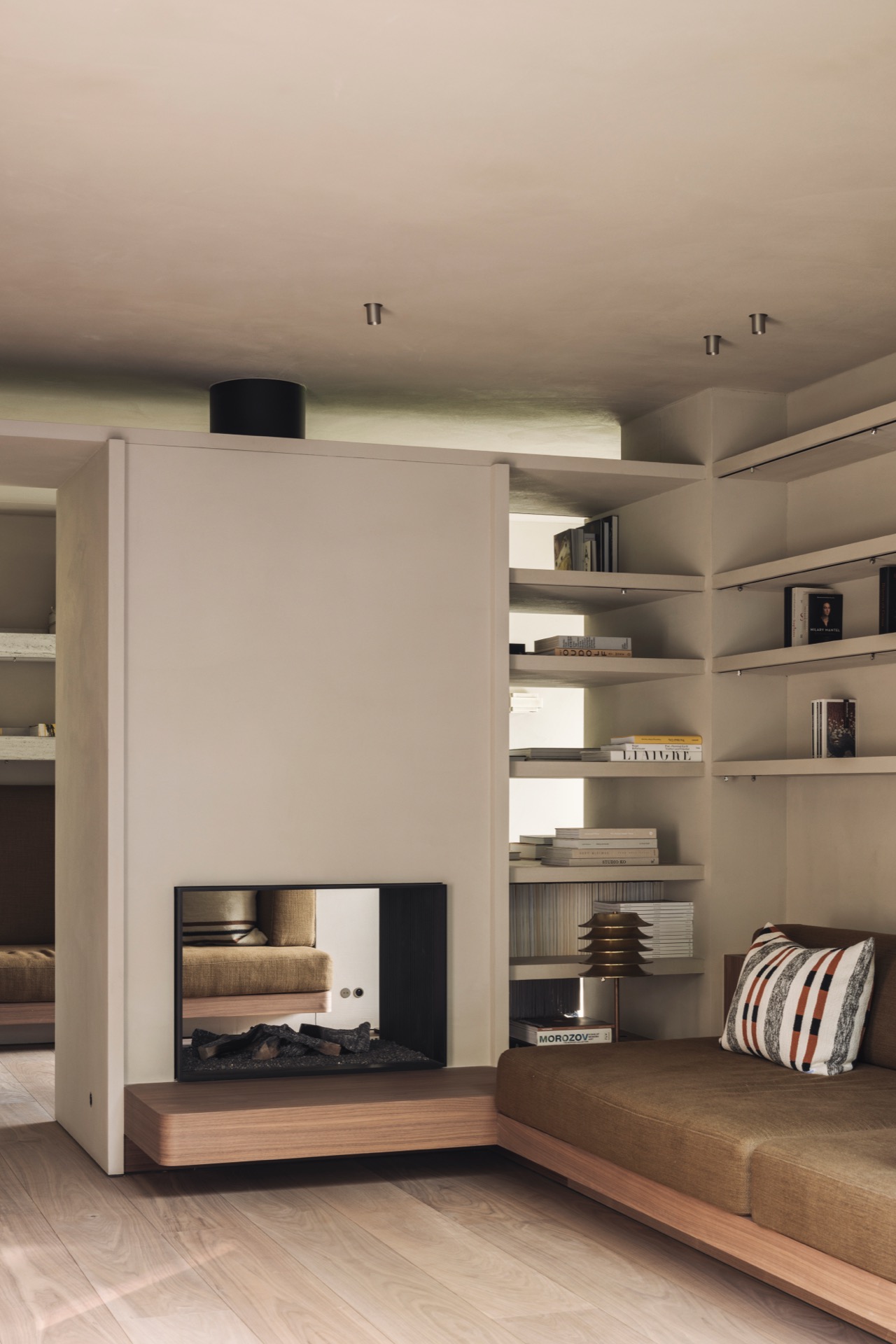
The living, dining, and kitchen areas unfold within a unified volume defined by repetitive use of wood paneling and stone surfaces. Furniture is integrated into walls, maintaining sightlines and reducing clutter. This openness supports fluid circulation and interaction without subdividing space.
Lighting Design Enhances Material Detail Without Ornament
Lighting fixtures are modest in appearance but precisely directed, delineating zones and highlighting texture across natural materials. Rather than decorative focus, light becomes a tool to reveal surfaces and volumes with quiet sensitivity.
Minimal Objects Emphasize Material and Space
Selected objects—sculptural vases, hand-bound books, soft cushions—are few yet carefully placed. Their restrained presence punctuates surfaces without competing with architectural or material elements, allowing wood and stone to convey the essence of the space. That makes the thatched roof part of the architectural character rather than a loose finish.
Material Contrast Shapes the Residential Atmosphere
The combination of rugged stone, polished wood, and shifting natural light creates a measured but inviting sensory environment. This interplay produces a home rooted in material presence, recalling the grounded character associated with thatched roof buildings, transposed into a contemporary setting.
Balancing Openness With Intimate Touches
Wide wooden walls meet finely textured textiles, adjusting scale and prompting tactile awareness. This layering softens the spatial volume, shaping areas that invite either quiet reflection or social gathering, all while preserving visual connection.
Visible Craftsmanship Prioritizes Practical Form
Details such as precise joinery and well-proportioned panels attest to careful fabrication. Design choices focus on functional clarity expressed through material rather than ornament, inviting quiet appreciation of form and finish.
Subtle References to Building Traditions
The openness and material honesty recall precedents in vernacular architecture using tactile, local materials like thatched roofs. These connections unfold indirectly, framing a contemporary interior responsive to its antecedents without literal mimicry.
Everyday Spaces Foster Quiet Engagement
From pared-back kitchen counters to timber-clad walls, surfaces invite measured occupation over spectacle. The combination of texture and light encourages presence and stillness within daily routines.
Wood Paneling Offers Depth Through Natural Variation
Walnut panels cover walls and storage fronts, their surfaces catching light in ways that reveal grain and texture dynamically. This material use extends beyond cladding, integrating architectural elements smoothly and enriching spatial layering across the home.
Concrete and Stone Mark Functional Boundaries
A stone island anchors the open plan, defining workspace without enclosure. Concrete surfaces nearby offer tactile contrast through texture, juxtaposed with the wood’s warmth to articulate the interior’s material dialogue.
Textiles Introduce Softness Into Linear Forms
Pale fabrics on bookshelves and window dressings temper the rectilinear wood and stone, subtly modulating light reflection and sound. Curtains filter sunlight into soft, evolving patterns, deepening the home’s quiet atmosphere.
Windows Extend the Interior’s Vertical Rhythm
Large vertical window openings mirror the rhythm of the wood cladding, framing views and amplifying daylight entry. This design blurs interior-exterior boundaries, forming a connection where material textures and natural light coexist softly. That makes the thatched roof part of the architectural character rather than a loose finish.
Want to see more of prado? View the page of prado for even more great projects and company information.

.png)