




Karakteristieke woning met moderne uitbouw en natuurlijke materialen
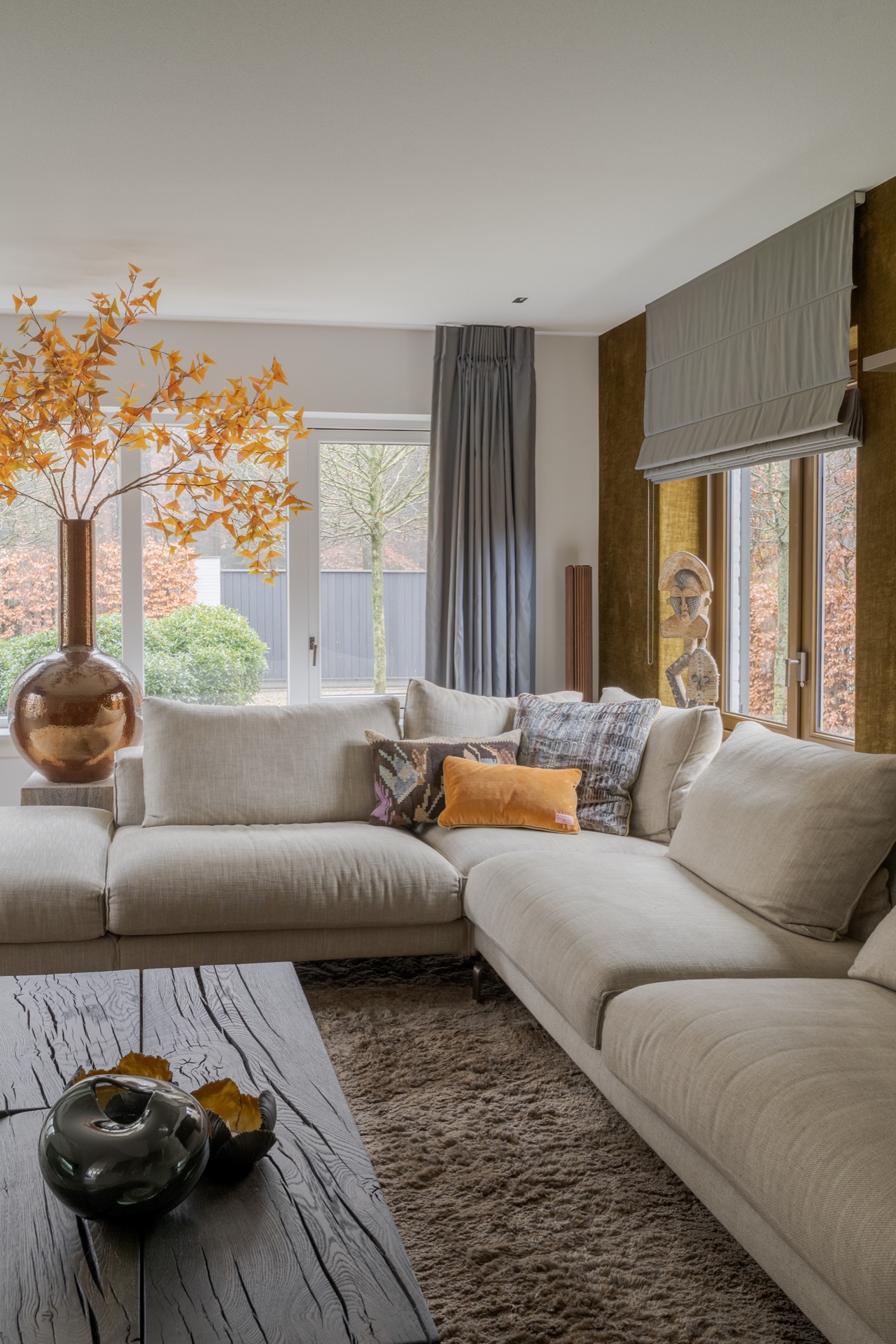
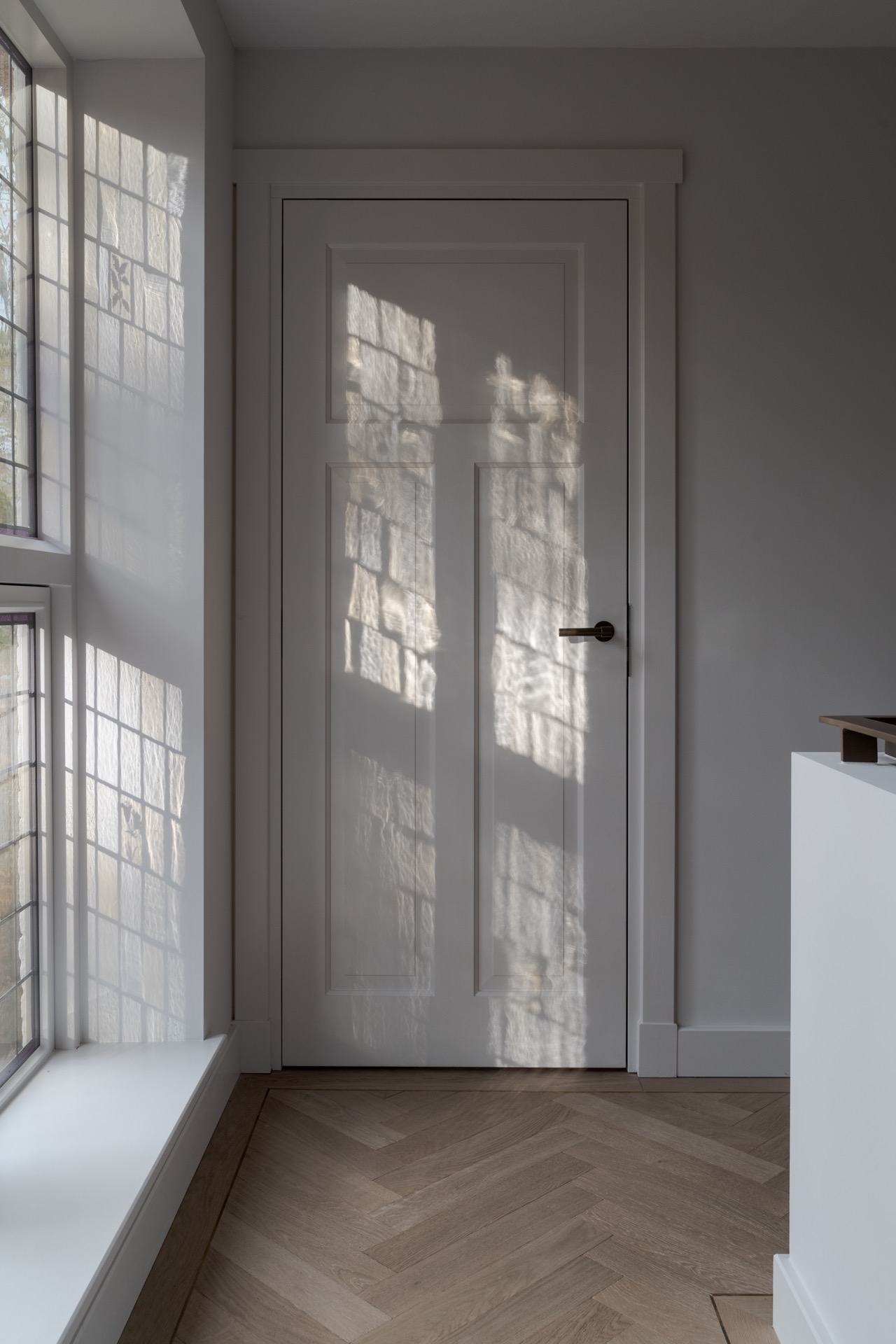
The modern interior is immediately visible in the way the project is framed. Sunlight filters through large windows, casting soft patterns on the pale wooden floor that extends across the living room. Here, a beige fabric sofa anchors the seating area, complemented by cushions in neutral shades and natural fiber textures. The subtle interplay of light and material draws attention to decorative elements such as tall glass vases holding slender branches, bringing elements from the outdoors inside.
modern interior as the architectural starting point
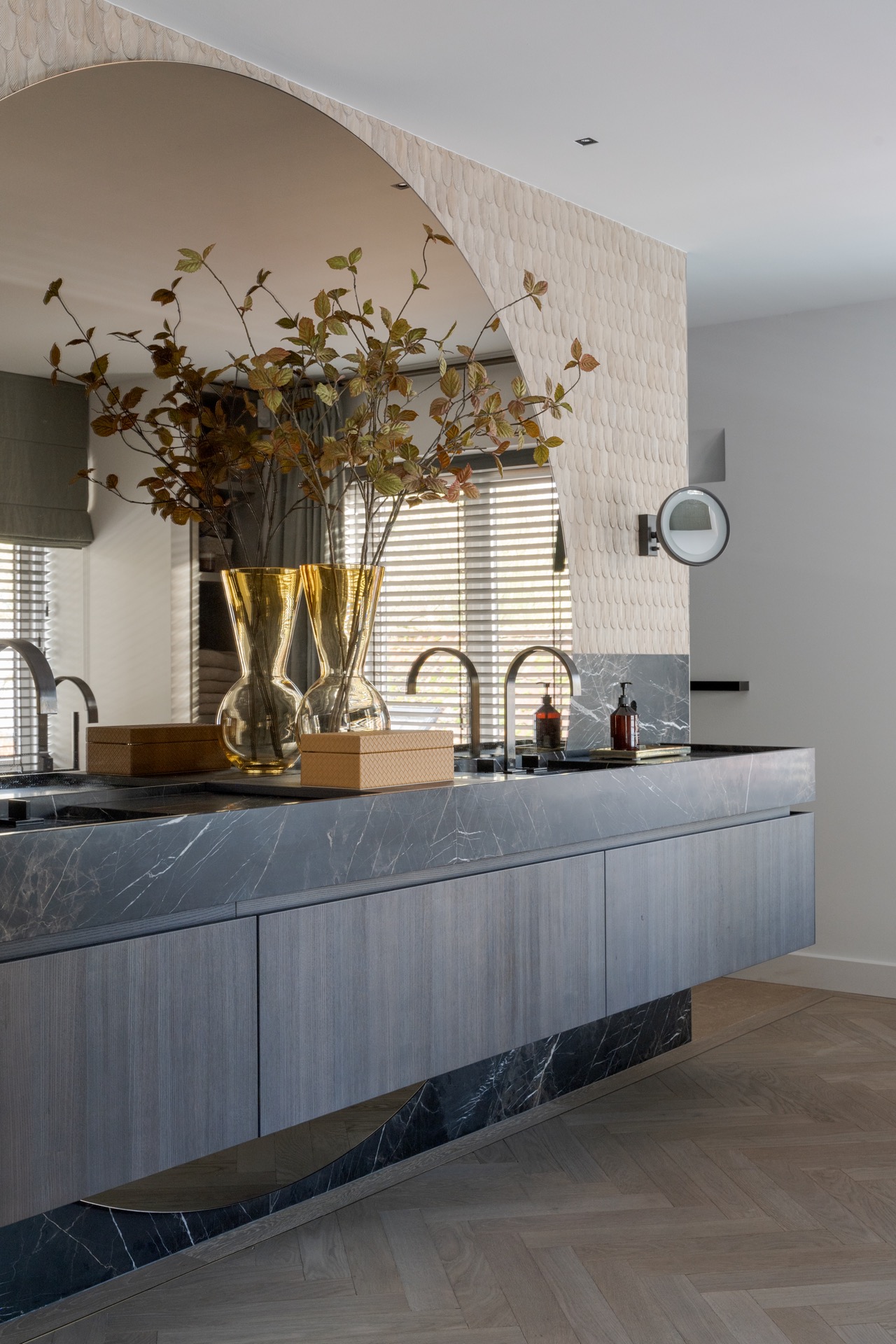
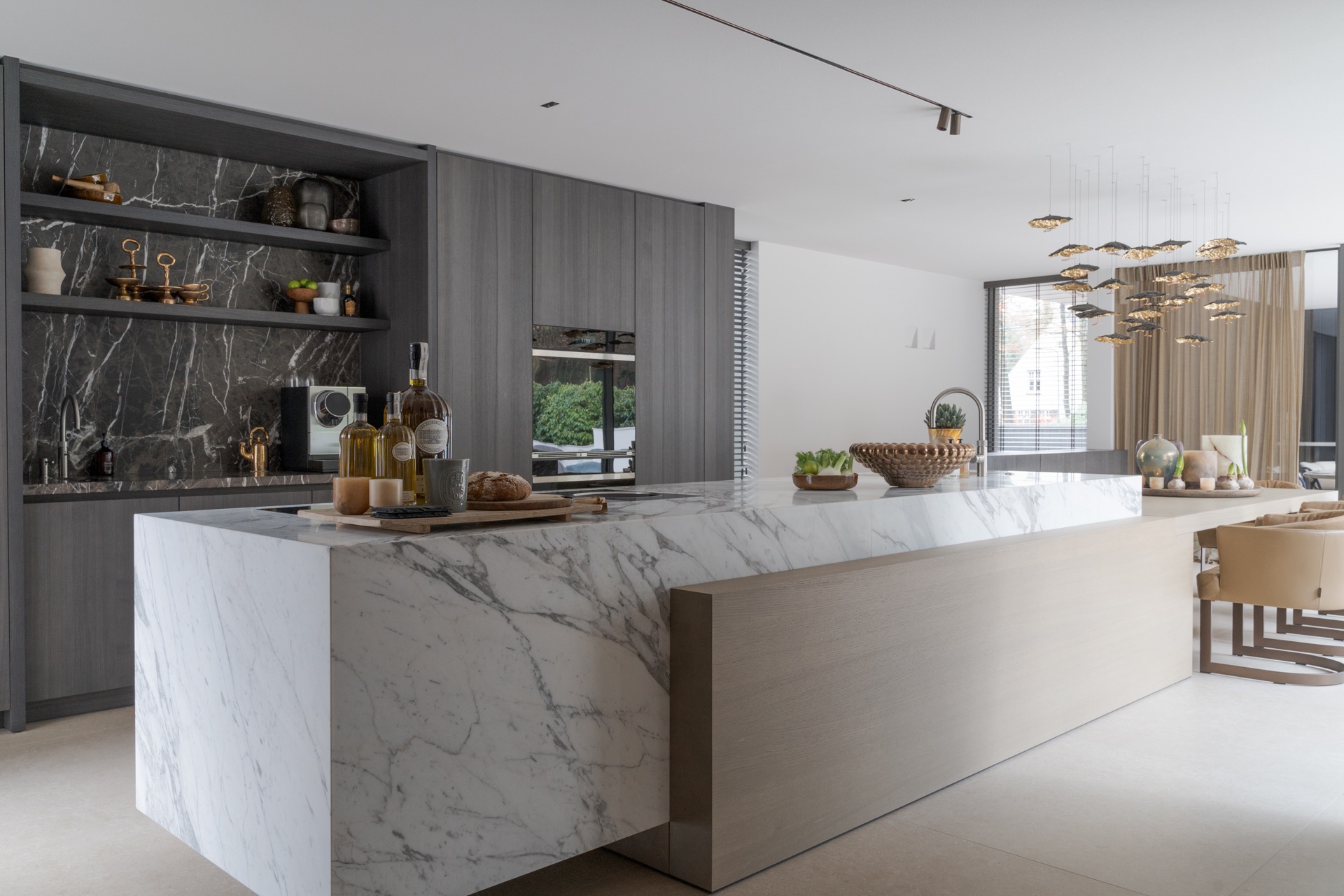
Opposite the living area, the kitchen reveals a careful selection of materials: a smooth marble countertop crowns a series of sleek gray cabinets with flat frontage. This combination reflects an understated modernity, balancing cold stone surfaces with the warmth of natural wood accents subtly incorporated elsewhere in the design. The monochrome palette in this space emphasizes shape and proportion over ornamentation.
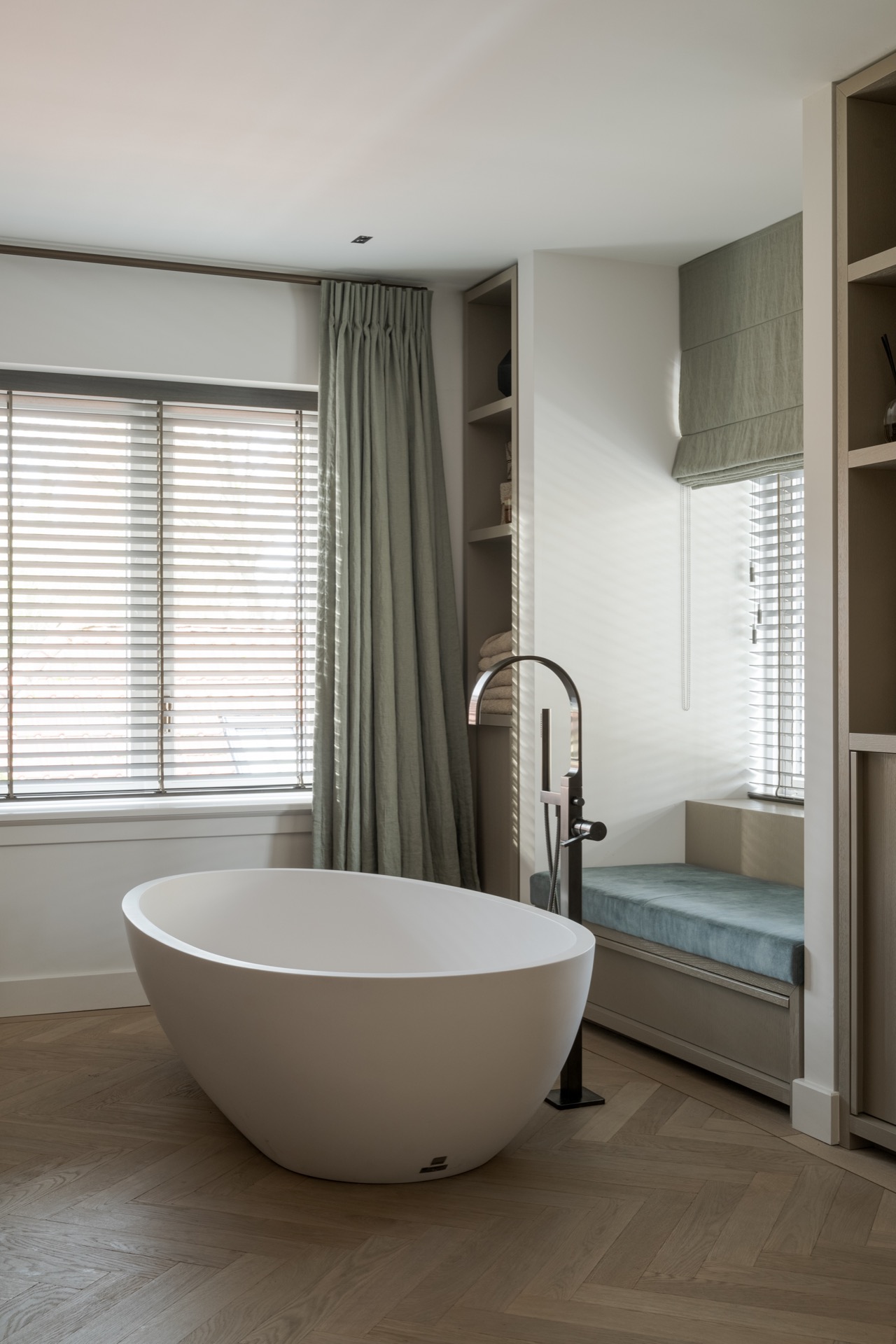
Bathroom with Freestanding Bath and Natural Illumination
The bathroom features a freestanding tub positioned near expansive windows fitted with horizontal blinds. The ample source of natural light enhances the polished surfaces, from the bath’s smooth curves to the minimalist fixtures. Light-colored tiles and wood details connect this area visually to the house’s broader material story, creating a space focused on calm and clarity.
modern interior as the architectural starting point
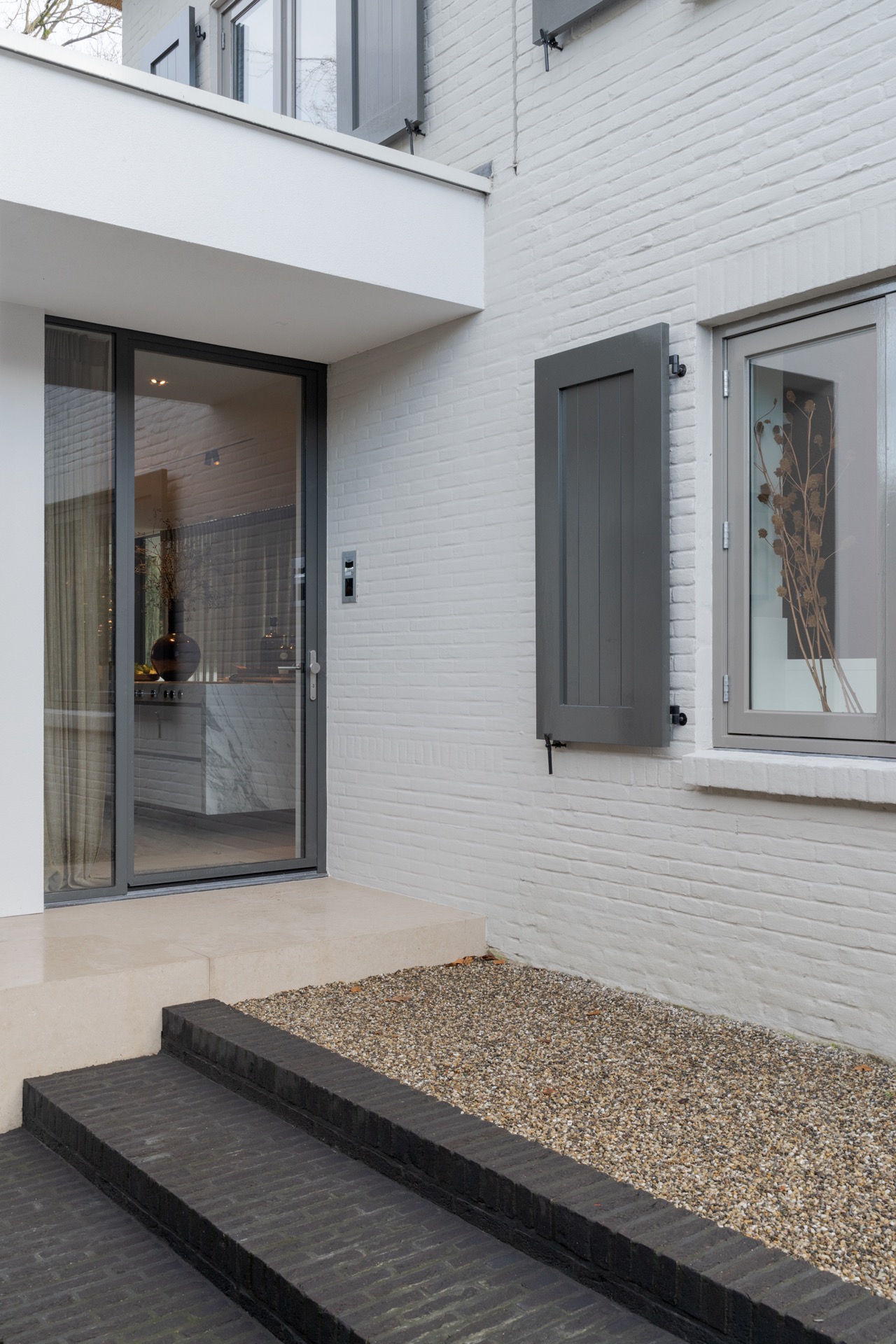
The exterior contrasts white walls with dark shutters, framing generous windows that open views to the surrounding forest. A concrete staircase with clean, straight lines leads to the entrance door, which incorporates a glass panel allowing additional light entry. The façade relies on simple forms, emphasizing volume and rhythm over decorative elements.
Interior Detailing: Warm Woods and Textured Surfaces
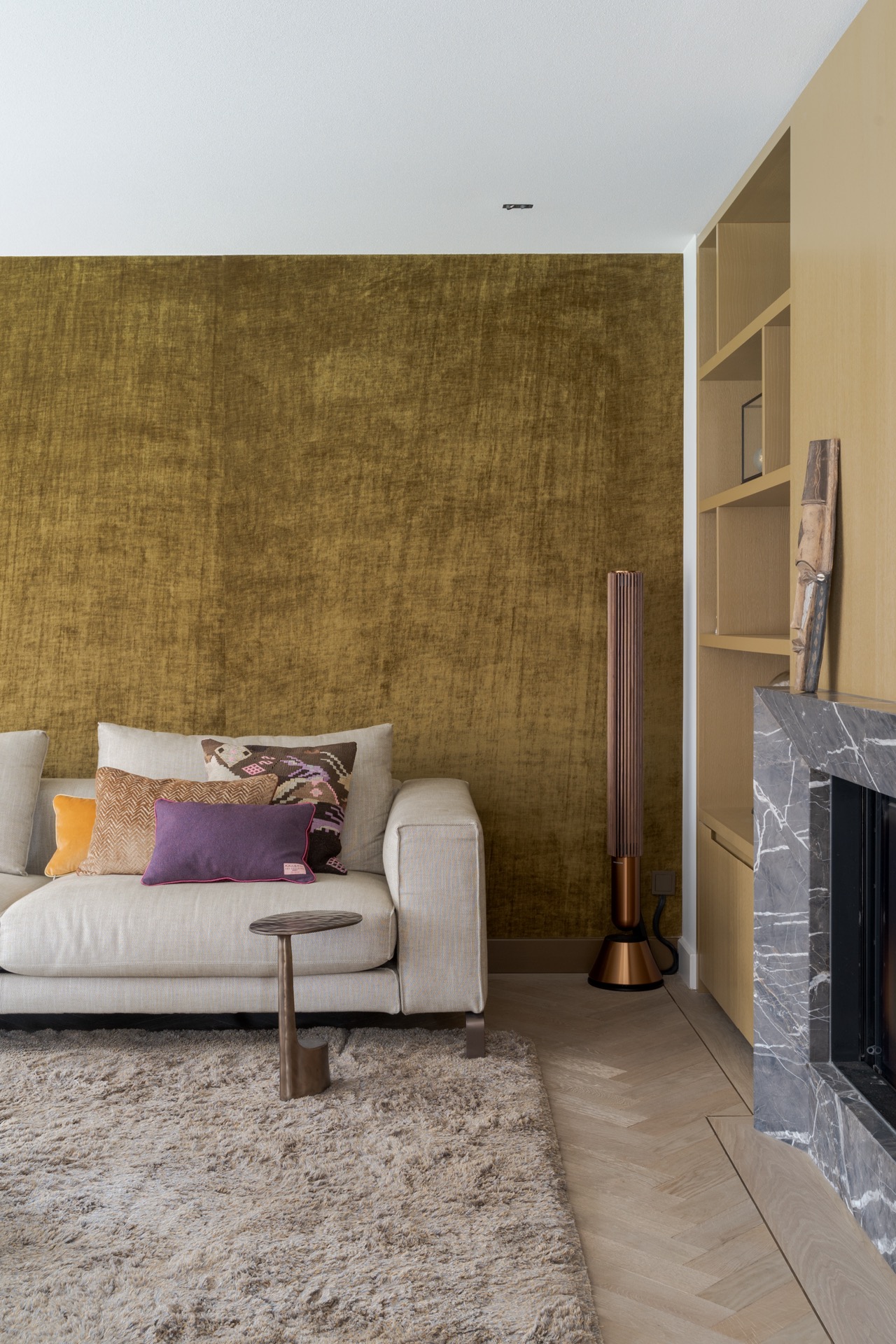
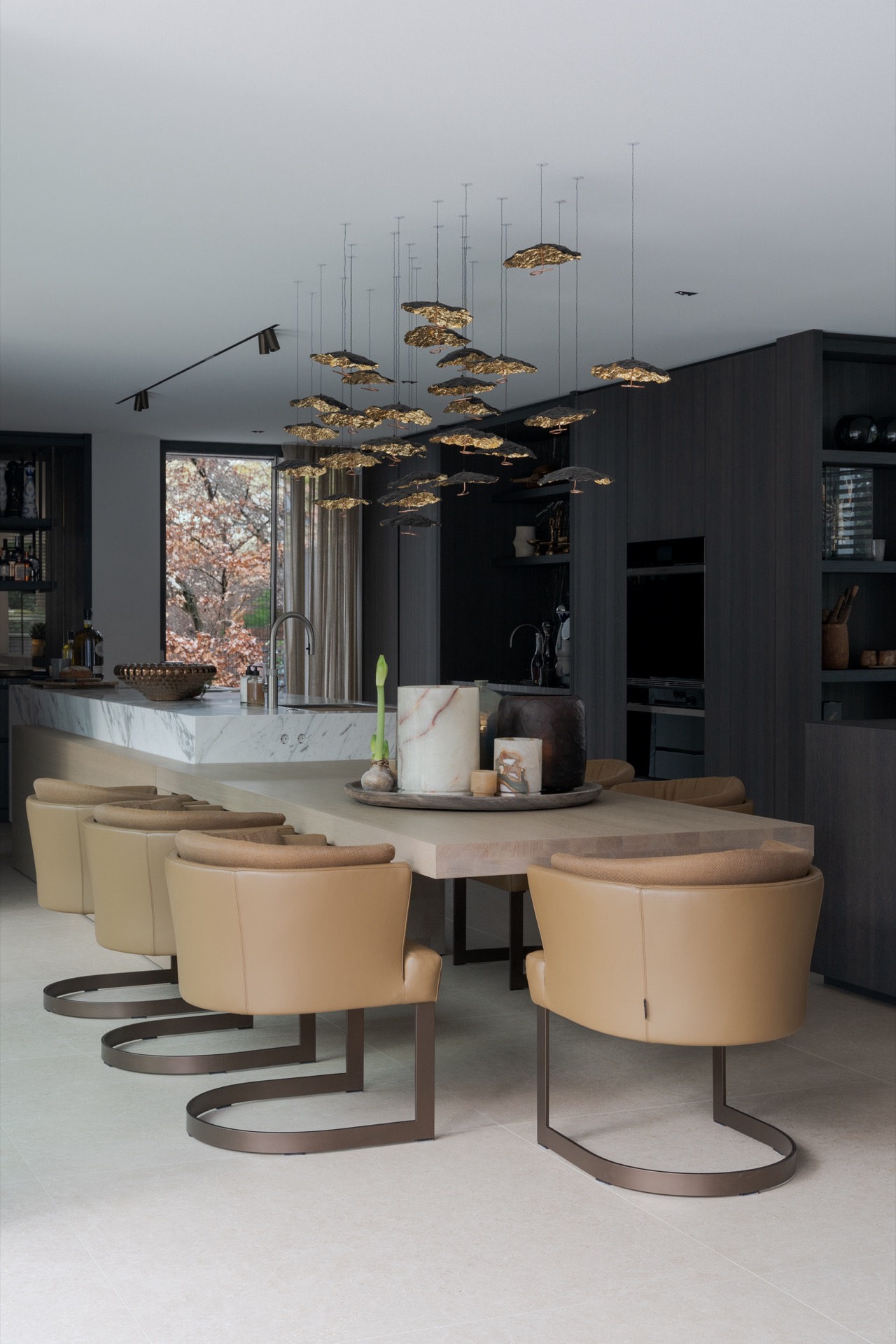
Within, the wooden floor extends through multiple rooms, its pale tone enhanced by soft textiles and assorted cushions scattered across the lounge seating. The presence of natural materials connects the interior with the wooded environment outside, while carefully positioned golden lamps and other decor pieces add variation in texture and subtle color accents.
Living Room Style: Blending Texture and Tone
The living area’s layout centers around comfort and openness, with furniture arranged to allow movement and views toward the outside. The use of light beige fabrics contrasts gently with accent pieces like dark wooden elements and green plants, integrating multiple textures without disrupting the overall muted color scheme.
Transitions Between Spaces
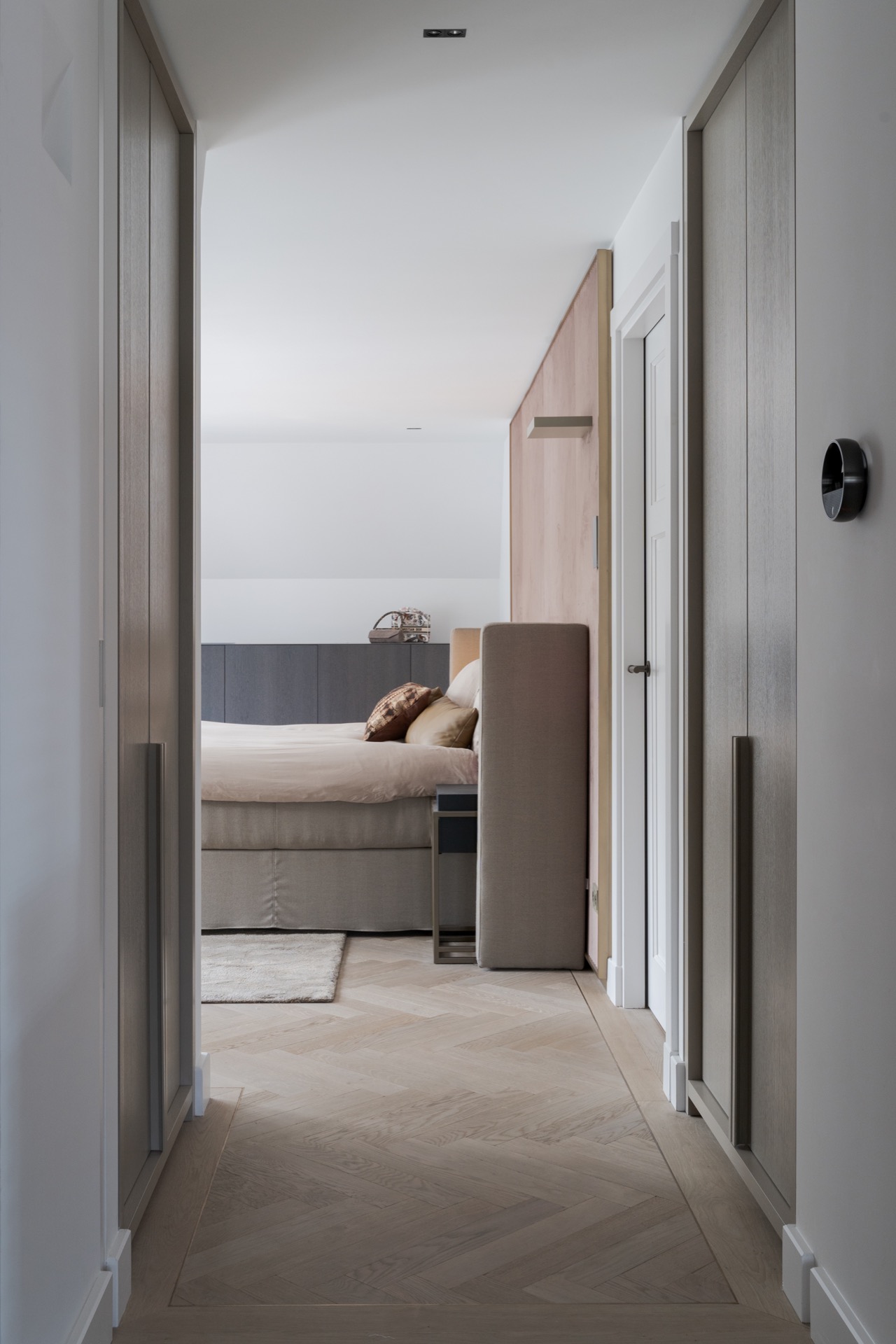
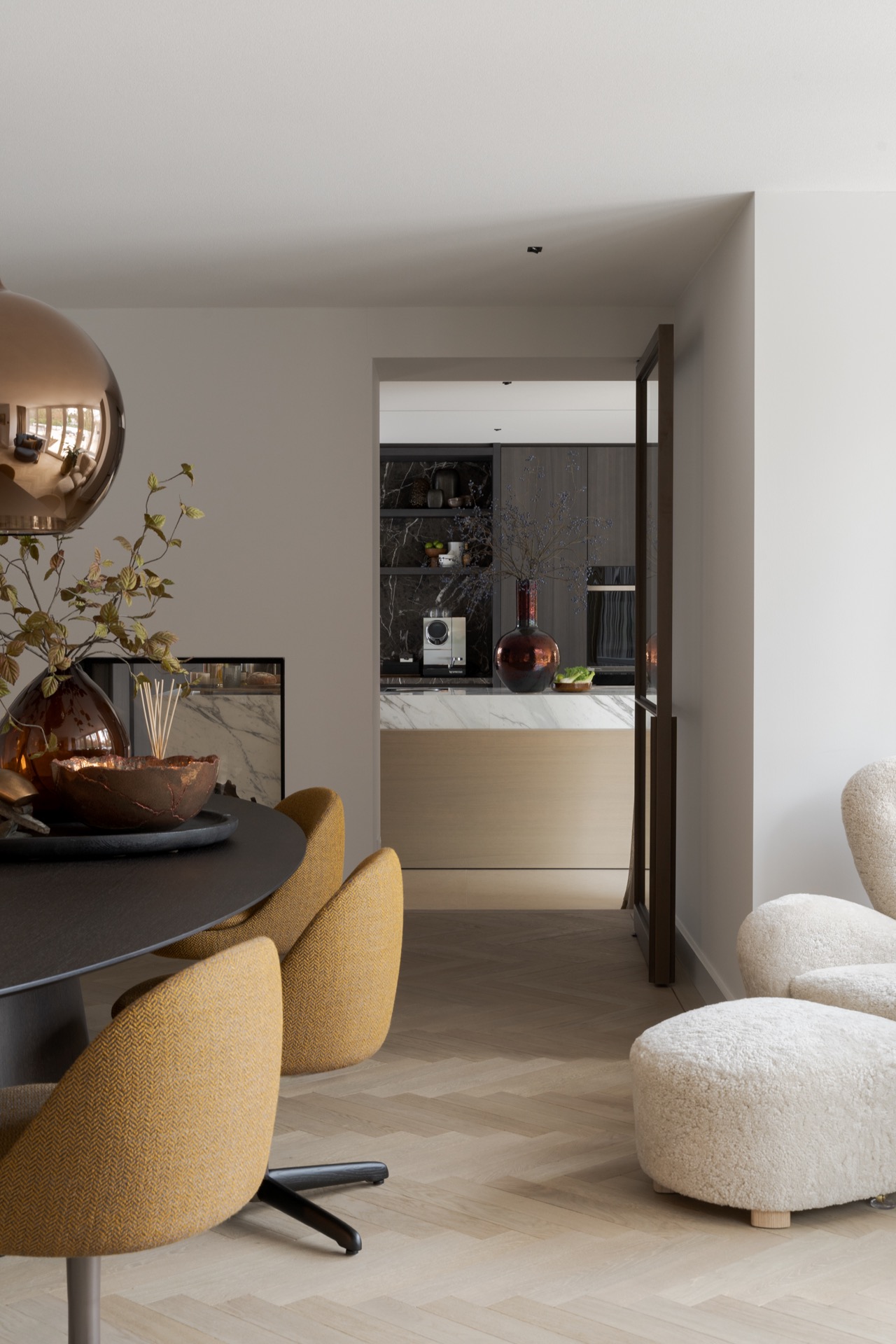
Doorways and sight lines maintain openness, facilitating a continuous flow between the kitchen, dining, and living zones. Transitions feature uninterrupted wooden flooring and minimal framing, allowing light and materials to unite these areas into one coherent spatial experience. That makes the modern interior part of the architectural character rather than a loose finish.
Embedded Lighting and Decoration Elements
Discrete fixtures, including strategically placed golden lamps, provide layered lighting options that enhance material qualities as daylight changes. Alongside these, decorative items such as oversized glass vessels and natural branches punctuate the rooms, grounding the interior palette in tangible natural textures.
Outdoor Connection Through Large Windows
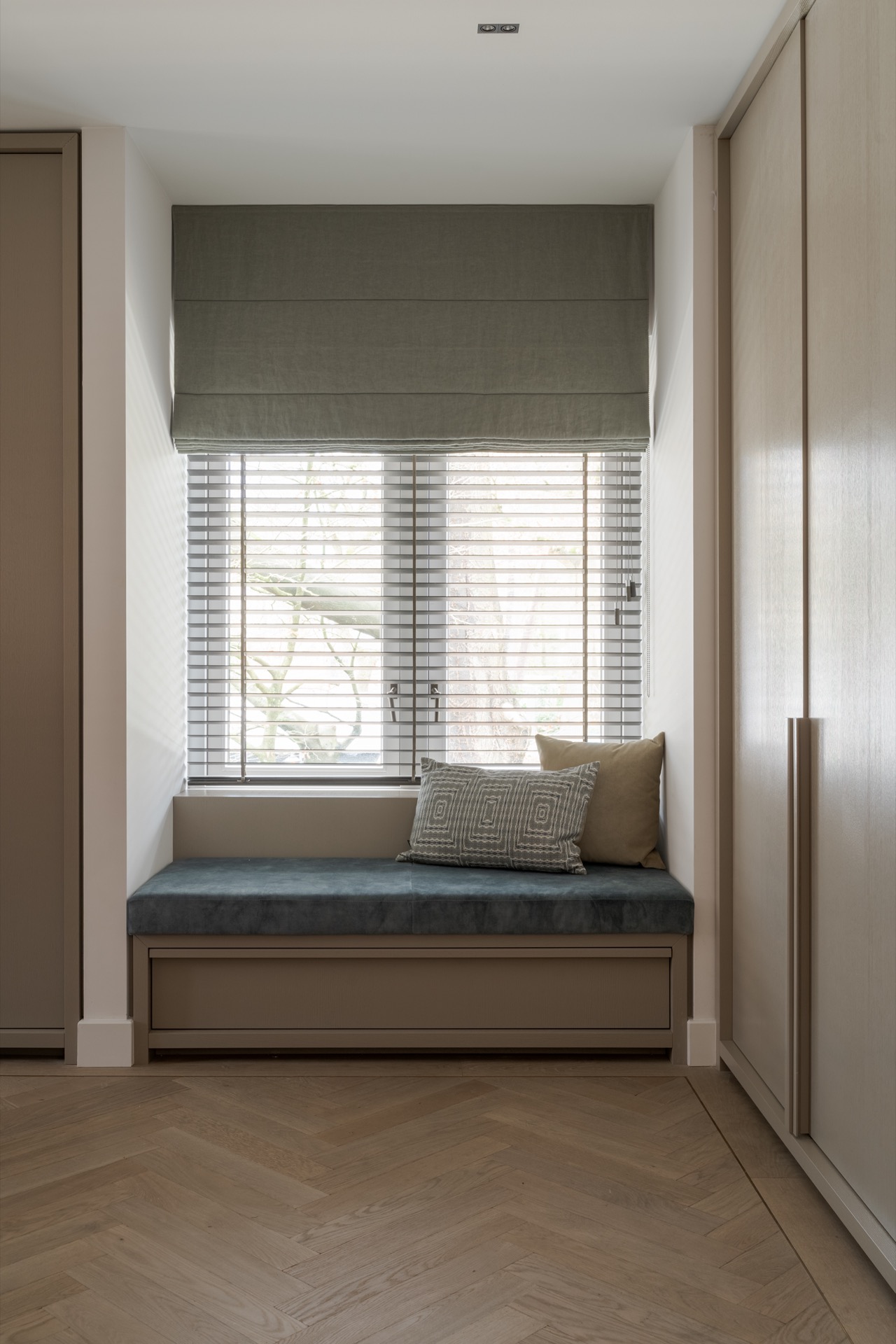
Floor-to-ceiling windows with simple blinds punctuate living spaces, inviting broad views of the bordering woods. These openings not only provide visual relief but also generate a dialogue between inside and out, reflected in the choice of natural materials and soft neutral tones found throughout the interior.
Material Palette Supporting a Sense of Restraint
Marble, pale wood, brick, and textiles define the tactile experience within the home. These materials, chosen for their surfaces and finishes, form a restrained palette that supports the architectural clarity of the modern extension, emphasizing form and light rather than surface decoration.
Wellness Area Linked to Residential Spaces
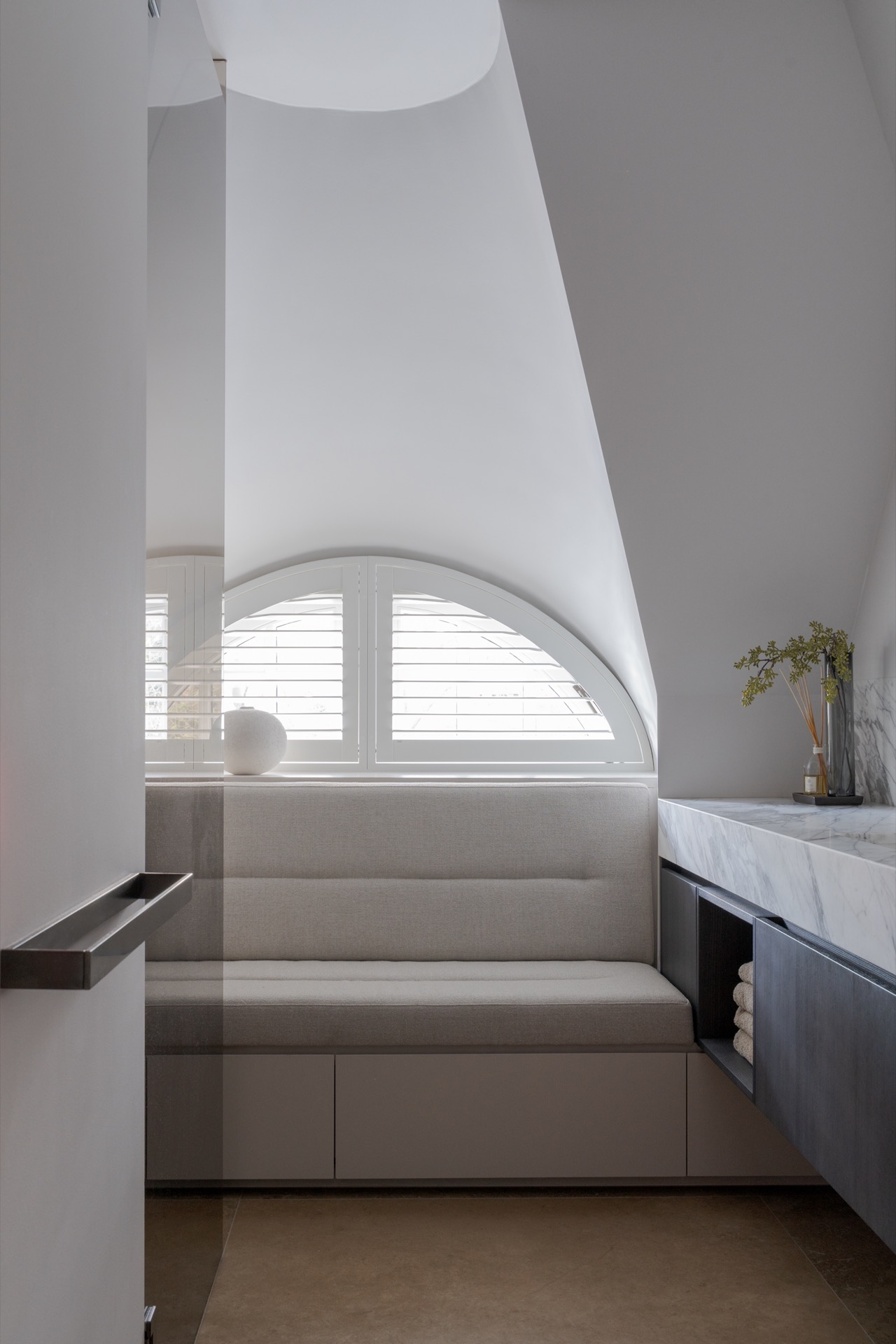
The wellness zone, adjacent to the main living quarters, extends the material and spatial language through natural stone, smooth wooden floors, and large glazed openings. This area promotes a sense of openness and lightness, incorporating simple furnishings that emphasize the material environment.
Exterior and Interior Symmetry in Design
The house’s overall appearance is marked by an alignment of linear elements on both the outside and inside, creating a dialogue between the strict geometry of the façades and the softer, comfortable interior. Shutters, window frames, and built-in elements reflect this repetition of forms and contribute to the overall spatial coherence.
Use of Neutral Colors to Define Space and Mood
Neutrals dominate the palette, with shades of beige, gray, and white used consistently across rooms. This approach heightens the impact of texture and material quality, ensuring spaces feel both expansive and grounded. The restrained chromatic approach keeps focus on spatial relationships and natural light.
Details and Finishes Enhancing Lasting Appeal
Subtle decorative touches—such as the contrast between matte and gloss finishes, or the tactile quality of woven cushions—enrich the spaces without overwhelming them. Fixtures and furnishings maintain straightforward forms, integrating with the architectural intent throughout the property. That makes the modern interior part of the architectural character rather than a loose finish.
Want to see more of Erik Koijen? View the page of Erik Koijen for even more great projects and company information.


.png)