






Authentieke landelijke boerderij met rieten dak
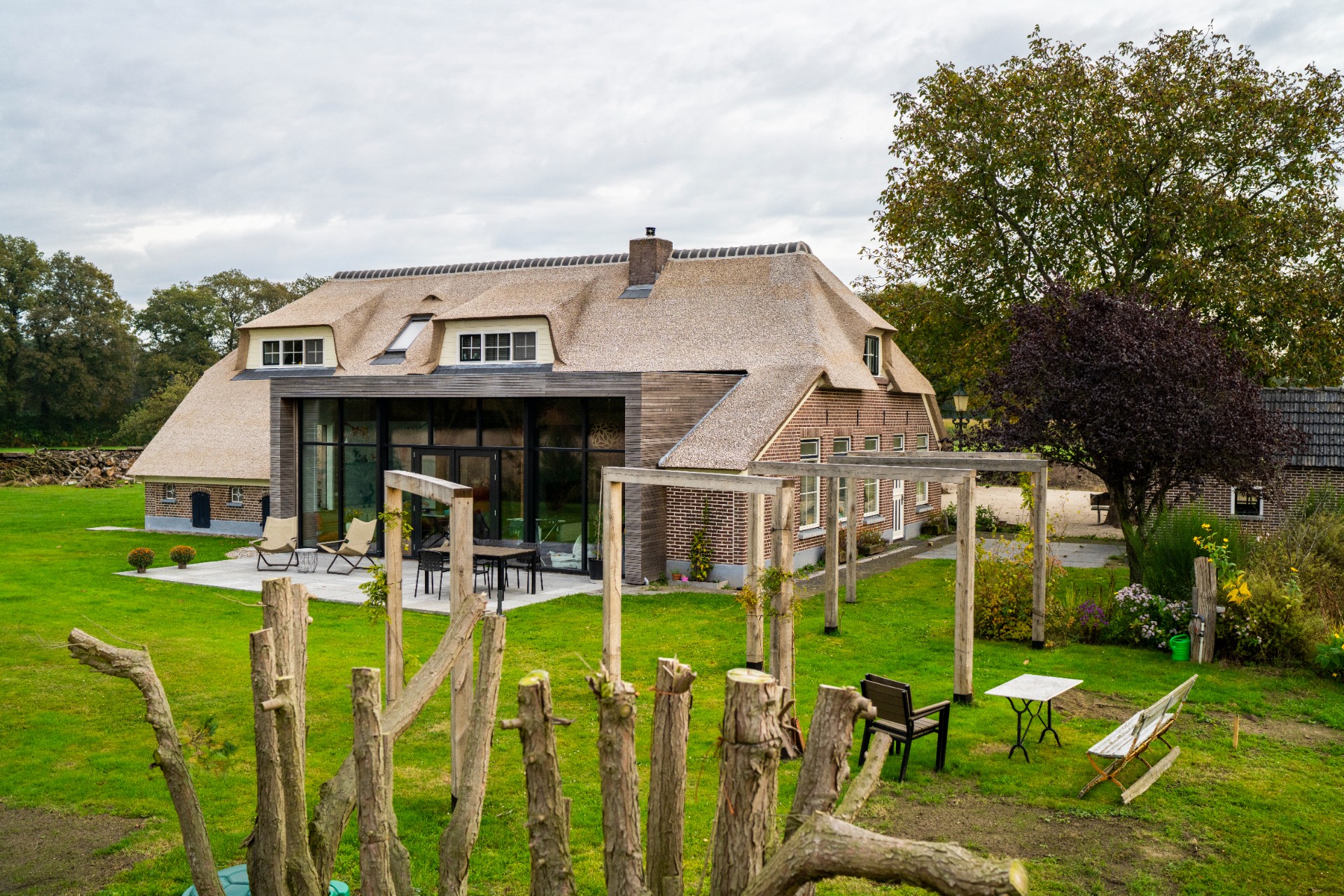
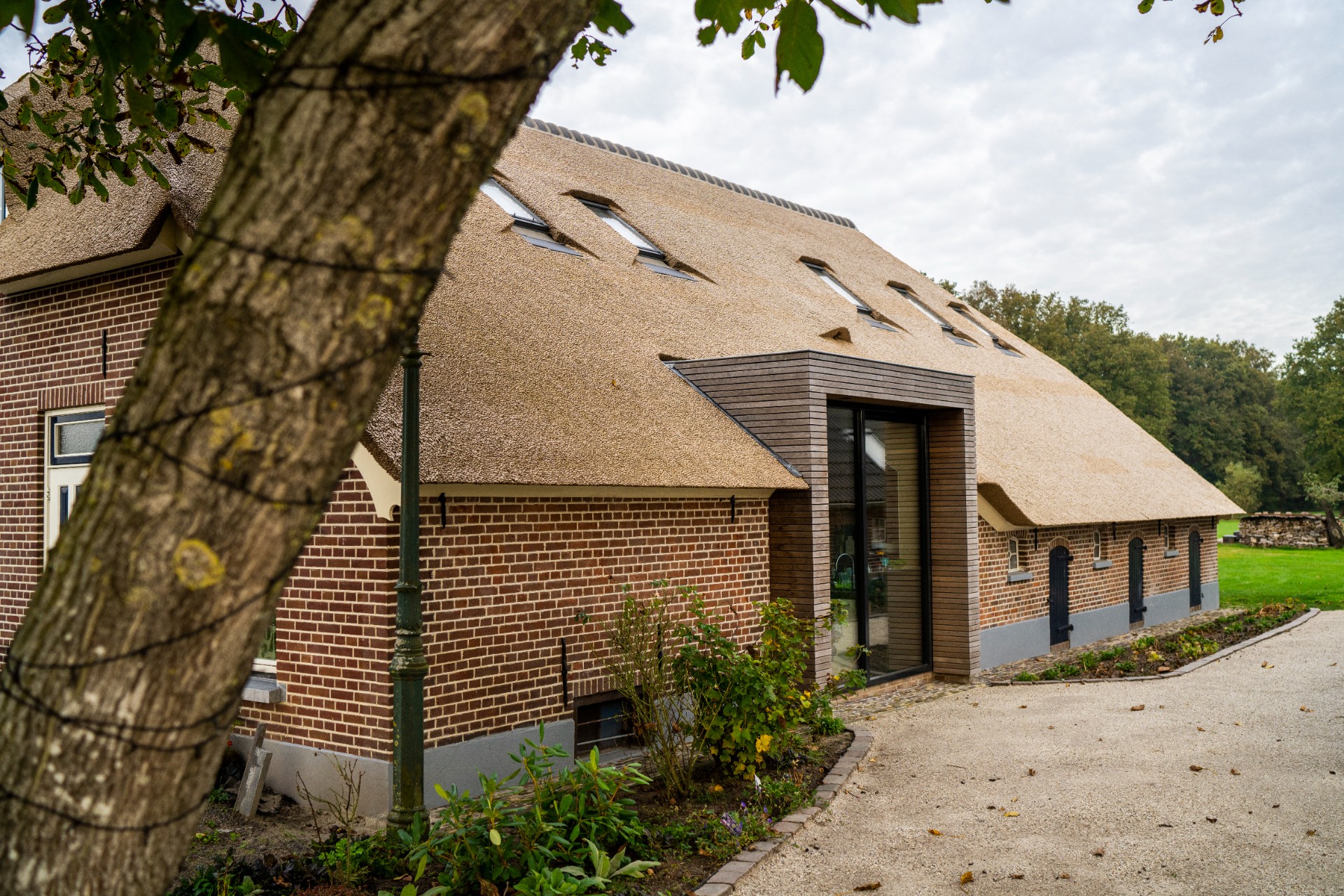
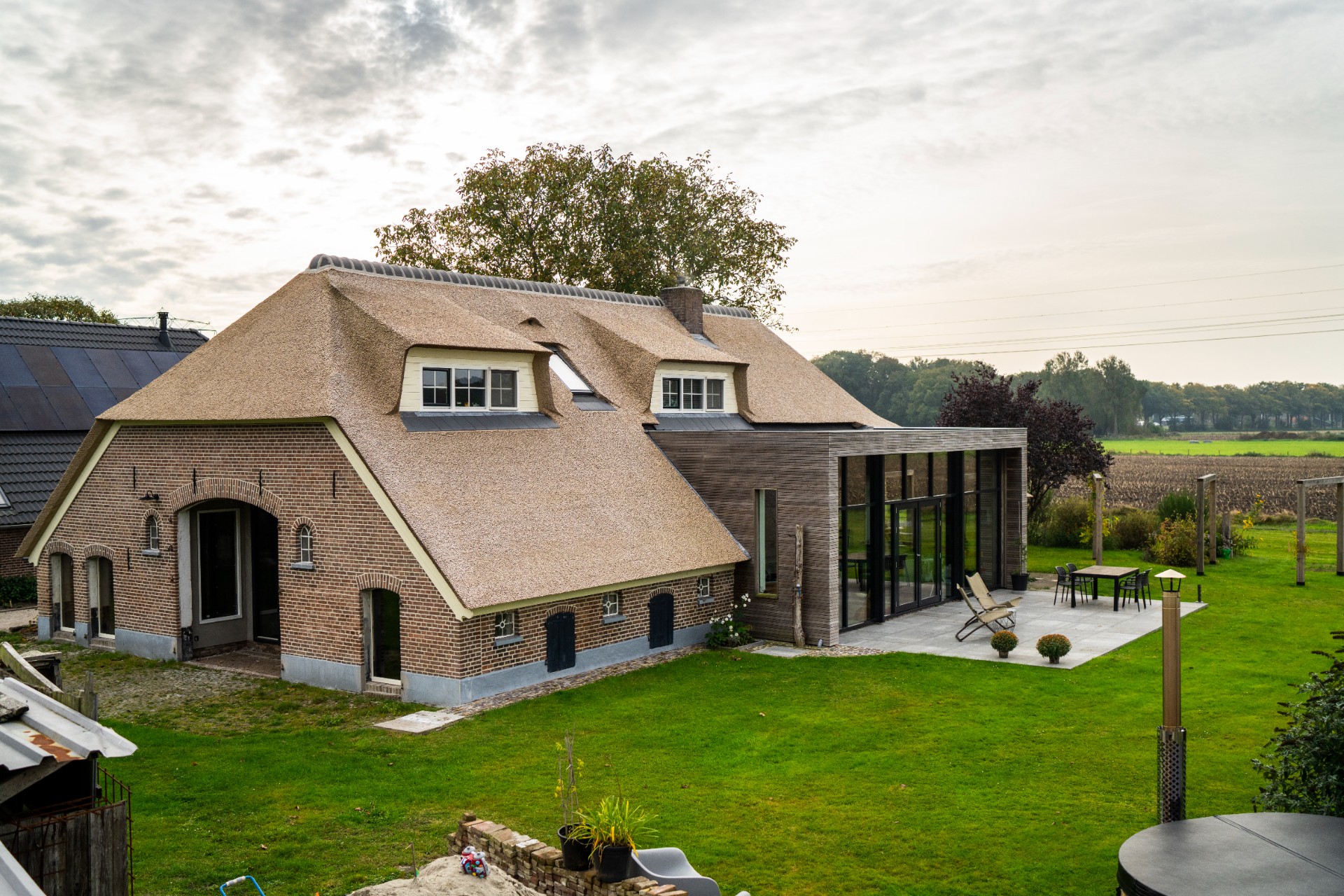
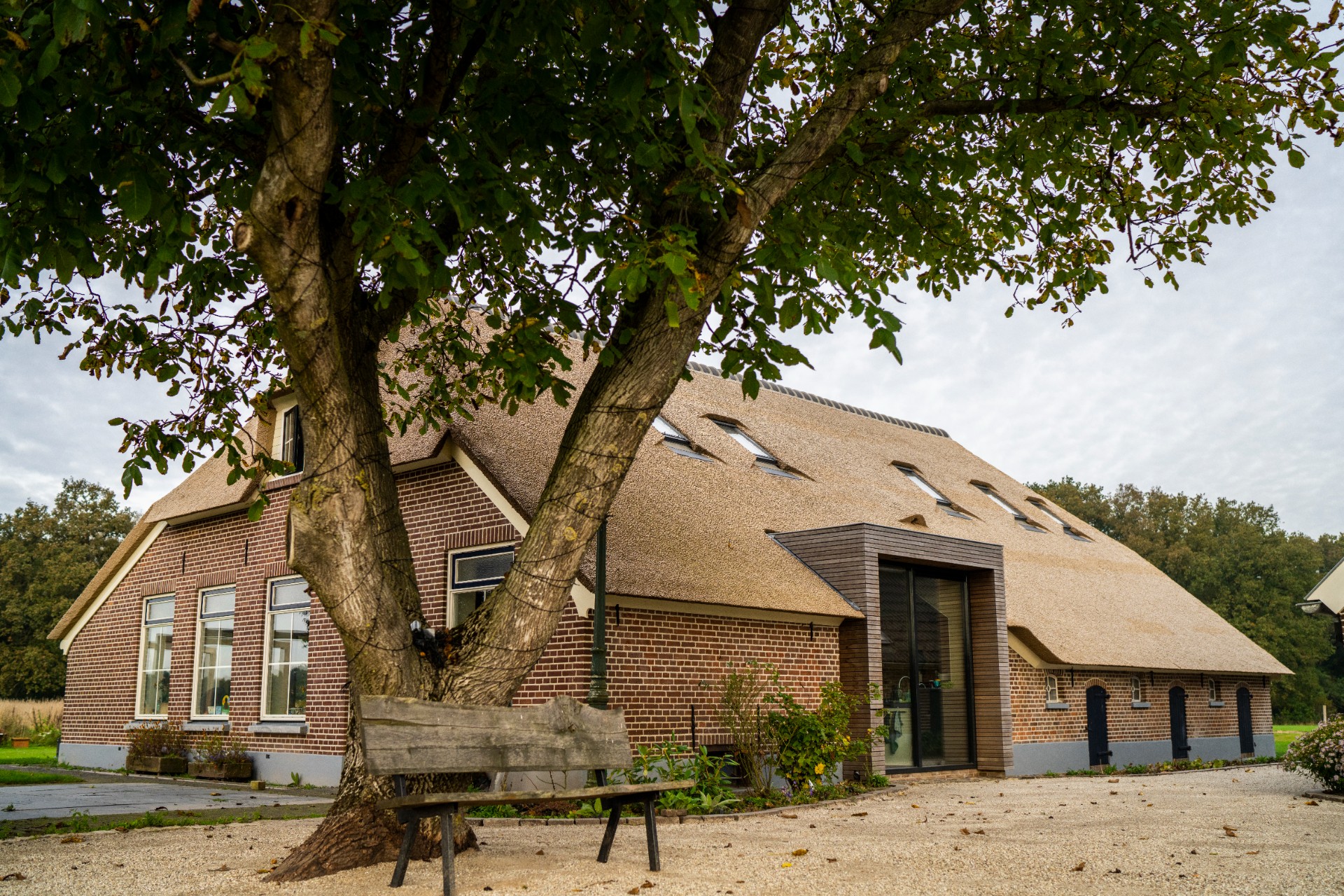
The thatched roof is immediately visible in the way the project is framed. The roof’s surface is formed by carefully layered synthetic reeds, arranged in tapered bundles that trace the contours of the gently sloping structure with precise edges. This technique recalls traditional thatching, yet the material offers a subtle stiffness that holds crisp geometry. Below, the walls alternate between patches of textured brick and upright wooden panels, each responding uniquely to light and shadow, casting nuanced patterns throughout the day.
thatched roof as the architectural starting point
Warm-toned bricks form irregular surfaces, their colors varying softly to catch daylight with uneven highlights. Vertical wooden sidings punctuate these solid planes, their grain and subtle relief introducing a vertical rhythm. The contrast between masonry and timber draws the eye along and around the farmhouse, offering layers of tactile and visual interest without interruption.
A Glazed Conservatory Bridges Inside and Out
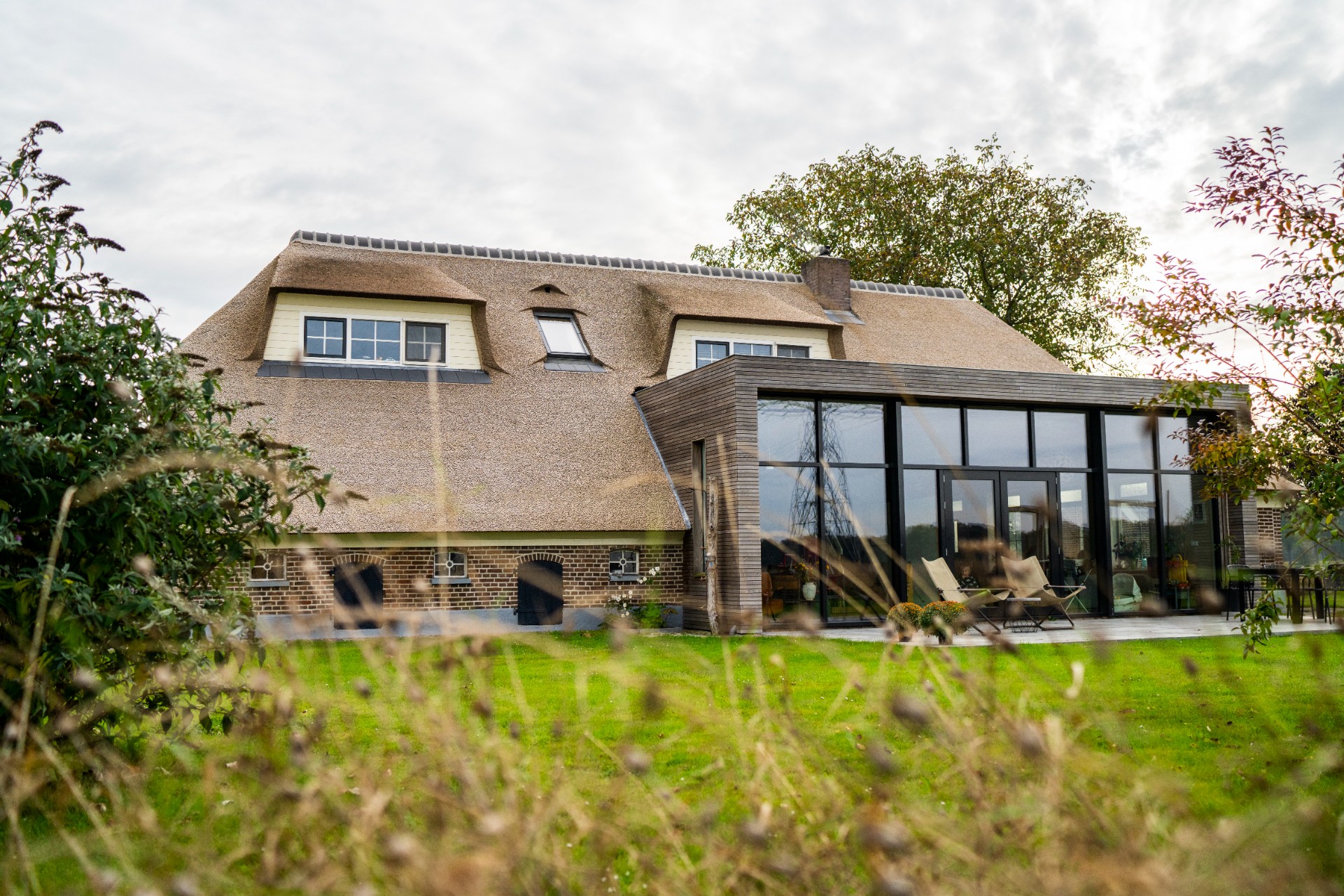
One face of the house opens onto a largely glazed conservatory framed in simple lines. Floor-to-ceiling glass admits daylight filtered through neighboring fruit trees, whose leaves cast lively shadows onto the stone floor beneath. This transitional space blends the solidity of the main dwelling with the garden’s openness, providing a changing atmosphere that shifts with the day.
Stone Terrace Beneath Fruit Trees’ Canopies
Extending from the conservatory, a broad stone terrace offers seating tucked under the gentle shade of fruit tree branches. Dappled sunlight moves with the breeze, creating a dynamic interweaving of light and shadow across the seating area. The terrace subtly balances shelter and exposure, adapting to seasonal changes and inviting varied use throughout the year.
thatched roof as the architectural starting point
Beyond the cultivated garden, clusters of native trees and low shrubs create a softened boundary, merging the managed spaces with open fields. This gradual transition diminishes abrupt separations and nurtures a connection with the surrounding rural landscape. The native vegetation cushions the property edges, integrating it quietly with its natural context.
Architectural Forms Combine Tradition and Restraint
The farmhouse recalls rural building traditions through the roof’s layered reed appearance and brick masonry, while crisp glazing and refined details introduce a contemporary sensibility. The synthetic reeds maintain thatched roof textures and depth, engineered for durability and reduced upkeep. Such choices strike a balance between historical reference and practical innovation.
thatched roof as the architectural starting point
Fruit trees arrange naturally around seating and paved spaces, serving as windbreaks and shade providers that modify local microclimates. Plantings favor native species, blending formal garden elements with a countryside gardening ethos. This layout supports biodiversity while framing outdoor rooms with seasonal and ecological responsiveness. That makes the thatched roof part of the architectural character rather than a loose finish.
Material Contrast Enhances Visual Complexity
Nearby, fired bricks exhibit a rugged texture that catches and scatters light irregularly, while adjacent glass panels reflect with sleek precision. Wooden battens framing windows add subtle tactile detail, reinforcing order without overwhelming simplicity. These material juxtapositions reveal careful craftsmanship and shape the building’s volumes and views outward.
Roof Geometry Shapes the Farmhouse’s Profile
Its silhouette merges soft slope transitions with sharply defined edges formed by layered synthetic reeds. The roof’s texture recalls traditional thatching techniques, yet delivers an orderly, long-lasting surface. This synthesis preserves familiar rural forms while adapting to the demands of current material performance.
Outdoor Furnishings Echo Natural Palette
On the terrace, furniture crafted from timber with natural finishes complements the earthy tones of brick and landscape hues. The scale and shape invite informal gatherings without blocking garden views, extending the living experience outdoors while maintaining visual continuity between house and terrain.
Layered Garden Spaces Invite Varied Interaction
Arranged stone patios, shaded beds, and gentle lawns offer a sequence of outdoor environments. Open areas accommodate larger gatherings, while secluded nooks provide quiet retreats. This spatial diversity encourages movement and makes the garden a dynamic extension of interior life.
Architectural Details Add Subtle Refinement
Corners and aperture frames feature neat wooden trims that delineate edges without ornament. Flush window profiles minimize disruption of exteriors, and material junctions appear carefully executed. These restrained details emphasize form clarity and craftsmanship on the farmhouse’s modest facade.
Practical Benefits of Synthetic Reed Roofing
Choosing artificial reeds ensures resilience against typical weather stresses while preserving the layered, tactile quality of a traditional thatched roof. This roofing approach reduces maintenance demands and sustains a familiar rural silhouette adapted to modern durability needs.
Together, this farmhouse and its garden reflect a thoughtful dialogue between carefully selected materials, architectural form, and landscape context. The defined roof textures, contrasting wall finishes, and layered garden edges compose a residence that acknowledges rural heritage through contemporary interpretations. That makes the thatched roof part of the architectural character rather than a loose finish.
Want to see more of De Rietdekker? View the page of De Rietdekker for even more great projects and company information.


.png)