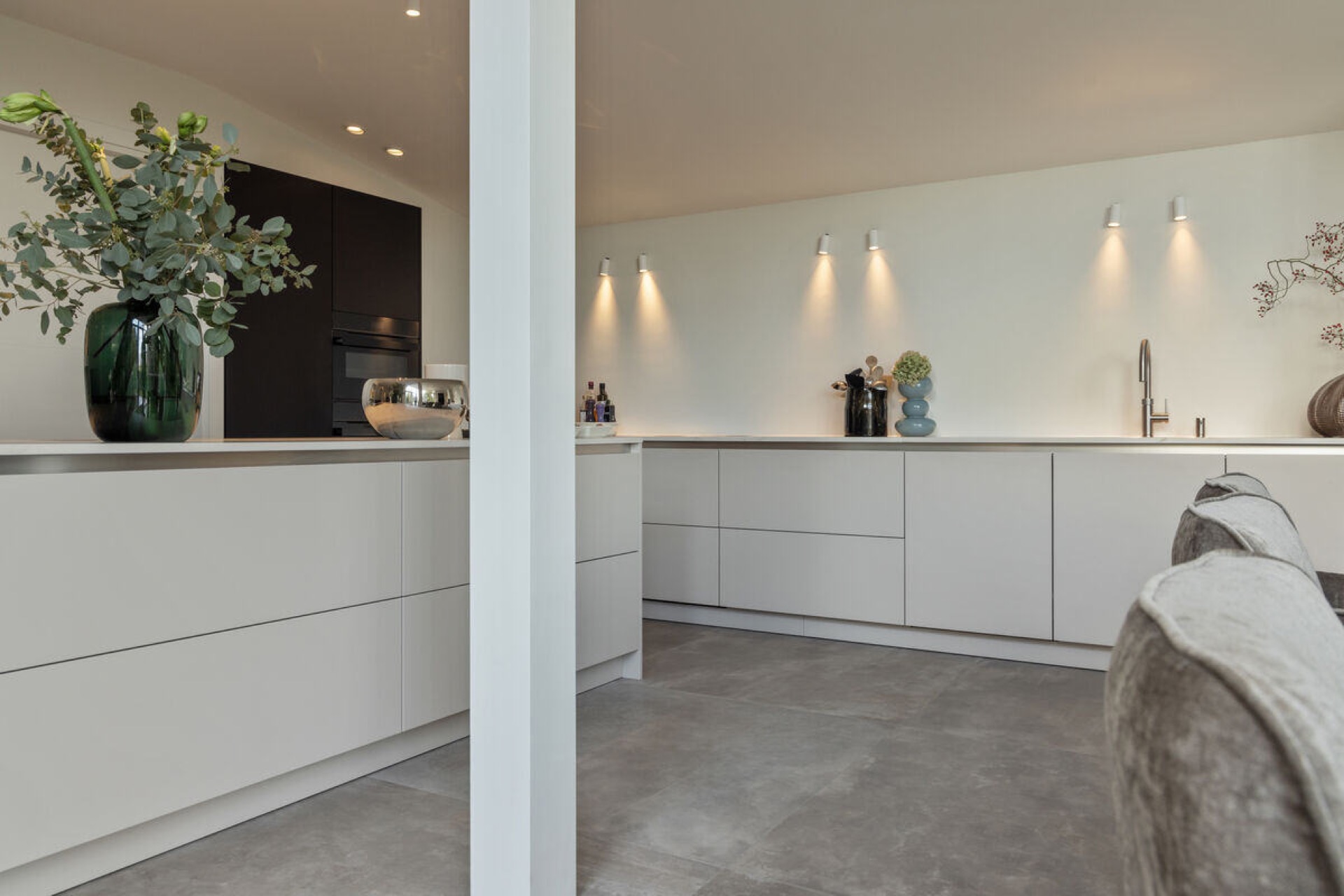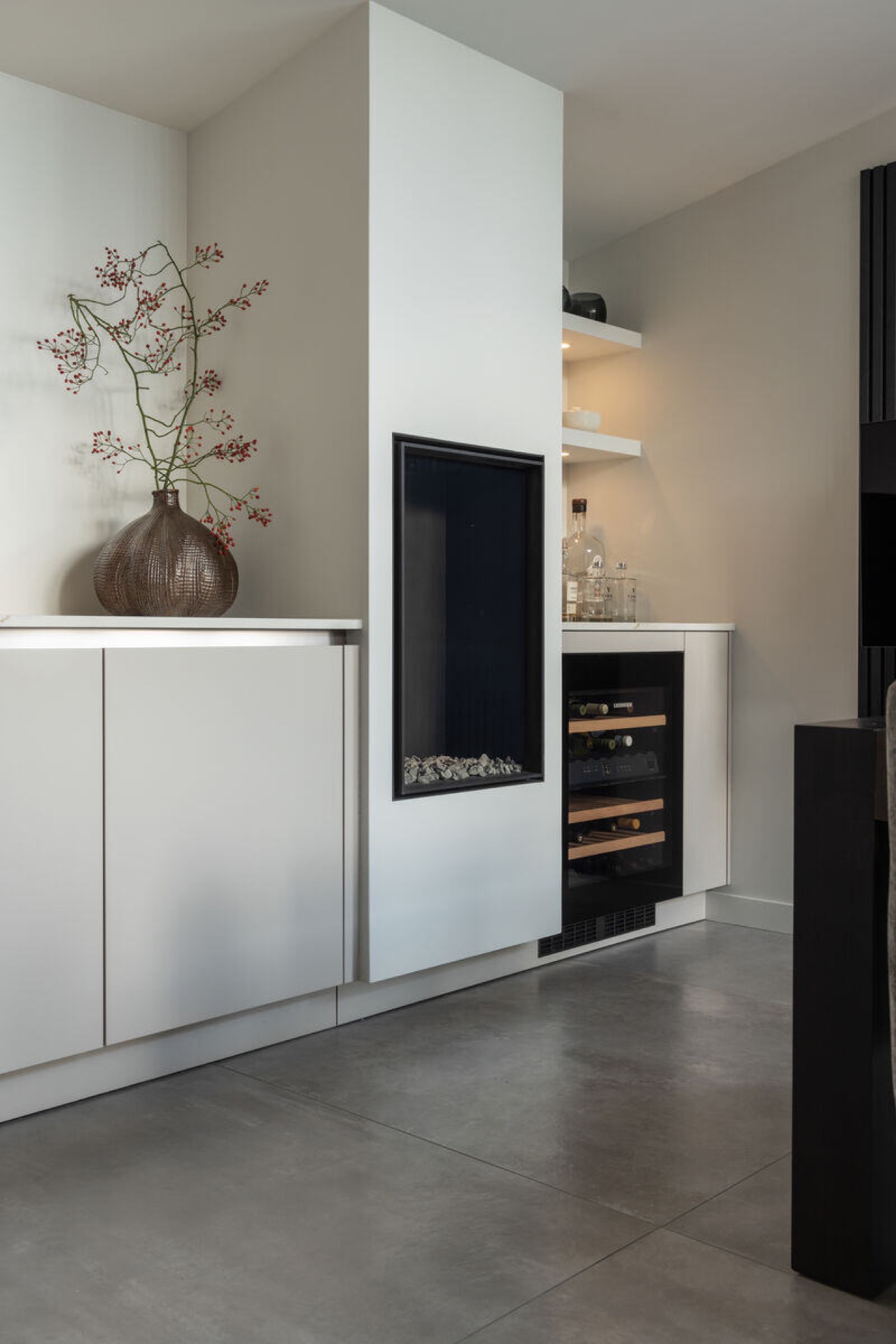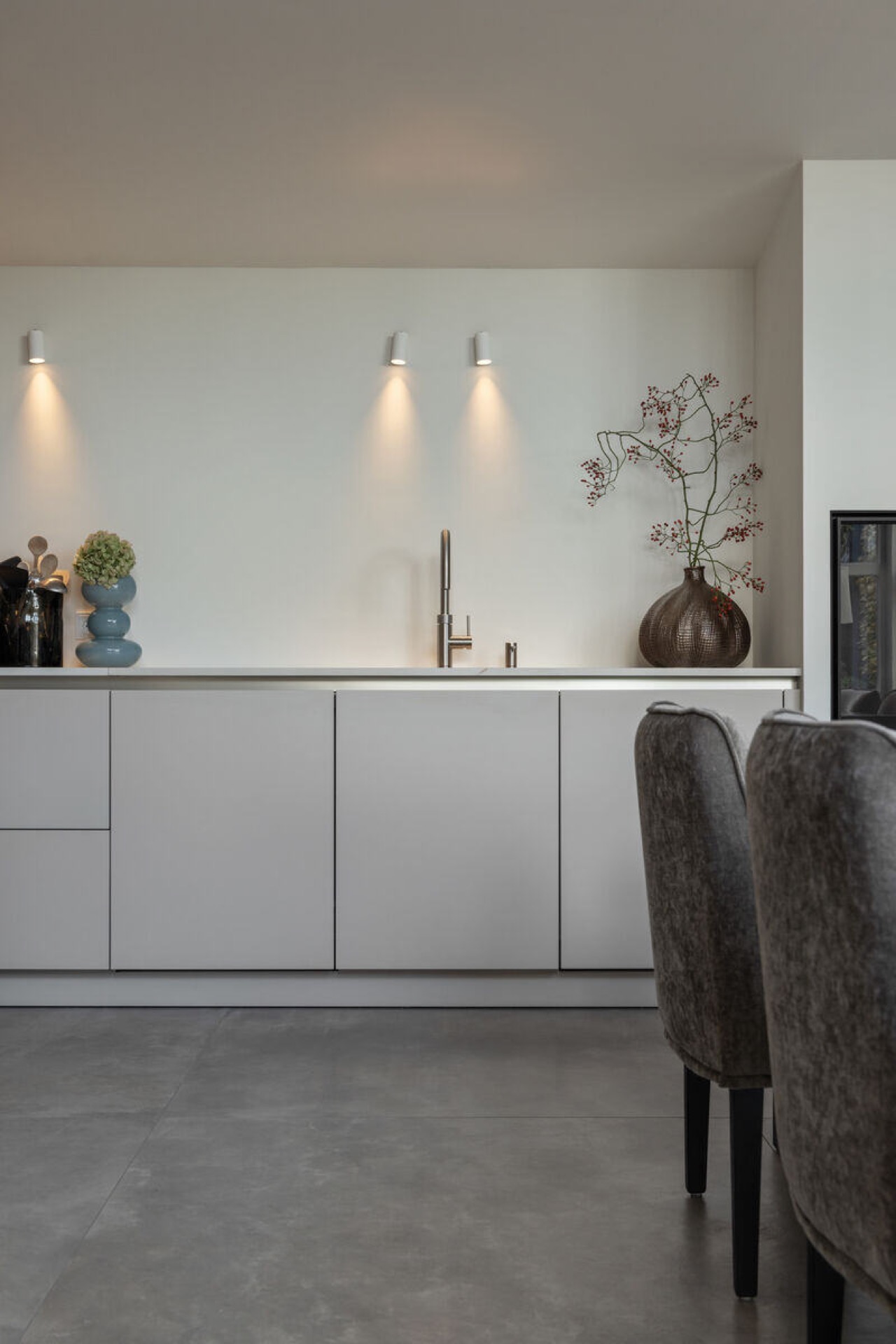







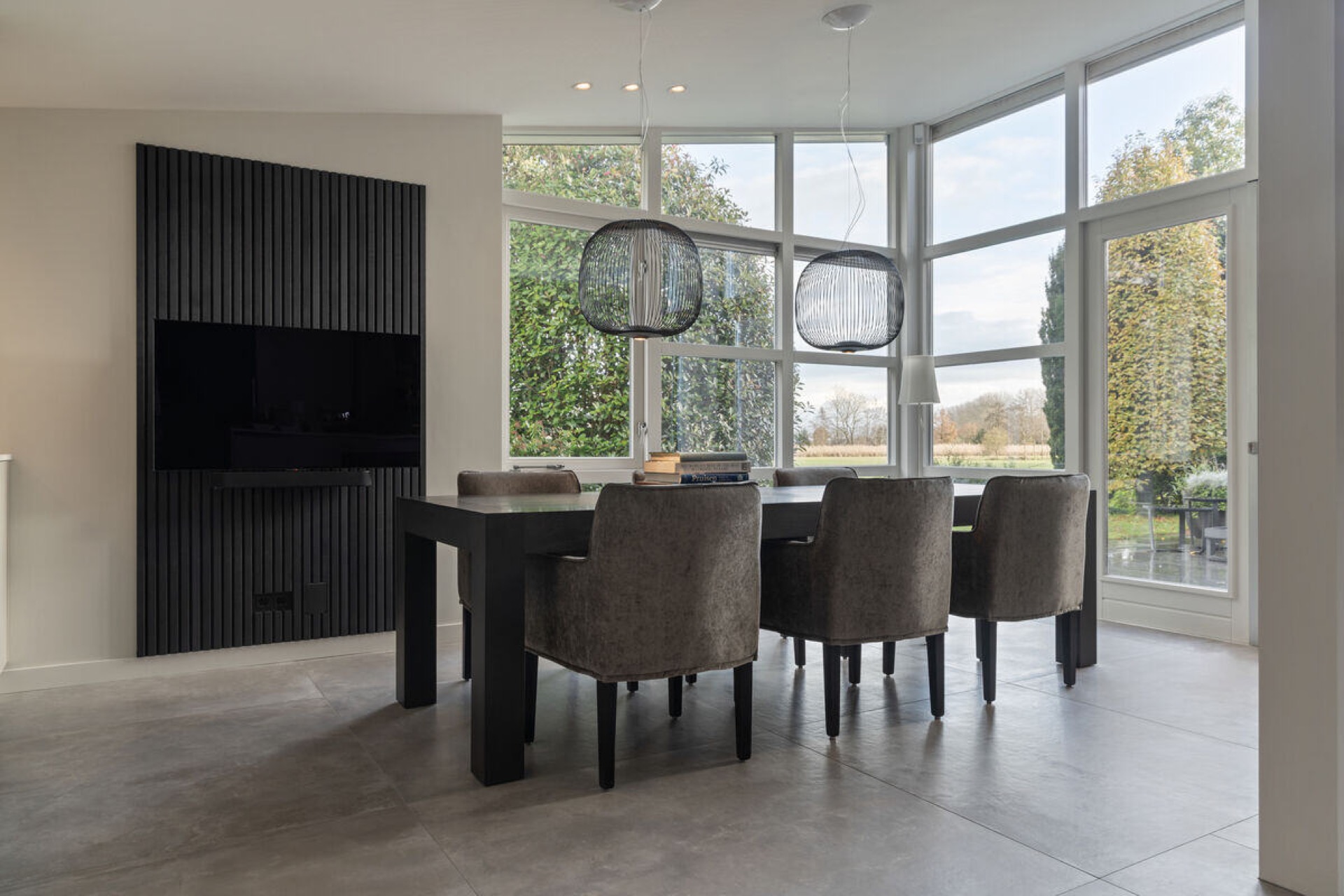
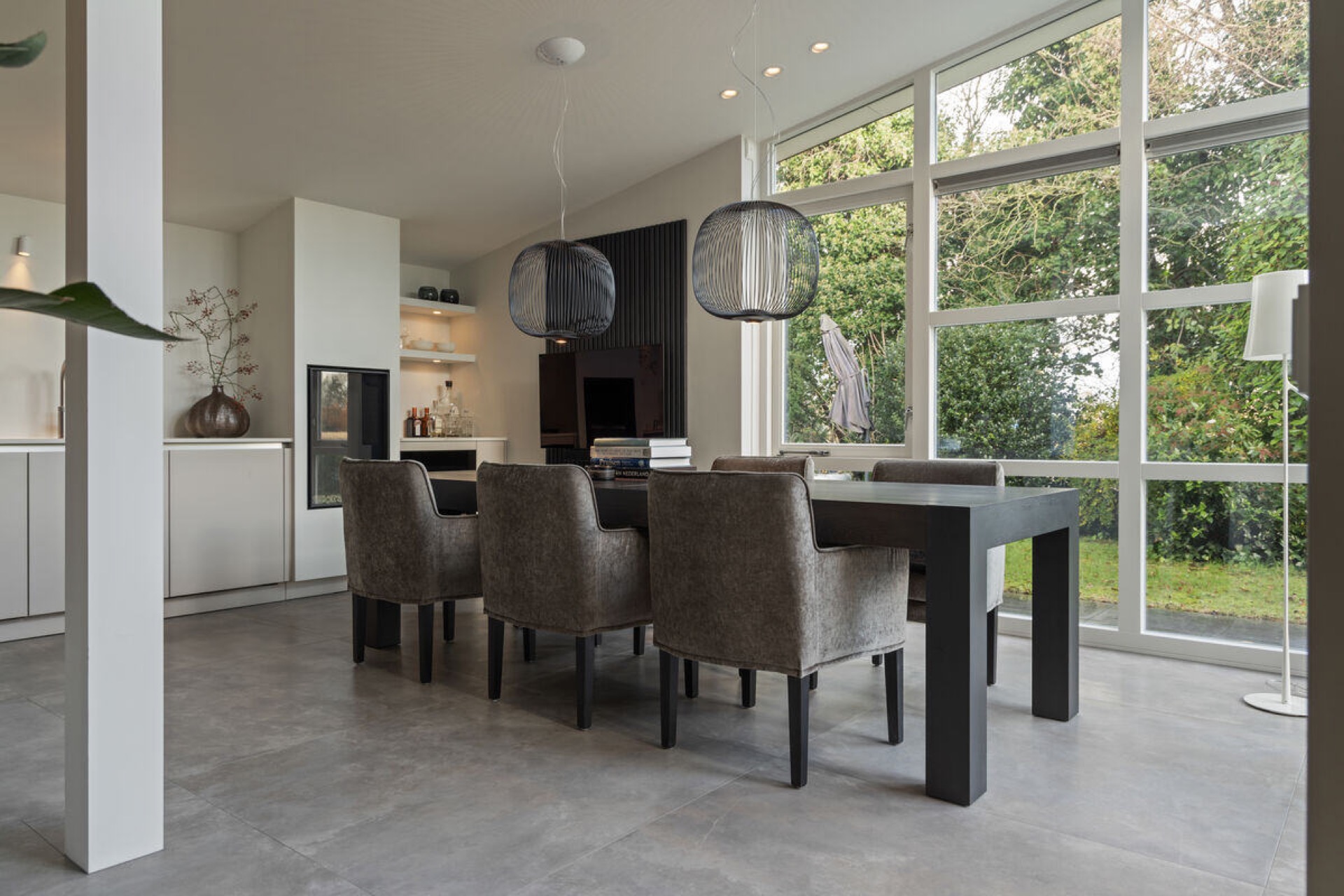
The large ceramic tiles is immediately visible in the way the project is framed. The expansive surface of 120 by 120 cm ceramic tiles marks the foundation of a kitchen and dining area defined by minimalism and clarity. Their broad dimensions reduce grout lines, establishing an even ground that visually broadens the space. This floor invites the eye to glide uninterrupted beneath natural light that pours through strategically placed windows.
large ceramic tiles as the architectural starting point
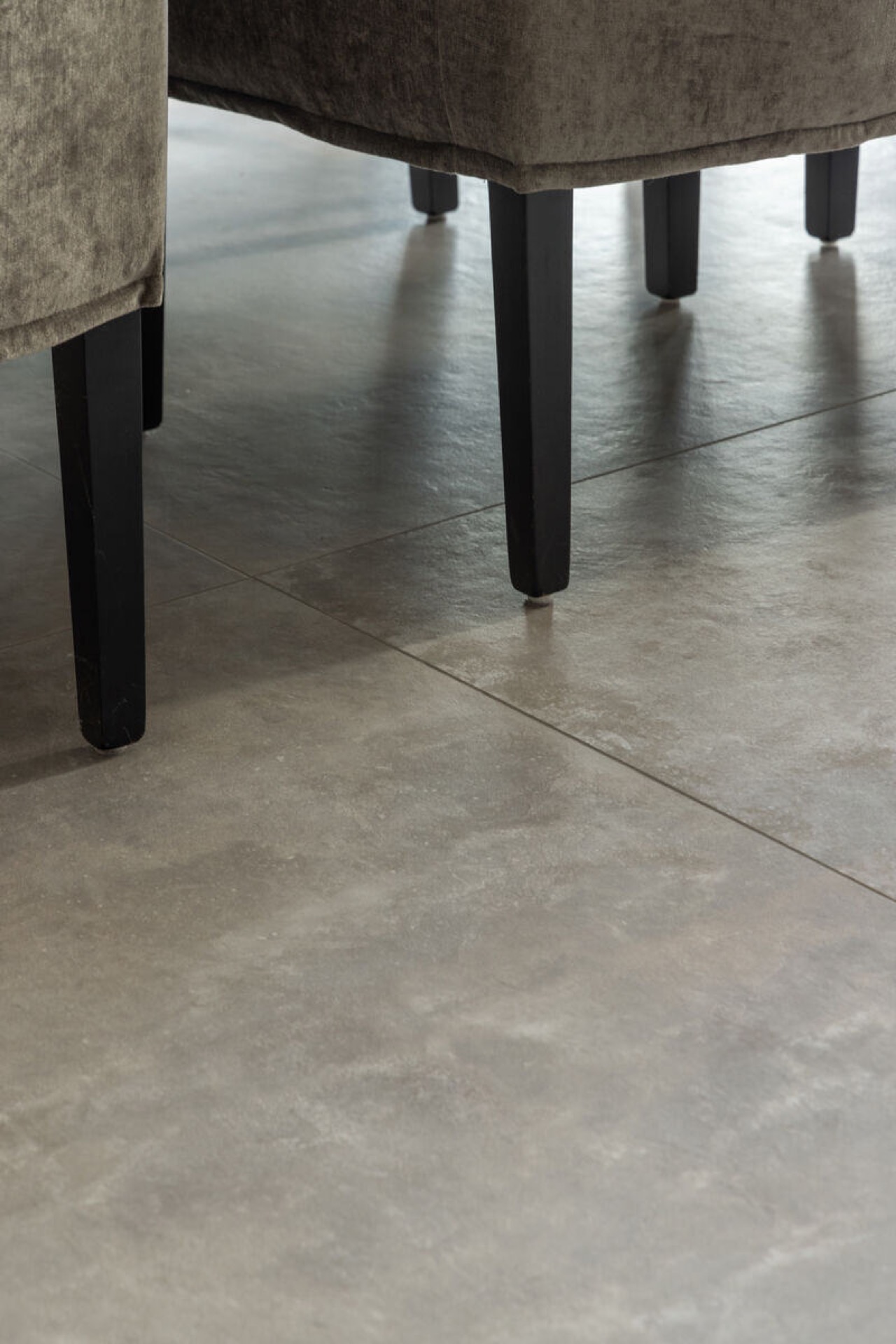
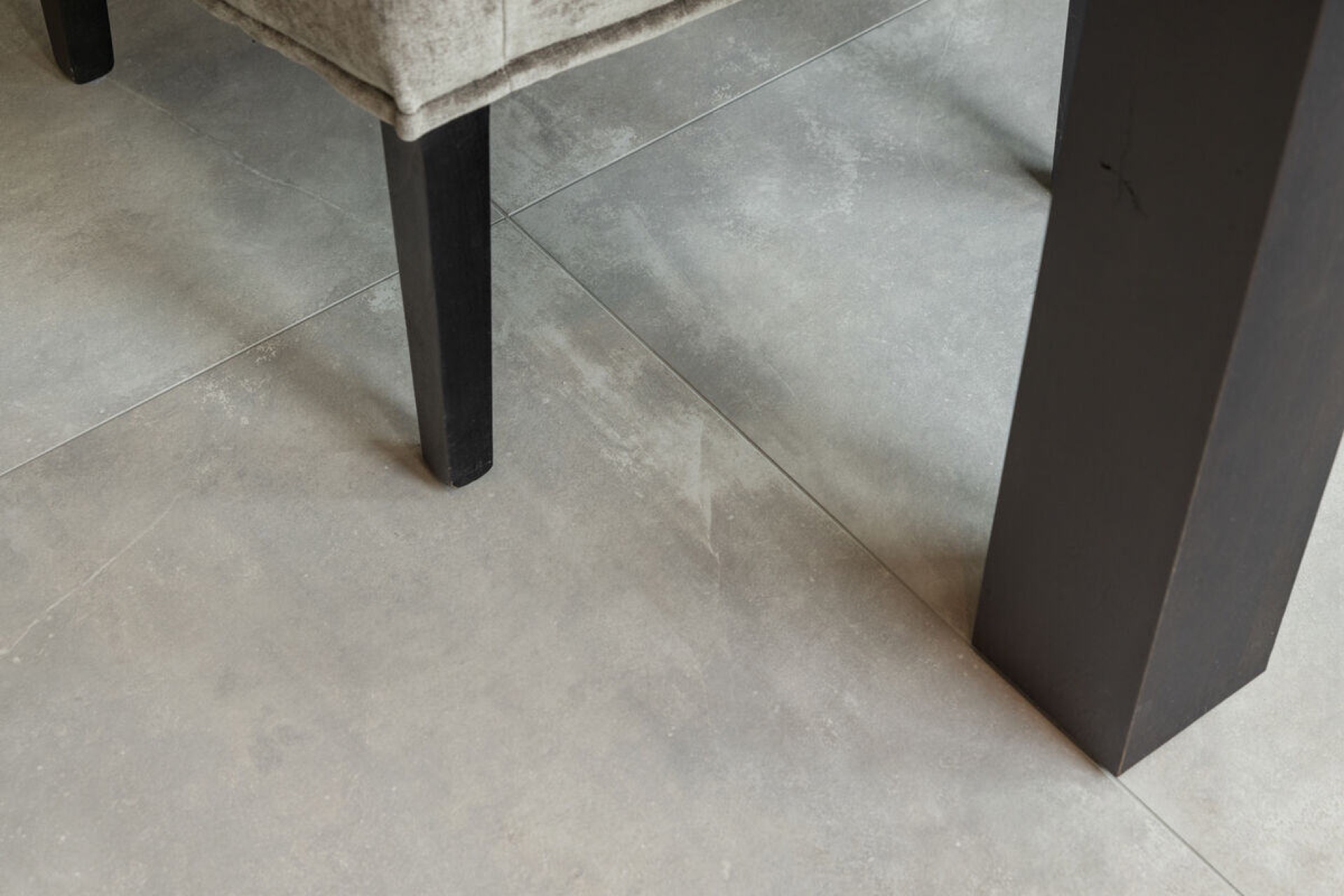
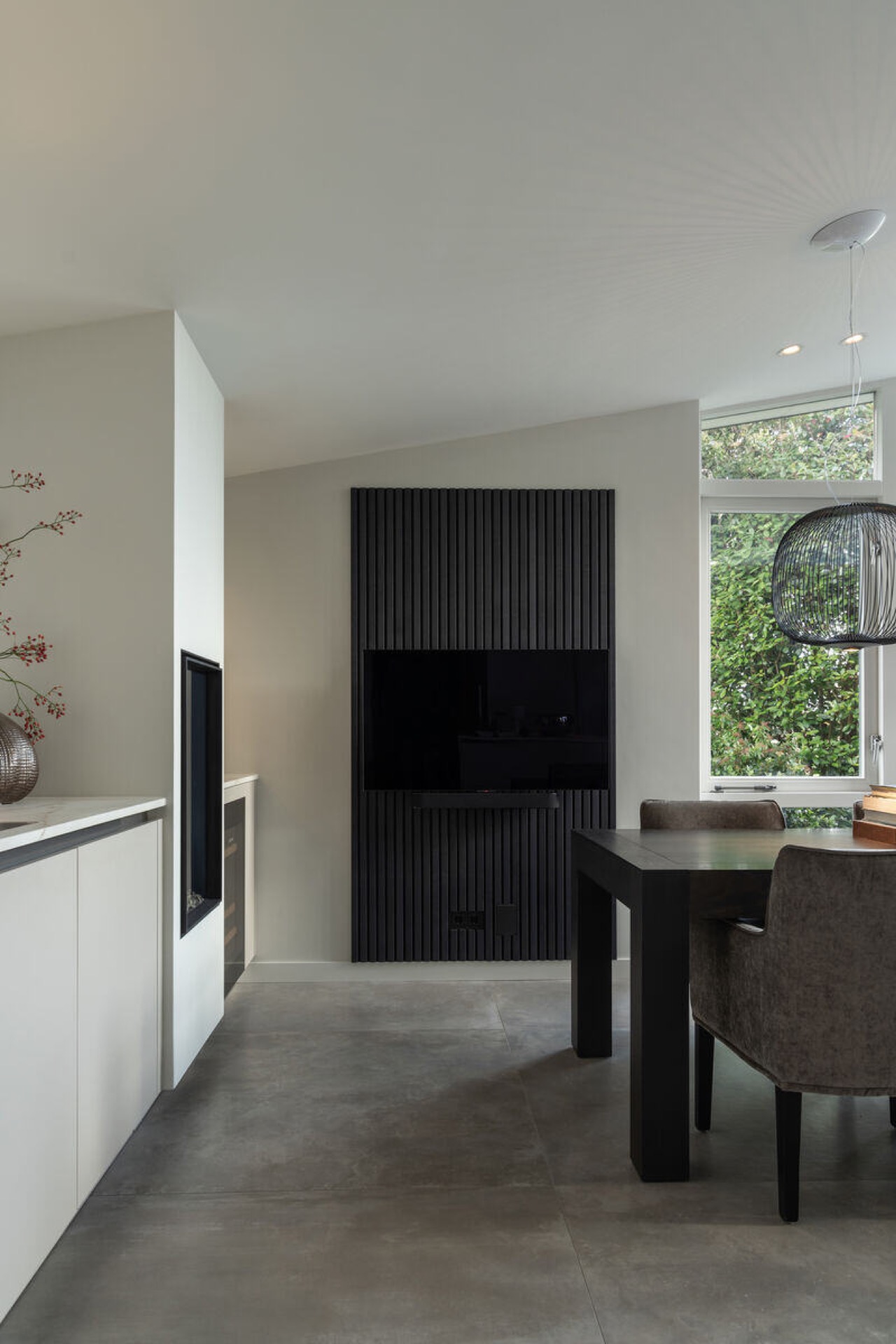
The matte gray tiles reveal a subtle texture resembling natural stone, their surfaces neither glossy nor stark. This touch of unevenness catches daylight delicately, preventing the floor from feeling flat. The muted tone complements monochromatic kitchen cabinetry and furniture, offering a quiet contrast that frames rather than fights for attention.
Light Gray Grout for Visual Continuity
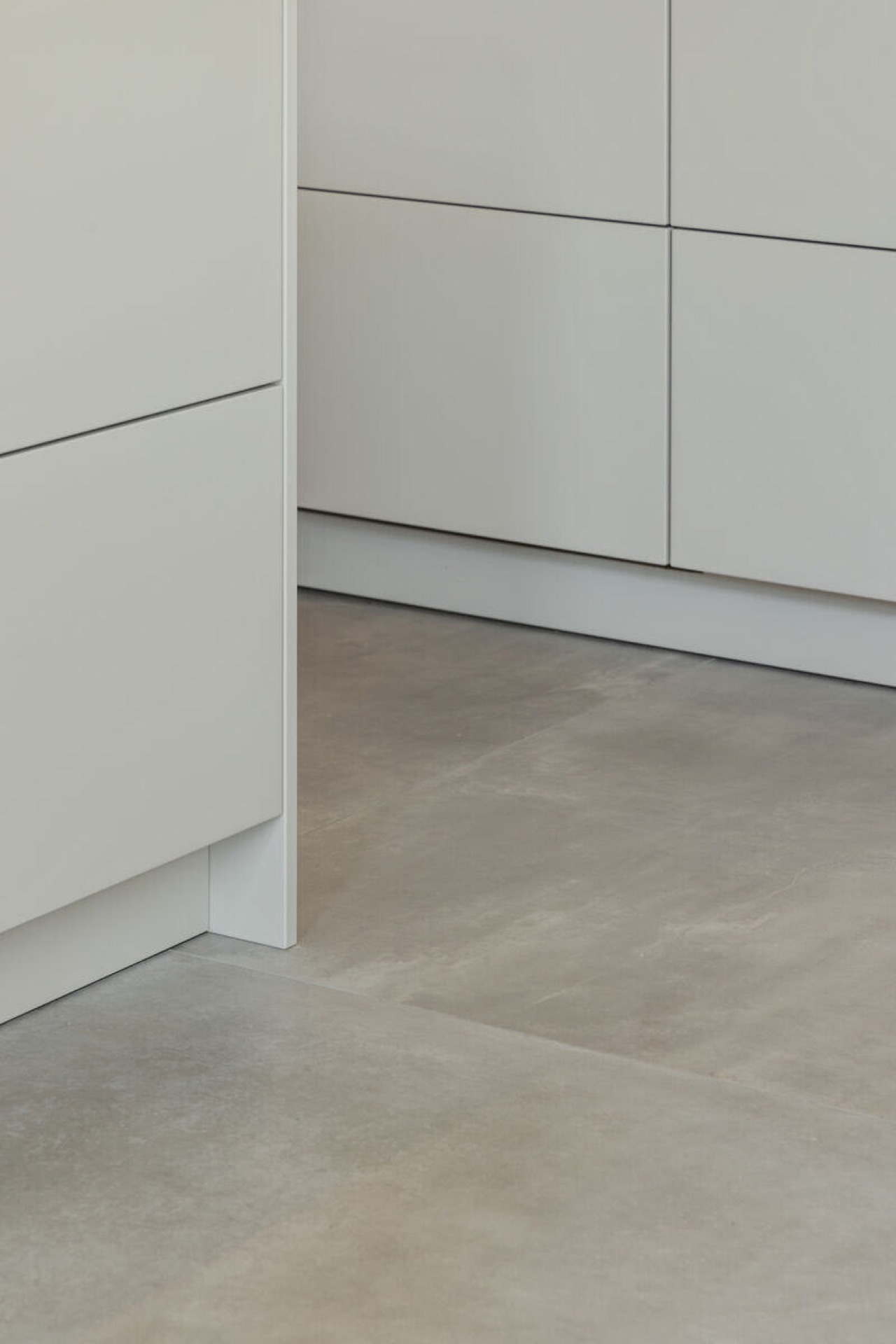
Thin joints filled with light gray grout were selected to closely match the tile color. This choice blurs the boundaries between tiles, creating a near-seamless canvas. The floor appears as a continuous plane, which simultaneously masks minor dirt and reduces the visual clutter of patterned flooring, enhancing the room’s calm atmosphere.
Integration with Kitchen Elements
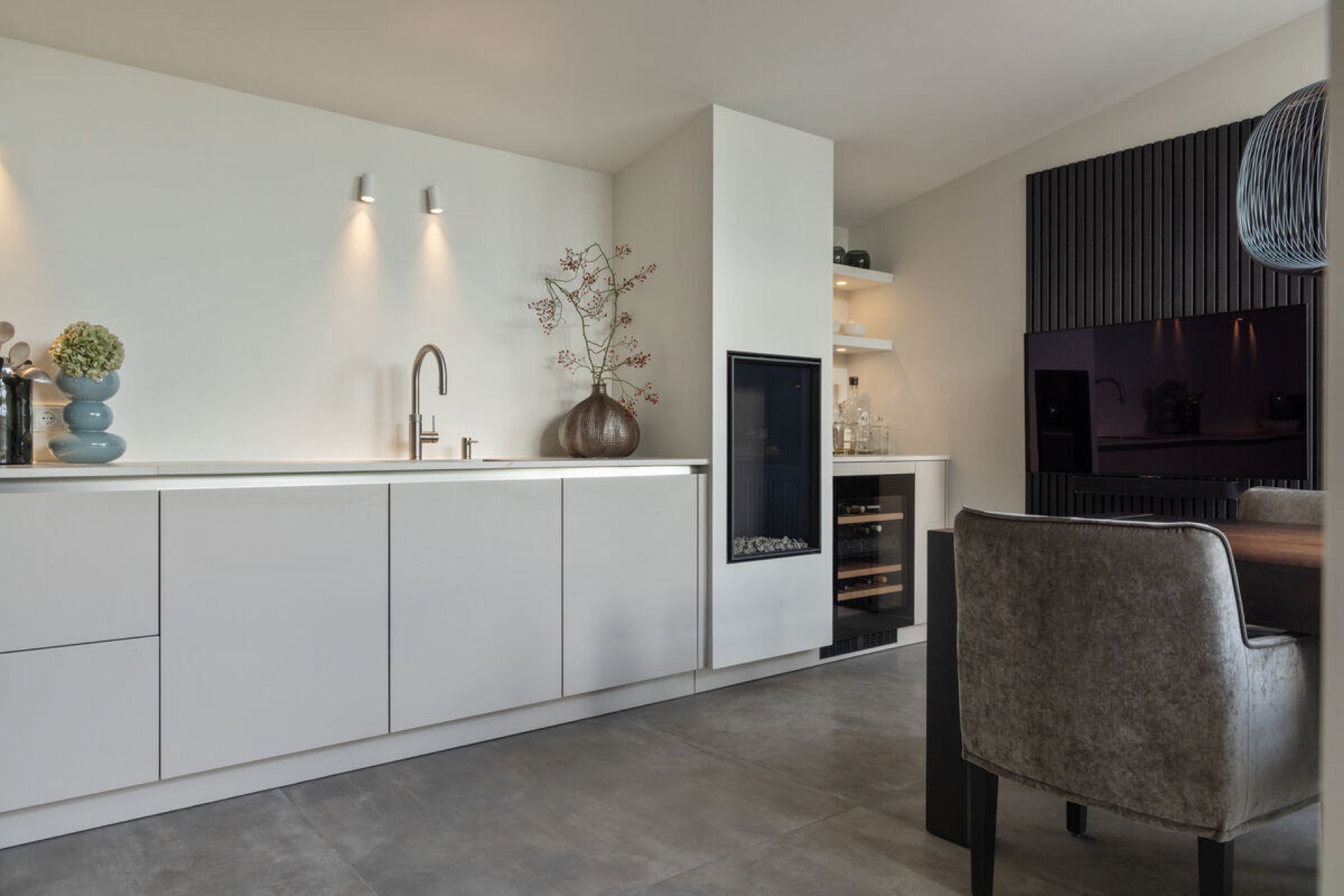
In the kitchen, the ceramic tiles harmonize with cabinetry featuring white, black, and gray accents. The floor’s stone-like texture connects subtly with other materials like sleek metal handles and wooden furniture, fostering an understated cohesion. Beneath the cabinetry, soft underlighting reflects faintly on the tiles’ matte surfaces.
Large Format Tiles in Spatial Arrangement
Arranged with precision, the large format tiles delineate zones within the open plan without interrupting flow. The generous size reduces visual fragmentation and helps unify the dining and cooking areas. The layout respects the room’s proportions, emphasizing its horizontal expanse.
Maintaining Functionality without Visual Disturbance
Besides aesthetics, the floor’s materials were chosen for durability and easy upkeep. Matte finishes resist glare and wear, and the natural texture provides enough grip underfoot, beneficial in a busy kitchen environment. The floor withstands frequent use while keeping its calm appearance.
Material Interplay Reinforces Minimalist Interior
Supporting the flooring, furniture made of warm woods and subtle metal details punctuate the space. The contrast between smooth painted walls and the textural floor creates layers without complexity. Together, the surfaces generate a grounded environment where each material’s qualities are clear. That makes the large ceramic tiles part of the architectural character rather than a loose finish.
Seamless Transitions and Spatial Flow
Transitions from room to room follow clean lines where tiles meet walls at precise angles, emphasizing geometry. The floor flows seamlessly under furniture legs and borders, anchoring the space gently. This continuity accentuates the home’s open layout without abrupt changes.
Details Reveal Craft in Tile Installation
Close-up views of the floor surface reveal expertly aligned joints and consistent grout application. Slight textural variations in the tiles enhance naturalism without compromising the flooring’s rigid geometry. Such attention highlights the balance between craft and design intent.
Lighting Accents Emphasize Texture and Form
Natural and artificial lighting create soft shifts across the tiles. Shadows from furniture legs and nearby accents fall gently on the matte surfaces, underscoring the subtle depth of the floor’s texture. The lighting setup enhances the room’s spatial clarity.
Visual Impact of Oversized Ceramic Tiles
The choice of notably large tiles adds a sense of openness uncommon to more traditional mosaic floors. Their presence commands attention through scale and understated complexity. The floor thereby functions as both a utility surface and a design element within the home’s interior language.
The Flooring’s Role in Everyday Living Areas
Functionally, the ceramic tiles accommodate the dynamics of household activity without showing wear rapidly or breaking the visual harmony. Their surface supports movement between preparation, dining, and relaxation zones, embodying the demands of contemporary living.
Considerations in Grout Color Selection
The light gray grout plays a quiet supporting role, chosen deliberately for its ability to minimize contrast without disappearing entirely. This balance permits the pattern of tiles to emerge softly, maintaining clarity in the layout while avoiding angular rigidity.
Summary of Material and Spatial Dialogue
Altogether, the large matte ceramic floor tiles articulate a measured simplicity that shapes the experience of the home interior. Their scale, finish, and texture interact with light and neighboring materials to construct a ground for everyday life that is unobtrusive yet perceptible. That makes the large ceramic tiles part of the architectural character rather than a loose finish.
Want to see more of ? View the page of for even more great projects and company information.
.png)