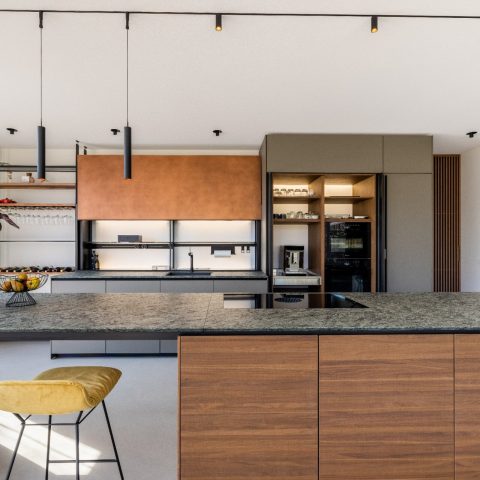






Living kitchen with a kitchen island: lots of daylight
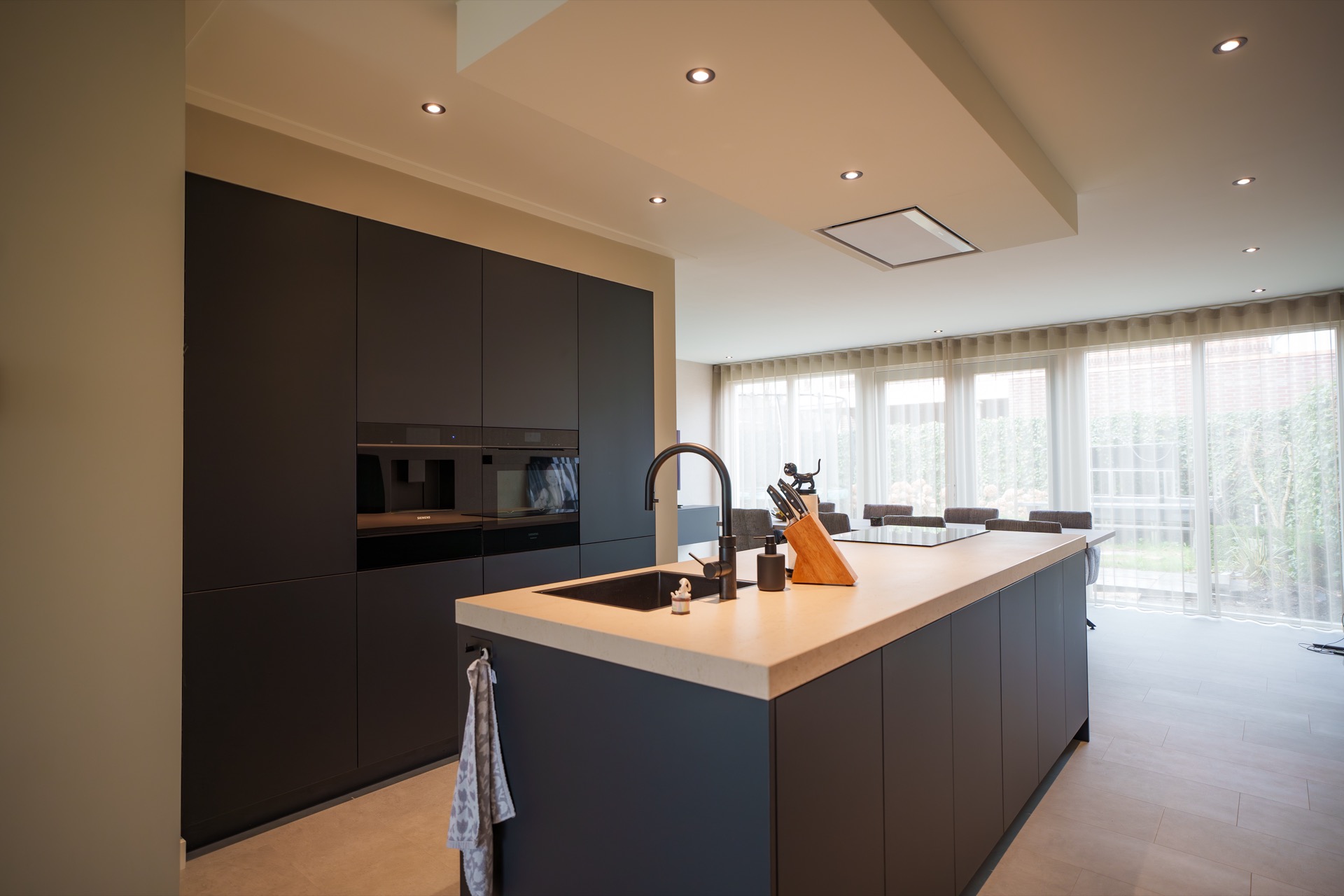
The first thing you notice is the island in the middle of the room, set against deep cabinet fronts and a wide view to the dining area. The brief began with a kitchen island, but the plan quickly shifted toward a living kitchen with a kitchen island that could carry everyday use as well as longer meals and conversation. To make that possible, the back of the house was extended, opening up space for a larger room and letting the daylight move further inside through generous glass.
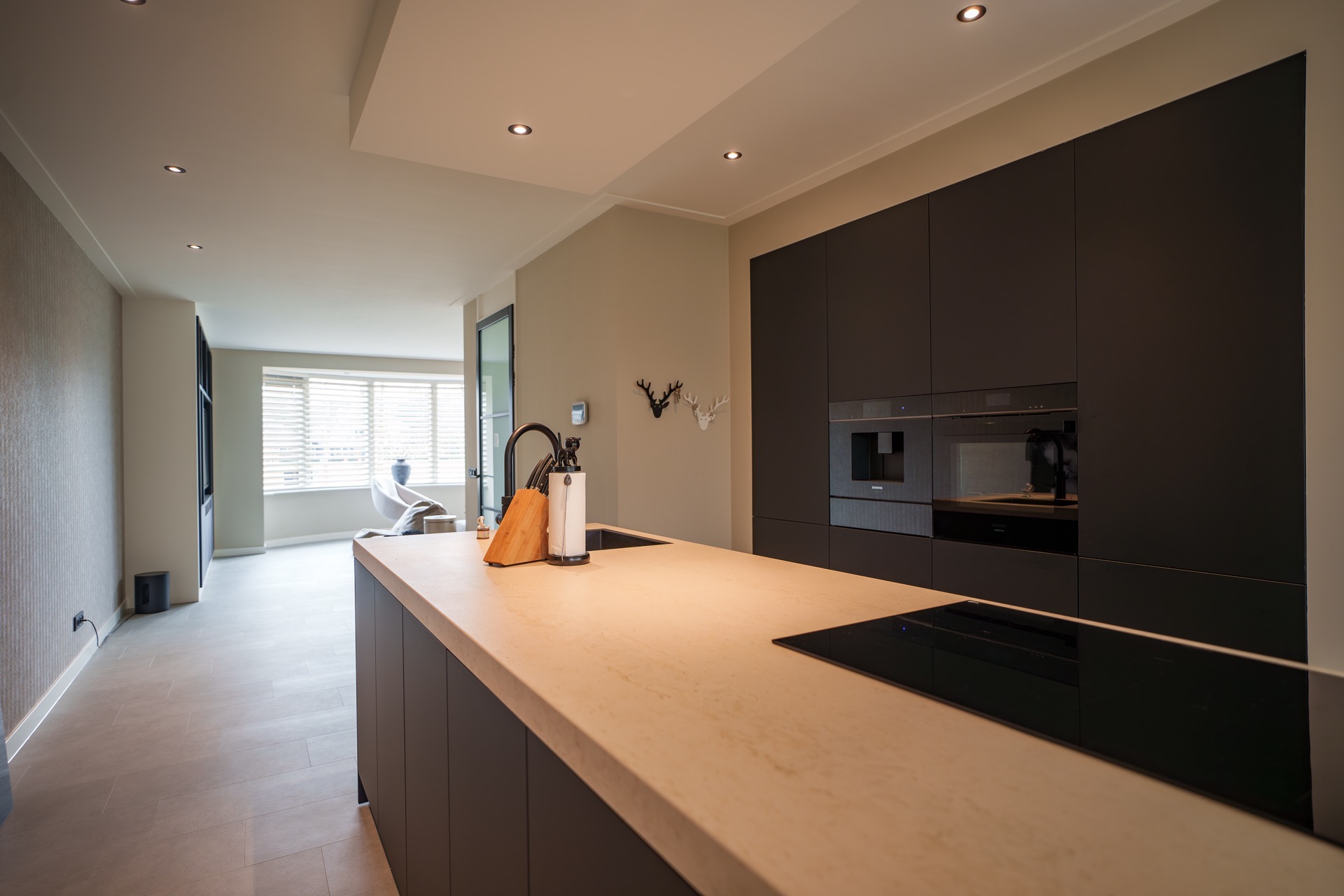
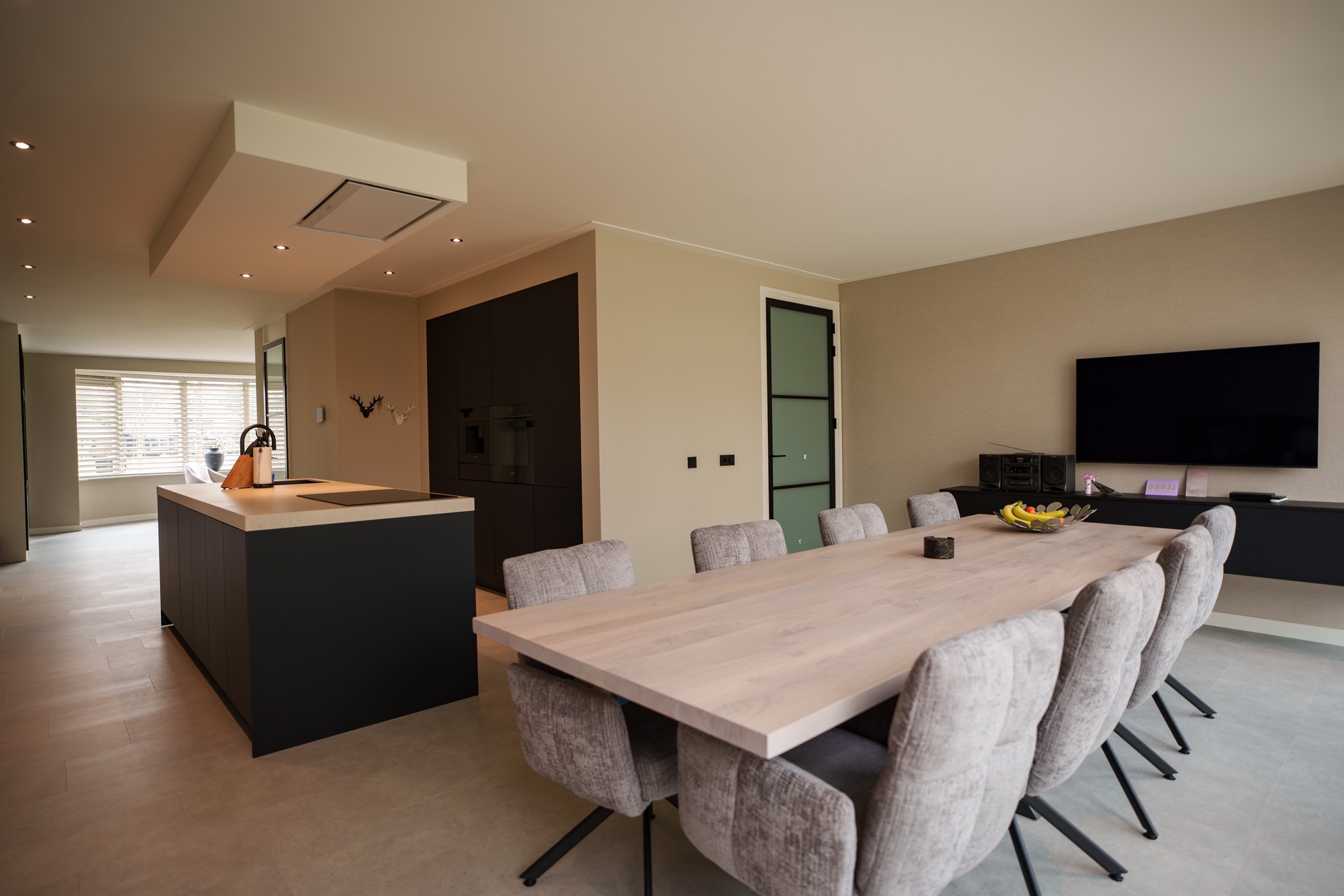
The kitchen sits in a clear sequence: cooking at the island, storage along the dark cabinetry wall, and then a direct line into the adjoining living zone. That layout gives the room its calm order. The island is not tucked away as a side element; it anchors the open-plan living kitchen and links the working part of the room to the seating and dining areas beyond. The result is a layout that reads at a glance, with each function placed where the sightlines already want to go.
Living kitchen with a kitchen island as a spatial starting point
Deep-toned tall units rise behind the island and hold the appliances in a compact, built-in wall. Their surface recedes rather than competes, which leaves the island to carry the eye. The worktop has a stone-like look and runs cleanly across the island, while the sink and tap are set into the centre of the composition. From the adjacent room, the kitchen island and lots of daylight become the two strongest signals in the space: one defines use, the other softens the volume.
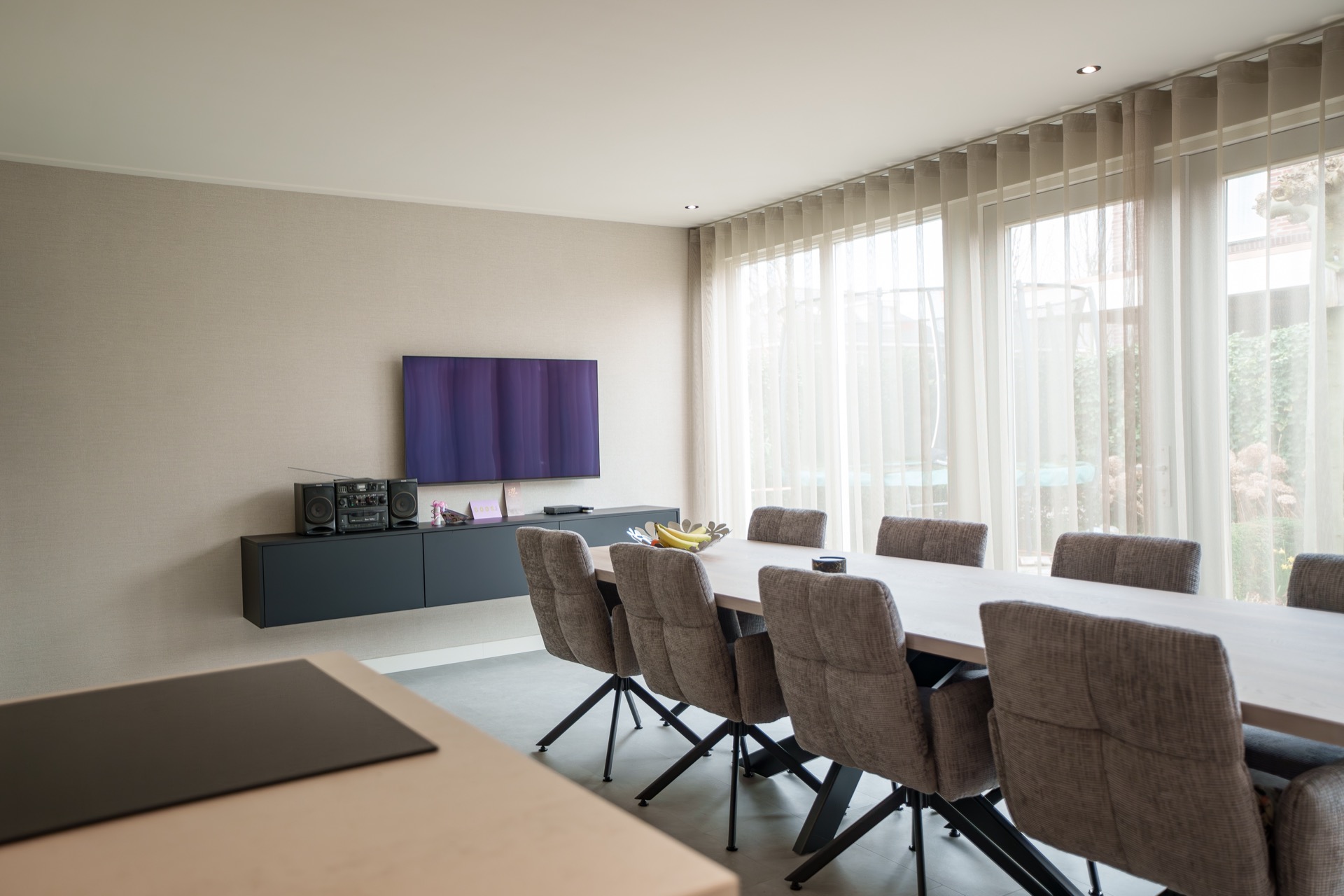
Daylight arrives through large glazed openings, and that light reaches the room without being broken up by heavy frames or closed partitions. The glass keeps the living kitchen open to the rest of the house, so the kitchen does not read as an enclosed workroom. Instead, the island, the dark cabinetry wall and the long views toward the dining table stay visually connected. It is this connection that gives the room its scale. Nothing is hidden behind a narrow opening or a short corridor.
Lines that stay visible from room to room
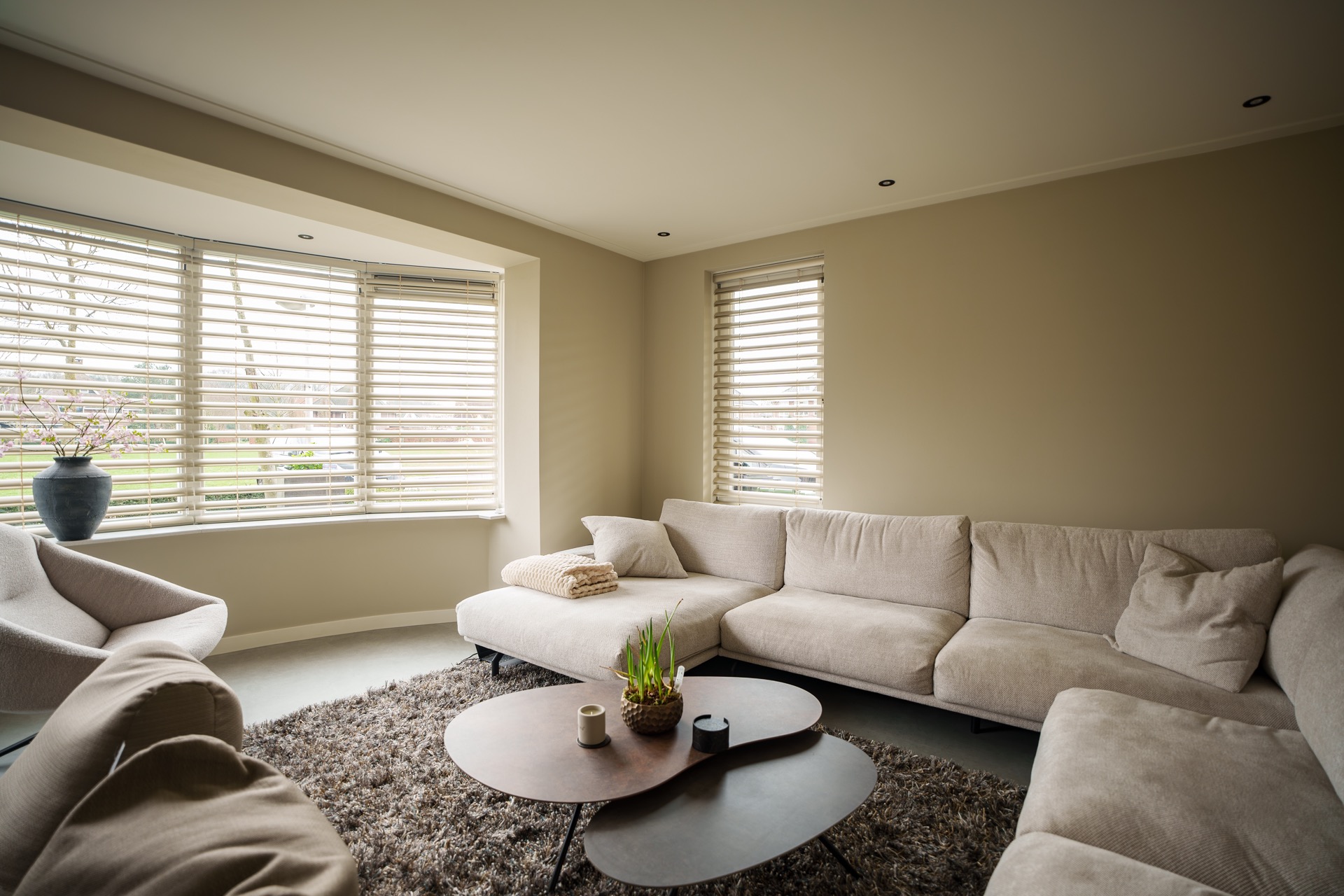
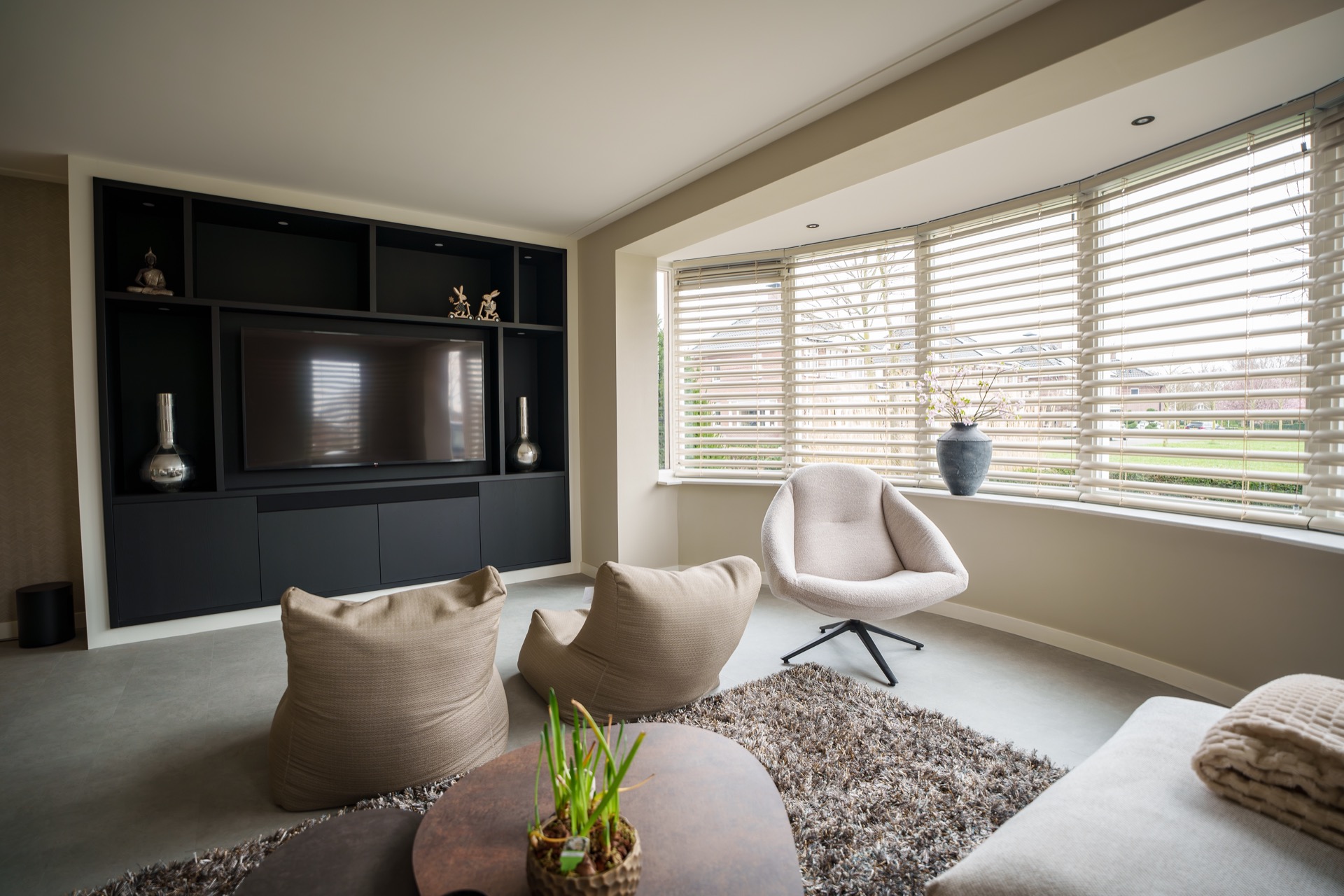
Across the windows, the blinds run in a linear rhythm that echoes the straight lines of the cabinetry and the island edge. They are practical, but they also set a pattern that can be read from the dining zone and the living area. The repeated horizontal strips temper the brightness without closing the room down. That detail matters here, because the house was extended to bring in more space, and the window treatment helps organise all that light rather than scattering it.
The living area continues that same quiet order. A low sofa, a round coffee table and a wall unit with open niches sit beneath recessed ceiling lights, all kept close to the floor so the room feels spacious around them. The furniture does not compete with the kitchen; it extends the room’s rhythm into the sitting area. Seen from the island, the room moves from dark cabinetry wall to lighter lounge tones, with the glazed openings acting as a bright edge along the side. Living kitchen with a kitchen island remains connected to the layout, materials and daily use of the home.
Open-plan living kitchen shaped by an extension
Because the back of the house was extended, the kitchen could become more than a cooking zone. The plan now has room for a proper dining setting beside the island and for a living area that sits naturally within the same volume. That shift is visible in the proportions alone. The island has enough clearance around it to work as the centre of the room, while the glazed wall keeps the longer layout from feeling closed in. In an open-plan living kitchen, that extra depth changes how the room is used throughout the day.
The material mix stays restrained: wood, glass and a stone-like surface on the worktop. Rather than introduce many finishes, the project relies on the contrast between the dark cabinetry wall and the lighter floor, walls and seating. This keeps attention on the room’s structure. The extension does not announce itself with excess detail. It shows up in the way the kitchen now opens fully to the dining area and in the amount of daylight that reaches the interior from the rear of the house.
Exterior rhythm in vertical wood slats
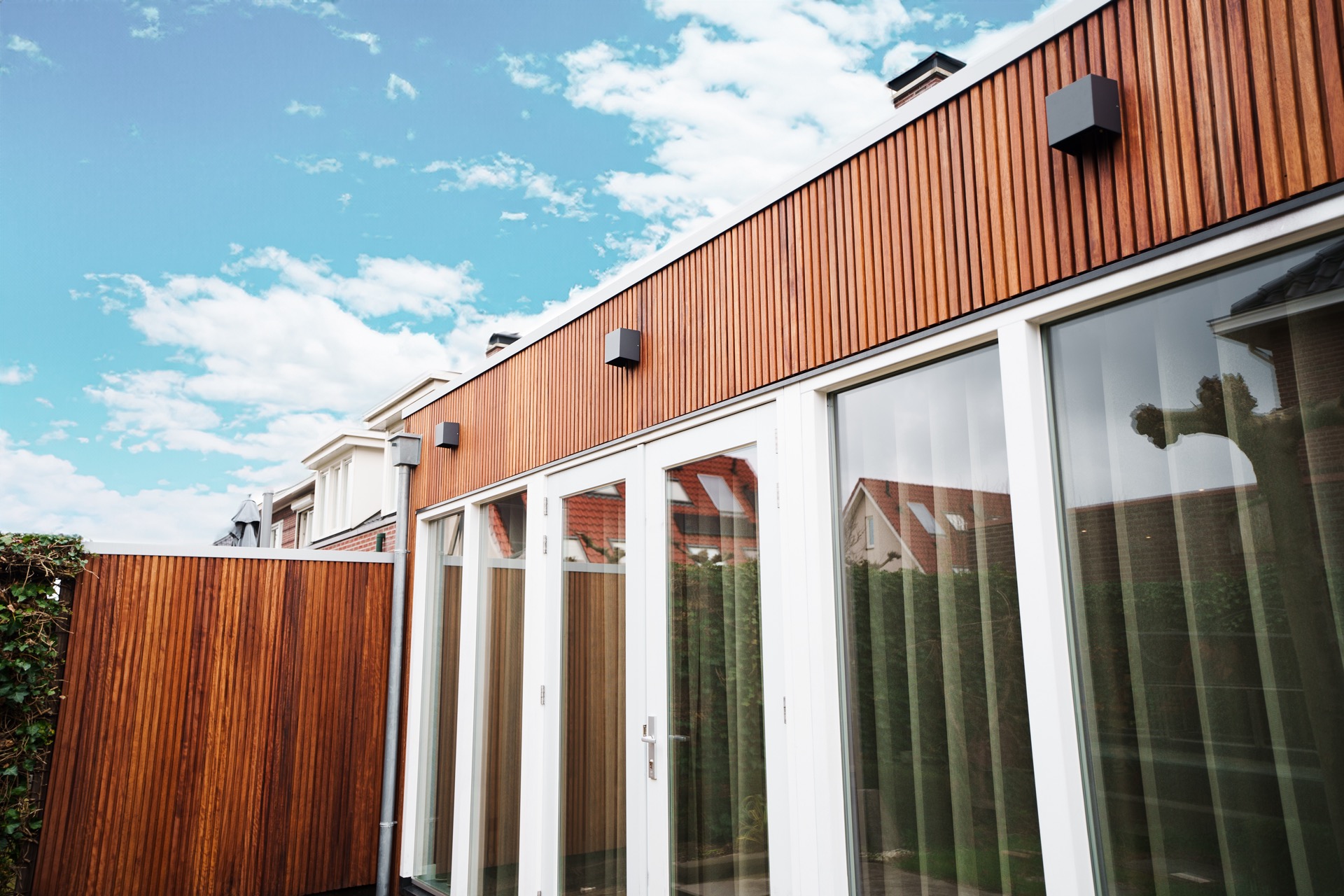
Outside, the extension is marked by a vertical wood facade that gives the rear elevation a clear, linear pattern. The slats sit in front of large windows and doors, so the exterior picks up the same sense of rhythm seen in the blinds inside. This is where the project becomes especially readable: straight lines on the inside, vertical lines on the outside, both held together by the same preference for order and repetition. The wood also introduces a warmer tone against the glass surfaces.
The facade treatment is not decorative in the superficial sense. It breaks the rear elevation into measured strips and gives the extension a visible cadence. Seen together with the large openings, the vertical wood facade makes the outside read as an extension of the room’s interior logic rather than a separate layer. That link between inside and outside is one of the strongest themes in the project, and it is supported by the amount of glazing and by the repeated linear elements in both zones.
A living kitchen that stays open to the light
What makes this living kitchen with a kitchen island convincing is the way the elements are kept in proportion to one another. The island has enough presence to anchor the room, the dark cabinetry wall keeps storage compact, and the glazed rear side gives the whole space relief. Even the lounge furniture remains low and visually light. The room is therefore not built around one dramatic gesture, but around a sequence of measured moves: extend the house, open the rear, bring in glass, and let the island sit at the centre of daily use.
Seen from the dining table or the sofa, the project holds together through surface, line and light rather than through ornament. The kitchen island and lots of daylight define the interior from the first view, while the vertical wood facade completes the story outside. Together they give the house a clear rear elevation and a generous open-plan living kitchen that works as one room, not as separate parts pushed together. Living kitchen with a kitchen island remains connected to the layout, materials and daily use of the home.
Want to see more of The Kitchen Art Studios? View the page of The Kitchen Art Studios for even more great projects and company information.

.png)