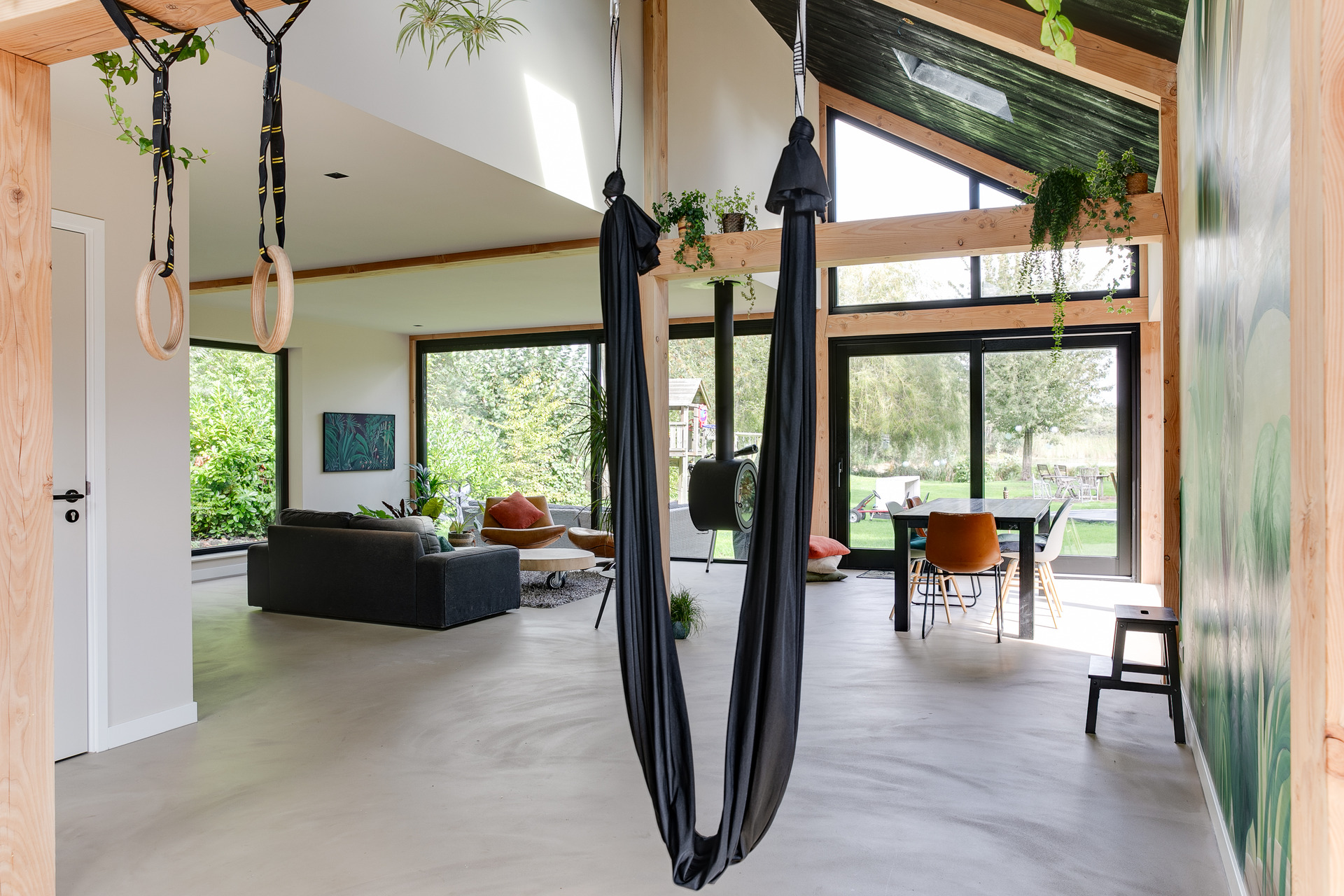





Large panes of glass pull the garden into the room before any furniture does. In this living room interior with indoor-outdoor feel, the eye keeps moving between the greenery outside, the dark wood ceiling line above, and the open floor that runs through the space without interruption. The home was designed for a young family, so the setting needed to handle daily use while still giving the room a clear visual identity.
living room interior with indoor-outdoor feel as the architectural starting point
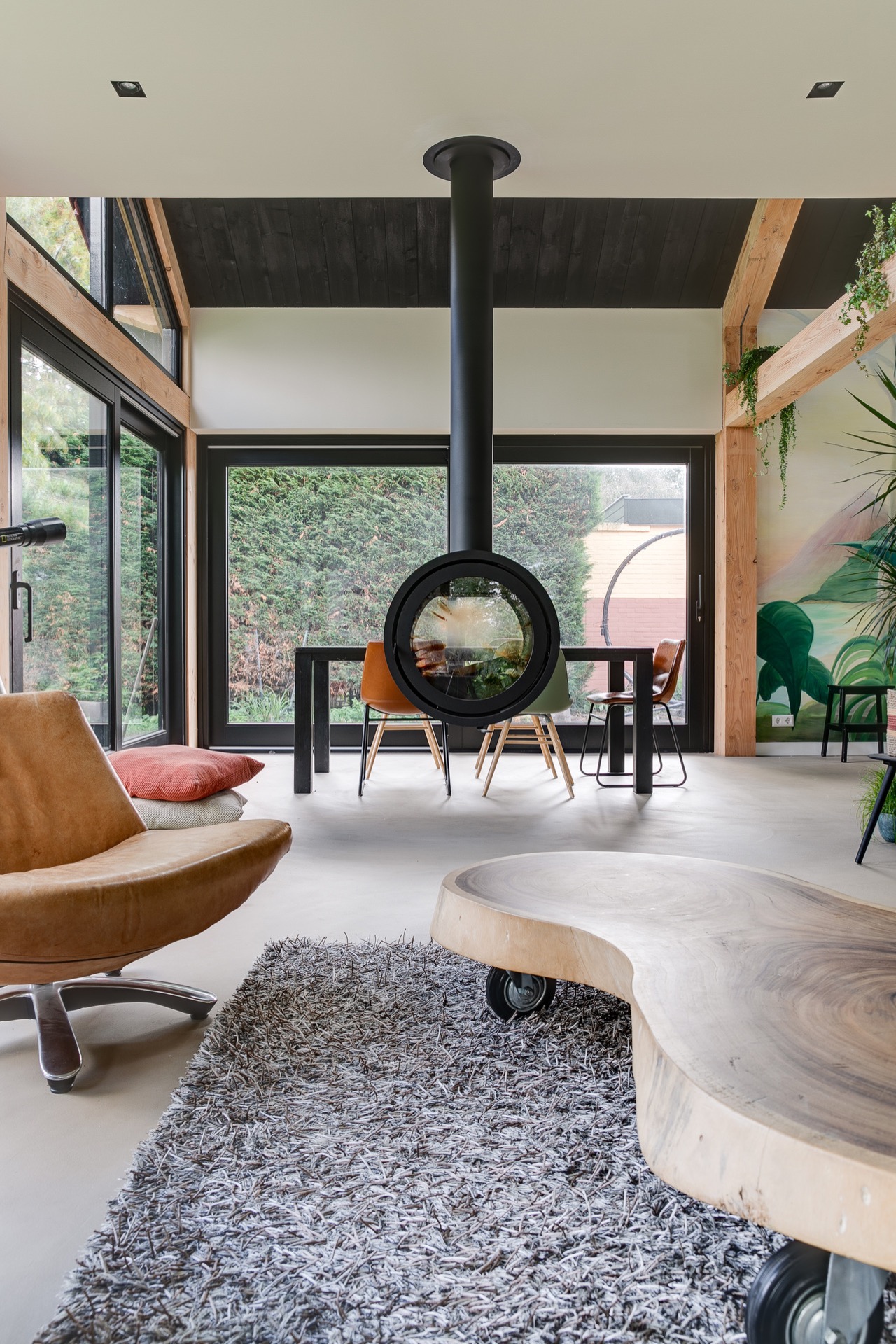
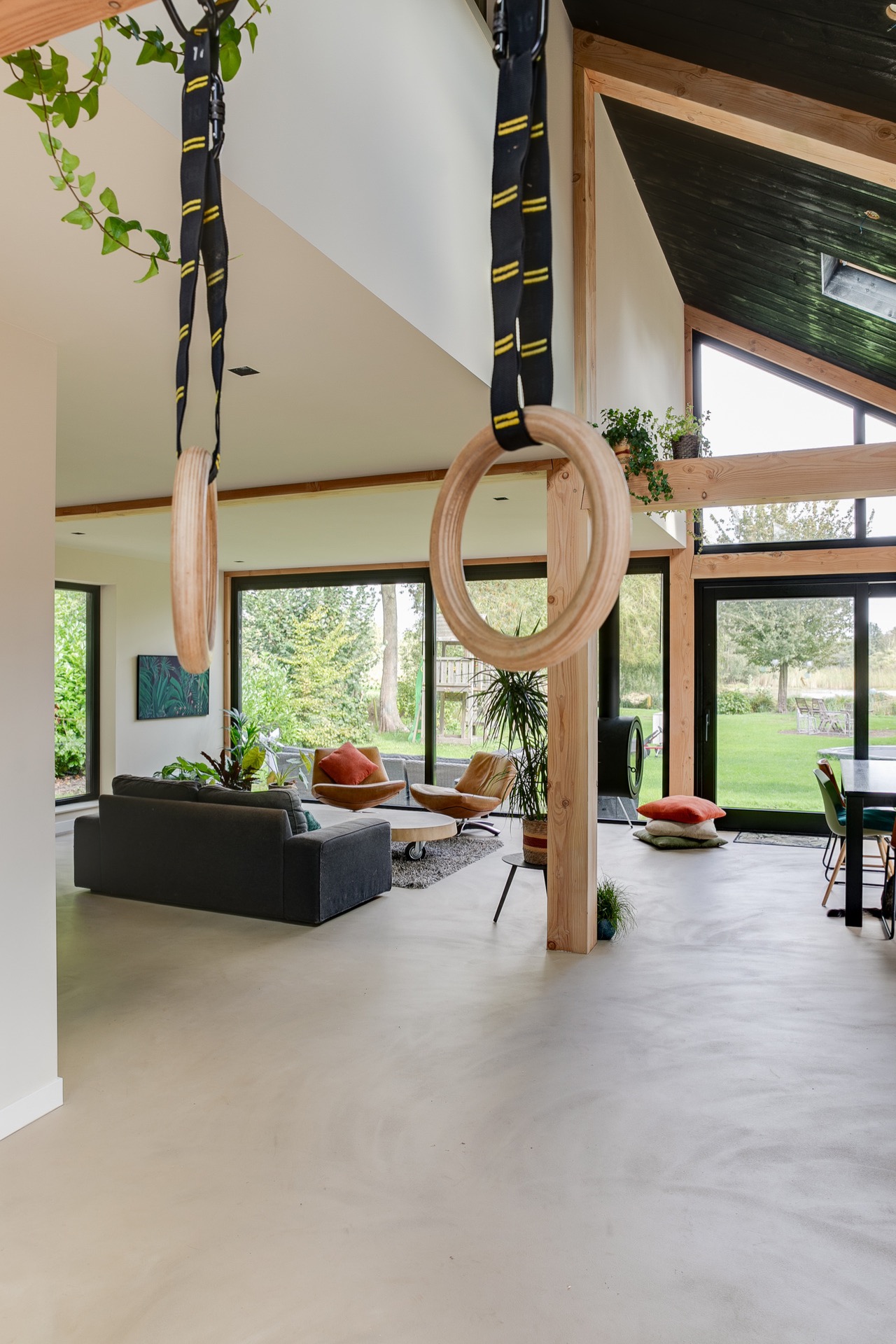
The strongest impression comes from the way the room opens to the outside. Wide windows and glazed doors frame the garden, making the view part of the interior composition rather than something seen after the fact. White walls keep the light moving, while black accents and warm wood details give the room sharper edges. The result is an open-plan living area that reads as one volume, with sightlines that stretch from the seating zone to the glass and back again.
Natural materials do much of the work here. Wood appears in the structural posts, in the ceiling finish, and in the framing around the openings, where it sets up a steady rhythm against the smoother surfaces. That contrast is especially visible where the darker ceiling edge meets the pale walls and the concrete-look floor living room below. The floor grounds the space and lets the room carry stronger details without becoming busy.
The botanical wall mural gives the room its focus
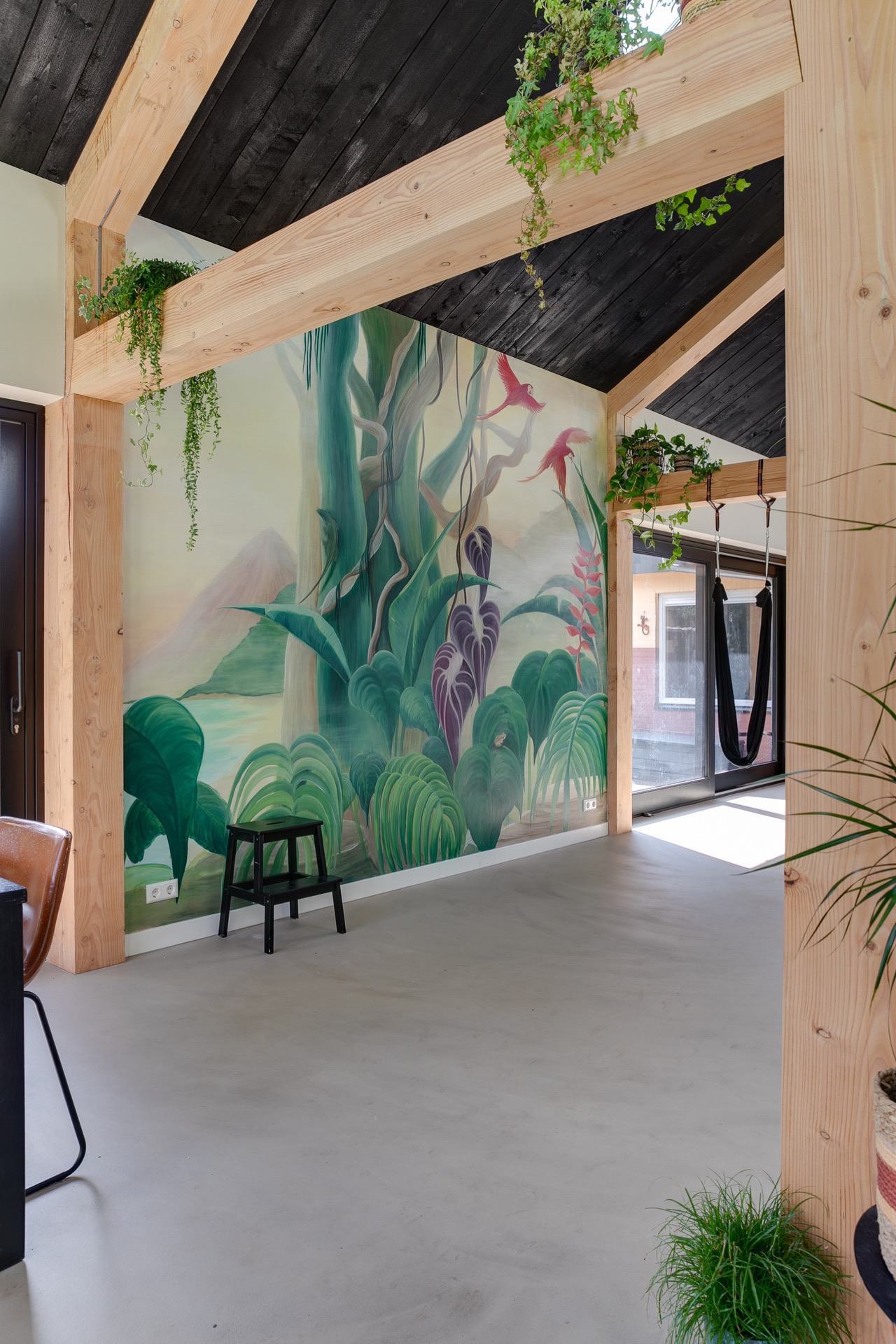
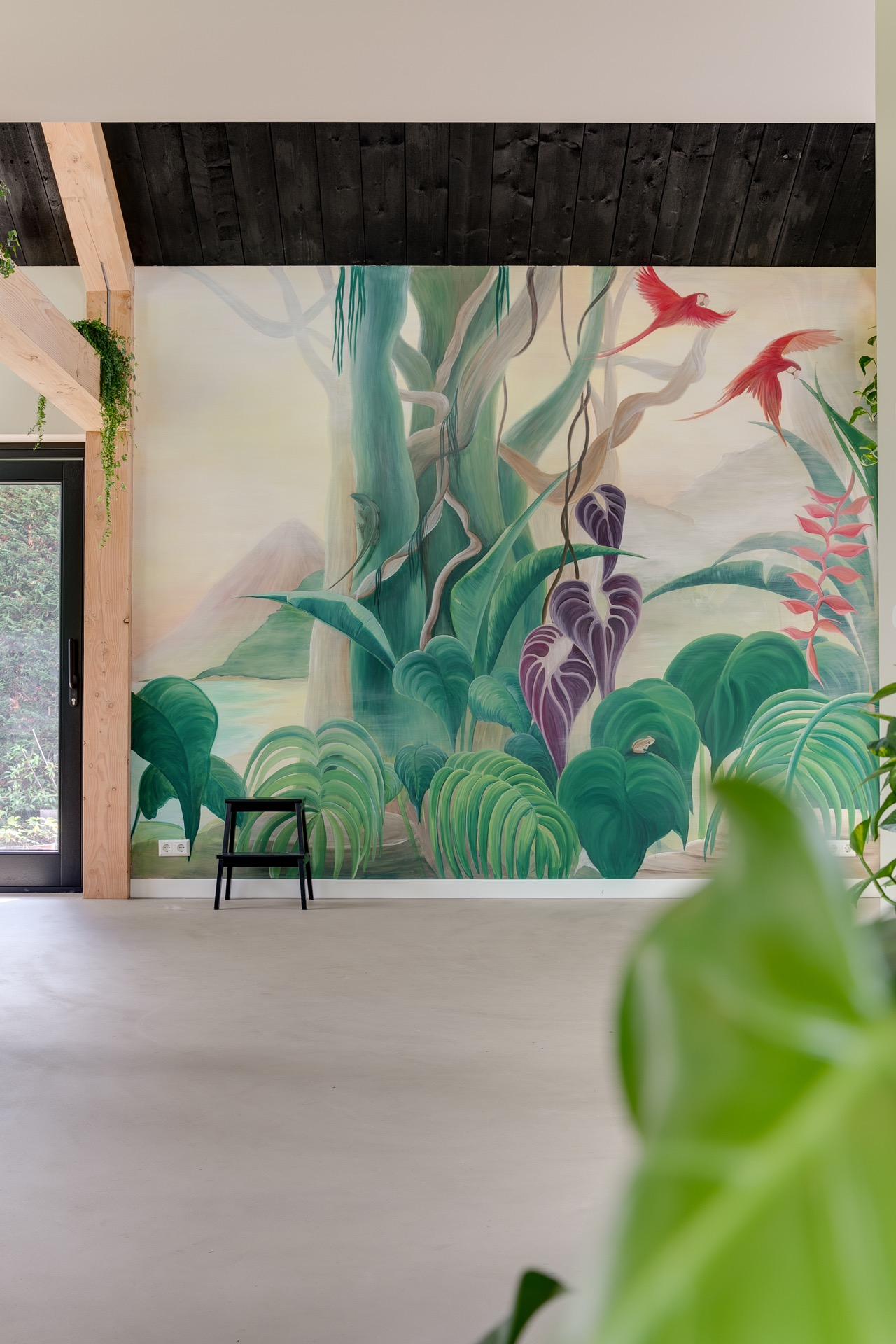
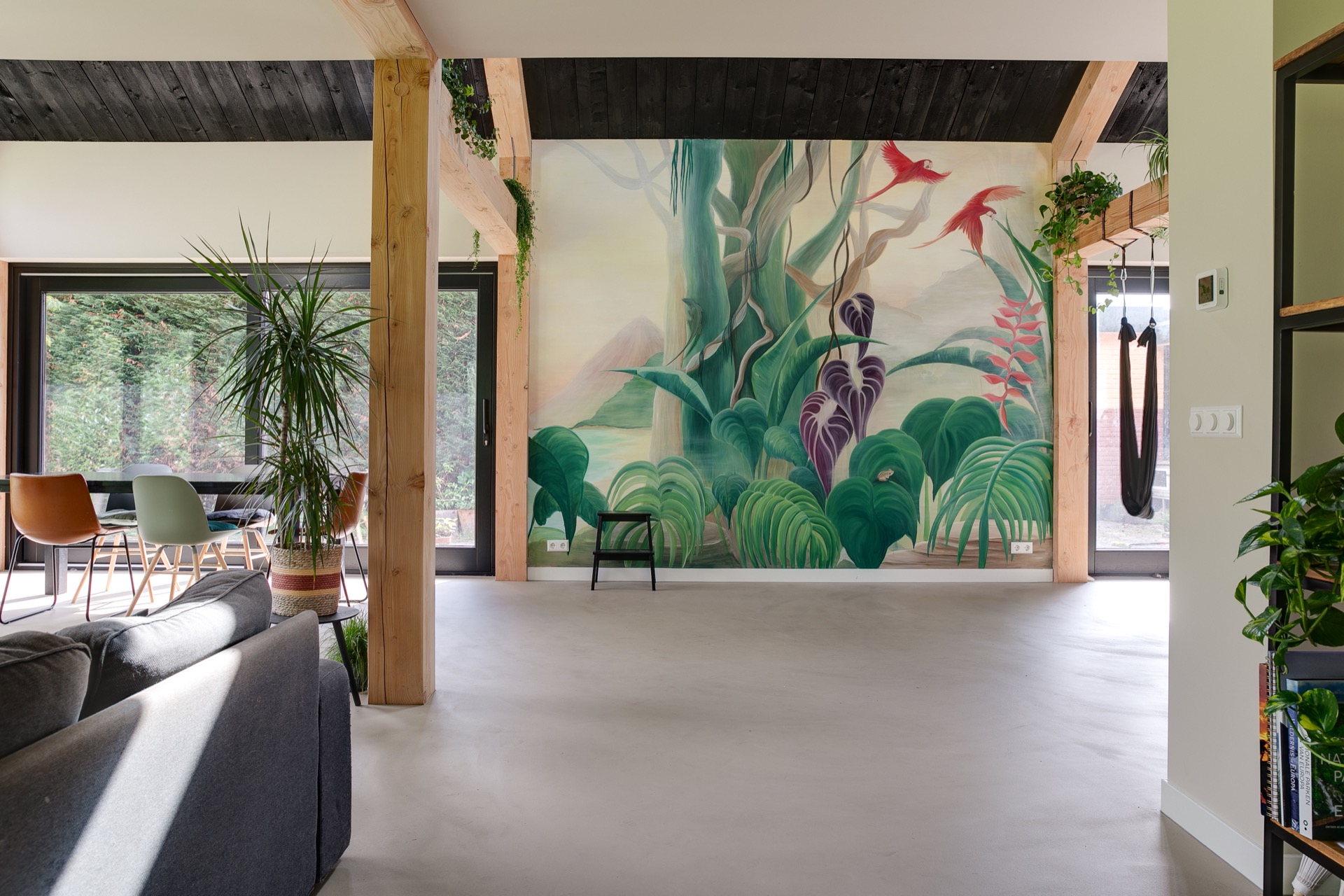
One wall breaks the calm of the envelope. The botanical wall mural brings leaf and flower forms into the room, and its scale gives the living area a clear focal point. It is not treated as decoration on top of the interior; it is part of the room’s structure, sitting opposite the windows so the greenery outside and the painted foliage inside speak to each other. That link between garden and wall is what makes the space feel considered from multiple angles.
Viewed with the rest of the room, the mural is balanced by the surrounding materials rather than hidden by them. The dark timber overhead, the pale wall surfaces, and the floor’s muted texture keep the image from feeling isolated. Instead, it sits within a broader palette of green, wood, black, and white. In that setting, the mural becomes a quiet anchor for the whole living room interior with indoor-outdoor feel.
Practical flooring that stays visually calm
The chosen floor is described as practical and stylish, and it earns both roles through restraint. Its surface does not compete with the mural or the wood detailing. It supports them. In a family home, that matters. The floor runs across the open rooms with a steady tone that works well beside the garden views and the changing daylight. In the photos, it reads as a concrete-look finish with enough softness in color to sit comfortably next to the warm wood accents.
There is also a clear logic to how the floor interacts with the rest of the interior. The glass wall brings in bright reflections, while the darker ceiling band and the timber posts add depth above eye level. Between those elements, the floor provides a visual base that keeps the room from feeling fragmented. It gives the seating area, the mural wall, and the transition to the windows a shared ground. That is what makes the concrete-look floor living room so effective here: it is present, but never loud. That makes the living room interior with indoor-outdoor feel part of the architectural character rather than a loose finish.
Wood details that slow the room down
The ceiling treatment deserves a closer look. Dark wood boards trace the upper edge of the room and create a more enclosed line against the open glazing. Their texture is visible enough to register, but not so dominant that it closes the space. Around the openings, the wood repeats in posts and frames, where it gives the room a measured vertical structure. Those details keep the interior from becoming a plain glass box.
A round wooden opening in one of the interior views adds another layer of depth. It interrupts the straight lines and draws attention through the room, almost like a framed sightline. That small gesture says a lot about the space: it is open, but not undefined. The combination of the round detail, the timber structure, and the broad window span makes the whole room feel composed through shape, not ornament. This is where the living room with warm wood accents gains its quieter strength.
Room to live with, not just look at
Because the home is used by a young family, the interior needs surfaces that can take regular use without calling attention to themselves. The floor, the painted walls, and the wood elements all serve that role in different ways. None of them are overworked. The room can handle movement, toys, feet, and daily traffic, yet the visual tone stays controlled thanks to the limited palette and the clear relationship between materials. You can read the whole space at a glance, which is part of its appeal.
The open plan helps that reading happen naturally. From one point, you can see the mural, the windows, the timber ceiling, and the route toward the garden. That kind of visibility makes the room feel larger without relying on excess. It also gives the interior a direct connection to the greenery outside, where the view remains active throughout the day. In a living room interior with indoor-outdoor feel, that exchange between inside and outside does most of the work.
Green as a thread, not a theme
What ties the room together is not a decorative motif repeated everywhere, but a consistent visual thread. Green appears in the mural, through the garden views, and in the way the room borrows color from outside. The wood tones soften the harder surfaces, while the glass keeps the composition open. Even the darkest elements, such as the ceiling edge, are used to frame light rather than block it. The interior stays legible because every material has a clear job.
For that reason, the project reads as more than a room with a statement wall or a practical floor. It is a carefully observed living space where the botanical wall mural, the large windows with views of greenery, and the natural wood ceiling details all work from the same visual logic. The room feels connected to the garden, but it also stands on its own through proportion, texture, and the quiet discipline of the finish.
Photography: Esther Scherpenzeel That makes the living room interior with indoor-outdoor feel part of the architectural character rather than a loose finish.
Want to see more of ? View the page of for even more great projects and company information.
.png)