






Luxury interior design with garden room and custom millwork
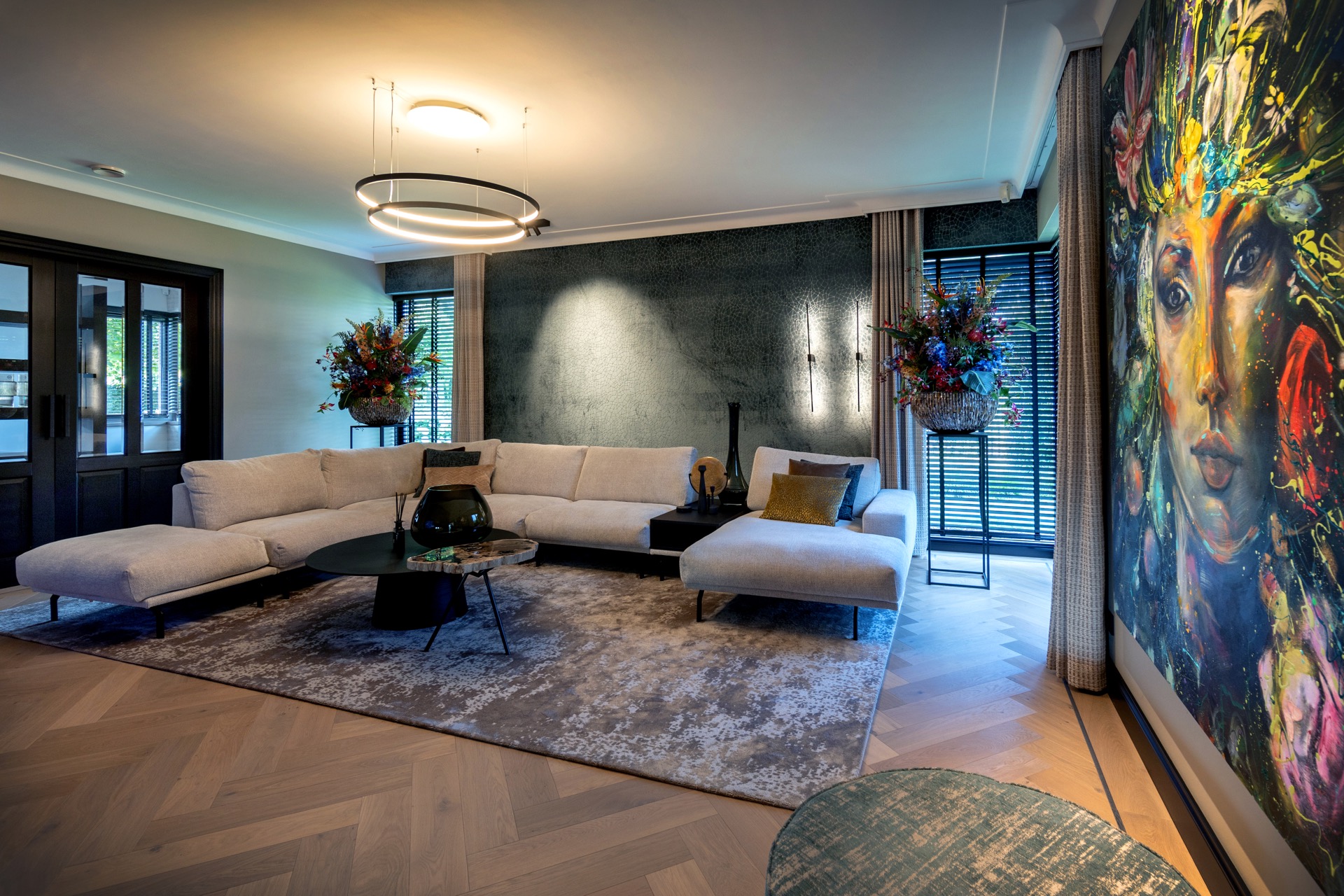
Luxury interior design with garden room shapes the way the rooms are organized and described. Dark wood, smoked glass, and a broad stretch of glazing set the tone before the room is fully read. The ground floor was designed as one connected interior, with a living kitchen, dining area, several seating zones, and a garden room that extends the house toward the garage. That garden room with large windows pulls daylight deep into the plan and makes the transition between inside and outside feel immediate.
Luxury interior design with garden room as a spatial starting point
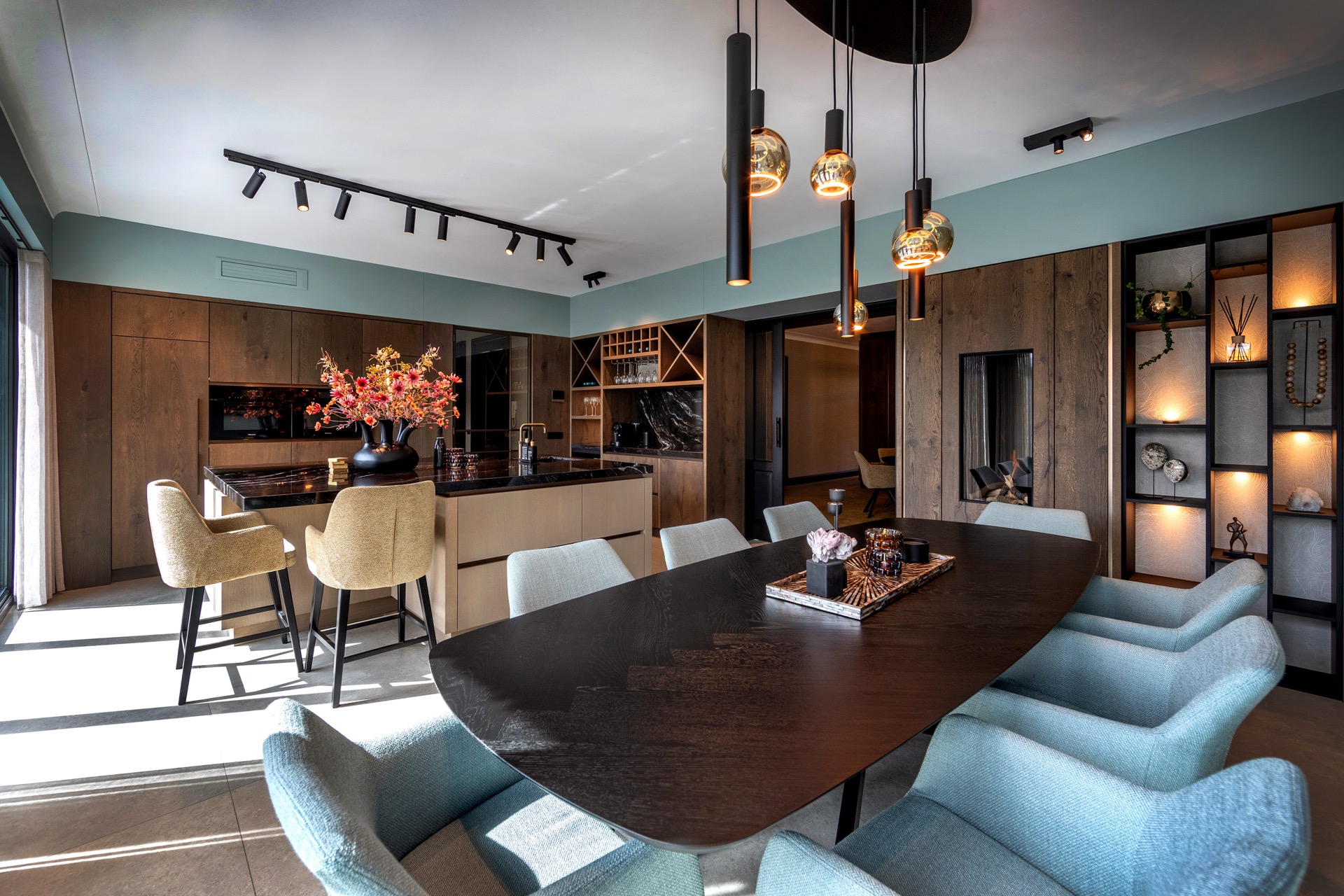
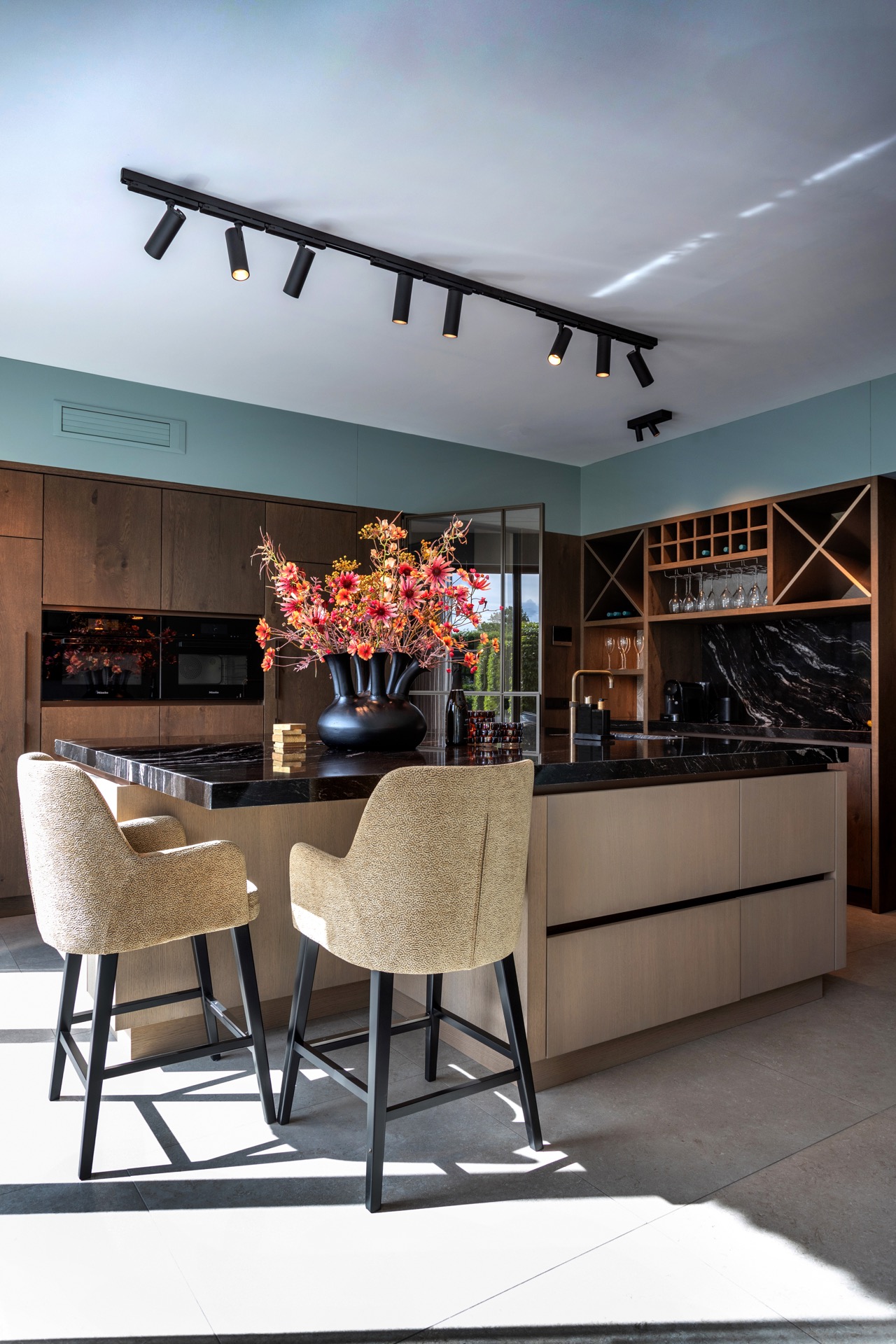
The living kitchen forms the anchor of the plan, but it does not stand alone. The dining area sits close by, while separate seating areas allow different things to happen at once: a film on one side, a dinner setting on the other, and a quiet corner in between. The layout gives each zone a clear role without closing them off from one another. That makes the space feel open while still leaving room for privacy and movement.
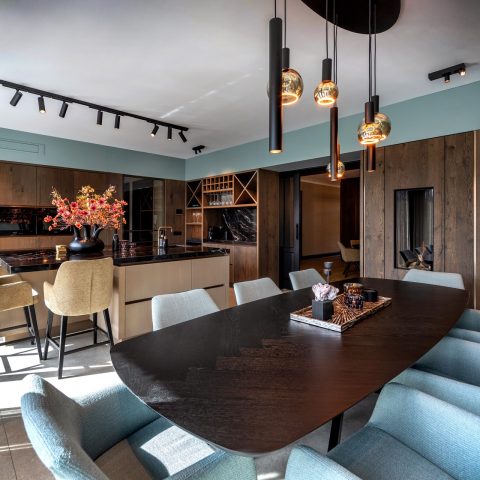
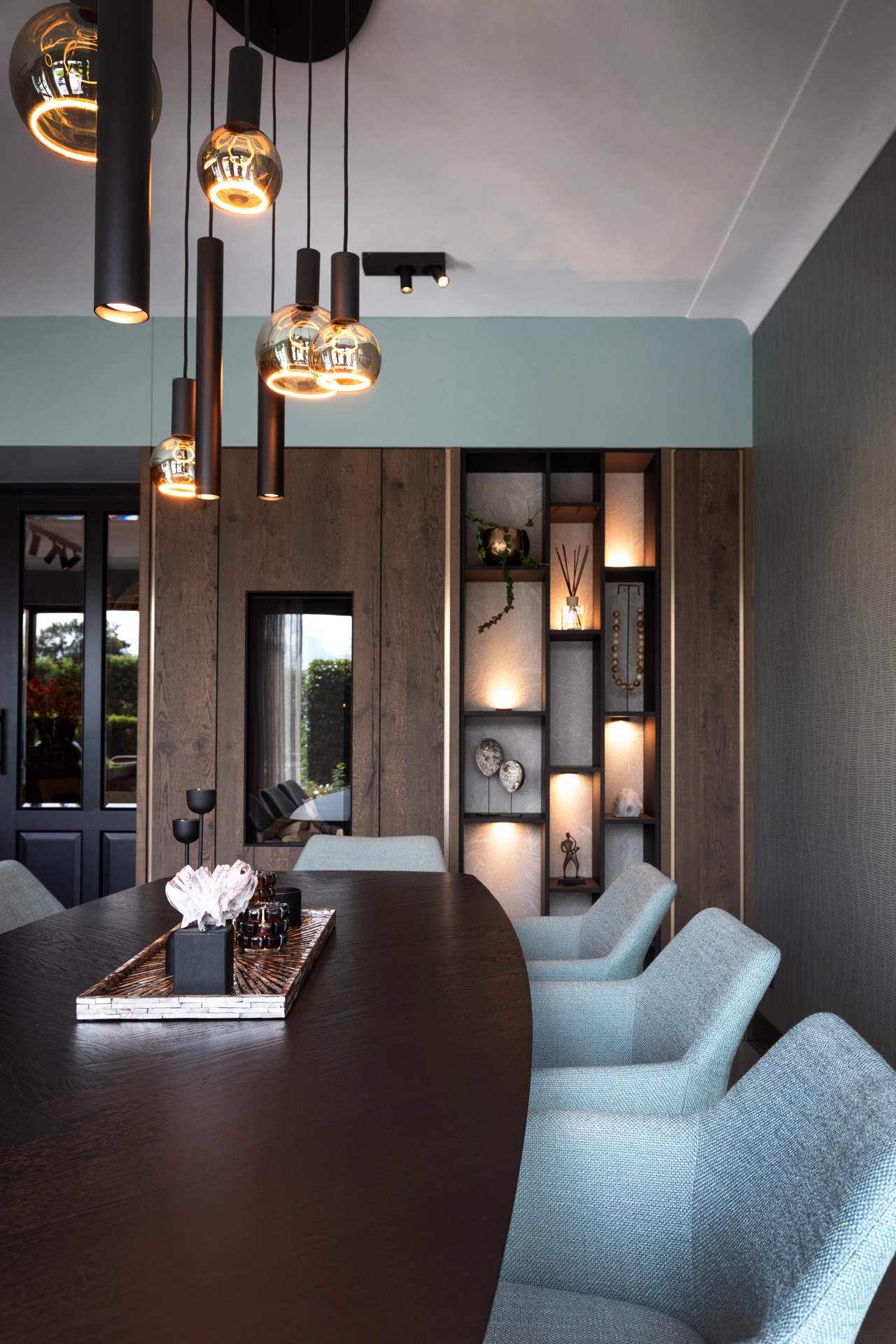
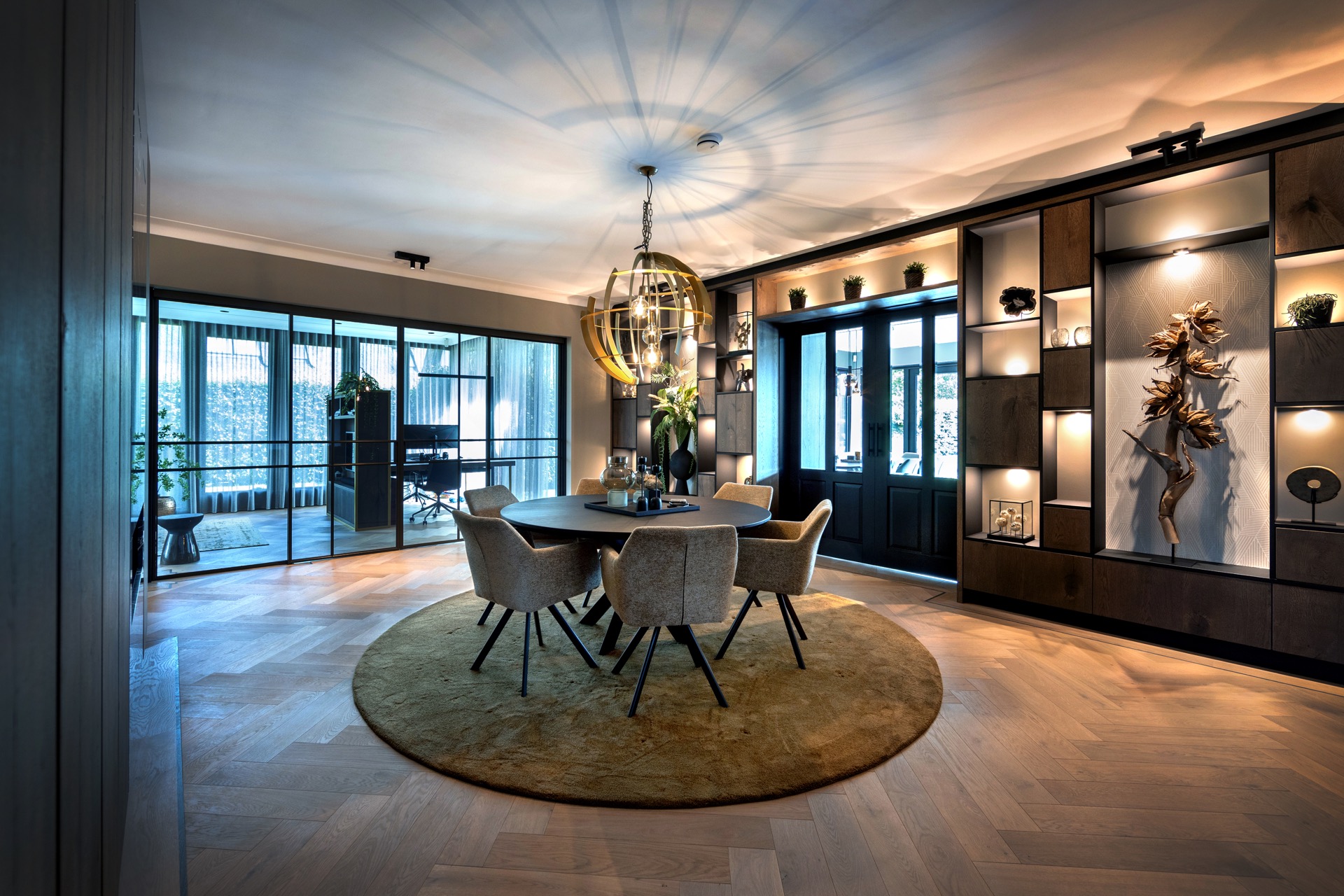
In the dining area, pendant lights hang low enough to mark the table without overpowering it. Their round shape softens the straight lines of the cabinetry and the steel doors nearby. Seen from the kitchen, the room reads in layers: timber underfoot, darker furniture lines at eye level, and glazed surfaces catching light from the garden room. The result is a luxury interior design with garden room that stays focused on use as much as on appearance.
Luxury interior design with garden room as a spatial starting point
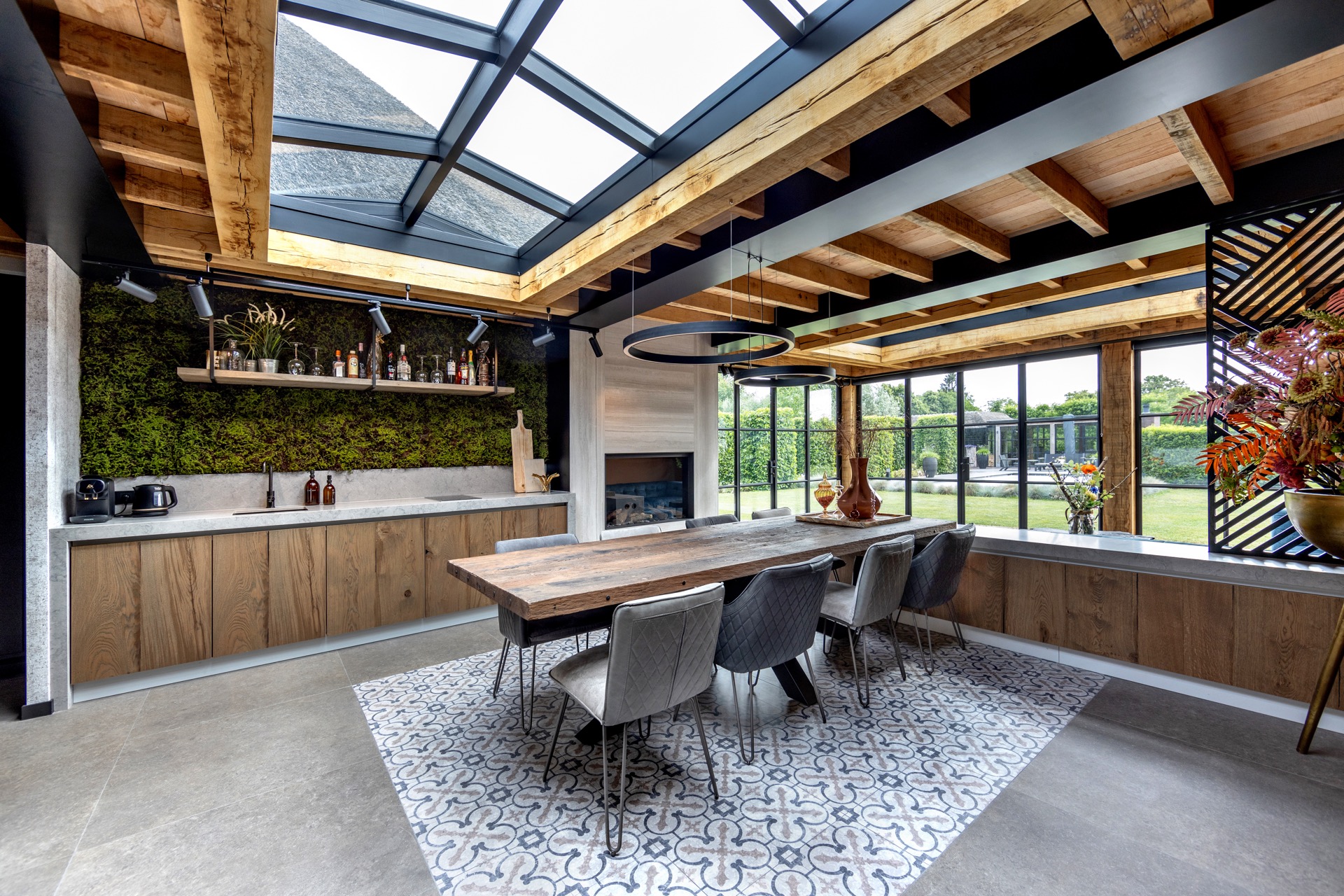
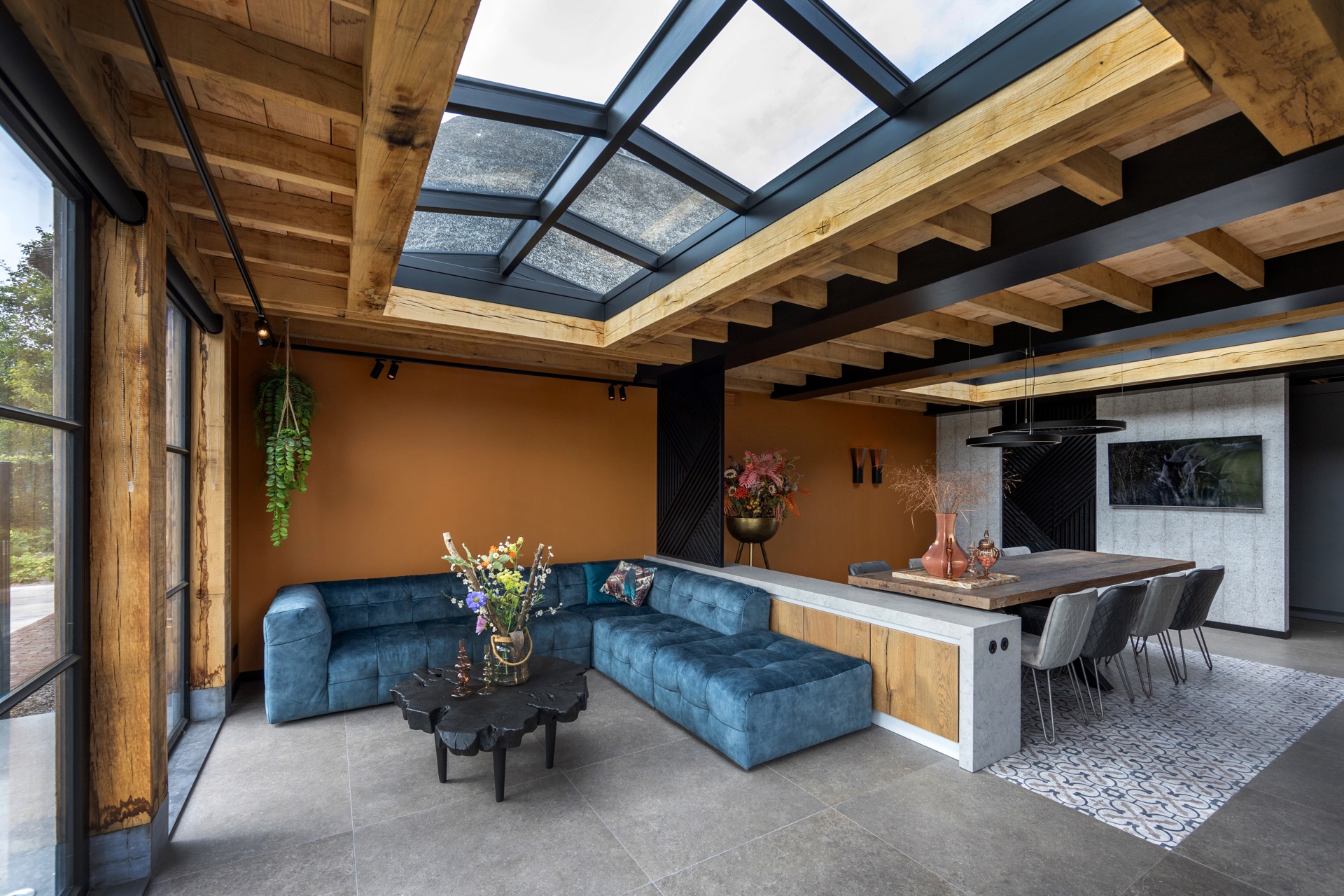
The garden room is the clearest shift in atmosphere. It was created through an extension that connects the villa with the garage, and its many glass panels keep the space visually open on several sides. Light lands on the floor, the seating, and the wooden structure overhead, so the room changes through the day instead of staying static. From here, the home opens toward the garden while still feeling tied to the main interior.
Under the freestanding canopies, there is space for dining outside without losing the sheltered feeling that the structure provides. The canopy lines are visible and deliberate, giving the garden room a defined edge. Rather than functioning as a separate outbuilding, this extension behaves like another room in the sequence of the house. It supports the same luxury interior design with garden room concept, but with more daylight and a stronger link to the terrace.
Glass, timber, and a measured amount of structure
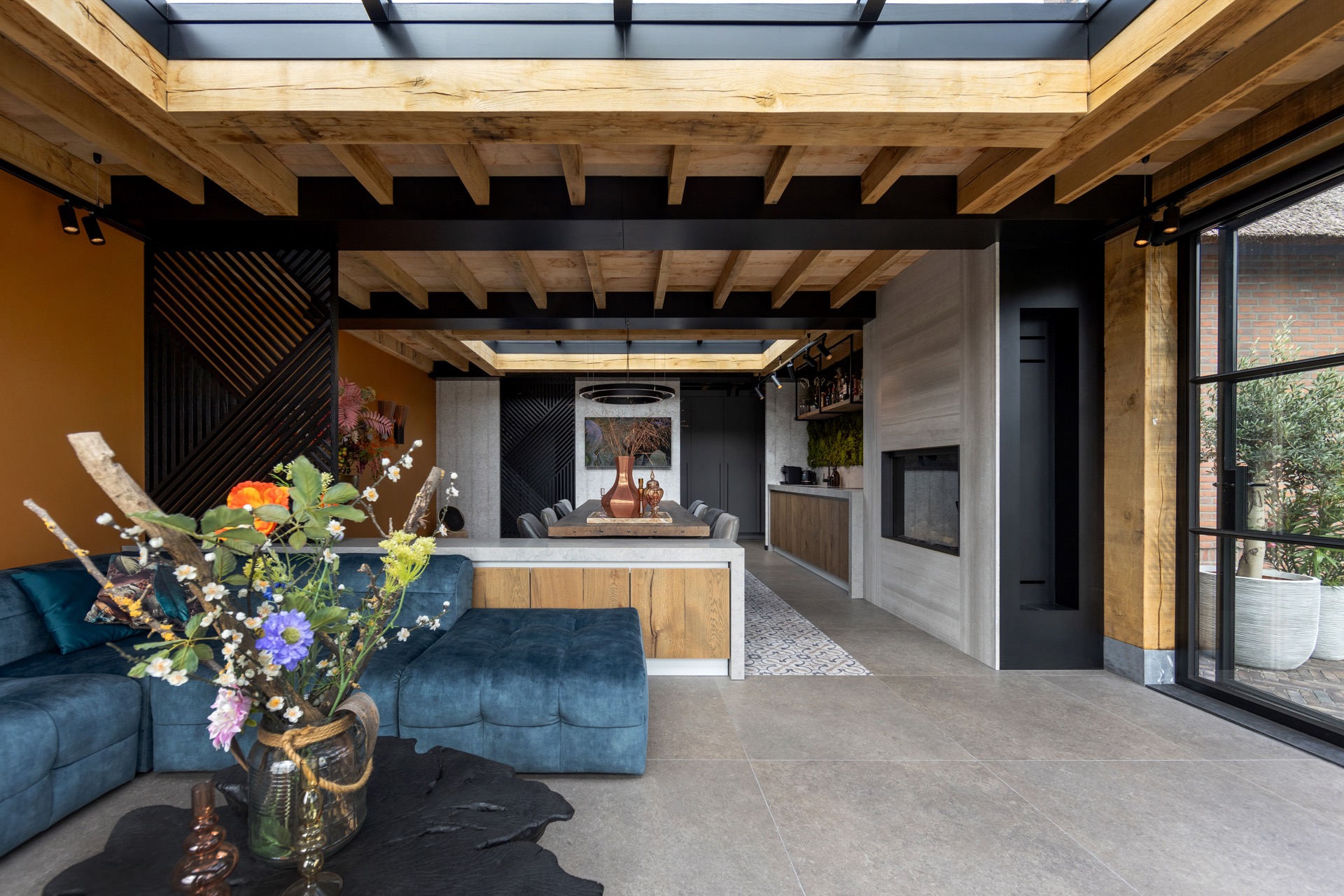
The ceiling in the garden room carries dark beams and visible lines that give the space rhythm. They contrast with the transparency of the windows and the softness of the greenery beyond. A blue corner sofa, a stone-look tabletop, and the open sightlines toward the outside create a room that feels settled without becoming heavy. Even the structural parts stay part of the composition, rather than disappearing into the background.
Materials that shift between refined and rugged
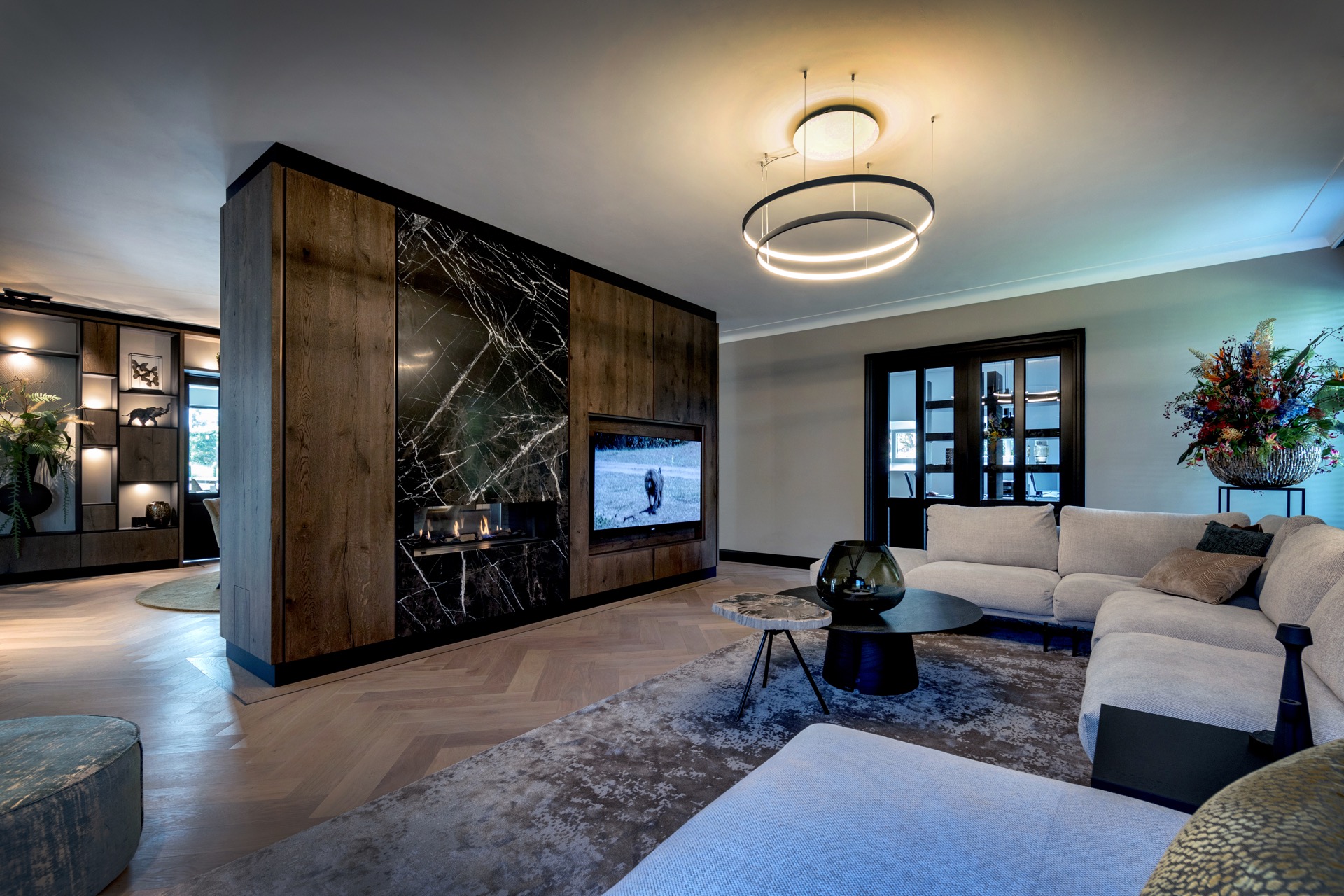
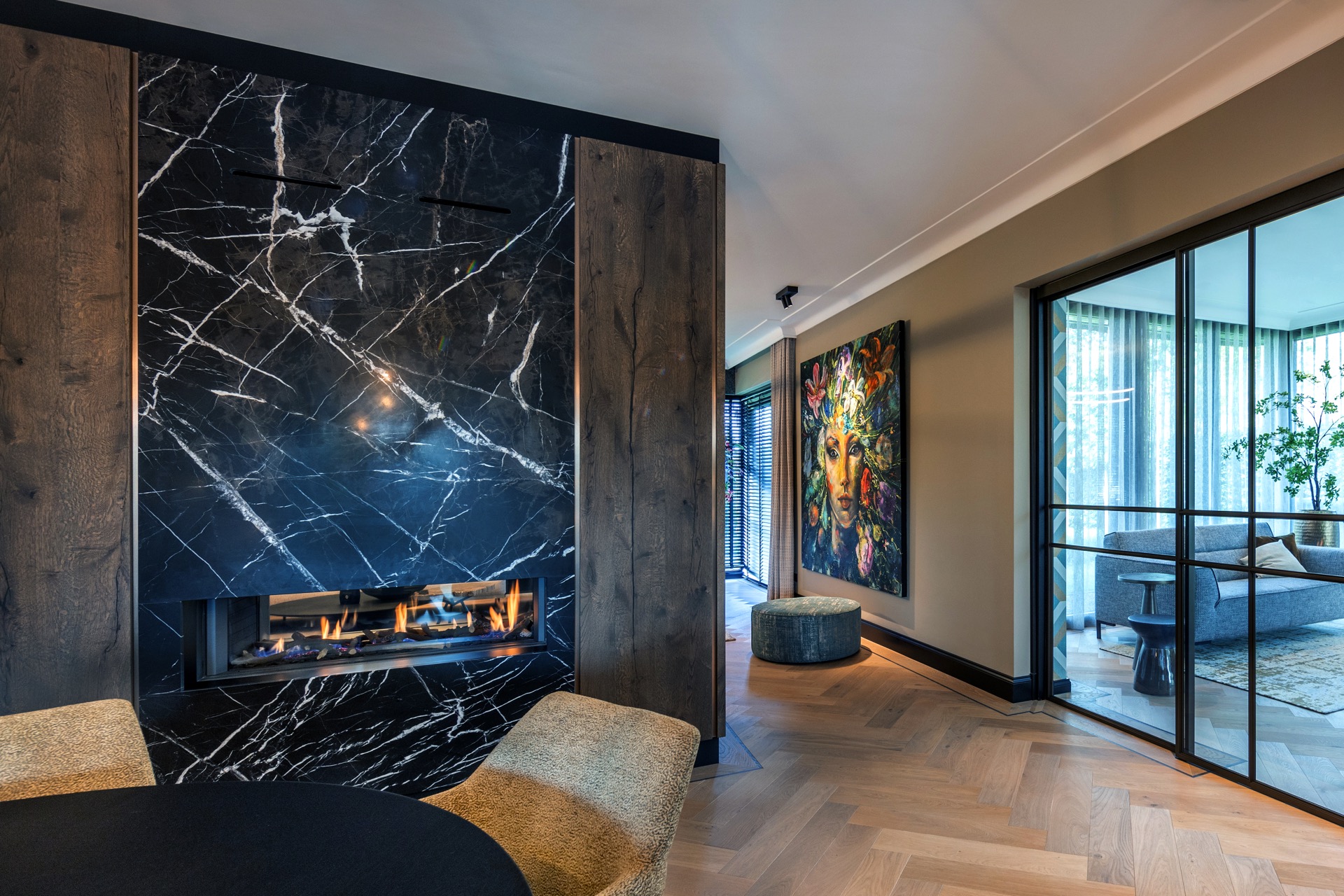
Across the ground floor, the material palette is varied but controlled. Wooden herringbone floors bring pattern underfoot, while custom furniture in dark wood adds weight to the kitchen and the outdoor kitchen zone. Steel doors with smoked glass interrupt the timber with sharper lines. Tile floors appear in some areas, and the wall colors move between soft and deeper tones, so the rooms are not left to one surface alone. The combination gives the interior a warm industrial interior character without pushing it toward a single style label. Luxury interior design with garden room remains connected to the layout, materials and daily use of the home.
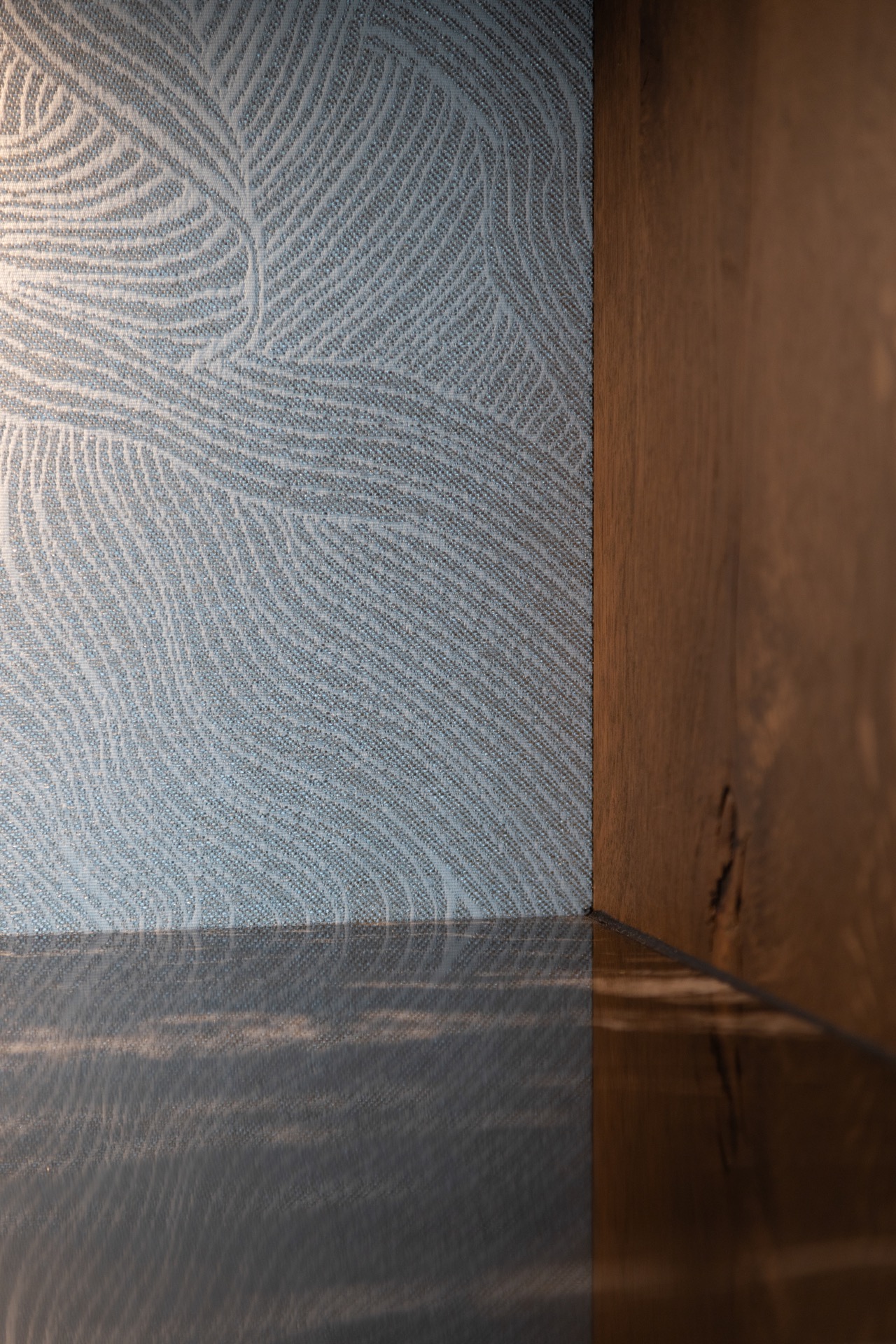
The fireplace is finished as a stone-like feature, reading almost like a marble-look fireplace wall in the way it catches light and holds the center of the room. Around it, wall cabinets and dividing elements help shape the space instead of merely filling it. Graphic wallpaper patterns bring another layer, but they are used sparingly, as a counterpoint to the larger surfaces. In close-up, the project is about texture: grain, reflection, matte finish, and the edge where one material meets the next.
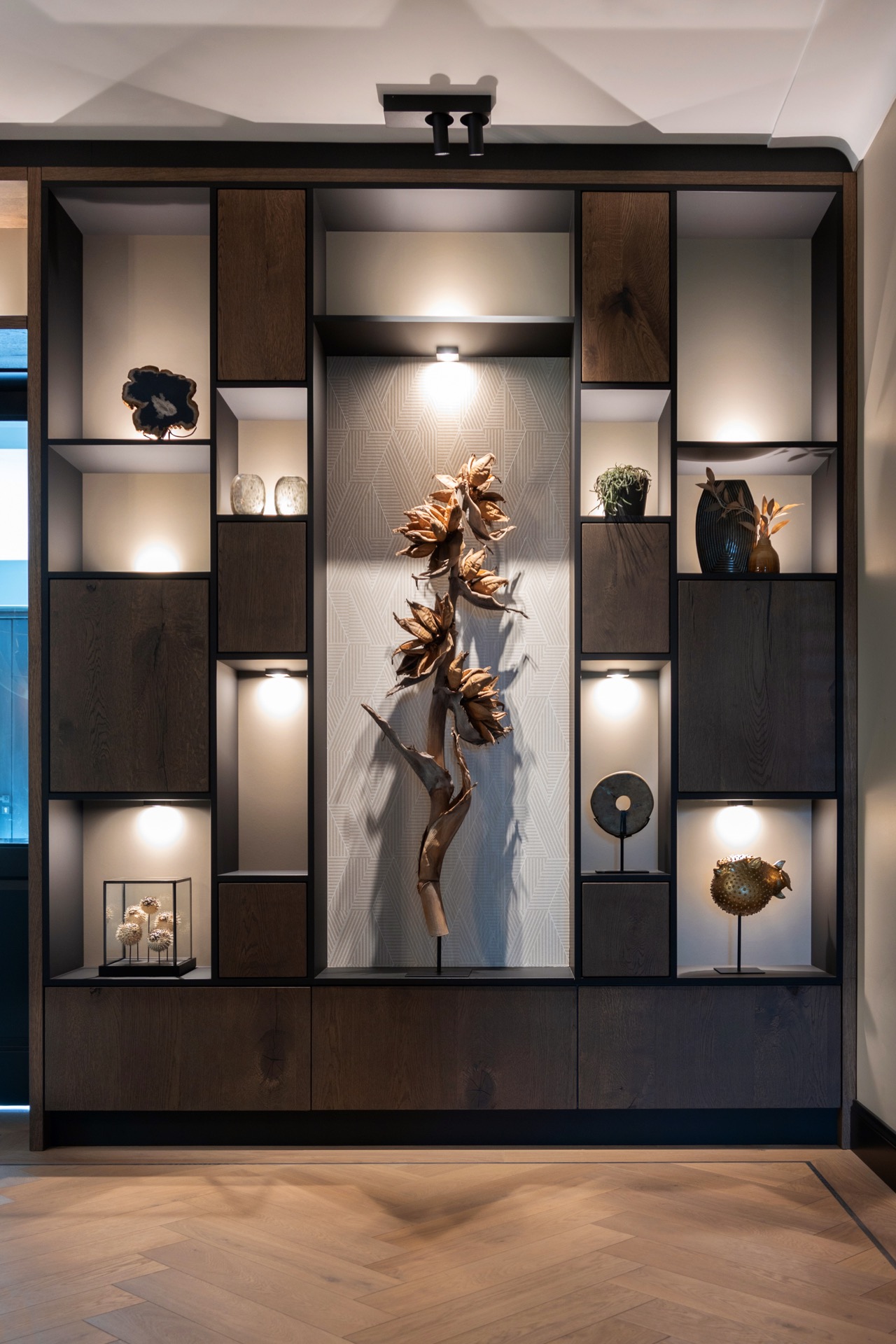
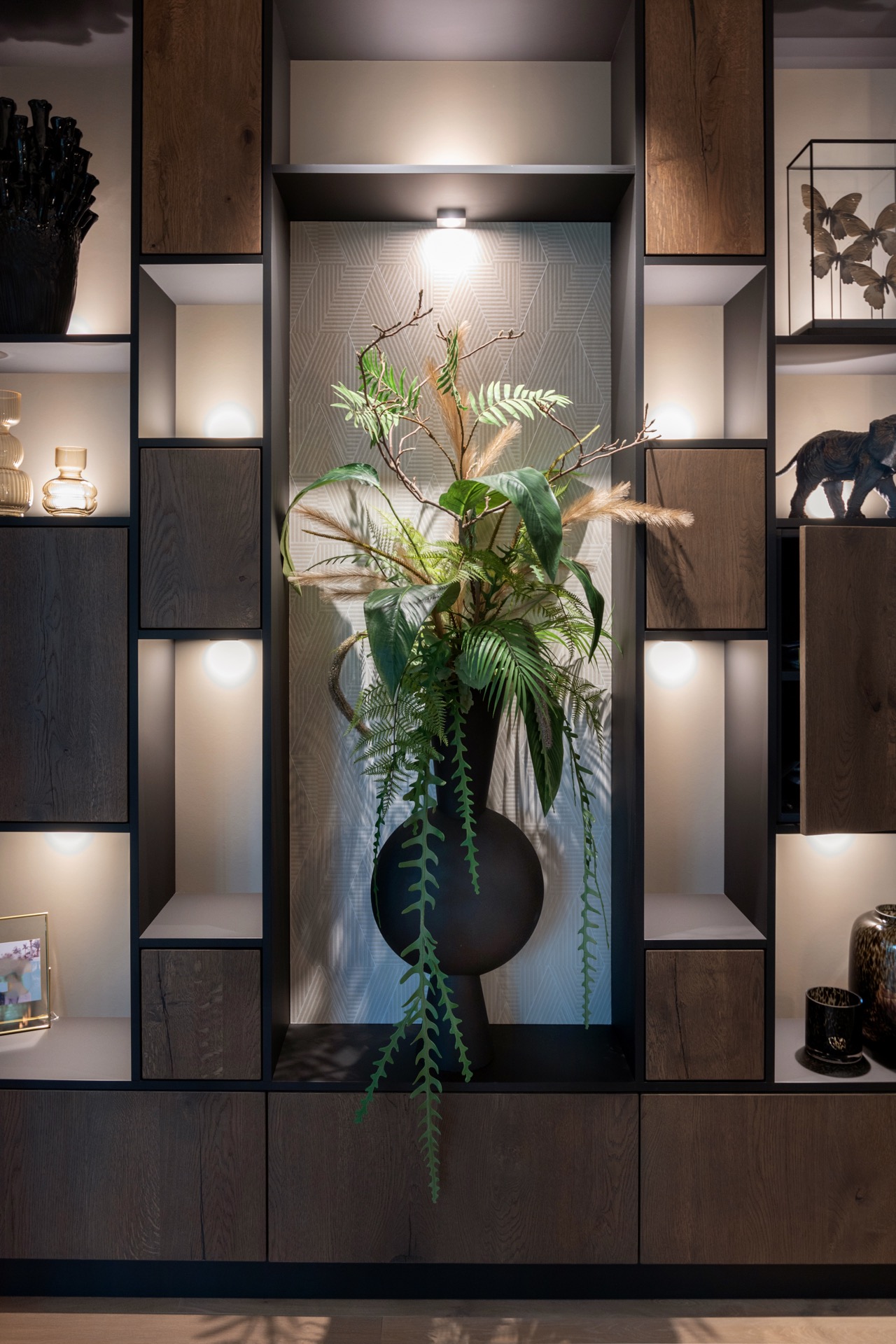
Custom wall cabinets niche lighting appears throughout the interior, especially in the built-in shelving where open compartments are lit from within. Those small light points are useful because they give depth to the cabinetry, turning storage into part of the room’s composition. The same approach can be seen in the dark wood kitchen accents, where the wood is not decorative trim but a deliberate frame around work surfaces, openings, and built-in zones. It is a quiet way of organizing a busy ground floor.
Lighting that shapes the room after dark
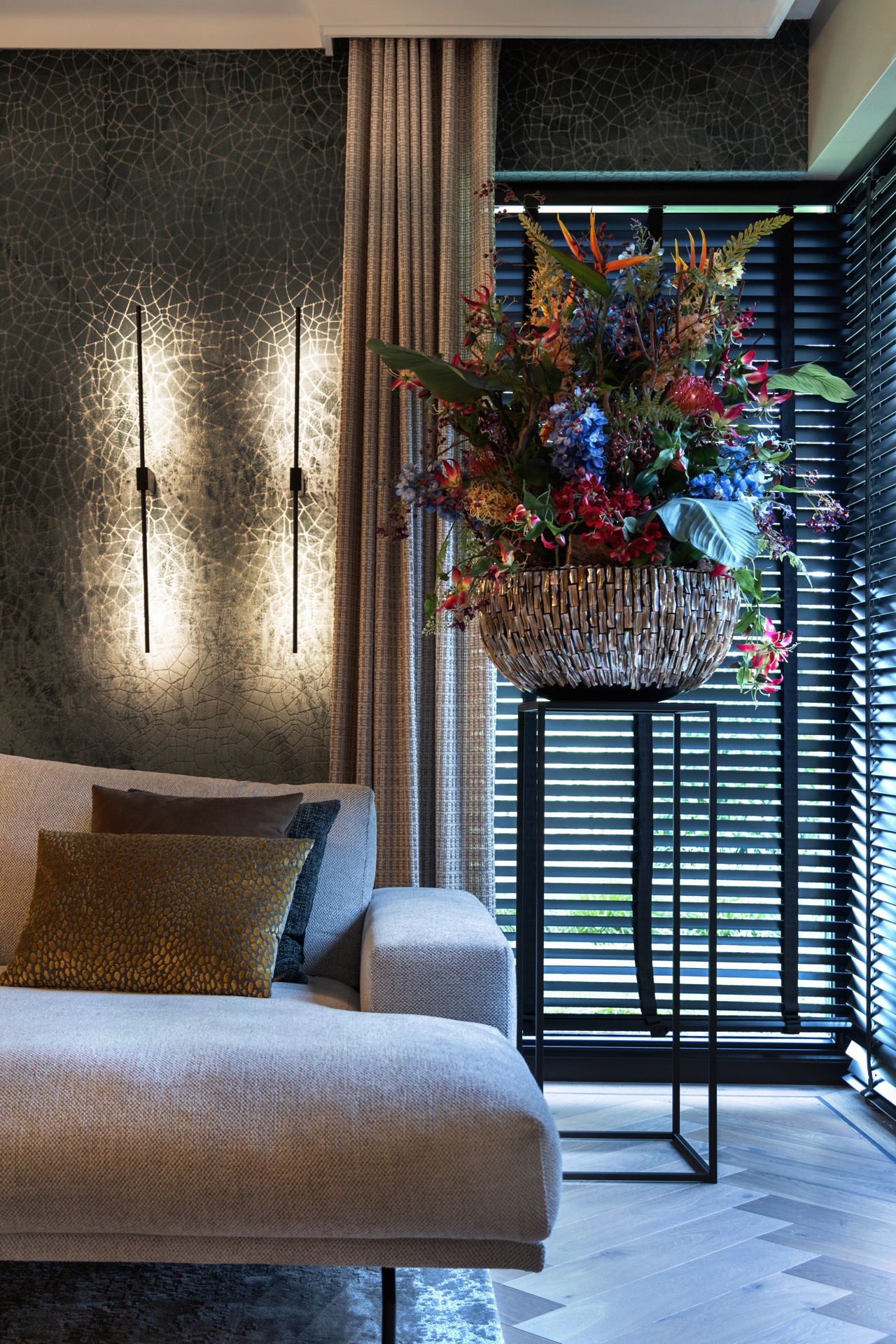
Light is handled in layers. Rail spots run along the ceiling above the kitchen and bar area, aiming light where the work happens. In the dining room, the pendant lights create a lower, more intimate pool above the table. The custom wall cabinets niche lighting brings a softer glow, especially in the evening, when the open compartments become visible as deep recesses rather than flat storage. Together, these sources keep the rooms readable at different times of day.
Some of the strongest images in the project come from the contrast between the dark structure and the lit openings. The steel doors with smoked glass break the view without fully blocking it, and the fireplace wall holds its position as a darker focal point. The effect is not theatrical. It is practical, but careful in the way a room is seen from one seat to the next. For a luxury interior design with garden room, that kind of light control matters as much as the materials themselves.
Built-ins, niches, and the details between them
The project depends on the in-between moments: the gap beside a cabinet, the recess in a wall unit, the line of a divider between functions. Those details are small, but they define how the rooms behave. The kitchen, dining space, and seating areas stay connected because the built-in elements give them edges rather than barriers. That is where the interior feels most resolved: not in a single statement piece, but in the way cabinets, openings, and light relate to each other.
Seen as a whole, the ground floor is organized by material contrast and by the move from enclosed rooms to the glass-filled garden room. Herringbone wood, dark timber, steel, stone-like finishes, and illuminated niches create depth without overcrowding the plan. The house offers several places to sit, eat, and gather, yet the strongest thread is still the same one that appears in the first view: a luxury interior design with garden room, where daylight, custom joinery, and carefully placed lighting define the experience of the space.
Want to see more of Luxury interior design with garden room and custom millwork? View the page of Luxury interior design with garden room and custom millwork for even more great projects and company information.

NEW 2026 Jubileum Edition The Best Interior Designers Benelux
Order Now €125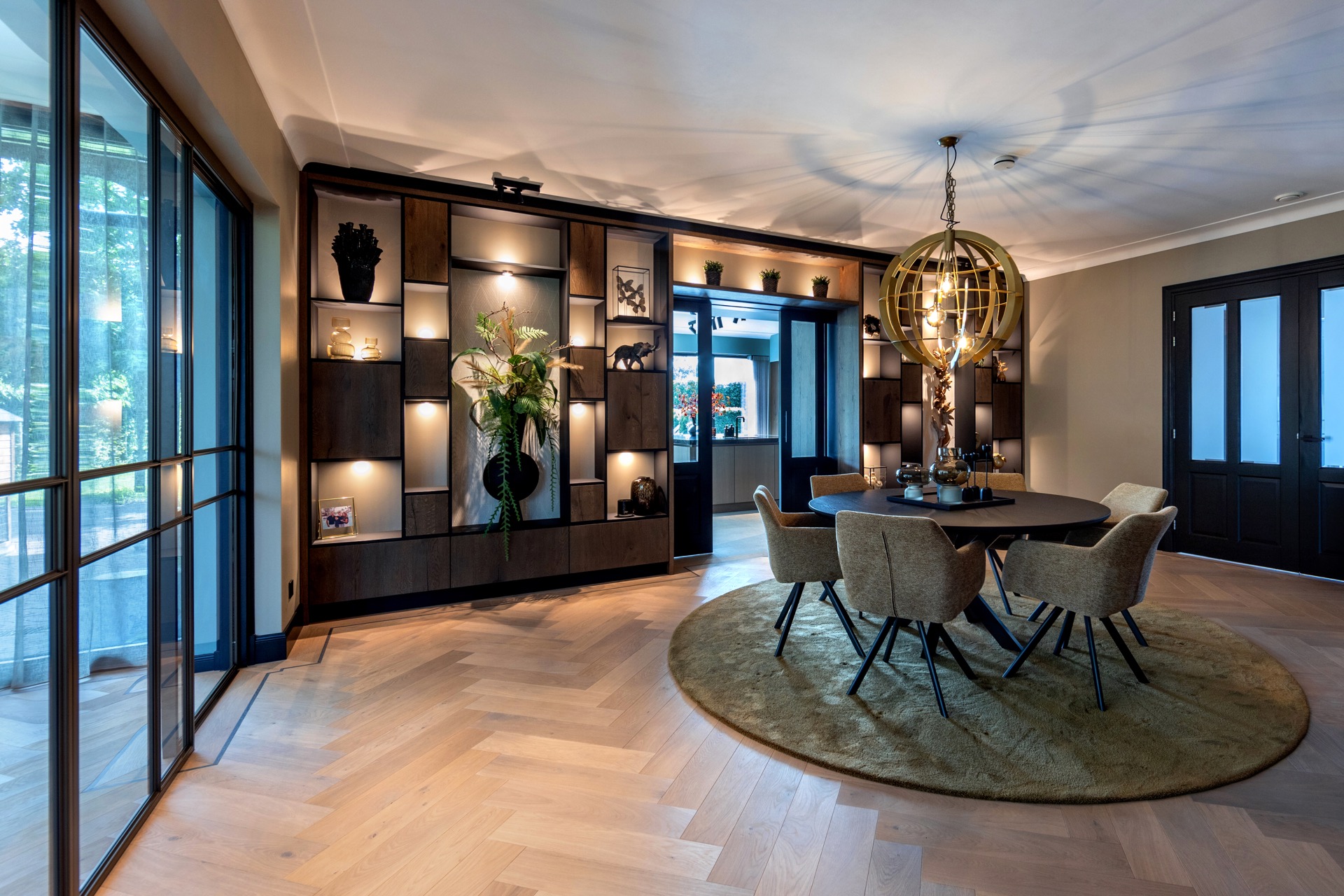
NEW 2026 Jubileum Edition The Best Interior Designers Benelux
Order Now €125