







Luxury kitchen with island and quartzite worktop
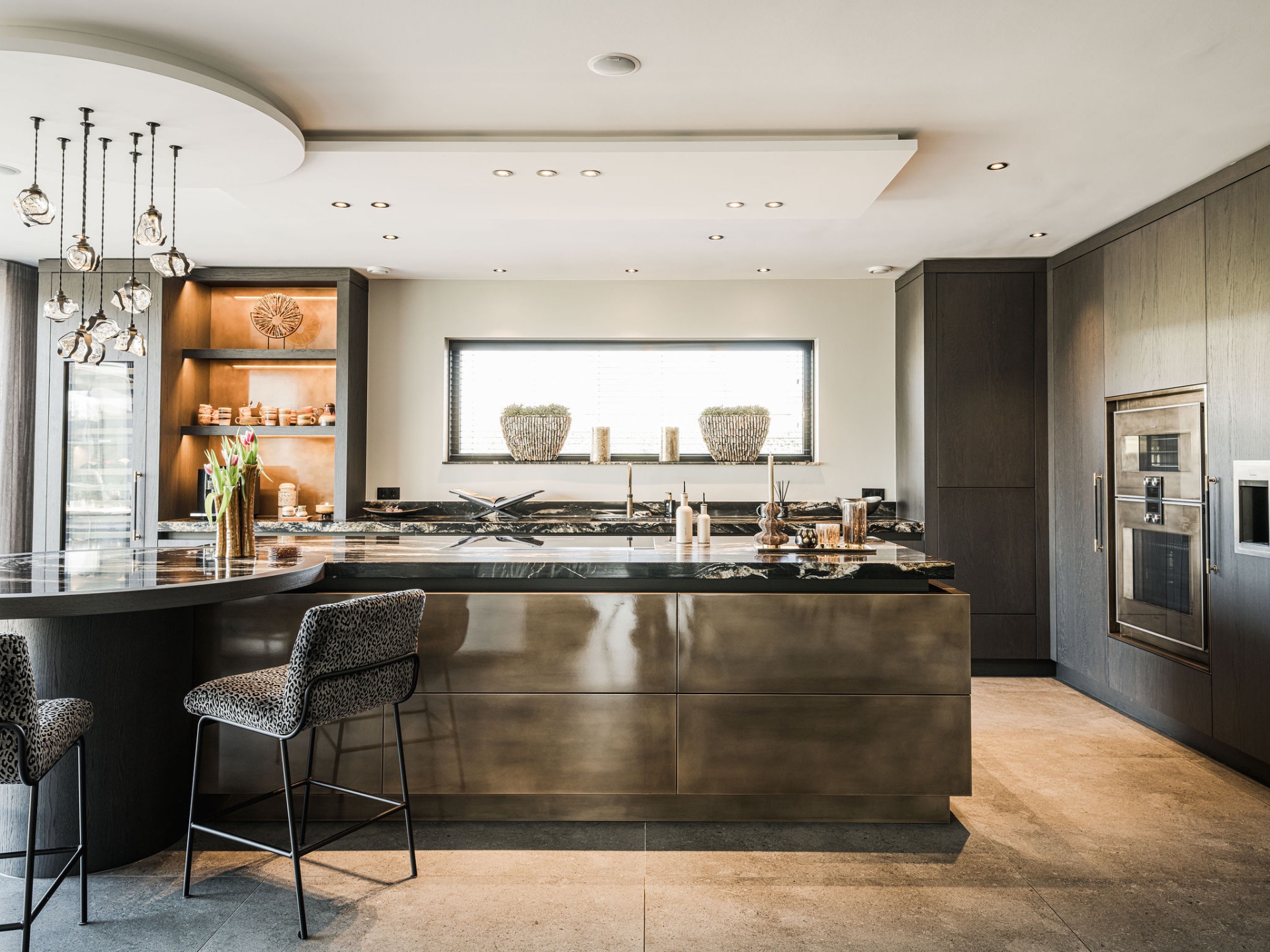
The quartzite top catches the eye first. It stretches wide across the island, with a clear vein and a hard mineral sheen that reads as soon as the light hits it. Around that centre point, bronze-toned surfaces and dark wood are set against each other, giving the room a compact, grounded look. In this luxury kitchen with island and quartzite worktop, the lines stay calm, but the details are direct: thickened fronts, a round bar, and cabinets that show the material instead of hiding it.
Stone, bronze and oak held in one frame
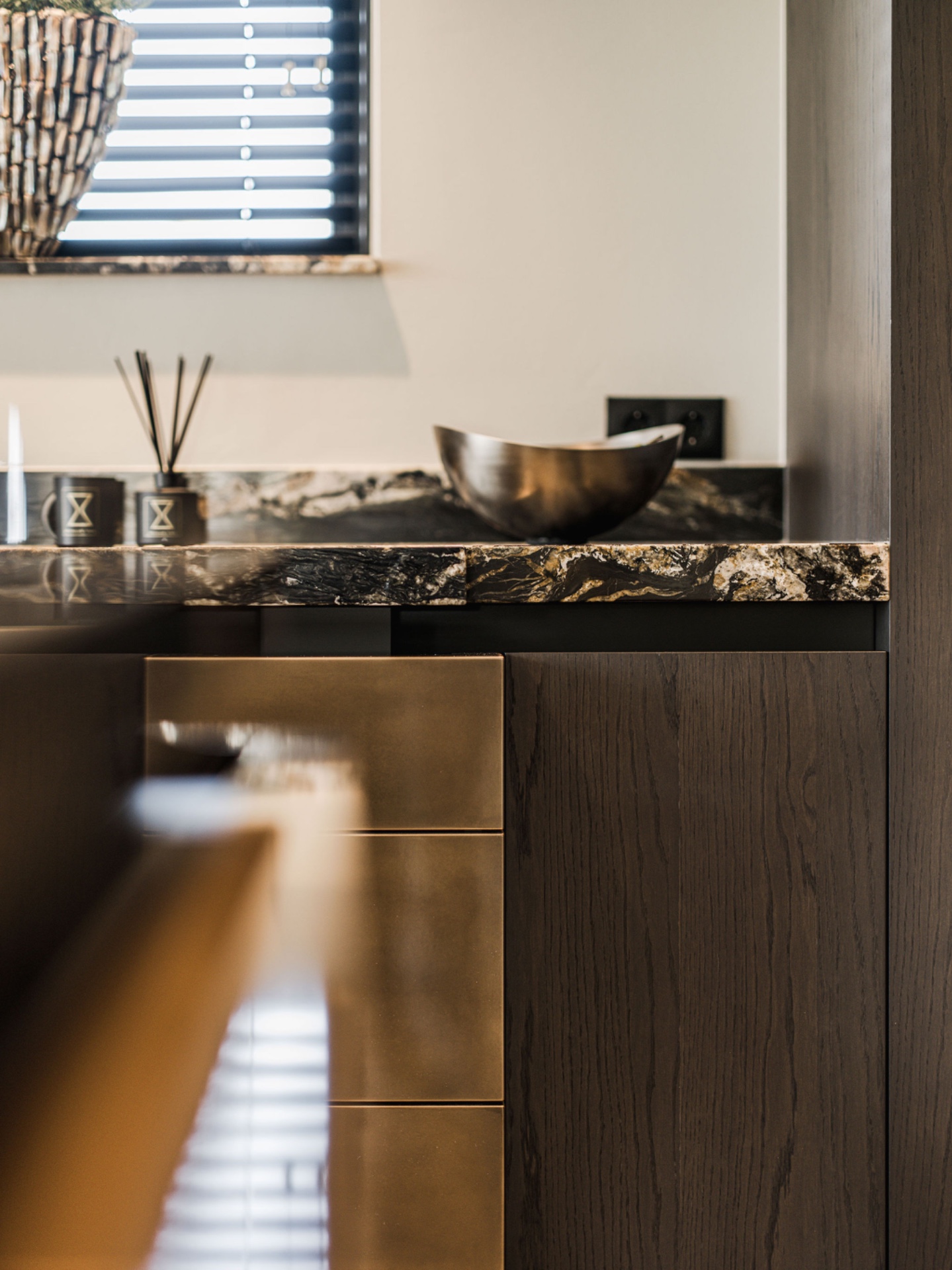
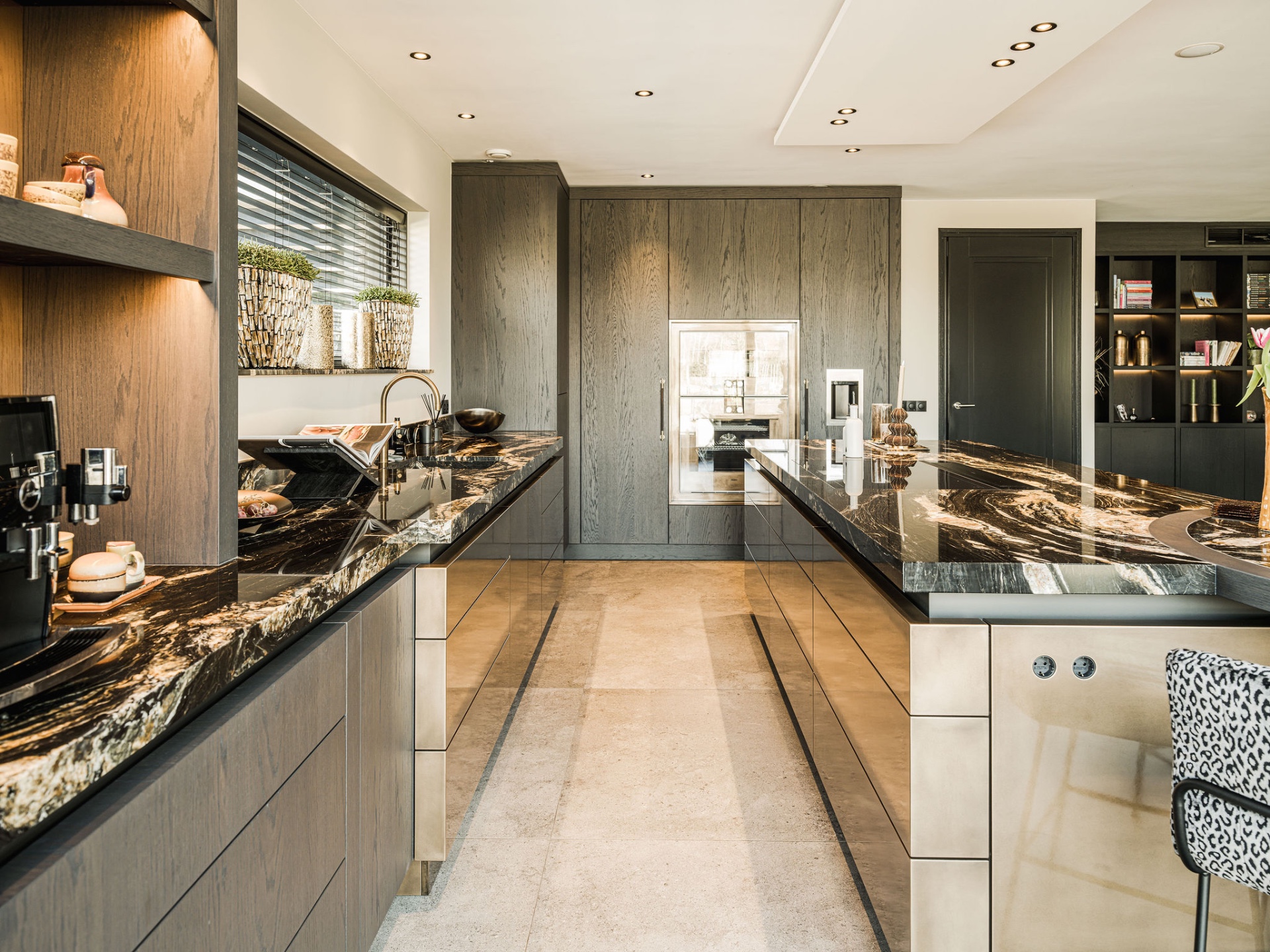
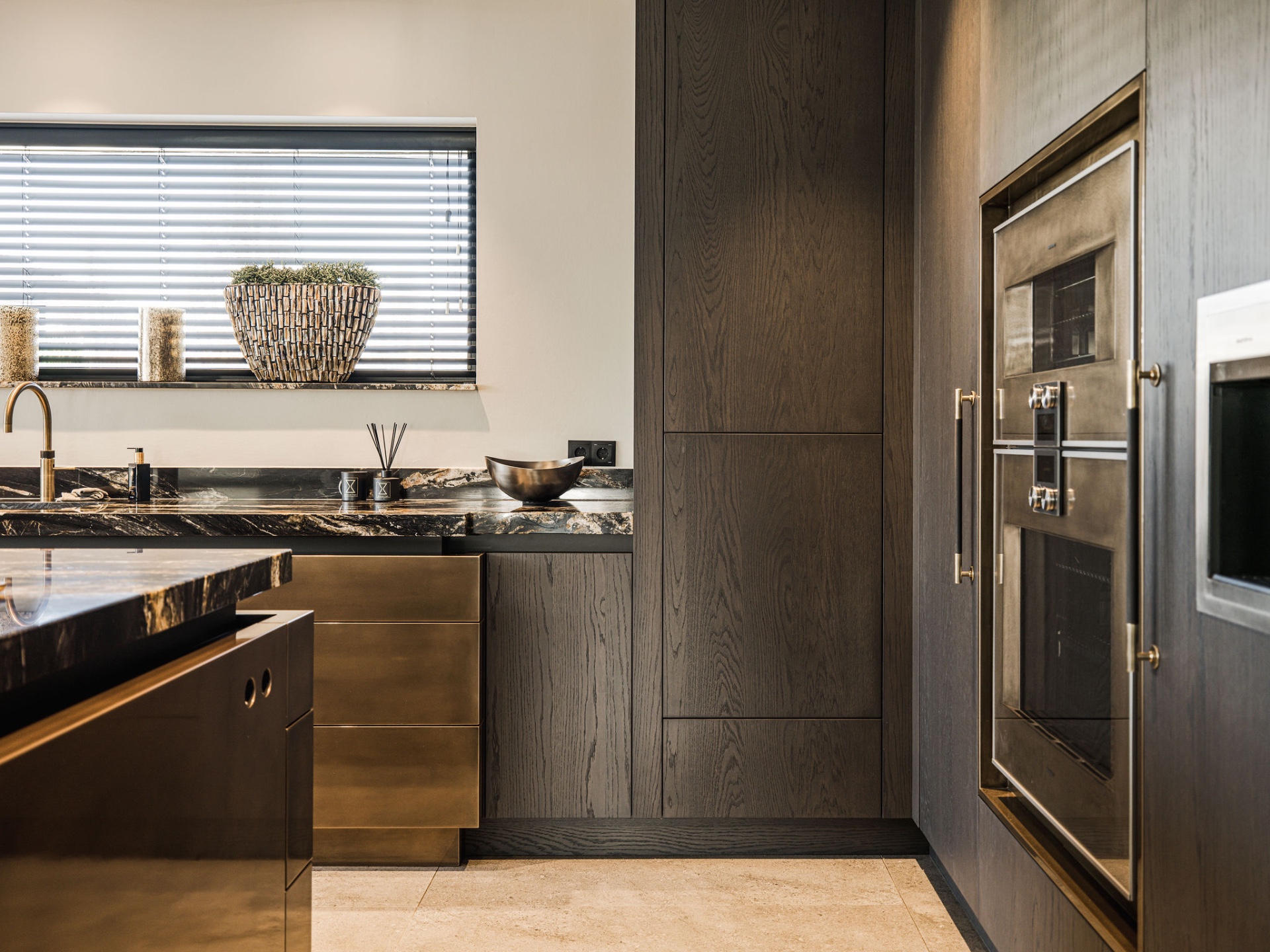
The island is finished in verometal bronze high gloss, so it reacts to light differently from the matte wood beside it. That difference is visible where the lower units meet the bar and where the island turns toward the walking route. The tall cabinets use oak veneer, stained and lacquered in Mystic, which pushes the colour deeper and darker. Together they do not form a flat backdrop. They keep stone, metal and wood separate enough for each surface to read clearly.
The thickened fronts make the furniture feel heavier and more defined. Their edges are firm, with no thin profile or soft recession. That stronger outline gives the quartzite kitchen island more presence and makes the bronze kitchen accents stand out where cabinet, worktop and circulation meet. The result is not busy. It is precise, with each transition left visible.
A round kitchen bar with a sharp stone edge
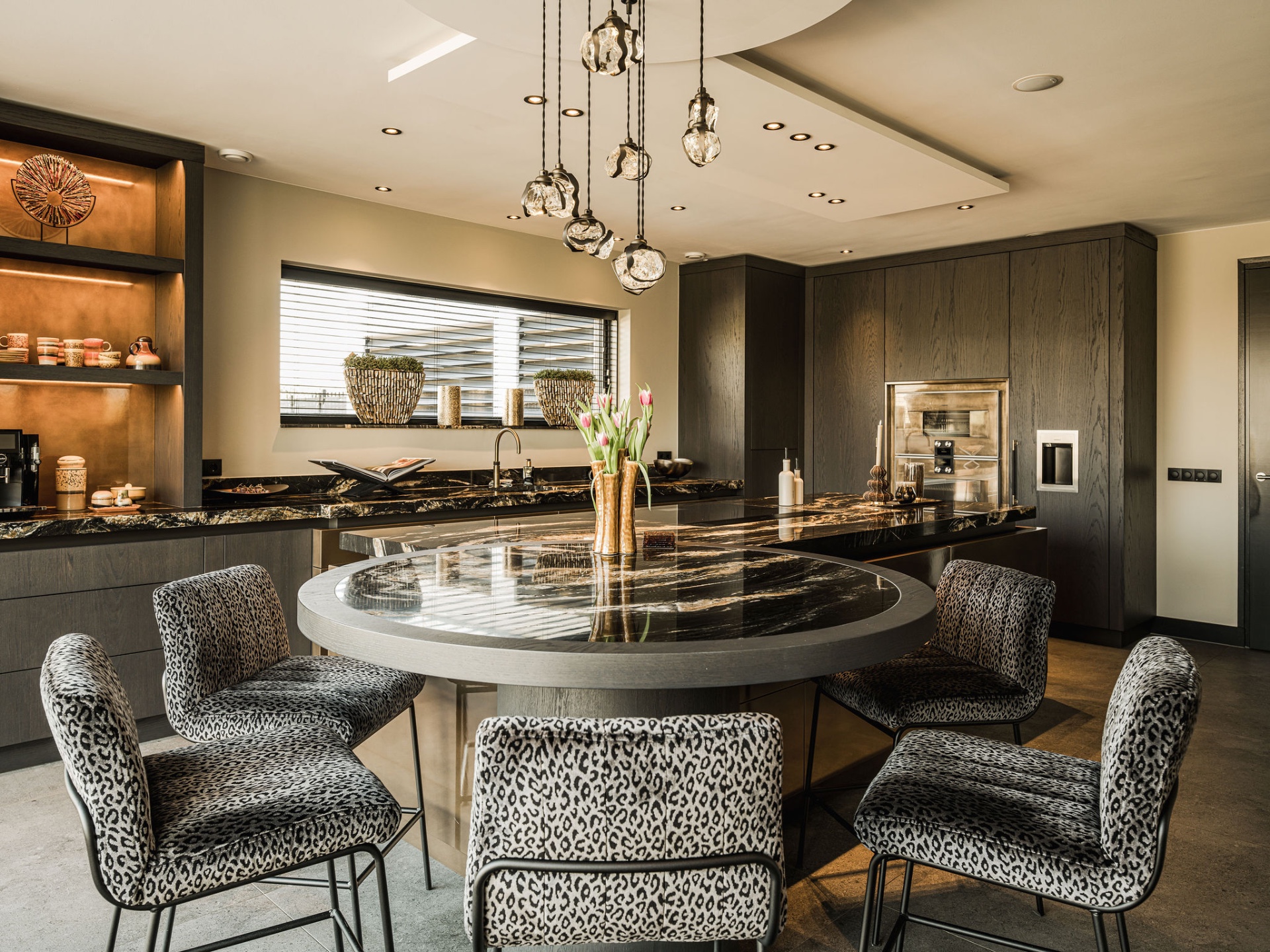
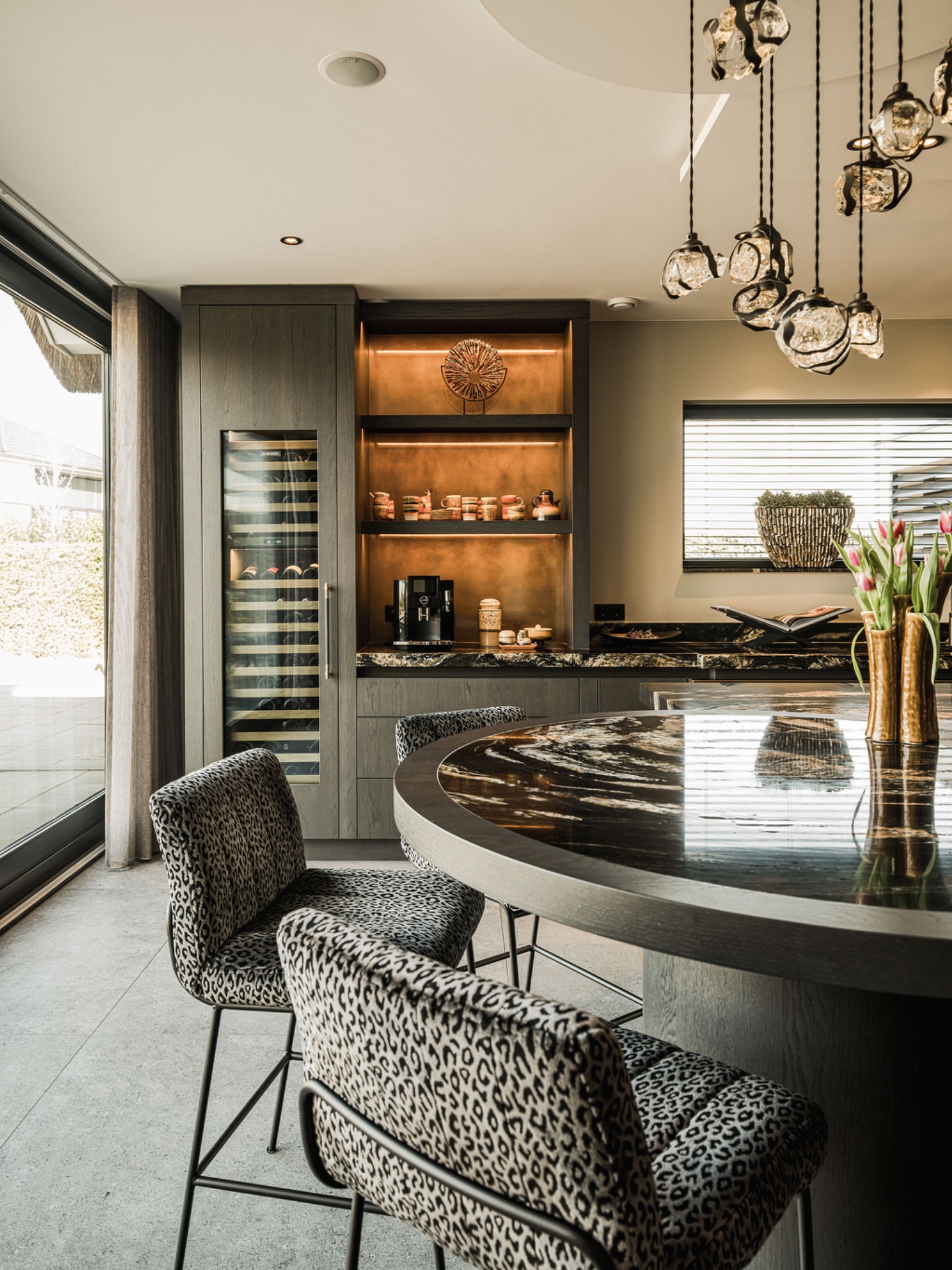
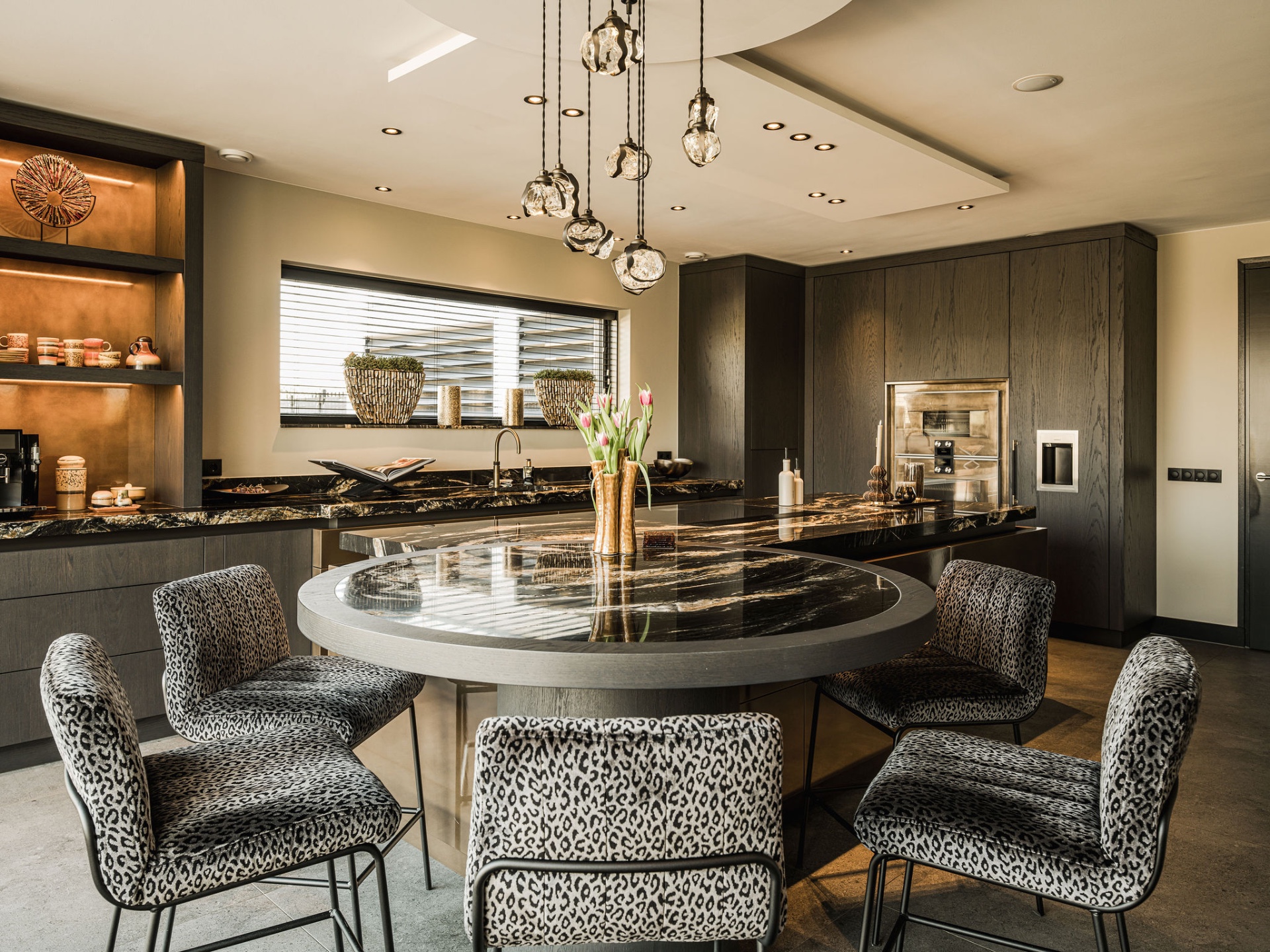
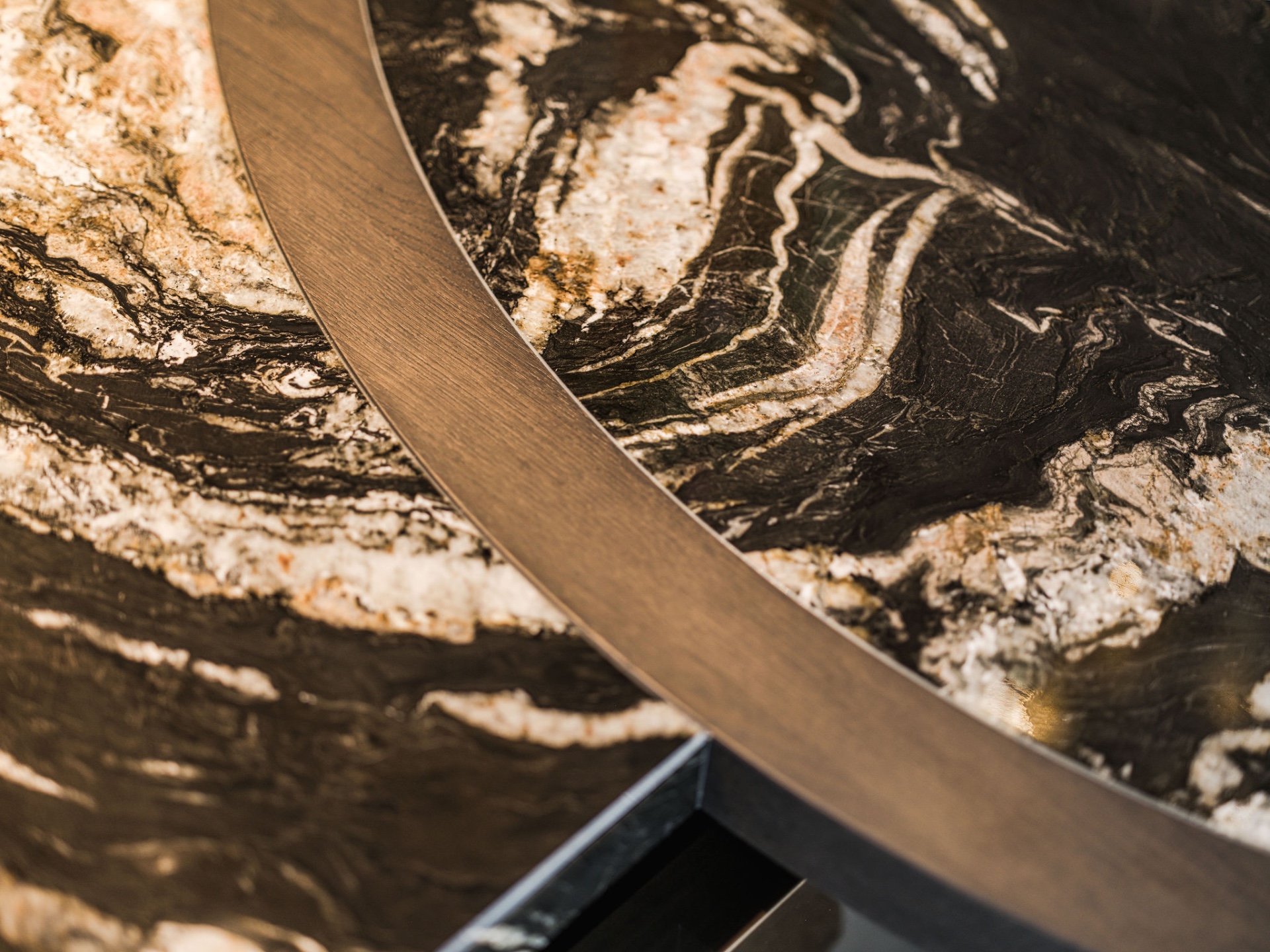
At one side of the island, a round kitchen bar breaks the straight run of the cabinetry. It is edged in oak and inlaid with quartzite natural stone, so the curve still has weight. The narrow visible vein in the stone forms a thin band through the arc, which shows exactly where the material is cut and where it continues across the top. That makes the rounded shape easy to read in the room.
The bar does more than soften the line. It opens the island toward the sitting area in a way that feels deliberate, almost like a pause in the mass of the furniture. The stone remains the strongest visual element, catching reflections from the surrounding interior, while the oak edge keeps the curve legible. This is where the luxury kitchen with island and quartzite worktop shifts from work surface to meeting point.
Material contrast you can see at the edges
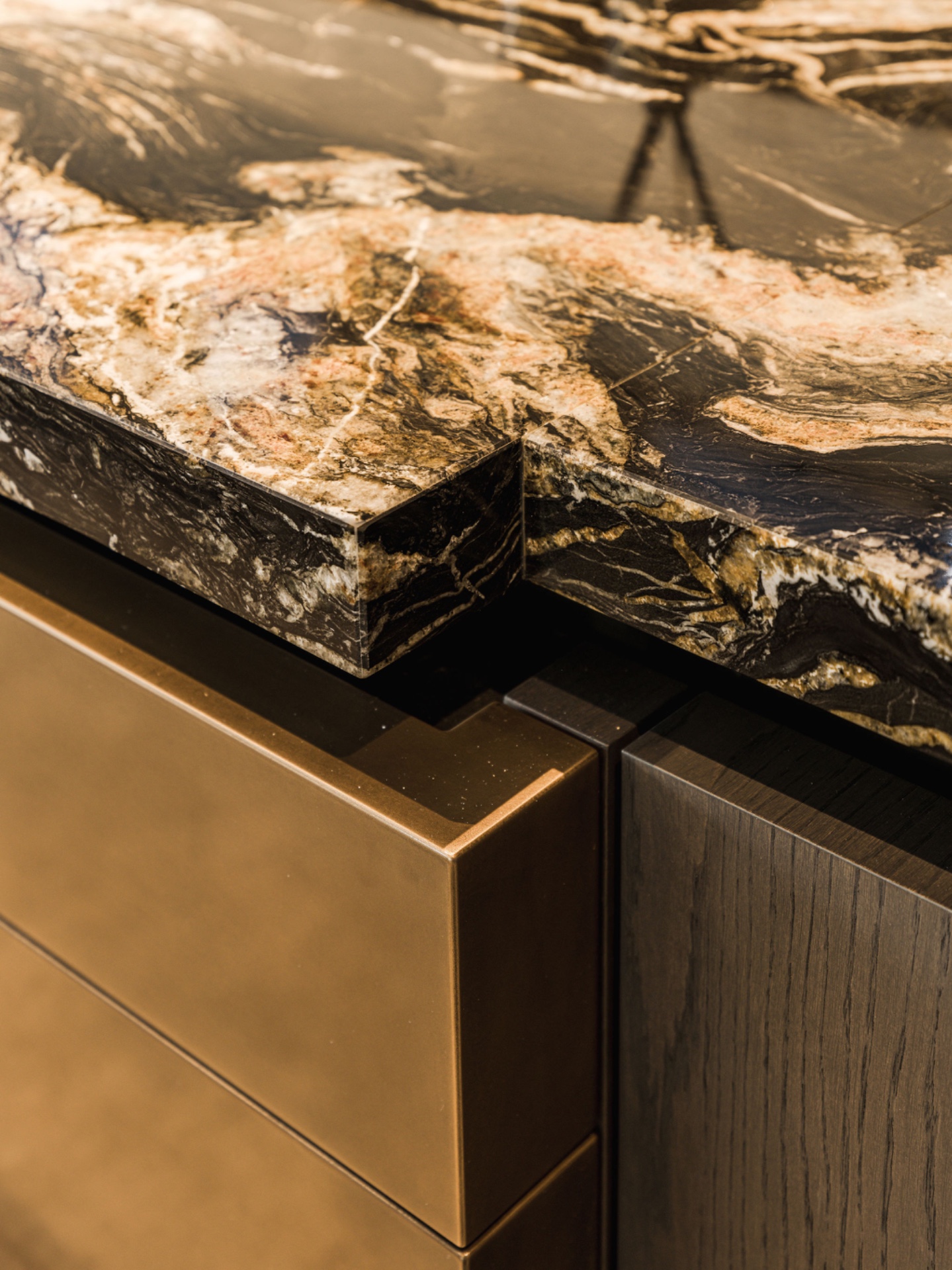
The contrast is clearest at the junctions. Bronze gloss, oak veneer and quartzite each take the light differently. The stone looks fixed and mineral; the bronze surface shifts as you move; the wood stays quieter and absorbs more of the room. Because the finishes are kept distinct, the island reads as a built object rather than a decorative block. Its weight comes from the way the materials meet, not from ornament.
A dark oak veneer kitchen wall with glass fronts
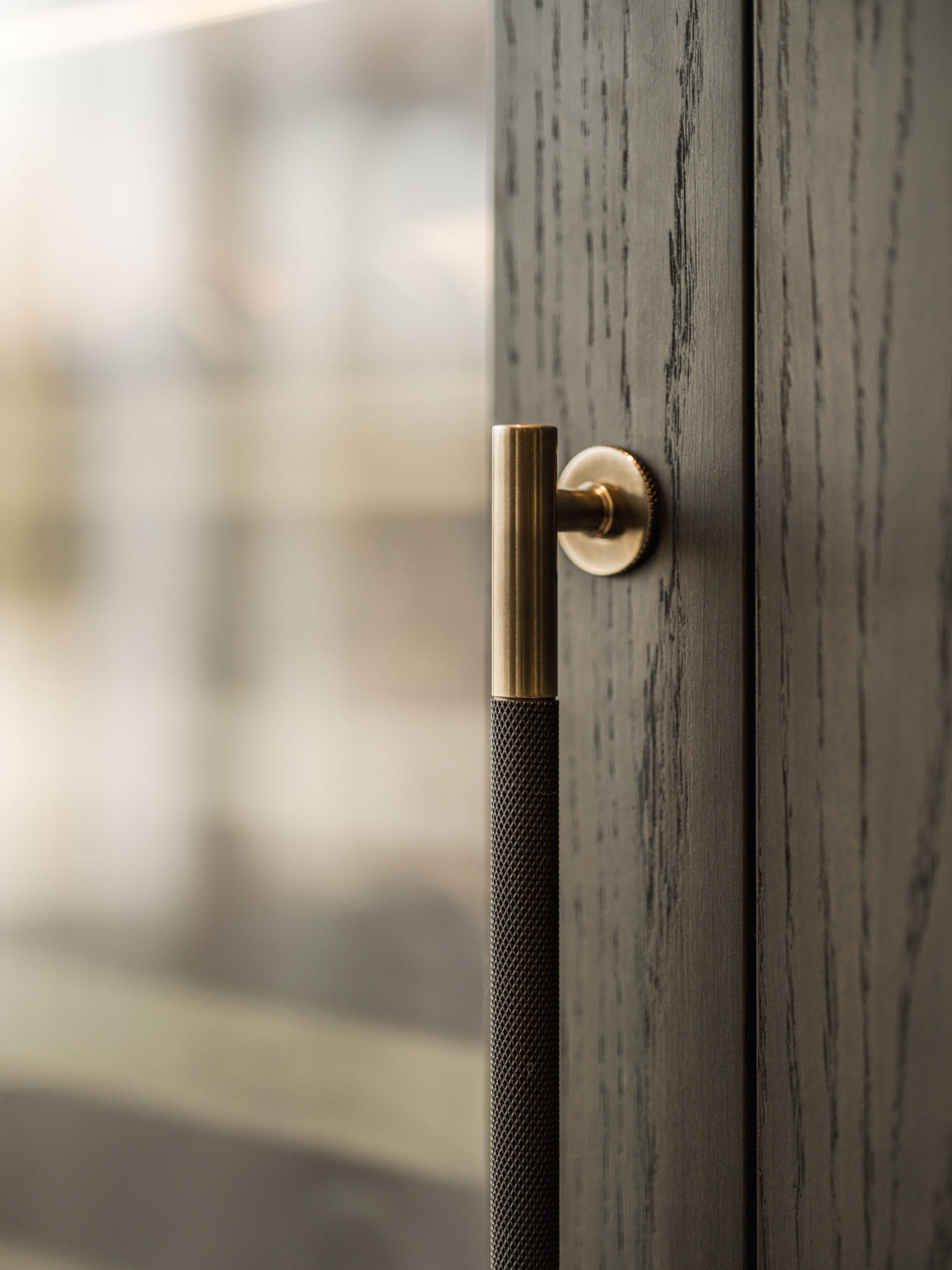
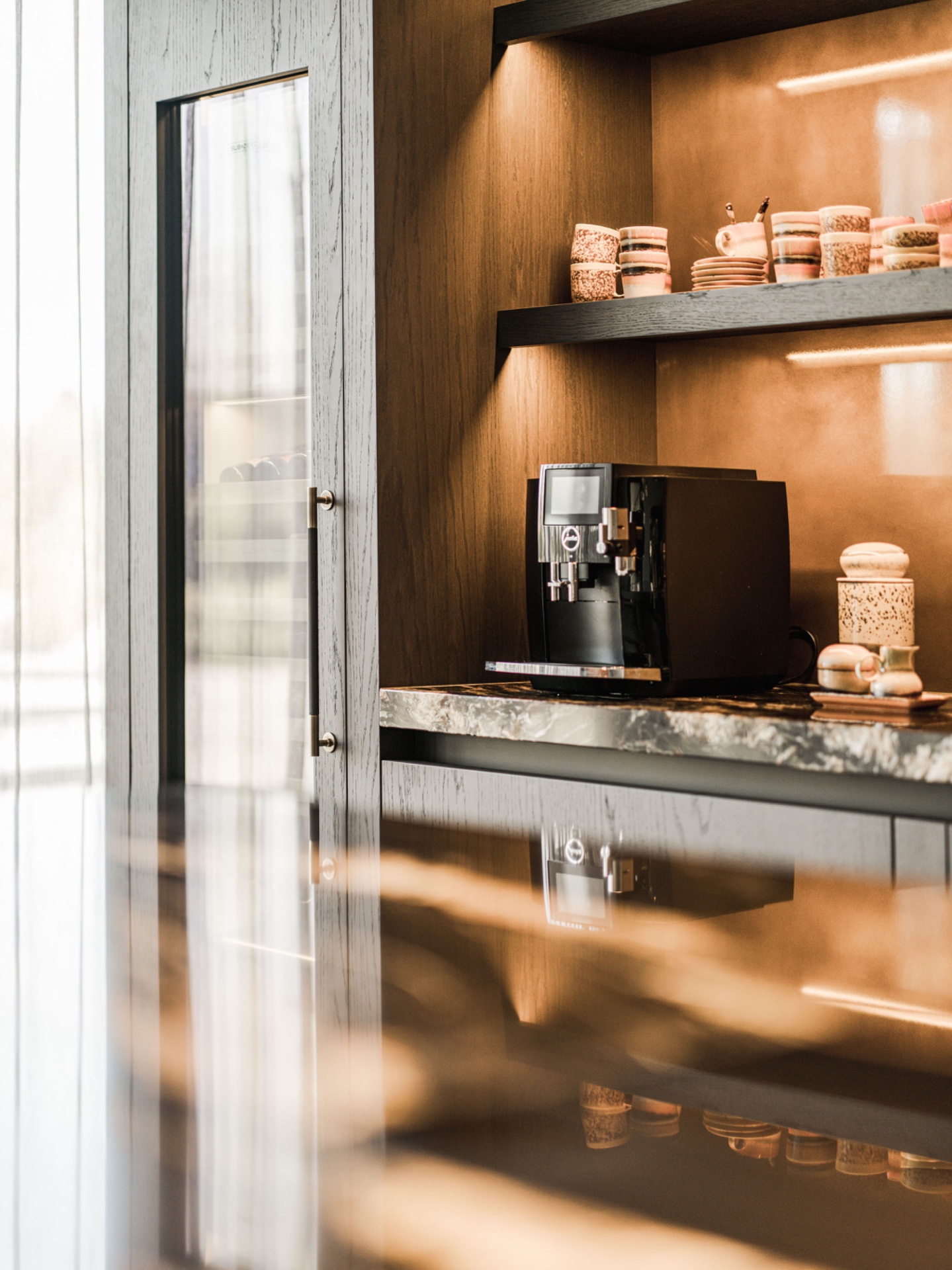
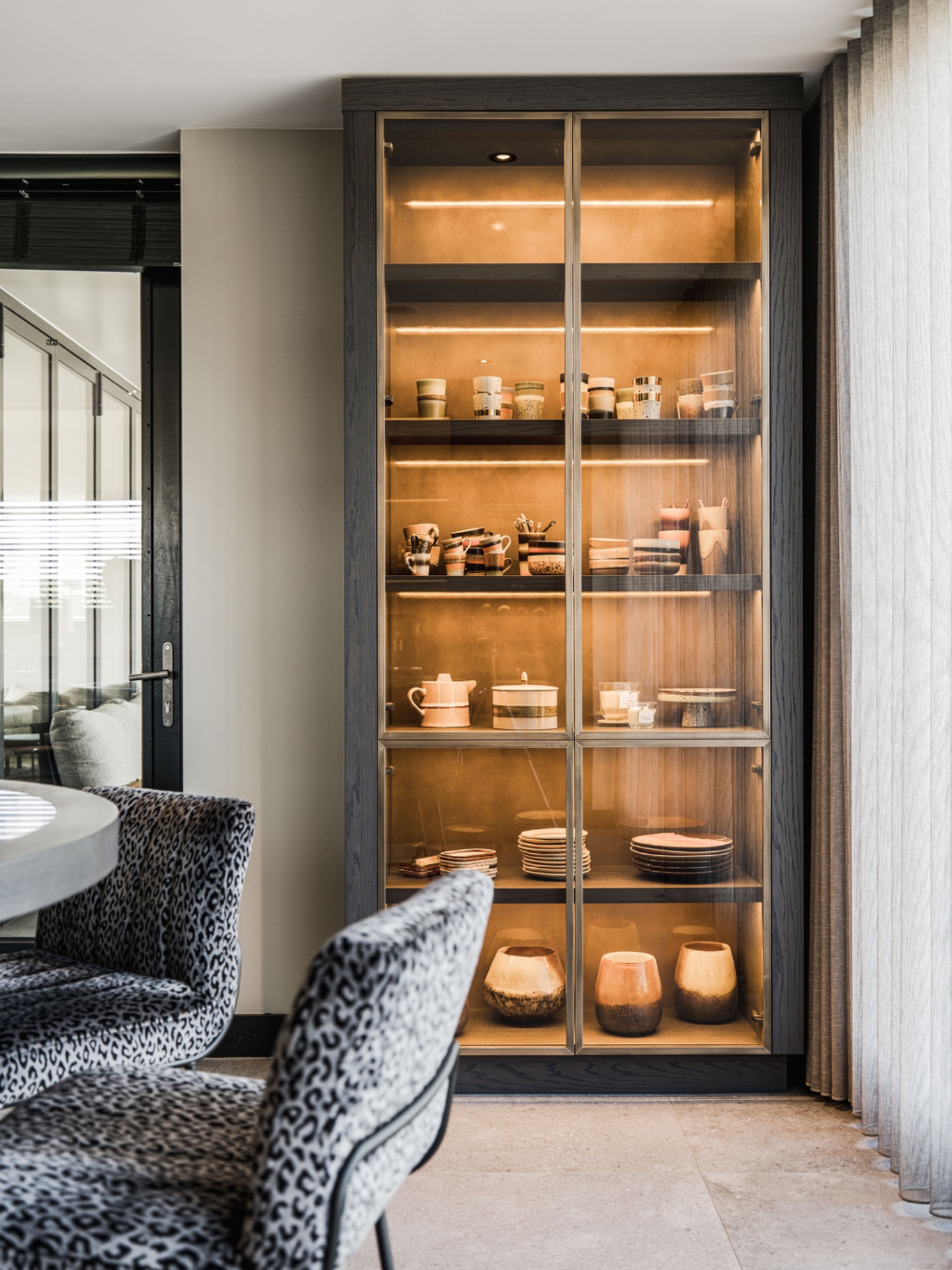
The tall wall of cabinets is built in dark oak veneer kitchen fronts, and the panel lines run straight through the composition. Between the closed sections are glass-fronted cupboards with soft internal lighting. Those illuminated glass cabinet sections work like pauses in the wall, showing crockery without turning it into a display case. The warm glow behind the glass is subtle, but it stops the wall from becoming visually dense.
This cabinet wall also shows how the kitchen uses closed and open surfaces together. The solid fronts keep the mass tidy, while the glazed sections bring a little depth between the timber planes. When daylight lands on the glass and the internal light stays on, the layers become clear: stone at the worktop, wood in the cabinet bodies, glass at the front. The sequence gives the room its order.
Warm niche lighting appears in the wall as well, with a gold-bronze tone that picks up the metal finishes near the island. The light is not theatrical. It sits back in the recesses and marks out the cabinets and openings one by one. In the evening, that soft accent lighting keeps the kitchen readable even when the fronts are closed.
Recessed spots and pendant lights over the island
The ceiling lighting is restrained and placed where the work area needs it most. Recessed spots keep the countertop readable, while pendant lights above the island introduce a second layer of light over the centre of the room. Seen together, they add depth above the quartzite kitchen island and the adjoining table zone. The glass in the pendants catches and breaks the light, so the ceiling does not flatten into one dark plane.
The same lighting also sharpens the edge of the round kitchen bar. The stone rim reflects the spots differently from the bronze island surface, which makes the curve easier to see. At night, the room is built from a few clear light points: the pendants, the spots, the lit cabinet niches. That is enough to separate the zones without crowding the ceiling with fixtures.
Details that keep the composition exact
The appliance wall follows the same measured approach. The ovens sit within bronze-framed openings that echo the island finish, so they belong to the same material language without taking over the composition. A downdraft hob is integrated into the worktop, which keeps the stone surface visually open and lets the quartzite remain the main plane in view. Technical elements stay present, but they are absorbed into the furniture rather than breaking the line.
Close up, the joinery stays tight. The gap between top and front is narrow, the corner finishes are crisp, and the different glances of bronze, wood and stone stay clearly separate. That precision matters because it lets the eye move from the island to the wall without losing the structure of the room. Nothing is overdrawn. The materials carry the expression themselves.
How the kitchen reads in layers
From a wider view, the island comes forward first, then the wall of cabinets, and only after that the smaller details in the stone, glass and lighting. That order makes the room easy to read. The luxury kitchen with island and quartzite worktop gains a strong centre line from the island, while the round bar, the glass-fronted cabinet and the tall storage wall form a measured edge around it. Each part has its own role, and none of them needs to shout.
The close details confirm that reading. The grain in the quartzite, the reflective bronze, the dark oak veneer and the warm light in the niches all work on their own terms. The kitchen becomes clear through those differences. It feels defined by material and placement, not by excess. That is what gives this project its strength: a quartzite kitchen island at the centre, a round bar beside it, and a wall of cabinets that keeps the whole composition anchored.
Want to see more of Martin Van Essen exclusieve keuken? View the page of Martin Van Essen exclusieve keuken for even more great projects and company information.


NEW 2026 Jubileum Edition The Best Interior Designers Benelux
Order Now €125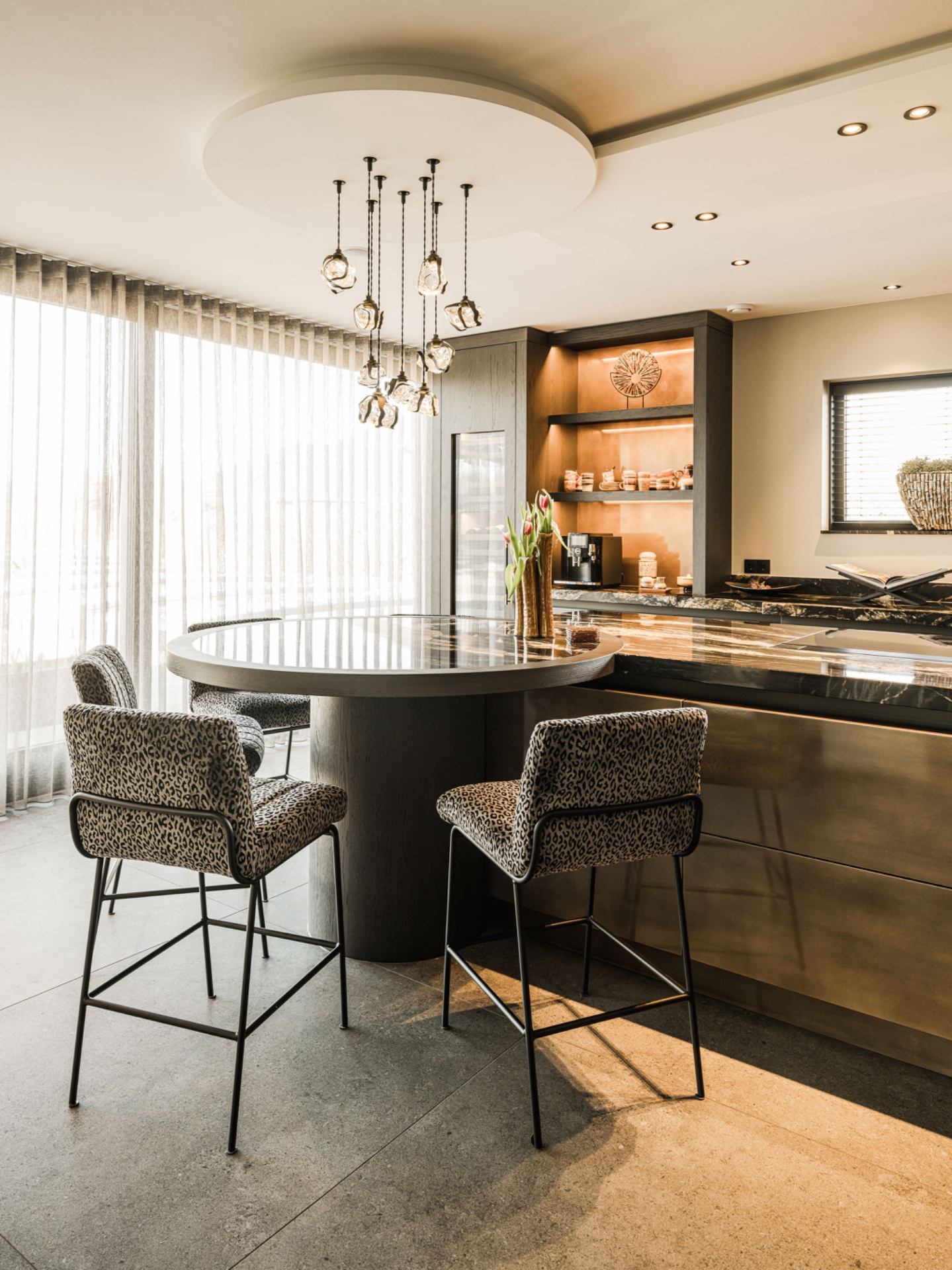
NEW 2026 Jubileum Edition The Best Interior Designers Benelux
Order Now €125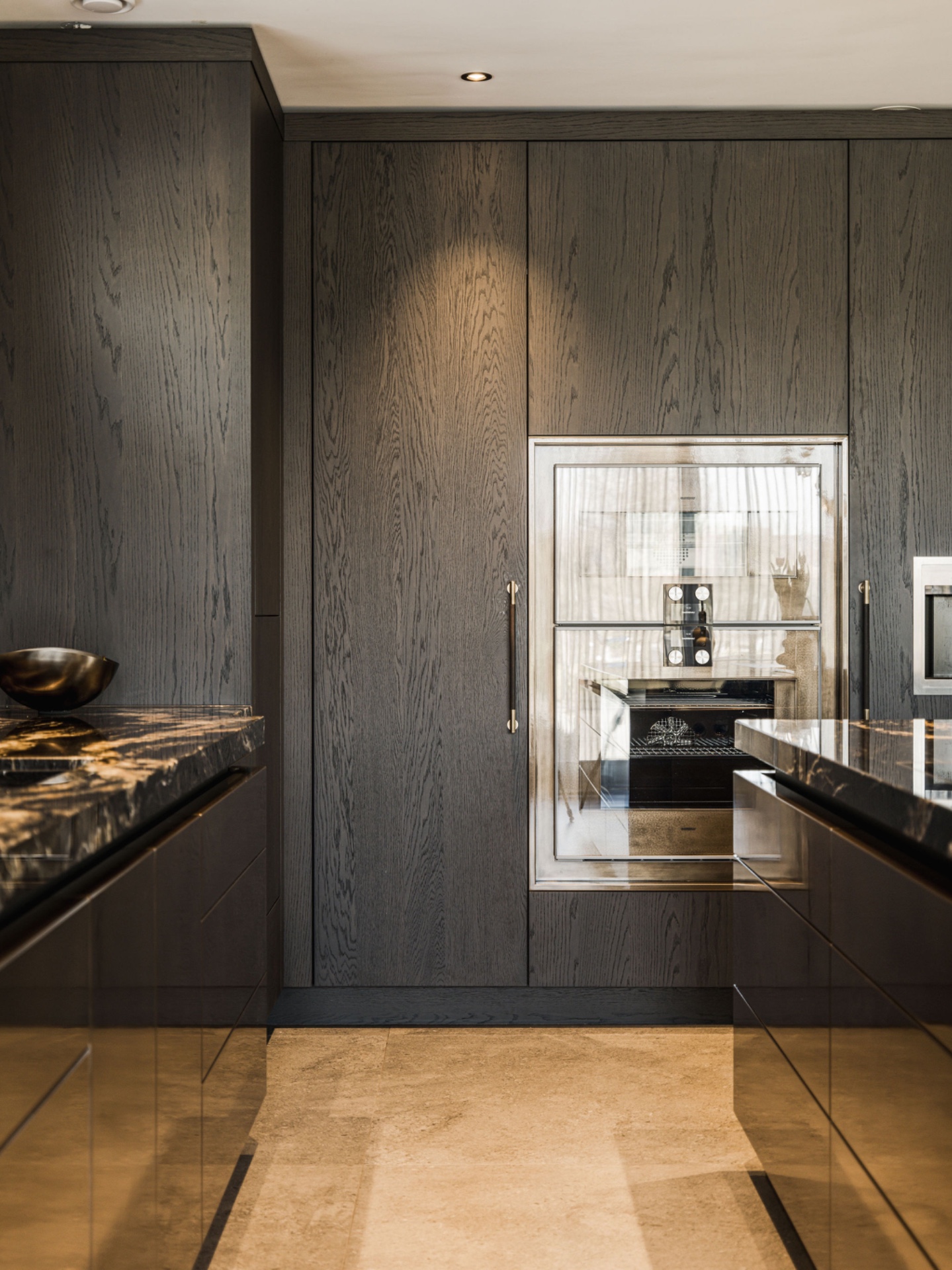
NEW 2026 Jubileum Edition The Best Interior Designers Benelux
Order Now €125