









Luxury kitchen with marble island in a renovated farmhouse
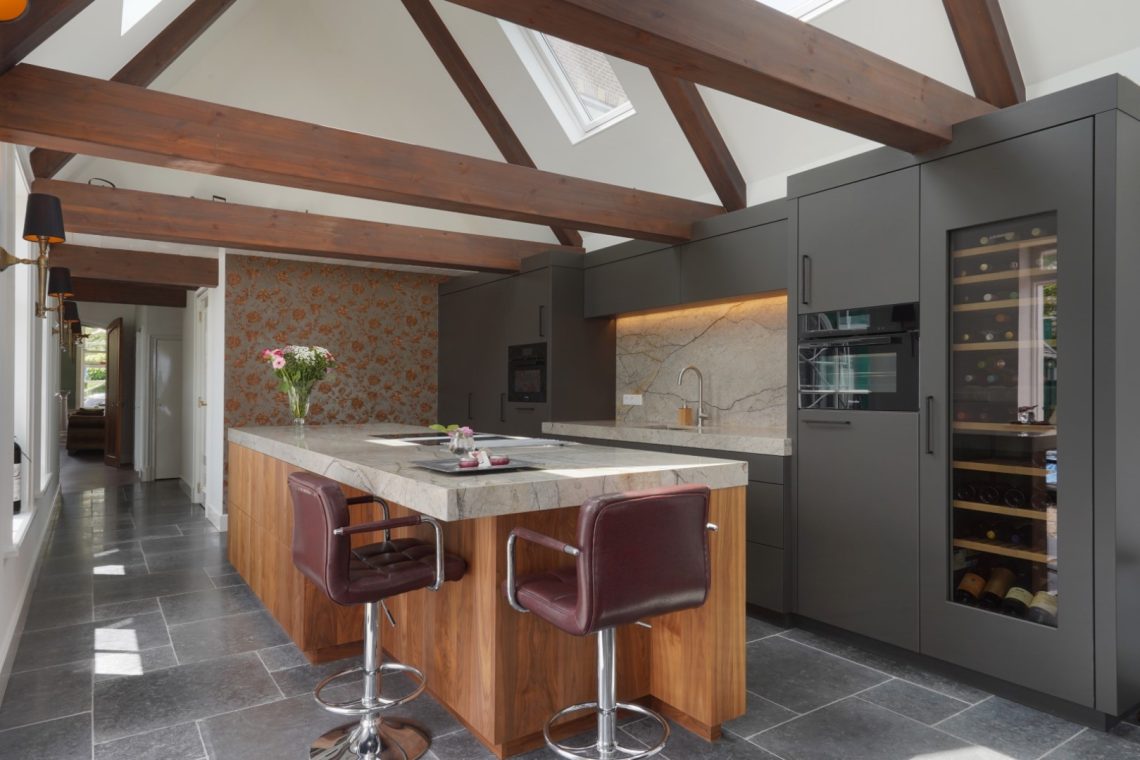
The marble kitchen island catches the eye first. Its pale surface, marked by grey veining, stands against bronze-toned cabinet fronts and the darker wood around it. In this renovated farmhouse, the kitchen is not treated as a separate scene; it sits within the structure of the house, with exposed wooden beams overhead and a dark wall finish that pulls the eye across the room. The result is a measured interior where materials do most of the talking.
A kitchen defined by the island
The luxury kitchen island sets the tone for the space. Its marble finish reads as one continuous block from a distance, then reveals more detail as you move closer: fine veining, crisp edges and a surface that reflects the light differently from the surrounding cabinetry. The bronze cabinet fronts nearby introduce a softer metallic note, less shiny than chrome, more grounded than brass. Together they anchor the kitchen without flattening it into a showpiece.
Warm timber tones keep the room from feeling severe. They appear in the beams above and in the darker wood surfaces that frame the working area. Against that backdrop, the marble kitchen island becomes the brightest element in the composition. The contrast is clear but restrained. Nothing is overworked, and no single finish tries to dominate the entire room. The eye moves between stone, metal and wood in a steady line.
Bronze tones against a dark kitchen wall
The dark kitchen wall gives the project its strongest shadow line. Structured panels add depth, while illuminated niches cut into the surface and break up the dark plane. Those openings do more than display objects; they pull light into the wall and keep it from becoming a flat backdrop. In the evening, the lit recesses will likely soften the transition between the kitchen work area and the rest of the room.
Bronze cabinet fronts sit naturally beside that darker wall treatment. Their horizontal lines echo the long, low profile of the island and bring order to the composition. The colour is not read as decorative trim. It is part of the architecture of the kitchen, folded into the larger material palette. That makes the room feel considered without relying on gestures that shout for attention.
Light, niches and the working edge
Spotlights in the ceiling and accent lighting along the wall sharpen the edges of the room. They pick up the texture in the panelled surface and make the marble veining more visible near the work zone. In the close-up views, the join between countertop and cabinetry is particularly telling: stone meets metal-toned fronting with a clean edge, and the tap area sits quietly in that arrangement. It is the kind of detail that only becomes visible when the camera moves in.
The kitchen also includes a Coffee annex Wijn Corner near the main zone, which extends the room’s use without breaking the visual language. The reference sits close to the kitchen rather than competing with it, so the main composition still revolves around the island, the wall and the beams. Seen that way, the corner acts as a small pause in the layout, a place that belongs to the same interior rhythm.
Exposed beams above a renovated farmhouse interior
The exposed wooden beams are one of the few elements that speak plainly of the farmhouse structure. They cross the ceiling with visible weight and give the room a frame that the newer finishes work against. Below them, the kitchen reads as a careful insertion into the old shell rather than a separate object placed inside it. That relationship is what gives the space its tension: stone and metal below, timber above, with each surface left clear enough to be read on its own.
From the wider view, the room depends on proportion as much as on material. The island stands low and broad in the centre, while the tall dark wall stretches upward in a way that balances the horizontal beams. The bronze cabinet fronts connect those two gestures. They hold the middle ground, linking the brightness of the marble to the depth of the wall and the grain of the timber. It is an interior built on clear contrasts rather than decorative layering.
Close details that carry the room
In the detail shots, the project shifts from broad composition to surface. The marble shows a cooler, quieter tone than the surrounding wood, and that difference is what makes the island read so strongly. The cabinet fronts, with their bronze cast and lined structure, bring a sense of rhythm across the lower level of the kitchen. No element is isolated. Each surface responds to the one beside it, whether through colour, reflection or texture.
The dark kitchen wall niches add another layer of depth. Their lighting draws attention inward, then releases it back into the room. That movement keeps the wall from becoming heavy, even though it is the darkest part of the composition. Seen together with the beams, the island and the bronze fronts, the niches help define a kitchen that feels settled into the farmhouse shell while still speaking in a contemporary material language.
Why the composition holds together
What keeps this renovated farmhouse kitchen coherent is the way every visible element has a clear role. Marble marks the centre. Bronze-toned fronts run through the lower cabinetry. The dark wall absorbs and returns light. Overhead, the exposed wooden beams hold the room in place and keep the newer finishes connected to the building’s original structure. The Coffee annex Wijn Corner sits nearby as a smaller functional gesture, but the focus remains on the island and the surrounding finishes.
For a portfolio page, the strength lies in that restraint. The kitchen does not rely on surplus detail or obvious display. It is built from a few strong materials, arranged so that light can settle on the marble, move across the bronze fronts and catch the texture of the wall. That is enough to give the room its presence. The luxury kitchen island remains the point where those lines meet, and the farmhouse interior gives it a grounded setting.
Want to see more of Martin Van Essen exclusieve keuken? View the page of Martin Van Essen exclusieve keuken for even more great projects and company information.

Contributors



NEW 2026 Jubileum Edition The Best Interior Designers Benelux
Order Now €125


NEW 2026 Jubileum Edition The Best Interior Designers Benelux
Order Now €125


NEW 2026 Jubileum Edition The Best Interior Designers Benelux
Order Now €125


