





Luxury penthouse featuring a thatched roof style
The thatched roof is immediately visible in the way the project is framed. Light moves through the entrance hall, reflecting softly on a wall clad with vertical wooden slats. These slim, evenly spaced strips form a tactile pattern that conceals doors and storage spaces, merging function with texture. Near this, a door covered in rough suede marks the entrance to the master bedroom, its surface inviting a quiet interaction with the hand.
thatched roof as the architectural starting point
A wall in the living area forms the home’s functional heart. Flush cabinetry stretches uninterrupted, hiding storage and a TV niche. Beneath, a fireplace framed in natural stone introduces subtle veining and a matte surface, balancing the smooth wood paneling around it. The contrasting textures maintain a layered yet precise expression, anchoring the space physically and visually.
Kitchen and Dining: Wood and Stone in Dialogue
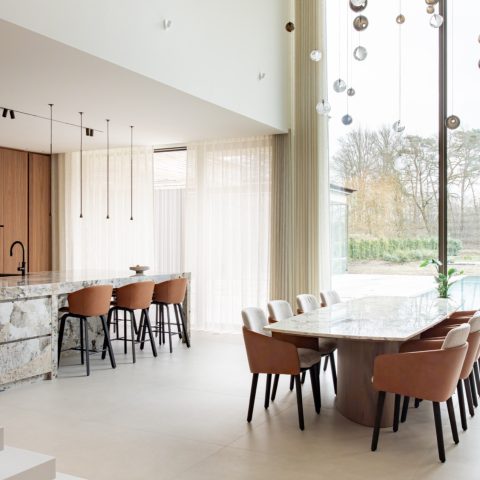
The kitchen continues the wood motif with full-height cabinets that extend into wall panels. A concealed door integrates storage and laundry access without fracturing the plane. At the center, a custom oak dining table offers a textured wood surface, contrasting with the kitchen’s polished stone countertops. Together these materials create a tactile setting suited for both daily meals and longer gatherings.
Master Suite: Structured Storage and Subdued Palette
Through the suede door, the master bedroom connects visually and spatially to a walk-in closet where shelving aligns with the room’s architectural lines. Surfaces favor subtle textures, with wood grain gently emphasized by indirect lighting. The restrained use of color and material variation keeps focus on form and surface quality in the private quarters.
Bathroom: Stone Surfaces and Minimalist Fixtures
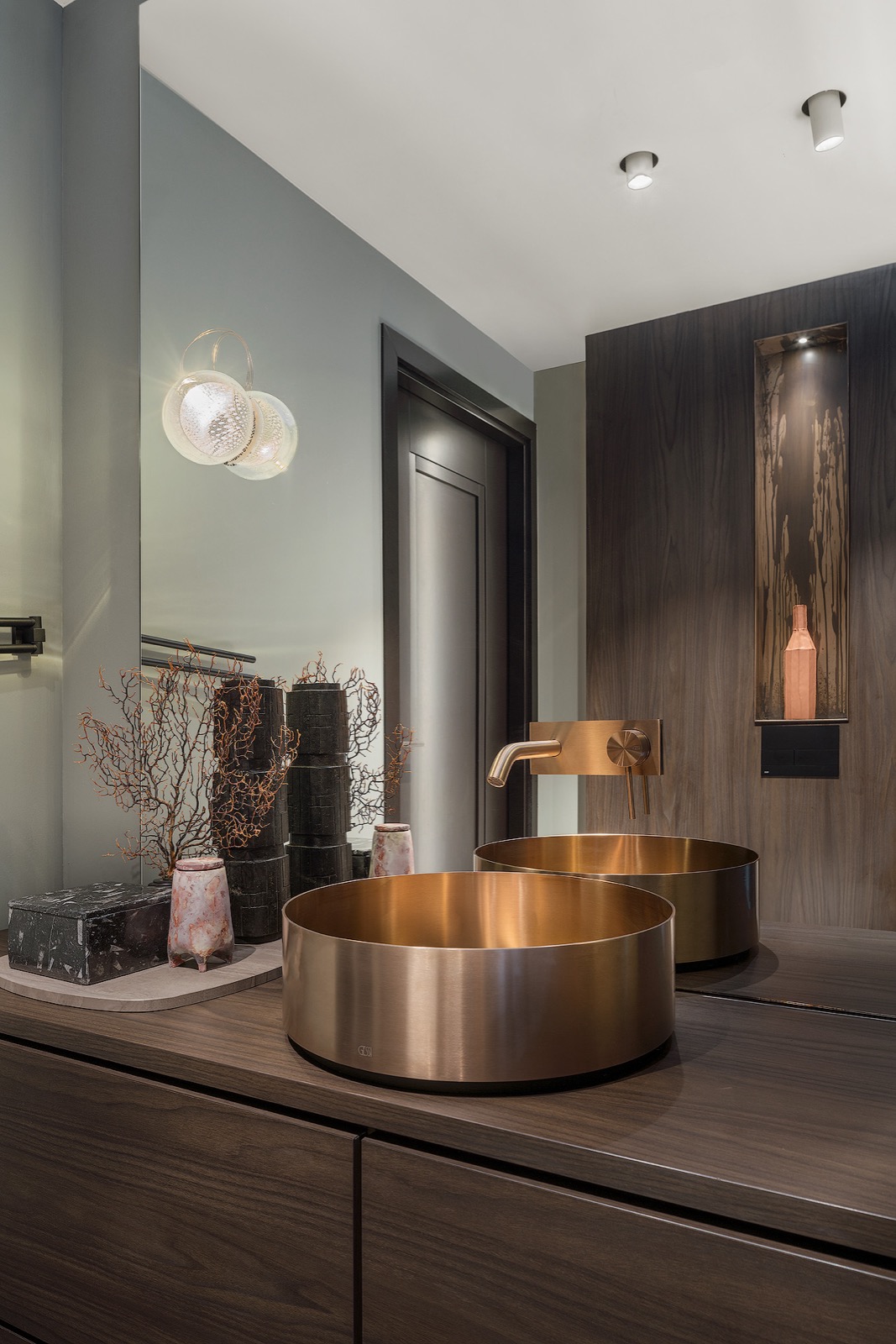
The master bathroom’s walls and floors are clad in large slabs of natural stone, their muted variations in tone and texture creating a quiet depth. Simple, streamlined fixtures emphasize the material qualities rather than decoration, embracing a calm atmosphere defined by raw surfaces and subtle contrasts.
Transitions and Flow: Concealed Boundaries
Throughout the penthouse, doorways vanish into continuous wooden panels, void of handles or other interruptions. This design draws spatial divisions through delicate shifts in material texture and light, rather than by structural breaks. Such subtle boundaries allow a seamless experience moving through public and private zones.
Secondary Bedrooms: Rustic Details and Layered Fabrics
Other bedrooms reveal wood-framed beds with visible grain and knots. Bedding incorporates muted autumnal tones and natural fibers, introducing texture without ornamental patterns. Rugs and wall art add further dimensions, enriching the rooms’ tactile and visual character with measured restraint.
Light and Texture: Dynamics of Materiality
Natural light filters through generous windows, angling across surfaces to accentuate texture. Slanted beams highlight wood grain and stone irregularities, while suede absorbs light softly, tempering brightness and heightening tactile sensation. These nuanced shifts mark the progression of daylight, enlivening the rooms without distraction.
Integrated Storage: Maintaining Visual Order
Storage units align with wall panels, their fronts flush and hardware hidden. This reinforces a steady vertical rhythm and keeps floors free of clutter. Such integration supports a clear visual plane, allowing furnishings and materials to define character without competing elements. That makes the thatched roof part of the architectural character rather than a loose finish.
Furniture Scale and Spatial Balance
Furniture choices respect room dimensions and flow. The oak dining table anchors the kitchen area without impeding movement. Built-in cabinetry relates proportionally to the space, maintaining openness while providing function. The restrained furnishings preserve uninterrupted sightlines and spatial volume.
Wood Surfaces: Precision and Honesty
Attention to grain direction and edge finishing creates smooth, understated wooden planes. Warm tones gently contrast with cooler stone and the soft matte of suede. Wood expresses material character through texture and finish, avoiding synthetic embellishment.
Stone Elements: Depth and Focus
Natural stone appears in key locations, such as the fireplace surround and bathroom surfaces. Its veins and tactile roughness break the linearity of wood elements, offering points of concentration and sensory variation. The stone grounds the interiors within their natural palette.
Spatial Organization Through Materials and Sightlines
Room differences emerge from shifts in materials and hidden doors more than from physical separation. Continuity of wood panels guides movement and frames views, subtly demarcating communal and private areas while preserving architectural openness.
The thatched roof architectural style, visible externally, defines the building’s character. Inside, natural stone, oak, and suede combine in layered textures and light interplay, expressing thoughtful design choices without embellishing beyond material presence.
Lighting and Architectural Details
Integrated lighting accents architectural niches, spotlighting decor while maintaining focus on wood and stone surfaces. Concealed fixtures modulate shadows and highlights, revealing material variations and spatial geometry naturally.
Custom Wood and Stone Furnishings
Custom cabinetry extends the spatial language, with wooden slats and stone accents shaping storage and delineating space without decoration. Craftsmanship appears in surface finishes and alignment rather than applied ornament.
Material Shifts Define Space Without Barriers
Flooring textures change gradually between areas, marking zones within the open plan subtly. This transition maintains spatial unity while signalling functions such as cooking, dining, and lounging.
Textural Layers in Bedrooms
Rustic timber beds paired with layered textiles enrich sleeping areas with tactile variation. Natural fabric thickness and weave introduce complexity without resorting to pattern, highlighting material depth and comfort through materiality alone. That makes the thatched roof part of the architectural character rather than a loose finish.
Want to see more of Hubbers interieurmakers? View the page of Hubbers interieurmakers for even more great projects and company information.



.png)