





Modern luxury villa renovation with elegant interiors
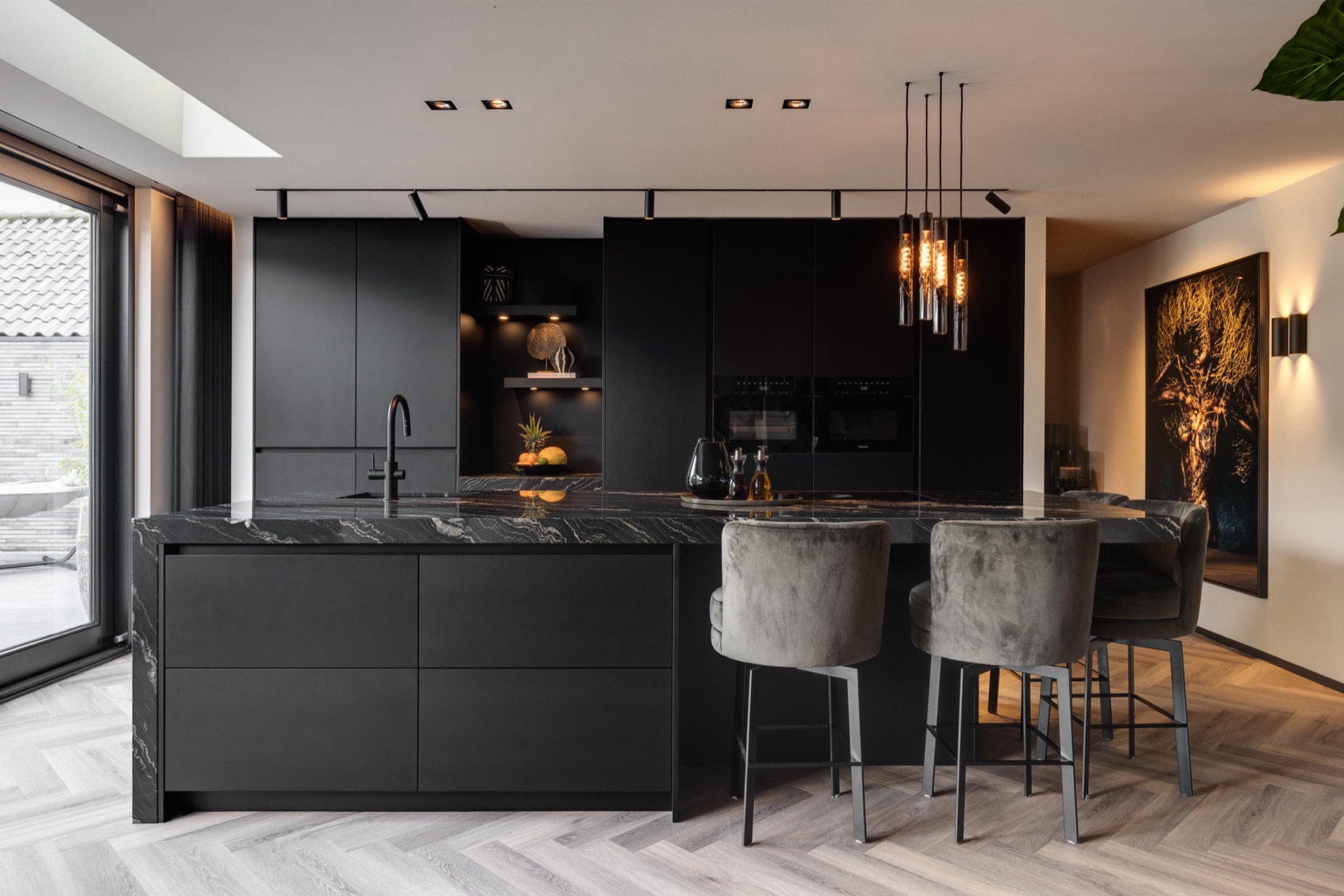
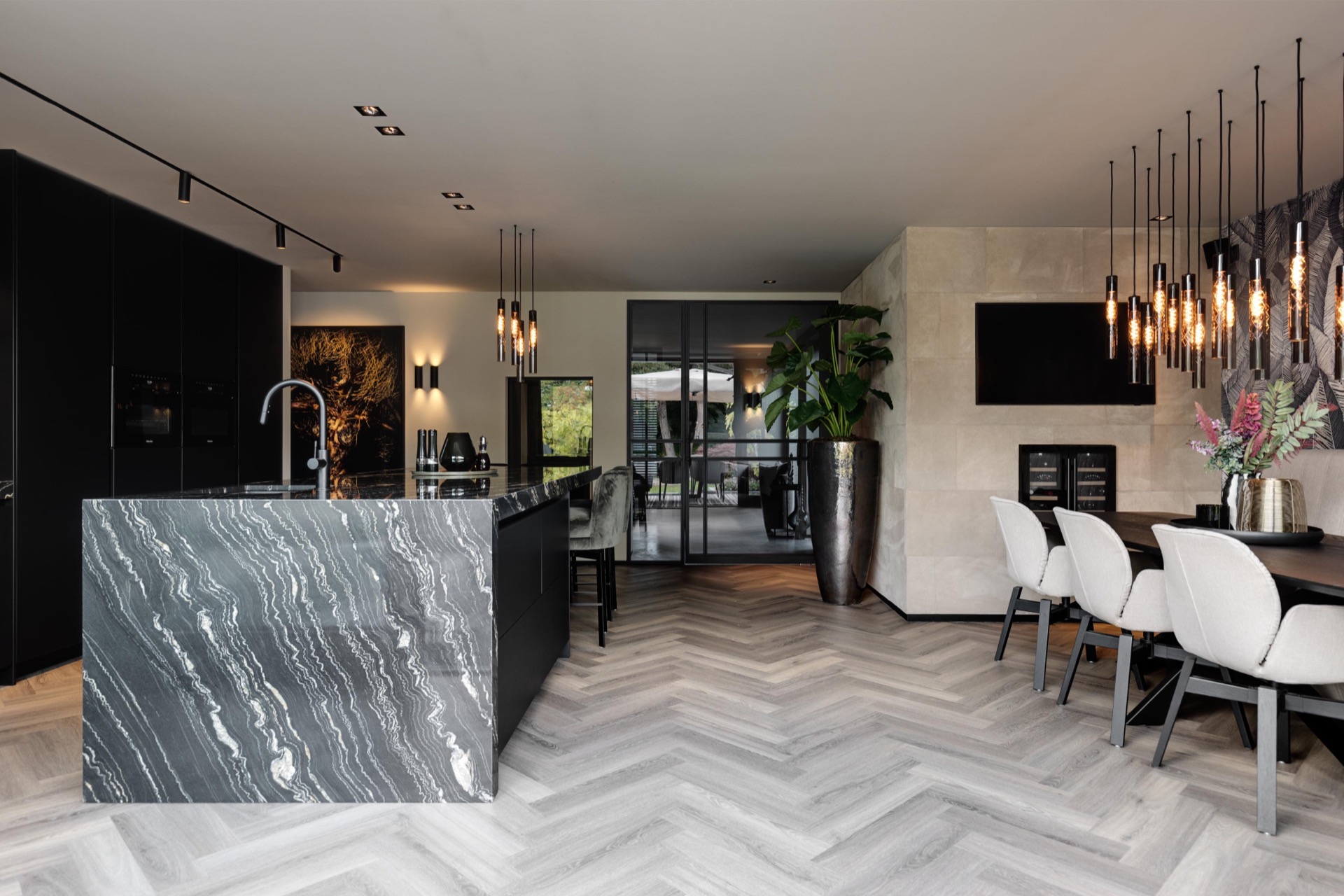
The luxury home renovation is immediately visible in the way the project is framed. Vaulted ceilings define the kitchen extension, where white marble countertops extend alongside deep black cabinetry. The marble’s subtle veins catch natural light streaming through large windows, playing against the warm tones of the wooden flooring beneath. This blend of materials shapes both tactile contrast and visual rhythm, grounding the culinary area within the larger living space.
luxury home renovation as the architectural starting point
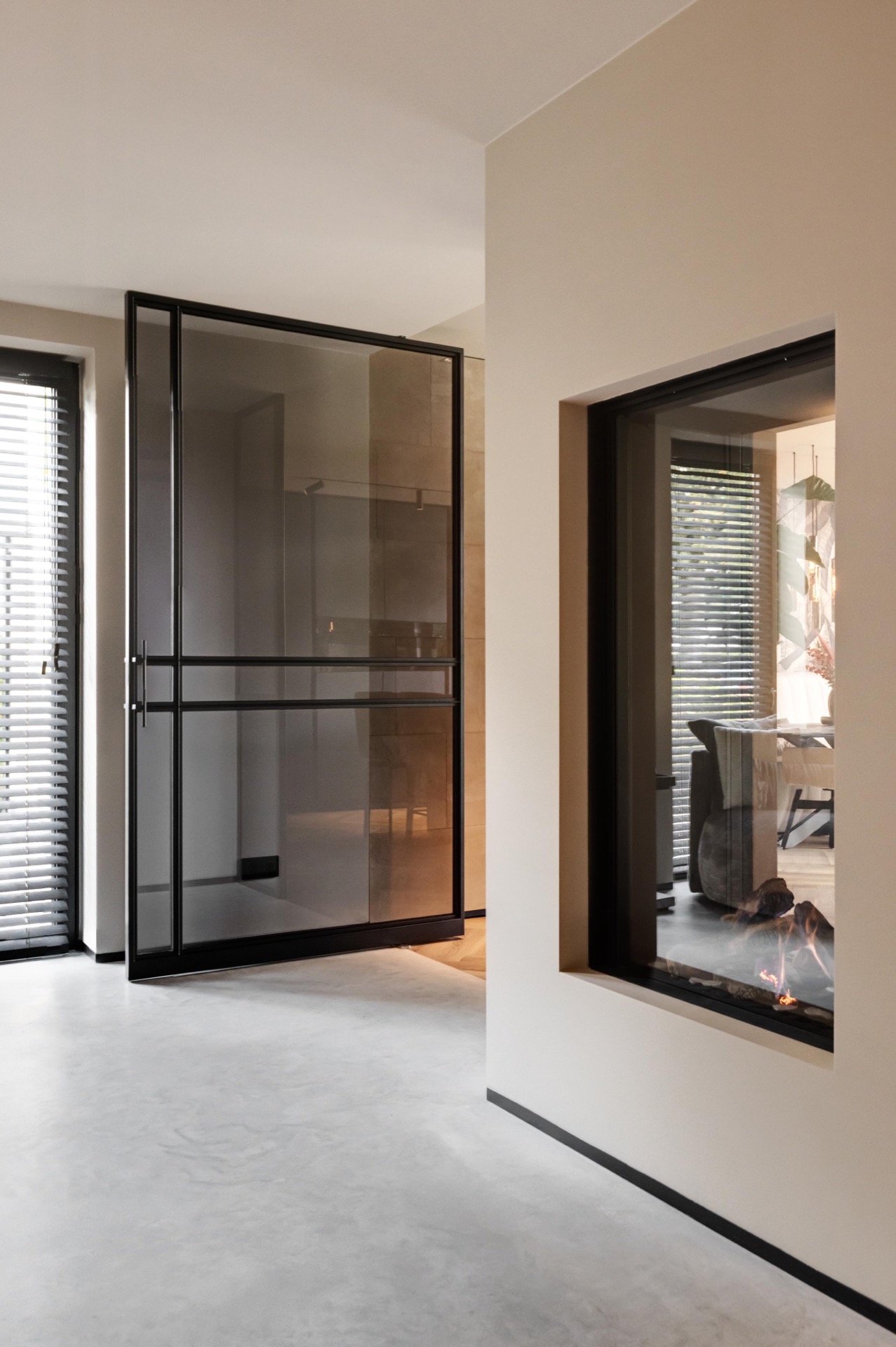
Walls giving way to open volumes create a spatial narrative shaped by changes in flooring and surface finishes. Stone surfaces meet timber, while matte black accents provide depth without interrupting sightlines. Floor-to-ceiling glazing lines two walls, filling the interiors with shifting daylight and framing views of the planted garden beyond. Instead of physical barriers, material transitions quietly delineate functional zones.
Textured walls and layered surfaces enrich the living environment
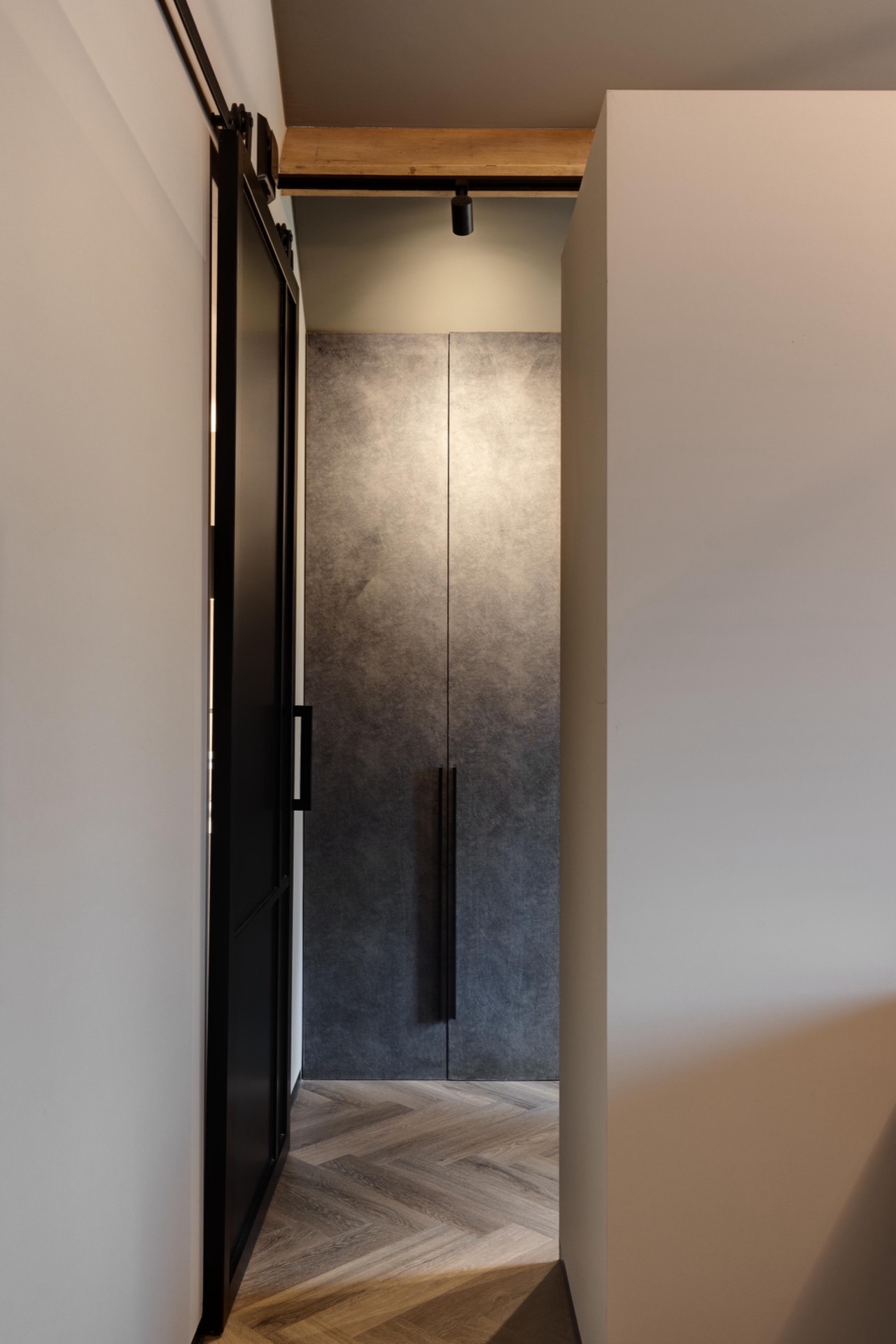
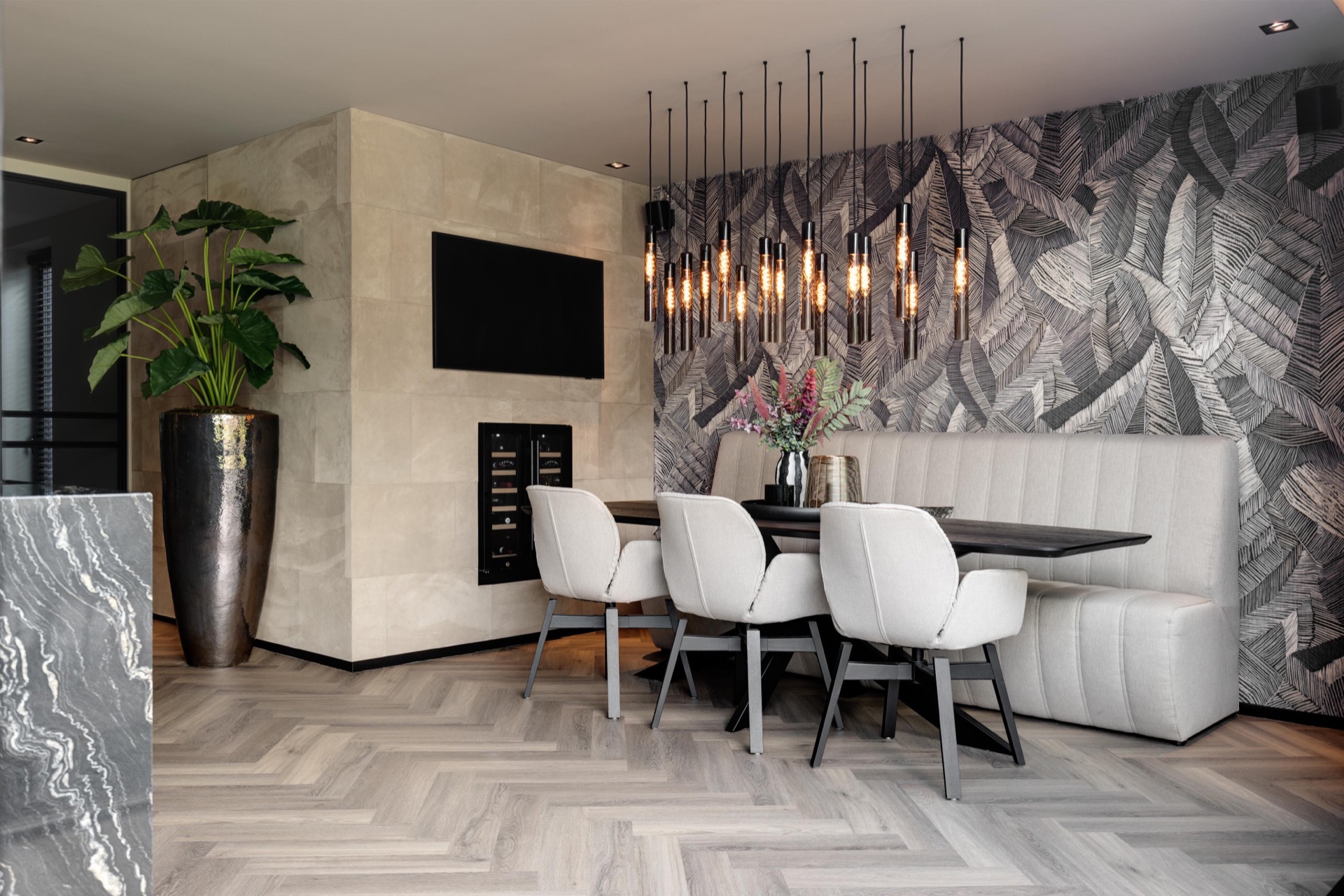
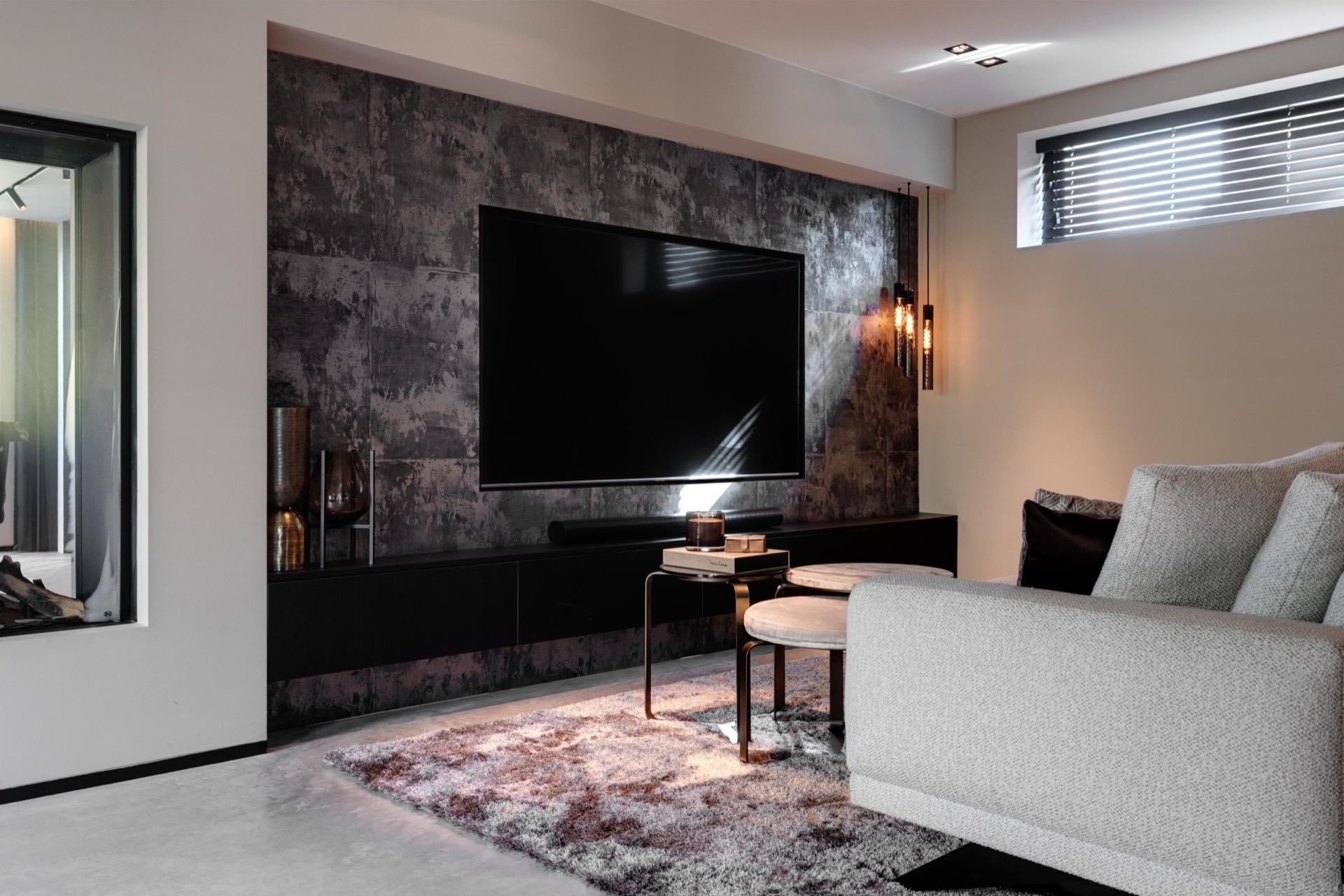
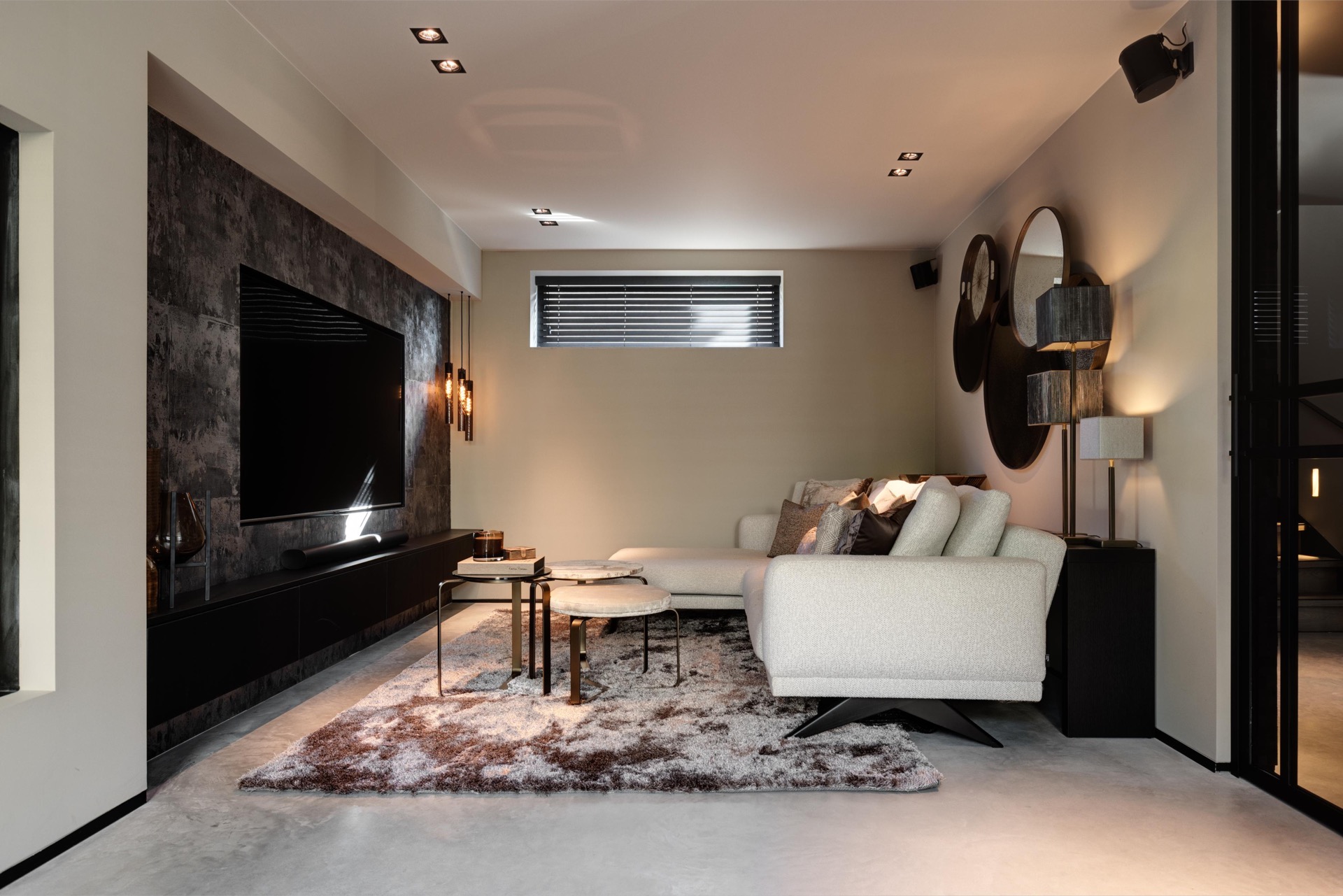
Muted plaster walls form a subtle canvas against which leather panels catch and diffuse light at varied angles. These textures extend past the kitchen into adjoining rooms, where wood grain and stone surfaces suggest a tactile journey through the villa’s interiors. The finish choices emphasize sensory variation rather than bold color contrasts or decorative motifs.
Marble surfaces unify and define key areas
The kitchen’s marble countertop commands attention with restrained elegance: soft veining contrasts the cabinetry beneath and repeats on built-in shelves and select furniture. Polished stone surfaces reflect ambient light, subtly underscoring the open spatial limits without drawing attention away from the broader room composition.
Lighting balances architectural intersections and spatial volume
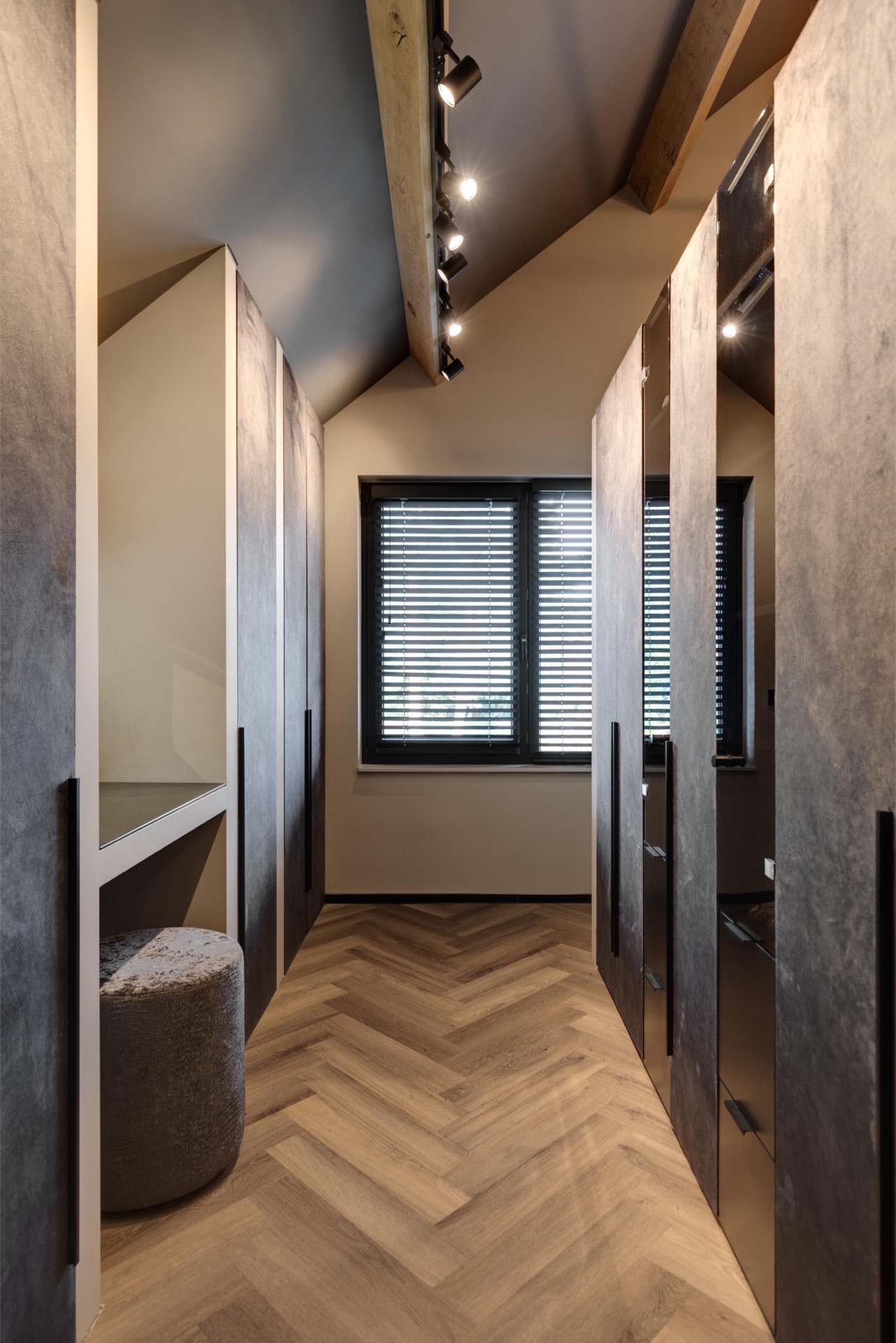
Fixtures align carefully with structural connections, highlighting corners where walls meet ceilings. Recessed and layered lighting avoids ornamental effects, instead emphasizing form and volume. Monochrome furniture silhouettes complement this scheme, maintaining legibility and clarity throughout the rooms.
luxury home renovation as the architectural starting point
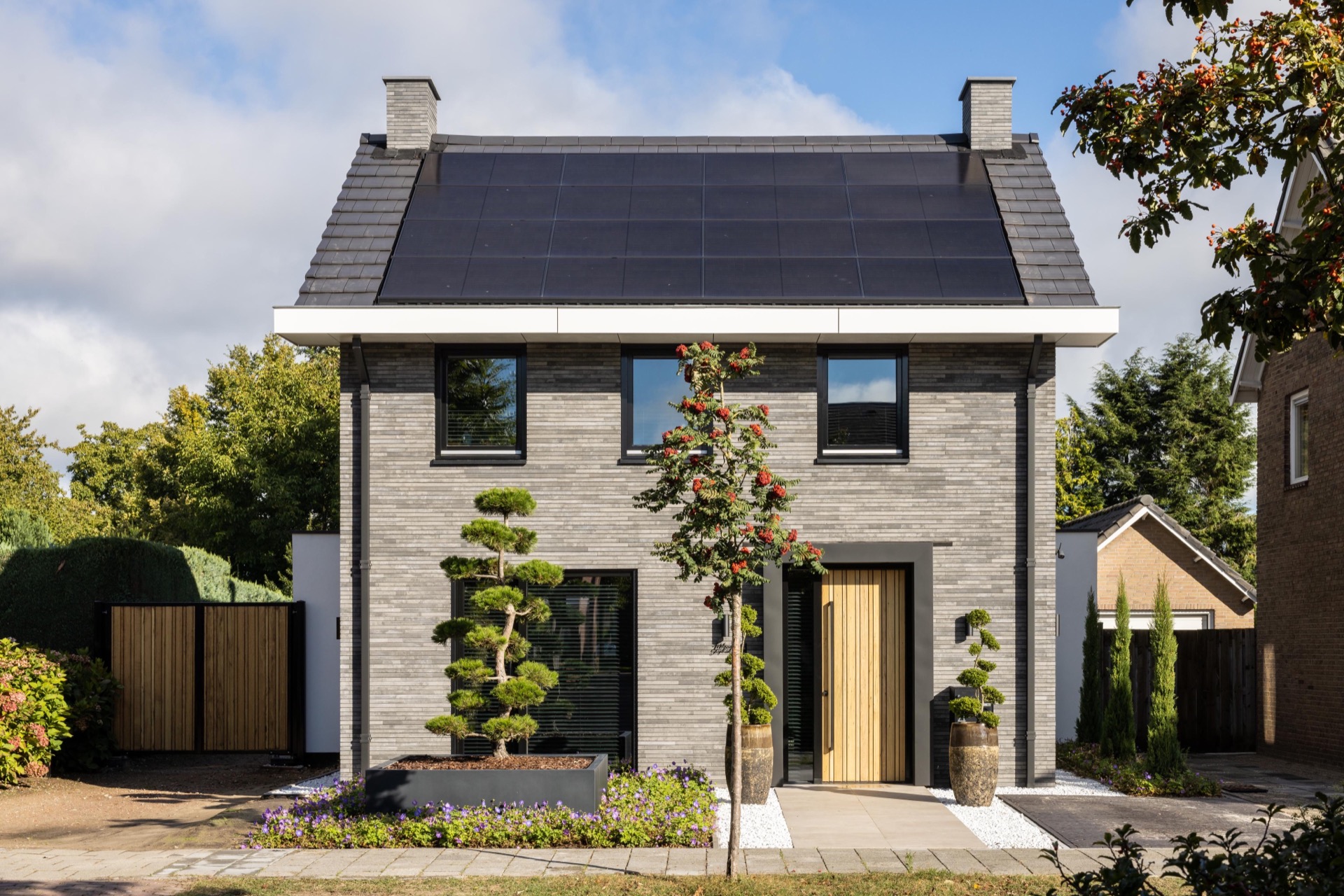
The exterior composition displays a precise brick pattern interrupted by wide, black-framed windows. Vertical steel supports mirror internal proportions, reinforcing the villa’s rectilinear shape. This correspondence between interior and exterior establishes a deliberate interplay of framing and transparency, amplifying visual continuation between inside and outside.
Vaulted ceiling opens volume and enhances kitchen-light relationship
In the extended kitchen, the vaulted ceiling enlarges the spatial volume above, allowing light to disperse freely over smooth, uninterrupted planes. Flush recessed fixtures merge with the ceiling surface, focusing attention on the interaction between solid forms and open space without structural distractions.
Material layering throughout the villa creates spatial nuance
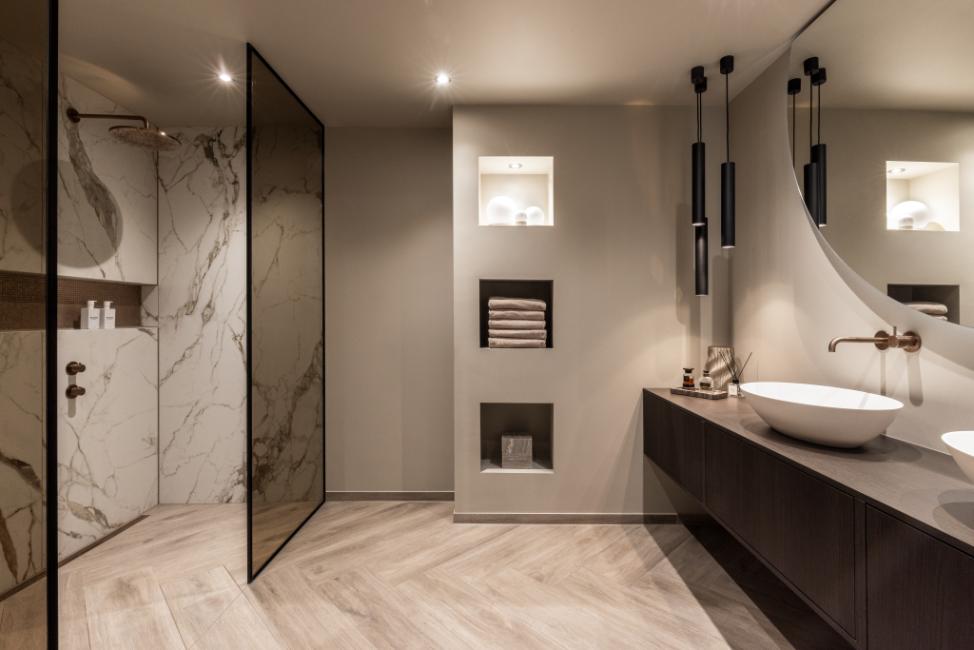
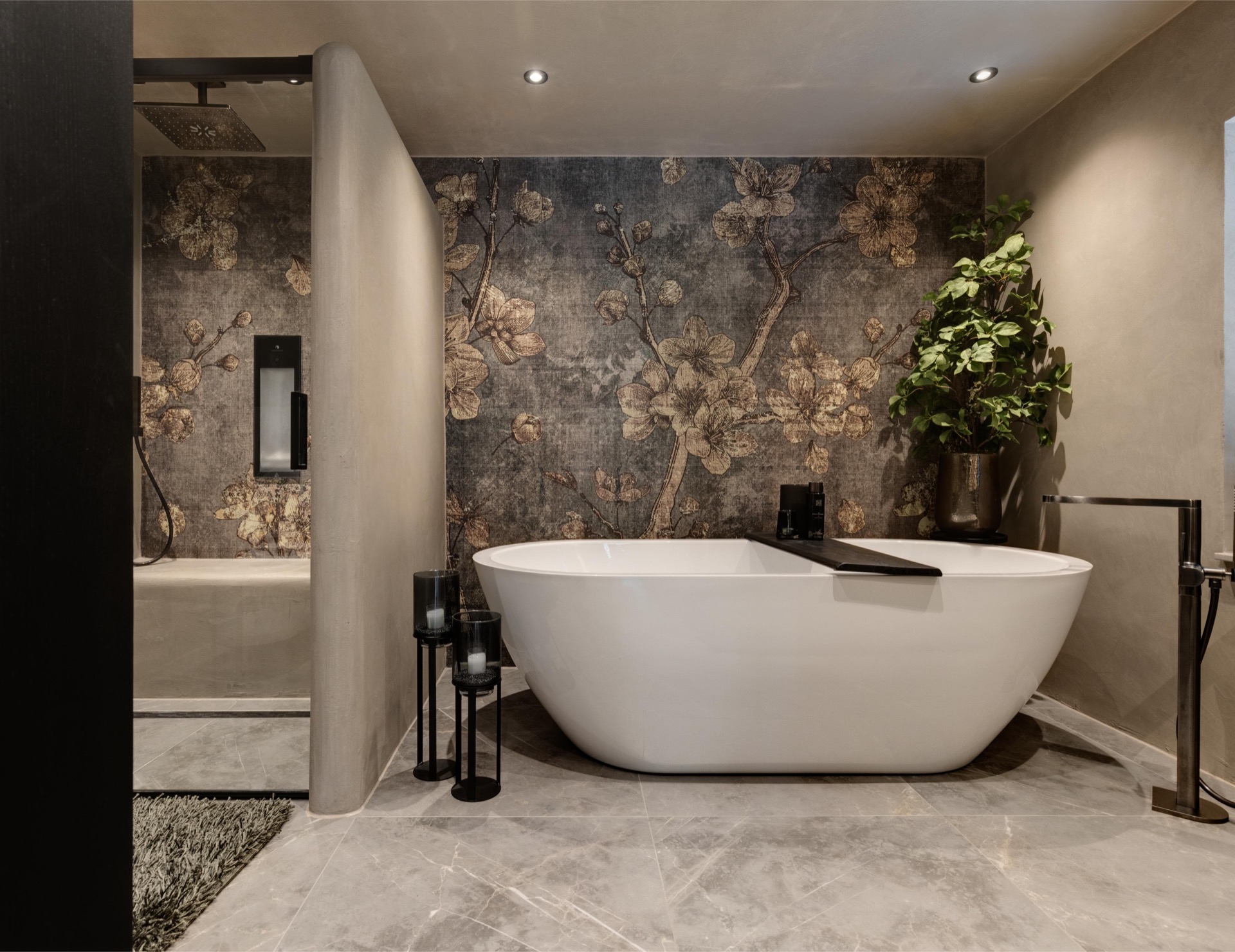
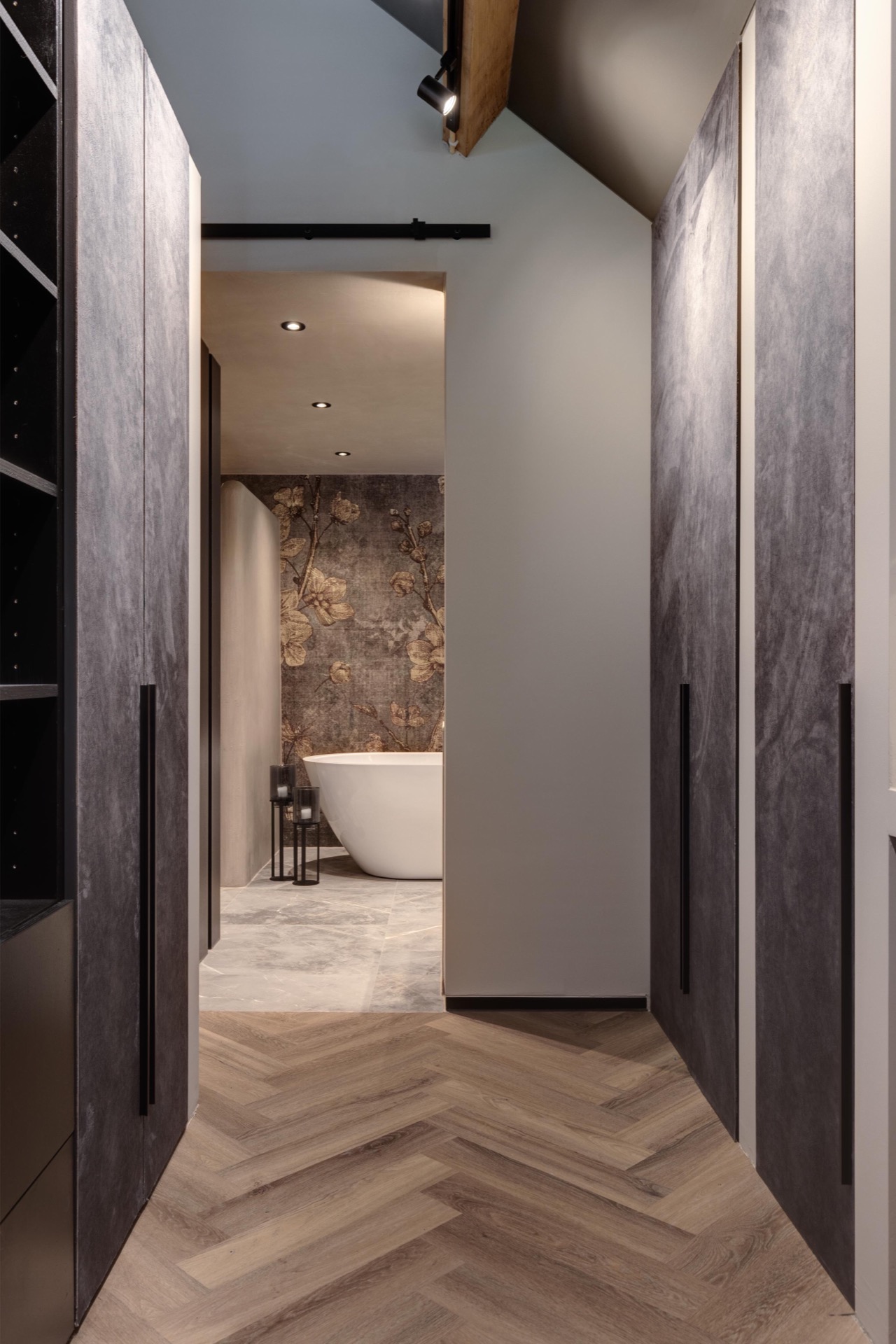
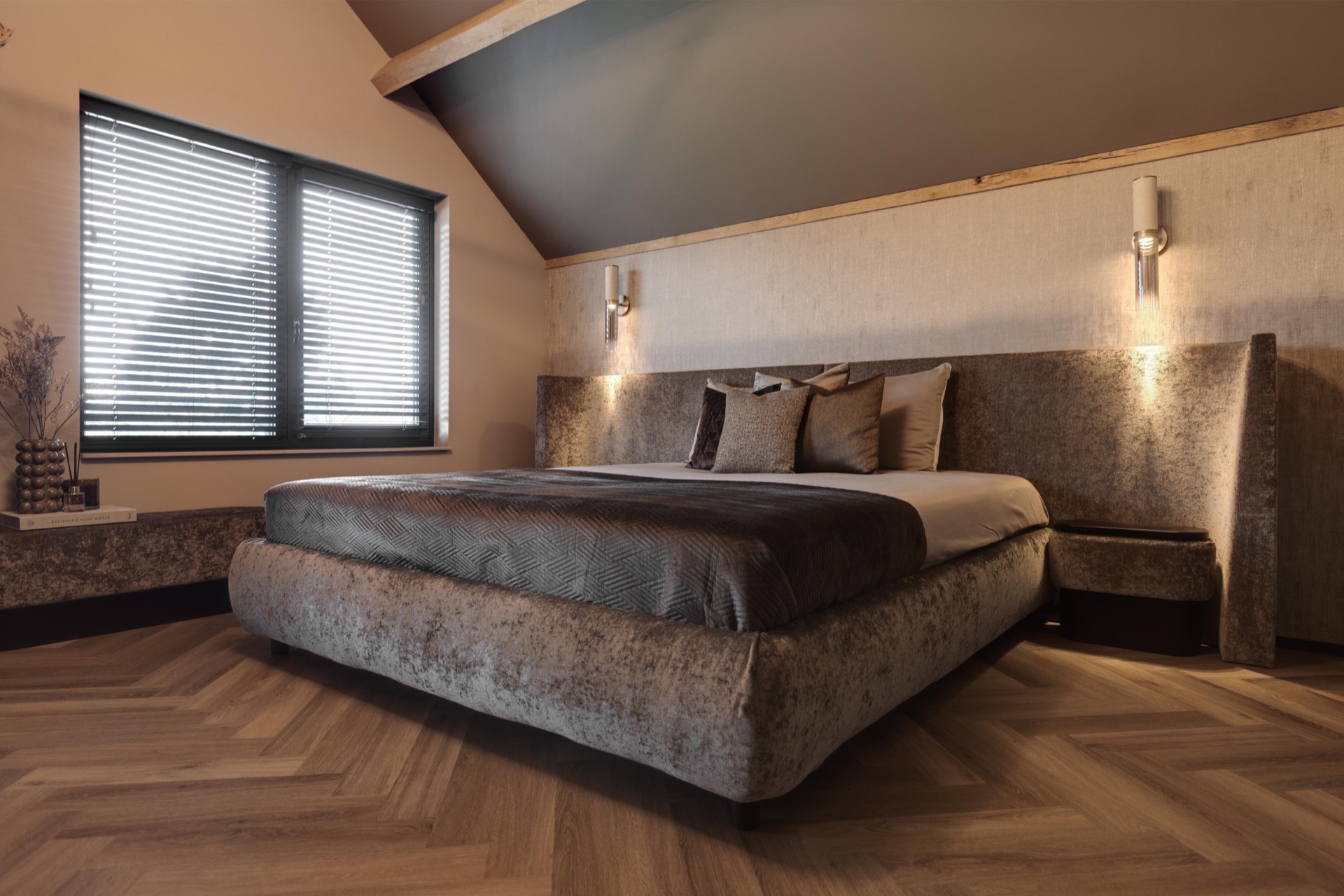
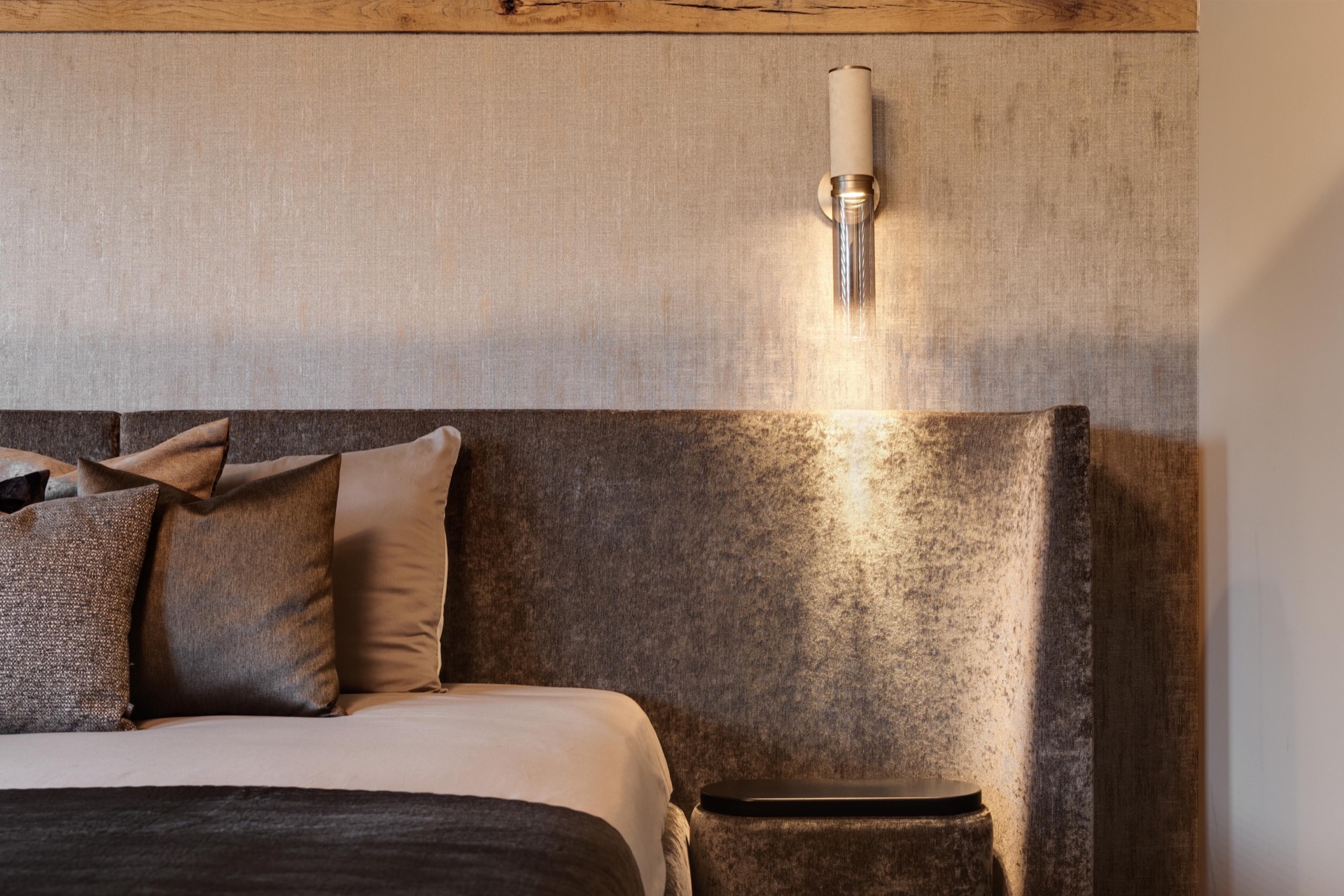
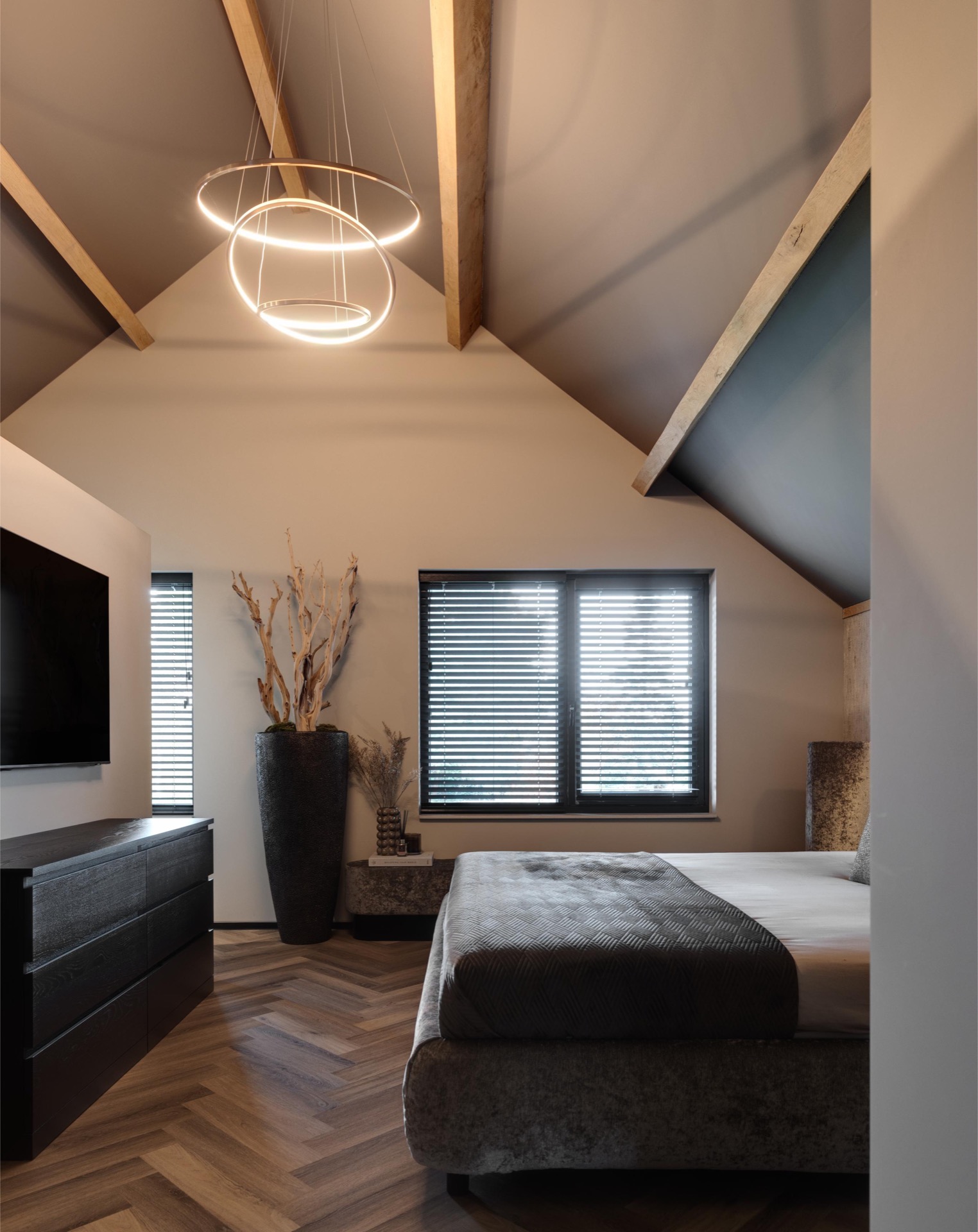
The interplay of matte plaster, polished stone, soft textiles, and leather wall panels continues across living and private areas. Bedrooms introduce restrained wallpaper textures, balanced with stone and wood accents in bathrooms. Carefully directed lighting reveals each texture’s character, supporting a continuous narrative of material sensitivity throughout the residence.
Private spaces offer clarity softened by natural elements
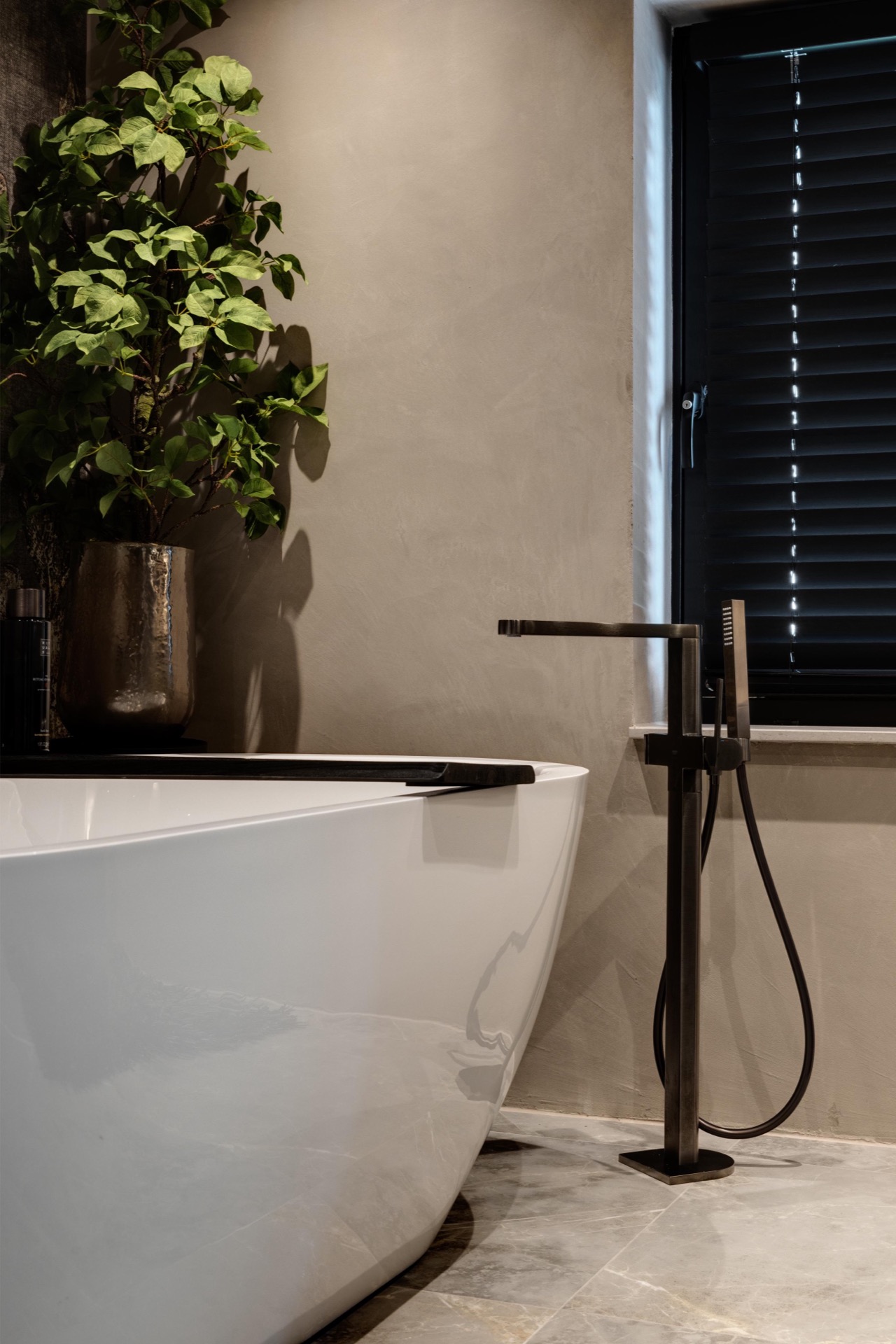
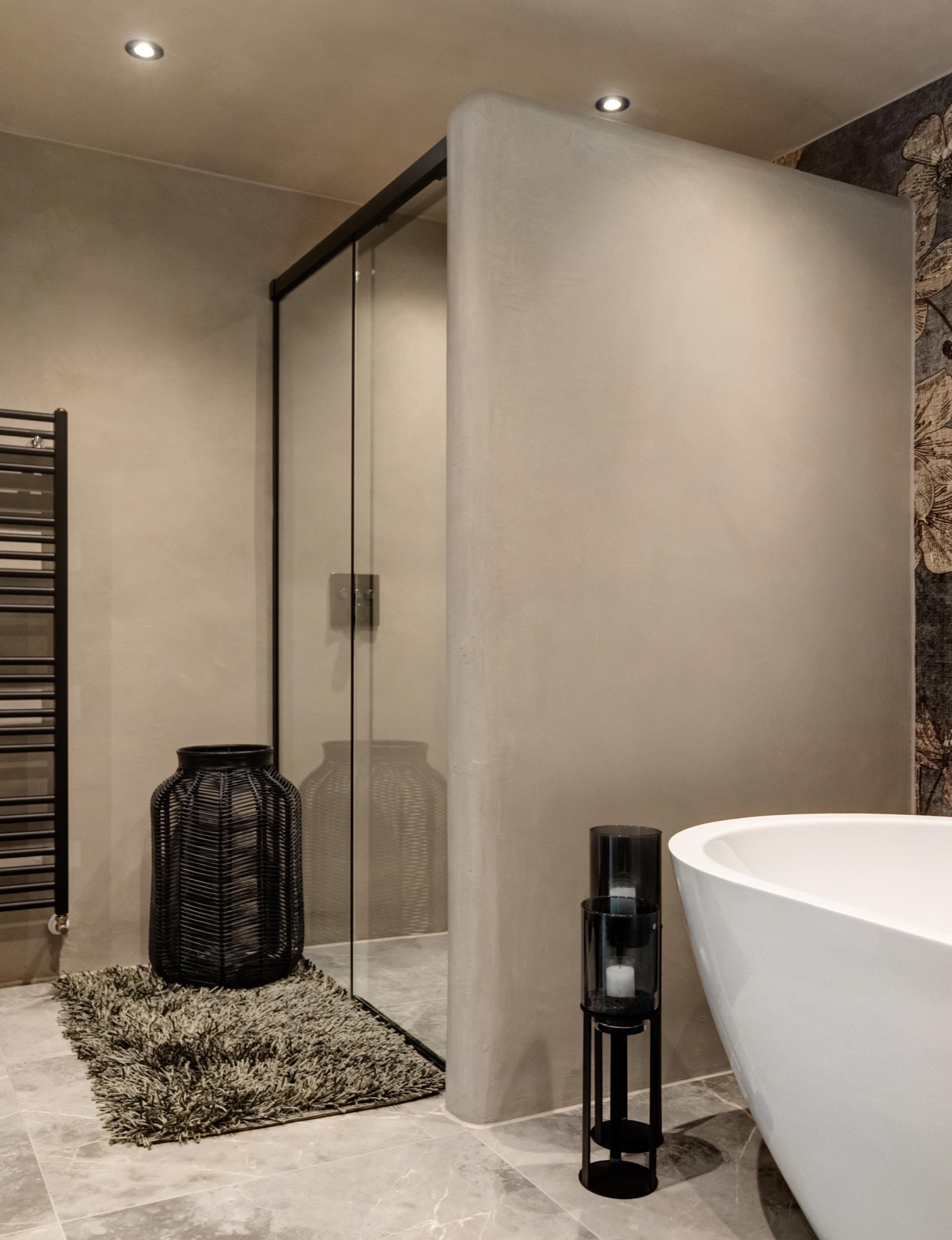
Bedrooms use indirect lighting to soften geometry and enliven surfaces, while bathrooms incorporate freestanding tubs oriented toward garden views. Glass-enclosed showers preserve transparency, reinforcing openness. Natural finishes in these rooms relate directly to the connected living areas, enhancing the spatial dialogue between interior and exterior. That makes the luxury home renovation part of the architectural character rather than a loose finish.
Seamless indoor-outdoor transition through expansive glazing
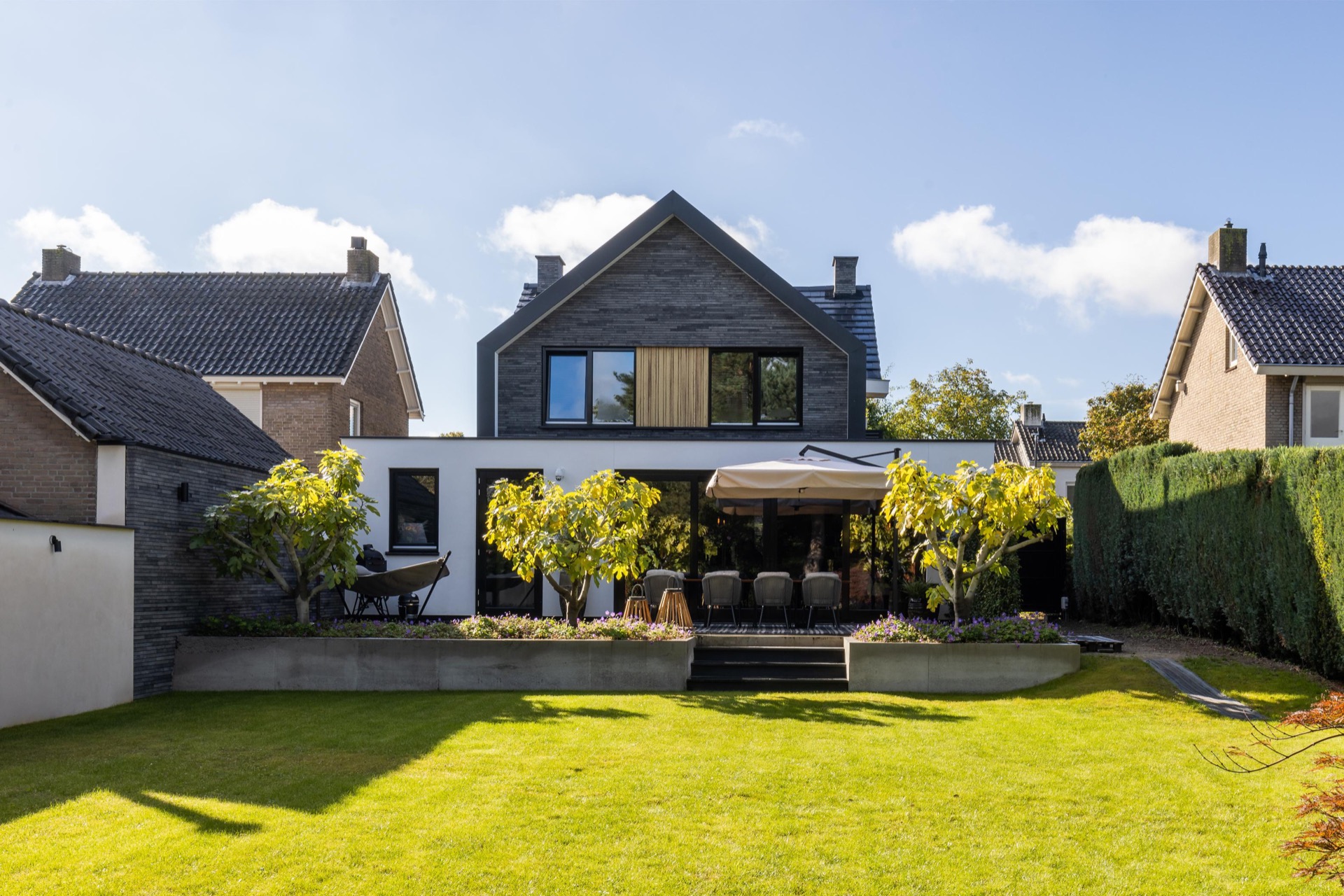
Folding glass doors fully open, connecting living areas with the landscaped garden terrace. Outdoor furniture mirrors interior shapes and materials through minimalist profiles and natural fabrics. Parasol structures blend into the planting scheme, filtering light without interrupting the visual continuity between inside and outside environments.
Structural elements underline rhythm and proportion
Exposed steel columns and vertical timber panels express the building’s framework, emphasizing measured repetition without superfluous detail. Window heights coordinate precisely with wall divisions, reinforcing the architectural clarity and emphasizing the role of materiality in defining form.
Reconfigured layout emphasizes openness and sightlines
The spatial arrangement orients open volumes toward garden views and lines of sight, encouraging interaction between rooms. Material choices, light distribution, and architectural detail collaborate to shape interiors that prioritize coherence and restraint within a clear spatial hierarchy.
Subtle detailing enhances spatial cohesion
From the delicate veining in marble to the directional grain of timber, detail decisions support overall cohesion. Furniture selections avoid elaborate ornamentation, letting materials dictate visual tone. Fixtures and finishes maintain consistent scale and proportion, guiding transitions from public to private areas while preserving compositional unity throughout the villa.
Expanded kitchen provides a generous social and culinary hub
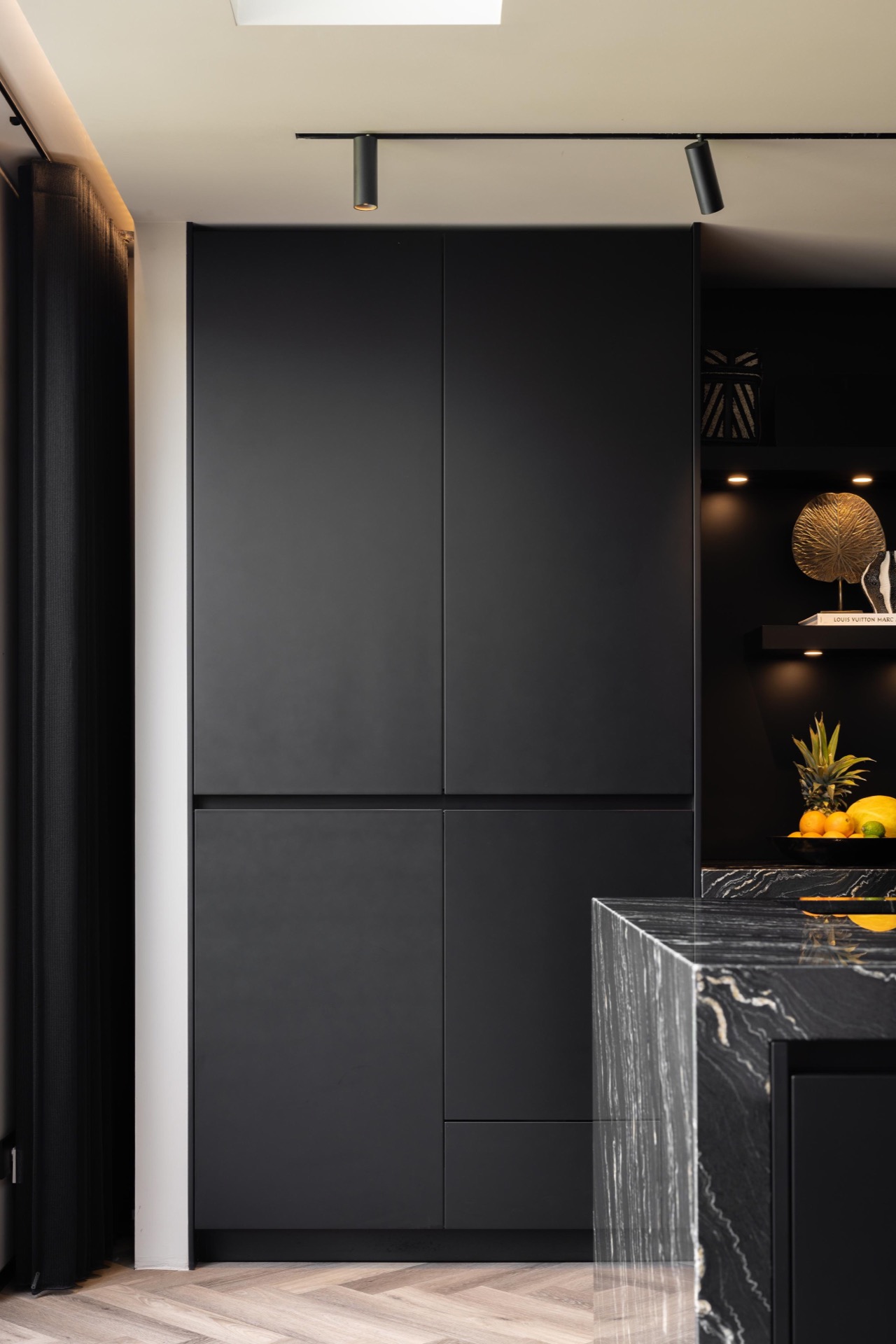
The rear extension offers a broad kitchen space where cooking and social exchange coexist comfortably. Black cabinetry contrasts with pale marble countertops, combining tactile experience and practical use. This layout supports a variety of activities without compartmentalization, maintaining an open and adaptable atmosphere.
Material intersections define living zones
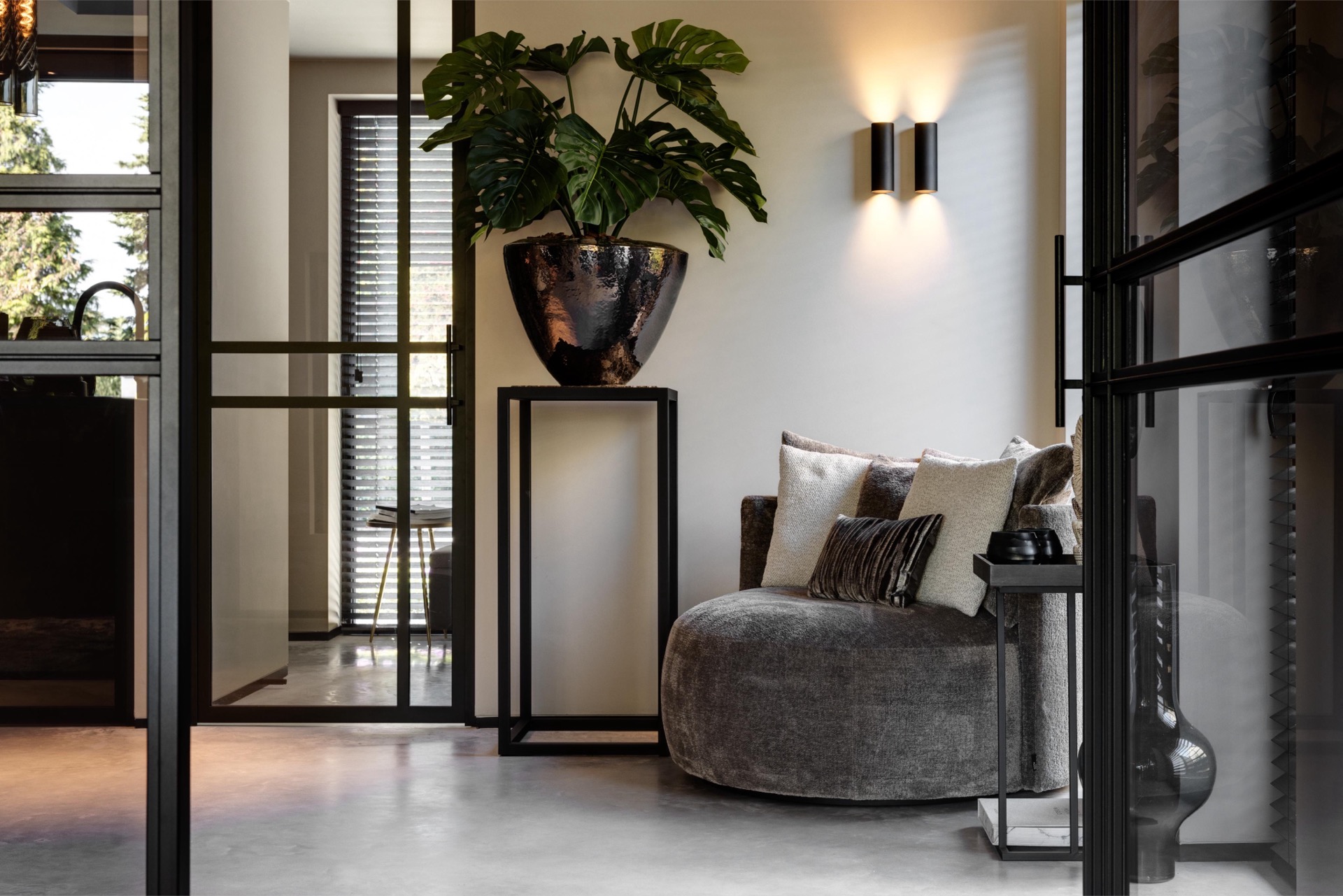
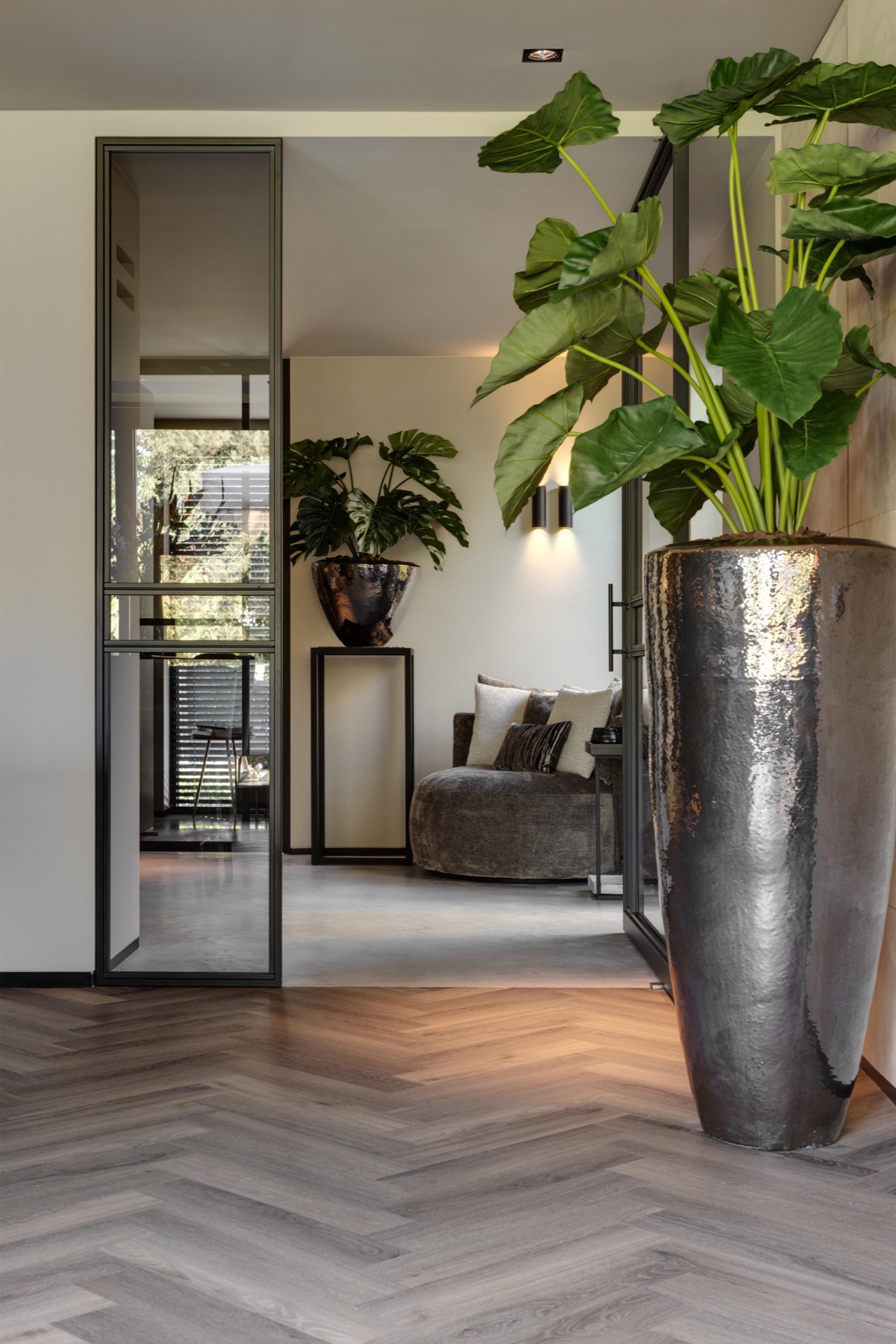
Natural wood flooring stretches throughout principal areas, its warm pattern offset by cooler stone finishes. Dark wall panels introduce subtle texture shifts, interacting with daylight to enrich the spatial experience across the day. Ample plants soften rigid architectural lines, integrating natural elements within the carefully composed interiors.
Lighting composition shapes atmosphere and guides movement
A combination of embedded fixtures and distinctive lamps highlights architectural geometry and material qualities. Light zones alternate between brightness and shadow, directing circulation and emphasizing key furnishings. Mood lighting in bathrooms accentuates clean shapes of freestanding tubs and the streamlined form of retractable shower screens.
Natural textures inform contemporary interior palette
Interiors lean on materials like marble, wood, and matte finishes that complement each other without competition. Polished surfaces sit alongside soft textiles and leather wall panels, anchoring spaces and inviting closer observation. These elements contribute to an environment defined by tactile richness and restrained elegance. That makes the luxury home renovation part of the architectural character rather than a loose finish.
Want to see more of MVD Interior Design? View the page of MVD Interior Design for even more great projects and company information.

.png)
NEW 2026 Jubileum Edition The Best Interior Designers Benelux
Order Now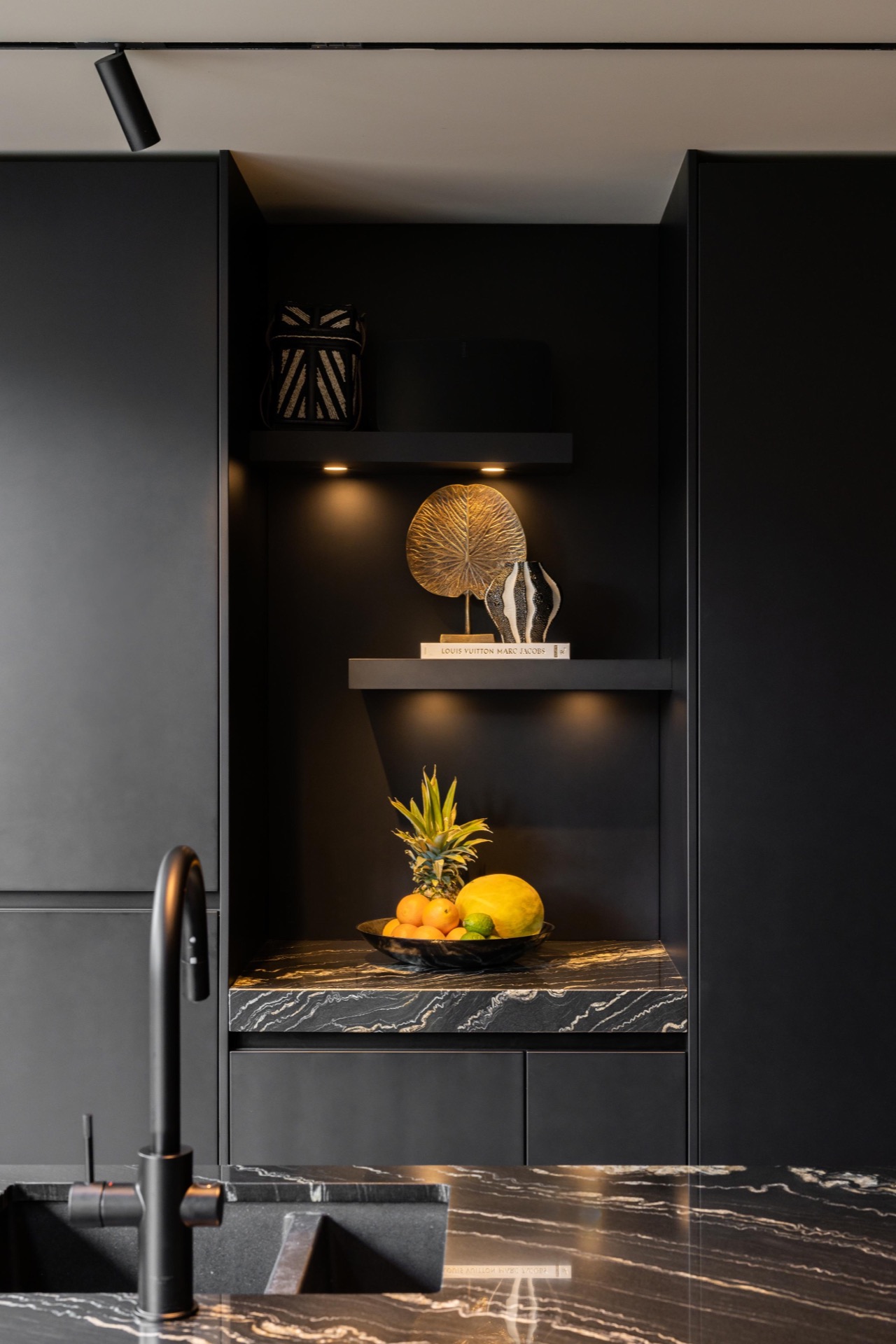
NEW 2026 Jubileum Edition The Best Interior Designers Benelux
Order Now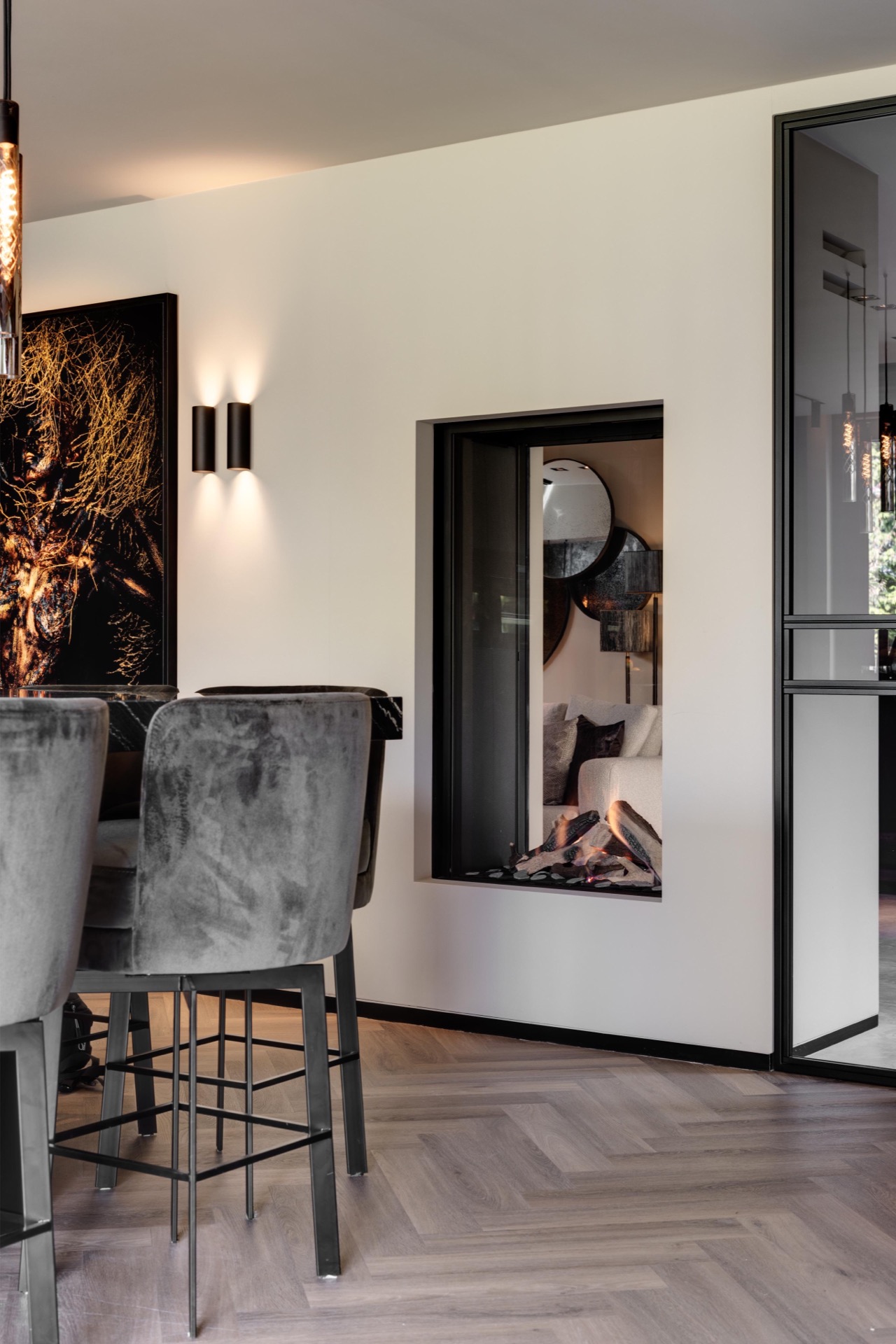
NEW 2026 Jubileum Edition The Best Interior Designers Benelux
Order Now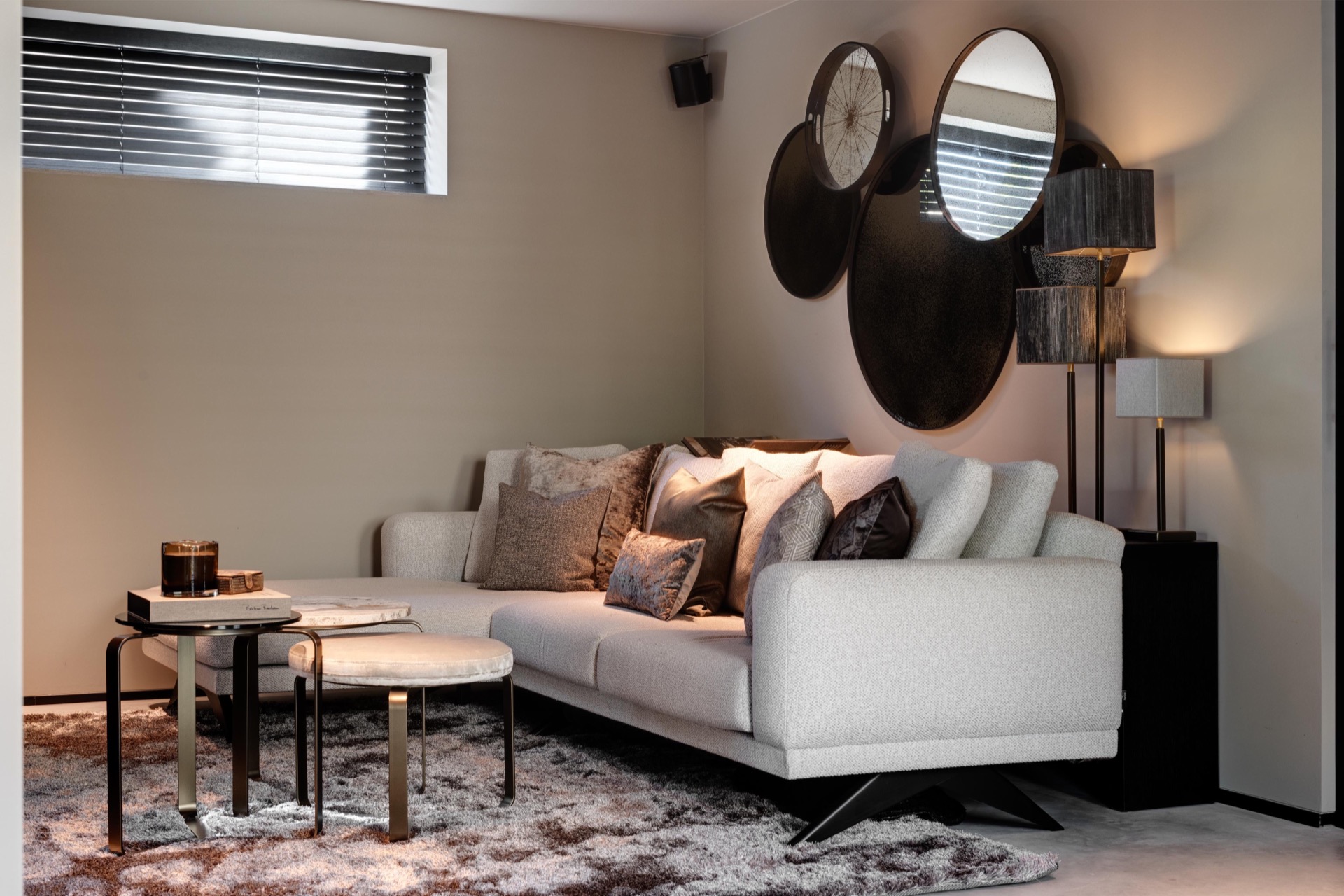
NEW 2026 Jubileum Edition The Best Interior Designers Benelux
Order Now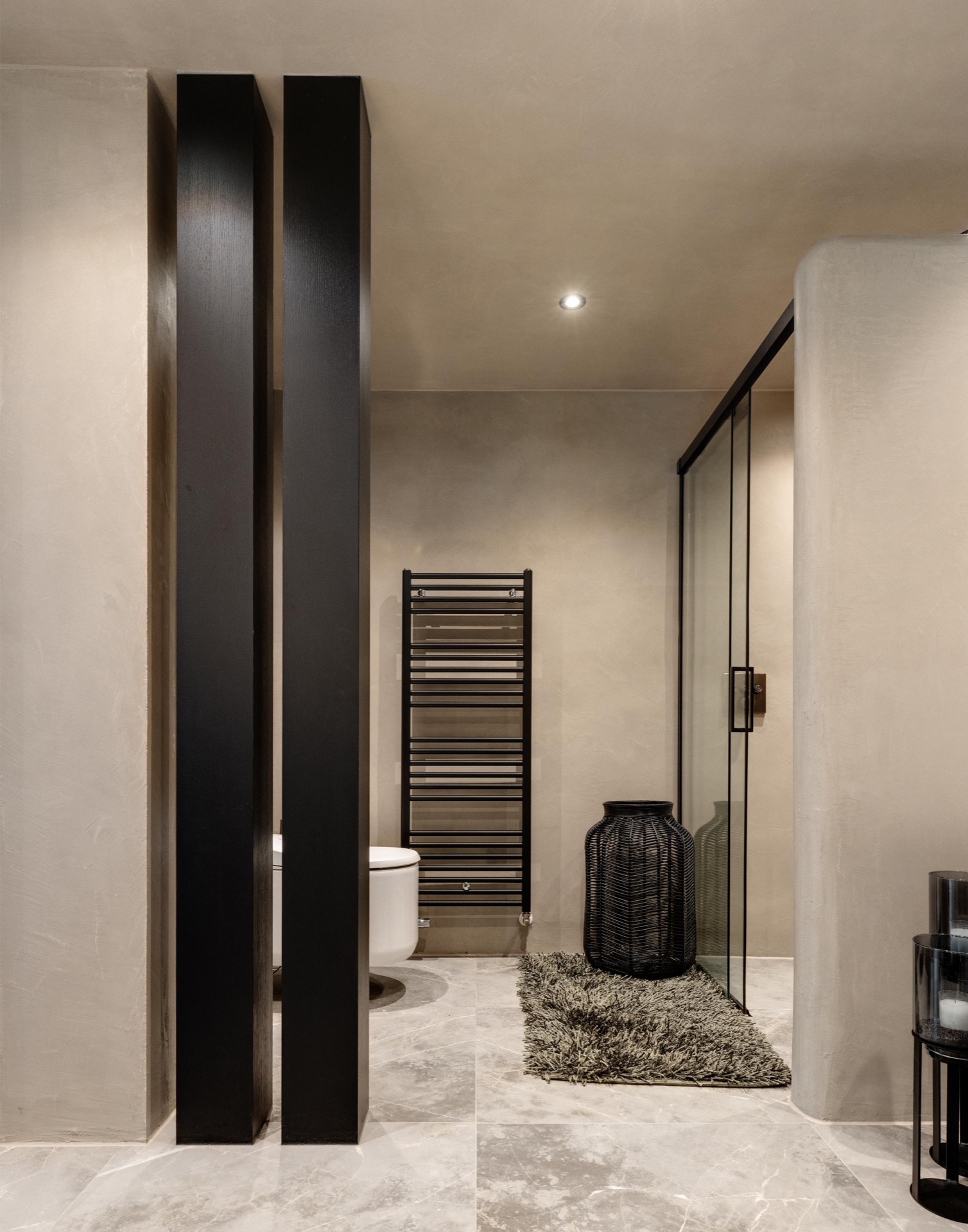
NEW 2026 Jubileum Edition The Best Interior Designers Benelux
Order Now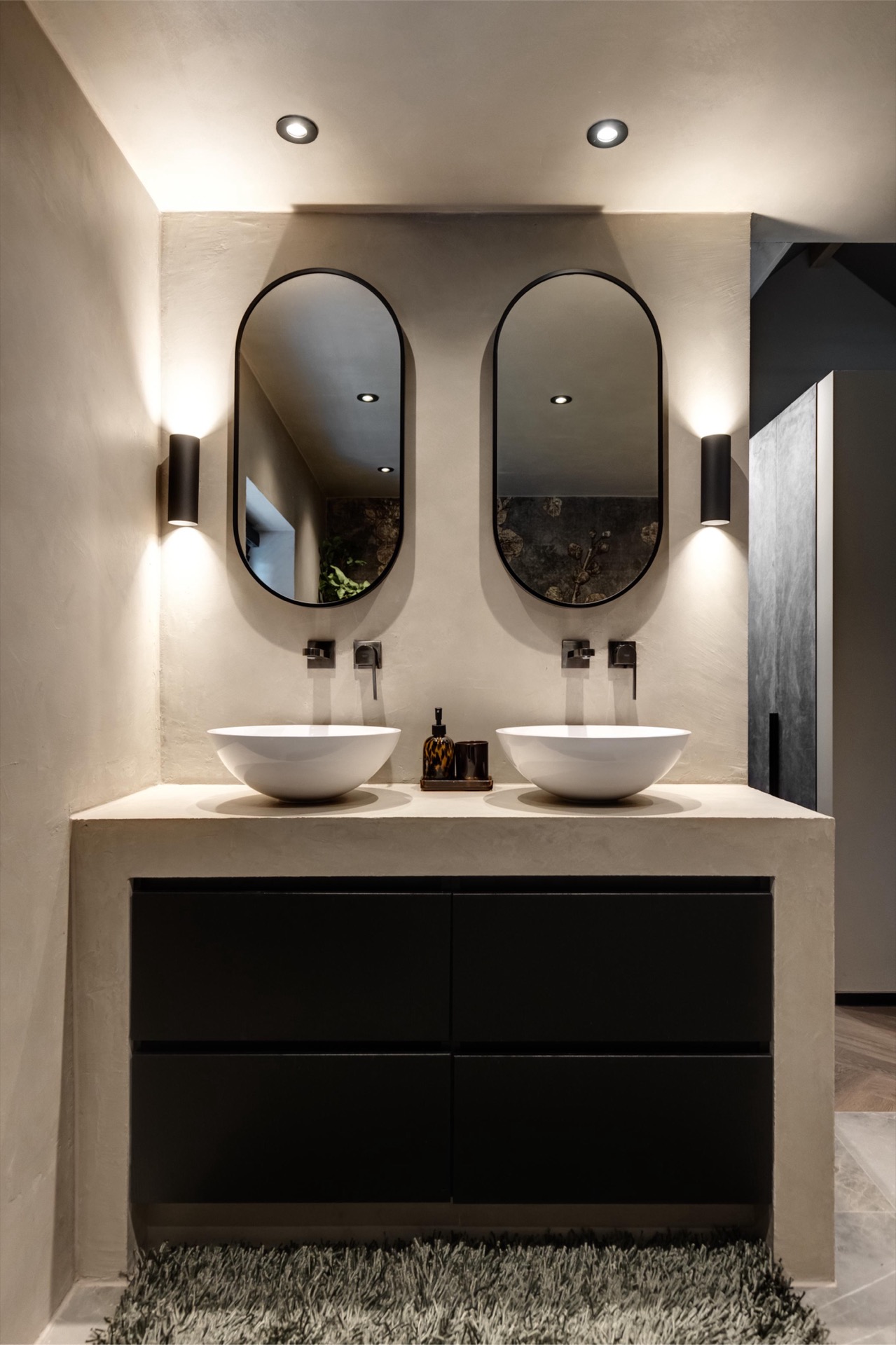
NEW 2026 Jubileum Edition The Best Interior Designers Benelux
Order Now