




Seamless matte interior finishes with microtopping in bathroom, shower and kitchen
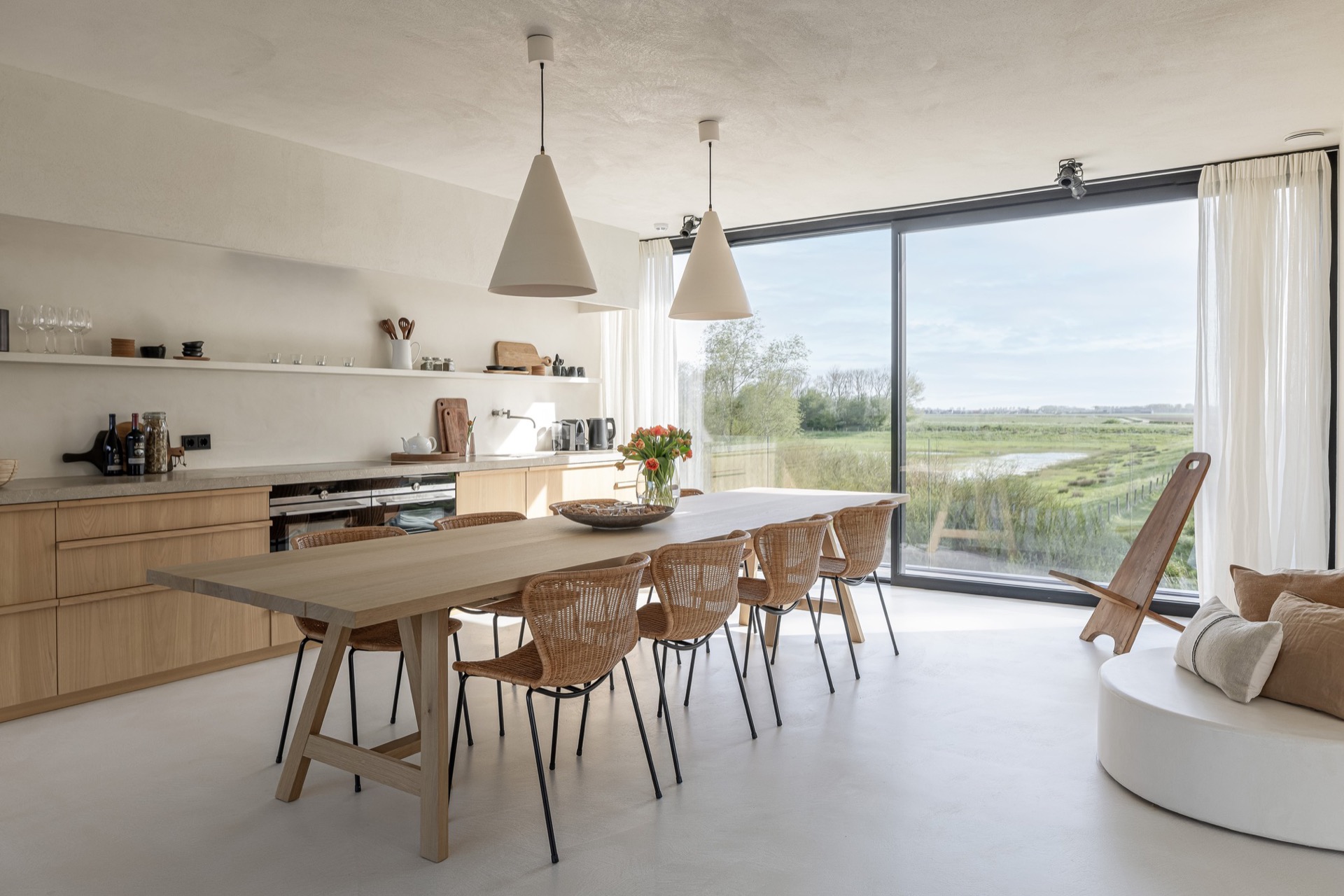
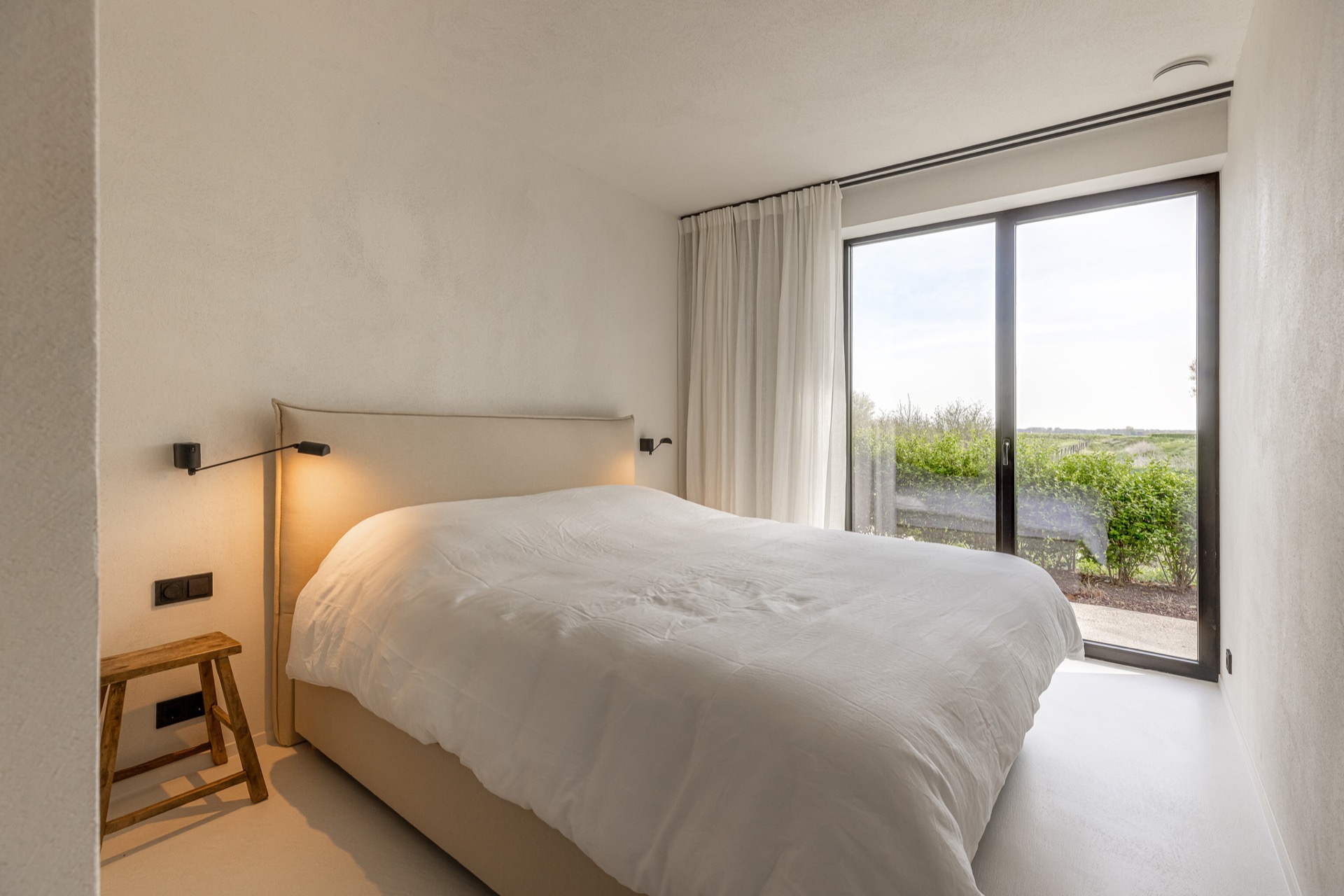
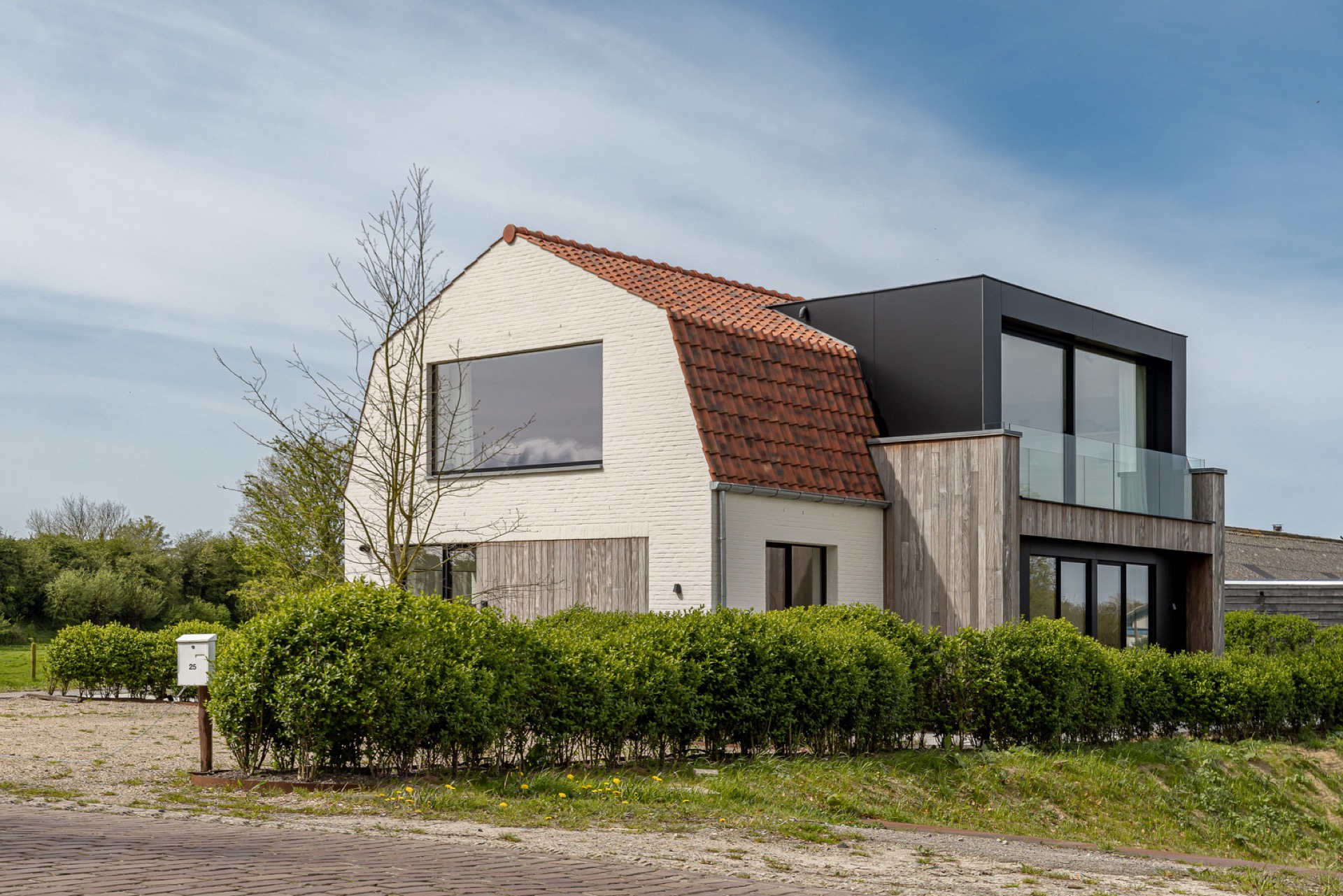
Light moves across the floor in one uninterrupted field, then lifts onto walls, ceilings and doors with the same muted surface. In this coastal home, the microtopping interior finish is not limited to one room or one object; it shapes the way the interior reads from the first step inside. Pale tones, large panes of glass and a restrained material palette keep the eye on the planes themselves: smooth, matte, and precise in their transitions.
microtopping interior finish as the architectural starting point
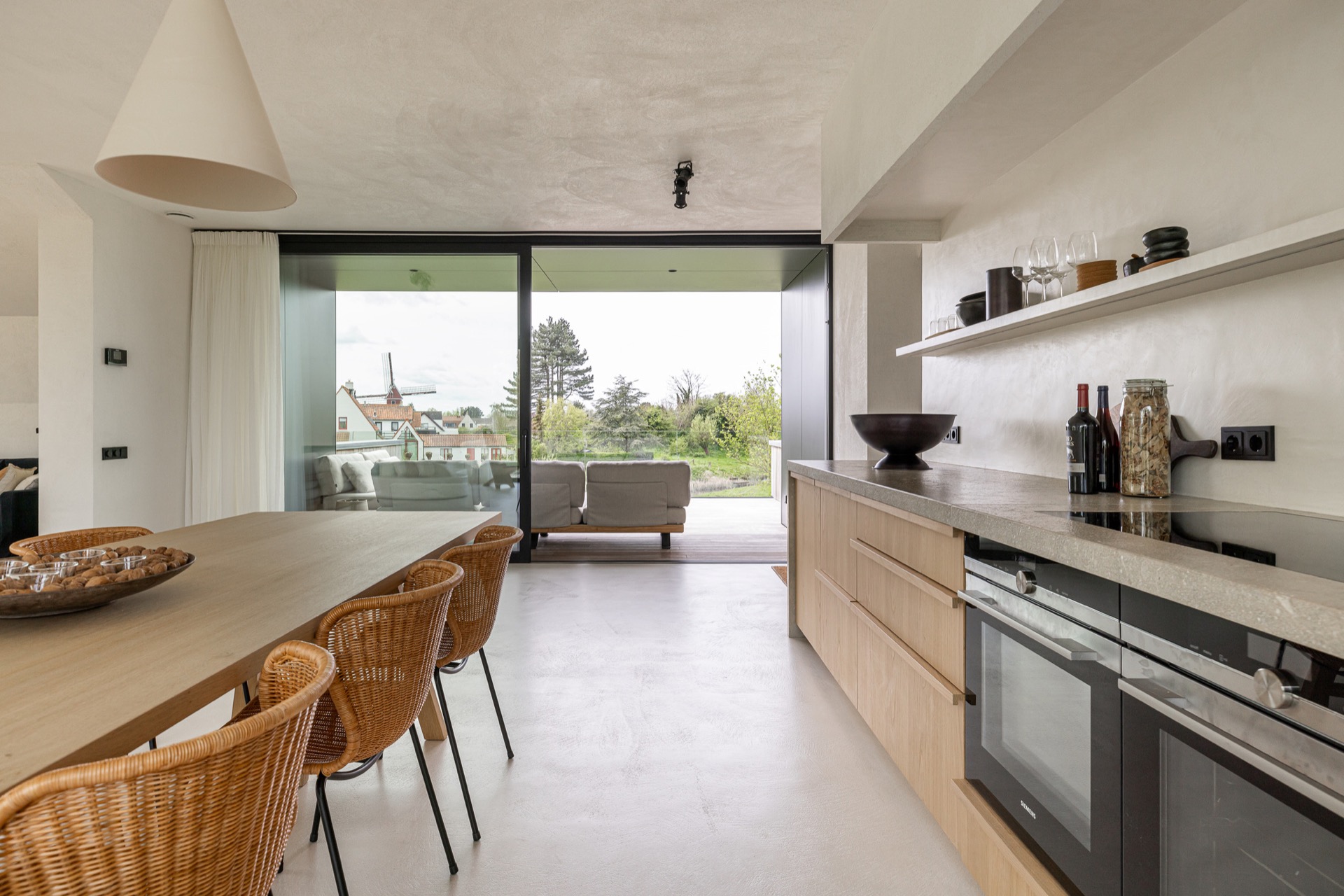
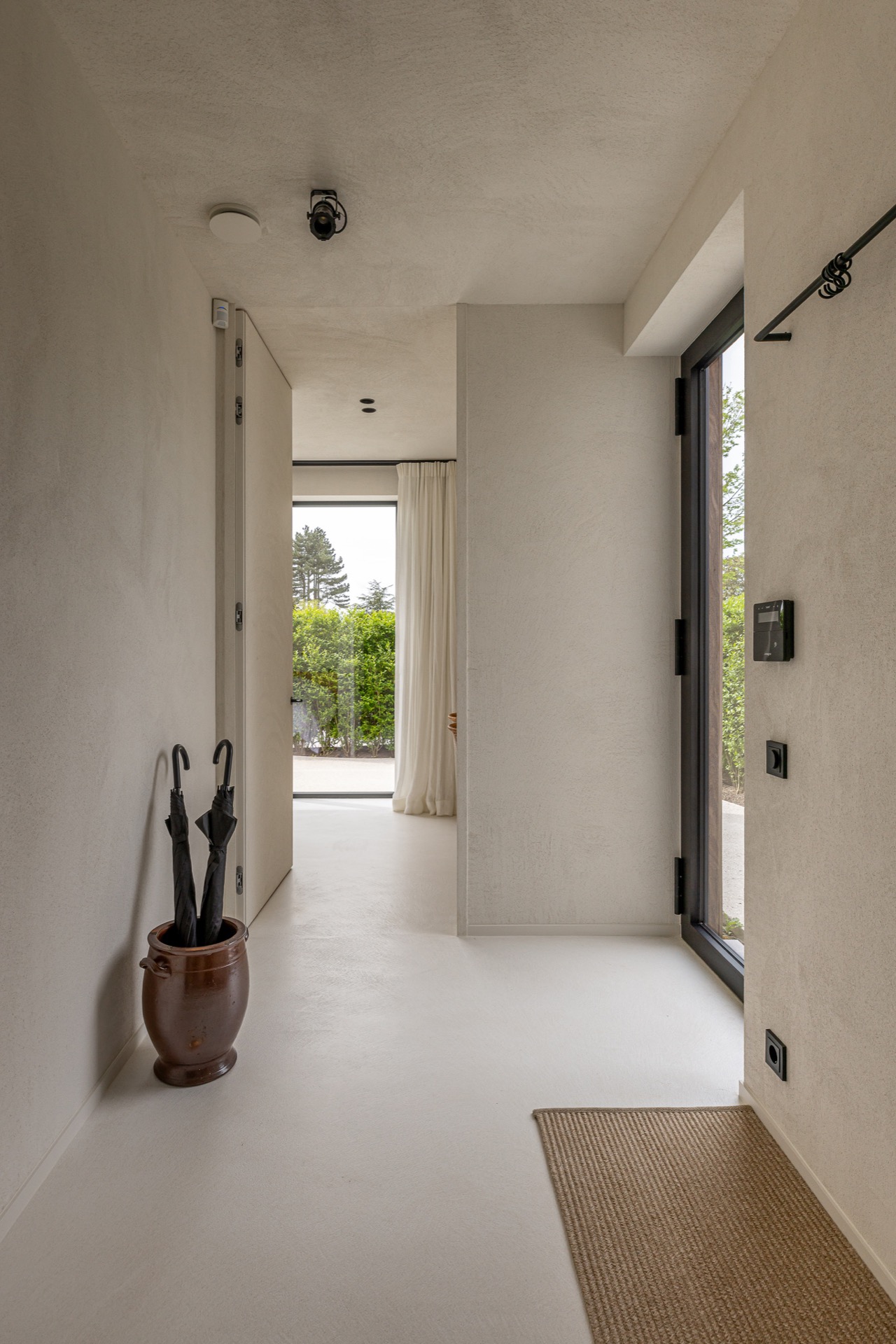
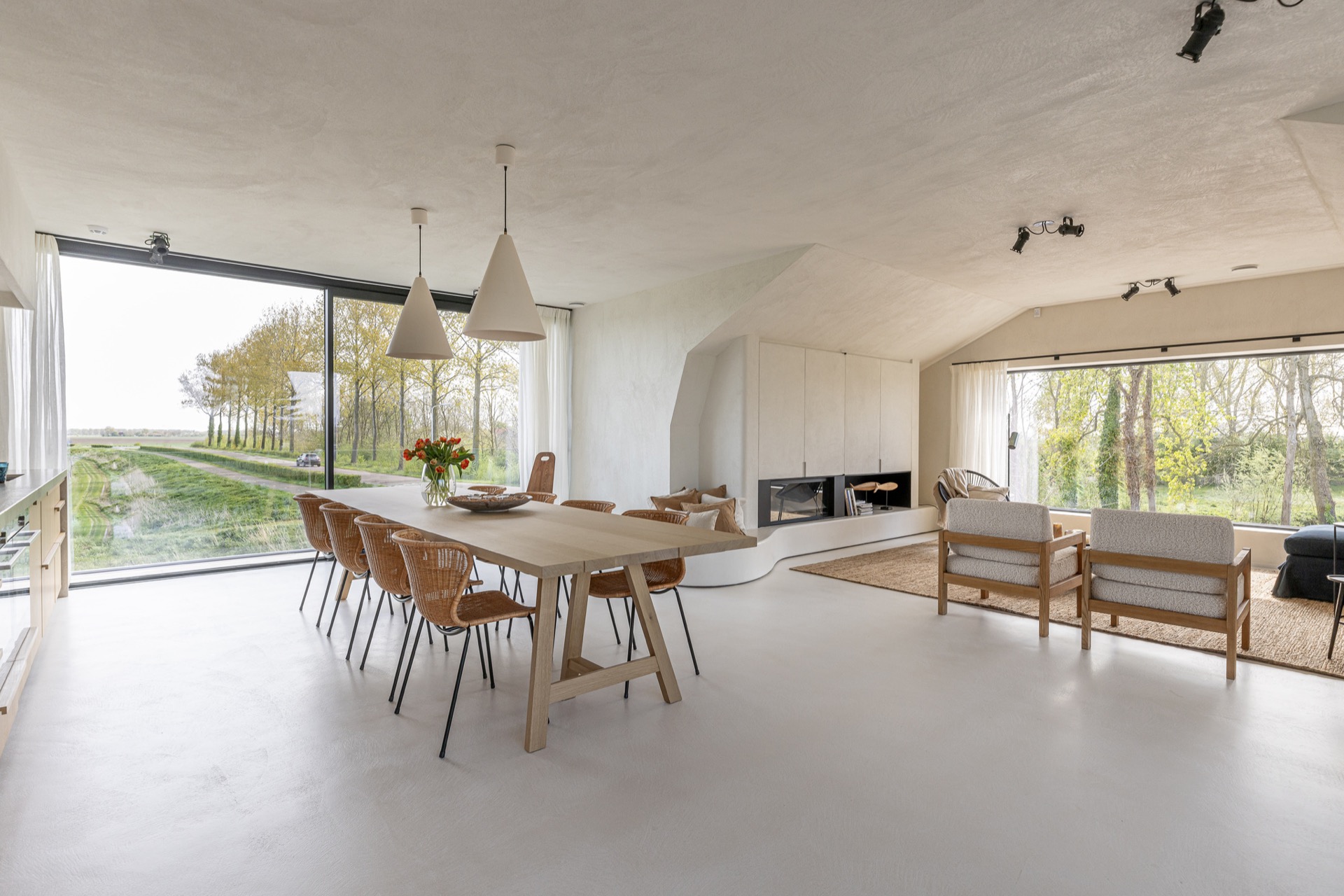
The entire floor is finished with the project’s 50/50 floor technique, which gives the surface a steady, continuous matte finish. Rather than breaking the room into separate zones, the floor runs beneath the living spaces as one visual base. That even surface works especially well with the white and grey tones seen throughout the interior, where the edges between material and space are kept quiet. The result is not decorative in the usual sense; it is the calm of a floor that lets the architecture sit clearly on top of it.
Seen with the large glazing, the floor takes on a second role. Daylight reflects softly instead of sharply, so the room stays open without becoming bright in a harsh way. The 50/50 floor technique also supports the rest of the finish package: walls, ceilings and doors follow the same calm logic, allowing the eye to move from one surface to the next without interruption. In a house like this, that consistency carries more weight than ornament.
Soho finish interior on walls, ceilings and doors
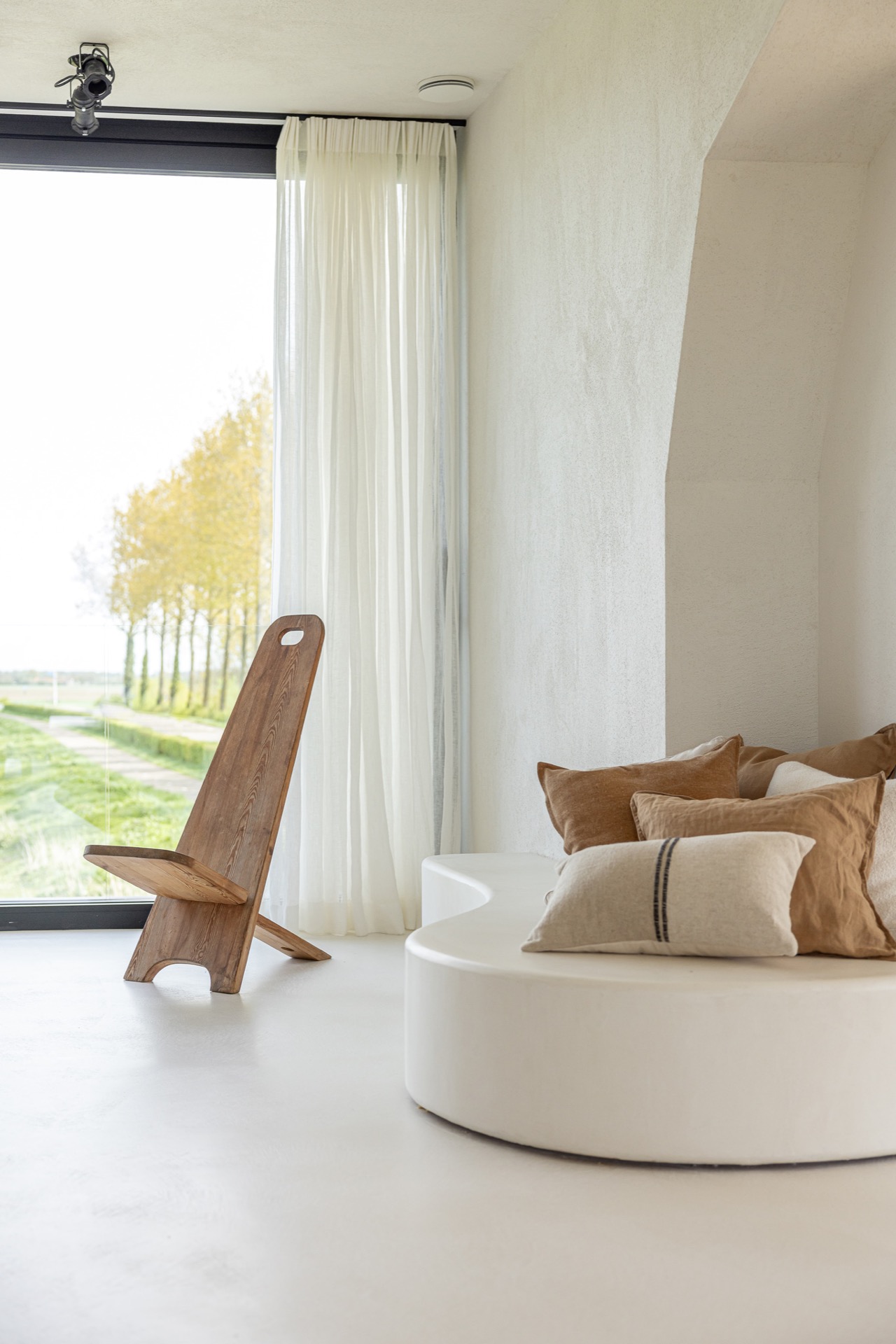
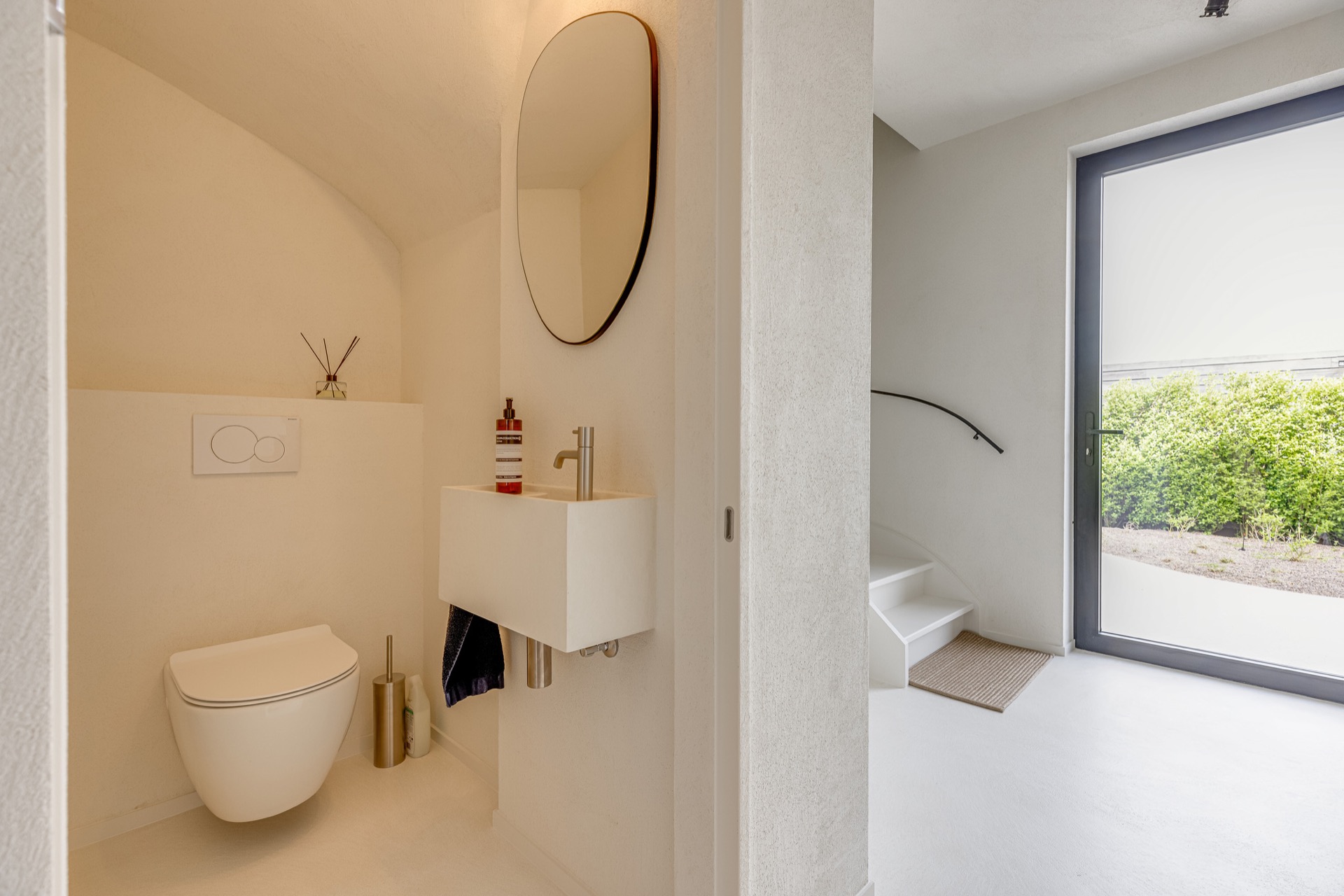
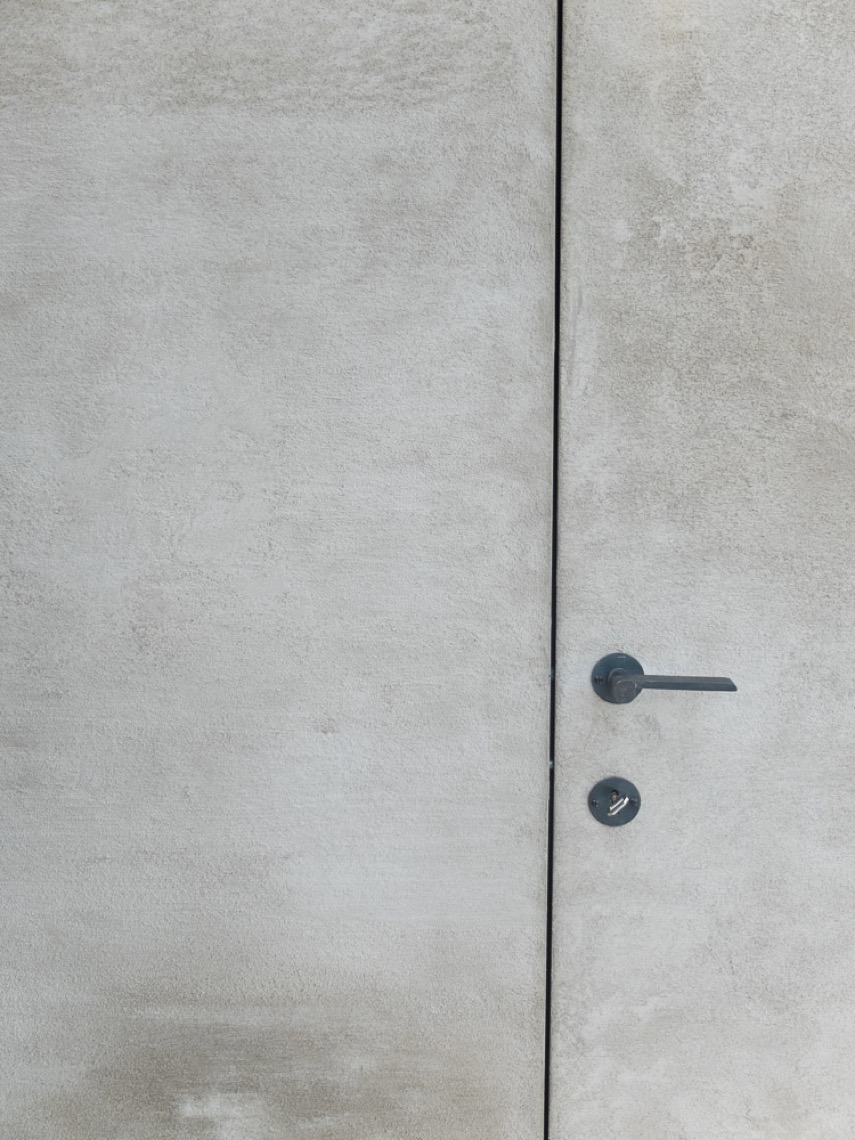
Walls, ceilings and doors carry the Soho finish interior, and that treatment gives the whole envelope a matte microcement look. The surface does not shout for attention; it sits back and frames the furniture, the glass and the openings. Around the living area, the finish softens the junctions where one plane meets another, especially under the high ceiling lines and around the window reveals. It is a surface choice that registers most strongly in light, where the subtle texture becomes visible.
Quiet transitions instead of hard breaks
Because the same finish is used across multiple vertical and overhead surfaces, the room reads as a set of connected planes rather than a collection of separate parts. Doors are not treated as isolated elements, and the ceiling does not end in a sharp contrast. That makes the living spaces feel more measured, with the matte surface carrying the visual rhythm from one side of the house to the other. The effect is especially clear where the interior meets the black window frames and the warmer timber details.
Microtopping in the bathroom, shower and kitchen
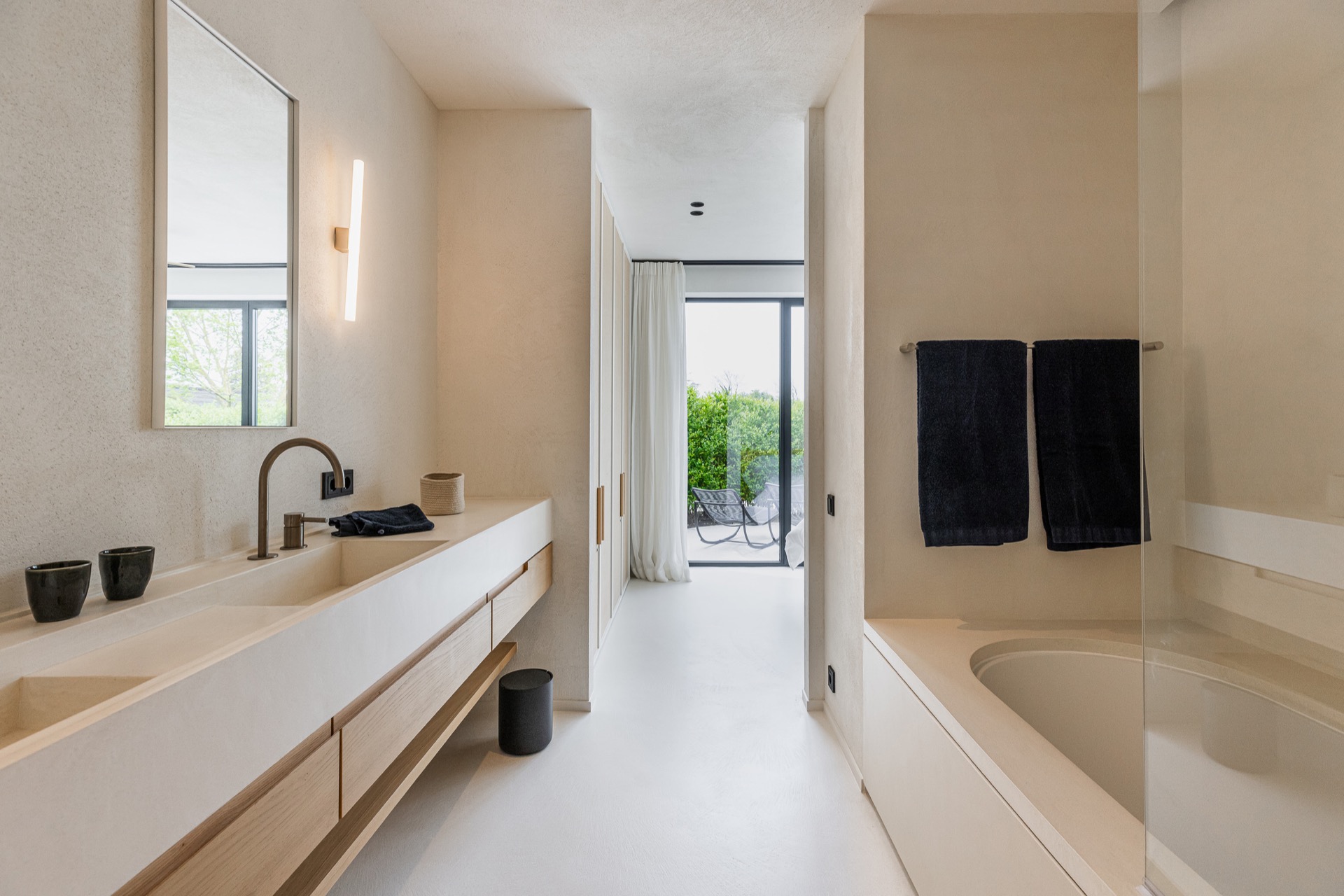
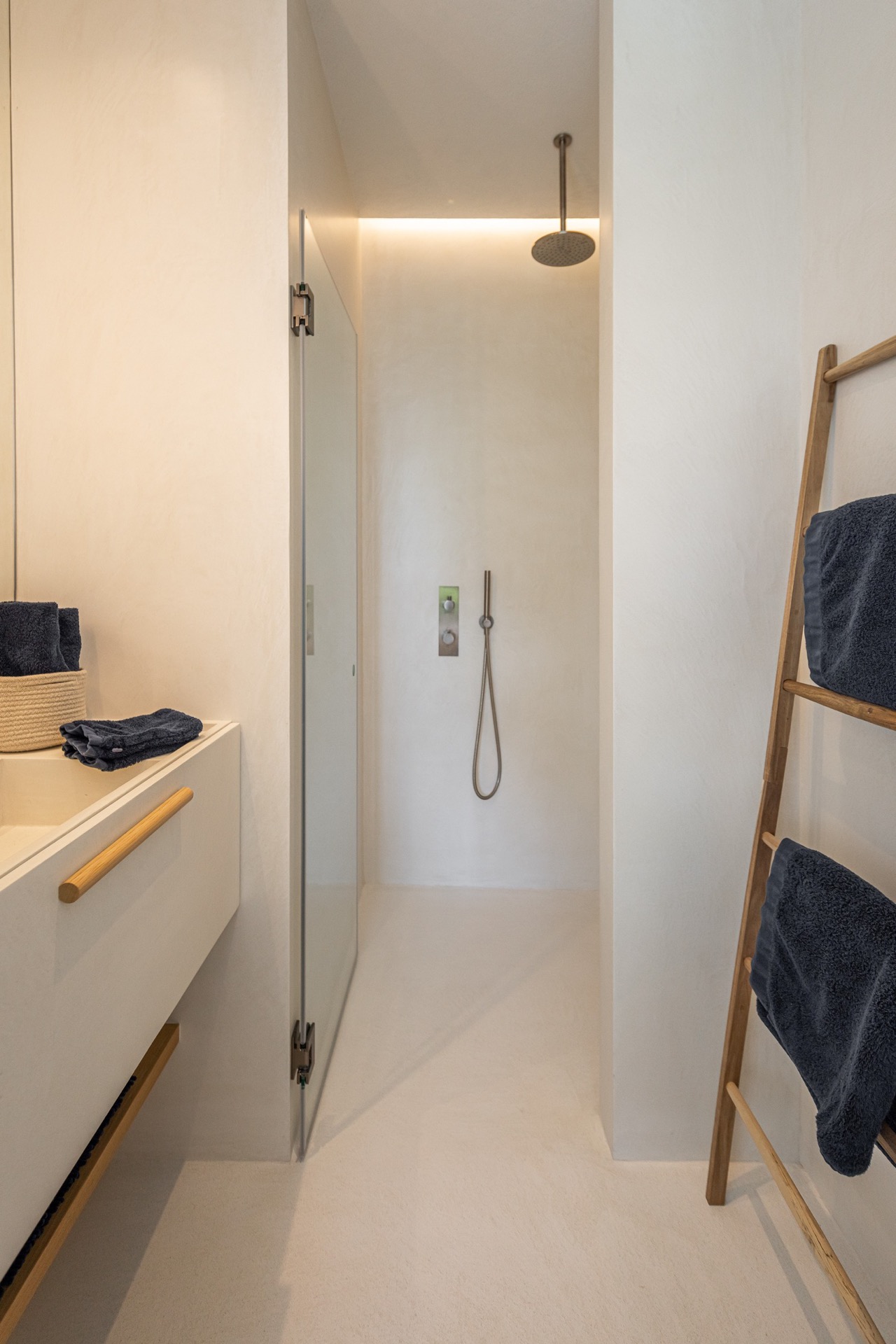
The wet zones bring the project’s microtopping interior finish into closer view. The bathroom furniture is wrapped in microtopping, and the shower uses the same finish, so the surfaces hold together across the room without switching language. A long vanity line, the tub corner in a niche, and the walk-in shower with a glass panel all sit within the same matte field. The material choice is visible in the way light slides over the flat planes rather than pooling in glossy reflections.
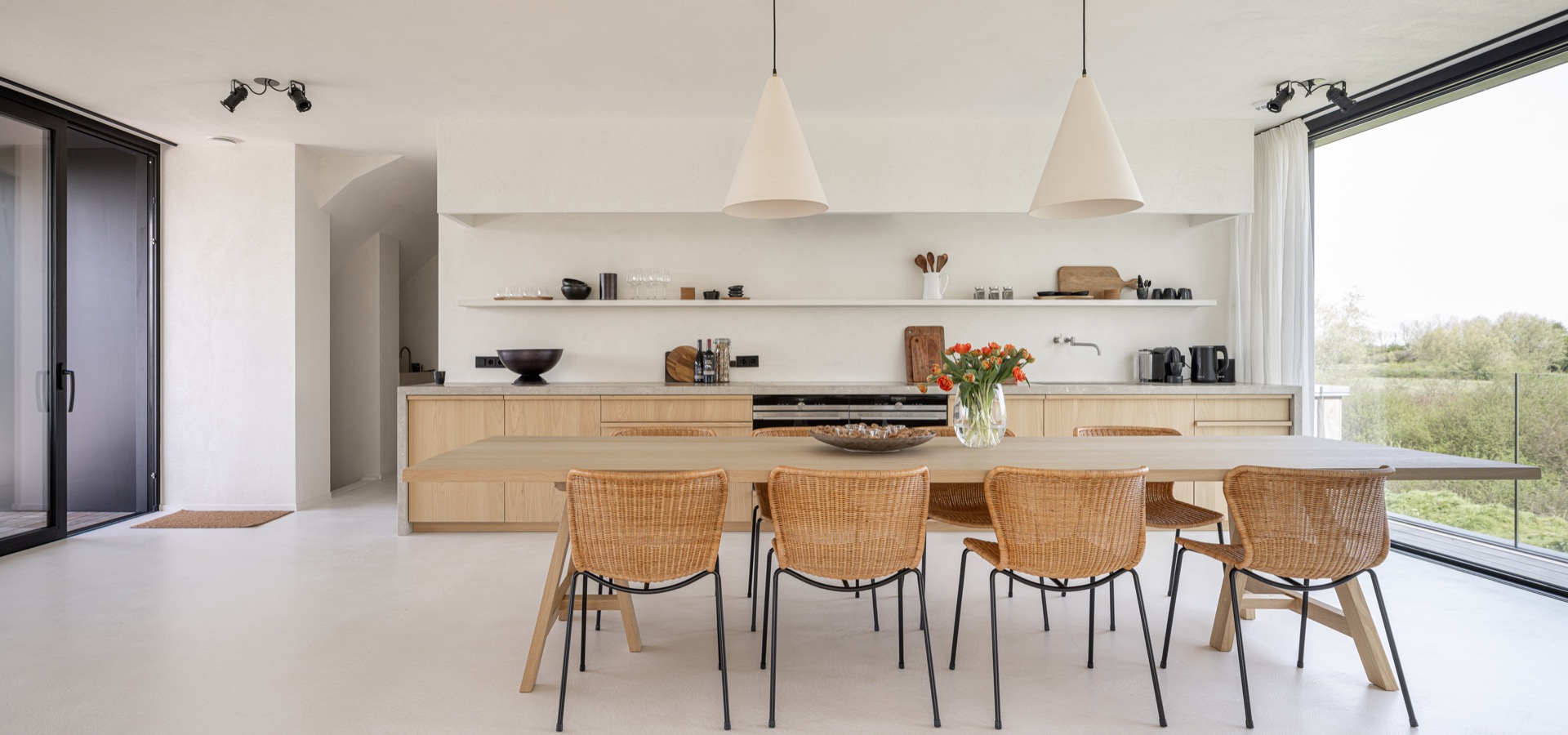
The kitchen splashback microtopping continues that idea in a more compact setting. Behind the working area, the surface sits flush and unshowy, allowing the wooden cabinets and hanging lights to take part in the composition without competing with a patterned wall or a shiny tiled finish. The kitchen remains tied to the rest of the house through the same restrained material logic. Even in a smaller detail like the splashback, the finish keeps the line of sight clear.
A shower zone defined by glass and matte surfaces
The shower is enclosed with a glass panel, which keeps the room open while still marking the wet zone. Next to that clear plane, the microtopping bathroom surfaces give the enclosure its character: soft, flat, and easy to read in daylight. The mix of glass and matte finish works well in the bathroom because each element does a different job. One keeps the space visually open; the other gives the room its continuous surface language.
A custom fireplace in the living area
In the living room, the custom fireplace microtopping finish draws the eye to the built-in wall structure and the seating area around it. The fireplace is not treated as a separate feature with a contrasting material; it belongs to the room through the same matte treatment used elsewhere in the house. A low, enclosed sitting nook sits nearby, which gives the fireplace a clear social role without making the space feel crowded. The finish helps the element sit into the architecture instead of standing apart from it.
Open flame, white wall surfaces and the darker opening of the firebox create a quiet contrast. Around it, the large windows, floor-length curtains and pale surfaces keep the room bright. The fireplace becomes part of the room’s visual structure, not just a source of heat. Its microtopping surface ties it back to the bathroom, the kitchen and the floor, so the project’s material language stays consistent even as the functions change from cooking to bathing to sitting.
Light, glass and built-in details
Across the interior, light is one of the main materials. Large panes bring in long views and soften the boundary between inside and outside, while the matte surfaces prevent glare from taking over. Timber joinery adds a warmer note in the kitchen and in the bathroom details, but it never breaks the measured tone of the room. In the living area, the ceiling lights and the hanging lamps over the kitchen zone punctuate the space without shifting its quiet palette.
The project is strongest where the finishes meet the architecture directly: at the floor line, around the door leaves, along the shower enclosure, and across the built-in fireplace wall. Those junctions are where the microtopping interior finish, the Soho finish interior and the 50/50 floor technique become most legible. Together they create a house that is read through its surfaces first, then through its furnishings and openings. That is what gives the interior its particular clarity: each material stays visible, but none of them has to compete for attention.
Want to see more of Texture Painting? View the page of Texture Painting for even more great projects and company information.

.png)