






Minimalist Apartment Featuring Japanese Design Elements and Natural Materials
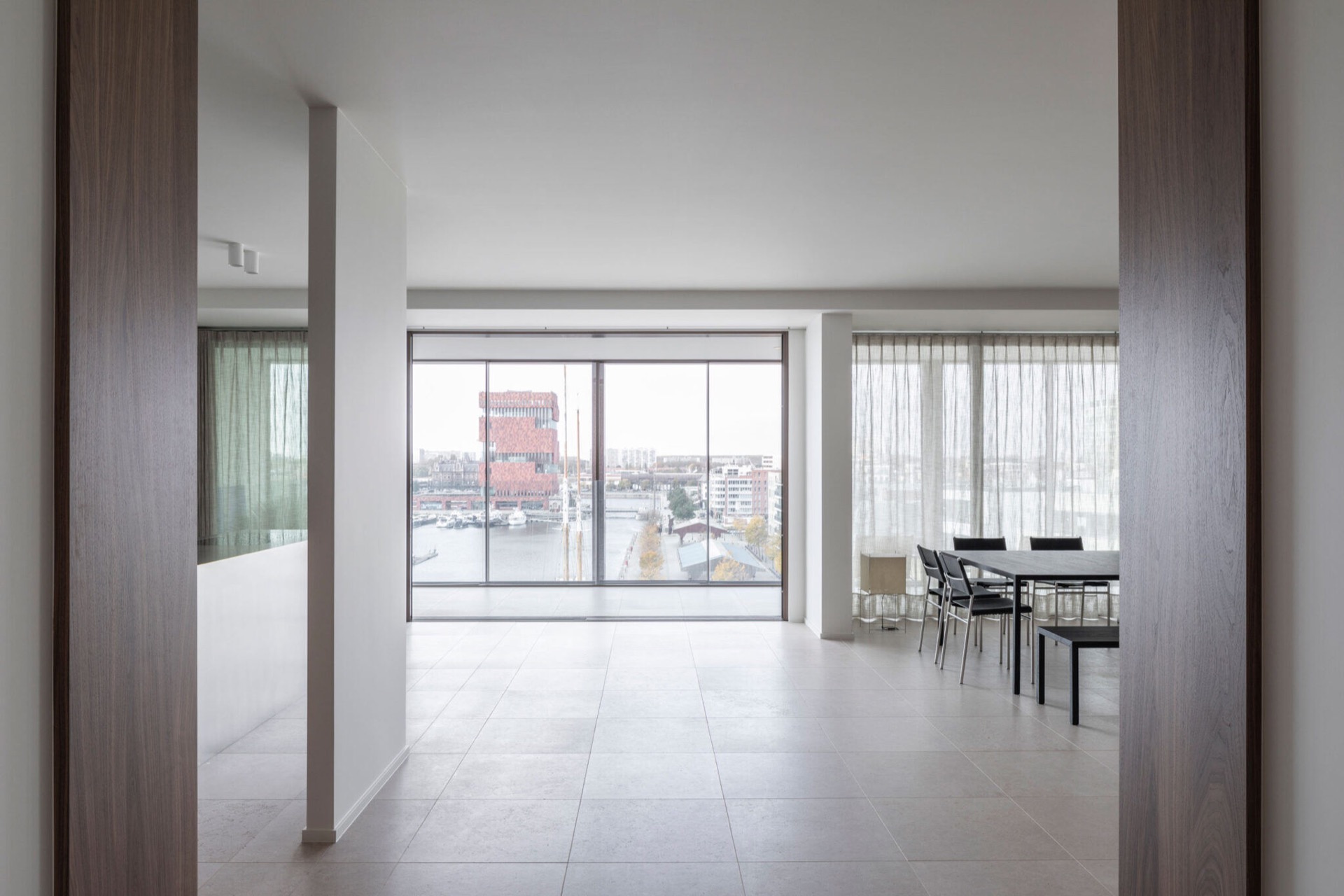
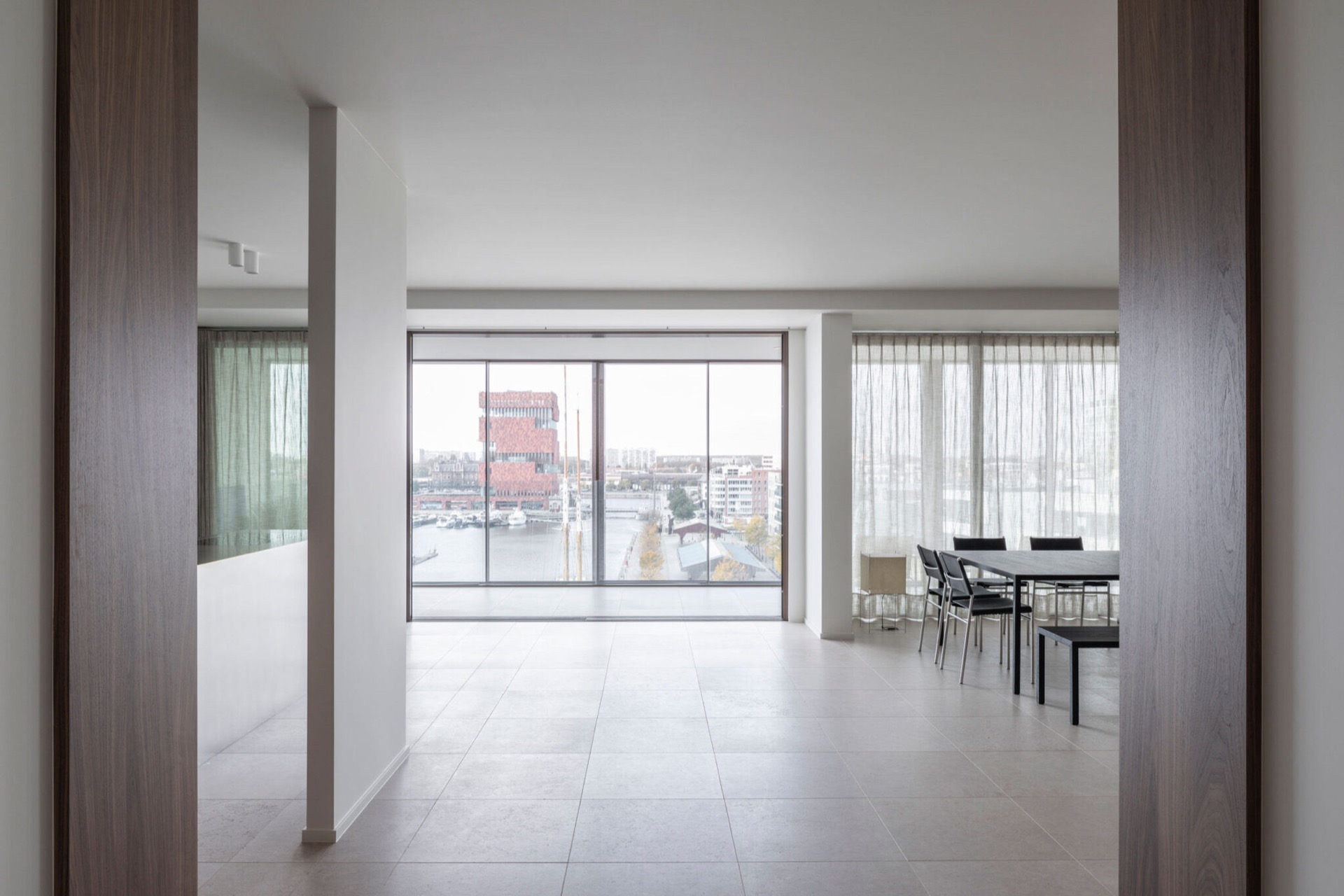
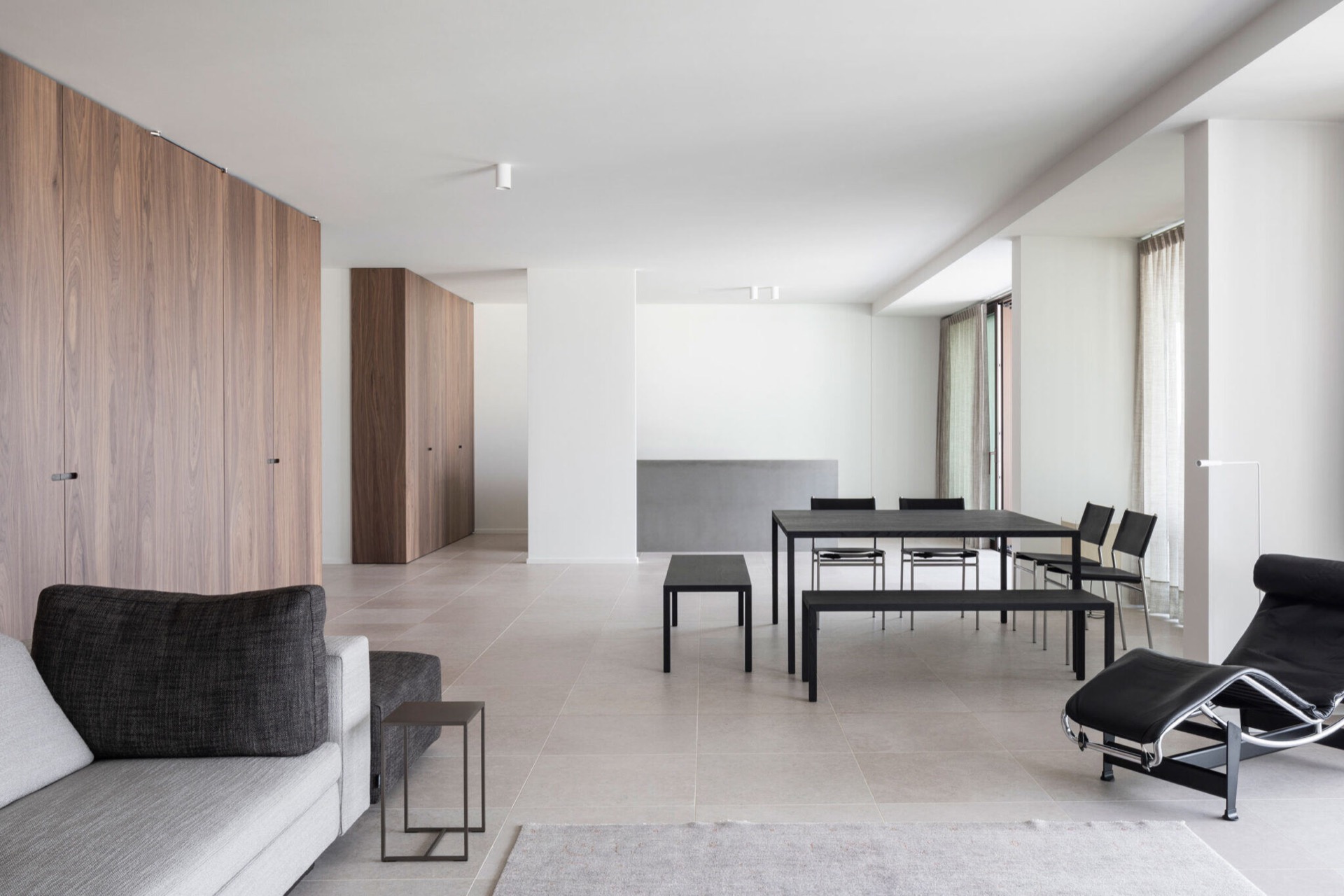
The minimalist interior is immediately visible in the way the project is framed. Sunlight filters gently through sheer curtains hanging from ceiling channels, casting subtle vertical shadows across the open apartment. The interplay of light and textured fabric softens the strong presence of natural materials—warm walnut cabinetry and cool stone floors—creating a quiet rhythm throughout the space.
minimalist interior as the architectural starting point
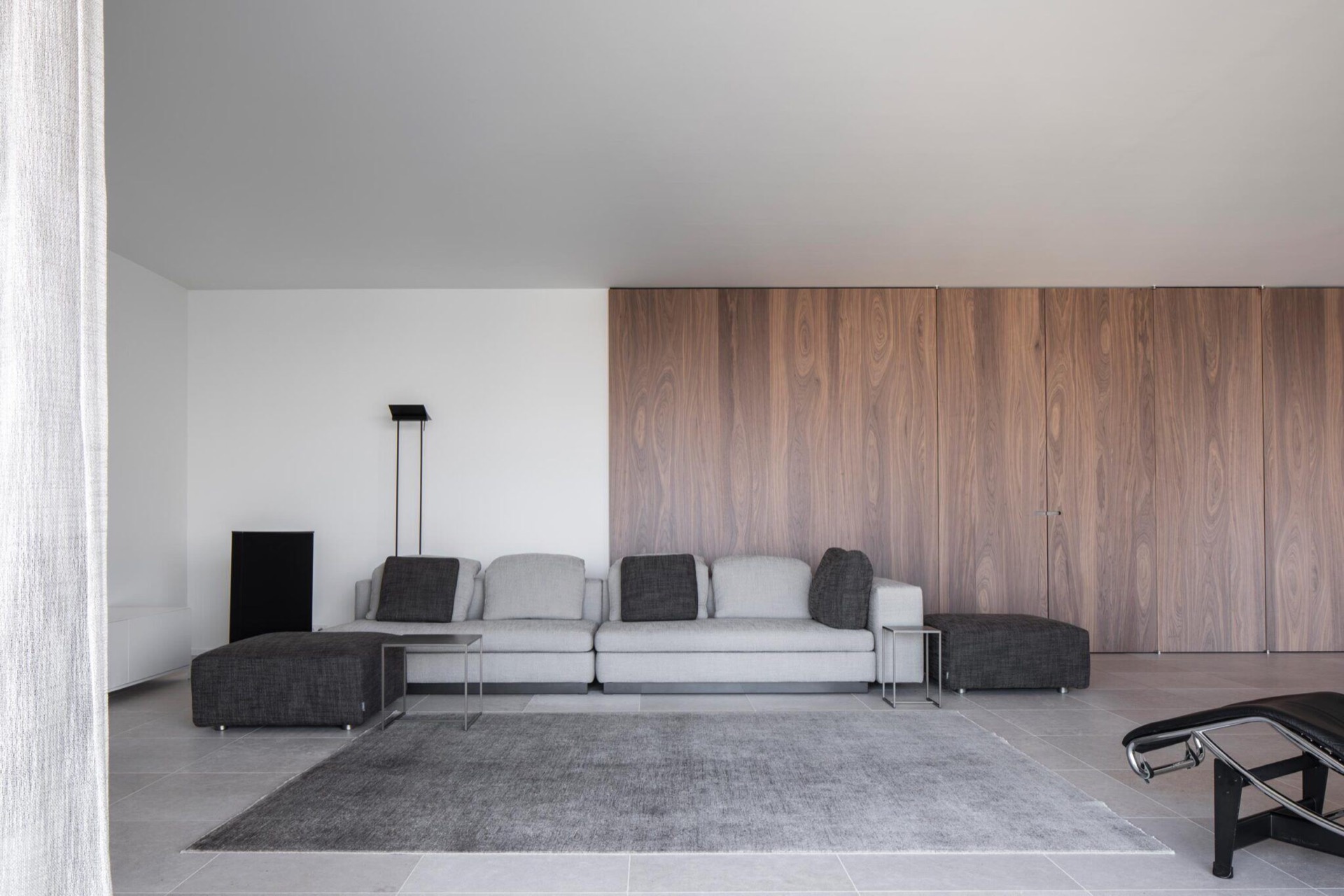
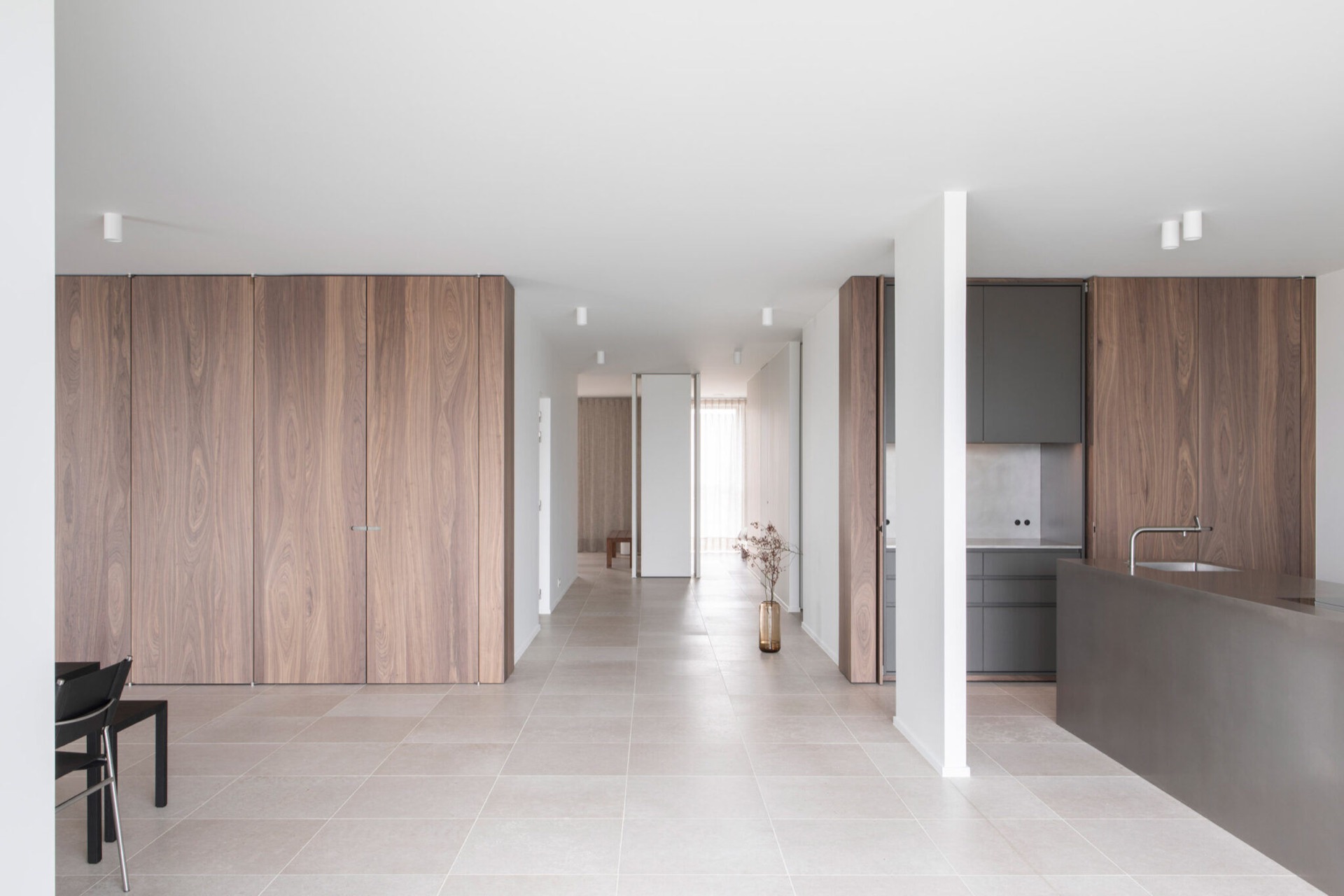
Floor-to-ceiling walnut closets extend along the hallway and living areas, their grain aligned to flow coherently over broad panels without handles disrupting the smooth surfaces. These built-in storage walls delineate zones while maintaining clear sightlines, their rich tones grounding the apartment’s otherwise light palette.
Natural Stone Tiles Unify and Transition Spaces
Expansive stone floor tiles with muted gray and beige shades spread evenly across the entire plan. Their matte finish reveals fine veining and a tactile texture that subtly shifts as daylight changes. The stone contrasts gently with the wood, marking circulation paths without physical barriers and reinforcing the apartment’s open layout.
Open Layout Enhances Spatial Flow
The kitchen, dining, and living areas occupy a single volume, connected visually and physically by absence of partitions. Walnut cabinetry hints at functional zones, while leaving uninterrupted views through large windows that frame water beyond. Furniture pieces with slender steel frames hold low profiles, preserving depth and openness.
Matte Steel Kitchen Island Complements Surroundings
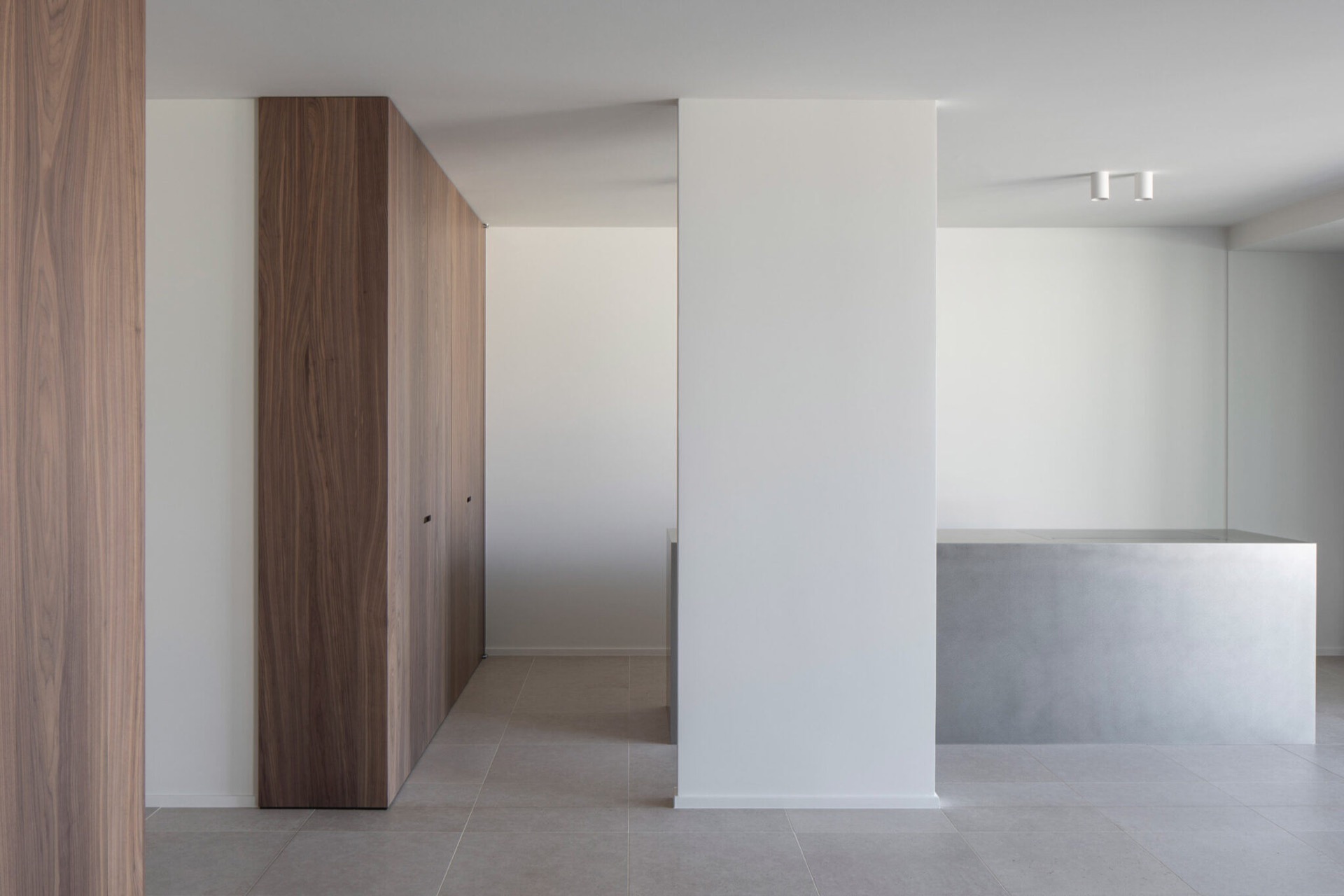
At the center, the kitchen island embraces a matte steel finish echoing the stone’s cool tones. Its angular geometry contrasts with the flowing wood grain but shares a restrained materiality. This creates a subtle focal element without disrupting the room’s calm balance.
Seating Area Plays with Texture and Tonal Contrast
Adjacent to the kitchen, a pale fabric sofa contrasts with an anthracite pouf, their colors drawn from the natural materials palette. A flat rug anchors the grouping while leaving stone floors largely visible. Furniture details, such as black steel legs, echo the kitchen features and reinforce cohesive material connections.
Sheer Curtains Modulate Light and Views
Translucent curtains diffuse sunlight, softening brightness without obscuring exterior vistas. Their vertical grain contrasts with the horizontal expanses of floor and cabinetry, adding subtle movement as they shift with breezes, enriching the interior’s tactile experience. That makes the minimalist interior part of the architectural character rather than a loose finish.
Material Palette Reflects Subtle Contrasts
The color scheme arises organically from material juxtaposition rather than surface treatments. White walls and ceilings set a neutral background that enhances the depth of walnut wood and the coolness of stone and steel. This balance supports spatial clarity and emphasizes texture over decor.
Refined Detailing Upholds Simplicity
Cabinet doors open with discreet insets, avoiding visible handles and preserving the integrity of continuous walnut planes. Recessed ceiling lights remain unobtrusive, letting natural light shape the atmosphere. Steel-framed furniture carries the kitchen’s material thread into living and dining areas, unifying the design with understated precision.
Furniture Supports Spatial Lightness
Dining chairs and seating rest on fine, dark steel frames, their thin profiles reducing visual weight while adding a graphic element. Upholstery in neutral shades anchors the furnishings in the stone and wall tones, maintaining a balanced yet open feel.
Large Windows Extend the Indoor Space
Dining and seating areas sit below window ledges, ensuring unbroken views toward the waterfront. This connection invites the external environment inside, broadening the apartment’s perceived space and reinforcing the minimalist approach.
Consistent Use of Materials Directs Movement
From entry to main living zones, the pairing of walnut cabinetry and natural stone flooring guides circulation fluidly. Built-in closets in the hallway echo those in the living spaces, creating a visual and functional thread. This material repetition subtly organizes the open floor plan without segmentation.
Light Variations Reveal Material Depth
Changing daylight amplifies wood grain contrast and highlights stone veining. Fabric tones respond to shifting light intensity; textures emerge or recede, inviting a nuanced sensory experience that relies on material presence rather than ornament.
Here, principles derived from Japanese design shape a minimalist interior that balances material warmth with clarity of form. Walnut, natural stone, and matte steel converge in a space where openness, integrated storage, and natural illumination prevail, allowing the architecture and materials to tell their quiet story.
Want to see more of LOFT4C? View the page of LOFT4C for even more great projects and company information.
.png)