





Minimalist Modern Kitchen with Japandi Influence
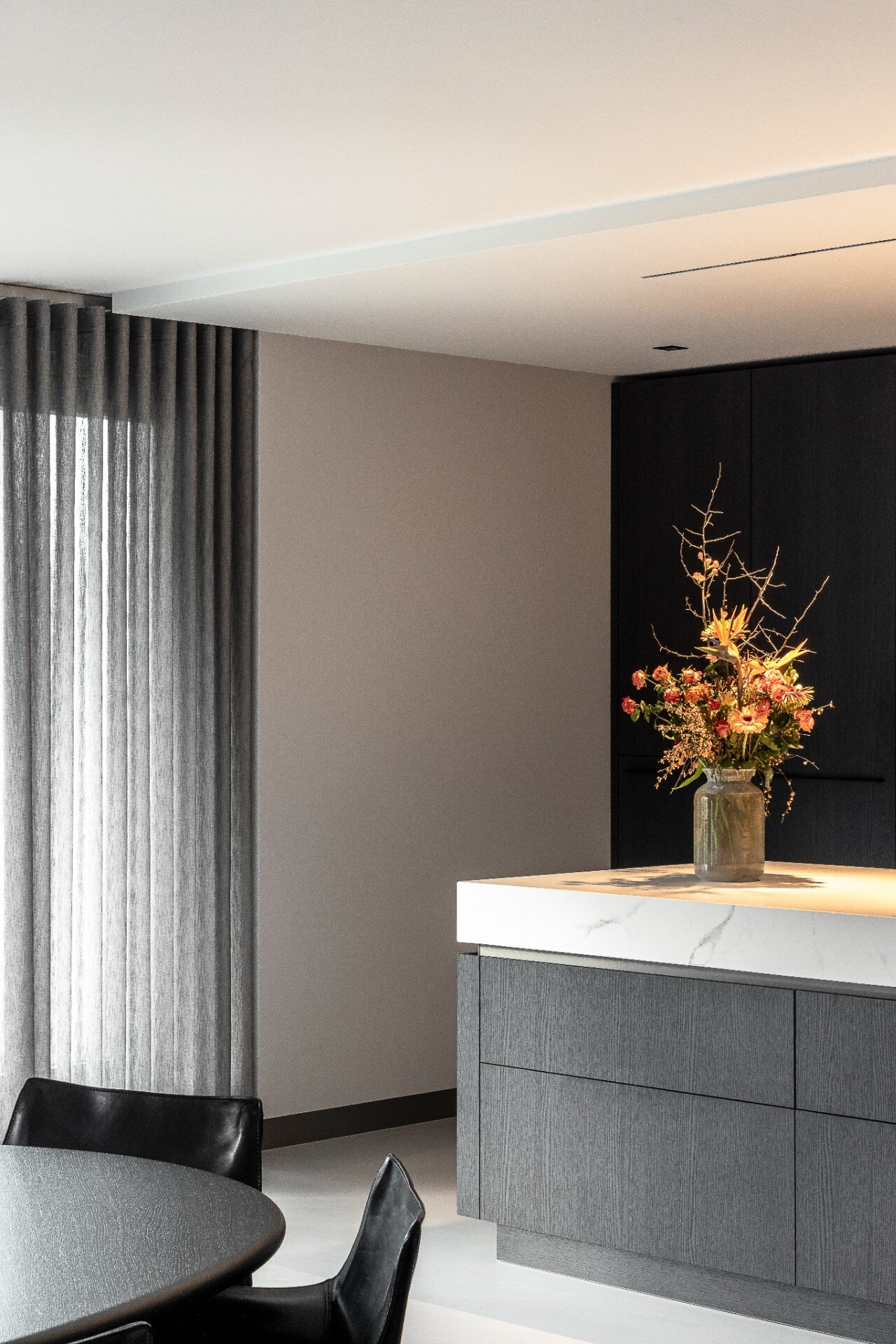
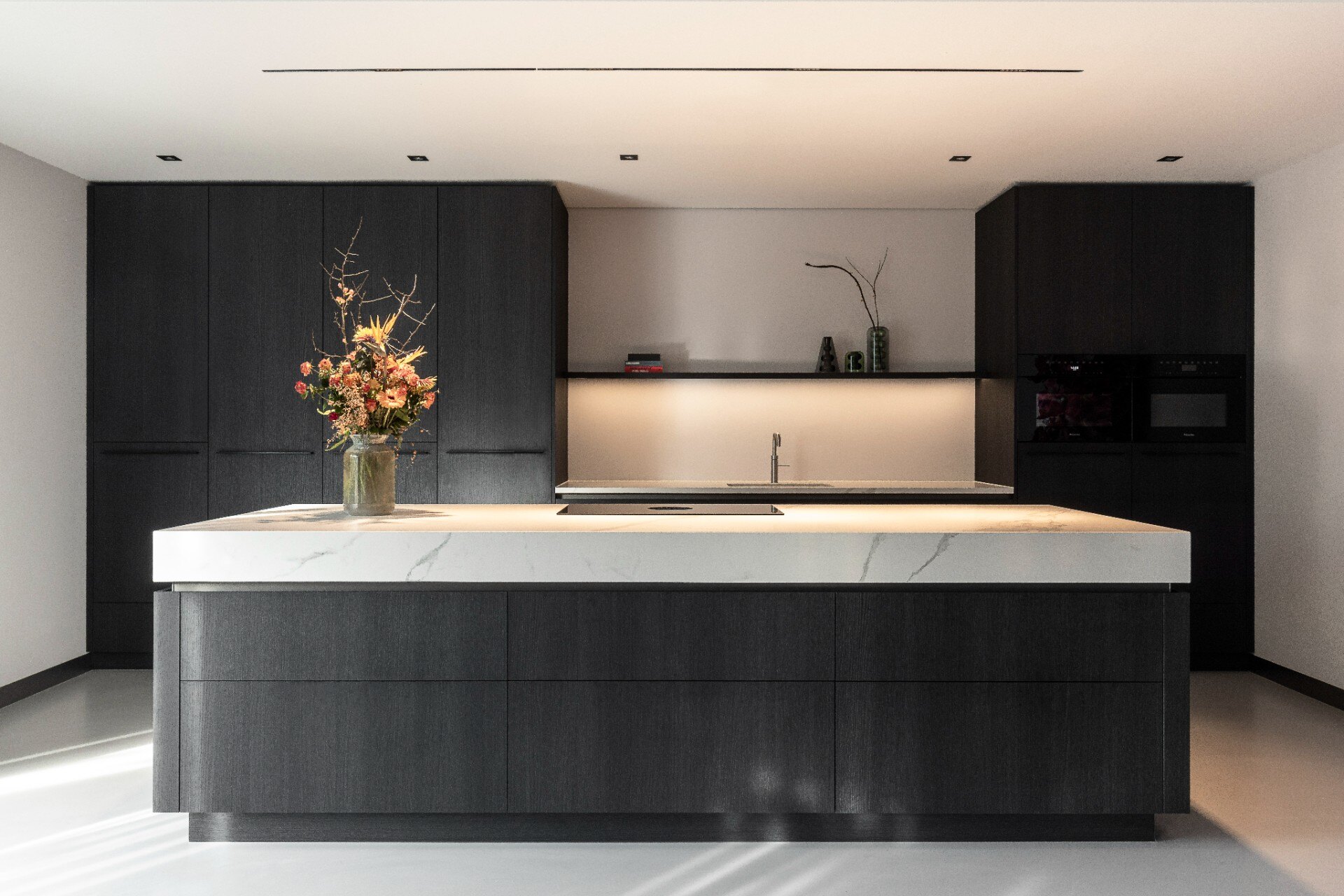
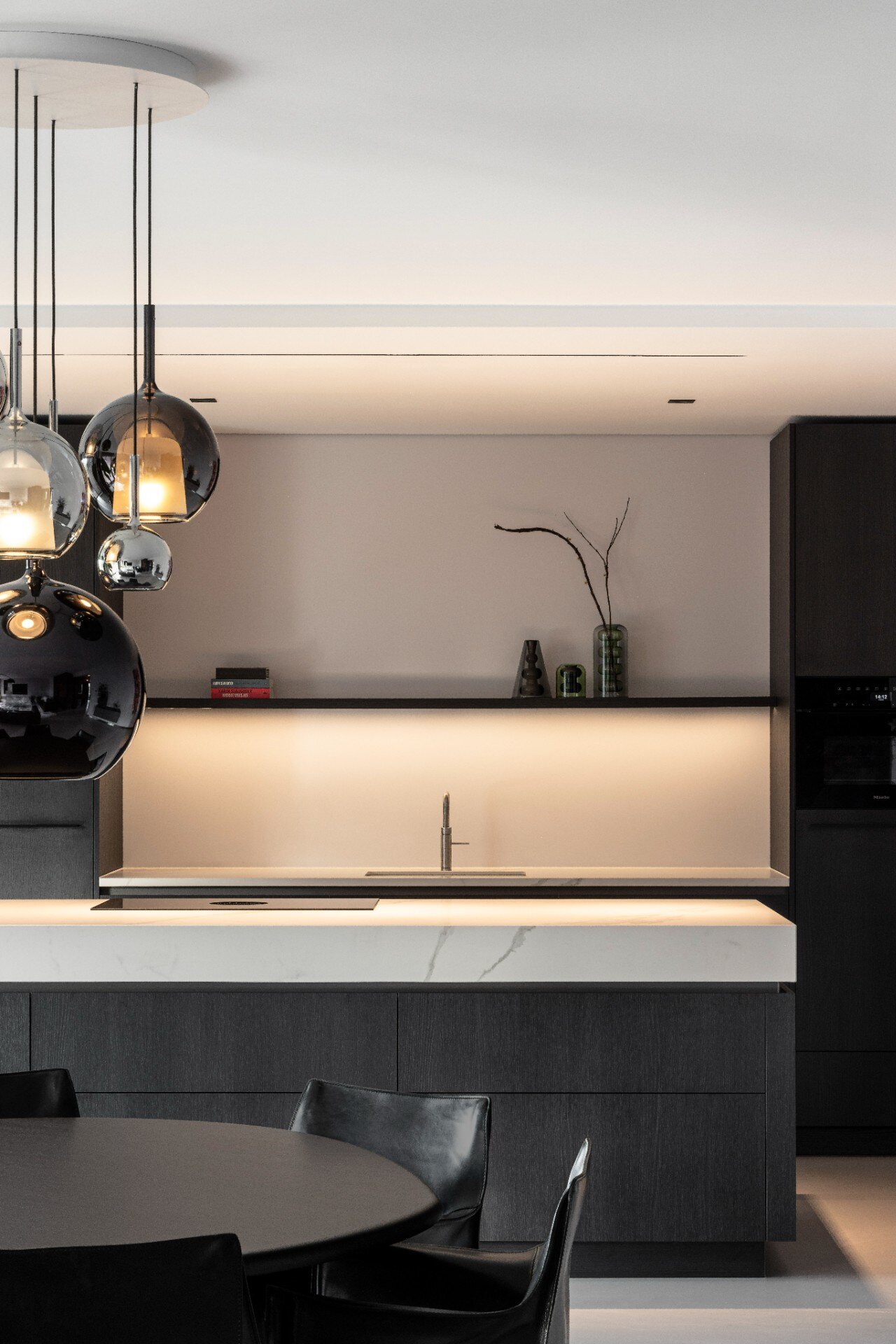
The minimalist kitchen design is immediately visible in the way the project is framed. Dark wooden cabinets without handles define the kitchen’s silhouette, their sleek surfaces extending uninterrupted beneath soft indirect lighting. The contrast between the deep tones of the cabinetry and the light-toned walls creates a measure of spaciousness that outlines the room’s geometry.
minimalist kitchen design as the architectural starting point
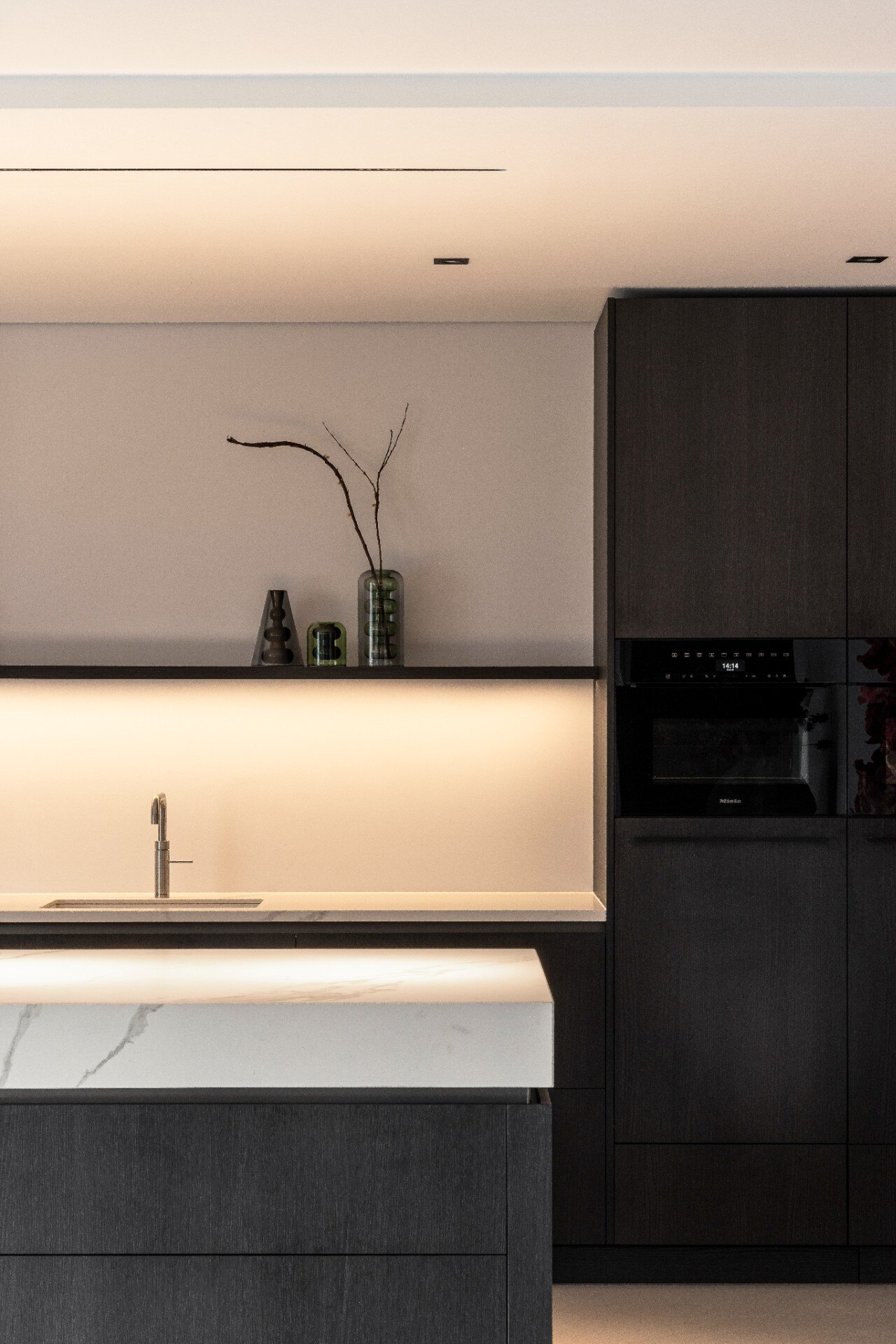
The kitchen island’s broad tabletop and adjacent countertop present a marble-inspired finish. Its pale veined surface breaks the darkness with delicate variation, supporting both functional workspace and visual interest. The island centers the layout, offering a defined area for preparation and interaction.
Integrated Appliances Blur Boundaries
Black appliances seamlessly fit into the cabinetry, their flat fronts concealing equipment while preserving the minimalist ethos. The induction cooktop appears as an inset on the marble-look island, eliminating raised edges. A sink and faucet placed centrally along the wall countertop maintain the clean geometry of the design.
Japandi Style Shapes Atmosphere
The kitchen’s design echoes Japandi principles, merging Japanese restraint with Scandinavian clarity. The arrangement avoids clutter, with linear surfaces and floating fixtures like a narrow shelf holding select decorative pieces. This shelf outlines the upper volume and carries subtle LED lighting beneath, lending a gentle glow that shapes the dusk-to-dawn mood.
Floating Shelf Adds Lightness
Mounted without visible supports, the shelf showcases a few objects and dried botanicals, reinforcing a sense of calm. The indirect illumination installed underneath accentuates textures without glare, drawing attention to the clean lines and muted colors.
Colorful Wall Artwork Provides Contrast
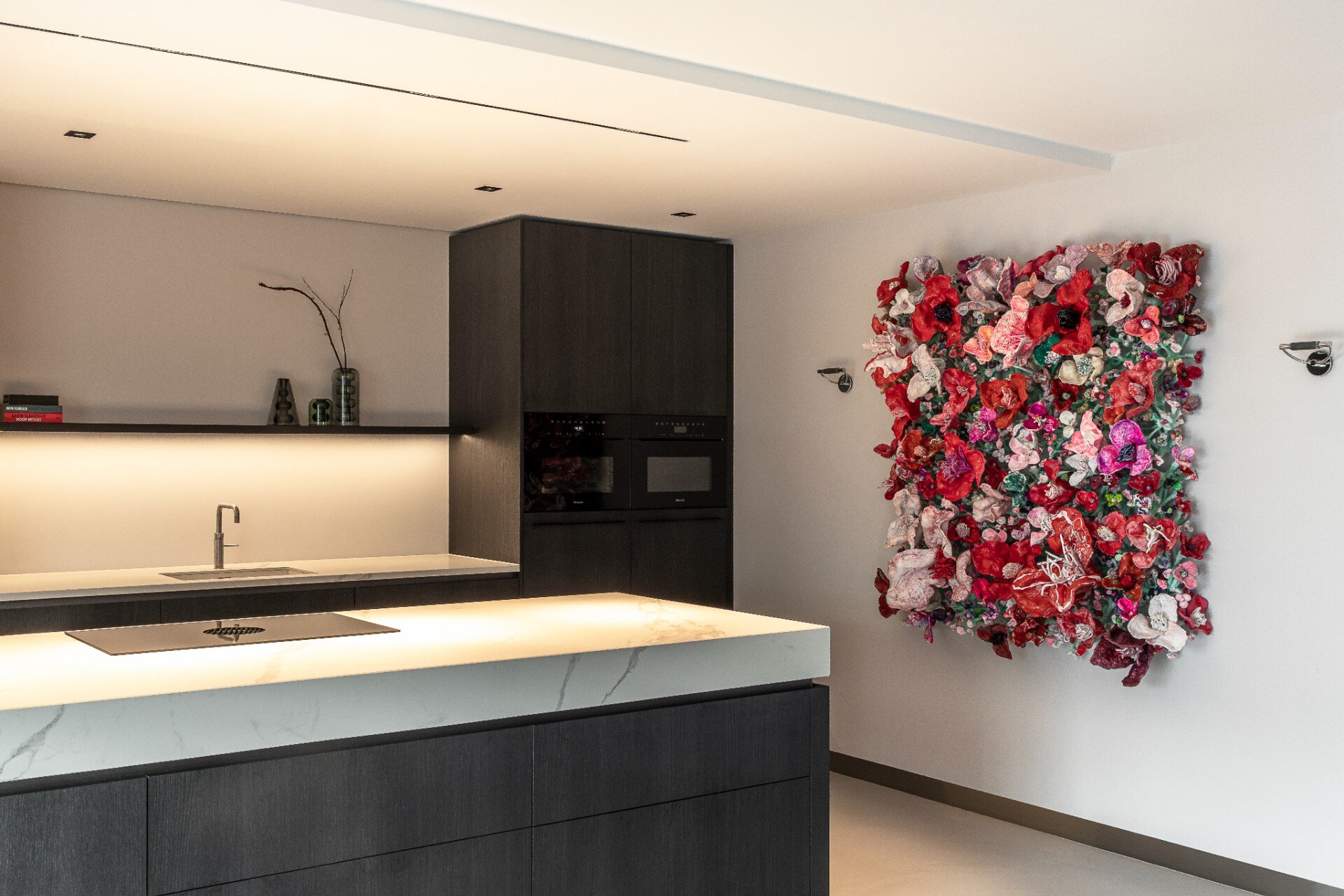
Facing the main cooking area, a textured installation in shades of red punctuates the subdued palette. Its dimensionality introduces a dynamic element, offering a tactile counterpoint to smooth surfaces while respecting the understated nature of the space.
Dining Corner Complements Kitchen Design
Near the island, a round black table with leather upholstered chairs creates an intimate dining nook. The arrangement balances solidity and softness, while the curved lines of the furniture slightly soften the otherwise rectilinear volume surrounding it. Drapery in neutral gray tones controls natural light influx and reduces harsh glare.
Material Choices Define Spatial Experience
The matte finish of the floor reflects light gently, steering attention upwards to the rich wood cabinetry and polished surface of the island. The disparate textures—from dense wood grain to smooth stone-look finishes—compose an environment that engages tactility and visual rhythm. That makes the minimalist kitchen design part of the architectural character rather than a loose finish.
Light Becomes a Design Element
Subtle indirect LED strips underneath the floating shelf and along the cabinets produce layered lighting that responds to daytime shifts. This strategy avoids dramatic fixtures, instead relying on the interplay between shadows and light to enhance depth and interest.
Symmetry Emphasizes Order and Calm
The layout reveals deliberate symmetry, especially in cabinetry alignments and countertop edges, fostering a sense of order. The balance between vertical and horizontal surfaces structures the space without interruption, reinforcing the minimalist approach.
Details Elevate Functionality Without Ornament
Hardware is minimized: absence of handles keeps fronts flush and reduces visual distractions. The inbuilt faucet’s slim silhouette preserves the lines of the marble-look counter, and subtle gaps allow functional opening without compromise.
Visual Pacing Through Layered Volumes
The kitchen orchestrates volume and plane, from low-lying island to floating shelf and vertical cabinets. This layering attends to human scale while offering a measured progression of heights that guide eye and movement.
Materials Reflect Light to Broaden Space
The pale wall and ceiling finishes reflect ambient light, supporting the darker elements instead of competing with them. This balance ensures the kitchen feels open, its surfaces quietly resonating with each other.
Arrangement Prioritizes Uncluttered Movement
The room design anticipates circulation with clear unobstructed zones. The kitchen island functions both as workspace and subtle divider between cooking and dining, easing flow without partition or enclosure.
Color Palette Maintains Restraint and Depth
A restrained chromatic scheme—dark wood, marble white, black accents, muted grays—avoids visual noise while creating a layered environment. The inclusion of the red-hued wall installation introduces a calibrated burst, allowing a controlled focal point. That makes the minimalist kitchen design part of the architectural character rather than a loose finish.
Want to see more of The Kitchen Art Studios? View the page of The Kitchen Art Studios for even more great projects and company information.

.png)