








Inspiratie voor een minimalistische woonkamer met houtaccenten
The living room fireplace ideas is immediately visible in the way the project is framed. Daylight seeps into the room through large windows, casting soft shadows across walls painted in gentle shades of off-white and pale gray. Against this subdued backdrop, a fireplace stands quietly framed by panels of walnut, its grain a landscape of subtle shifts in color and texture. The wood’s warmth extends seamlessly into custom cabinetry, forming both vertical and horizontal elements that establish a measured rhythm within the living space.
living room fireplace ideas as the architectural starting point
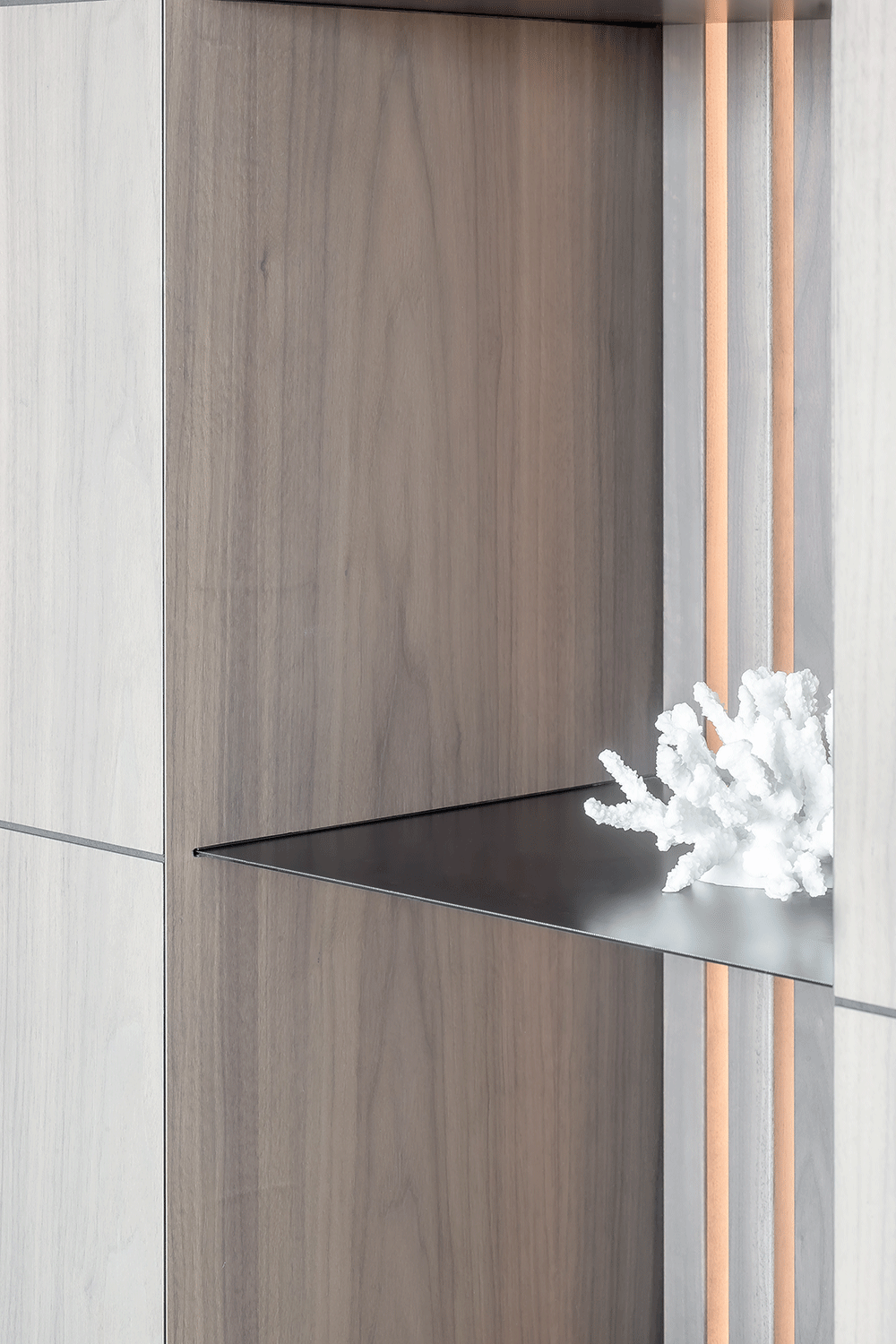
Beyond framing the fireplace, walnut surfaces reveal knots and linear patterns that vary under changing light. The wood’s finish is smooth yet tactile, inviting the eye to trace its natural irregularities. Precise mitred corners in the cabinetry reinforce a clean-lined geometry, contributing to a calm visual order without interrupting the material’s organic quality.
Furniture Shapes that Encourage Clarity
Seating sits close to the floor, wrapped in fabrics that echo the room’s neutral palette. Sofas and chairs have simplified contours, avoiding excess ornament to keep sightlines open. Tables scattered through the space rest on thin, squared legs with austere rectangular surfaces, their light visual weight preserving roominess even as they serve practical functions.
Neutral Tones That Support Material Voices
The walls and ceiling wear muted hues with matte finishes that soften reflected light, setting a calm stage for the interplay of materials. Flooring presents a lightly textured surface in pale tones, diffusing illumination to avoid reflections that break spatial continuity. This restrained palette reinforces the room’s quiet focus on materiality rather than color vibrancy.
Blue Steel Details as Cool Accents
Subtle hardware elements — curtain rods and cabinet pulls— arrive in matte blue steel, providing a cool contrast without overwhelming warmth. The cabinetry’s handleless fronts feature recessed channels that align along walnut planes, preserving uninterrupted wood expanses while hinting at function.
Multi-Layered Lighting Revealing Texture
Hidden LED strips beneath shelving surfaces cast indirect glow, bringing forward the nuanced grain of the wood and the gentle veins in stone accents. Adjustable spotlights concentrate illumination over the hearth and seating, shifting between intimate moments and more social settings. This layered approach enhances the room’s depth without adding visual clutter.
Layout Centered on the Hearth
Furniture arrangement naturally guides movement toward the fireplace, which holds spatial authority without dominance. Adjacent areas flow without physical barriers, linked through a consistent, subdued palette and materials. Subtle shifts in ceiling height and floor finish mark functional zones, maintaining openness while distinguishing individual areas.
Stone Surfaces as Textural Counterpoints
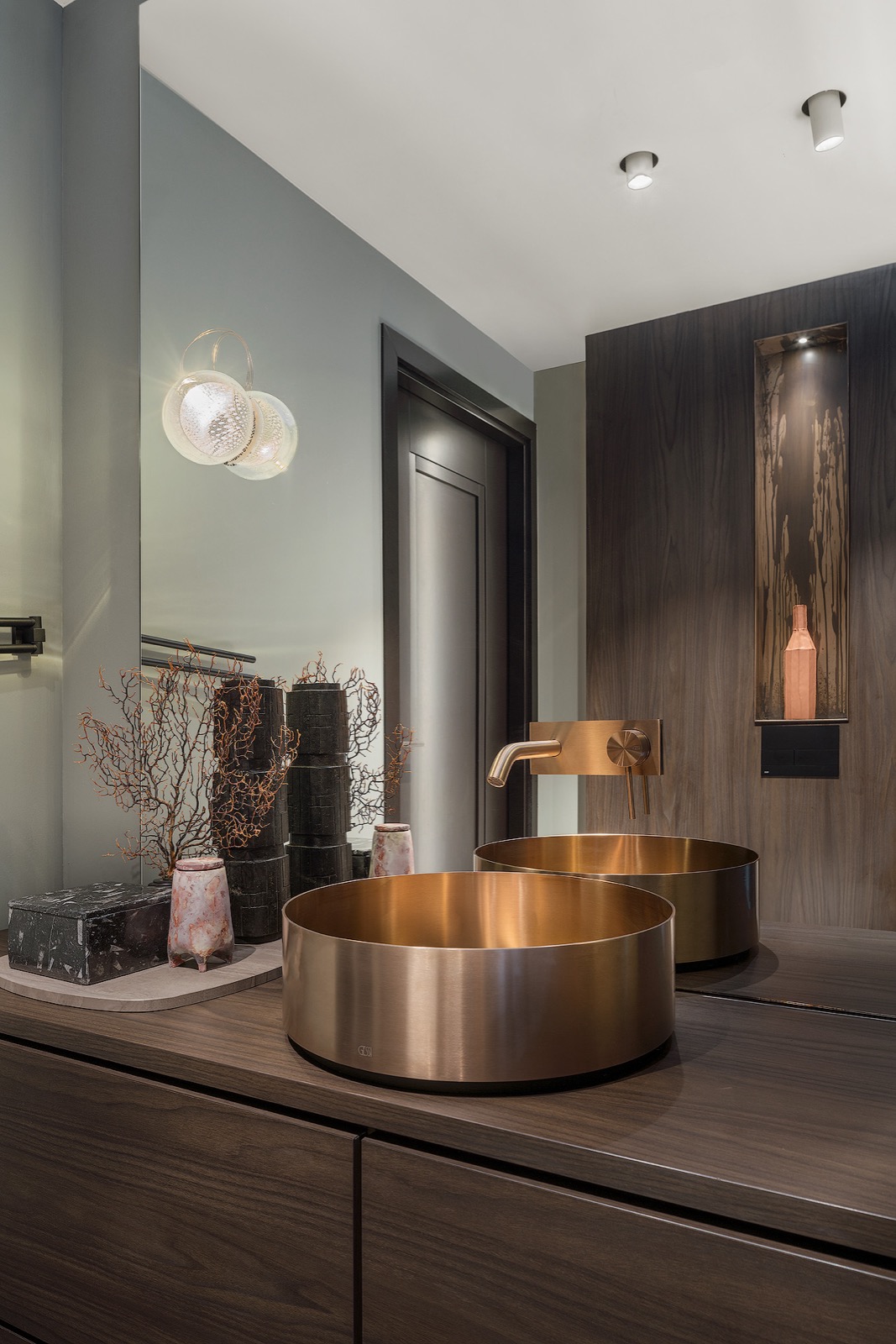
Stone appears selectively — on shelving and counters — its smooth, cool surfaces setting off the warmth and tactile richness of walnut. These slabs add a grounded textural element, emphasizing natural material contrasts while avoiding ornamental excess.
Integrated Storage Keeping the Room Uncluttered
Cabinetry fits flush with wall planes, precise joints and edges sustaining clean lines. This built-in storage allows daily objects to remain out of sight, maintaining clear sightlines across the living area. The wood finish continues without interruption, reinforcing a visual calm.
Soft Textiles Providing Subtle Contrast
Sparse cushions and a low walnut media console introduce gentle softness against harder materials. Fabric tones harmonize with wall colors, providing tactility that enriches the space without pulling attention from architectural and material details. That makes the living room fireplace ideas part of the architectural character rather than a loose finish.
Material Coordination Creates Depth
The crafted interplay of wood, stone, metal, and fabric unfolds across varied textures—matte, polished, and rough—that catch light differently throughout the day. This composition roots interest in authentic surfaces, avoiding ornamental embellishments or artificial effects.
The Fireplace’s Quiet Authority
The hearth occupies modest space but acts as the room’s focal point. Its walnut surround extends the wood’s tactile qualities, subtly framing views and light. Positioned deliberately, the fireplace shapes traffic flows and seating zones, bringing coherence without theatrical display.
Architectural Details Emphasizing Structure
Transitions in ceiling planes use discreet detailing, preserving geometric simplicity. Changes in floor materials mark shifts in use without imposing boundaries. The built-in elements use clean lines that coexist with wood’s natural irregularities, distinguishing zones through proportion and surfaces alone.
Continuity Across Connected Spaces
From the living area, adjoining rooms echo the restrained palette. Walnut elements and muted wall shades flow into cabinetry and fixtures, ensuring visual unity. Hardware remains subtle in profile and finish, blending into fixtures without distraction.
A Composition Focused on Subtlety and Texture
This interior balances muted colors and natural materials to create a living room where texture and spatial clarity take precedence. The fireplace anchors the room quietly yet distinctly, inviting contemplation of surfaces, natural light, and form without competing visual noise.
Natural Materials Defining Character
Warm walnut wood and cool stone create tactile moments across the space. Walnut grain offers a rhythmic element against plain walls, avoiding decorative excess. The stone slabs introduce irregularity and coolness that encourage the eye to engage with material contrasts.
Storage Aligned with Material Simplicity
The built-in storage units integrate seamlessly with walnut paneling, providing concealed space for daily essentials. Their uninterrupted finish keeps surfaces clear and preserves the visual calm that defines the interior.
Spatial Flow Shaped by the Hearth
Seating arcs gently around the fireplace, allowing conversation centered on the hearth without impeding movement. This arrangement emphasizes how deliberate spatial planning supports both social interaction and circulation.
Lighting Accentuating Material Qualities
Layered lighting balances functional needs with material expression. Ambient sources reveal wood and stone textures by emphasizing subtle shifts in grain and vein, while accent lamps highlight storage and shelving hardware. This nuanced lighting scheme shifts mood gently over the course of a day. That makes the living room fireplace ideas part of the architectural character rather than a loose finish.
Want to see more of Hubbers interieurmakers? View the page of Hubbers interieurmakers for even more great projects and company information.



.png)
NEW 2026 Jubileum Edition The Best Interior Designers Benelux
Order Now


NEW 2026 Jubileum Edition The Best Interior Designers Benelux
Order Now


NEW 2026 Jubileum Edition The Best Interior Designers Benelux
Order Now


NEW 2026 Jubileum Edition The Best Interior Designers Benelux
Order Now


