






Modern care center met gevelzonwering
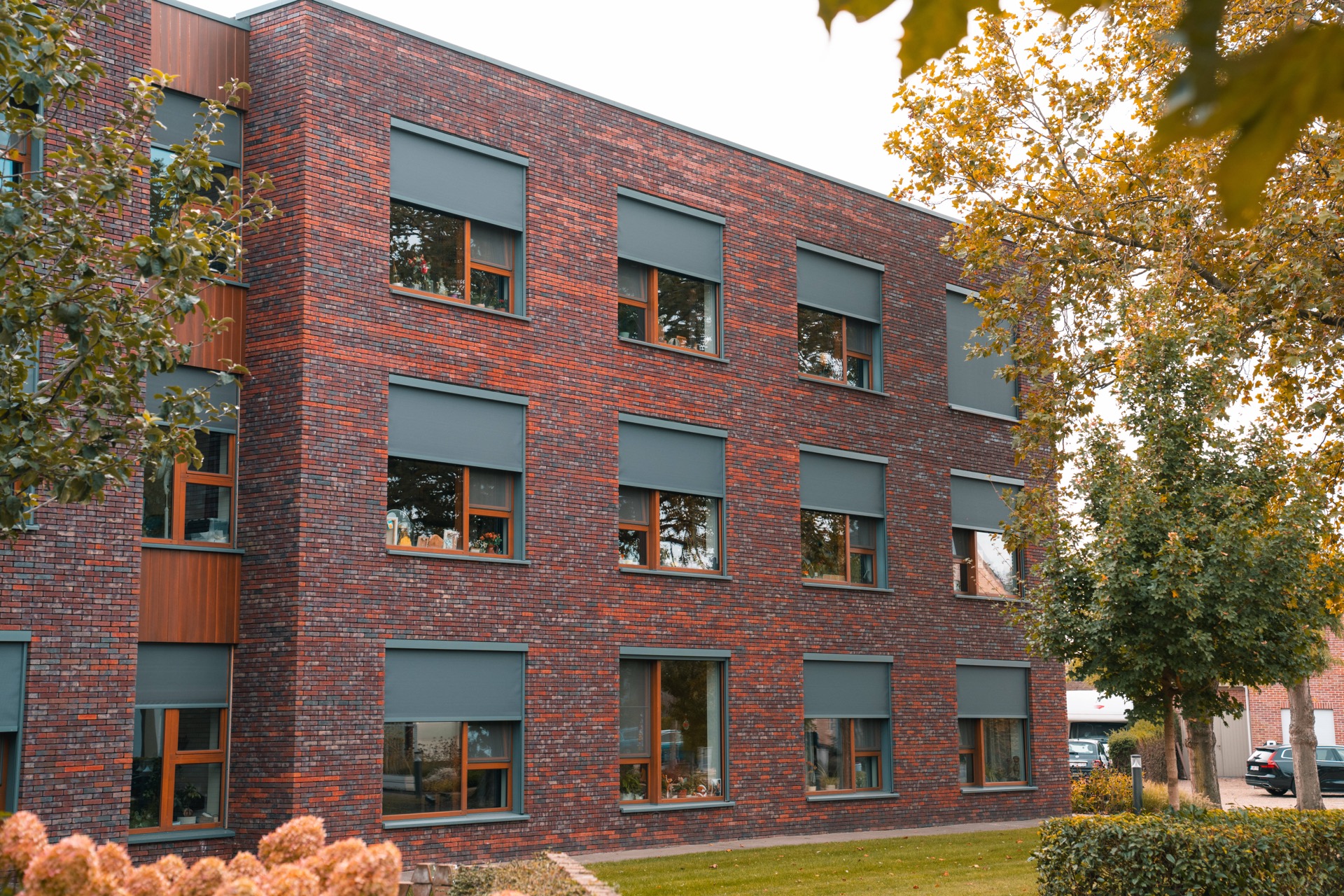
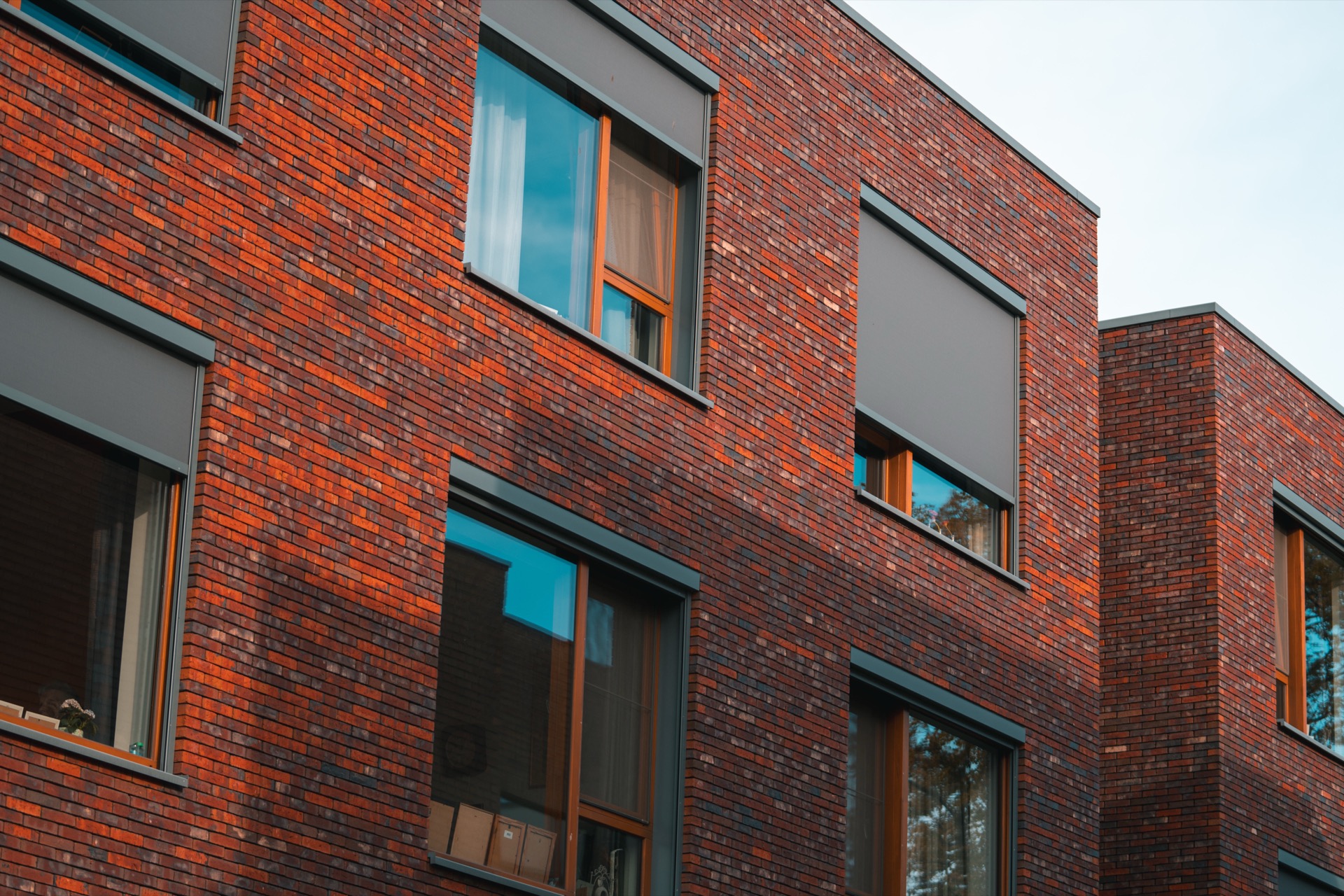
The care center sun shading is immediately visible in the way the project is framed. The facade presents a series of tall windows with gray metal frames set within a rich brick envelope, creating a layered surface where solidity meets transparency. These large openings, each framed with precise brickwork, allow substantial daylight into rooms often prone to overheating. More than a hundred motorized fabric screens are installed behind the windows, hidden within the frames and ready to adjust the amount of incoming sun based on orientation and time of day.
care center sun shading as the architectural starting point
The brick facade is more than a static shell; subtle variations in brick shades and placement produce a rhythmic texture that changes as light shifts. Horizontal brick courses alternate with vertical wood panels that punctuate the facade, introducing natural warmth and breaking up brick expanses. These materials interact by contrasting tactile roughness with smooth metal window frames and the softness of fabric screens.
Integrated Sun Protection Enhances Daily Comfort
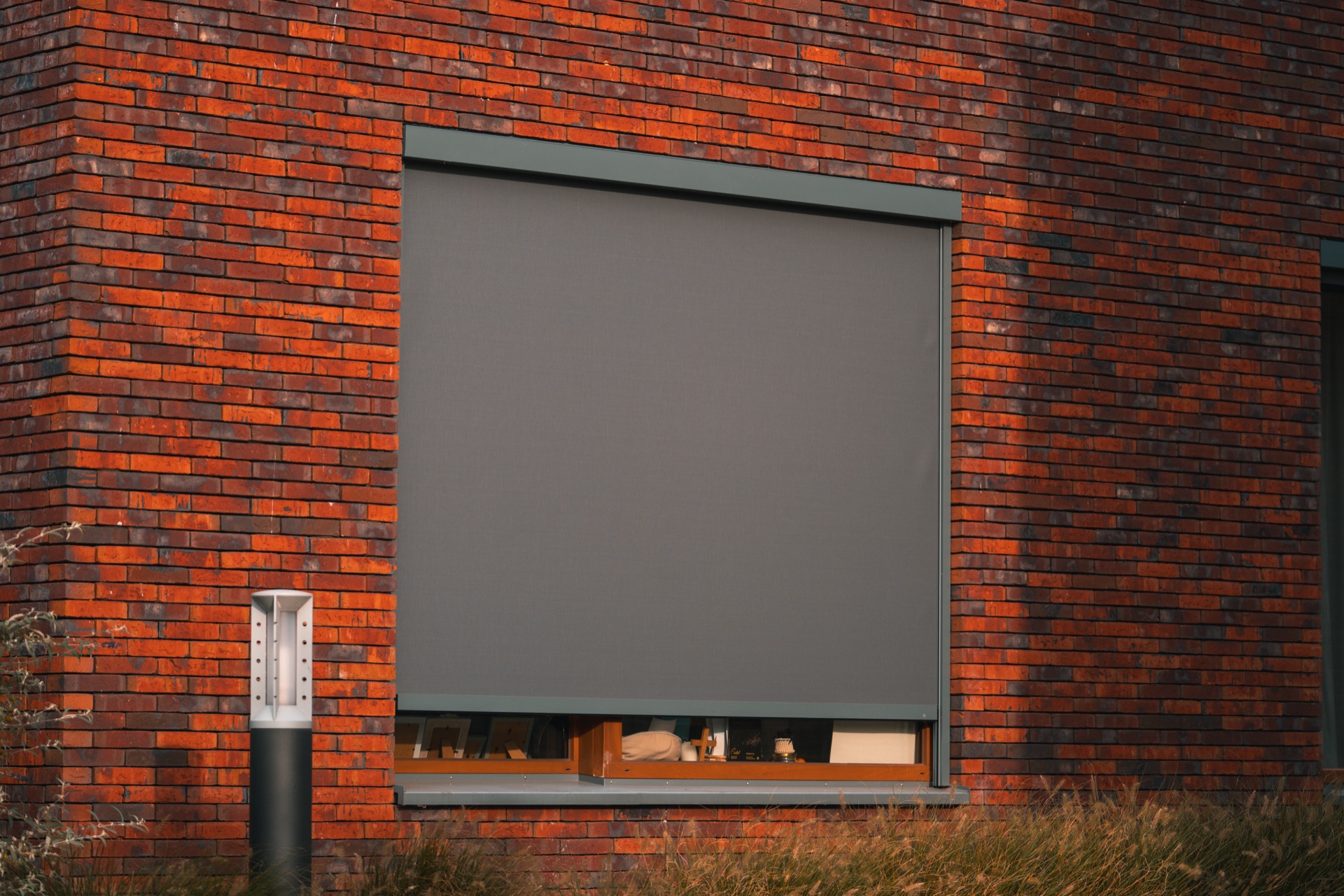
Within the framework of each window, Fixscreens deploy as a refined filter between interior and sun. These fabric layers temper glare and solar heat without fully obscuring views or daylight. The screens are motorized and individually operable, enabling fine-tuned adjustments tailored to each room’s sun exposure. This design embeds sun shading as an active facade component rather than a mere add-on.
Coordinated Window and Shading Systems
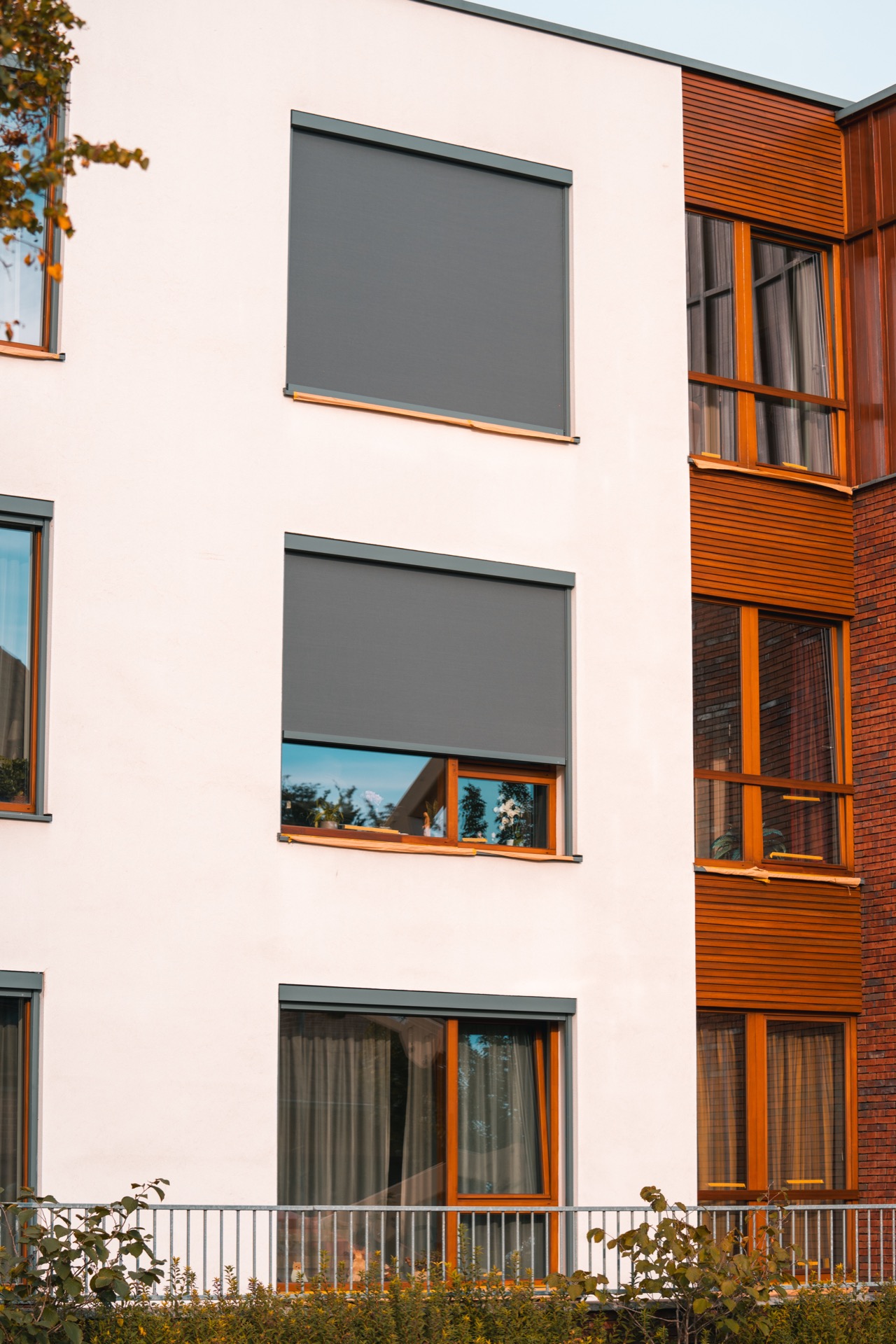
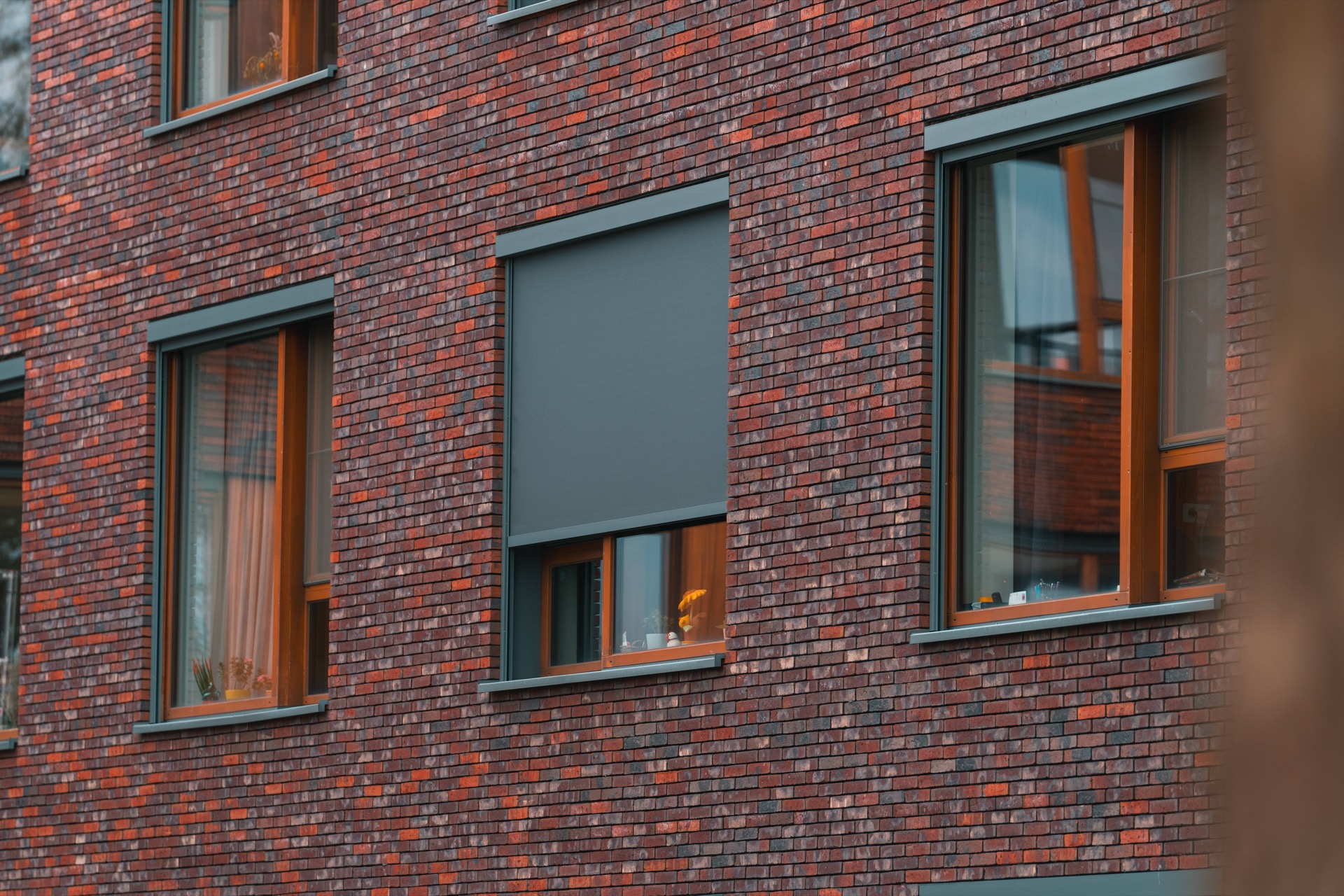
The coordinating use of roll-up shutters within the metal frames offers supplementary control during intense sunlight periods. The precision in aligning shutters, screens, and window edges results in a facade where shading layers overlay each other without disrupting the clean lines of the building’s exterior. Metal profiles are slim and subtly recessed, emphasizing material transitions with gentle edges.
Responsiveness to Environmental Conditions
The care center accommodates varying solar orientations through its network of more than a hundred motorized screens. Each unit can respond independently, adapting to changing sunlight angles and interior needs. This flexibility reduces heat accumulation inside while maintaining visual connectivity to the outdoors, transforming the facade into a dynamic interface with its environment.
Material Contrasts Define Façade Character
Warm brick hues set the tone for the building’s shell, complemented by the cool gray of metal frames and shutters. Vertical wooden panels interspersed between brick sections interrupt the horizontal rhythm, adding a natural element that contrasts texture and color. These material interactions establish a measured hierarchy and visual depth across the facade’s surface.
Large Windows Frame Views and Light
Floor-to-ceiling window openings anchor the facade’s composition, their generous proportions inviting ample daylight while coordinating with sun shading elements. Surrounding brick columns and horizontal ledges frame the glass expanses with clear lines that emphasize verticality and rhythm. The window surfaces reflect light differently throughout the day, enlivening the building envelope.
care center sun shading as the architectural starting point
By combining porous brickwork and adaptive shading, the facade acts as a mediator between outdoors and interior settings. Sunlight filtered through fabric screens traces delicate patterns on wood and masonry, highlighting textures and material contrasts. Shadow plays over the varied surfaces punctuate time’s passage and animate a building that responds to its climate conditions. That makes the care center sun shading part of the architectural character rather than a loose finish.
Technical Refinement in Shading Installation
The installation of over one hundred Fixscreens demanded exact coordination between mechanical systems and architectural materials. Each screen fits within the window frame’s profile with minimal intrusion, preserving transparency and detail. The shading equipment integrates without visible disruption to the brick and wood surfaces, revealing a balance between utility and craftsmanship.
care center sun shading as the architectural starting point
Subtle sunlight filtered by fabric screens creates shifting shadow lines on the building’s surfaces. These ephemeral patterns emphasize the relief created by brick joints and wooden panels while softening the harshness of direct sun. Inside, this interplay of light supports visual comfort without sacrificing natural brightness.
Precise Material Transitions and Edges
Close observation shows carefully detailed edges where materials meet: bricks align precisely against metal frames, wooden panels sit flush with surrounding masonry, and shading screens nest within slim profiles. These transitions avoid abruptness by chamfering corners or recessing components slightly, sustaining a measured visual scale throughout the facade.
Layered Envelope Balances Form and Function
The assembly integrates brick, wood, metal, glass, and fabric into a systematic facade that attends to structural demands, climate control, and visual articulation. Each material contributes specific qualities such as mass, texture, durability, or translucency. The active shading system overlays this composition with dynamic adaptability, creating a building shell that interacts continuously with environmental factors.
Resources for Further Exploration
Fixed Screens Designed for Optimal Sun Control
Over one hundred fixed screens are installed on the building’s windows, fitted with precise measurements to provide targeted shading. These screens reduce glare and limit direct sunlight penetration, helping maintain moderate indoor temperatures during periods of intense sun exposure. Their placement aligns carefully with the window openings, maintaining visibility while enhancing visual privacy.
Material Interaction Between Brick and Wood Surfaces
The facade combines red brickwork with wooden panels, creating a tactile surface that breaks up the building’s mass. The variation in brick tones and the texture between the smooth wood and rough masonry add subtle depth and rhythm to the elevation, emphasizing structural geometry without excessive detailing.
Window Configuration and Shading Integration
Large windows with gray metal frames are arranged to maximize daylight and external views while integrating shading devices. The metal shutters and fixed sun screens follow clean, sharp lines that complement the regularity of the brick pattern. Reflections on the glass surfaces register the environment, introducing a dynamic character to the otherwise solid facade.
Facade as Buffer in Changing Weather Conditions
Besides controlling sunlight, the layered facade system serves as a buffer to external climate fluctuations. Bricks provide thermal mass, stabilizing internal temperatures, while the wood panels add a layer of visual warmth and break the building’s silhouette. The shading devices adjust the intensity of daylight and heat entering the interior, crucial for spaces that require consistent comfort. That makes the care center sun shading part of the architectural character rather than a loose finish.
Want to see more of Boonen? View the page of Boonen for even more great projects and company information.


.png)