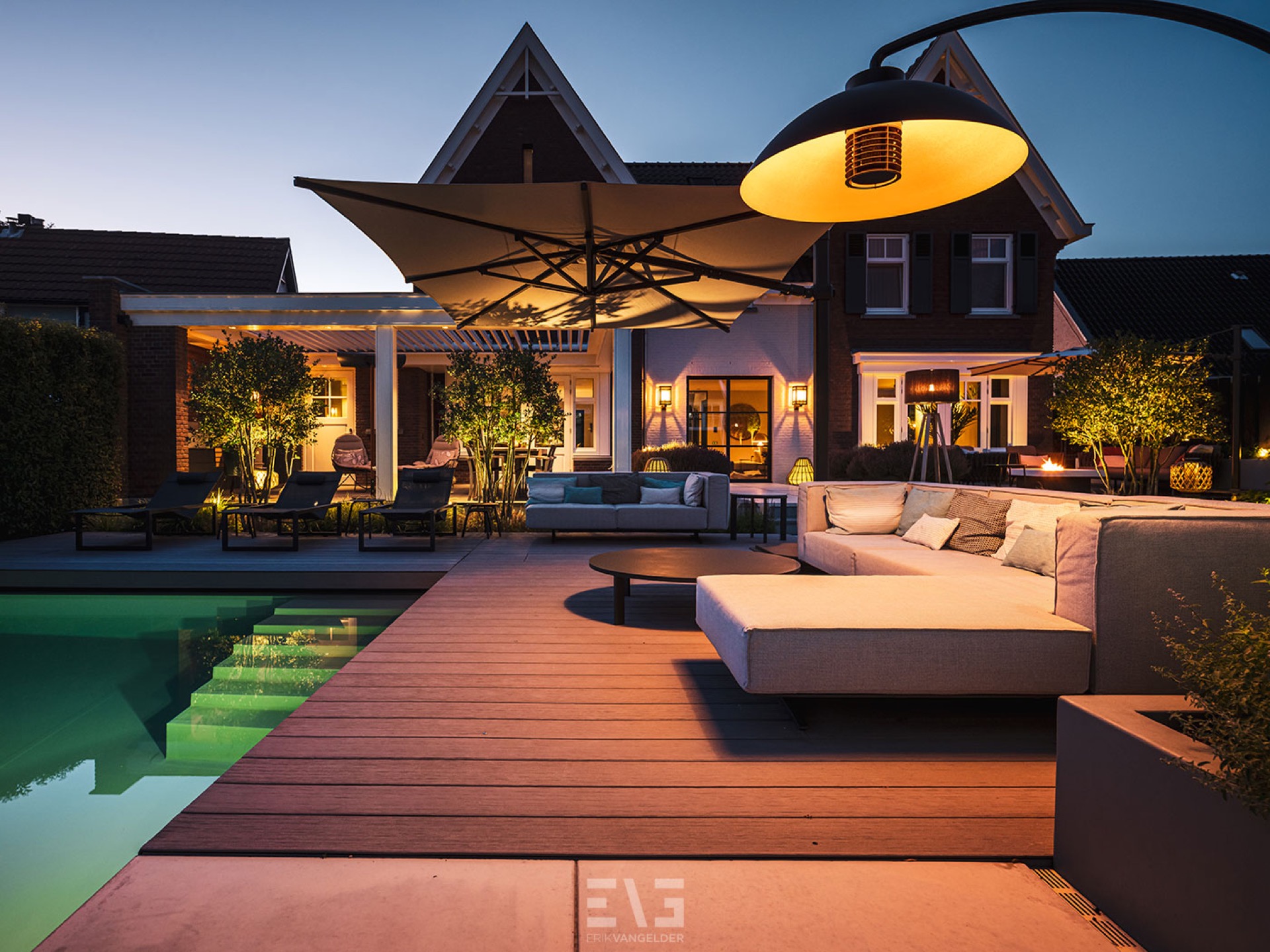







Explore the modern garden cover with adjustable lamellas
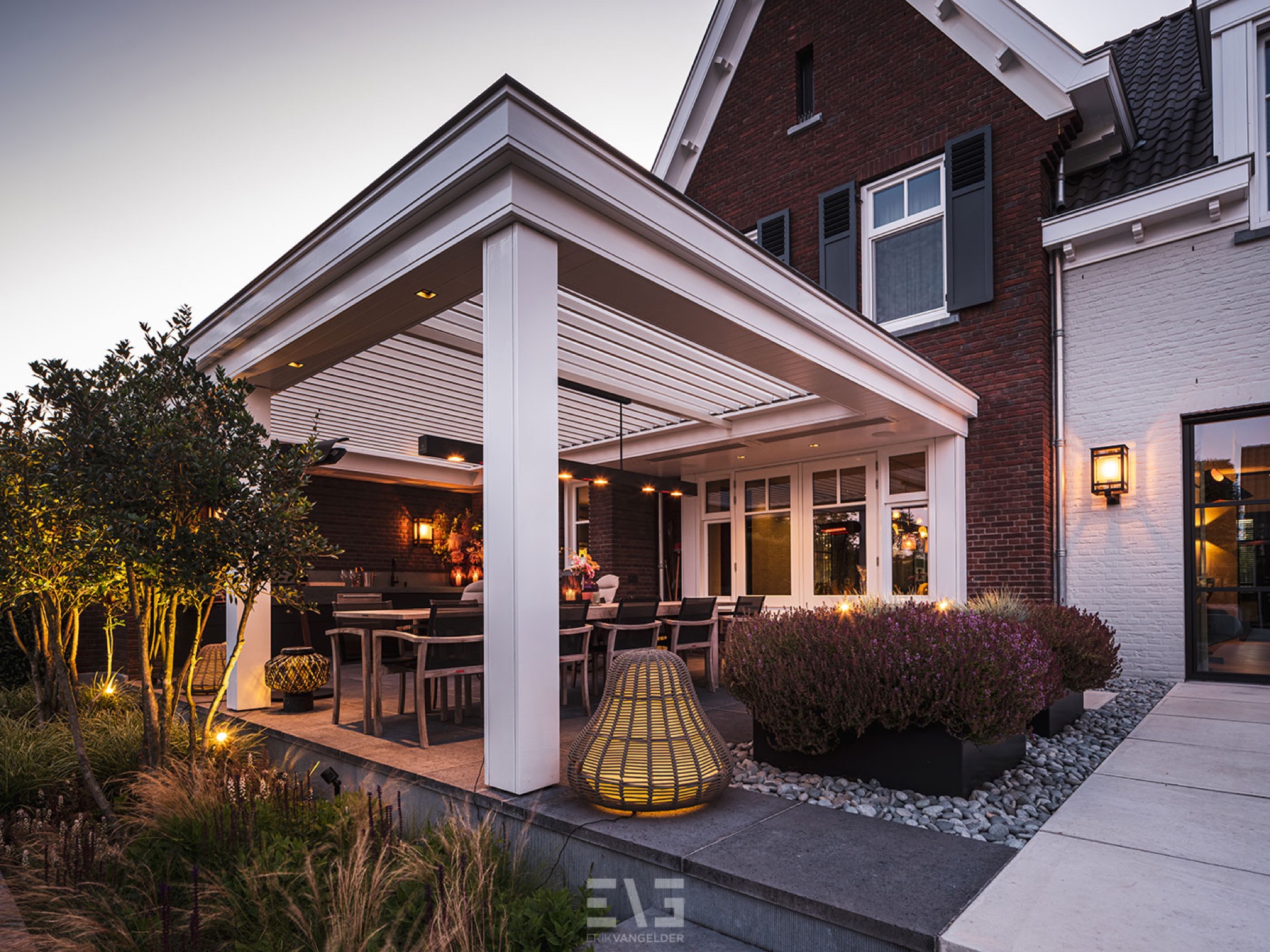
Beneath a finely crafted white aluminium frame, the garden canopy outdoor employs adjustable louvred panels to shape the environment according to the shifting daylight and weather. These lamellas pivot smoothly, enabling the modulation of sunlight and airflow over the poolside terrace. The result is a space that can quickly transform from open sky to sheltered refuge, creating zones that respond precisely to outdoor conditions.
garden canopy outdoor as the architectural starting point
The aluminium louvres tilt through incremental angles, allowing for controlled shading and ventilation. Fully closed, they lock together to form a watertight barrier, protecting the area from rain without interrupting outdoor activities. This adaptability means the terrace remains functional during bright summer sun or unexpected showers.
Material contrasts give texture and grounding
The sleek white aluminium contrasts with the warmth and grain of wood employed throughout the seating and kitchen elements. Expanses of smooth concrete paving anchor the site, presenting a sturdy and tactile platform. Together, the materials articulate a deliberate balance between lightness and solidity, guiding both light reflection and spatial perception.
A kitchen embedded in the outdoor setting
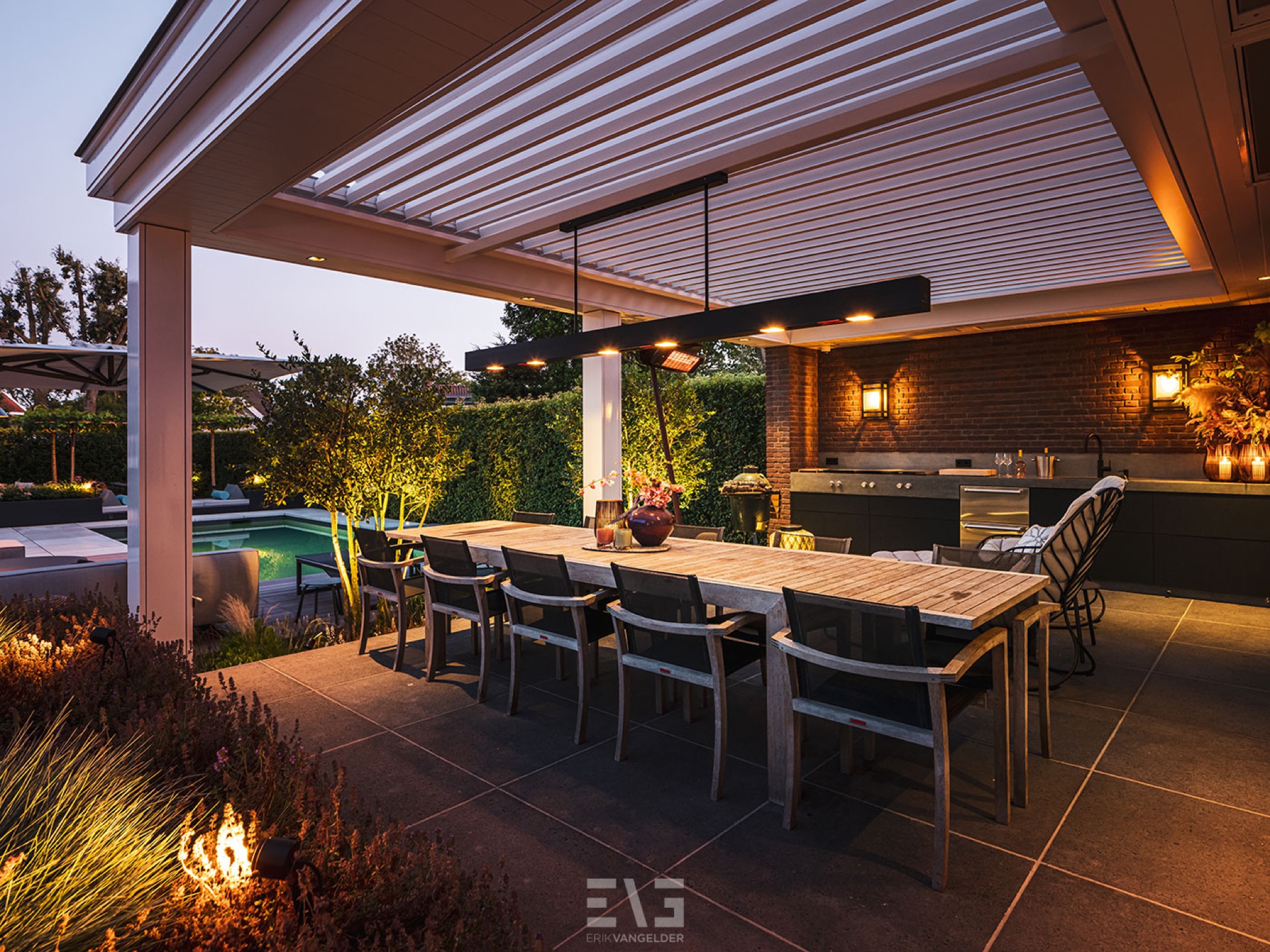
One segment beneath the canopy hosts an outdoor kitchen featuring practical work surfaces and tidy storage compartments. The layout facilitates direct movement between preparation, dining areas, and the pool view. This pragmatic arrangement encourages casual gatherings with a clear flow, enhancing the usability of the garden canopy outdoor.
Furnishing organized for fluid interaction
The terrace furniture combines textile upholstery atop wood and aluminium frameworks that echo the canopy’s color scheme. Seating clusters provide settings for intimate conversation and larger social groups, positioned around a sizeable dining table. This configuration allows a natural transition from dining to relaxation beneath the louvred cover.
garden canopy outdoor as the architectural starting point
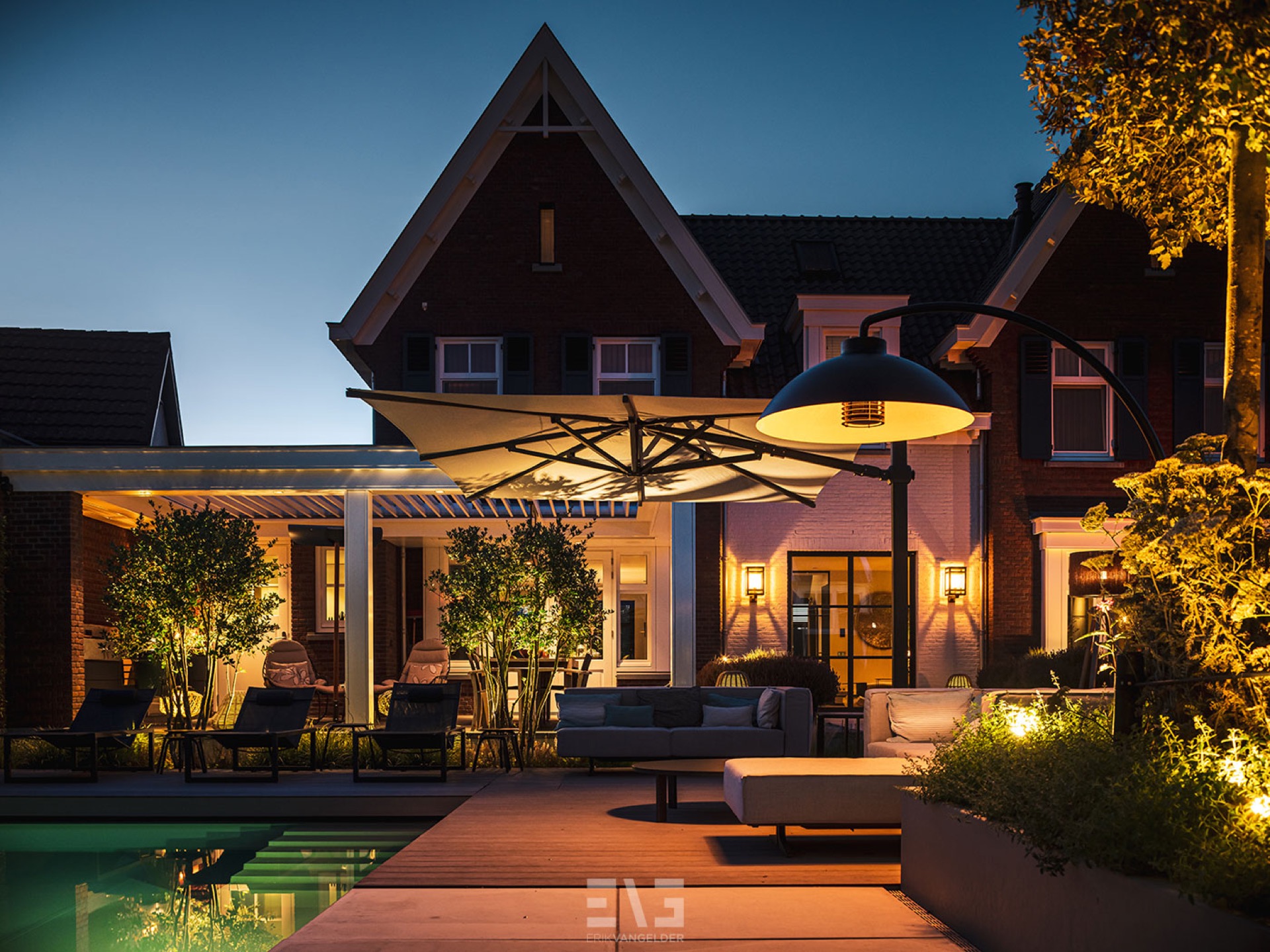
Discreet lighting is incorporated along steps and overhead beams, offering subtle illumination to mark pathways and emphasize material surfaces. The soft, layered glow highlights architectural details without overwhelming the surroundings, inviting residents and guests to move safely and comfortably after sunset.
Transitions from poolside openness to terrace enclosure
Concrete paving near the pool reflects a cooler tone and surface temperature, leading gently into shaded seating areas under the canopy. This progression supports a change in activity from aquatic to leisure use, with repeated lines and structural rhythms guiding vision and movement. That makes the garden canopy outdoor part of the architectural character rather than a loose finish.
Natural ventilation integrated with sun control
The spacing and angle of the lamellas harness natural breezes, encouraging airflow while controlling sun exposure. This passive design avoids reliance on mechanical ventilation or additional shading solutions, allowing users to adjust settings easily to suit atmospheric preferences.
Joinery and finishing detail underscore precision
Close inspection reveals crisp, clean edges and subtle fasteners that maintain structural integrity without visual clutter. Wood components retain natural surface textures, contrasting with the consistent sheen of aluminium profiles. The quality of craftsmanship becomes apparent in these refined details.
Expanding use with multifunctional outdoor rooms
The garden canopy outdoor defines spaces dedicated to cooking, dining, socializing, and quiet repose. Its adaptable form supports prolonged use through changing times of day and weather conditions, integrating the garden as a lively extension of the home.
Structured openness with distinct zoning
Despite its connection to the open air, the canopy’s design segments zones clearly: the kitchen, dining, and lounges each occupy defined areas shaped by roof settings and furniture layout. This spatial organization maintains visual coherence while allowing purposeful separation of activities.
Light interplay enlivens materials throughout the day
Sunlight moves across the aluminium lamellas, wooden surfaces, and concrete flooring, creating shifting patterns of highlights and shadows. These interactions enhance the tactile nature of materials and elucidate the shapes within the canopy, adding visual interest as daylight changes.
Adaptability for seasonal variation
The adjustable roof lets sun in during cooler months and provides shade and rain protection in warmer seasons. This responsiveness upholds functionality year-round, matching the structure’s performance to the evolving outdoor environment.
Design credit: Erik van Gelder That makes the garden canopy outdoor part of the architectural character rather than a loose finish.
Want to see more of Livium? View the page of Livium for even more great projects and company information.


.png)