





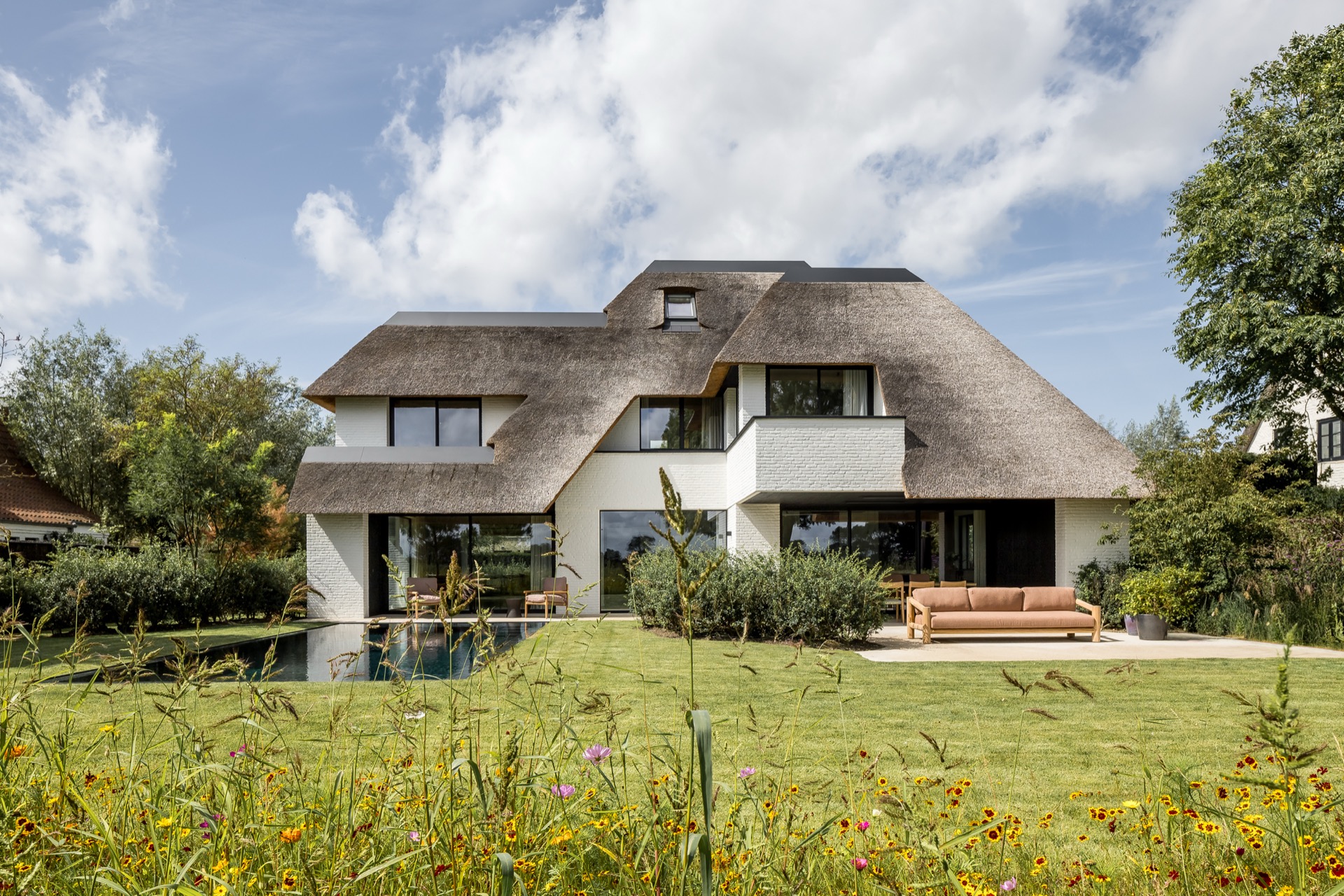
Contemporary house featuring a thatched roof and natural materials
Rising gently above the residence, the thatched roof introduces an organic texture that contrasts with the building’s linear form. Its fibrous surface catches shifting daylight, adding a rhythmic softness that offsets the home’s well-defined volumes.
thatched roof as the architectural starting point
Irregularly spaced vertical wood slats punctuate the facade with varying depth, their grain and knot patterns lending subtle complexity. A base of roughly hewn natural stone grounds the building, while dark metal frames outline windows and doors with precision, creating clear visual boundaries without dominating the surfaces.
Windows that Frame Views and Light
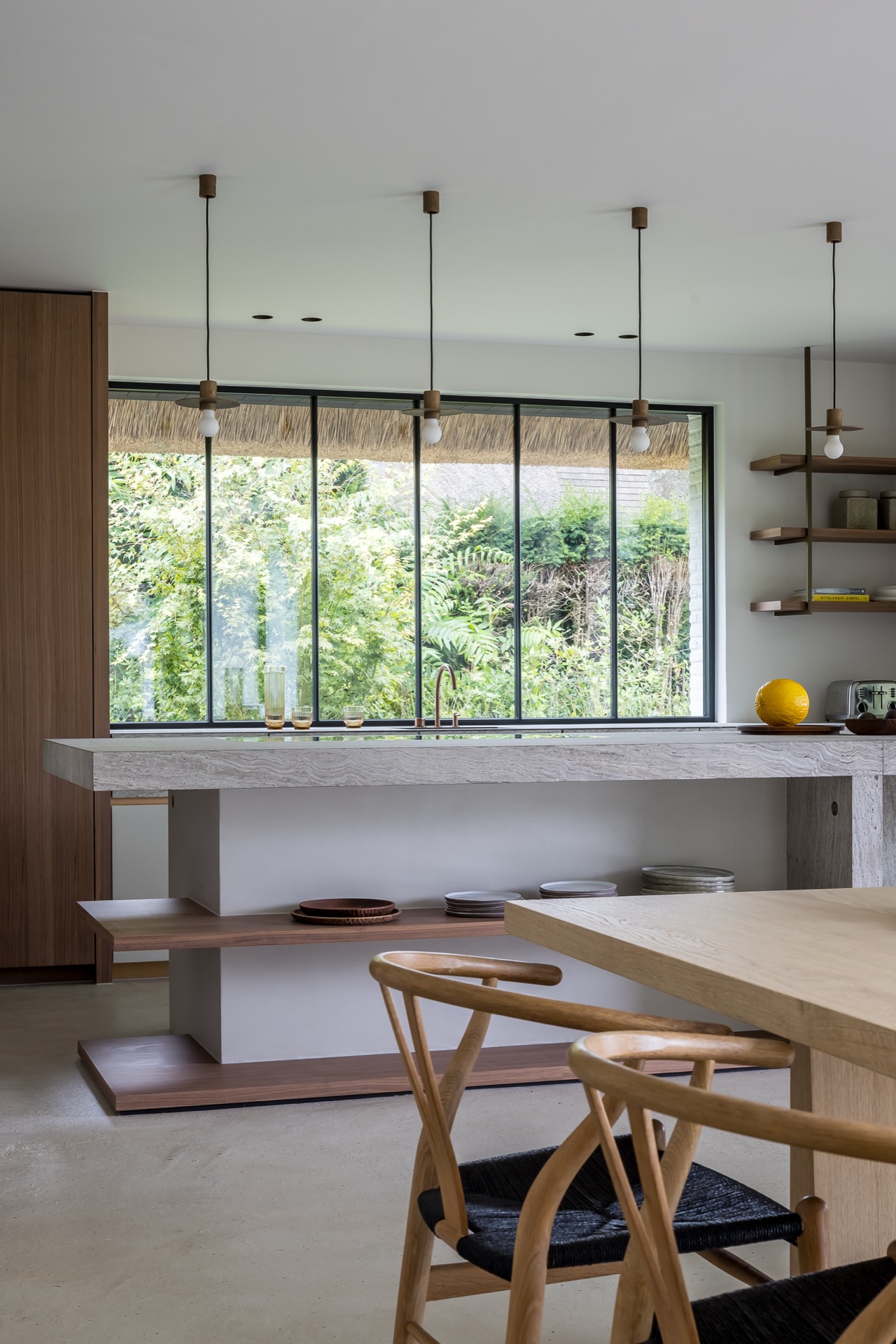
Window openings vary from slender vertical cuts to broader horizontal bands, all framed in matte dark profiles that emphasize form while receding visually. These apertures shape the views outward and introduce natural light that animates the interior surfaces, revealing wood textures and stone details as sunlight moves through the day.
Interior Surfaces Flow Naturally Across Spaces
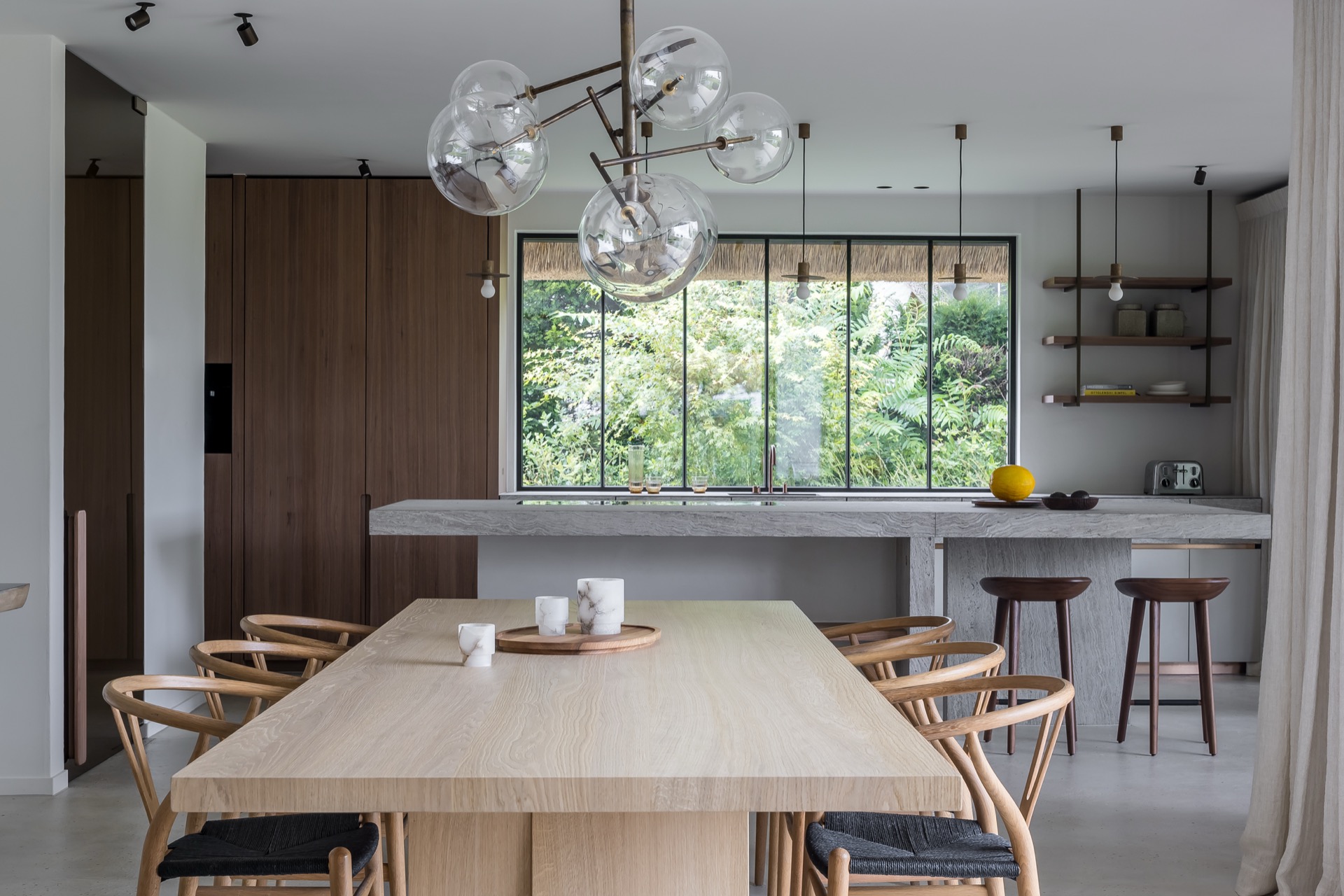
Light-colored wood sheathing unfolds from floors onto select walls, unifying spaces with a consistent tactile presence. Stone forms a contrasting element through its natural veining and rough texture, anchoring the interior without overshadowing the wood’s softness. The kitchen area combines wooden cabinetry with a marble countertop, where subtle veins enhance the surface without ornamental intent.
Open Staircase Connects Floors with Lightness
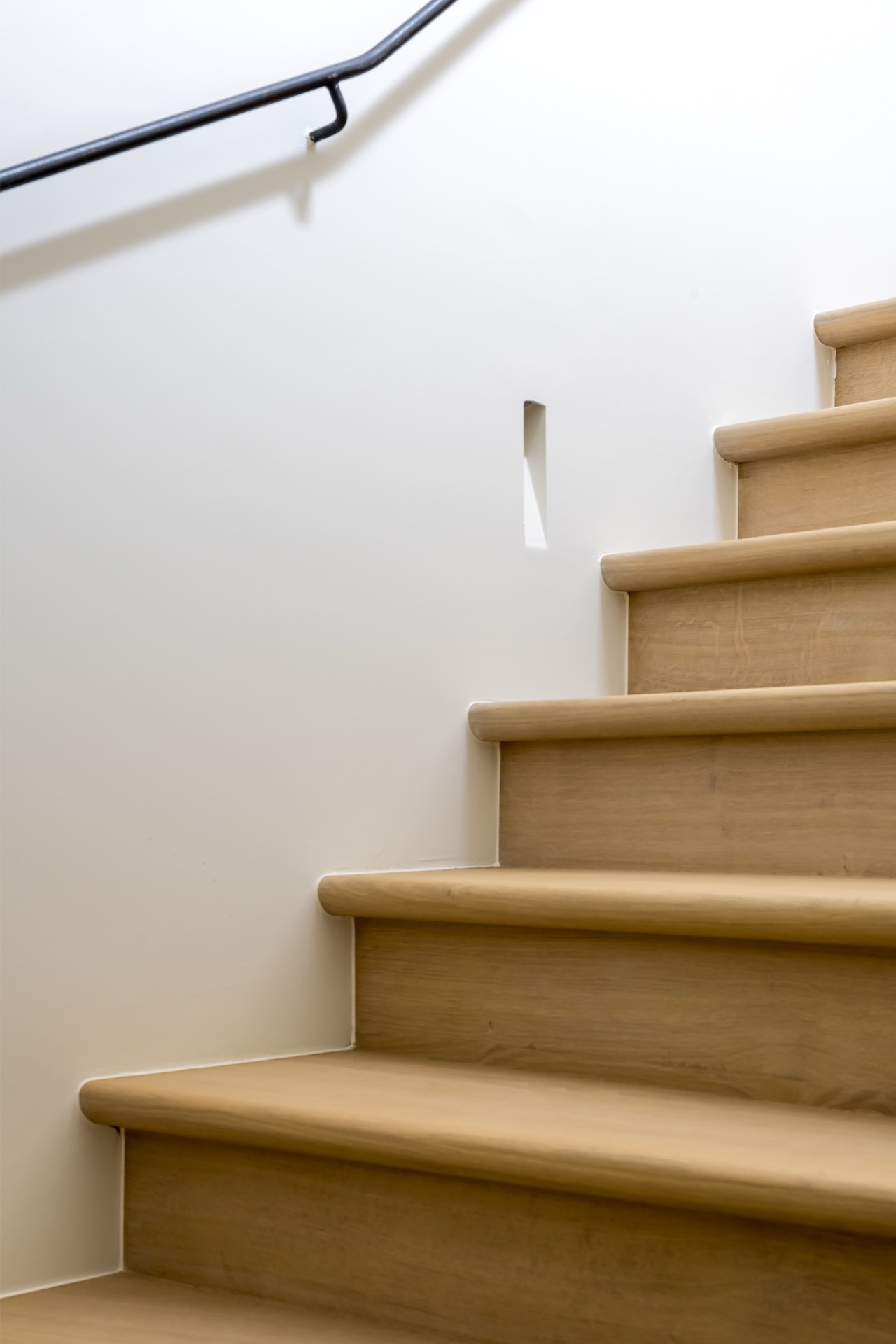
The stairs feature slender wooden treads resting on minimal metal supports, arranged openly to allow daylight to filter freely between levels. This transparency sustains visual connection throughout the home and maintains the flow of natural light without interruption.
Bathroom Features Focus on Materials and Craft
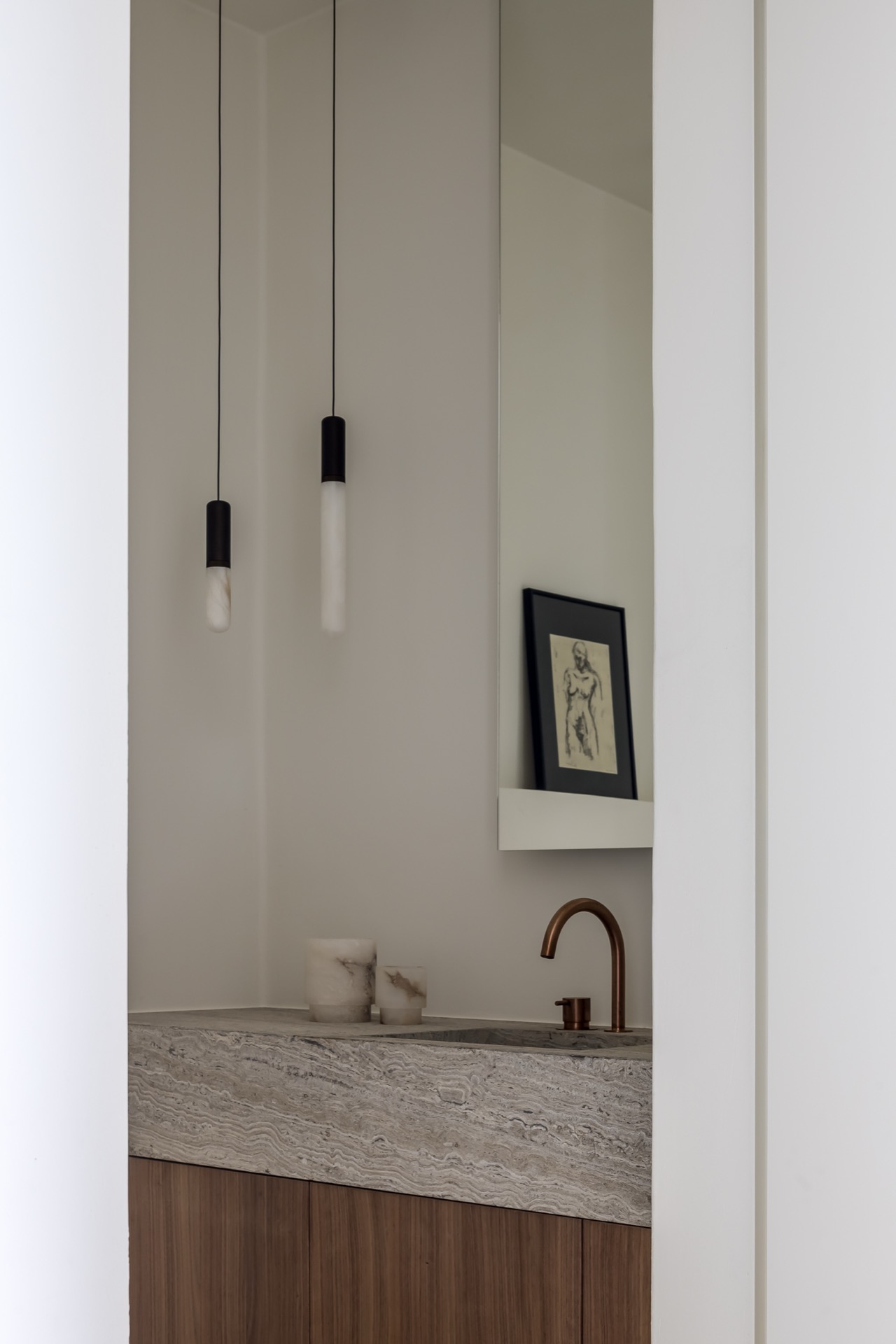
Bathrooms avoid superfluous detail, presenting marble basins with clearly visible vein patterns paired with copper taps whose patina introduces subtle variation. The arrangement centers on the natural qualities of materials and their intersections, creating a restrained yet tactile space.
Living Areas Flow Outside to Stone Paved Terraces
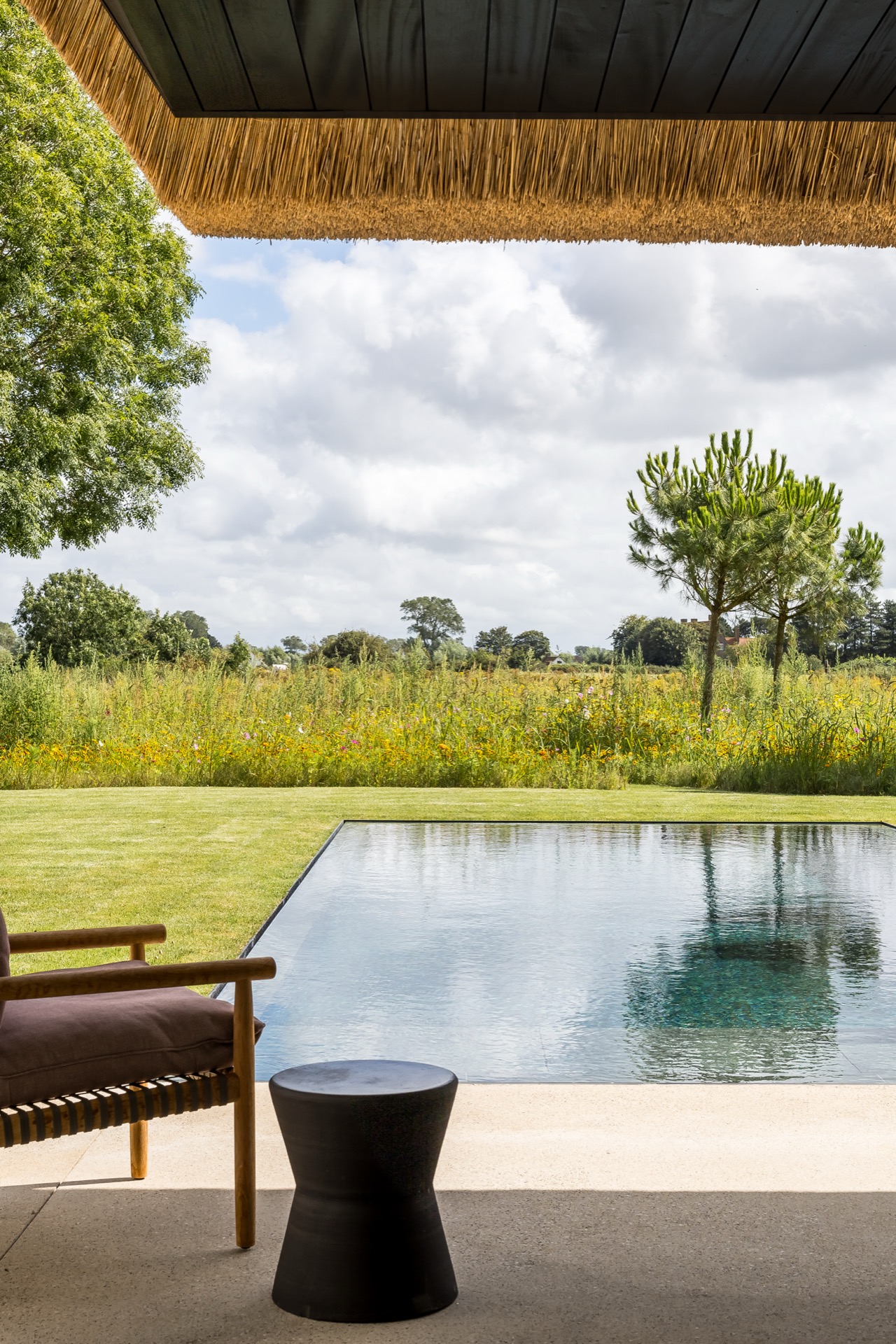
Frameless sliding doors extend the interior’s wood flooring visually onto adjoining terraces finished in natural stone slabs. This extension blurs the boundary between inside and out, with planting clusters of native species marking informal garden edges and inviting gradual transitions into the landscape.
Planned Lighting Accentuates Textures After Dark
Recessed spotlights set high on walls illuminate textured stone and wooden surfaces, as well as curated art pieces, casting low shadows that generate depth without overpowering the ambient balance. Nighttime brings a layered experience where materiality is rediscovered under softer light.
Sunlight Highlights Material Richness
Large windows positioned to capture changing sun paths animate the interiors, throwing wood grain and stone textures into subtle relief throughout the day. The interplay of natural light and shadow emphasizes the inherent irregularities of these elements, deepening spatial complexity. That makes the thatched roof part of the architectural character rather than a loose finish.
Thatched Roof Interpreted for a Contemporary Form
Rather than referencing traditional thatching patterns, the roof’s gentle curves and raw fiber surface serve as a tactile counterpoint to the otherwise clean-lined geometry. This design choice balances tradition with minimalism, fostering a quiet architectural dialogue.
Material Palette Creates Continuity Between Inside and Out
Consistent use of timber, stone, and metal weaves a subtle thread through windows, doors, floors, and facades. Stone paving shifts continuously from interior rooms to outdoor patios; vertical wood slats find reflection in cabinetry details; and metal framing unifies openings at multiple scales, sustaining a cohesive material language.
thatched roof as the architectural starting point
The planting scheme relies on indigenous trees, shrubs, and flowering species arranged in natural groupings. These clusters shape garden paths and seating areas without rigid lines, allowing a changing seasonal mosaic that complements the home’s restrained palette.
Spatial Design Balances Openness with Defined Zones
Open plan spaces merge living, dining, and kitchen areas, yet spatial distinctions arise through floor materials and volume shifts like the central stairwell. This arrangement fosters unbroken sightlines while allowing each function to retain subtle autonomy.
Joinery and Details Emphasize Material Intention
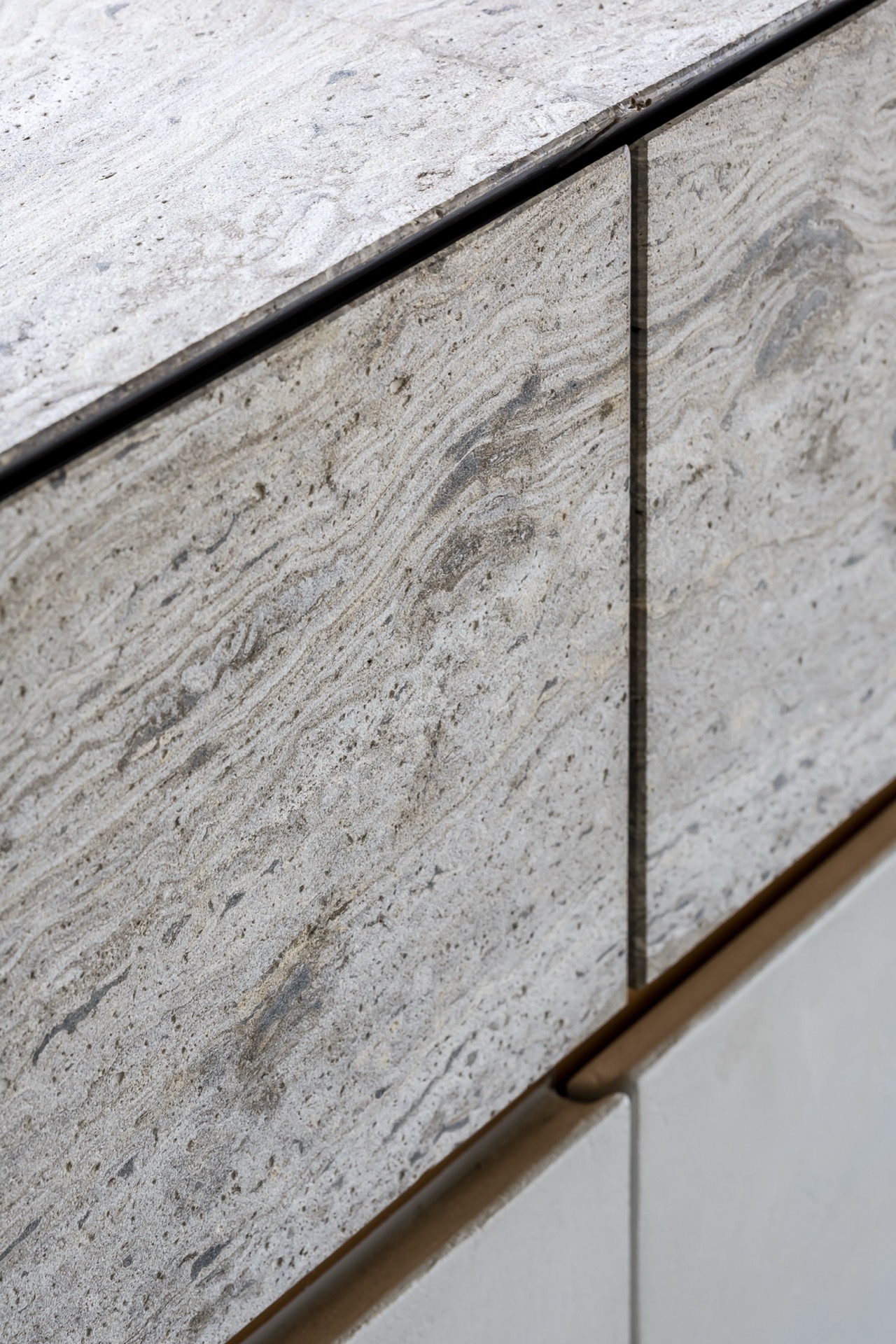
Precise alignments mark where wood meets stone or metal, with attention to grain direction and texture transitions. Slim metal profiles are milled carefully to fit the clean forms, underscoring craftsmanship in the execution of simple geometries and material honesty.
Kitchen Composition Highlights Marble and Wood Contrast
The kitchen’s smooth marble countertop brings refined solidity, its subtle veins adding quiet complexity. Wooden cabinetry offers a tactile warmth that sets the stone and metal elements into contrast, grounding the space without ornamentation.
Open Staircase Balances Transparency and Texture
The stair’s combination of wood treads and metal structure avoids full risers, allowing light to flow while connecting different levels visually. This openness maintains spatial clarity and echoes material choices from other key points in the house.
Art and Lighting Add Subtle Layers on the Upper Landing
On the intermediate landing, a graphic art piece challenges the otherwise continuous material flow. Nearby, directional lighting accentuates surface texture and creates a balanced interplay of light and shadow that changes through the day.
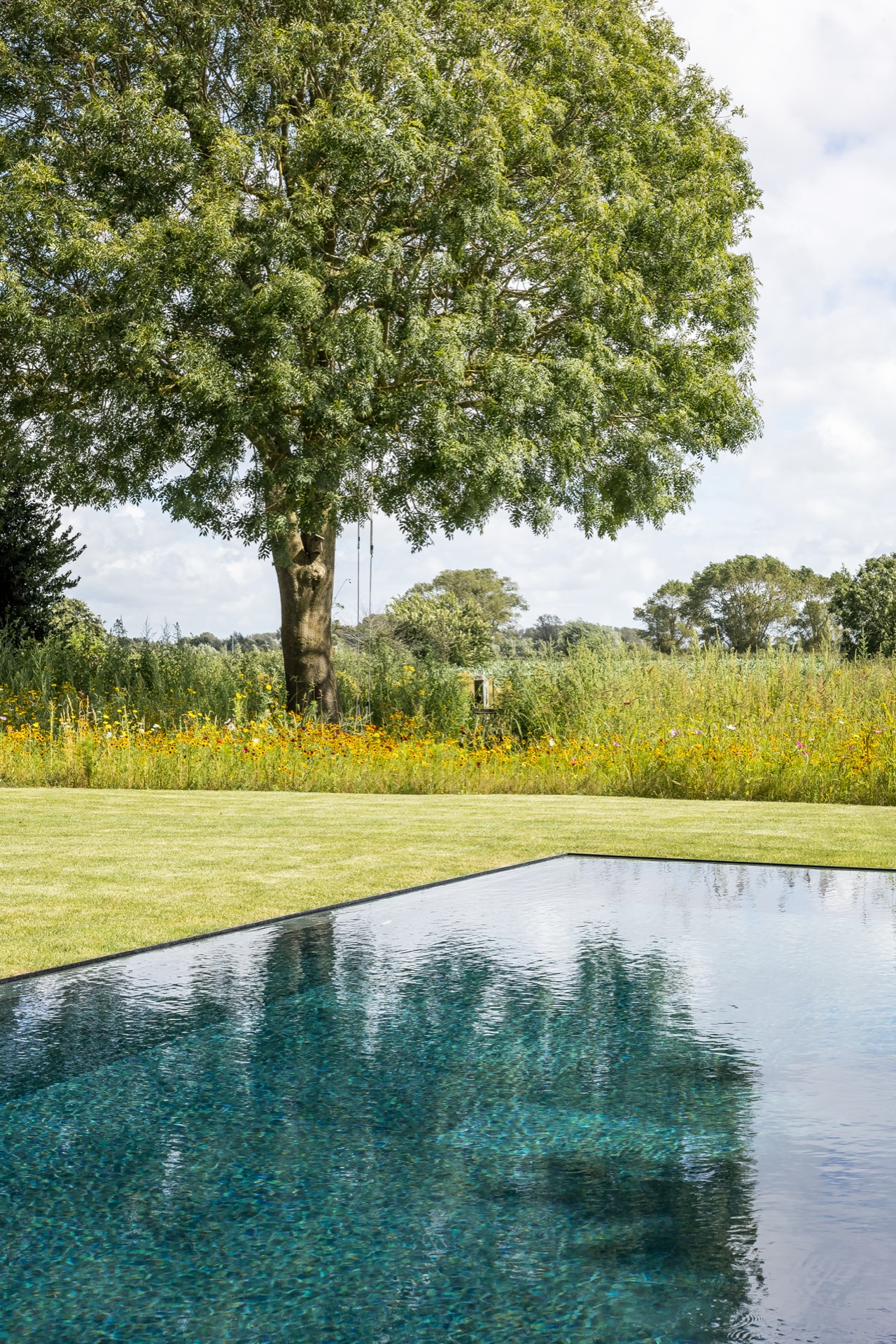
Garden Embraces Natural Forms and Native Species
Clusters of tall trees provide vertical rhythm and dappled shade, while loosely grouped flowering plants and shrubs define garden edges without hard lines. These elements frame views from indoors and invite a gradual transition from built to natural environments. That makes the thatched roof part of the architectural character rather than a loose finish.
Want to see more of Vlassak-Verhulst? View the page of Vlassak-Verhulst for even more great projects and company information.


.png)