






Modern house with glass walls and wooden screens in a natural landscape
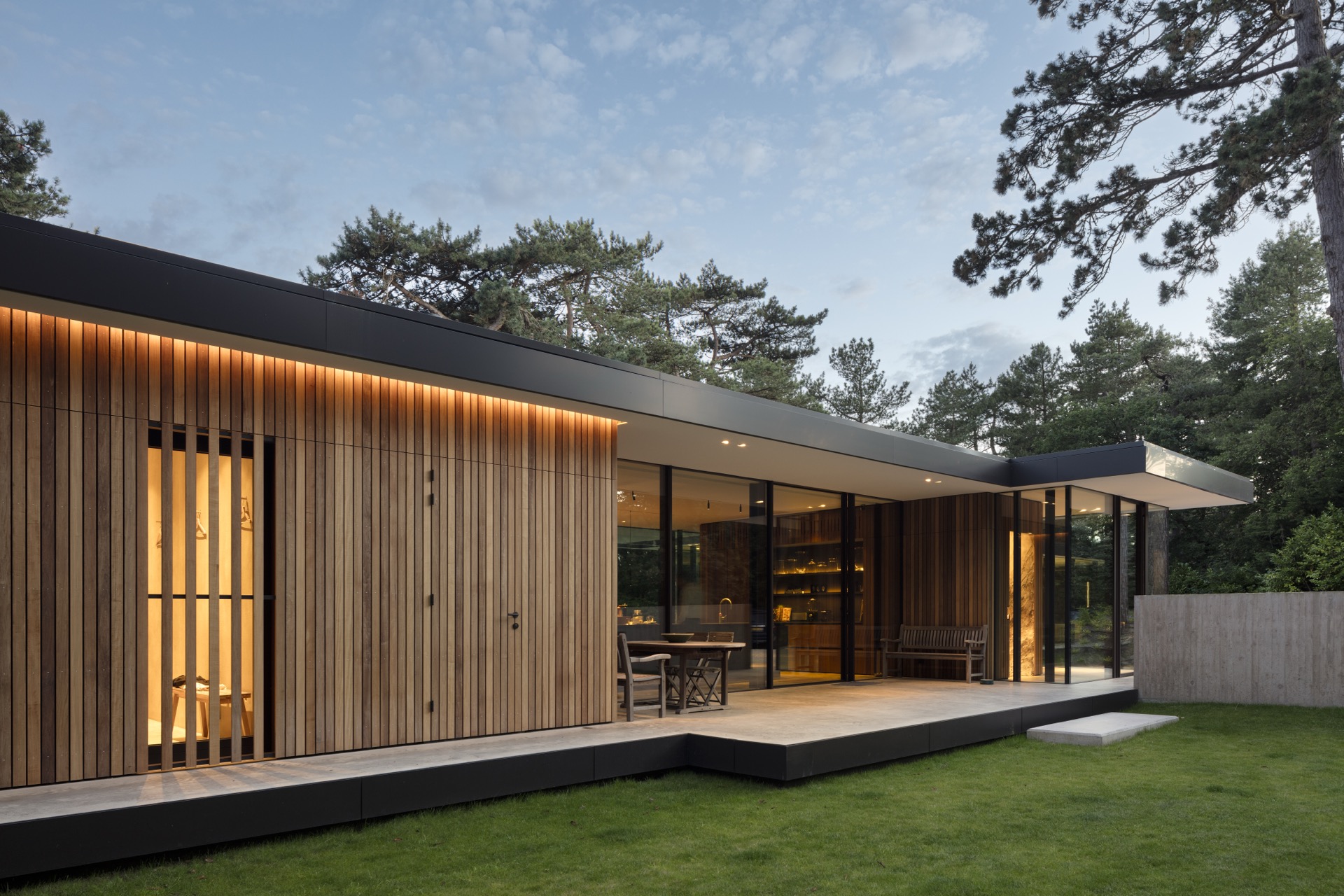
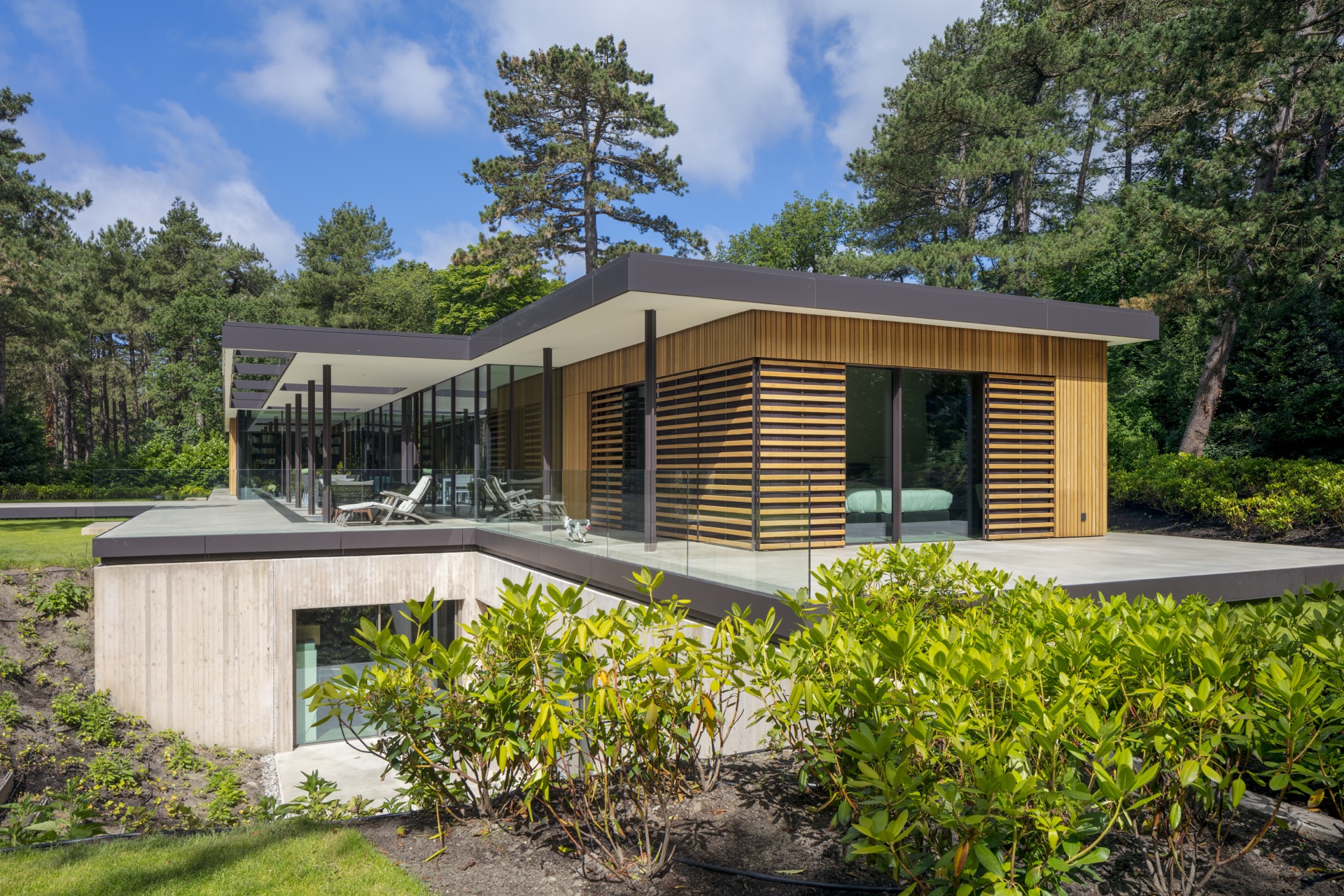
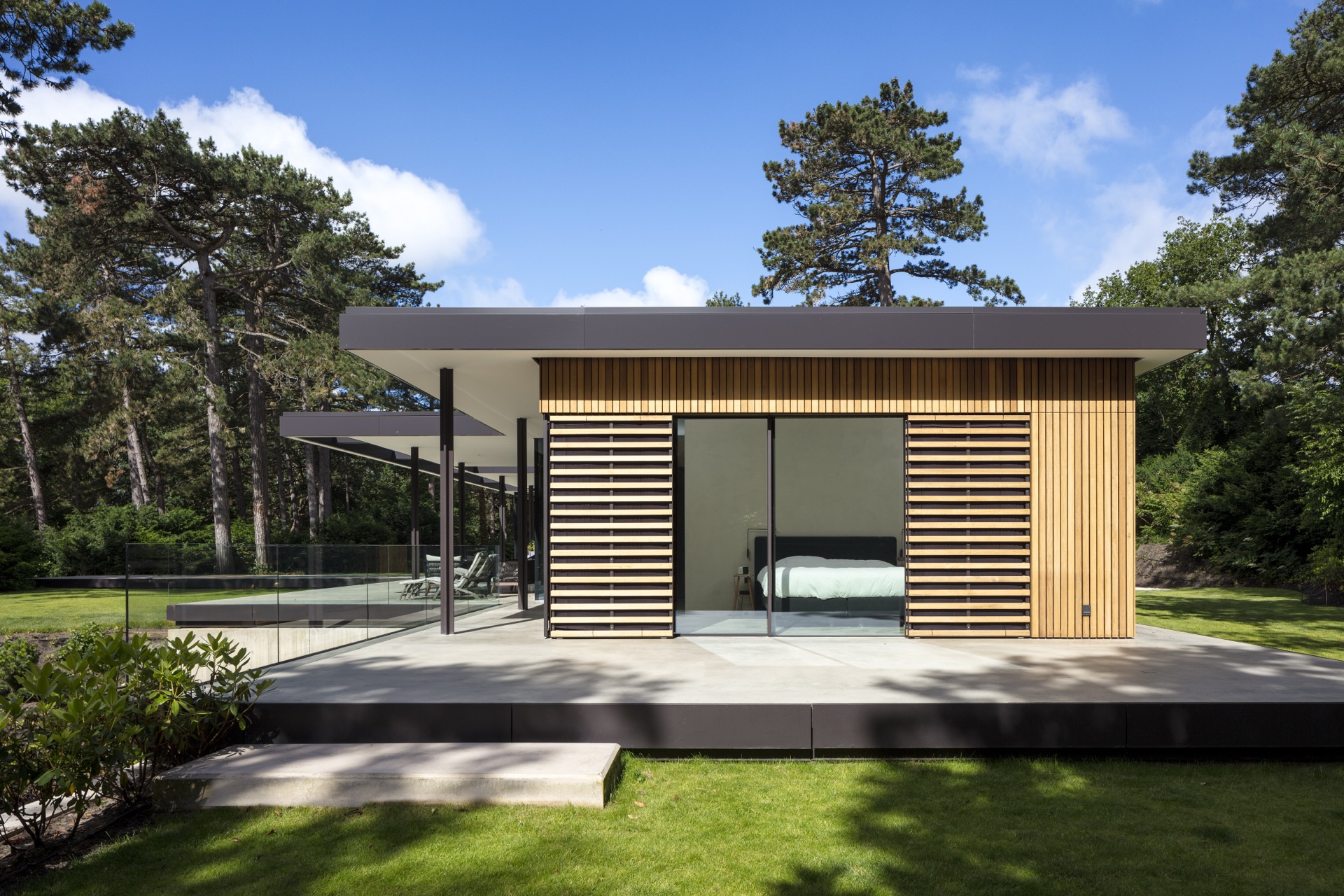
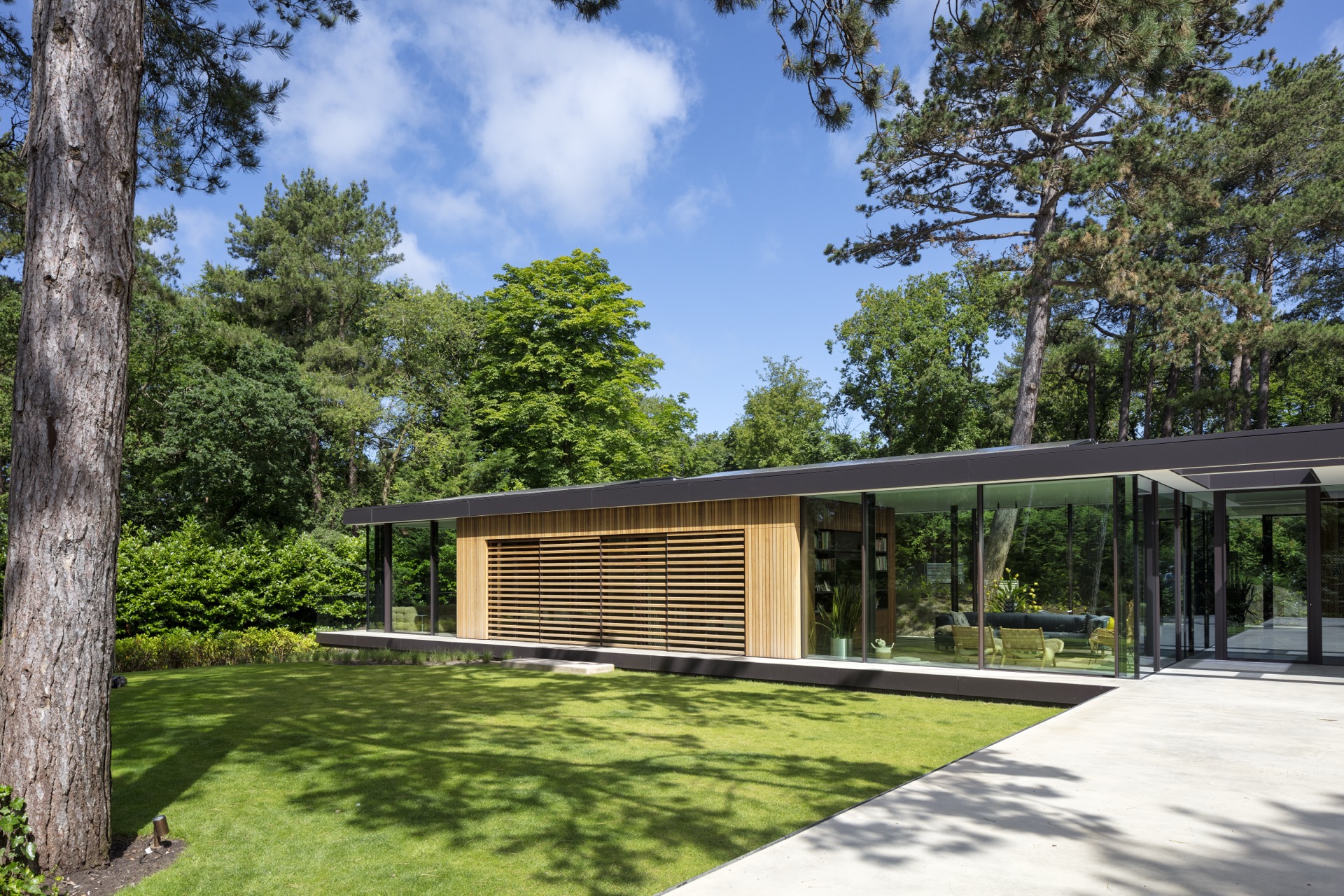
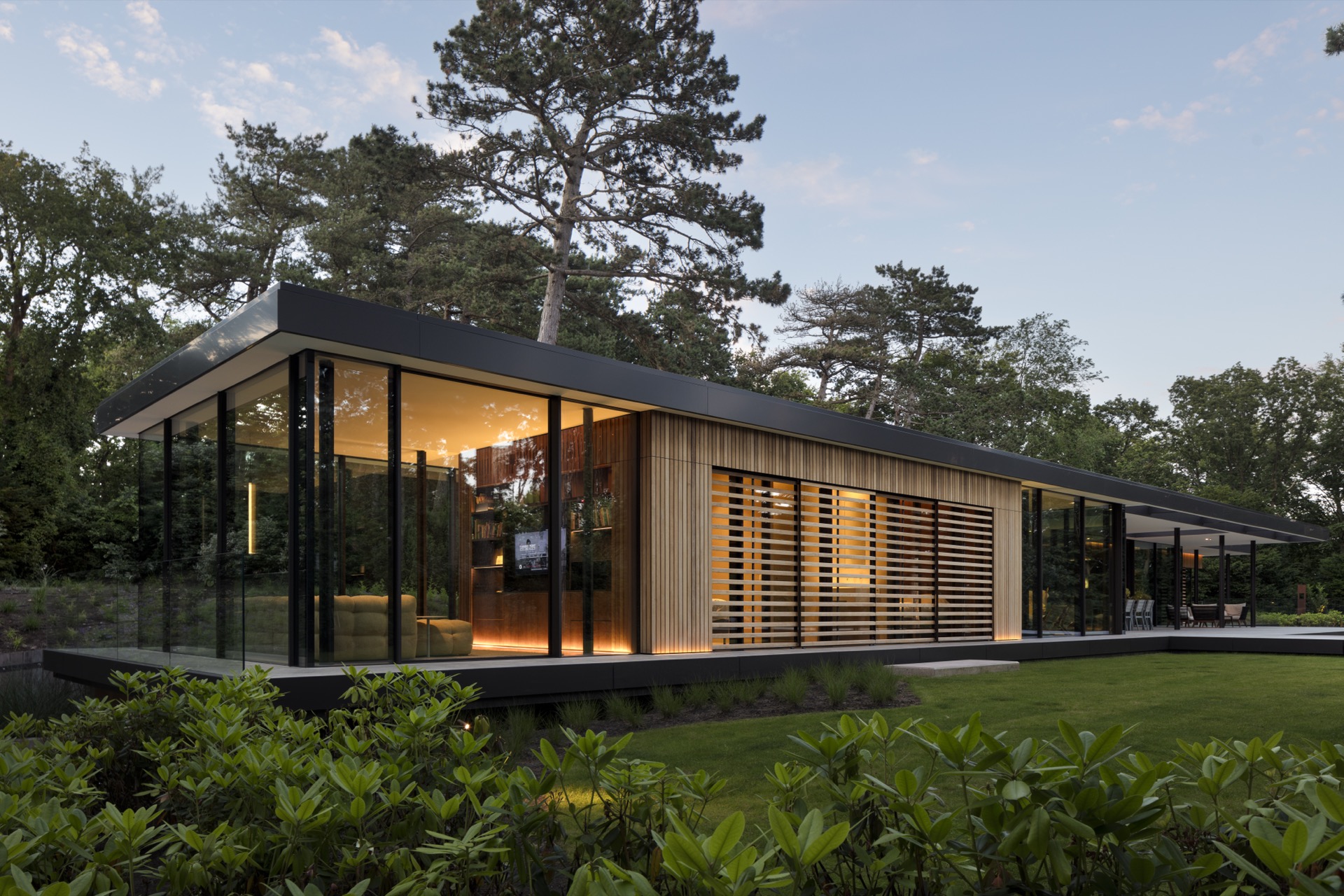
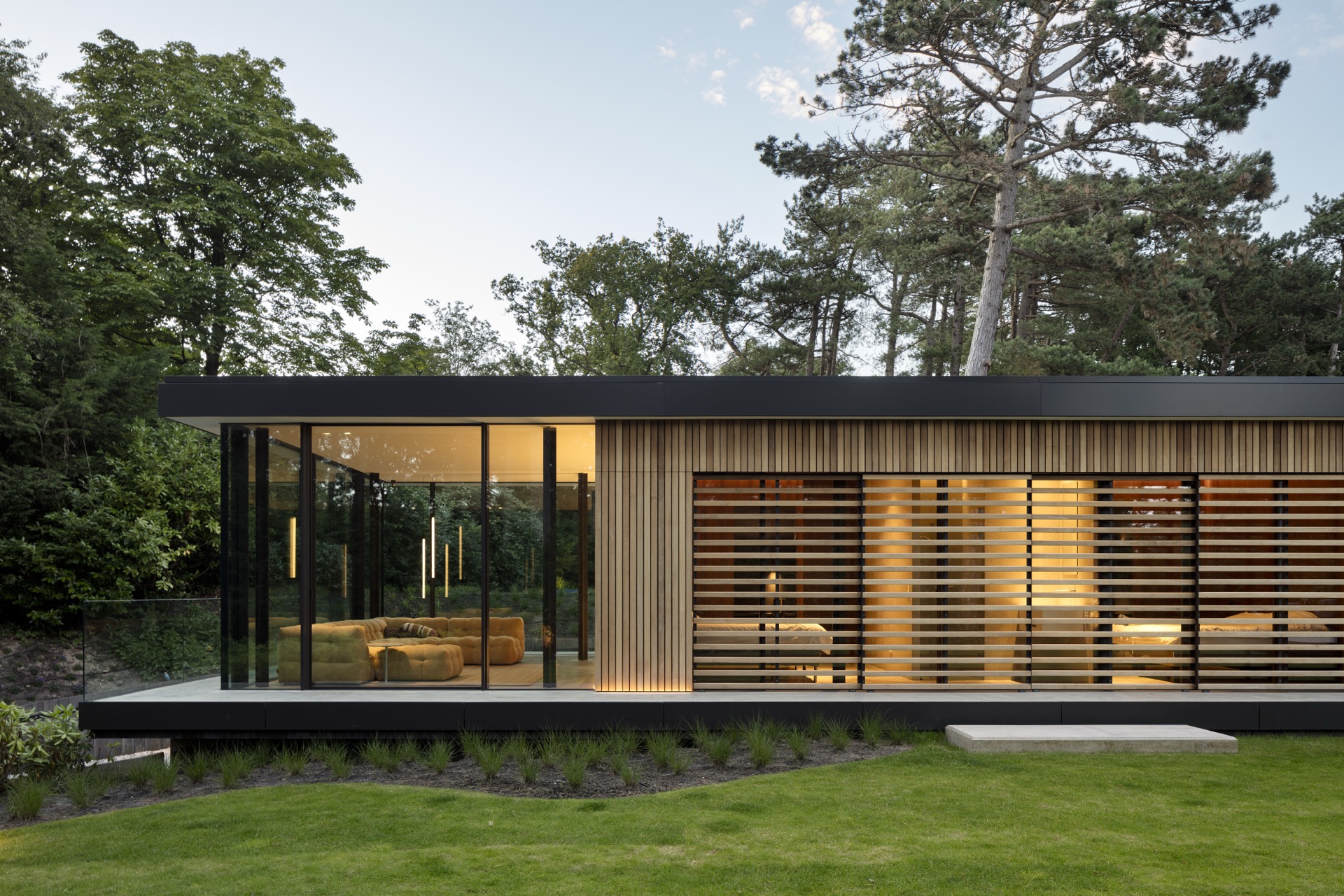
The modern house with glass is immediately visible in the way the project is framed. Mansonia wood slats shade the large glass walls of this house, their warm tones shifting with the changing daylight. Positioned within a forested setting, the wooden screens slide along tracks, offering selective privacy without obscuring views of the surrounding greenery. The slender spacing between the slats allows filtered light to pass through, creating patterned shadows inside while maintaining a continuous visual connection to the outdoors.
modern house with glass as the architectural starting point
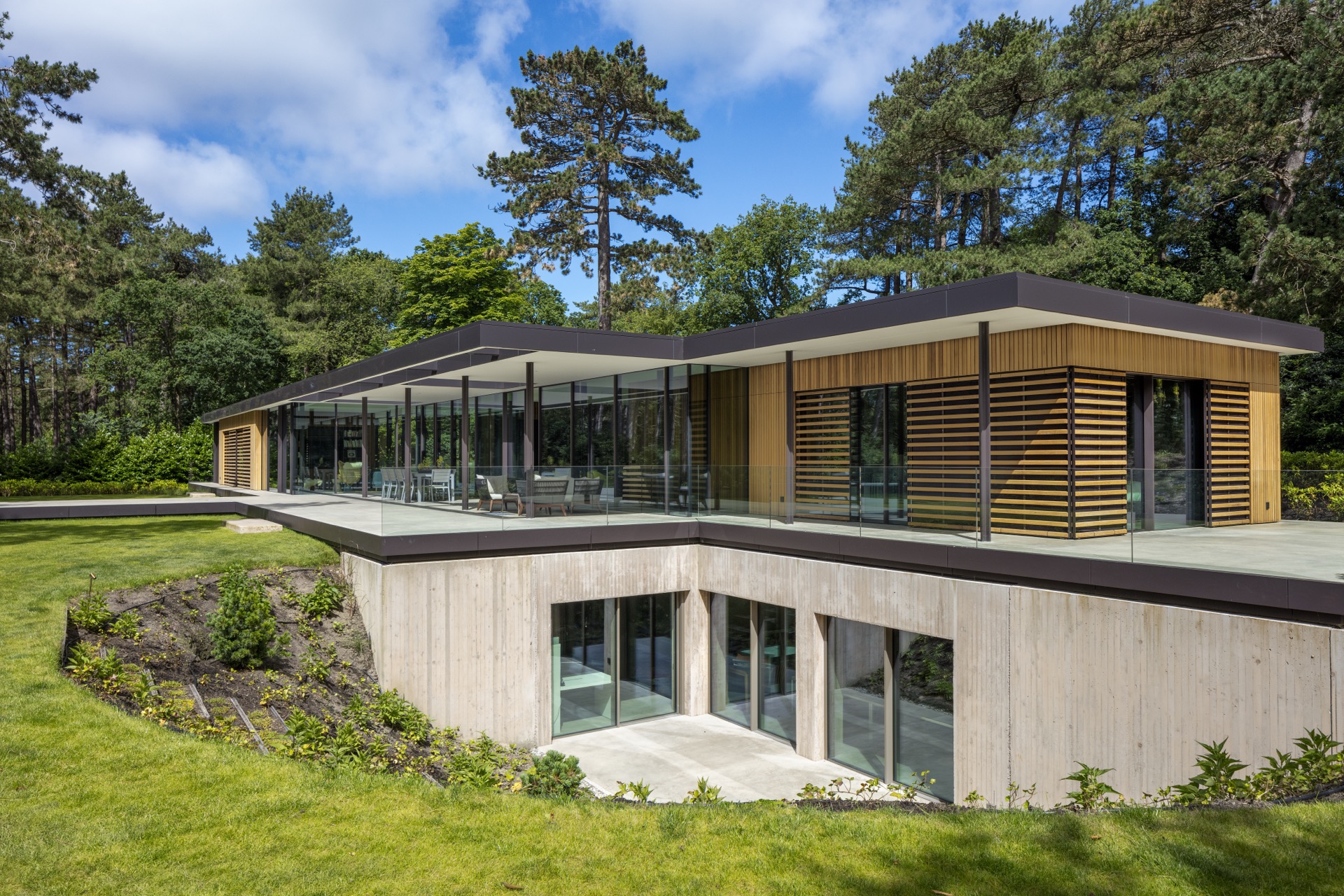
Floor-to-ceiling glass panels frame the facade, anchoring the building firmly in modern architectural language. The glass appears as transparent boundaries rather than barriers, maximizing natural light while positioning the interior spaces in dialogue with the external environment. Wooden accents and concrete components complement the expanses of glass, grounding the structure in natural textures and muted tones.
Transforming Outdoor Terraces into Living Extensions
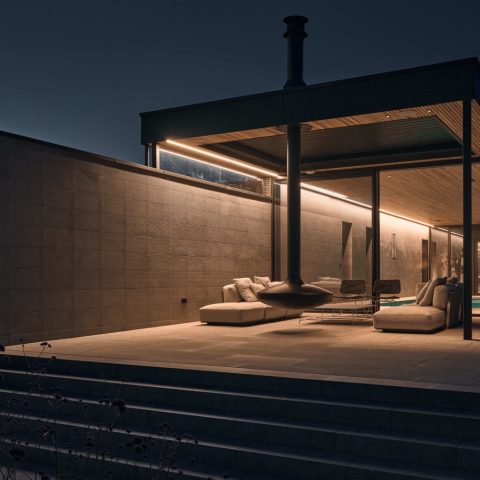
Outside, a terrace edged with transparent balustrades opens to the garden and forest beyond. The terrace surfaces blend concrete workmanship with touches of natural plantings at the perimeter. Seating areas placed near the glass walls encourage outdoor living, where the transition from open-air space to sheltered interior is fluid. This layout fosters casual indoor-outdoor movement and frames views of the surrounding nature.
Privacy Through Vertical Wooden Slats
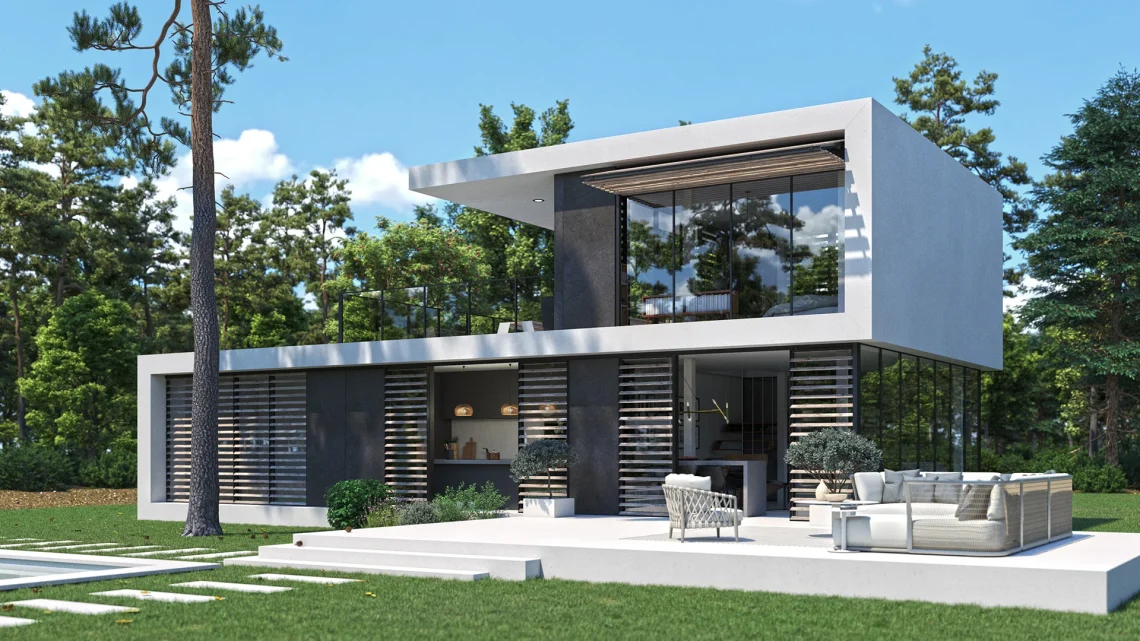
The wooden slats are arranged vertically and modulate sunlight and visibility selectively. Their positioning caters to privacy needs while preserving openness. This approach exemplifies the dialogue between enclosure and exposure, allowing light and air to circulate freely without sacrificing discretion. The slats also echo the vertical lines of nearby trees, reinforcing the integration with the woodland setting.
Materiality Rooted in the Setting
Mansonia, known for its rich coloration, was chosen for the slats to complement the greens and browns of the surrounding vegetation. Concrete surfaces provide durable grounding, contrasting texture and tone with the warmth of the wood and the transparency of glass. This palette cultivates a natural yet contemporary aesthetic sensitive to the site.
Spatial Flow and Light Play
Inside, light filters through the wooden slats, casting gentle vertical shadows that shift as the sun moves. This dynamic lighting sculpts the interior volumes subtly, connecting the occupant’s experience directly with the surrounding time of day and weather. The openness of the glass façades ensures that these light patterns animate the space continuously.
The House in Its Forest Context
Set amid mature trees, the building’s aluminium frames and glazing reflect glimpses of foliage, while also standing out with crisp architectural lines. The combination of glass and wood negotiates transparency and shelter, creating a home that neither dominates nor disappears but occupies a quiet architectural dialogue with its natural surroundings. That makes the modern house with glass part of the architectural character rather than a loose finish.
Minimalism in Form and Detail
The volume follows a restrained geometric language, emphasizing horizontal and vertical planes aligned with the forest’s rhythm. The flat roofline and clean edges resist decorative excess, focusing instead on material expressions and spatial relationships around the house.
Careful Connection Between Interior and Landscape
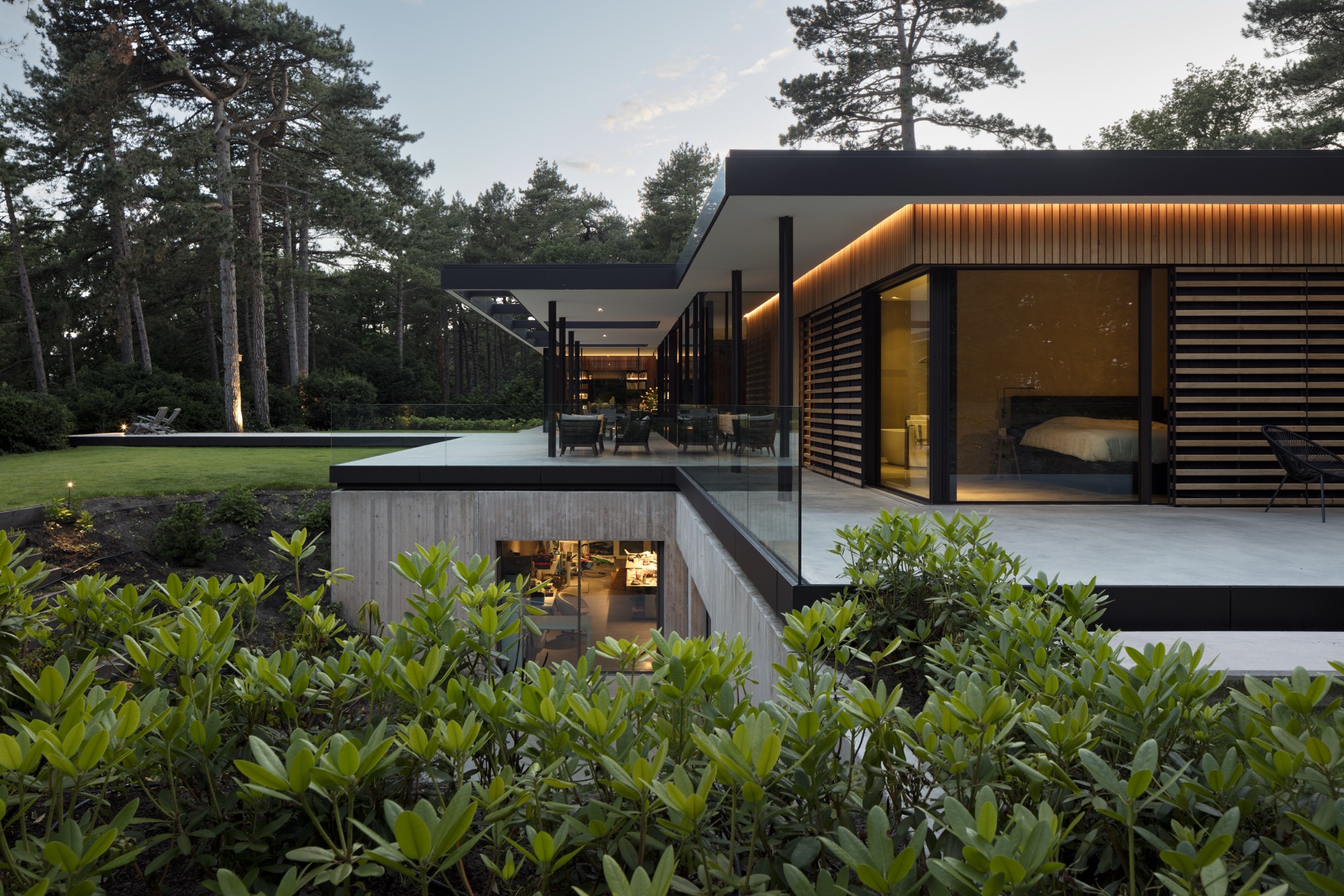
Large sliding doors open directly onto terraces that extend the living space outward. These thresholds erase distinctions between inside and outside. The glass balustrades maintain uninterrupted sightlines to the ground vegetation, reinforcing the sense of immersion in the landscape from both levels of the house.
Wood and Glass as Counterpoints
The juxtaposition of translucent glass and tactile wooden slats creates a texture play on the exterior walls. This counterpoint adds visual depth and complexity to the facade, articulating both enclosure and access to views. The wood softens the precision of the glass, establishing a relationship between built form and natural materials.
Practical Benefits of Sliding Screens
The sliding mechanism permits flexible adaptation to changing light and privacy requirements throughout the day and seasons. This dynamic facade element allows inhabitants to modulate their connection with the environment while contributing to the home’s quiet rhythm with nature.
Experiencing the Home at Dusk
As evening falls, internal lighting illuminates rooms softly through the glass walls, and the wooden lamellae silhouette against both interior and exterior light. This interplay of transparency and shadow strengthens the connection with the wooded setting, where the home appears as an extension of the natural scene rather than imposition.
Conclusion: A Thoughtful Modern Dwelling
Overall, the house combines a modern architectural layout with natural materials, emphasizing open sightlines, adaptable privacy, and a strong visual dialogue with the forest. The wood and glass components function both as aesthetic tools and functional devices that encourage a direct relationship between interior life and the landscape beyond.
Explore more architecture with modern layout approaches, discover details in natural material selections, or learn about modern homes blending sustainability. That makes the modern house with glass part of the architectural character rather than a loose finish.
Want to see more of Artino? View the page of Artino for even more great projects and company information.

.png)