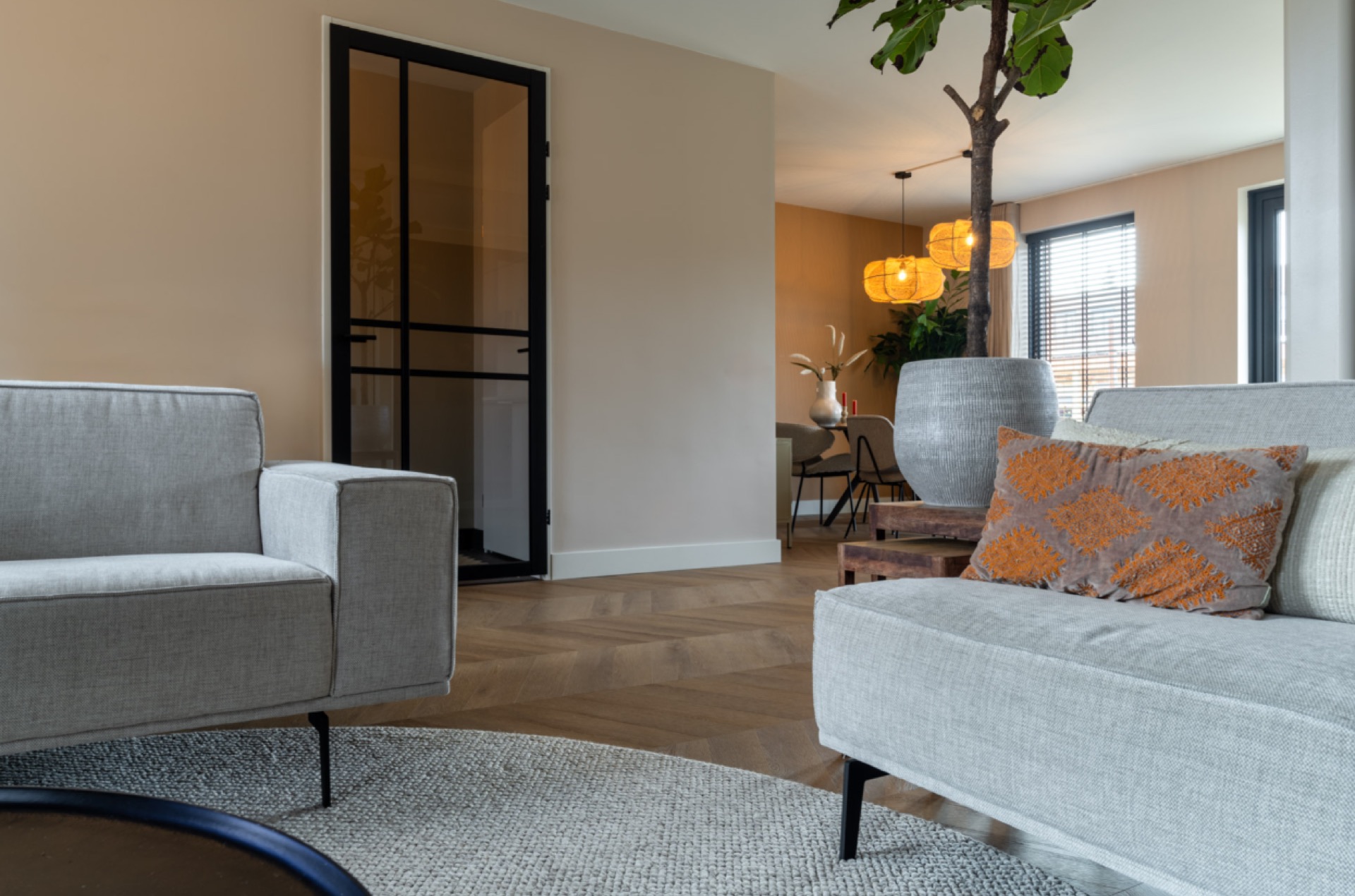







The ceramic tiles home is immediately visible in the way the project is framed. At the entrance, expansive slabs of large-format ceramic tiles extend across the floor, their subtle texture catching the soft daylight streaming through broad windows. These tiles set a calm tone for the spaces, their matte finish diffusing reflections and emphasizing the room’s clean angles.
ceramic tiles home as the architectural starting point
The foundation of the living area is a field of broad ceramic tiles that establish a uniform surface undisturbed by grout lines. The tiles’ precise edges and cool stone-like color create a restrained backdrop, allowing natural wood accents and greenery to emerge as focal points within the rooms.
A Warm Contrast: Wooden Floors and Textured Fabrics
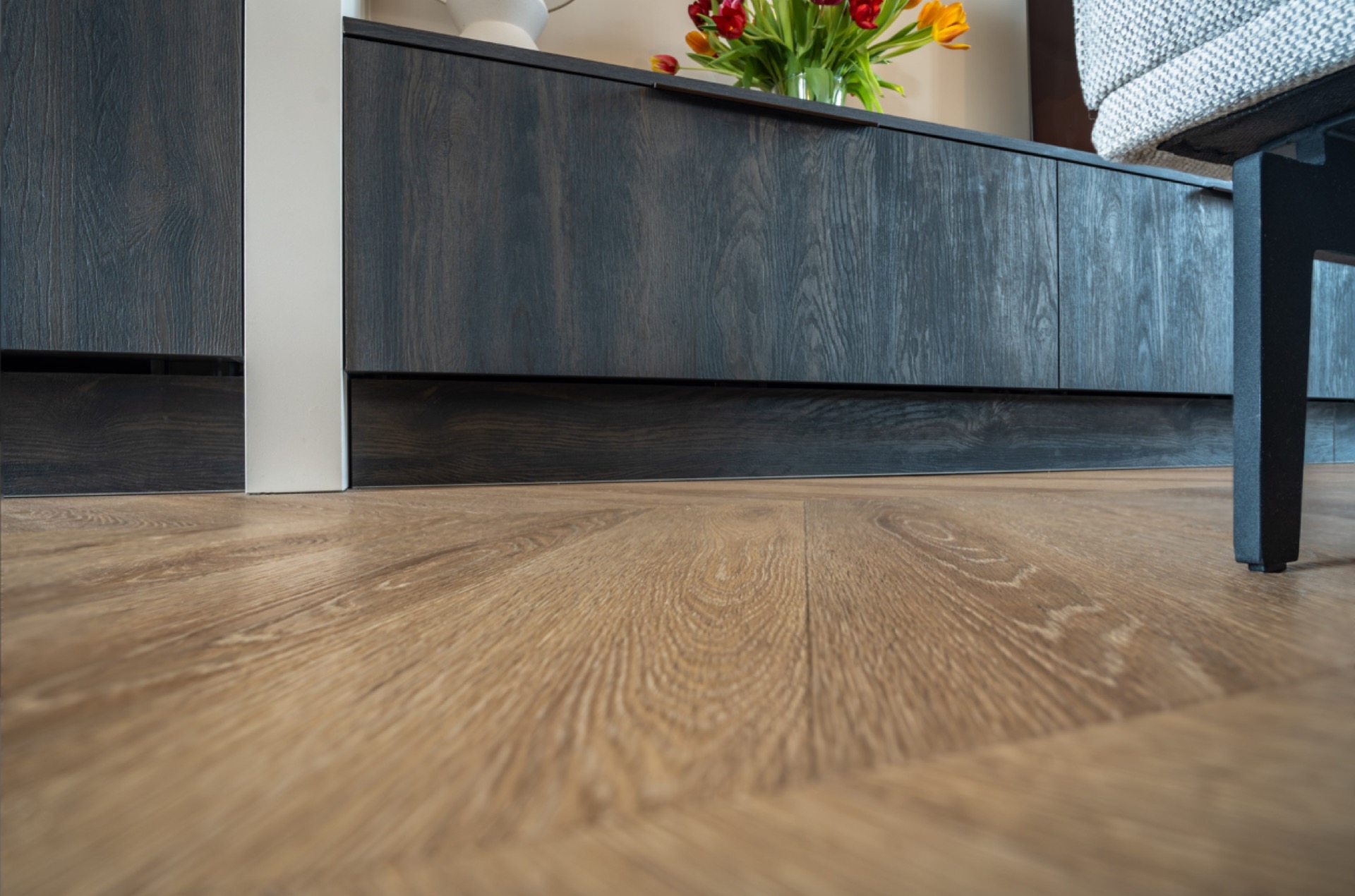
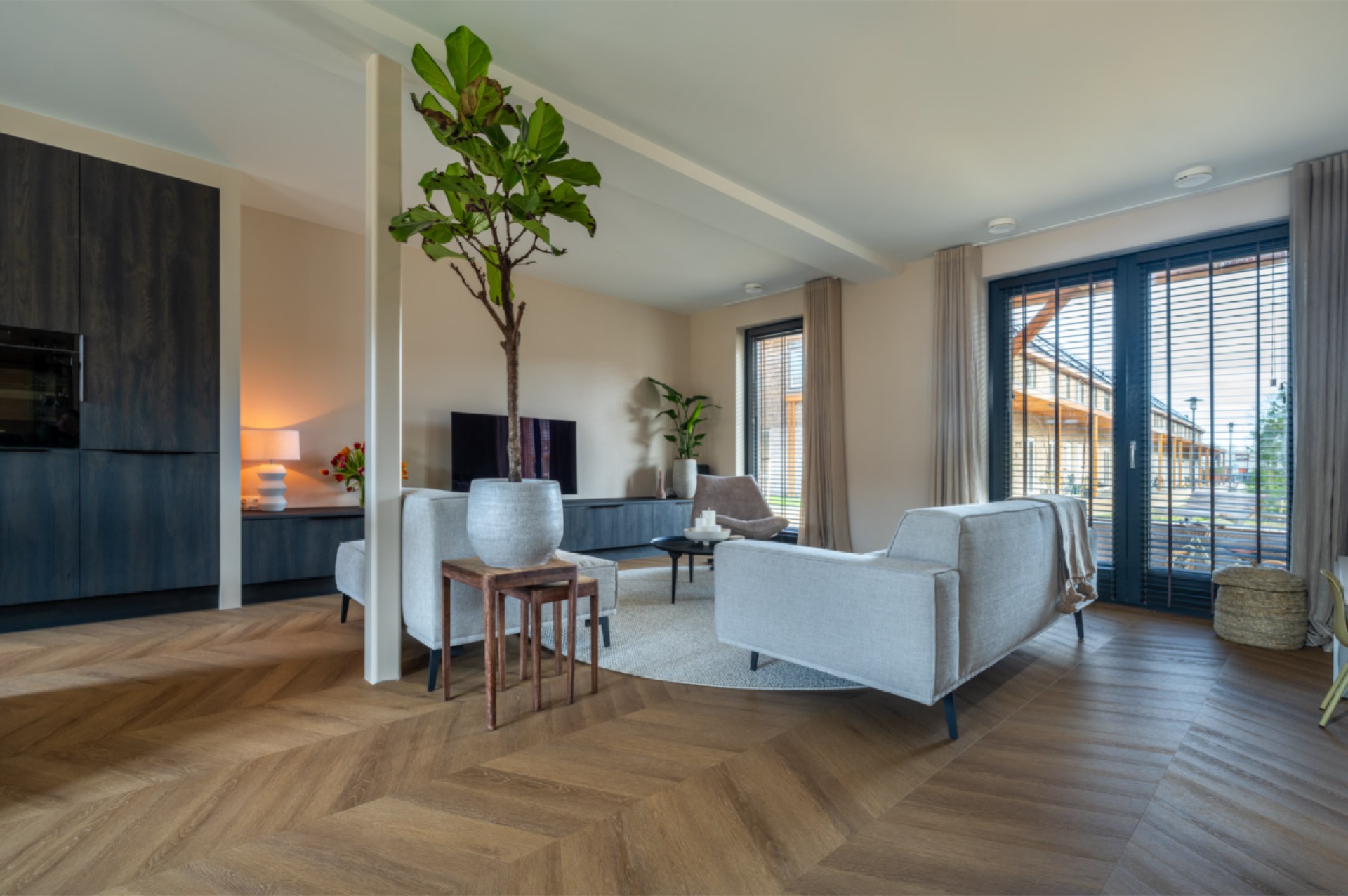
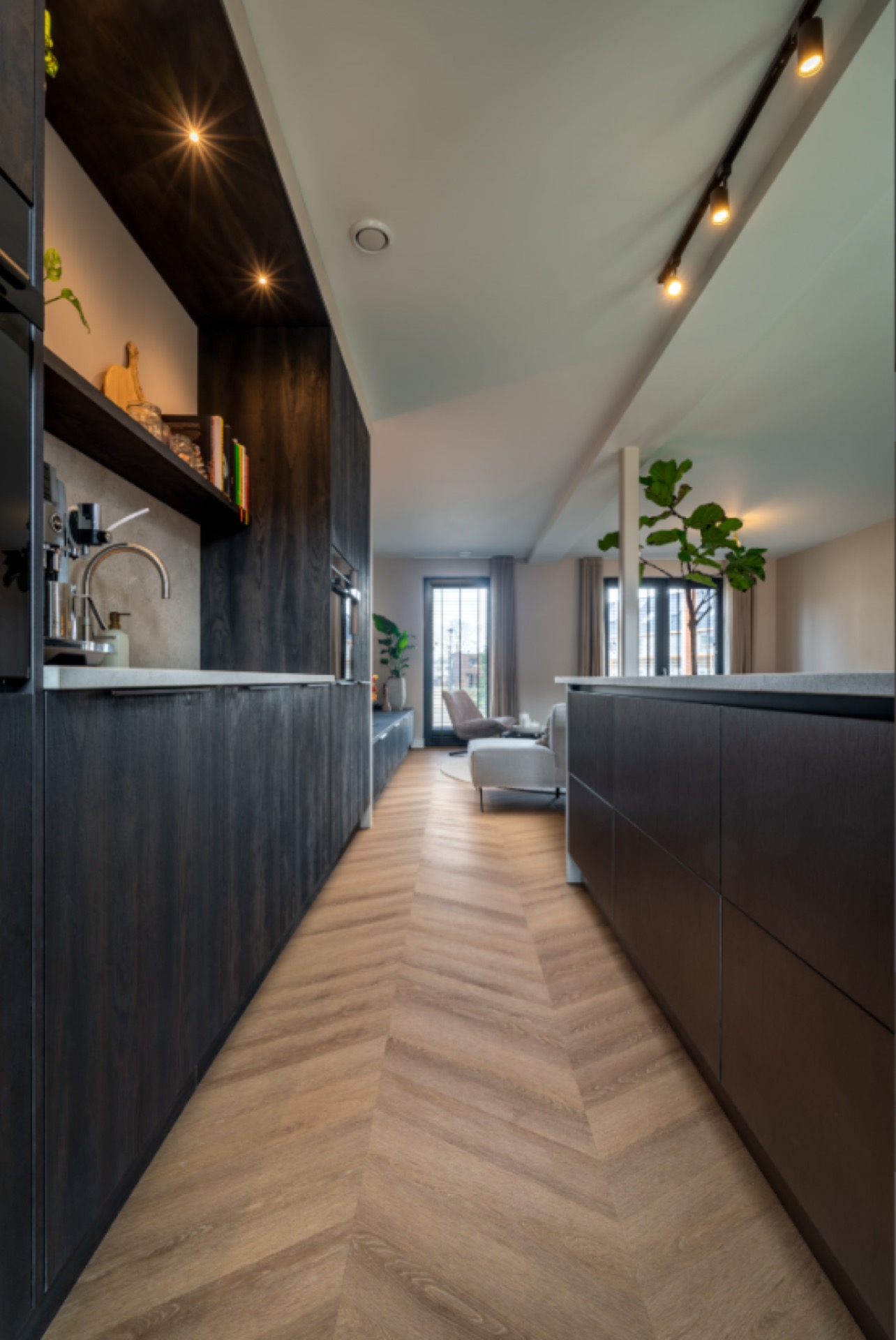
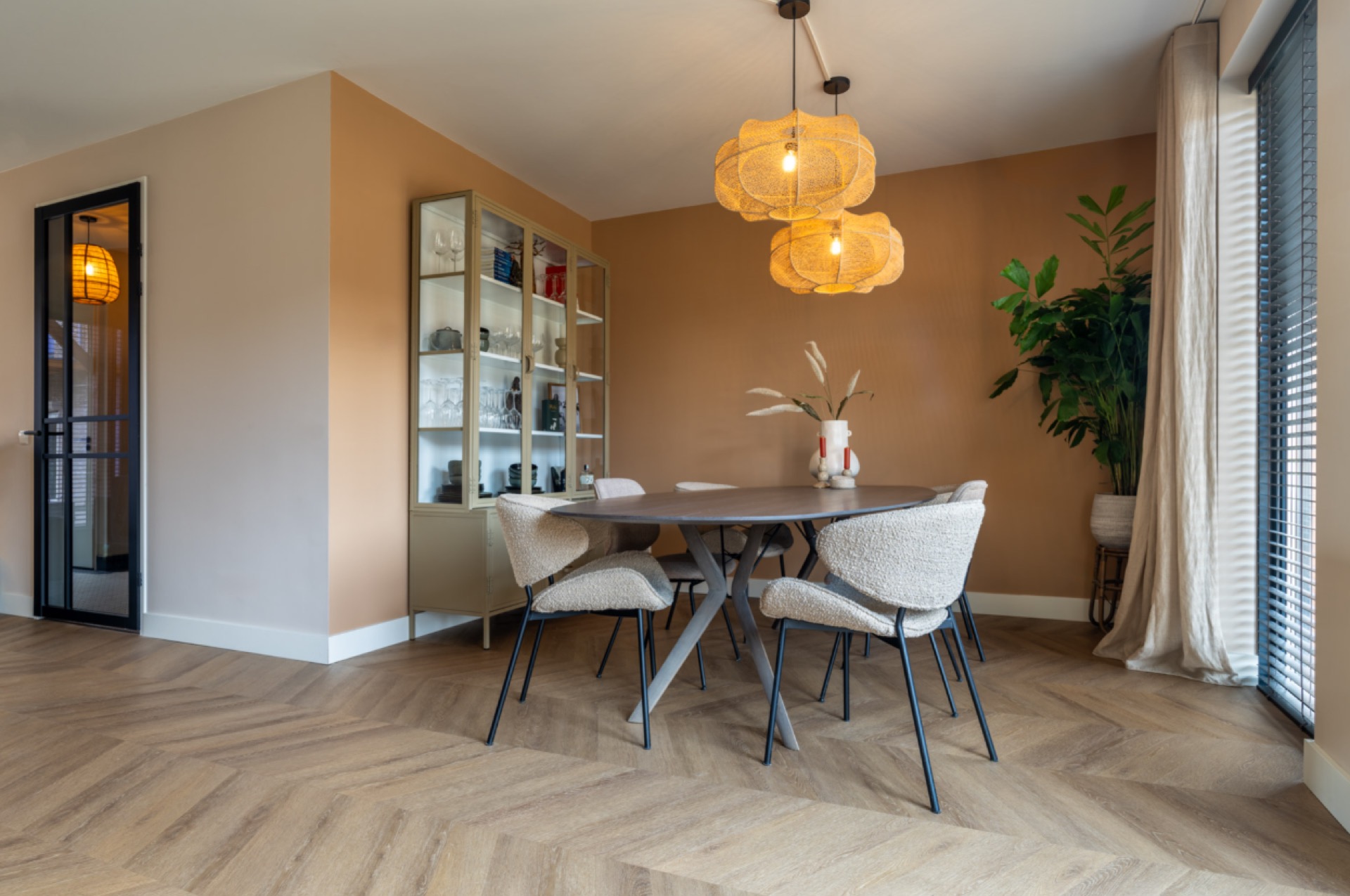
Adjacent rooms present a shift in flooring with wooden planks laid in a herringbone arrangement. The wood’s grains and varied tones enrich the interior with a tactile warmth that contrasts the ceramic slabs’ hard surfaces. Upholstered seating and arranged textiles complement these natural materials, introducing subtle softness and layering.
Natural Materials Shaping Spatial Ambiance
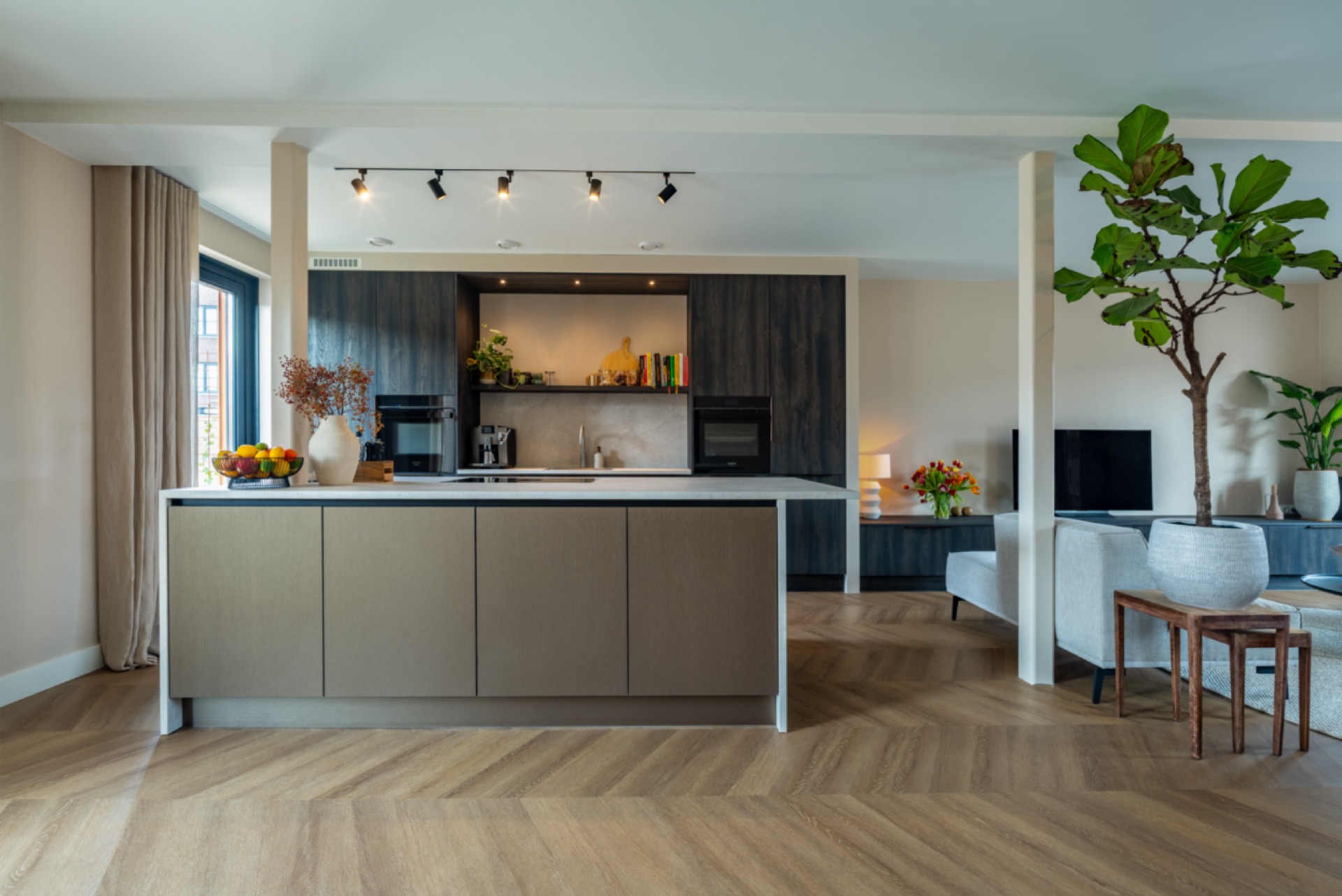
Plants placed near the windows add vibrant green hues, their organic shapes breaking the geometry of the flooring and furnishings. These elements connect the interior with natural textures, reinforcing a deliberate transition between the ceramic tiles and wood surfaces.
Spatial Fluidity Between Flooring Textures
The transition from ceramic to wooden floors is marked by carefully maintained thresholds, allowing the eye to flow without interruption through the interior’s various zones. This interplay between materials articulates functional areas without physical barriers.
Kitchen Island as a Central Element
A large kitchen island, wrapped in muted wood tones, anchors the open-plan kitchen. Its sanded surfaces reflect the natural grain of the surrounding wooden elements, while the adjacent ceramic tiled floor ensures practical durability in high-traffic areas. That makes the ceramic tiles home part of the architectural character rather than a loose finish.
Layered Lighting Enhancing Materials
Overhead, paper-textured pendant lights hang above a rounded dining table, their diffused glow emphasizing the natural fiber patterns within upholstery and the ceramic floor’s subtle texture. The layered lighting scheme supports the contrast between materials, highlighting tactile qualities across the room.
Visual and Tactile Texture in Flooring Choices
The ceramic tiles’ large format reduces surface interruptions and delivers an expansive feel, while their stone-inspired hues ground the rooms visually. In combination with the hardwood planks’ rich textures, this layering invites nuanced exploration of tactile and visual surfaces.
Window Framing and Natural Light
Generous glazed openings frame external views while admitting natural light that plays across the interiors. The resulting shadows accentuate the clean lines of the tiles and the warmth of wood floors, creating changing patterns throughout the day.
Integration of Materials for Living Room Ideas with Tiles
Decorative composition hinges on contrasting materials: smooth ceramic tiles juxtapose with the wooden flooring’s herringbone geometry and surrounding textiles. This synthesis influences furniture placement and guides circulation within living spaces.
The choice of ceramic tiles at home here underlines how material scale and texture shape spatial perception. This home embodies a straightforward approach where the flooring defines mood through restrained color and detail, allowing natural interior decoration to unfold thoughtfully. That makes the ceramic tiles home part of the architectural character rather than a loose finish.
Want to see more of ? View the page of for even more great projects and company information.
.png)