






Contemporary interior design featuring natural materials
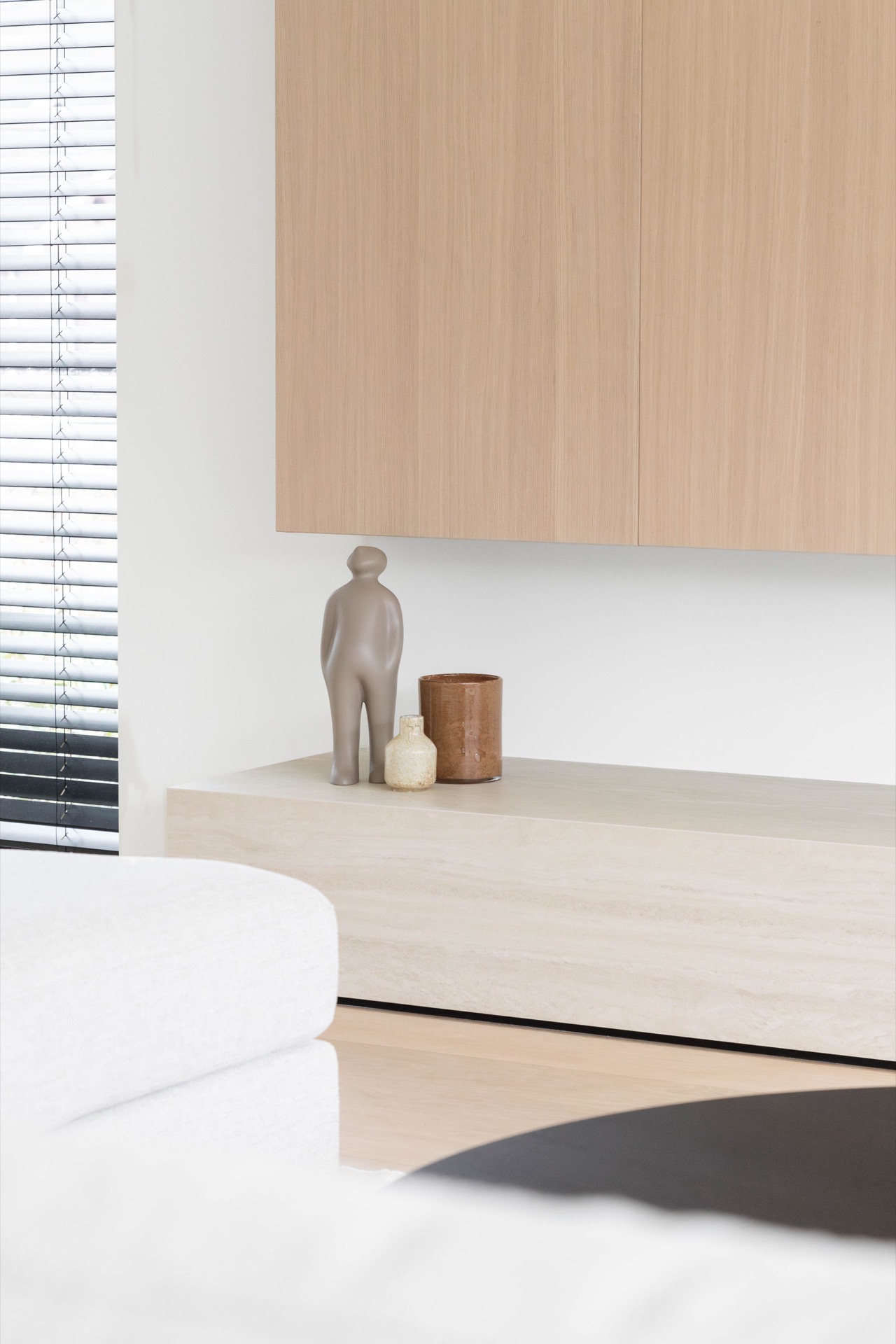
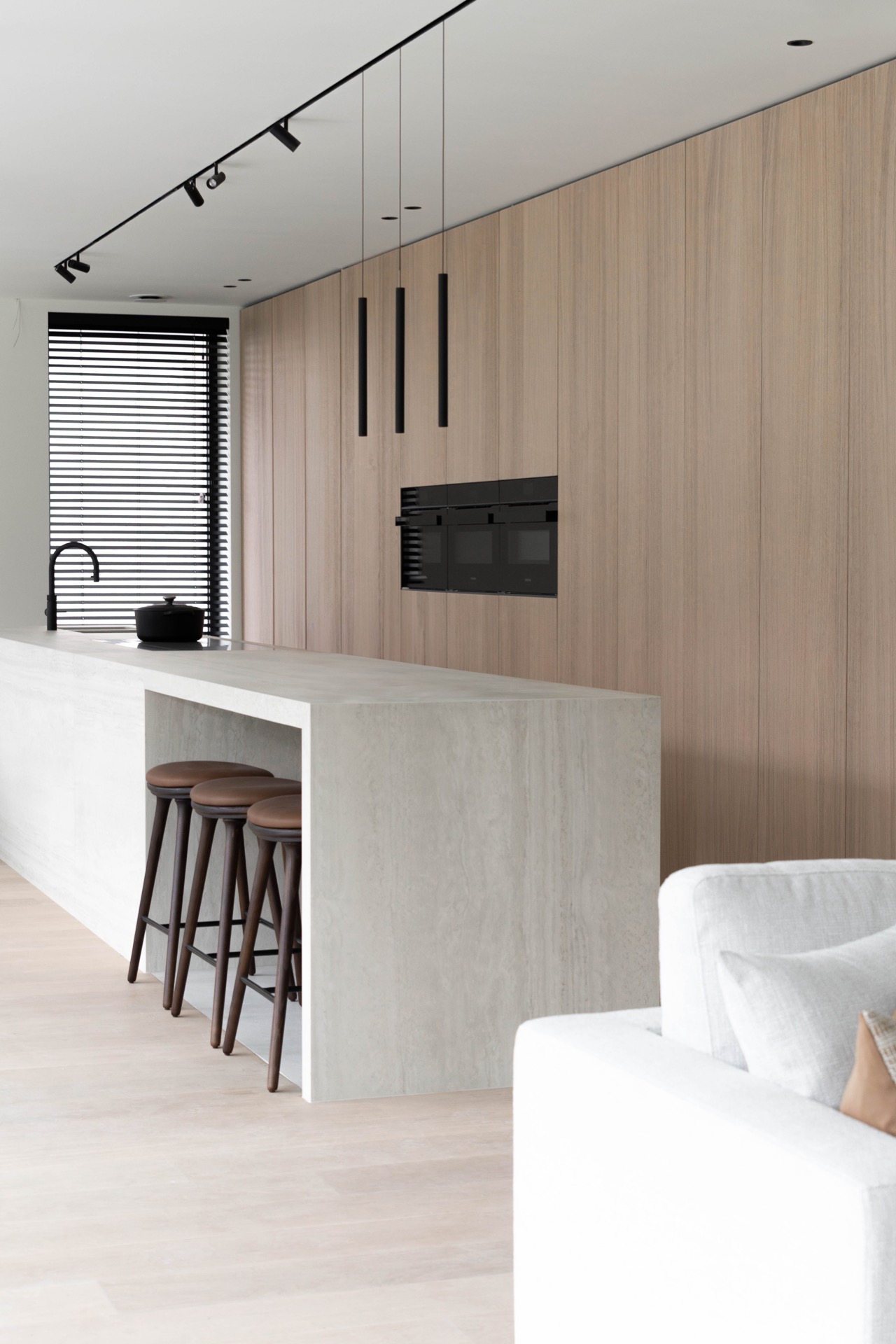
The thatched roof is immediately visible in the way the project is framed. Daylight flows through tall windows trimmed in matte black, defining crisp silhouettes across the pale travertine floors. This stone extends fluidly from kitchen counters into the living area’s media console, its soft beige veined surfaces grounding the open plan with tactile, natural texture. The finish balances reflective and absorbent qualities, catching subtle shifts in light throughout the day.
thatched roof as the architectural starting point
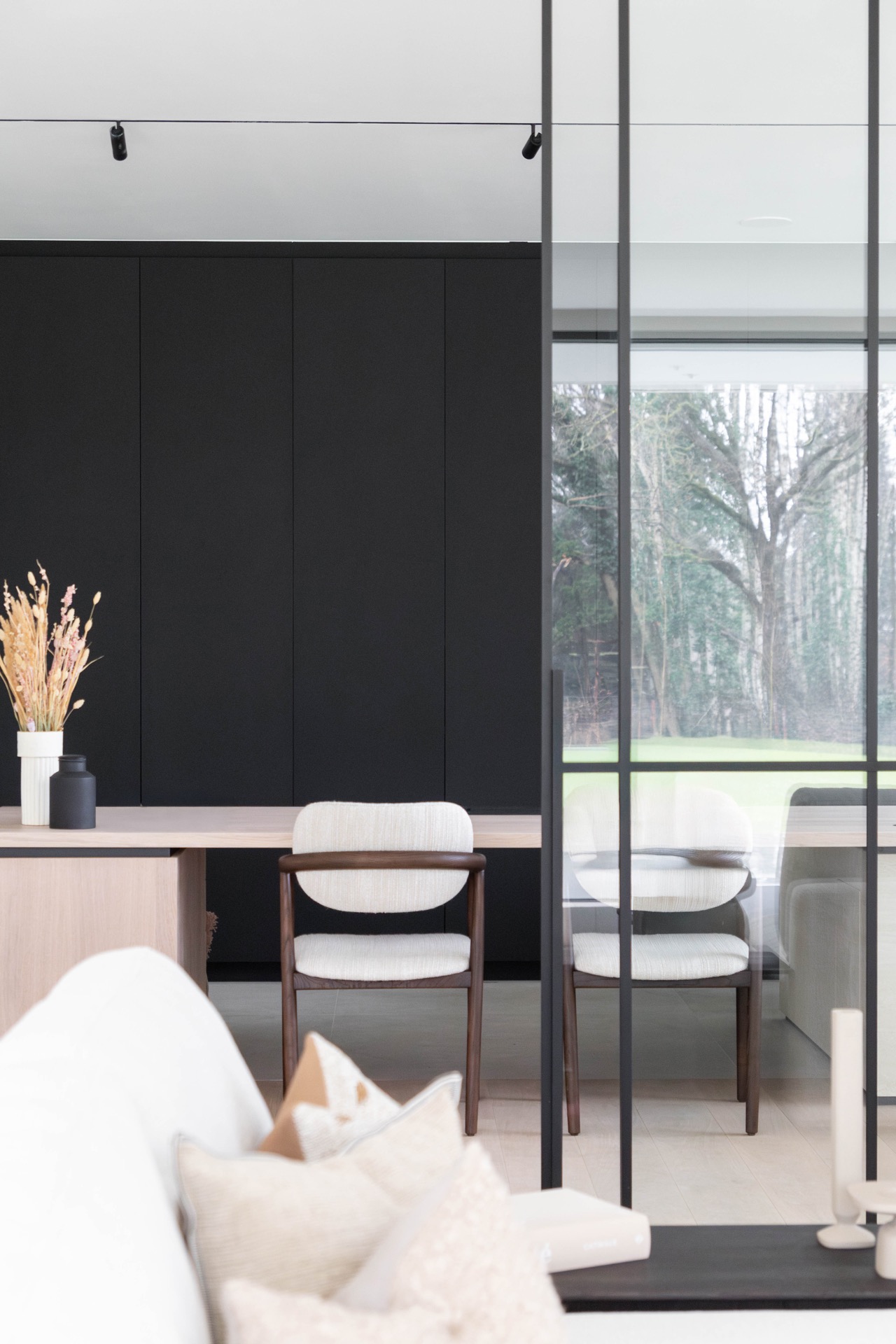
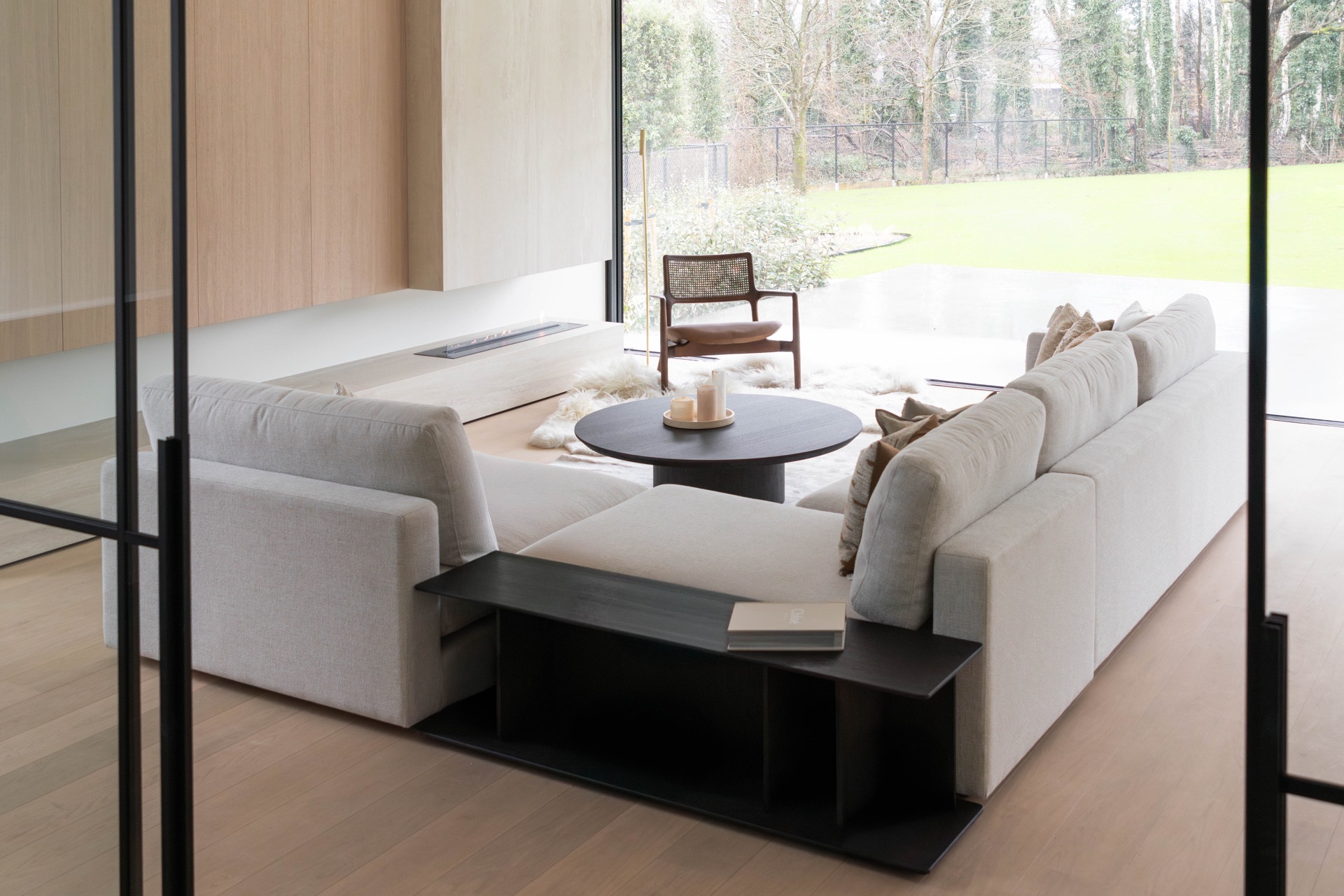
In the kitchen, counters rise seamlessly into backsplashes, their travertine surfaces blurring vertical boundaries. The living room’s media unit mirrors this, reinforcing a consistent material thread. Against these light tones, furniture crafted from dark wood stands in measured contrast, bringing depth without interrupting the calm palette. Low tables and chairs create focal points through shape and grain rather than embellishment.
Geometry and Light Define the Spatial Flow
Walls painted in soft off-white reflect natural illumination deep into the interiors. Pale laminate flooring extends the visual length of the open space. Thin black frames around windows echo the straight lines found in furniture legs and ceiling fixtures, stitching an understated rhythm through the rooms and guiding perception along clear geometric axes.
Simplicity and Substance in Wooden Furnishings
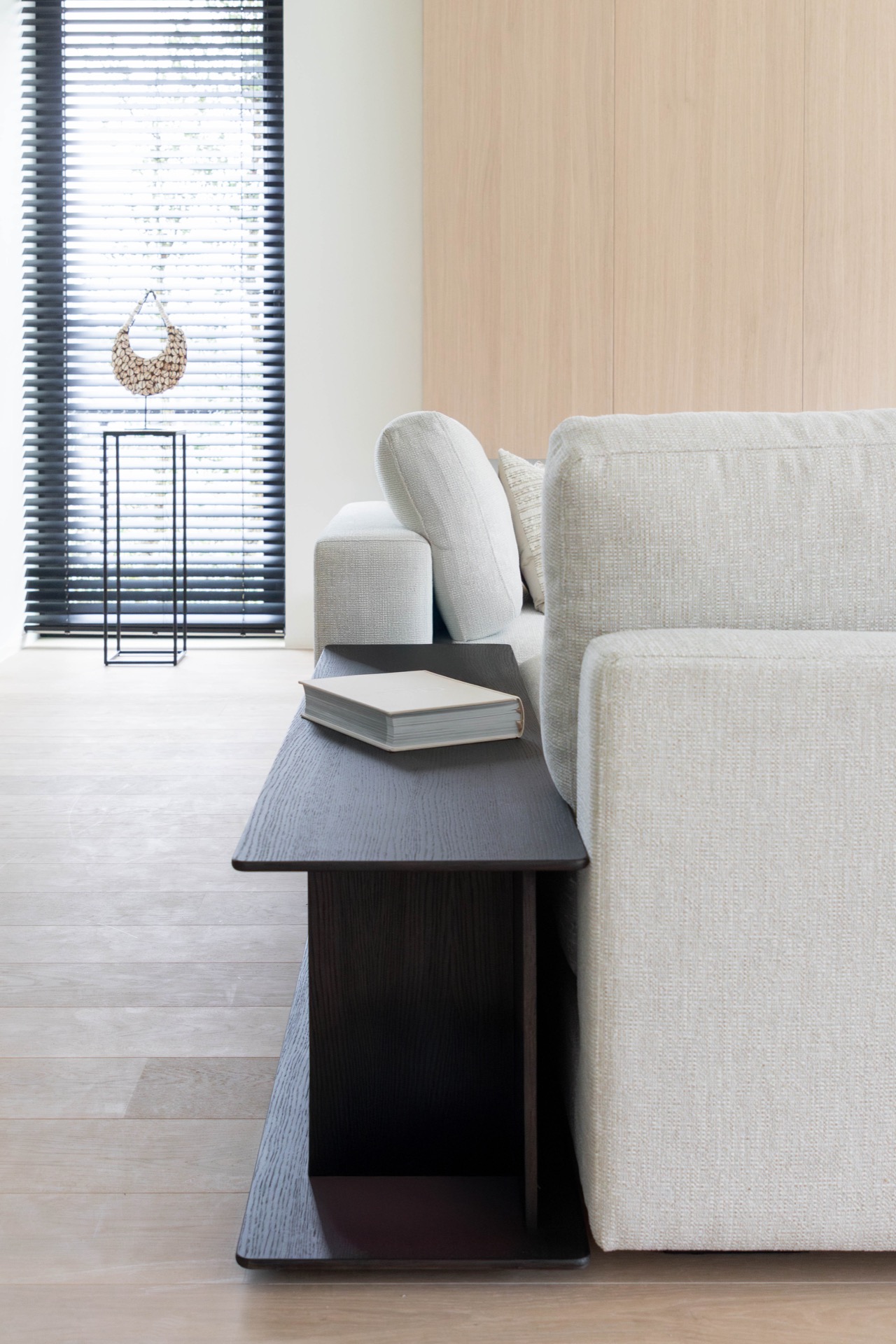
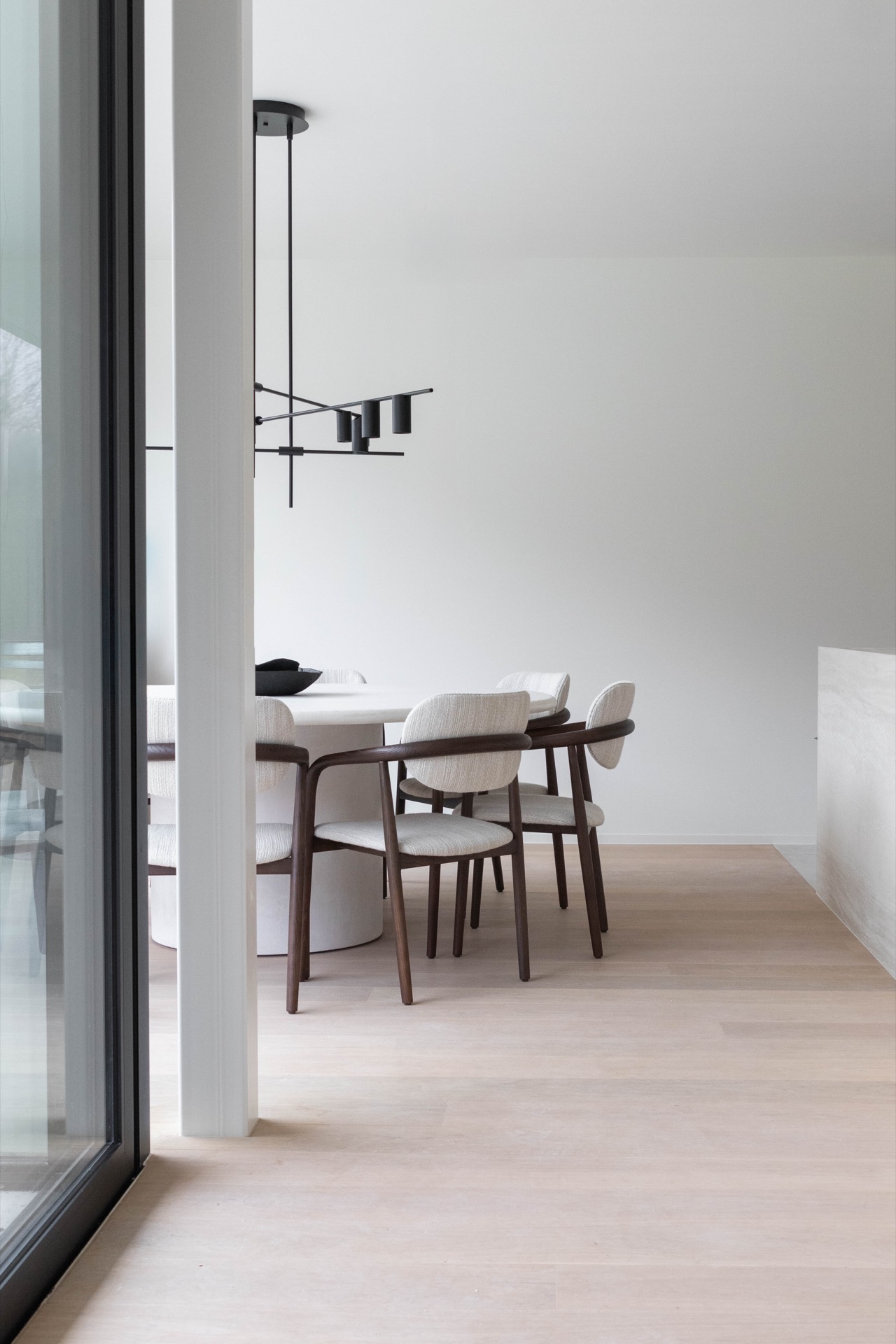
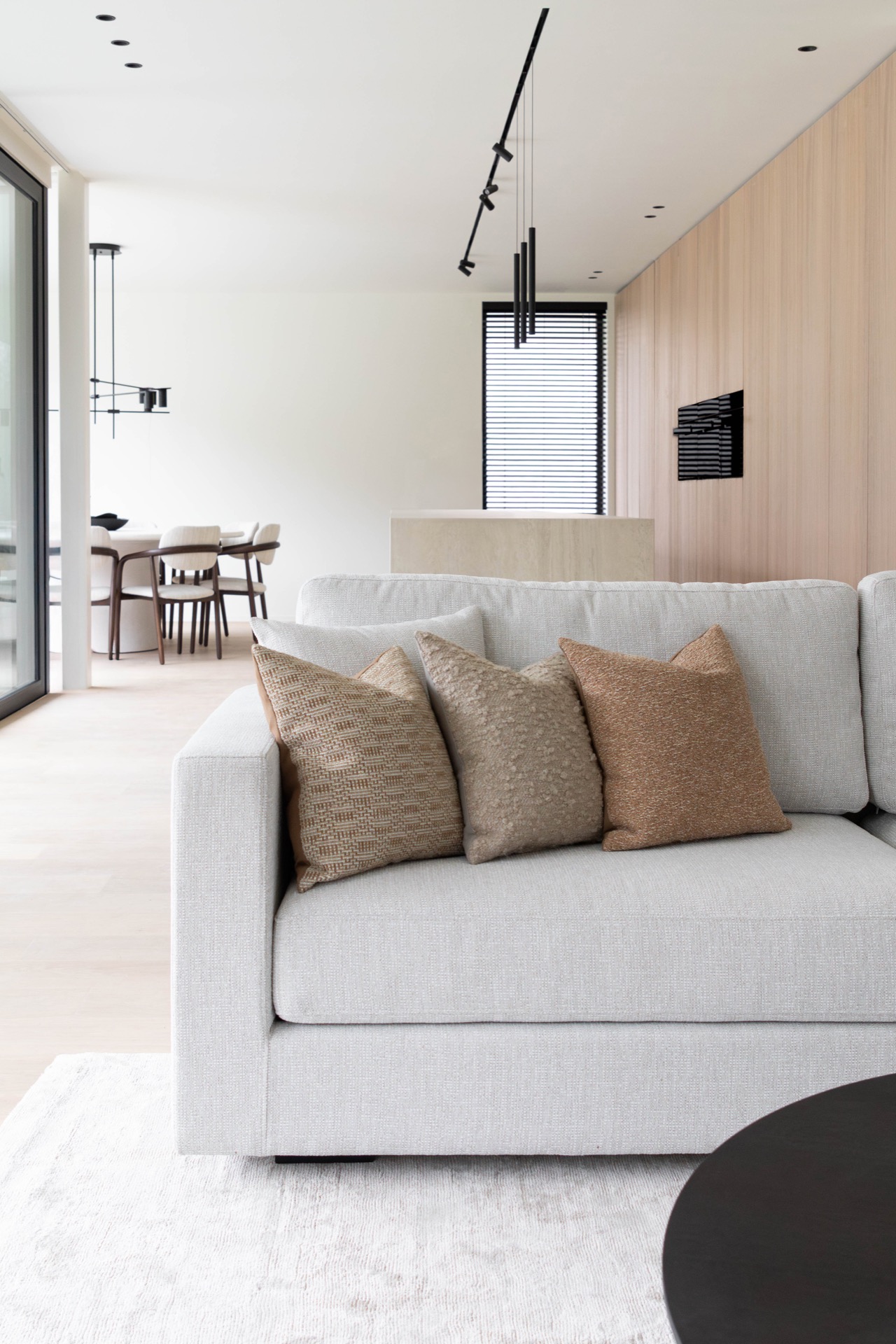
Furniture pieces take a restrained approach, showcasing wood’s natural variation without overt decoration. Dining chairs and tables embrace straightforward forms, with fine edges and smooth surfaces that emphasize material presence. Occasional matte black metal details provide discreet texture contrasts, complementing the minimalist Scandinavian-inspired style apparent throughout.
A Subdued Focal Point in Wooden and Stone Contrast
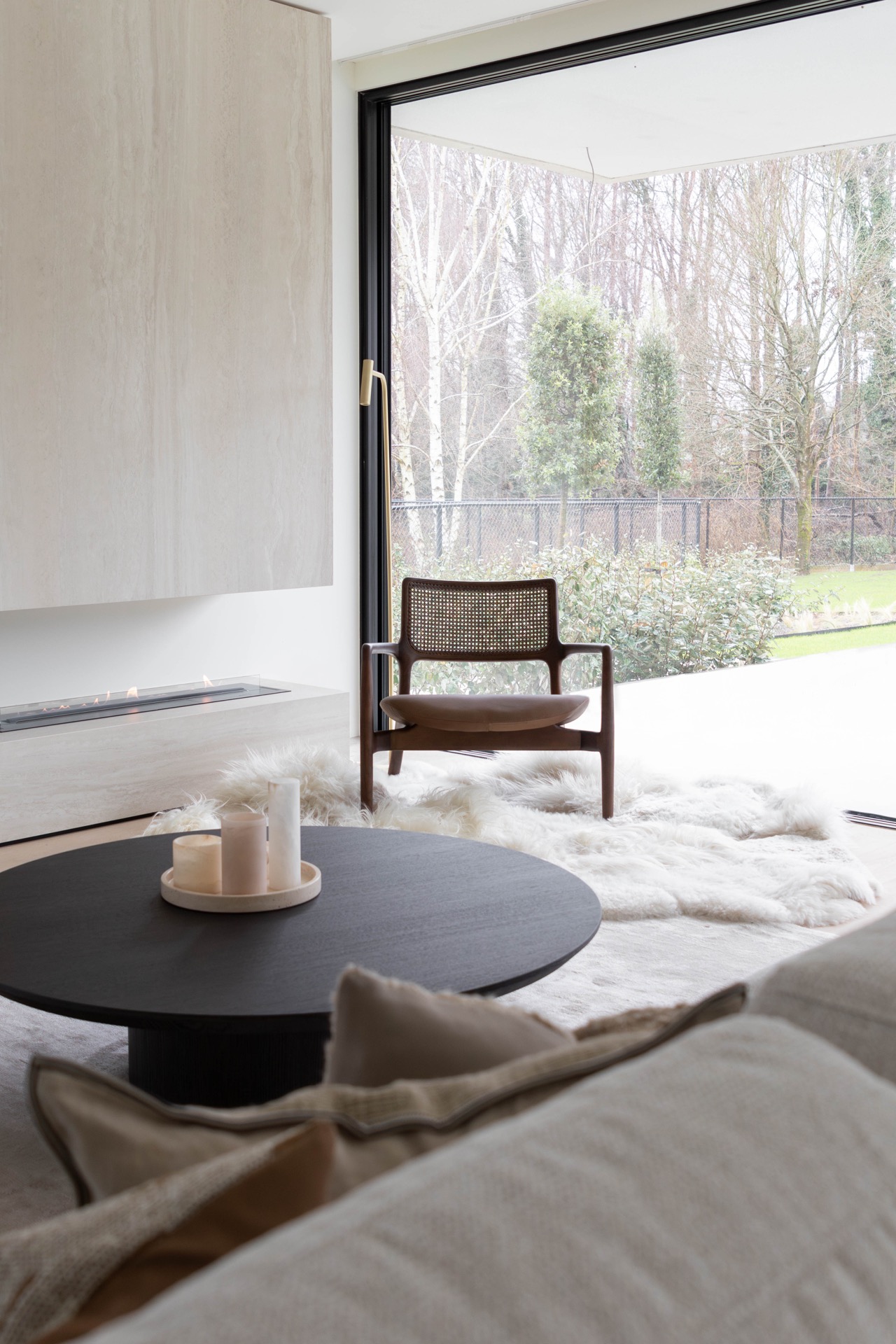
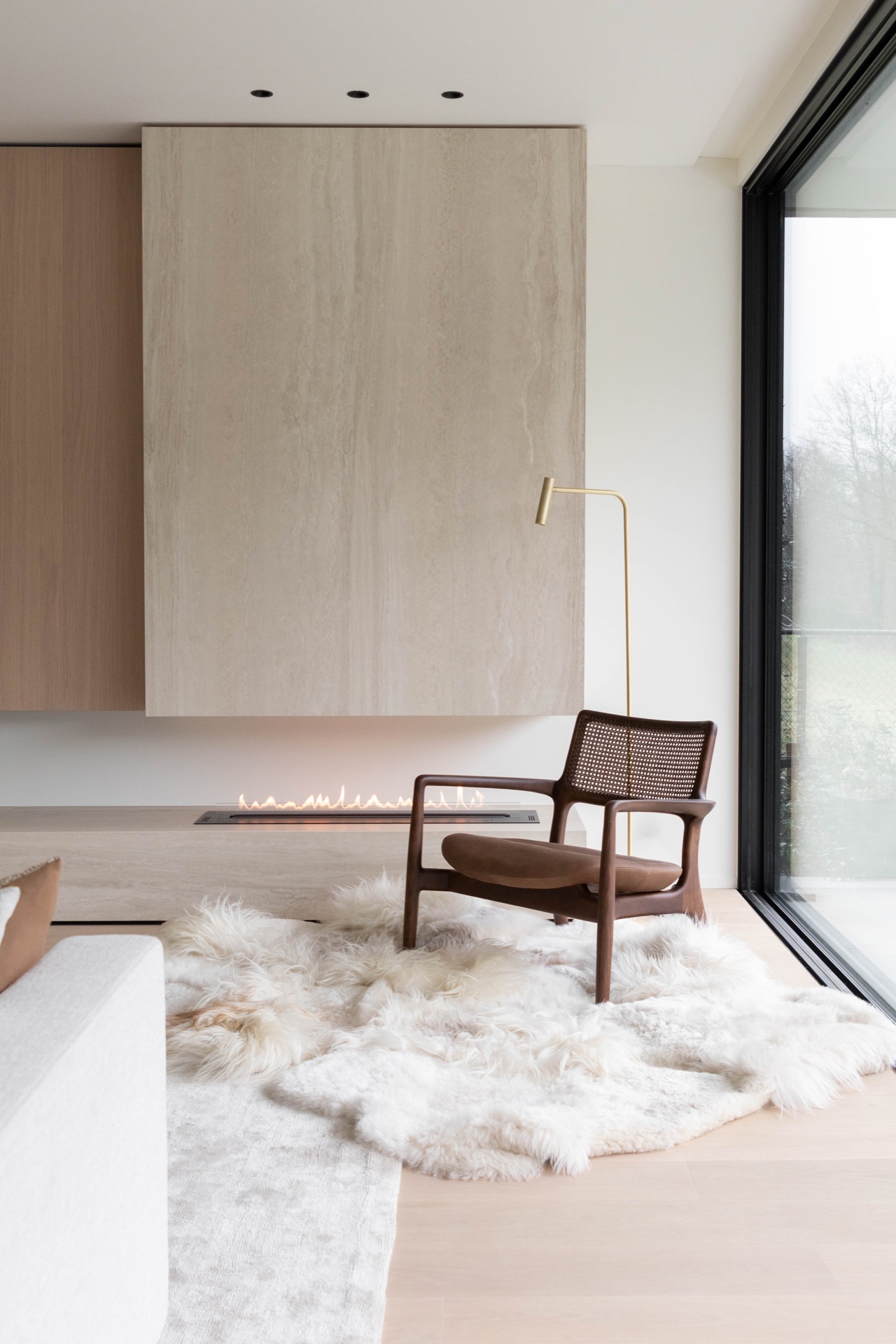
A built-in gas fireplace nestles flush within a broad wooden panel wall, its low horizontal line anchoring the living area quietly. The panel’s surface reveals nuanced grain and shading variations, enhancing this element’s natural influence. Above, parallel track lighting mirrors window grid patterns, underscoring an architectural logic woven into the material selections and layout.
Layers of Natural Texture Engage Sight and Touch
The interior invites sensory exploration through a blend of travertine’s subtle roughness, wood’s grainy warmth, and the smooth sheen of ceramic details. Each material asserts its character without ornament, organizing spaces through texture and color shifts. The neutral palette incorporates light hues alongside gentle pastels and earthy tones, modulating dynamically with changing daylight.
Clean Lines Preserved by Concealed Storage
Custom cabinetry stretches along walls, hidden behind flush panels that sustain uninterrupted sightlines. This choice clears the visual field, accentuating the room’s spaciousness and material qualities. Open corners and generous passages allow light to move freely, animating the layered volumes and emphasizing open circulation routes.
Natural Light Shapes the Spatial Experience
Window placement near the ceiling introduces indirect sunlight that sculpts soft, shifting shadows. The stark black framing cuts across pale surfaces, forming geometric compositions that offset organic textures such as stone veining and wood grain. Here, daylight acts as an element shaping perception and spatial depth. That makes the thatched roof part of the architectural character rather than a loose finish.
Tonal Counterpoints Structure Functional Zones
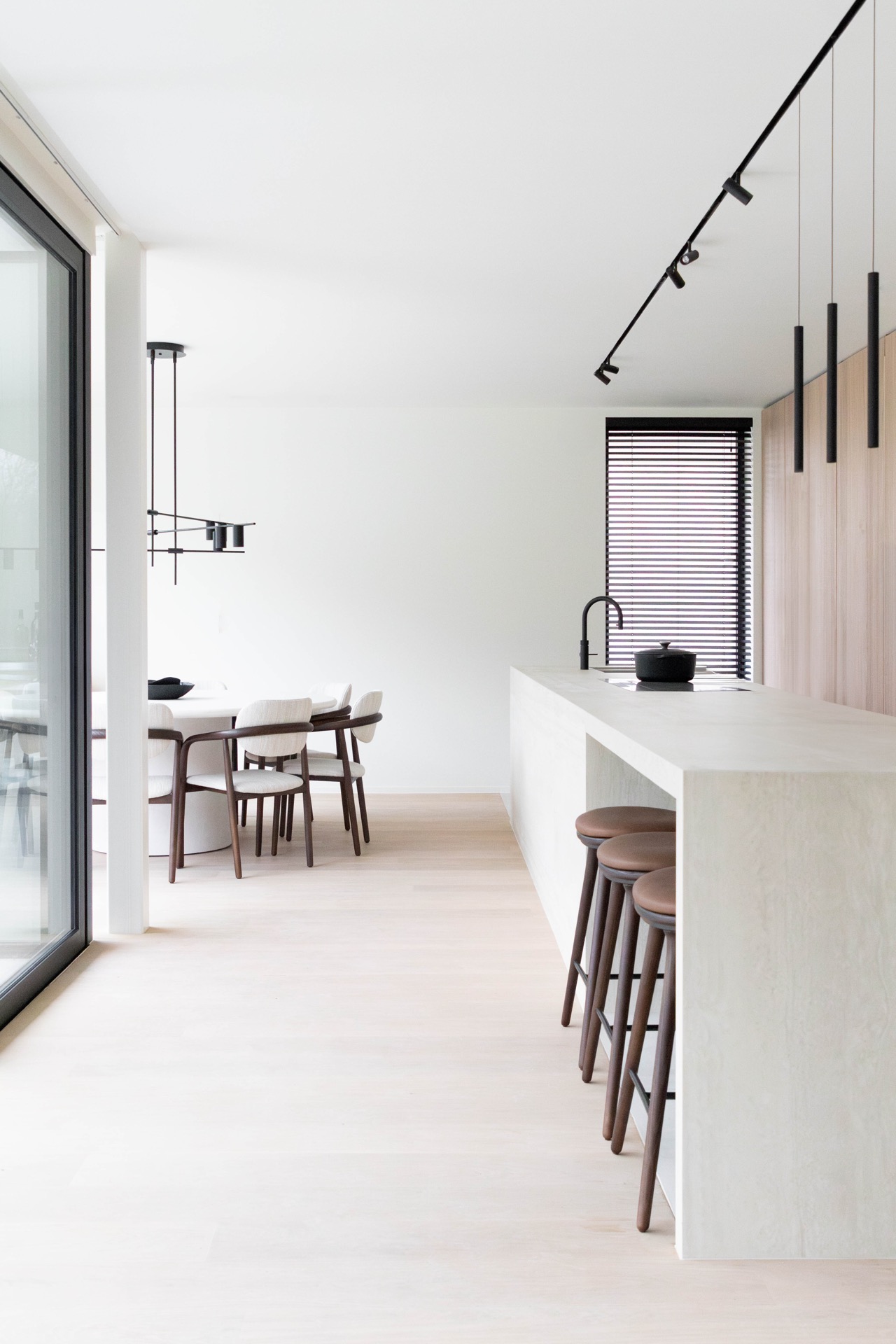
The light expanses of travertine and laminate flooring contrast with darker wood furniture, marking transitions between kitchen, dining, and living areas without physical barriers. These tonal differences subtly guide movement and function, promoting an intuitive and connected environment through a shared material narrative.
Material Repetition Reinforces Spatial Cohesion
Travertine surfaces recur from counters to media storage, linking disparate zones visually. Wooden finishes on furniture unify separate groupings and architectural features, allowing the open space to feel orderly yet distinct in areas of use.
Minimal Detailing Directs Attention to Form and Surface
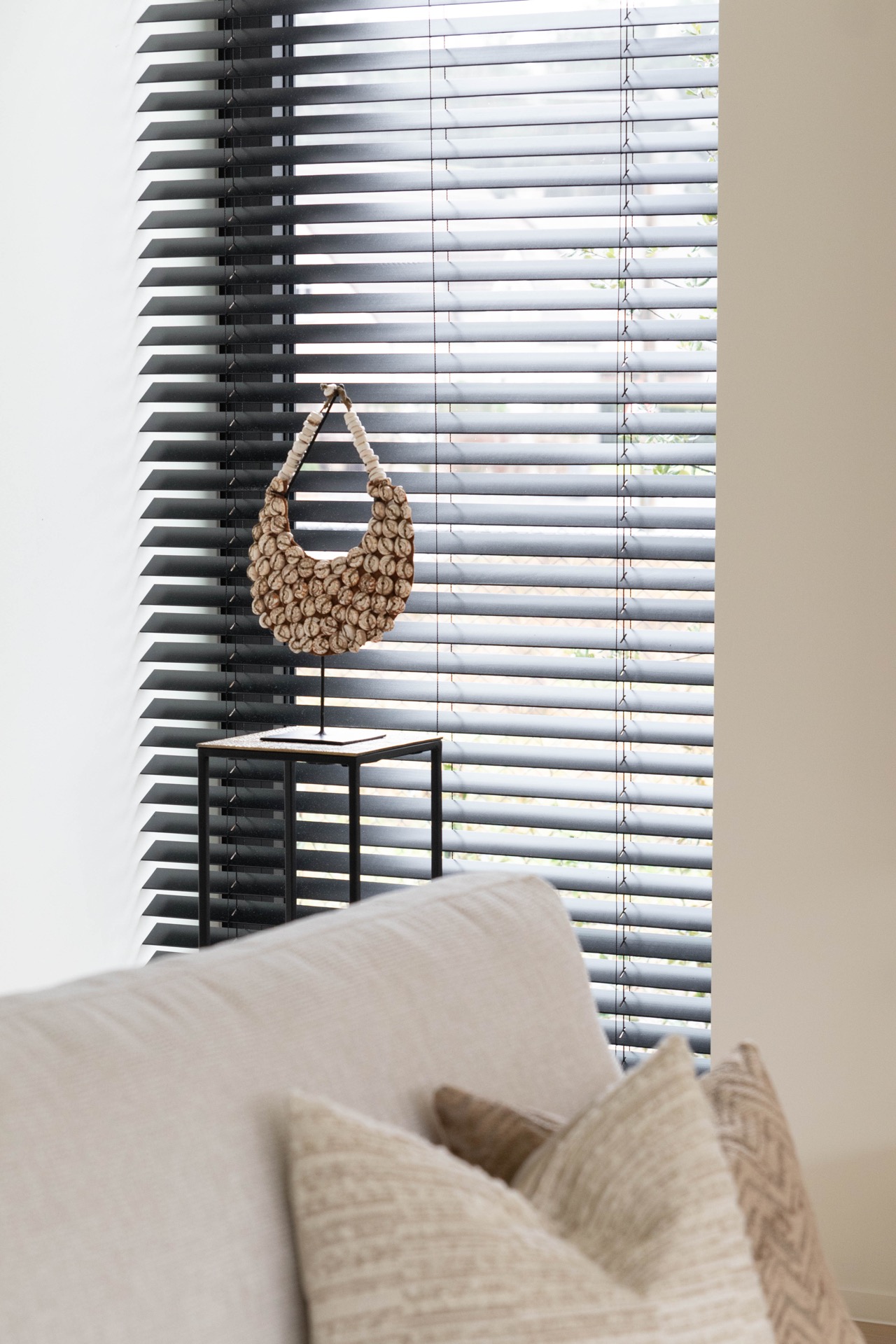
Decorative elements remain sparing and textural, prioritizing material presence over ornament. This restraint invites closer viewing of natural nuances in surfaces and how they respond to light, reinforcing the interior’s clarity and rhythm.
Subtle References to Traditional Roofing Methods
Material layering and the spatial structure allude quietly to traditional roofing techniques like the thatched roof. This influence arises from the stacking of natural materials and clean geometric shapes rather than literal imitation, integrating heritage through abstraction in a contemporary setting.
Transitions Guided by Texture and Light Rather Than Walls
Flow from kitchen to dining and living sections unfolds along continuous floors and modulated light levels. Travertine paths and wood accents subtly signal functional changes without enclosure, crafting an experience of gradual spatial unfolding.
Integrated Lighting Complements Architectural Geometry
Linear ceiling tracks align with window structures and furniture legs, framing spatial geometry and offering focused illumination. Their unobtrusive profiles support the composition of planes, lines, and textures rather than dominate, reinforcing the design’s quiet visual order.
Natural Surfaces Ground the Minimalist Interior
Rich wood grains and travertine veining introduce complexity within the restrained design. These natural characteristics balance precise architectural lines, providing sensory depth and encouraging engagement across different senses. That makes the thatched roof part of the architectural character rather than a loose finish.
Want to see more of Charrell Home Interiors? View the page of Charrell Home Interiors for even more great projects and company information.


.png)