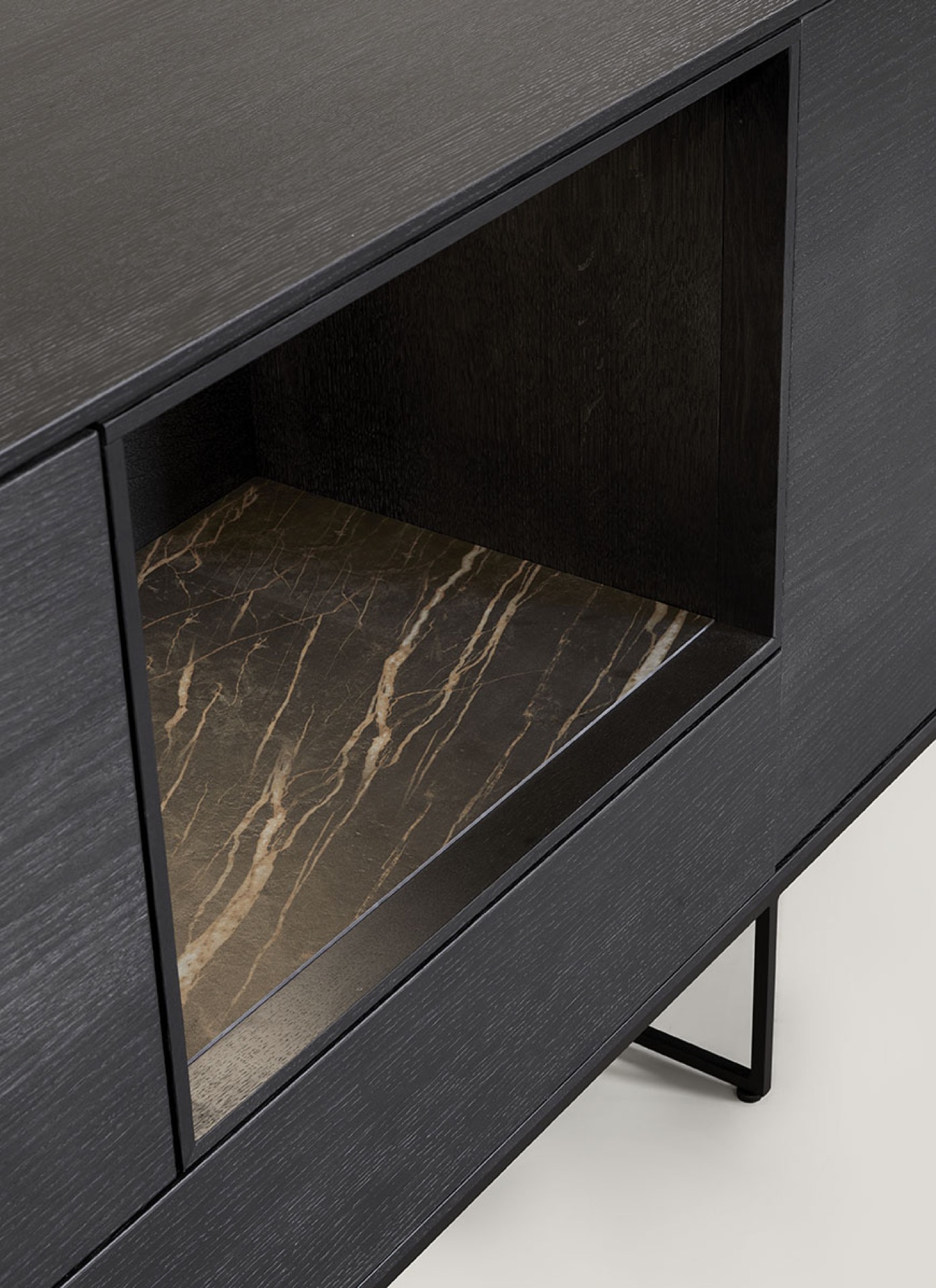





Modern office furniture with clean, dark oak pieces
Modern office furniture sets the tone as soon as the entrance opens up. A pair of solid oak tables catches the first light, and the pale grain under a matte varnish gives the room its starting note. From there the palette turns darker: black accents, deep wood tones and straight-edged storage pieces guide the eye through the office. The result is not built on display pieces, but on furniture that marks zones, holds the route open and lets the material surface do the work.
Clean lines in oak, veneer and stone
The collection brings together sideboards, storage cabinets and meeting tables. European oak and oak veneer form the base, then a dark stain pulls the surfaces toward a subdued sheen. That finish keeps the wood readable without making it glossy. In the meeting areas, marble appears on tabletops and shelf inserts, where its cooler surface interrupts the grain of the oak. The contrast stays direct: black frames, beige tones, natural timber and stone panels all sit close together, each one clearly defined.
Built in the workshop around the material
All pieces were made in a workshop where the character of the wood appears to have guided the making. The sharp corners and smooth planes suggest a process that leaves little room for excess. Massif oak and veneer are used together for both appearance and performance, with the transparent matte coating protecting the surface while keeping the texture visible. You can read the joinery in the way the edges stay crisp and the panels remain flat, even on longer cabinet runs.
Storage that keeps the floor clear
Built-in storage office elements line the walls rather than blocking the room. Low sideboards hold the sightline open, while taller cabinets gather the visual weight at the back of the space. That arrangement leaves the circulation routes free and makes the office easier to move through. The furniture does not try to fill every corner. Instead, it leaves pockets of air between pieces, so the dark volumes sit against the lighter walls without closing the plan down.
Meeting room double-height and the round table in the void
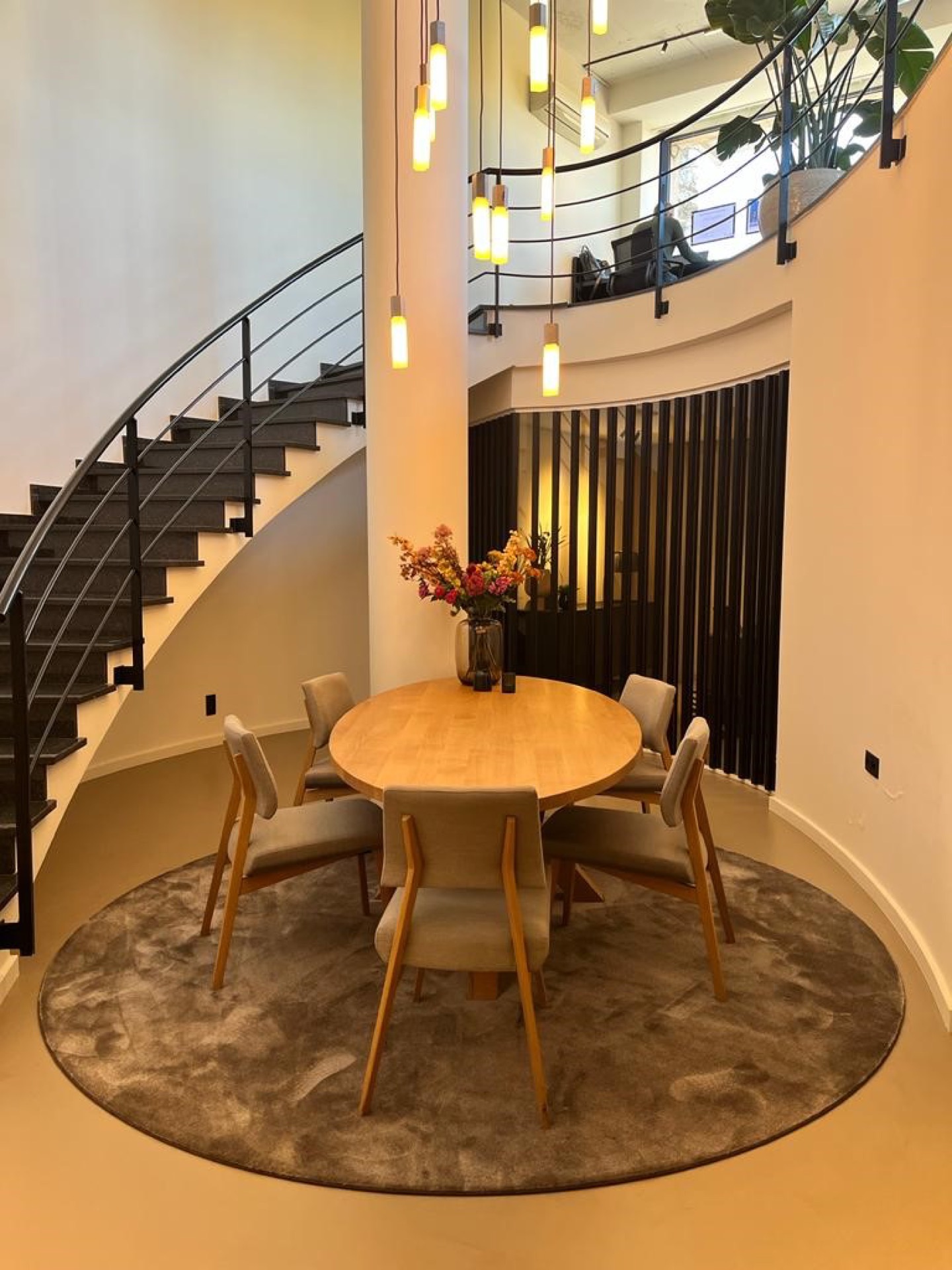
The meeting room double-height setting is felt in the entrance and the open view upward, where a round wooden table sits below the open volume. Around it, the black metal stair railing and vertical dark elements sharpen the outline of the space. The round top softens the geometry of the room, but the rest stays strict: straight balustrades, slim frames and a measured arrangement of seating. It is a space where the furniture defines the scale more than decoration ever could.
Dark oak furniture against black and beige
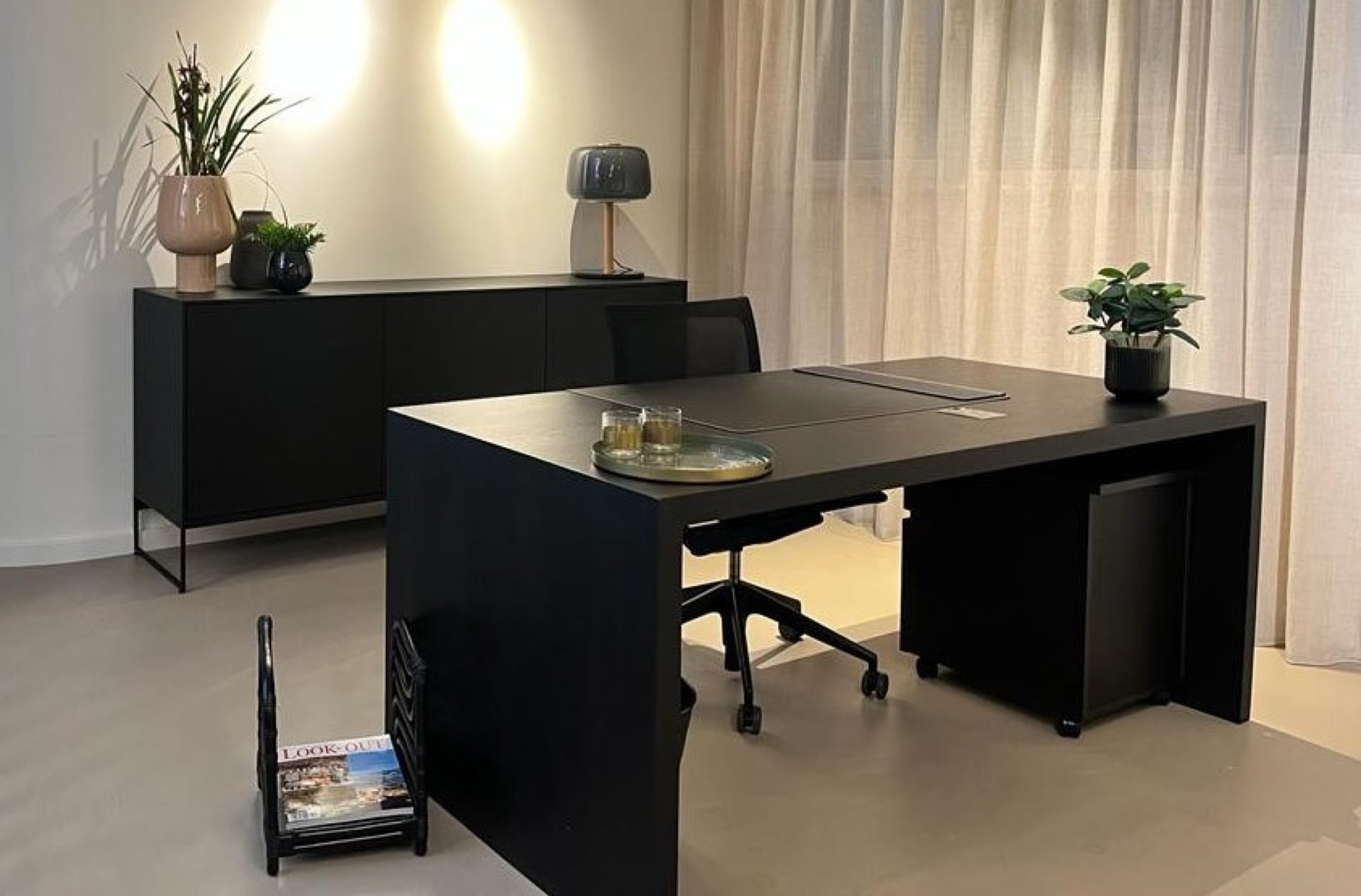
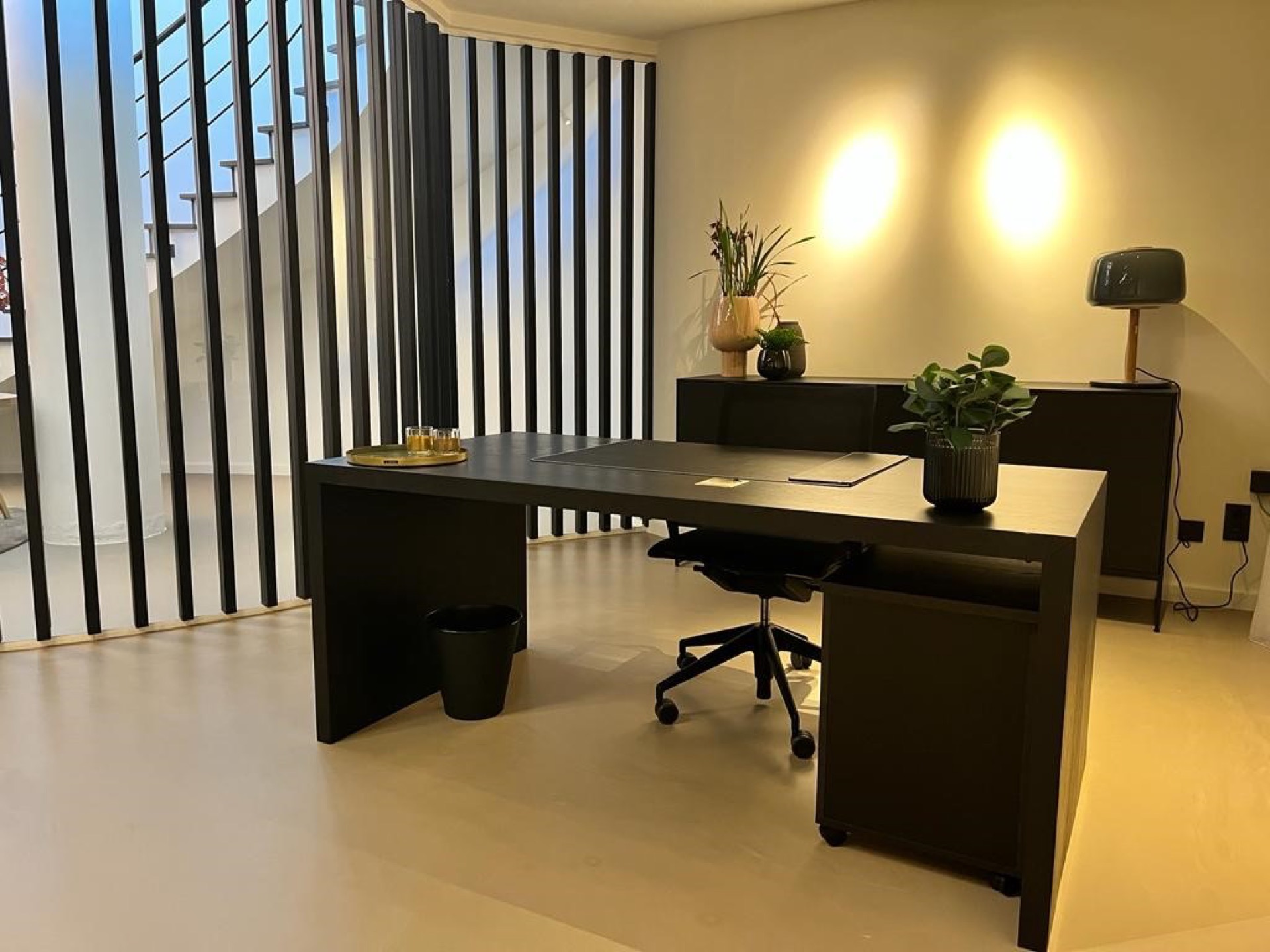
Dark oak furniture carries most of the visual weight, yet it is the quieter tones that let it stand out. Beige curtains soften the window wall, black cabinetry deepens the edges, and the natural timber stops the room from slipping into a flat monochrome scheme. The contrast is not dramatic. It works through proximity: a black cabinet beside an oak table, a pale wall behind a dark worktop, a marble surface set into an otherwise wooden composition. Every shift in tone changes how the room reads.
Warm indirect lighting over matte surfaces
Warm indirect lighting washes across the wood and catches on the dark stain without creating glare. In the wall recesses and along the zoned surfaces, the light sits low and even, which makes the room feel more legible after dark. It also reveals the finish. The matte wood finish absorbs part of the light, so the grain shows in a softer way, while the marble responds differently and holds a cooler reflection. The room depends on that difference between surfaces.
Material changes that mark the work zones
The office is divided without walls doing all the work. Dark oak elements lead toward the meeting areas, and lighter wood tables near the entrance create a more open read at the threshold. The shifts are subtle, but they are enough to tell one zone from another. That layering is reinforced by the furniture itself: sideboard, cabinet, table, worktop. Each piece has its own proportion, yet all of them stay within the same visual language, so the transitions feel clearly drawn.
Marble office details inside the black frames
Marble office details appear inside black shelving and on selected tops, where the veining brings a brighter, more reflective surface into the composition. The stone does not cover large areas. It works as an insert, a shelf, a tabletop edge, a surface that breaks the rhythm of wood and lacquer. In the images, the pale lines in the marble stand out against the dark frame, which gives the furniture a sharper outline without adding ornament. The material is doing the visual work on its own.
Plants and light softening the straight field of furniture
A few organically shaped plants interrupt the straight lines and bring a looser rhythm into the room. They sit beside the harder surfaces rather than being used as decoration on top of them. That placement matters. Their shapes break the repetition of right angles, especially near the storage walls and around the brighter zones. Combined with the warm light, they make the room feel less rigid while keeping the furniture layout legible. The contrast stays tactile: leaf, stone, wood grain, lacquered edge.
Office interior design built from proportion
What holds the whole composition together is proportion. The desks are deep enough to register as work surfaces, the sideboards stay low enough to preserve the view, and the taller cabinets create a measured finish at the back of the room. This office interior design does not rely on spectacle. It depends on the way each piece meets the next, on the gap between table and wall, and on the weight of the materials in relation to the volume around them. That is where the room settles into its own rhythm.
A restrained palette that keeps texture visible
The final impression comes from restraint. Black, beige, dark oak and marble are the main notes, with the transparent matte varnish keeping the wood structure open to view. Because the surfaces are not overworked, the grain, the stone veining and the edges of the joinery remain readable from different angles. The entry table, the cabinets, the worktops and the meeting table all carry the same discipline of line. Modern office furniture here is not a single object, but a sequence of pieces that shape how the space is used and seen.
Want to see more of Strakk Interieurbouw? View the page of Strakk Interieurbouw for even more great projects and company information.



NEW 2026 Jubileum Edition The Best Interior Designers Benelux
Order Now €125