





Modern outdoor living: stylish veranda with adjustable louvers
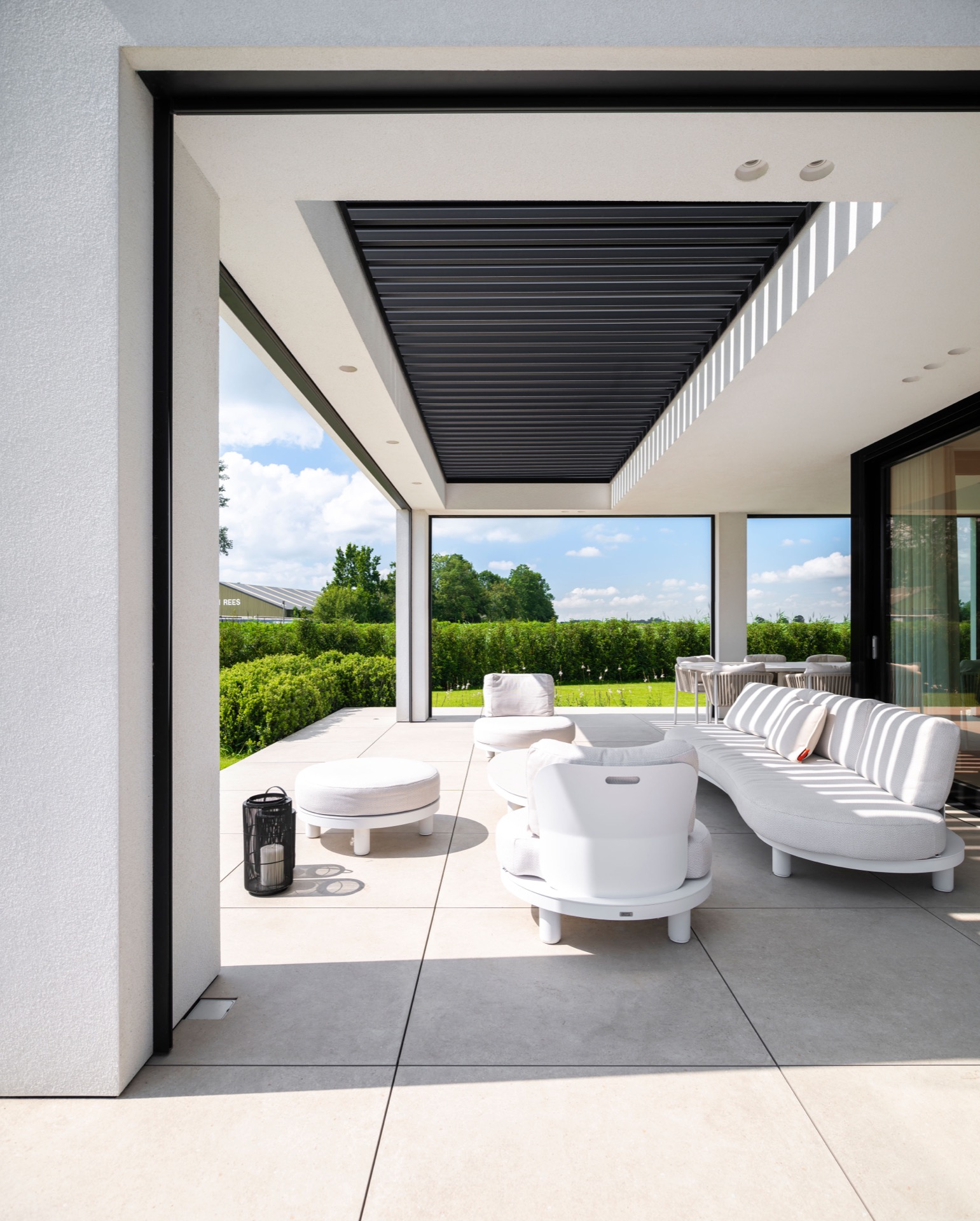
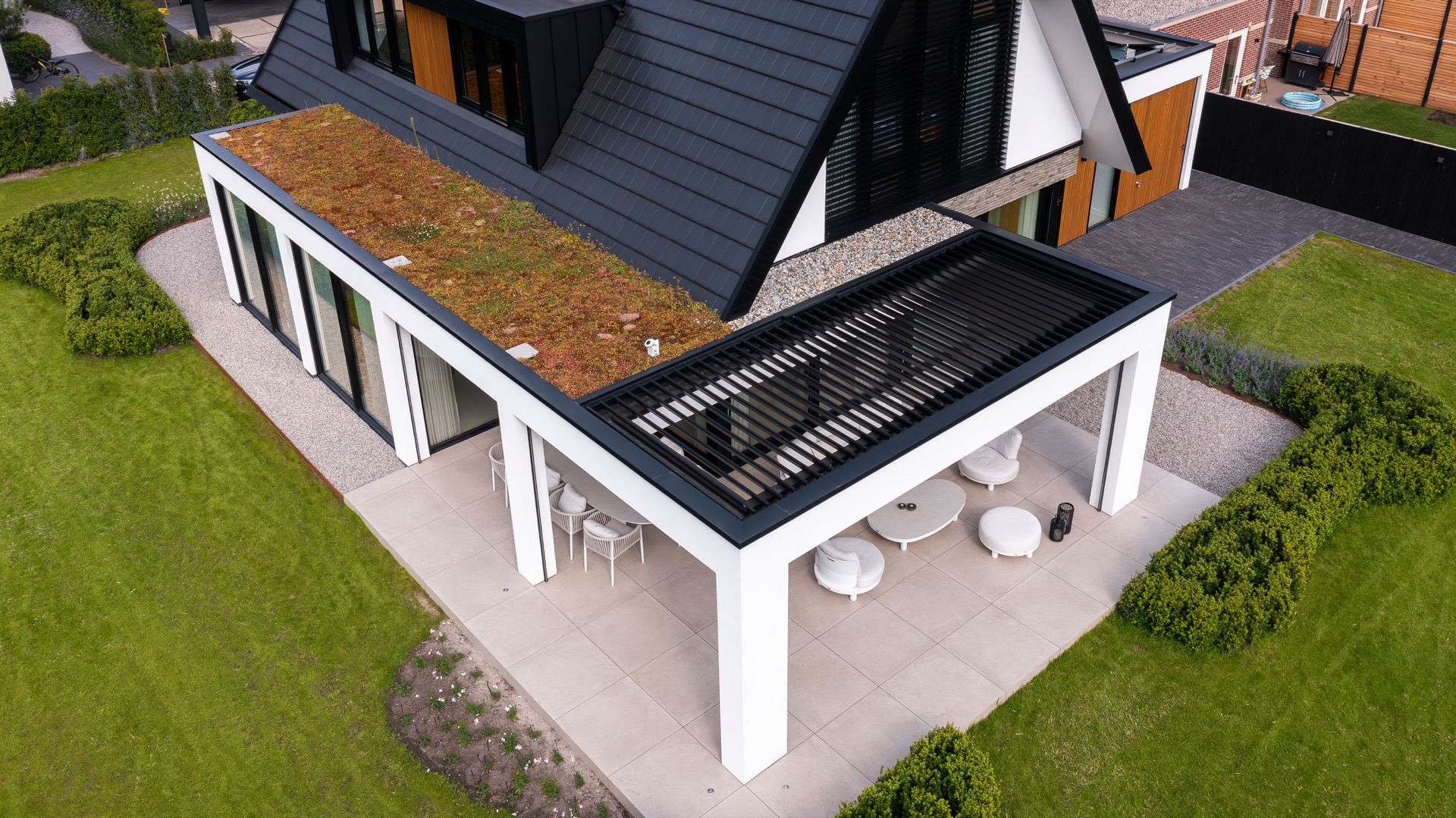
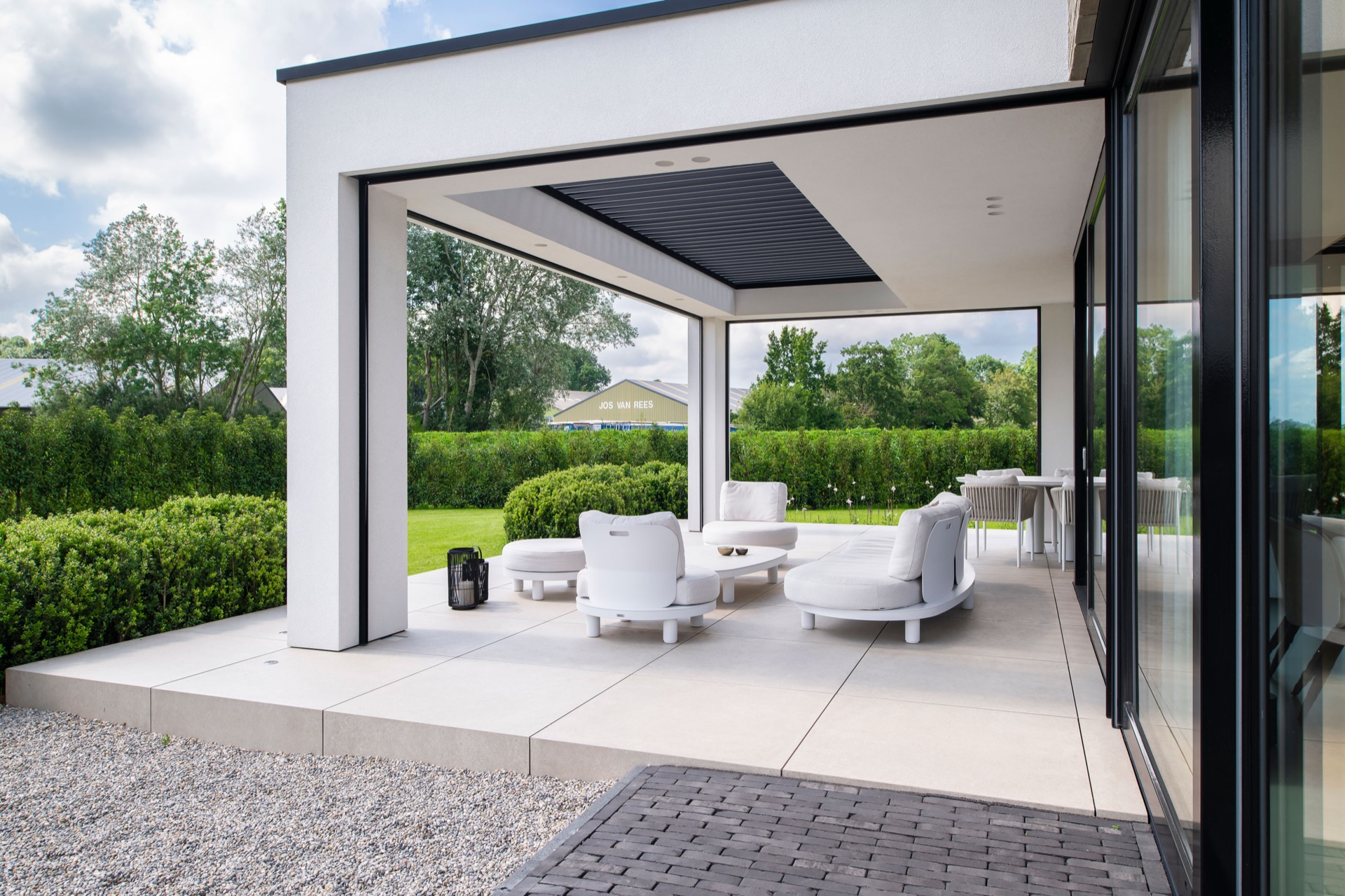
The modern outdoor living is immediately visible in the way the project is framed. A grid of slender black aluminum louvers defines the roof over the terrace, casting patterned shadows that shift with the sun. The sharply angled lamellas pivot smoothly, offering precise control over sunlight and ventilation while framing views to the sky and garden beyond. Below, broad concrete slabs with crisp edges extend the outdoor floor, repeating the geometry of the overhead louver system. Pale plaster walls of the adjoining house provide a subtle backdrop, emphasizing the contrast between materials and light.
modern outdoor living as the architectural starting point
The louver system operates with concealed hinges that allow each aluminum lamella to pivot individually. When fully open, the roof transforms into narrow strips, blurring the boundary between built structure and open sky. Partially closed positions shield the terrace during peak sun or light rain without enclosing the space. This adaptability encourages use of the veranda throughout the year, accommodating changing weather conditions without interrupting the minimalist silhouette.
Blurring indoor and outdoor boundaries with folding glass walls
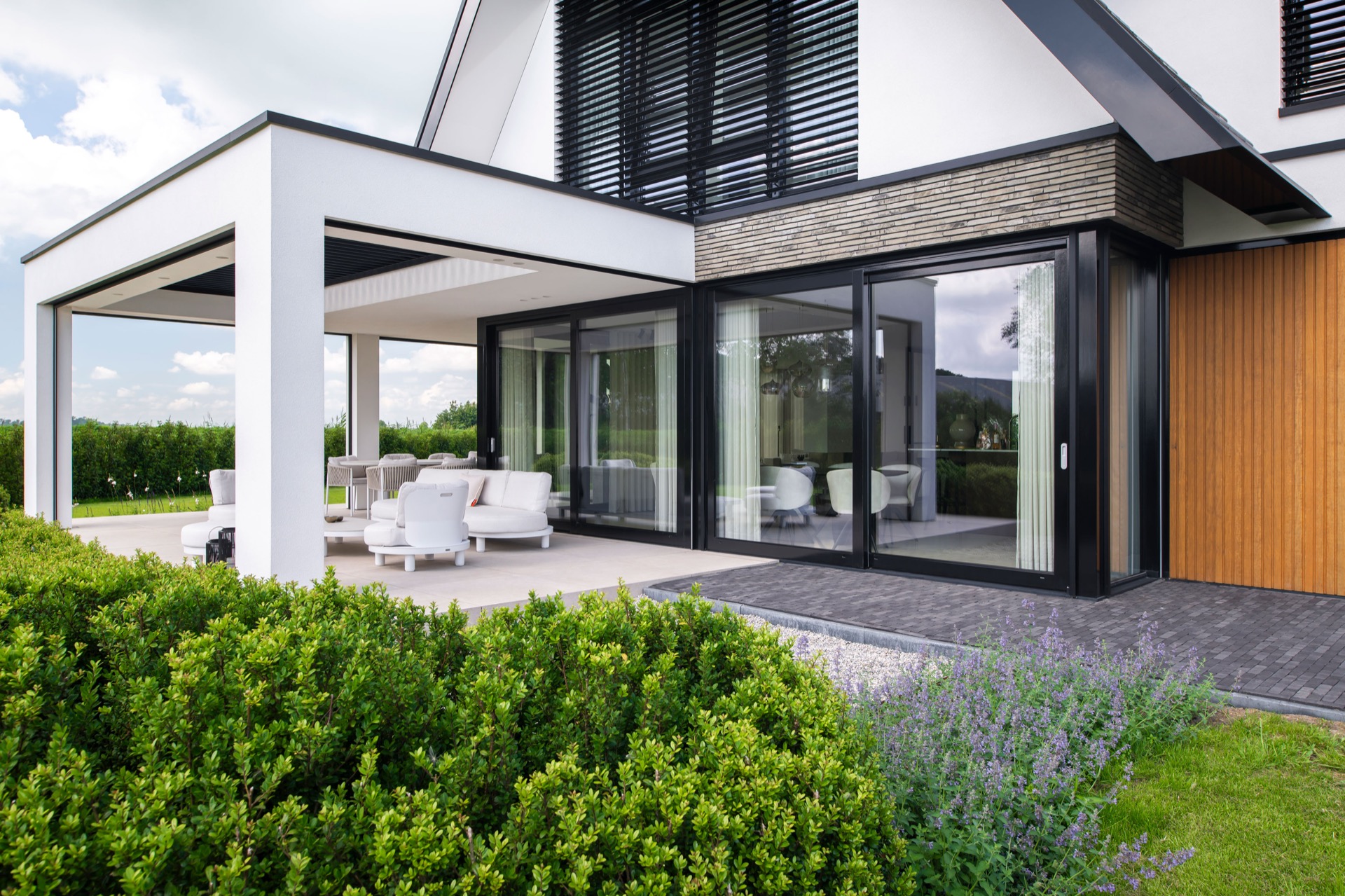
The transition between interior and terrace is softened by folding glass doors that slide fully into wall pockets. These panels, with slim profiles, maximize transparency and invite daylight deep into the home. When opened, the boundaries dissolve, allowing fresh air and visual continuity between indoor living areas and the covered outdoor room.
Material interplay in structural supports
Aluminum posts uphold the louvered roof, each rising from a timber base resting on the concrete terrace floor. The natural texture of wood contrasts with the matte black metal, adding warmth and tactile variation at the foot of the columns. This detail discreetly links the metal roof to the hard surface beneath, anchoring the structure visually.
Soft landscape touches framing defined edges
The terrace perimeter is softened by low hedges and neatly arranged planter boxes. These plantings interrupt the strict lines of concrete and metal, introducing organic shapes that guide the eye toward the garden. Through openings between the lamellas, shifting greenery and sky provide a living, changing backdrop within the structured framework of the veranda.
Material finishes balancing durability and refinement
The concrete floor features a smooth, finely troweled finish in a uniform tone, reinforcing the minimalist aesthetic while ensuring a hardwearing surface. Aluminum elements share a consistent matte black coat, resistant yet understated. The plaster walls carry a pale, even surface that seamlessly transitions between interior and exterior spaces without drawing focus from architectural details.
Open spatial layout supporting varied use
With no enclosing walls, the veranda offers a generous footprint for both private repose and social gatherings. The air circulates freely under the adjustable louver roof, which adapts dynamically to environmental conditions. This responsive design balances shelter and openness, allowing daylight, breeze, and rain presence to shape the outdoor experience naturally. That makes the modern outdoor living part of the architectural character rather than a loose finish.
Concealed drainage maintaining clean lines
Drainage channels are integrated within the aluminum roof structure, hidden from view to preserve the veranda’s clean geometry. Rainwater is discreetly routed through internal paths in the lamella assemblies, preventing visible gutters and avoiding interruptions to the sleek silhouette.
Light and shadow patterns animate surfaces
Throughout the day, sunlight filters through the adjustable louvers, casting dynamic stripes and dappled shadows across floors, walls, and furniture. These moving patterns accentuate surface textures and subtly animate the static architecture with variations in light intensity and angle.
Furniture echoing the veranda’s geometry
White outdoor chairs and tables follow the linear rhythm of the roof and floor, with simple geometric contours that complement the architectural composition. Their understated presence supports the spatial balance, reflecting light softly without drawing attention away from structural lines.
Proportions aligned with home architecture
The veranda extends naturally from the house, maintaining alignment with the existing facade and roof lines. This careful coordination avoids visual fragmentation, reinforcing the home’s overall composition and creating an integrated outdoor extension rather than an afterthought.
Consistent material language inside and out
The plaster finish continues from the interior walls across the external surfaces, offering visual continuity. Concrete slabs relate closely to indoor flooring in color and texture, while aluminum framing echoes exterior details. Timber bases reflect internal wood finishes, collectively embedding the terrace within the home’s broader material palette.
Credit: Van Dijk Bouw That makes the modern outdoor living part of the architectural character rather than a loose finish.
Want to see more of Livium? View the page of Livium for even more great projects and company information.


.png)