





Design details and material choices for a modern outdoor space
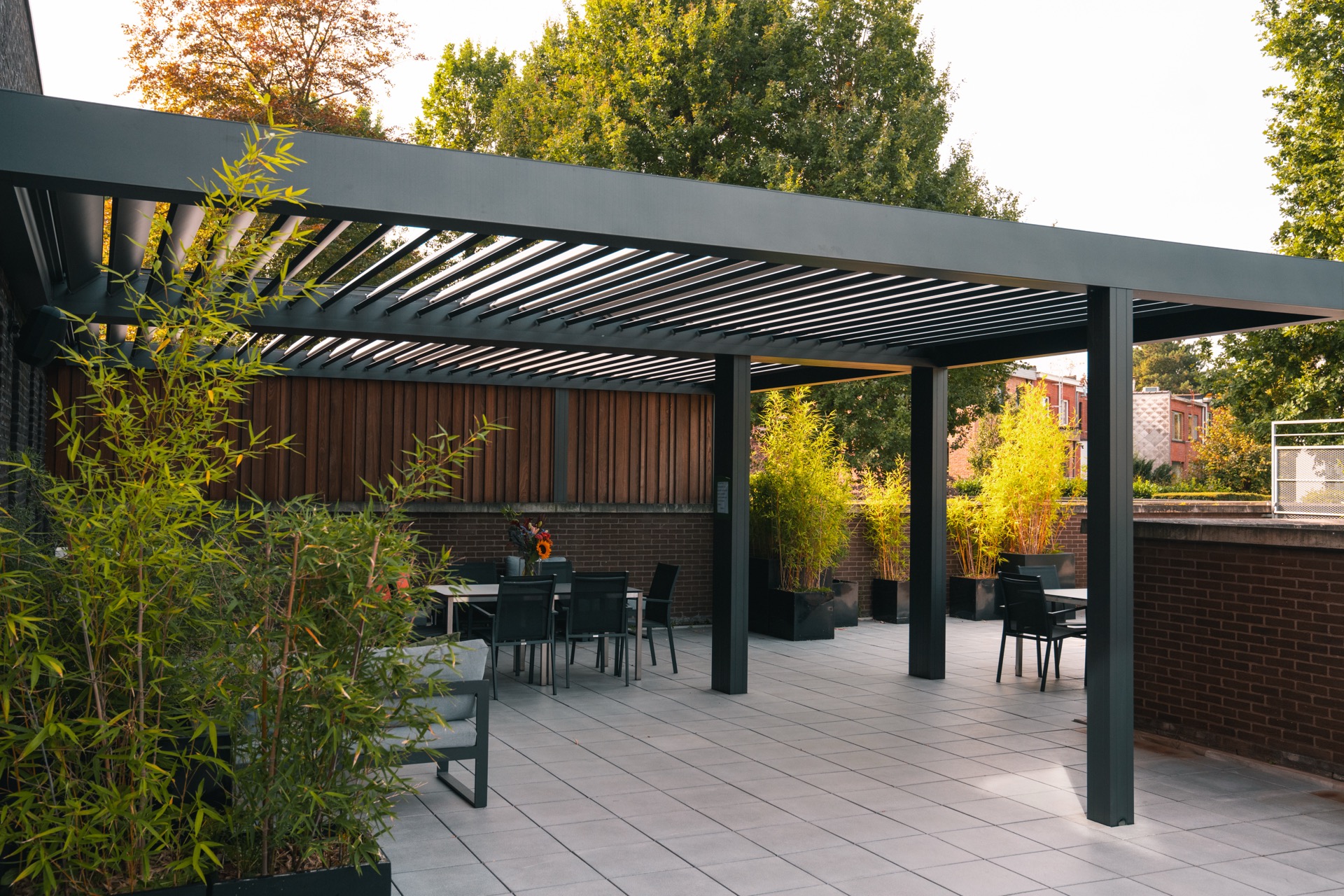
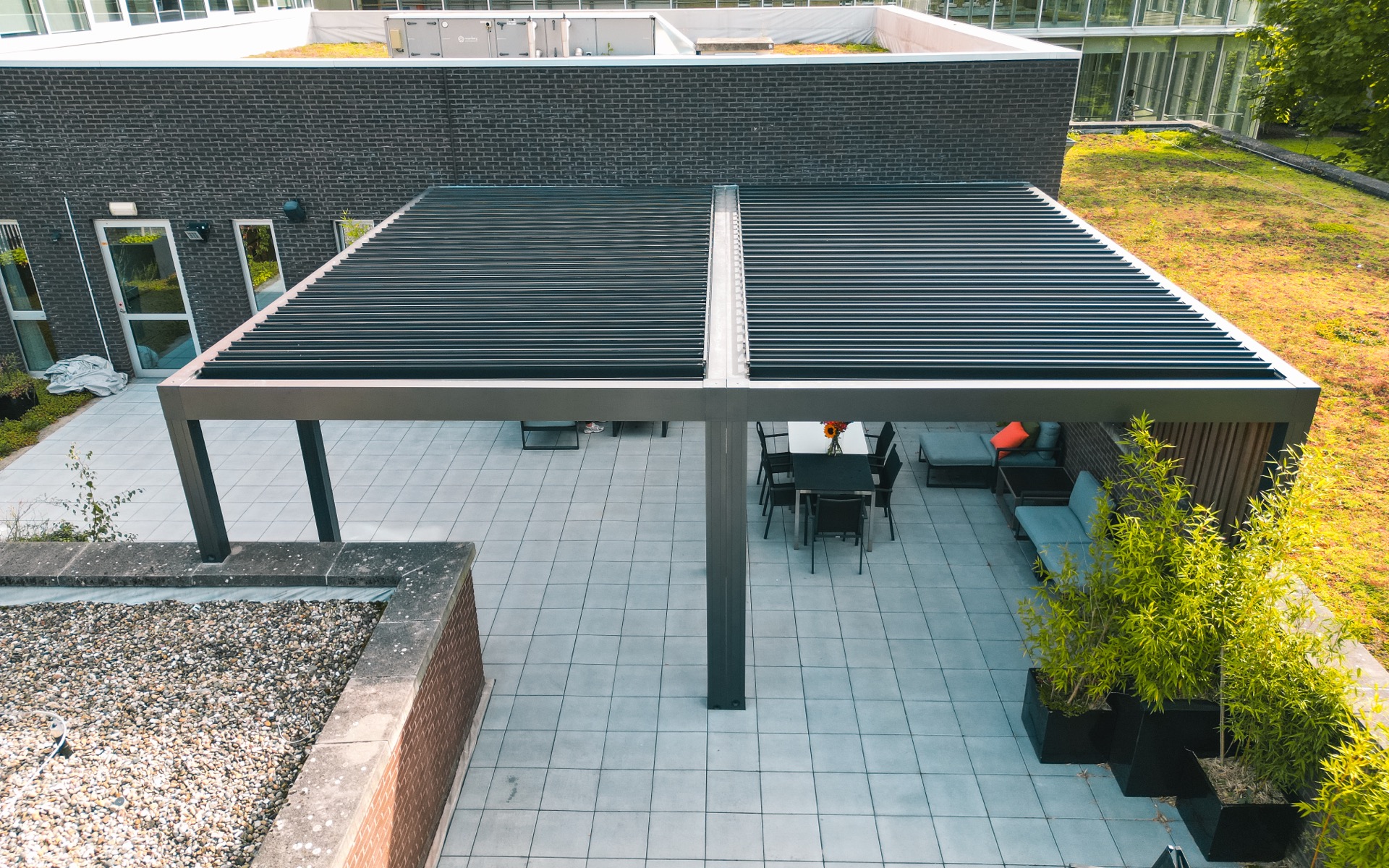
The wood cladding is immediately visible in the way the project is framed. The outdoor living area extends from the built environment with a garden pergola topped by a lamella roof. Its angled slats filter sunlight and shift shadows across the stone-tiled patio, creating a changing play of light throughout the day. This architectural feature introduces volume without enclosing the space, preserving openness while offering shelter from sun and wind.
Integration of Wood Cladding in the Outdoor Environment
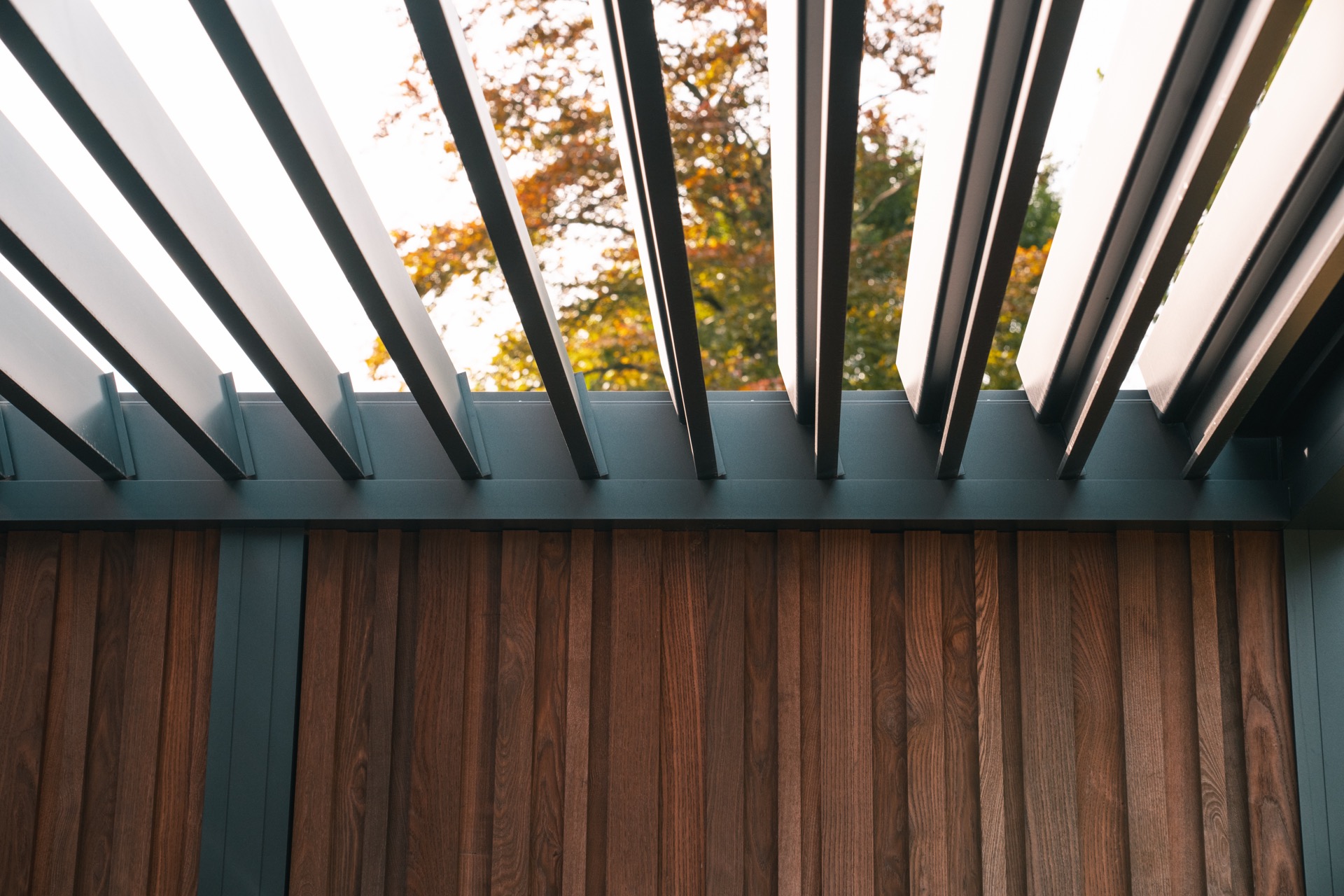
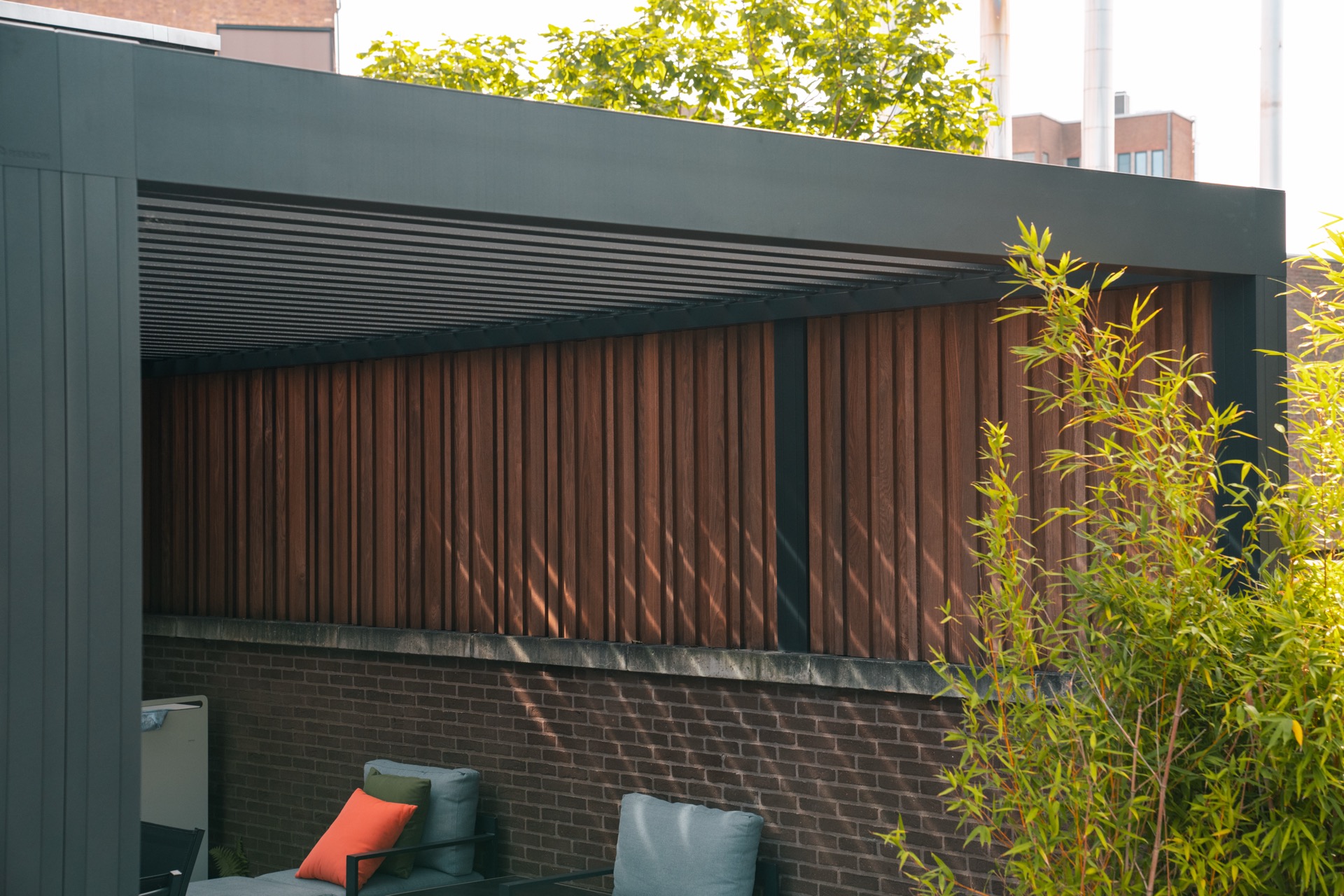
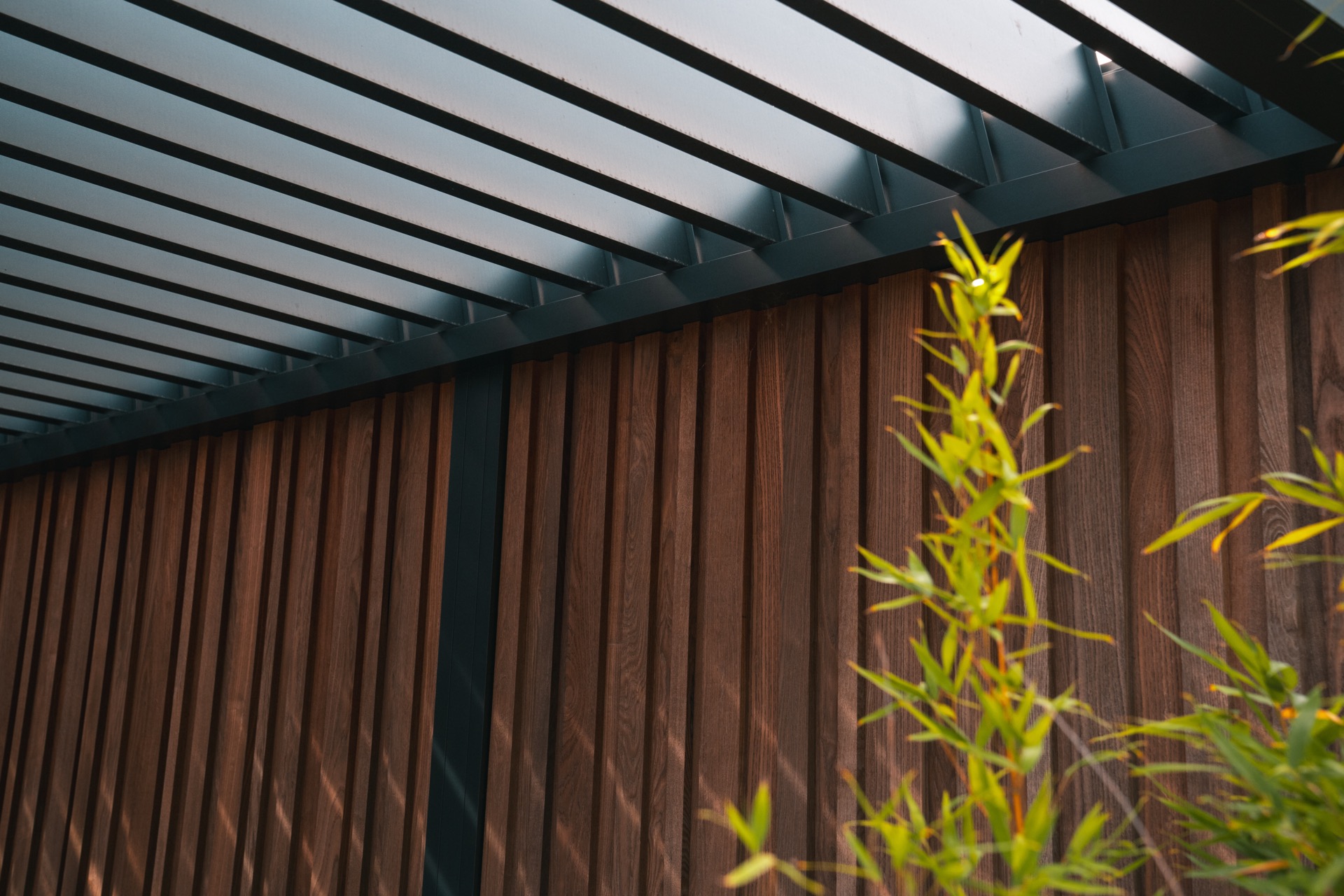
One striking detail is the use of wood cladding on vertical surfaces adjoining the patio. The wooden panels, arranged with precision, add texture and warmth to the façade, contrasting with the harder surfaces beneath. The natural grain of the wood contrasts gently against the pale grey tones of the paving stone and metal framing, highlighting the material interplay central to the garden’s composition.
Structured Seating Zone Under the Pergola
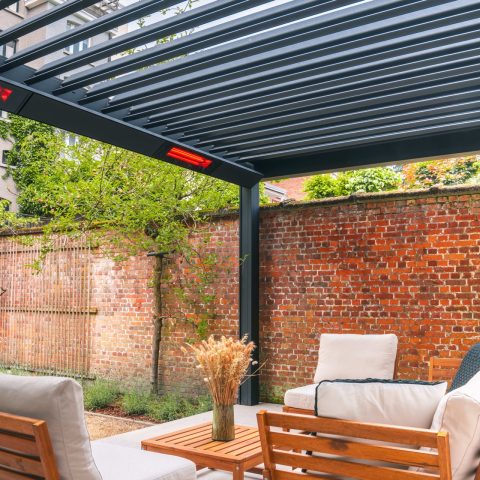
Below the pergola, the seating area anchors the outdoor space. Cushioned benches in subdued hues nestle against planters filled with greenery, softening the geometry of the structure. The garden furniture is selected for its clean lines and materials that marry with the natural context while enduring outdoor conditions. Arranged for both privacy and social interaction, the seating modulates scale and movement through the terrace.
Spatial Flow Guided by Landscape Layout
Pathways paved in large square tiles delineate zones within the garden without imposing barriers. Bordering lush plantings offer layered foliage, mixing textures that respond to seasonal shifts. These clusters of green define the edges while inviting visitors deeper into the outdoors. The layout allows for varied experiences; a quiet retreat or a shared gathering spot.
Wood and Metal: Material Contrasts and Cohesion
Beyond wood cladding, slender metal elements articulate structural components of the pergola and framing. Their smooth, matte finishes contrast with the rougher tactile feel of the timber, emphasizing craftsmanship in detail. This combination fosters a modern garden design language, where material contrast is balanced by alignment in proportions and rhythm.
Light and Ventilation Through the Lamella Roof
The lamella roof’s adjustable slats offer functional versatility, allowing control over sunlight and air movement. This transforms the outdoor living space through changing conditions, keeping it usable and comfortable during different weather scenarios. Exposure to both sun and shade enriches the ambiance, making the terrace an extension of indoor living.
Plantings That Complement Built Elements
Planted elements in the garden walls and containers provide a vivid backdrop for the seating and hard landscaping. Varied shades of green and textural differences bring vitality without interrupting the calm geometry. The choice of shrubs and perennials is deliberate, aiming to frame views and soften edges.
Detailing of the Wooden Façade Cladding
Close observation reveals the vertical wooden slats fitted with precise spacing. This detail produces a rhythmic pattern that enlivens the wall surface, contributing to both function and aesthetic. The cladding not only frames the space visually but also integrates with the garden pergola’s geometry. That makes the wood cladding part of the architectural character rather than a loose finish.
Terrace Flooring and Its Relationship with Surroundings
The terrace is laid with wide stone tiles in muted tones. Their smooth texture contrasts with the grain of the wood cladding and the green foliage. The oversized format supports a minimalist aesthetic, with grout lines that align visually with the pergola structure’s lines, ensuring coherence in the design.
Furniture Placement Oriented Towards Views and Comfort
Custom outdoor furniture placement considers access and views. The seating encourages occupants to face either the garden plantings or adjacent hardscape areas, generating intimate conversation zones. The cushions, subtle in tone, complement the wood without overpowering its presence.
Transition Zones Between Interior and Exterior
The change from indoor environment to outdoor space is marked by shifts in materials and heights but remains fluid. Large glass doors open onto the terrace, guiding natural light inside and extending the spatial experience. The surrounding wood cladding operates as a visual bridge between inside and outside.
Greenery in Planters Enhancing the Vertical Space
Greenery arranged in raised planters adds vertical dimension alongside the wooden surfaces. The plants grow to varying heights, producing a layered effect that enhances the perception of depth. This landscaping approach weaves natural elements into the architecture, avoiding rigid boundaries.
Environmental Interaction With Material Choices
Materials like wood and stone respond to the changing daylight over the course of the day, their colors subtly shifting with temperature and moisture. This dynamic interaction enriches the outdoor living space’s character, connecting built form with natural cycles.
Accessibility and Usability in Outdoor Design
Paths remain wide and unobstructed, ensuring ease of movement around the seating and planting areas. The pergola height allows for clear views out to the garden while sheltering from overhead elements. This balance supports varied uses without compromising the garden’s openness.
Technical Aspects of the Wooden Cladding Installation
The wooden façade is mounted with unseen fasteners, creating a clean surface uninterrupted by visible screws or nails. This precision craftsmanship signals attention to detail and upholds the design’s minimalist standards. The cladding panels align consistently, reinforcing the overall architectural rhythm. That makes the wood cladding part of the architectural character rather than a loose finish.
Want to see more of Boonen? View the page of Boonen for even more great projects and company information.


.png)